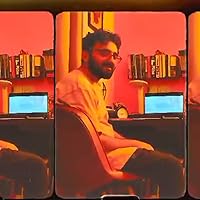
Winner of the Ida and Studs Terkel Prize In his too-short life, Aaron Swartz reshaped the Internet, questioned our assumptions about intellectual property, and touched all of us in ways that we may not even realize. His tragic suicide in 2013 at the age of twenty-six after being aggressively prosecuted for copyright infringement shocked the nation and the world. Here for the first time in print is revealed the quintessential Aaron besides being a technical genius and a passionate activist, he was also an insightful, compelling, and cutting essayist. With a technical understanding of the Internet and of intellectual property law surpassing that of many seasoned professionals, he wrote thoughtfully and humorously about intellectual property, copyright, and the architecture of the Internet. He wrote as well about unexpected topics such as pop culture, politics both electoral and idealistic, dieting, and lifehacking. Including three in-depth and previously unpublished essays about education, governance, and cities,The Boy Who Could Change the World contains the life's work of one of the most original minds of our time.
Aaron Swartz was an American computer programmer, a writer, a political organizer, and an Internet hacktivist. He was involved in the development of RSS, Creative Commons, web.py, and Reddit. He helped launch the Progressive Change Campaign Committee in 2009 and founded the online group Demand Progress.
Don't get me wrong, the contents in this book are wonderful. Aaron Swartz was a brilliant guy and his thoughts are well worth reading. But they aren't worth reading here.
The publisher of this book, The New Press, is a copyright troll, liar, and a DMCA-abuser. In 2014, a different publisher by the name of Discovery Publisher had published a book consisting of Aaron's writings. Not long after The New Press published this book in late 2015, they successfully forced Discovery Publisher's compilation off of shelves by sending DMCA complaints to CreateSpace and other affiliated services that Discovery Publisher was using. That is a blatant abuse of not only what the DMCA was meant for, but of how Aaron would have handled things.
The New Press was able to do this because they claimed that they had received exclusive rights over Aaron's writings for this compilation. However, the only man in the world who could have given these rights to The New Press, Sean Palmer, openly denies that he gave exclusive rights to anyone. Nonetheless, The New Press insists that they have them, even though they aren't willing to show any proof.
(ctrl + f "I can only reiterate that I did not give New Press any exclusive rights over any of Aaron’s work" in that link above. That is a direct quote from Sean Palmer himself in the comments.)
So The New Press almost certainly lied about having exclusive rights, and they used this lie to abuse the DMCA against a competing publisher who had a similar product, in order to take this product off of the shelves right about when they started selling their own. That is how vicious this publisher is. This is also exactly the sort of stuff that Aaron had spent a lot of his time fighting against, so the fact that a book published in his honor is being put out there like this is absolutely unacceptable. Never mind the fact that this book isn't even under a Creative Commons license.
Most of the writings in this book (though sadly not all) are easy to find other places on the internet. The actual writings and thoughts of Aaron Swartz are well worth reading, but not if it means supporting such a cruel, vicious publisher as The New Press. Do not support this publisher with your money.
It saddens my heart every time I look at this book, The writing of Aaron Swartz. This book is just a compilation of his thought, like a diary. But I can feel how much courage this boy held in his heart, who was actually of my age. Many people know what is right and what is wrong, many people feel that someone should do something when wrongs prevail, but only a few acts upon it. Aaron Swartz was someone like that, who felt it and became that someone to protest against keeping the vast knowledge of years and years scientific discoveries keeping away from the public domain. Yes, he hacked Jstor to make that public, but I am actually not sure why Jstor gets to be the gatekeeper of scientific knowledge! In the process, Swartz faced many years behind the bar, took his own life and we lost one very courageous soul from this world. I mourn for him, his way may not have been right in our existing system, but he was a hero in the heart.
To say, "The Boy Who Could Change the World" is a fascinating book is an understatement. Aaron Swartz reminds me of my brother Michael. Around 1985 I had a discussion with Michael about the Berlin Wall. Michael said, "you'll see, it'll come down." To which I replied, "Never! You forget, I visited Berlin in 1980, I crossed Checkpoint Charlie. I got poked into my ribs with a Kalashnikov, when I did not move fast enough by East German guards. That Wall won't come down."
As it turned out, Michael was right and I was wrong, even though I had been there and seen it.
Aaron Swartz's thoughts come from the same idealistic angle. They are challenging our thoughts as we see the world, and what we believe is possible.
Sadly, both, Aaron Swartz and my brother are dead. Michael died of MS in 2003. Why do the forward thinkers have to die young and the old establishment stays in place?
Swartz' thoughts are provocative (like my brother's), they force us to think about what is and might be possible.
When I began reading, right away - I cringed. Aaron Swartz writes, "... Downloading may be illegal. But 60 million used Napster and only million voted for Bush or Gore. We live in a democracy. If the people want to share files then the law should be changed to let them...."
Ouch! I write books. What about if "the people" want to download my books for free? Aaron Swartz has an answer for that, "... And there is a fair way to change it. A Harvard professor found that $60/yr for broadband users would make up for all lost revenue. The government would give it to the affected artists and, in return, make downloading legal, sparking easier-to-use systems and more shared music. The artists get more money and you get more music. What's unethical about that?" Swartz also addresses the book issue too and copyright issues.
The interesting thing is that while on one hand I oppose Swartz's thoughts (in which he agrees with Jefferson) "by their very nature, ideas cannot be property.... The government has no duty to make laws about them..."
I do agree with his third point, "... The laws we make aren't all that successful..."
For me it comes down to that yes, we have the laws, and yes, in theory we are protected.... then again
(quoting from one of Swartz favorite sites/concepts wikipedia) "... Microsoft Corp v Commission (2007) T-201/04 is a case brought by the European Commission of the European Union (EU) against Microsoft for abuse of its dominant position in the market (according to competition law). It started as a complaint from Sun Microsystems over Microsoft's licensing practices in 1993... ... In 1993, Novell claimed that Microsoft was blocking its competitors out of the market through anti-competitive practices..."
Which basically means, that, copyright laws existing - yes or no - huge corporations strong muscle others, especially the software industry offers stories no end in sight about little companies that got bought out cheaply, strong muscled or tricked.
Probably one of the most interesting chapters in this book is "How We Stopped SOPA." Considering the way politics is going the effects of this amazing effort may be more important than ever.
"The Boy Who Could Change the World" is highly recommended. Like me you won't agree with everything you read but it'll make you think and wonder what is important or not.
Knowing how Aaran Swartz' life came to a tragic end, I could not help but being reminded of Galileo Galilei's life. Was Swartz today's Galileo Galilei... crushing our concept of how this world functions... or should function?
I read more than 400 of the 451 essays on Aaron Swartz' blog, aaronsw.com, over a span of 5 days -- 21.5 hours in total. Reading from the earliest posts to the most recent painted a better picture of Aaron's developments and changes of interest than the book could possibly have painted.
I don't think all of his best essays are featured in the book, but a good number of them are. The many writings in the book by Aaron Swartz that I had not seen before made up for that lack. But, most definitely, peek at his blog and read what sounds interesting to you. It is well worth your time
Information - intellectual propert rights - creatives common license - decentralization. The maturity he has at a very young age and his fighting mentality inspires me.
Largely a curated greatest hits of Aaron's blog posts, speeches, articles and op eds, with brief introductions written by various law professors and Doctorow. The absence of any contributions from peers who knew Aaron at a personal level and weren't markedly older than him is notable.
Swartz's best writing was about technology and the web while his weakest was definitely on sociology and schooling where he pumped out unquestioning undergrad level summaries of well known sociology studies.
He was clearly passionate about forming communities and this comes out most clearly in his piece on forming a coalition to oppose SOPA as well as his insistence that Wikipedia and Reddit were distinguished by their communities, not by being wiki software or voting software respectively.
Swartz continually called for democratisation of contributing to larger projects by making editing easier and more WYSIWYG, which spoke to his disillusionment with the semantic web.
His prediction that the web and the communities formed by it would democratise celebrity has largely come true while his Marxist hope that it would abolish the concept of superstar altogether inevitably has not.
Much of his political commentary has aged poorly: Haiti's Aristide was found to be a supporter of necklacing while South Korea's Roh Moo Hyun killed himself facing bribery charges three years after Swartz's blog post praised him as the first internet president.
His own promotion of unschooling at age 14 handwaved away the social challenges he would later face as a precocious and unschooled puer aeternus who was on the spectrum and deeply hostile to the social establishment.
It's sad that Swartz was unable to accept he had autism and ADHD and even wrote a blog post declaring he did not have autism while at the same time having: gastrointestinal problems, restricted and repetitive eating behaviours (white food and bread and cheese only), a need for escape, an ability to live for years in a literal wardrobe, problems fitting in, ability only to work on what he found interesting, intense hyperfocus, deep and intuitive understanding of technical systems and a limited ability to express his social desires in an appropriate way.
It's notable that all the people who pushed Swartz into his idealistic self martyrdom remain alive, wealthy and employed at prestigious institutions and have made no attempts at career limiting stunts themselves.
Despite my reservations and scepticism of some of his arguments, Swartz is an amazing thinker. I read the essays haphazardly going to the sections that I found most interesting and working my way through the rest of the book from there. I'd argue that's probably the best way to read this book. The collection of essays that resonated with me the most are found in the section titled Unschooled. There Swartz launches a devastating attack on academia. It was a pleasure to discover that I share the same conclusions with the author, but even more of a pleasure when the author pointed out things I neglected to consider. Reading this is a joy all round.
After I started reading this book, I also found some YouTube vids on Aaron Swartz. I watched the documentary, [The Internet's Own Boy: The Story of Aaron Swartz](https://www.youtube.com/watch?v=3Q6Fz...), and that definitely influenced my emotions when reading the collected essays in this book.
While I'll give the content 5 stars, it was definitely published with bad intentions. However, who cares, if you didn't pay for the copy, which I didn't ;(
The book was donated by _anonymous_.
Nonetheless, Swartz was a well-spoken, young mind that eloquently conveyed passion when communicating his ideas. We're so fortunate to have had his ideas recorded, but a mind that develops that fast at such a young age also burns fast, as a burning star.
Aaron Swartz was an intellectual and an old soul, and he would love to see everyone in the world attempting to make a change, impact their community, and "think deeply about things, don't just go along with it".
On the side of communities, it mentions how it is so important to act locally to impact the "system", as the gov is 99.9% corrupt, and when shit hits the fan, we can't really rely on them to solve a local problem. There is a major section about law and how it works, or should I say how it is played.
Education was also an important topic to Swartz. He believed in "unschooling", or letting children decide for themselves what to dedicate their time on. Other than also believing that the education system and its standardized ways are so ineffective and were created by scheming moguls to "brainwash" students and eventually their employees to be more disciplined, follow the herd mentality, have low self-esteem, be afraid to question authority, etc., Swartz also believed that "apprentice education" is a way better philosophy. If a student has "reason", "inspiration", "questions", and "perseverance", there is really no system that can stop him/her, so just keep on truckin' and let the curious mind fly.
As a software engineer, I feel the obligation to continue working to solve socio-economic problems with technology. One can only attempt to do, and see the outcome when all is said and done. As Swartz says, "for those who genuinely care about their legacies, it doesn't seem like there's much choice".
One of the ideas that I'm very passionate about is to promote the free access to scholar findings, as it should be shared with the world to put all of our minds together. While the access to free information is not enough, community apps should be created to facilitate the engagement on the topic and craft an ironclad solution that covers many vantage points.
Speaking of sharing information, what about sharing Open Source solutions? That should be a given when creating a tool that smooths the sharp edges of the developer experience. Even if it is not a developer tool, if it's a community app, why not do it Open Source, so the community can feel safe with how the data is used and even contribute with improved features?
On the note of Open Source, DO NOT FORGET TO DONATE TO YOUR FRIENDLY NEIGHBOR DEVS!
Je vais tenter d’être objectif malgré mes sentiments envers Swartz (j’ai littéralement certains de ses textes affichés dans mon bureau + j’ai réussi à mindfuck les chefs pour qu’ils impriment son Guerilla Open Access Manifesto sur des totes bag offerts aux étudiant-es). Ce livre est un brise-cœur à lire, source des frustrations : si seulement il était en vie, si seulement il avait écrit ses livres, et puis sur quoi écrirait-il aujourd’hui, presque 10 ans après son suicide? L’ouvrage est globalement un recueil de ses articles, des posts de son blog et de certaines conférences qu’il a donné (les textes les plus anciens datent de ses 14 ans). L’éditeur a réparti ses écrits en différentes catégories vu qu’il était passionné de sujets divers (informatique, culture libre, système scolaire, politique, etc. On a même droit à certains de ses articles de recommandations de livres.) Le mélange est malheureusement un peu indigeste : entre les écarts de dates et de maturité, les positons de Swartz semblent parfois contradictoires. Certains articles font référence à des événements précis de l’actualité au moment de l’écriture, et qui sont pas forcément aisé à situer aujourd’hui. Je pense aussi que c’est pas la meilleure porte d’entrée sur le travail de Swartz, et j’aurais tendance à conseiller des articles plus généraux (ou le documentaire The Internet’s Own Boy) pour le découvrir. Les enchaînements de textes souvent courts ne permettent pas d’entrer en profondeur non plus et globalement j’ai vraiment ressenti une grande frustration qu’il n’ait pas pu écrire un livre structuré plutôt que des textes éparses réunis à titre posthume. Il n’évoque pas ses propres actes de lui-même, et la majorité de son travail n’est pas vraiment mentionné (les licences CC, la création du RSS, ses prises de position autour du SOPA, ni bien sûr son piratage de JSTOR qui ont conduit à sa condamnation puis son suicide). Il n’empêche que certains textes édités ici sont passionnants, que Swartz est brillant, et que j’aurais toujours la rage qu’il soit mort.
A testament to a technical genius and a passionate activist, Aaron Swartz: his essential writings on internet culture, hacktivism and the freedom of information In January 2013, Aaron Swartz, under arrest and threatened with thirty-five years of imprisonment for downloading material from the JSTOR database, committed suicide. He was twenty-six years old. But in that time he had changed the world we live in: reshaping the Internet, questioning our assumptions about intellectual property, and creating some of the tools we use in our daily online lives. Besides being a technical genius and a passionate activist, he was also an insightful, compelling, and cutting critic of the politics of the Web. In this collection of his writings that spans over a decade he shows his passion for and in-depth knowledge of intellectual property, copyright, and the architecture of the Internet. The Boy Who Could Change the World contains the life’s work of one of the most original minds of our time. -Throughout the book—and throughout Aaron’s Life—there’s a strong theme: technology shouldn’t just be for techies. Tech can, and should, benefit everyone.
I was motivated to read this book after watching the documentary "The Internet's Own Boy". The documentary inspired me more than any book or documentary I remember and I was really intrigued to learn more about Aaron. and I think this book was a great collection of his blog entries and essays which provided a very good window to his thoughts and mindset throughout his life. I particularly enjoyed his essays on education which form the last section of the book.
Proposal - the title. The unforgivably awful, kitschy title. The title manages to come across as both aggrandizing and infantilizing the title's subject, Aaron Swartz. Aaron Swartz's ghost has better things to do than maliciously haunt whoever was responsible for the title, but I'm sure it (or he, depending on how you conceive of the afterlife) is deeply exasperated by the title.
With that out of the way:
What does it mean to "love" a person's genius, and what relationship, if any, does it have to loving them?
The pieces in [Title I refuse to reproduce here] tend to fall into one of three categories: 1. Later-in-life pieces he's exhaustively prepared for and is a subject matter expert on 2. Prescient and interesting pieces from a very good blogger 3. Precocious writings that break your heart because now you're thinking about Aaron Swartz as a teenager.
I came for the 1's, but then the 2's were so powerful and charming and packed with that ineffable Aaron Swartz-iness that I couldn't help but hungrily lap up the 3's by the end. What I mean is that you read enough of him and the notion of him as a thinker/actor in the world and the notion of him as a real person start to merge painfully into a single entity, grieving for the loss of one becomes inseparable from grieving for the other.
Comparisons to David Foster Wallace come naturally, especially if you're like me and spend more time thinking about DFW than any other person whom you've never so much as shared a room with: both were voracious autodidacts whose achievements thrust them into the spotlight at an early age; in both of their writing, you get the sense of an intelligence so bright it'd be blinding if not for their own casual humbleness and sincere humanism to act as a lampshade. What makes reading AS so thrilling though are the ways in which he is DFW's opposite - the exhibitionism of his writing in contrast with DFW's neurotic perfectionism, or Swartz's instinct for action vs. Wallace's cautious neutrality.
One of the more interesting choices here was to order the essays more or less randomly with respect to Aaron's age at the time of writing. I could imagine more traditional editors complaining that this approach unnecessarily inflicts one Authorial Voice Whiplash injury after the other on the reader, and that a consistent ordering from young to old would do a better job capturing his evolution, but I'm happy with the choice for two reasons. First, the chronological ordering is boring (AS says so himself, about the presentation of history in school). Second is the heartbreaking effect of him seeming to flicker at random through 12 years of life. Read fast enough (say, two sittings, like this guy), and, if you squint your eyes a bit, it's a bit like watching an old-fashioned film reel slowly accelerate into the range where the brain begins to see it as a stable image; something seemingly independent of the frames, but latent in each.
And then the reel runs out, and Aaron Swartz is still dead, and it is the cusp between a presidential administration responsible for more whistleblower prosecutions than every other combined and one already credited with ushering in the whole "post-truth" era.
As the unforgivably bad title so clumsily alludes to, this was a voice we could use now more than ever.
This book consists of a set of essays written by Aaron Swartz from the age of 14 until his suicide 12 years later, and published on various blogs.
The subject matter Swartz tackles is wide ranging, covering political activism in the internet age, education policy, the internet as a collaboration tool, the uses of computers among others. Each set of essays is presented with a brief introduction by someone who knew Swartz, essentially presenting a group of eulogies to his life and work.
Unfortunately although it is clear that Swartz had a great impact on these people the book itself feels incoherent. Although the grouping of the essays is logical, it doesn't give any sense of the development of Swartz's thought. It is clear that he was an intelligent person with an interest in many subjects who read widely, but what is missing in this collection is a thread to draw it all together.
The sections that feel the most cogent are those in which Swartz talks about his work on Wikipedia. The rest feel a little too much like he was read fairly briefly across a topic and written his thoughts down. Swartz hopes that widespread blogging will do a better job of disseminating the truth than the mainstream media, but I'm not convinced that his own work as presented in this book demonstrates that.
His political writing feels most superficial of all, the work of an undergraduate student. That's not a criticism - at the time he wrote most of these essays that's exactly what Swartz was - but it does mean that his thinking is not as insightful as the writers who introduce it like to pretend. He comes across as an interesting, thoughtful, politically active young man, but not perhaps a genius or someone who could 'change the world' as the title claims.
This book is most a compilation of writings (and a few lectures) of Aaron Swartz. And boy are the writings impressive. Some of the blog entries written when Aaron was a young teenager are at a higher thinking level than many adults. It is truly tragic that Aaron decided to commit suicide to escape what he perceived as government persecution. Minds and voices like his are needed in this crazy mixed up world. I wish the editor would have included more biographical information about Aaron and some of the back story as to the JSTOR incident. Including this information would make the book more accessible to a larger audience - one that needs to read and be aware of these issues. Without this backstory being included, readers would do well to watch the documentary Internet's Own Boy prior to reading the book.
[On a side note, the eARC available on Edelweiss is full of formatting errors that need to be fixed before the electronic versions are sold.]
There was some good content in here, and some that I'm less sure about. Some of the areas the book covered, economics for example, are less familiar to me so I don't know enough to dispute the author on them. Where this book lost points for me was towards the end when Swartz got into writing about education. He had some valid criticism on the way modern schools operate with over-reliance on testing and potential stifling of creativity. But, he was completely wrong on the history of public schools in the US. He claimed that the first public schools were created to turn children into compliant factory workers in the 1830s, and that's just not true. His critiques of education throughout history stemmed from this false information, it seems to me like that makes his conclusions on education suspect. It also makes me wonder what else he got wrong. So, there was some interesting material here, but readers should take it with a grain of salt.
I didn't follow this kid, alas, while he was alive, but this book collects his most substantial blog posts and writings about a range of topics, mostly involving an open internet and government. Really smart, some of these writings startle you when you realize he was only a teen when he wrote them. Some, such as his "offense of classical music" show his immaturity, but they are all readable and provocative. What a loss he is.
He's comes off as a little pretentious at first, but you get used it. By then, you realize he's just an incredibly smart, talented guy. He dipped his feet into so many aspects of American life with commentary and criticism around the age that I was still writing stories with necrophilia jokes. Read it if you want to feel inadequate.
The first part is very interesting. Then the politics part comes in and, it is not that I disagree with Aaron, it is just that it drags on and on and on. After that we get a few really good essays but manny of them feel tainted by the politics previously discussed (in the book, not chronologically). Still, I am glad I've read it.
An incredibly compelling, deeply moving and ultimately disturbing book. It's compelling on two distinct levels: first, the content of Aaron's thoughts - the clarity of his vision, his impressively singular focus on a moral north star, his intelligence and passion - and, second, the "meta" of Aaron himself. I read this and then immediately this piece by the New Yorker, and I want to watch the documentary now as well.
A bit of personal background: I worked at MIT from 2010-2013. MIT has a long, respected tradition of "hacks" - i.e. pushing (legal) boundaries to make political points or have fun (e.g. putting a police car on the dome). The wifi at MIT is free and open - if you're somewhere near Kendall Square in Cambridge, you will get access to MIT's network, and thus access to JSTOR and all the paywalled academic articles. So, as Aaron would say, if you're wealthy and live in the 02139 zip code, you have access to top scientific articles for free. If you live in Accra or Bogota or Dar es Salaam, you do not.
Anyway, at MIT there's a general vibe of "hacker counter-culture" (Richard Stallman hangs around at CSAIL, apparently refusing to use the key fobs to enter buildings since they can be tracked). So Aaron's action was, in my 2010 view, a completely normal and unremarkable "MIT hack" that was a bit more political, but making a generally benign/admirable point (paywalled academic articles are absurd, after all).
This is all to say that the Federal prosecution of Aaron has been rightly criticized for being so anti-human and dystopian.
Anyway, about this book: I felt like I knew the "story" already - but I found this book still so surprising because, (a) I didn't realize Aaron touched SO MANY things I consider important (and even use frequently!) like Markdown (!), RSS (!), Reddit (!) and (b) I felt like I got a much better (but still incomplete, no doubt) picture of who Aaron was as a person. I was amazed and inspired by his absolute clarity of thought: his posts on governance, corruption, copyright, education (!) are righteous and true. They just make sense. But I was also bummed by the "darker" patterns: his absolute conviction which felt like moral perfectionism, his humorlessness, the intensity of his righteousness. And I was irked by some of the "brilliant young dude" traits like his worshipping of David Foster Wallace and Noam Chomsky, and his - like Cory Doctorow - sometimes condescending explanation of econ principles.
But! Honestly, those flaws just enriched this whole reading, since they made Aaron seem more human and imperfect, and therefore made his achievements even more impressive.
at first i thought i'd be able to whizz through this like a novel, but even though the essays were short, they were often so thought provoking, and going from one to another was jumping topics so quickly, that i just wasn't able to do it, which i think is a good thing. i ended up reading one/a few (depending on their lengths) a day, and was able to really think about and marinate in thoughts about the various points he had brought up. his optimism and curiosity and surprising thoughts were really very motivating to have and reflect on everyday. his work and work ethic was also very inspiring, and of course we have so many interests in common that i learnt a lot (except that i skipped most of the technology section - sorry, i just didn't get it! hopefully i'll get to it at some point).
i really loved learning about how congress works from his POV, and his piece on transparency inspired me piece on transparency for the organisation i was interning at, which i'm very proud of. but the section that resonated the most with me was definitely on school and unschooling. although the others made me look at a topic a different way or consider it differently, or that i just totally agreed with, they weren't totally novel ideas to me, just better articulated or voiced in a way that i enjoyed more than things i'd heard in the past. but the unschooling was completely new to me, and something i never have heard articulated, but really subscribe to. so that was a great gem to have at the end.
very worth my time, and highly recommended. will be interesting to revisit in the future to see if i still feel the same way, whether i agree with him / can add anything else to the conversation.
I'm really glad I read this anthology of Aaron's blog posts and other writings. What will strike you almost right away is the complexity and range of his thinking at such a young age (as young as fourteen). He challenges many of the ways we all think about fundamental parts of our society: our education system, the news media, governance of the internet, intellectual property, and politics. In "Welcome to Unschooling," I identified deeply with his assessment of our institutionalized learning, and the historical context he provides is very helpful in understanding how we got here. One this is clear to me after finishing this very enjoyable read. Aaron thought carefully and deeply about the things he decided to spend time investigating. He thought from first principles, and is a clear and persuasive writer when trying to communicate his ideas to others. I may disagree with him on some of his proposed solutions to the problems he saw in the world, but I have a keen sense that more than anything, he valued a rich and open conversation, and abhorred anything that tried to stand in the way of the open sharing of those ideas. We all lost an incredibly bright and caring individual in Aaron, but I would highly recommend anyone interested in the above subjects to spend some time with a piece of his legacy in this book.
Every time I pirate stuff, Swartz would be proud of me.
I read his blog before when an author I followed shared his documentary. But this time revisiting this organized compilation of Swartz’s writings, everything feels more resonant. It gives me a sense that there are still other people working in the tech industry truly care about integrity, despite the boom of Generative AI and crypto scams. The first chapter, which discusses Free Culture, may be somewhat dated, but interesting nevertheless, as this has become a gray area with the birth of data crawling and privacy in the era of web 3.0 / 4.0 / 5.0, whatever it is.
The downside of this book is that it also should be able freely shareable (I pirated the ebook, duh), just like the documentary on YouTube through the Creative Commons. I’ll leave some links here to remind ourselves that we need to strive for a better world, as well as for anyone interested in the life of the Internet's own boy.
Son una serie de entradas del blog de Aaron Swartz que van desde que era un adolescente hasta su suicidio a corta edad. Están agrupados por tema (leí especialmente los de Cultura Libre, Computadoras, Libros y Cultura, y Homeschooling). Yo conocía poco de su vida y me sorprendieron sus logros en pocos años (RSS, Creative Commons, start-up que luego se fusiona con Reddit, etc.) y la claridad conceptual que tenía muy de chico.
Es de esos libros (como las entradas de "Los viernes" de Juan Forn) que tiene muchas semillas que te llevan a varias lecturas -literalmente en "Recommended books" hay varios de los que tomé nota-. También lo de educar a los hijos en casa (Unschool) que hoy en pandemia toma otra relevancia.
Se respira espíritu ciberpunk que uno ve en Geo Hot, Vitalik Butalin, Linus Torvalds y todos esos referentes del código abierto, del trabajo colaborativo y de la cultura hacker. Quizá más que contenido lo más rico es su potencial inspirador.
I don’t agree with some of the political positions he takes in his younger years around 18, 19 but man what a brilliant kid. It is amazing to see what he was thinking about at 14 and his period of radical optimism for change in his 18-20 years and then to read the darker and more cynical writings of his 24-26 years. He learned largely that some people know how to be good and know what to do to make things better but actually don’t want that to ever come to fruition. To Aaron he couldn’t believe this because he was a good person and unaccomosted to how some people really are. When he found that out and learned it was at the highest levels of all of our structure in the world I think it kind of broke him mentally. His essays are great though for the general deep multi-level of thinking that he does and he exposed me to a lot of knew concepts and sources I had never heard of on the web such as unschooling and democracy now and others.
In his introduction to this anthology of blog posts and speeches by the late web pioneer Aaron Swartz, ethics professor Lawrence Lessig wrestles with the question of whether it’s fair to anthologise a lifetime’s worth of any person’s writing. He goes on to wonder whether Swartz would have approved of the publication of the volume he’s introducing, and tells a story about Swartz getting upset with him for describing one of his blog posts to some friends when he was a student at Stanford. The celebrated activist, who spent much of his short life promoting the theory that ideas should be freely available online to everyone, admonished Lessig for recapitulating his post to an audience of outsiders, telling Lessig: “That was private.”
What Swartz meant, Lessig goes on to say, was that the anecdote was intended for readers of his blog, not “random” people. It’s a justifiable concern. What happens to online writing when it leaves the internet, either by being described or, as in this case, by being enshrined within the bound pages of a book? What does it mean for blog posts written over the course of a prodigious adolescence and young adulthood to be stripped of their original context, then recontextualised as evidence of a young thinker’s quotidian brilliance and evolving ideas about politics, computers and media?
Swartz’s interests and accomplishments were wildly varied, but a rigorous commitment to justice and freedom undergirded them all. When he was 13 he became well known as a programmer; in the years that followed he was instrumental in shaping much that internet users take for granted, from the Markdown publishing format to Reddit, Wikipedia and Creative Commons. Later, he became passionate about political causes, pertaining both to the legal challenges thrown up by new media and the larger issue of unequal access to both money and information. At the time of his death in 2013 he was facing federal prosecution for data theft; he had systematically downloaded the archives of the digital library JSTOR, which he believed should be accessible by everyone, not just academic elites. Facing jail time and possible financial ruin, he hanged himself. After his death, the charges were dropped.
The collection divides Swartz’s writings into subcategories – “Free Culture,” “Computers,” “Politics,” “Media,” “Books and Culture,” “Unschool” – each with an introduction by a luminary in that field who was familiar with his work. Each section contains writing from different times in Swartz’s life, and each piece is prefaced by the web URL where it can be found, the date it was posted and Swartz’s age at the time. The earliest writing in this book dates from when Swartz was 14, around the time that he coauthored RSS, the software that allows websites to syndicate their feeds; the most recent dates to just months before his death.
Some of these pieces make the transition from screen to page with grace. It’s exciting to hear in Swartz’s own words what it was like to stop SOPA, the internet-censoring bill that came dangerously close to making it through Congress in 2010. That post stands well on its own because it provides an intimate look at a series of events most people witnessed at a remove; it’s funny and telling to hear how Swartz realised he was getting through to people about what was at stake if the bill was passed by hearing from a “cute girl” on the subay that “we really have to stop SOAP”.
But that post, like many of the strongest in the book, was written when Swartz was older. It dealt with past events, so he was able to use perspective to shape a narrative. Long stretches of the book are not so consciously crafted, and blog posts about, say, running for a seat on Wikimedia’s board as a teenager need a lot more editorial context to seem interesting to a general audience. Likewise, while posts about the philosophical concerns that ruled Swartz’s programming might still be relevant and comprehensible to fellow programmers today, footnotes or post-by-post introductions would be helpful to general readers.
Swartz habitually used a casual shorthand for complex ideas because he was writing for an audience that he had every right to assume was already familiar with the whole history of his thinking – after all, they were reading his blog. Online writing is living writing, emphatically both of and for the moment of its creation. Reading these once-living posts long after they first appeared can feel like trying to figure out what a ruined structure looked like while it was still standing. It’s hard to decipher the logic this book’s editors used in deciding to include time-sensitive posts, as well as posts that might best be classified as juvenilia. Perhaps they were striving to make this collection as complete as possible for future historians who might not have access to online archives. But it can be rough going for readers who simply hoped it would give them a clear, cohesive idea of Swartz’s impact and legacy.
What’s never in question, though, is his commitment to thinking through difficult concepts in pursuit of more freedom and more access to knowledge for everyone, not just for a privileged few. In the book’s final section, “Unschool”, his capacity for compassion – here, for the plight of students in schools that he felt were created more with the aim of indoctrinating placid workers than producing free, informed thinkers – comes to seem the most defining characteristic of his writing. “The world around us is an enormous classroom and we merely need the time to explore it, and the drive to ask questions and try to answer them,” he wrote in a blog post at the age of 14. One thing the writings collected here do makes clear is that he lived that ethos as completely as anyone possibly could, in exploring the world for as much time as he was allowed.
This is a collection of articles, most of them with no connection to the others. Among them, you can find a lot of interesting points of view and very mature thoughts from a young person. Unfortunately, the solutions that are proposed can mostly be applied if several decision factors get to think the same way. And, statistically, this has a very low probability. Another minus of the articles collection is the fact that most situations can be found in USA and are far from what's being found in other countries. Overall, the author proposes interesting solutions and can be applied at least partially.
J’avais découvert la personnalité d’Aaron Swartz grâce au récit « Ce qu’il reste de nos rêves » de Flore Vasseur. Cela m’avait donné envie de lire ce livre qui regroupe des textes d’Aaron Swartz, principalement issus de son blog, mais pas seulement, regroupés en plusieurs thématiques : Free Culture, Computers, Politics, Media, Books & Culture, et Unschool.
Je n’ai pas été déçu : les textes d’Aaron Swartz permettent de découvrir un jeune homme cultivé, qui s’intéressait à de nombreux sujets, acceptait de remettre en cause ses croyances et s’interrogeait sur la marche du monde.
Une lecture passionnante et un livre bien construit.