The world of Sularin is ruled by twenty gods, different in aspect but equal in power. But a war rages in the heavens, one that will affect the gods, the mortals, and the immortal beings who serve them both. It is a tale of romance and magic, blending epic fantasy with Arabian adventure. Khardan, Calif of a horse-riding tribe, and Zhora, princess of a sheep-herding people, must put aside their own differences - with the help of a young spellcaster named Mathew from across the sea - before the fabled Rose of the Prophet blooms.
Margaret Edith Weis is an American fantasy and science fiction author of dozens of novels and short stories. At TSR, Inc., she teamed with Tracy Hickman to create the Dragonlance role-playing game (RPG) world. She is founding CEO and owner of Sovereign Press, Inc and Margaret Weis Productions, licensing several popular television and movie franchises to make RPG series in addition to their own. In 1999, Pyramid magazine named Weis one of The Millennium's Most Influential Persons, saying she and Hickman are "basically responsible for the entire gaming fiction genre". In 2002, she was inducted into the Origins Hall of Fame in part for Dragonlance.
I am horribly and hopelessly biased on this book. Ignore everything I have to say about it.
Or don't.
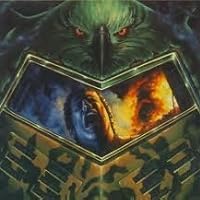
Truth is, not only is Margaret my boss and both she and Tracy dear friends—but I was the one who fought to bring the Rose of the Prophet books back into print. I'm the publisher of this edition (which sports a new introduction by the authors and a brand-new Larry Elmore cover, I'm proud to say). But perhaps there is a reason that I wanted to make sure this book was available again, the reason being that I love these books and feel it was the most under-appreciated of the Weis & Hickman fantasy of the 1980s.
The Rose of the Prophet trilogy takes fantastic stories of Arabian adventure and blends them into a well-structured fantasy world. The "Hickmanization" (my own word!) of a familiar real-world culture is something we'll see again in the Dragonships series, but in Rose of the Prophet led to some interesting ideas I haven't quite seen the same way anywhere else.
At the heart of this universe is Sul, a jewel that represents truth. Truth is neither good nor evil, and could care less about chaos or law. It's just Truth. It also kind of looks like a 20-sided die, if you're a gamer-geek like me. And if you're really crazy, you might have this as a tattoo on your arm.
Ahem. Each point on the jewel represents one element of Truth—such as Good, Chaos, Charity, Greed, etc. The twenty gods are essentially projected from one facet of the gem, thus each have three elements of Truth. Akhran the Wanderer represents Chaos, Impatience, and Faith, while Quar is the God of Reality, Greed, and Law. The gods in turn are served by immortals--powerful beings who serve as intermediaries between the gods and their mortal followers. Some gods might call their immortals angels and organize them into strict hierarchies. Others might simply bind them an object, such as a basket or a lamp, and call them djinn.
The story itself is a war in heaven reflected on the mortal world, with the immortals forced to deal with both. We get to see the story on all three levels, as the god Quar tried to tip the scales of balance and make himself the one and only god of Sularin.
I could write a hugely detailed, spoilerific summary. But I'm only allowed another 7,4000+ characters here and you really need to read this one for yourselves. There are a lot of characters here and there is a lot going on, but it's a great tale of romance and adventure with a different flavor than the Western-centric fantasy that many of us are used to.
Read it for the action, because there is plenty of it from warring tribes, battling immortals, and murderous plots. Read it for the romance, because there are multiple love triangles that present themselves -- including one involving what I believe is one of the best-written gay characters in the history of fantasy literature (an under-represented minority, to be sure). Read it for the well-realized, structured fantasy world that presents the universe as a 20-sided die. Read it for a non-typical Weis & Hickman ending.
I'm mixed about this book. The world and setting is amazingly realized. Familiar in all the right ways and yet fresh and vibrant. As one might expect given the authors...it is the absolute perfect RPG setting.
The story line was also solid. An epic tale of a war between gods and the handful of humans caught in between who can swing the outcome.
But the characters...oh...the characters. Sad sacks who are swept along by events from one rock to the next hardplace...sometimes by their own weakness, sometimes by their own stubborn stupidity, and sometimes by the shear power of immortal forces beyond their strength. They have no agency, accomplish nothing on their own, and are the recipients of more deus ex machina than I've ever seen in one trilogy.
In fact, by far the most interesting and realized character was pure unadulterated evil. A truly wretched scum bag with one of those twisted codes of honor that make you slightly sick for thinking that maybe his honor makes him a little less vile. But despite his evil nature, he's pretty much the only character (other than the main villains) who's at all competant or proactive.
So Mixed Indeed. If you're a fan of inpsired fantasy settings...4 stars. If you have no idea what "perfect for an RPG" even means...2 stars...maybe.
A quality trilogy by the original authors of the Dragonlance series. Interesting and entertaining in that it brings together several different fantasy cultures - Bedouins and djinns with wizards and angels, etc.. A fun read when you're in the mood for something light.
Success is achieved by the protagonist against seemingly overwhelming odds and the small good actions of some are critical to stopping the evil. Can't go wrong with that outline.
Rose of the Prophet Trilogy (Omnibus) by Margaret Weis This is a collection of all the prophet trilogy. a great series with strong female role characters
I just finished this trilogy, and it was indeed an interesting tale.
The setting is somewhat low-fantasy, settled in an imaginary world with gods and immortals, although all resembles supernatural entities from exsiting cultures. The novels has vibes from the medieval Middle-East, with deserts, warring tribes, similar language and culture. You will find the setting very similar to real places and religions, without elves, dwarves and other fantasy elements of the Tolkien heritage.
The protagonists are interesting, there are several twists and turns in the story, and the authors succesully blurred the lines between good and evil characters. Altough the novels were published in the '80s, there are also hints of unconvetional romance interests for one of the characters. I must underline that it is not stressed like today's "woke" stories, but showing other aspects of love in a respectful way, not distracting the main storyline.
The only thing I found lacking was the ending, it felt a bit rushed and unfinished for me, I would have preferred an additional 50 pages to settle the story properly.
Hickman and Weis proved many times that they are excellent authors and can forge great stories, the Rose of the Prophet being one of them, not the best one, but definitely worth checking out.
This is the most underrated fantasy series of all time. The only solution to a problem on all planes being the marriage of the children of the two tribes who most hate each other, and the father's reaction to boot, promises great humor and drama throughout the story. All three books are top quality, and the fates of the different beings are unexpected, humorous, and heart-yanking, especially the immortals.
Very much enjoyed this book. It's one to read more for the world and setting than the characters though. While they are interesting characters, their development - what there is of it - doesn't come very smoothly or naturally. In part, I feel that is due to this wold they are in. So much happens due to the influence of the gods and their immortals. That does take a certain amount of agency away from the characters themselves.
Still, even where the gods don't seem directly involved, characters develop in such a jumpy and awkward way. Of course most of the characters and their relationships are awkward from the start, and that does make the story much more interesting, but one expects even awkward relationships to develop in a smooth and reasonable way from one point to another. Particularly for two of the main characters, Khardan and Zhora, that doesn't seem to be the case.
Characters aside, the concept behind the world and its gods is pretty neat. I've bumped into similar ideas more recently and wonder now if this is the source. The differences in the immortals and their relationships with their god and mortals makes the story. The relationship between Khardan's djinn and Mathew's angel is particularly entertaining, both humorous and sweet. Keeping in mind the nature of the gods is important to the story too. If you forget that chaos is one of Arkan's aspects, the ridiculous behavior of his followers and the djinn makes no sense.
Overall I enjoyed it and while the memory of many books disappears as quickly as I finish, this one is likely to be one that lingers much longer.
Written back when fantasy novels could be light, short and fun. These days, it seems fantasy is dark, gloomy, door-stoppers that never seem to conclude.
One of my personal favorites to read every couple years. A guilty pleasure maybe but it's such a fun read. I'd recommend it as a YA fantasy pick.
It has been a while since I read this series, but when a good friend asks for a fantasy series to read, this one seems to exchange hands. It doesn't carry the same weight as the new generation of fantasy stories, and the characters don't quite have enough depth to connect with you, but the setting and the atmosphere that Weis weaves is very enjoyable.
One of my all time favorite fantasy series. I had dinner with Weis and Hickman years ago at GenCon and they make a great team in terms of in-depth character development and world building, respectively. While they are best know for their Dragonlance series, this series is thoroughly enjoyable and light summer reading.
This trilogy was slow taking off and had a very unsatisfying ending. It's almost as if the author got tired of writing and just abruptly ended the book, without answering many of the lingering questions.
Although I read this as an omnibus, and I never read it when it first came out, I was a little disappointed at its progression. I felt I had to drag myself through the book. Sad considering how much I love their work.
Loved the feel of these books, such a great adventure. This is possible my favorite series from Weis/Hickman. Perhaps it's the Middle Eastern environment, which lends the story a highly immersive backdrop. The treatment of magic is one of the best I've ever seen in fantasy, too.
Wise an Hickman are my favorite authors of all time. And the rose of the Prophet will not disappoint. just as good If Not Better than all their other stuff.
I liked this, despite a kind of departure from the usual sword and sorcery that the duo of author are commonly known for. It's fast-paced reading but fun