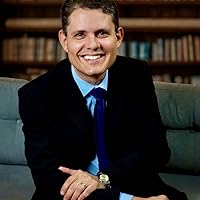
Over the past half-century, Eric Voegelin has produced a demanding body of writing on the philosophy of history and the history of political theory since antiquity. This is the first full-scale treatment of his inquiry into the reality of man's political existence. It includes close readings of the texts, with Voegelin's own comments on them interspersed, offering a thorough explication of the philosopher's quest.Incorporating an "Autobiographical Memoir" prepared in collaboration with Voegelin especially for the volume, Ellis Sandoz interweaves the events of this great thinker's life with the philosophical inquiry to which that life has been devoted. Among the uniquely engaging biographical subjects covered are Voegelin's reminiscences of his involvement with such seminal minds as Max Weber, and with Karl Kraus, Hans Kelsen, and other lights of Vienna's intellectual community of the 1920s and 1930s; a full discussion of his early responses to national socialism and his escape from the Anschluss in 1938; and a summary of his early years in America, with particular attention to the years at Louisiana State University with Cleanth Brooks, Robert Penn Warren, and Robert Heilman.Carefully analyzing Voegelin's contribution to our understanding of ourselves, Sandoz convincingly argues that Voegelin's achievement is revolutionary. He emphasizes the common sense running through Voegelin's thought, and reveals how Voegelin reached a new analysis of reality and provides us with a new science of human affairs. Sandoz does not reveal the "truth to end the quest for truth," but shows how such "stop history" answers are defective. Exploring the meaning of that "first truth" as it has been intellectually and spiritually unraveled by one of our century's leading thinkers, Voegelinian Revolution shows anyone interested in politics and human affairs how to follow Voegelin's path. This book will be of interest to historians, political theorists, students of philosophy and religion, and educated readers concerned about the plight of American/Western civilization and looking for a new view on our current "crisis."
O objetivo da obra de Sandoz é apresentar uma introdução geral que demonstre o caráter revolucionário da filosofia de Eric Voegelin. A obra é organizada cronologicamente e é resultado de textos e horas de entrevistas com o próprio Voegelin. São oito capítulos. No primeiro capítulo, o autor mostra que o ponto de partida de Voegelin é o senso comum. A partir disso, Voegelin desenvolveu uma nova concepção científica singular. O capítulo dois trata da biografia de Voegelin, as principais influência sobre seu pensamento, as obras de Voegelin até 1938 e sua fuga da Alemanha nazista. No capítulo seguinte, Sandoz trata da chegada e trabalho de Voegelin nos EUA e seu abandono da História das Ideias Políticas. O capítulo quatro é dedicado à explicação da obra "A nova ciência da política". O capítulo cinco apresenta os três primeiros volumes de Ordem e História. O capítulo seis dedica-se ao texto da Anamnese e o problema da ordem da consciência. O capítulo sete aborda a percepção voegeliniana sobre o homem, a existência e a ordem social. Sandoz apresenta nesse capítulo os princípios de ciência noética. O capítulo nove trata da Era Ecumênica (volume IV da Ordem e História). E, por fim, Sandoz apresenta em um epílogo o caráter do pensamento de Voegelin e sua abertura Em Busca da Ordem. Como diz Sandoz, Voegelin foi um cientista político e um filósofo místico revolucionário no sentido de compreensão da realidade.
O Professor Ellis Sandoz tem o grande mérito de organizar a vasta produção intelectual de Eric Voegelin em grandes temas que o interessavam em cada época de sua vida. A principal tese de seu livro é que o pensamento de Voegelin tem a mesma força que o de Copérnico ou Newton em suas áreas. Ele promove uma revolução de paradigma, questionando profundamente toda a base da ciência positiva e moderna, suplantadas por uma ciência da nous, ou da razão, resgatando o que os grandes filósofos da antiguidade e do cristianismo sabiam muito bem, que a experiência humana é de participação na realidade e que um distanciamento crítico no estilo sujeito-objeto é impossível e uma falsificação.