Jump to ratings and reviews
Rate this book

The Robben Island Shakespeare

Rate this book
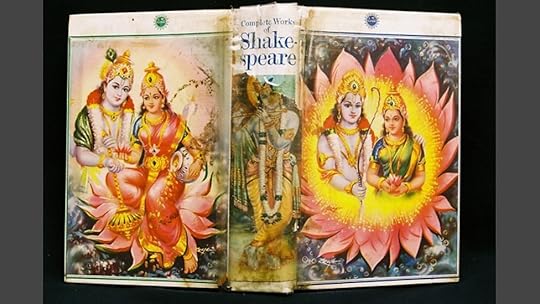
During the Apartheid years in South Africa, a copy of The Complete Works of William Shakespeare was smuggled around the prison on Robben Island. The book’s significance resides in the fact that the book's owner, Sonny Venkatratham, passed it to a number of his fellow political prisoners in the single cells, including Nelson Mandela, asking them to mark their favourite passages with a signature and date. Informally known as "the Robben Island Bible", numerous prisoners selected the speeches that meant the most to them and their experience as political prisoners. In 2008 and 2010, playwright and scholar Matthew Hahn conducted interviews with eight former political prisoners in South Africa. Offering a vivid and startling account of the experience of these political prisoners during Apartheid, this extraordinary verbatim play weaves Shakespeare's words together with first-hand accounts from these men. They offer their reflections on their time as Liberation activists and, twenty years later, on the costs, consequences and whether or not it was all worth it. The play is published alongside a preface by Sonny Venkatrathnam and an introduction by South African actor, director , playwright and cultural activist John Kani.

80 pages, Paperback

Published January 12, 2017

1 person is currently reading
25 people want to read

About the author

Ratings & Reviews

What do you think?
Rate this book

Friends & Following

Create a free account to discover what your friends think of this book!

Community Reviews

5 stars
6 (30%)
4 stars
5 (25%)
3 stars
5 (25%)
2 stars
2 (10%)
1 star
2 (10%)
Displaying 1 - 5 of 5 reviews
Profile Image for Warwick.
Author 1 book15.4k followers
October 22, 2017
South Africa has a long and storied tradition of political theatre, which punched well above its weight during the apartheid era – Athol Fugard is perhaps the key name – and it's great to see that tradition continuing with fascinating projects like this one. The Robben Island Shakespeare builds on a remarkable footnote from the notorious prison island: a copy of Shakespeare's Complete Works that was held by political internee Sonny Venkatrathnam. To disguise it from the warders, he covered it in pictures of Hindu deities cut out from Diwali cards, and told the prison authorities that it was a ‘Hindu bible’.


For years, this book was passed around the prisoners, who would discuss their favourite passages during the secretive ‘Robben Island University’ sessions in the limestone quarry or the hard labour yard. When Venkatrathnam was released, he had the prisoners – including Nelson Mandela, Saths Cooper, Eddie Daniels and many others, underline and sign their favourite quotations.

The American dramatist Matthew Hahn came across this story in a Mandela biography, and set about interviewing eight of the surviving prisoners about the importance of this Shakespeare volume. This play dramatises their thoughts about their time on the Island and intersperses them with the key speeches from Shakespeare that the prisoners found most meaningful.

It's a combination that works incredibly well. The testament of the internees is always essential reading, but what's amazing is how powerful the Shakespeare becomes in this context. The following passage from As You Like It seems transformed when spoken by prisoners who lived in freezing, unheated conditions, in tiny cells that were so wet in parts of the year that they would literally wash their faces with the water dripping down the walls.

Now, my co-mates and brothers in exile,
Hath not old custom made this life more sweet
Than that of painted pomp? Are not these woods
More free from peril than the envious court?
Here feel we but the penalty of Adam,
The seasons' difference, as the icy fang
And churlish chidings of the winter's wind,
Which, when it bites and blows upon my body,
Even till I shrink with cold, I smile and say
‘This is no flattery: these are counsellors
That feelingly persuade me what I am.’


Or this, from The Tempest:

For I am all the subjects that you have,
Which first was mine own king: and here you sty me
In this hard rock, while you do keep from me
The rest o' the island.


Crucially, the play takes these themes forward and considers the way this extraordinary struggle has been betrayed by the corruption and cronyism of contemporary South African leaders.

As far as I can tell, The Robben Island Shakespeare has never been properly ‘performed’, but staged readings of it have taken place in South Africa, the UK and the US several times since it was first written in 2009. This volume comes with some excellent introductory materials, including some notes from Venkatrathnam himself, and a foreword from the South African actor John Kani who talks movingly about the importance of Shakespeare to a generation of black South Africans who grew up reading him as part of a forcibly Anglocentric education.

It was thought that Shakespeare would instil the values of a superior English literature; instead, a whole people took lessons on leadership from Henry IV, and on dealing with tyranny from Julius Caesar. Here you can see how those lessons were forged, under intense and lasting pressure, into something genuinely transformative.
Profile Image for Emma Christmas.
39 reviews1 follower
January 17, 2018
While a very interesting read I find it incredibly hard to picture this on stage and found it rather hard to differentiate between the scenes. I think a greater understanding than mine of South Africa’s history is required to get the most from this play.
Profile Image for Jen.
51 reviews
October 9, 2023
I kind of expected Shakespeare to be cast as a colonizing figure; but the animus was against Afrikaans and Shakespeare was seen as a universal figure, even more so when later translated into native languages such as Xhosa. The play notes how the architects of Apartheid weaponized Julius Caesar against the notions of democracy; the imprisoned men, in contrast, interpreted it as a missive against autocracy and political selfishness.
Profile Image for Valerie.
105 reviews
March 18, 2019
Impactful work about the prisoners of Apartheid in South Africa who only had a Complete Works of Shakespeare available to them during their years of political imprisonment. They committed it to memory and it speaks to the transcendence of Shakespeare through time and culture. This is a script but with first hand introductions by those involved. Favorite quotes from prisoners are intertwined in the text with Nelson Mandela's closing the book.
Displaying 1 - 5 of 5 reviews

Can't find what you're looking for?

Get help and learn more about the design.