

What do you think?

Kubla Khan
"In Xanadu did Kubla Khan
A stately pleasure-dome decree..."
Though left uncompleted, “Kubla Khan” is one of the most famous examples of Romantic era poetry. In it, Samuel Coleridge provides a stunning and detailed example of the power of the poet’s imagination through his whimsical description of Xanadu, the capital city of Kublai Khan’s empire.
Samuel Coleridge penned “Kubla Khan” after waking up from an opium-induced dream in which he experienced and imagined the realities of the great Mongol ruler’s capital city. Coleridge began writing what he remembered of his dream immediately upon waking from it, and intended to write two to three hundred lines. However, Coleridge was interrupted soon after and, his memory of the dream dimming, was ultimately unable to complete the poem.
[ Taylor Coleridge|11525] (1772–1834) was an English poet, critic and philosopher who was, along with his friend [ Wordsworth|64845], one of the founders of the Romantic Movement in England, and one of the Lake Poets. He is probably best known for his poems [ Rime of the Ancient Mariner' (1792)|6186447] and [ Khan' (1816)|28014281], as well as his major prose work [ Literaria' (1817)|350099].
A stately pleasure-dome decree..."
Though left uncompleted, “Kubla Khan” is one of the most famous examples of Romantic era poetry. In it, Samuel Coleridge provides a stunning and detailed example of the power of the poet’s imagination through his whimsical description of Xanadu, the capital city of Kublai Khan’s empire.
Samuel Coleridge penned “Kubla Khan” after waking up from an opium-induced dream in which he experienced and imagined the realities of the great Mongol ruler’s capital city. Coleridge began writing what he remembered of his dream immediately upon waking from it, and intended to write two to three hundred lines. However, Coleridge was interrupted soon after and, his memory of the dream dimming, was ultimately unable to complete the poem.
[ Taylor Coleridge|11525] (1772–1834) was an English poet, critic and philosopher who was, along with his friend [ Wordsworth|64845], one of the founders of the Romantic Movement in England, and one of the Lake Poets. He is probably best known for his poems [ Rime of the Ancient Mariner' (1792)|6186447] and [ Khan' (1816)|28014281], as well as his major prose work [ Literaria' (1817)|350099].
24 pages, Kindle Edition
First published January 1, 1816
About the author
Samuel Taylor Coleridge
2,310 books906 followersSamuel Taylor Coleridge (1772-1834) was an English poet, critic, and philosopher who was, along with his friend William Wordsworth, one of the founders of the Romantic Movement in England and one of the Lake Poets. He is probably best known for his poems The Rime of the Ancient Mariner and Kubla Khan, as well as his major prose work Biographia Literaria.
Ratings & Reviews
Friends & Following
Create a free account to discover what your friends think of this book!
Community Reviews
Displaying 1 - 30 of 154 reviews

December 28, 2024
Kubla Khan… An opium-induced poem about an old-time opium-eater…
A romantic pipe dream about an ancient pipe dreamer…
Shangdu, popularly known in English as Xanadu, was the summer capital of the Yuan dynasty of China before Kublai moved his throne to the former Jin dynasty capital.
So the poem has historical roots…
But, as usual, cherchez la femme – look for a woman…
A woman of evil…
A woman of joy…
Pleasure is primary so Kubla Khan abided in his dome built of air…
Even Homer glorified lotus-eaters in his Odyssey.
In Xanadu did Kubla Khan
A stately pleasure-dome decree:
Where Alph, the sacred river, ran
Through caverns measureless to man
Down to a sunless sea.
A romantic pipe dream about an ancient pipe dreamer…
Shangdu, popularly known in English as Xanadu, was the summer capital of the Yuan dynasty of China before Kublai moved his throne to the former Jin dynasty capital.
So the poem has historical roots…
But, as usual, cherchez la femme – look for a woman…
A woman of evil…
A savage place! as holy and enchanted
As e’er beneath a waning moon was haunted
By woman wailing for her demon-lover!
A woman of joy…
A damsel with a dulcimer
In a vision once I saw:
It was an Abyssinian maid
And on her dulcimer she played,
Singing of Mount Abora.
Pleasure is primary so Kubla Khan abided in his dome built of air…
For he on honey-dew hath fed,
And drunk the milk of Paradise.
Even Homer glorified lotus-eaters in his Odyssey.

December 29, 2017

karen and I were just discussing the excellent fantasy short story, Singing of Mount Abora, in her review thread for that story by Theodora Goss (read it! it's free online). Since it's inspired in part by Samuel Taylor Coleridge's classic poem "Kubla Khan," I told her to reread this short poem before reading Goss's story (here's a copy of the poem).
I'm not sure she's forgiven me for that.
So I reread "Kubla Khan" myself just now. It's fragmentary and dreamlike, with no plot (maybe there would have been a plot if that blasted person from Porlock hadn't interrupted Coleridge's creative frame of mind). But it has wonderful imagery and is so evocative. Plus who can resist the Romantic Era sexiness?
A savage place! as holy and enchanted*fans self vigorously*
As e’er beneath a waning moon was haunted
By woman wailing for her demon-lover!
And from this chasm, with ceaseless turmoil seething,
As if this earth in fast thick pants were breathing,
A mighty fountain momently was forced:
Amid whose swift half-intermitted burst
Huge fragments vaulted like rebounding hail ...
But on a more serious note, there's this fantastic story and commentary by Jorge Luis Borges:
The poet’s dream occurred in 1797 (some say 1798), and he published his account of the dream in 1816 as a gloss or a justification of the unfinished poem. Twenty years later the first western version of one of those universal histories that are so abundant in Persian literature appeared in Paris, in fragmentary form—the General History of the World by Rashid al-Din, which dates from the fourteenth century. One line reads as follows; “East of Shang-tu, Kubla Khan built a palace according to a plan that he had seen in a dream and retained in his memory.” Rashid al-Din was the Vizir of Ghazan Mahmud, a descendant of Kubla.
A thirteenth-century Mongolian emperor dreams a palace and then builds it according to his dream; an eighteenth-century English poet (who could not have known that the structure was derived from a dream) dreams a poem about the palace. ... The first dreamer was given the vision of the palace and he built it; the second, who did not know of the other’s dream, was given the poem about the palace. If the plan does not fail, some reader of “Kubla Khan” will dream, on a night centuries removed from us, of marble or of music. This man will not know that two others also dreamed. Perhaps the series of dreams has no end, or perhaps the last one who dreams will have the key.

December 14, 2014
Words evoking vivid, faithful images. The perfection of metres, rhymes and the intellectual effort everything represents. A person in a verse. A life in a haiku. A world in a stanza. I love poetry as much as I love prose. And this poem by Coleridge, this fragment portrays the essence of Romanticism. I have already read The Rime of the Ancient Mariner and found it awe-inspiring. So I had a vague idea of the artistic force I was going to encounter with.
The Preface of this poem explains the background of the creative process and publication, including a famous anecdote that would later become a concept by itself, a fair allusion to certain aspects of life that inevitably interrupts the writer's creativity. It all started with a dream. By 1797 the poem was “completed” and published in 1816. Coleridge states that, one night, after reading about Xanadu (the palace of Kublai Khan, a Mongol ruler and Emperor of China) and giving himself over to the influence of opium, he had a dream. A wild, vivid dream. When he woke up, he started to write a poem until he was apparently interrupted by a person on business from Porlock. And then, he couldn't remember much of the dream and therefore couldn't finish what he has planned. There is no concluding evidence but it does teach us a remarkable lesson. If you feel inspired and begin to write in a frenzy, and all of the sudden someone knocks on your door, don't open it. Unless it is the fire department. Otherwise, do not open the door. Lock it. Close your window. And keep writing.
"Kubla Khan" starts with a depiction of Xanadu. An idea of perfection conveyed through the circular shapes that Coleridge describes. He does so using different tones relating to the idea of opposites. Light and darkness. Nature and human creativity. A lifeless ocean, a mighty fountain. Visions of contradictory images, mythological references, exquisite symbolism; the symphony of a woman. The taste of her song, a song with the power of building domes in the air.
Below, you will find a passage (in Spanish and English) of an essay by the erudite pen of Jorge Luis Borges, concerning Coleridge and his poem.
There was no other way. I had to end these rambling thoughts on Coleridge with Borges on my mind.
Nov 20, 2015
* Also on my blog.
The Preface of this poem explains the background of the creative process and publication, including a famous anecdote that would later become a concept by itself, a fair allusion to certain aspects of life that inevitably interrupts the writer's creativity. It all started with a dream. By 1797 the poem was “completed” and published in 1816. Coleridge states that, one night, after reading about Xanadu (the palace of Kublai Khan, a Mongol ruler and Emperor of China) and giving himself over to the influence of opium, he had a dream. A wild, vivid dream. When he woke up, he started to write a poem until he was apparently interrupted by a person on business from Porlock. And then, he couldn't remember much of the dream and therefore couldn't finish what he has planned. There is no concluding evidence but it does teach us a remarkable lesson. If you feel inspired and begin to write in a frenzy, and all of the sudden someone knocks on your door, don't open it. Unless it is the fire department. Otherwise, do not open the door. Lock it. Close your window. And keep writing.
"Kubla Khan" starts with a depiction of Xanadu. An idea of perfection conveyed through the circular shapes that Coleridge describes. He does so using different tones relating to the idea of opposites. Light and darkness. Nature and human creativity. A lifeless ocean, a mighty fountain. Visions of contradictory images, mythological references, exquisite symbolism; the symphony of a woman. The taste of her song, a song with the power of building domes in the air.
Below, you will find a passage (in Spanish and English) of an essay by the erudite pen of Jorge Luis Borges, concerning Coleridge and his poem.
There was no other way. I had to end these rambling thoughts on Coleridge with Borges on my mind.
Nov 20, 2015
* Also on my blog.

February 25, 2015
“A mighty fountain momently was forced:
Amid whose swift half-intermitted burst
Huge fragments vaulted like rebounding hail,
Or chaffy grain beneath the thresher’s flail:”
Precisely how I felt.
A Vision In A Dream. The poem opens with Kubla Khan, basking in the beauty of his pleasure dome, imposingly erected amidst a gorgeous canvas of the sacred river, the sunless sea, the blossomed trees and the green hills. His eyes, filled with passion and beauty, also finds merit in the waning moon, the paused fountain and the aching wait for a lover. However, the spell of this world lifts all at once and settles between the notes of a song; a song strikingly rendered by an Abyssinian maid whose charisma temporarily invalids him. He regains consciousness way too late and his longing to hear the sweet song again leaves him in a subdued hysteria. The two stanzas pretty much looked to be on track and I felt the tempo arising to its shinier periphery. But alas! The third stanza rises and falls in a jiffy, like a great storm about to strike but changing mind at the last moment.
The curtains fall at the 54th line, which documented evidence says, was not the point of termination. It is said that Coleridge had about 200 to 300 lines floating in the back of his mind when he conceived writing them down in a poem. But for reasons, logical and insane, or probably by plain cursed fate, he ended up retrieving just these 54 lines from his jumbled up memory.
Ha… I wished the poem had reached its intended destination; the picture was complete.
Then again, what is more invigorating for a thirsty mind than to caress the incomplete outlines of a promising dream?

October 7, 2021
This review is of the following edition:
Product Details
ASIN: B018QMX0AU
Publisher: HarperPerennial Classics (December 15, 2015)
Publication date: December 15, 2015
Language: English
File size: 338 KB
Text-to-Speech: Enabled
Screen Reader: Supported
Enhanced typesetting: Enabled
X-Ray: Not Enabled
Word Wise: Enabled
Print length: 24 pages
Lending: Not Enabled
When I was in high school and forced to read this poem, I was convinced that it was the ravings of a man in the throes of or in the aftermath of an opium dream. The lit teacher said no but I was sure. Her attitude diminished my respect for her even further. We did not like each other.
Well, the introduction confirms what I already knew based upon my reading of the poem. In 1797 Coleridge was ill and was given a pain killer which in 1797 meant opium. He fell asleep in his chair and had extravagant dreams or visions. When he recovered, he began to write the vision. Someone came to his door and interrupted him for about an hour. When he tried to write more, he found that his dream and visions eluded him. He wrote a little more but was unable to complete it.
He left it unfinished and unpublished until 1816 when, at the urging of Lord Byron, he finally published the unfinished poem. He freely admitted that it was conceived during an opium dream. I don't know if my lit teacher was a liar or just ignorant.
The interpretations of this fragment are both varied and extravagant. My interpretation is that it sounds good for an opium dream. Meaning? You supply that. I think it means most anything you can imagine.
Product Details
ASIN: B018QMX0AU
Publisher: HarperPerennial Classics (December 15, 2015)
Publication date: December 15, 2015
Language: English
File size: 338 KB
Text-to-Speech: Enabled
Screen Reader: Supported
Enhanced typesetting: Enabled
X-Ray: Not Enabled
Word Wise: Enabled
Print length: 24 pages
Lending: Not Enabled
When I was in high school and forced to read this poem, I was convinced that it was the ravings of a man in the throes of or in the aftermath of an opium dream. The lit teacher said no but I was sure. Her attitude diminished my respect for her even further. We did not like each other.
Well, the introduction confirms what I already knew based upon my reading of the poem. In 1797 Coleridge was ill and was given a pain killer which in 1797 meant opium. He fell asleep in his chair and had extravagant dreams or visions. When he recovered, he began to write the vision. Someone came to his door and interrupted him for about an hour. When he tried to write more, he found that his dream and visions eluded him. He wrote a little more but was unable to complete it.
He left it unfinished and unpublished until 1816 when, at the urging of Lord Byron, he finally published the unfinished poem. He freely admitted that it was conceived during an opium dream. I don't know if my lit teacher was a liar or just ignorant.
The interpretations of this fragment are both varied and extravagant. My interpretation is that it sounds good for an opium dream. Meaning? You supply that. I think it means most anything you can imagine.

July 14, 2018
One of my favorite poems - truly made me reflect on the river of time that runs through our life and our perception that is often lost in the illusion of pleasure.

March 23, 2017
‘Kubla Khan’ – is very much an enigmatic piece of poetry, written by Samuel Taylor Coleridge, he states after having come to him fully formed and complete as if in a dream, whilst he was under the influence of ‘anodyne’ pain killing medication. Unfortunately for him and us, he was called away urgently almost immediately following this inspirational dreamlike state and as such – forgot the overwhelming majority of the work that sadly could have been. What remains is a striking and memorable piece (although frustratingly short) which does give us a tantalising glimpse of what might have been.
Whilst I did enjoy this ‘fragment’ of ‘Kubla Khan’ – the only other poetry that I have read by Coleridge is ‘The Rime of the Ancient Mariner’ and by comparison – ‘Kubla Khan’ pales into insignificance when up against the lyricism, the monumental power and epic majesty of the great work that is ‘The Rime of the Ancient Mariner’.
Whilst I did enjoy this ‘fragment’ of ‘Kubla Khan’ – the only other poetry that I have read by Coleridge is ‘The Rime of the Ancient Mariner’ and by comparison – ‘Kubla Khan’ pales into insignificance when up against the lyricism, the monumental power and epic majesty of the great work that is ‘The Rime of the Ancient Mariner’.

March 19, 2017
Kubla Khan is sort of about a person and a place, but it's really more about the means by which you can forge those things—with words alone.

December 31, 2017
The Annoying Man from Portlock
30 December 2017
Well, it looks like this is going to be my last review of 2017. I hope you enjoy it.
Since I had referred to this poem from my review of Dreamquest of Unknown Kadath, I thought that it might be a good idea to read Kubla Khan again. Not that it is much of a chore considering that it is a fairly short poem, though I have since discovered that pretty much all of the reproductions of the poem do not contain the introduction, which is more than a real shame because it is the introduction that adds so much life to what is already a beautiful poem. Mind you, I remember attending a poetry reading at one of my friend's houses, and this was the poem (as well as Jabberwocky) that I was going to read, right up until somebody stood up and recited it off by heart.
So, the question that is raised is whether the story about Coleridge smoking some opium (though he doesn't actually admit it), falling asleep and having a dream of this fantastic place, and then, upon waking up, begins to transcribe what he saw only to be rudely interrupted by some guy from a nearby town who refuses to leave for an hour, is true. Personally, I'm not all that sure, but it is an ongoing debate as to whether the poem is actually finished or not, and when we were discussing it in English, our teacher was of the opinion that it was. Mind you, it is poetry, so theoretically you could end halfway through the poem and people would still be convinced that it was a complete poem.
I can really sympathise with Coleridge though, because we have all had that experience where we have planned to do something only to be interrupted by somebody wanting to do some important business, and while we want to get out of it, we can't, and by the time we get rid of that annoyance, all of our creative juices have gone and we are left staring at a blank piece of paper. Mind you, this poem remained a part of Coleridge's private collection for some time, only to be read to close friend's, until he was convinced to publish it.
As for the poem, as I have suggested, it is a beautiful piece of literature describing a place that is clearly fantastic. Honestly, I never thought that Kublai Kahn actually had a place, considering when you think of Mongol housing you tend to think of the humble yurt.

Though it seems that you can deck them out quite well:

In a way the poem is basically a description of a scene, of the palace of a powerful king, yet it also has a fantasy element with the idea of the river flowing deep underground to a 'sunless sea'. Though we do have the Mongol emporer roaring in his barbaric roar, which gives us another strange picture of this barbarian living in this magnificent palace. Still, it is a grand city of an emperor who ruled what was literally the largest contiguous land empire ever, and also has a huge effect on the history of pretty much most of Europe and Asia (much of the Persian empire was destroyed when his armies swept down into the middle east).
But this raises the question about dreams, and we note that this is a dream that no doubt came about through the use of drugs. Opium was quite popular among the gentlemen class of 19th Century England, despite it being illegal (much in the same way that cocaine is quite popular among the celebrity class today). In a way opium is one of those drugs that sends you into a dreamlike state – and it isn't hard to see some junky flaked out on the sidewalk as I wander around parts of innercity Melbourne. Still, this state is incredibly addictive, as we note with Coleridge, who upon getting rid of that annoying man from Portlock, discovered that his dream had now fled.
Some drug users have suggested that their creative juices only come about through the use of drugs, but I'm going to have to disagree with that. There have been many creative people throughout history that have created some wonderful works of art and literature who have not resorted to drugs. In a way drugs are disabling in that once the addictive mindset has taken hold, the user ceases to believe that they can do anything unless they are on drugs. Yet, having spent time with people who take drugs, when they do so they simply become completely disconnected from the world as they drift into their own private reality, only to wake up and search for more drugs to send them back into that reality. It makes me wonder whether that is all that true.
30 December 2017
Well, it looks like this is going to be my last review of 2017. I hope you enjoy it.
Since I had referred to this poem from my review of Dreamquest of Unknown Kadath, I thought that it might be a good idea to read Kubla Khan again. Not that it is much of a chore considering that it is a fairly short poem, though I have since discovered that pretty much all of the reproductions of the poem do not contain the introduction, which is more than a real shame because it is the introduction that adds so much life to what is already a beautiful poem. Mind you, I remember attending a poetry reading at one of my friend's houses, and this was the poem (as well as Jabberwocky) that I was going to read, right up until somebody stood up and recited it off by heart.
So, the question that is raised is whether the story about Coleridge smoking some opium (though he doesn't actually admit it), falling asleep and having a dream of this fantastic place, and then, upon waking up, begins to transcribe what he saw only to be rudely interrupted by some guy from a nearby town who refuses to leave for an hour, is true. Personally, I'm not all that sure, but it is an ongoing debate as to whether the poem is actually finished or not, and when we were discussing it in English, our teacher was of the opinion that it was. Mind you, it is poetry, so theoretically you could end halfway through the poem and people would still be convinced that it was a complete poem.
I can really sympathise with Coleridge though, because we have all had that experience where we have planned to do something only to be interrupted by somebody wanting to do some important business, and while we want to get out of it, we can't, and by the time we get rid of that annoyance, all of our creative juices have gone and we are left staring at a blank piece of paper. Mind you, this poem remained a part of Coleridge's private collection for some time, only to be read to close friend's, until he was convinced to publish it.
As for the poem, as I have suggested, it is a beautiful piece of literature describing a place that is clearly fantastic. Honestly, I never thought that Kublai Kahn actually had a place, considering when you think of Mongol housing you tend to think of the humble yurt.
Though it seems that you can deck them out quite well:
In a way the poem is basically a description of a scene, of the palace of a powerful king, yet it also has a fantasy element with the idea of the river flowing deep underground to a 'sunless sea'. Though we do have the Mongol emporer roaring in his barbaric roar, which gives us another strange picture of this barbarian living in this magnificent palace. Still, it is a grand city of an emperor who ruled what was literally the largest contiguous land empire ever, and also has a huge effect on the history of pretty much most of Europe and Asia (much of the Persian empire was destroyed when his armies swept down into the middle east).
But this raises the question about dreams, and we note that this is a dream that no doubt came about through the use of drugs. Opium was quite popular among the gentlemen class of 19th Century England, despite it being illegal (much in the same way that cocaine is quite popular among the celebrity class today). In a way opium is one of those drugs that sends you into a dreamlike state – and it isn't hard to see some junky flaked out on the sidewalk as I wander around parts of innercity Melbourne. Still, this state is incredibly addictive, as we note with Coleridge, who upon getting rid of that annoying man from Portlock, discovered that his dream had now fled.
Some drug users have suggested that their creative juices only come about through the use of drugs, but I'm going to have to disagree with that. There have been many creative people throughout history that have created some wonderful works of art and literature who have not resorted to drugs. In a way drugs are disabling in that once the addictive mindset has taken hold, the user ceases to believe that they can do anything unless they are on drugs. Yet, having spent time with people who take drugs, when they do so they simply become completely disconnected from the world as they drift into their own private reality, only to wake up and search for more drugs to send them back into that reality. It makes me wonder whether that is all that true.
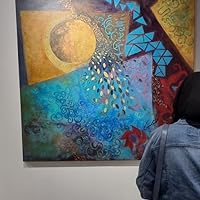
March 23, 2017
I love Coleridge.

Read
March 3, 2023Coleridge claimed that the lines of this poem about Kubla Khan’s pleasure palace came to him during laudanum-infused sleep, and then rushed to write them down. According to Borges, a book published after Coleridge's death - which Coleridge could not have read - tells the story of how Kubla Khan built a palace from plans that had been revealed to him in a dream. "So we can think about a Platonic idea - a palace that wants to exist not only in eternity but also in time - and that through dreams, it is revealed to a Chinese medieval emperor and then, centuries later, to an English poet at the end of the eighteenth century." And he wonders to whom it will reveal itself next.

December 11, 2013
So mesmerizing! And to think we would've had more of this opium-sparked fantasy...
Damn it, person from Porlock!
Damn it, person from Porlock!

March 24, 2014
Great Poem. You should also listen to actor Benedict cumberbatch reading it!

December 31, 2017
One of my favorite poems...
And David Olney FTW!
https://www.youtube.com/watch?v=ywJSg...
And David Olney FTW!
https://www.youtube.com/watch?v=ywJSg...

December 18, 2023
Initially Kubla Khan was the worst poem I had to read this semester. Eventually it became one of the most beautiful ones. I remember arguing with my teacher that Coleridge didn't have a poetic talent, he was a wannabe, and that if Kubla Khan is just a recollection of his dream, there's nothing noteworthy about it. Thank God I read the poem 20 times more for exam preparation, and now I have a much deeper appreciation for it. I love how Coleridge creates pictures in the air and the whole atmosphere around you changes.
P.s. the poem is still a nightmare to study.
P.s. the poem is still a nightmare to study.

January 1, 2025
L'ho letto per studio, mi ha trasportata di peso in un mondo onirico e fiabesco, quando si è interrotto mi sono schiantata rientrando sulla terra.

March 2, 2016
This poem contains some beautiful language and imagery yet on a whole it is pretty weird, of which I like!

February 26, 2021
It was interesting, but nothing I could deeply connect with. The imagery was excellent and very visual overall, which made it an easy and pleasing read. Not my cup of tea, but still worth reading.

March 28, 2011
I discovered this poem when assigned to read it in lit class years ago. It's one of the few that have stuck in memory since. The thing I like best about it is its meter. I especially love the first stanza;
In Xanadu did Kubla KhanThat is just plain fun to read and speak aloud. Special props to Coleridge for mentioning "Xanadu" even though he couldn't have known at the time that it would immediately bring to mind that equally trippy Olivia Newton-John musical by the same name. Because of this, it doesn't surprise me when critics say Sam was high on opium when he wrote it. Yeah the poem's got that dreamlike, fragmentary quality to it but more importantly: Coleridge used drugs to see into the future and predict the awesome (or awful, take your pick) cheesefest that was Xanadu! Impressive. Also, I really love that song. And I really love Samuel T. Coleridge.
A stately pleasure-dome decree:
Where Alph, the sacred river, ran
Through caverns measureless to man
Down to a sunless sea.

October 26, 2015
I was expecting this to be an epic poem and was quite surprised to find out just how short it is. I did enjoy it but it does feel unfinished, if only he had taken a bit more opium to recreate the dream.
This was my intro to Coleridge, will be checking out more of his stuff.
This was my intro to Coleridge, will be checking out more of his stuff.

December 16, 2013
Absolute favorite poem of all time. The imagery is unreal. Beautiful use of metaphor and fantastic allusions. Love Coleridge in all of his Opium-infused genius glory XD
March 10, 2021
big fan of all the exclamation marks

April 17, 2025
While listening to Howling Dark (a science fiction book in a series I'm at the start of), the main character is exploring an underground area with a river. He used the phrase, "through caverns measureless to man, down to a sunless sea" my internal Samuel Taylor Coleridge alarm went off. I had to stop the audiobook and go read Kubla Khan. All the novels I'm reading lately are sending me to re-read my favourite English romantic poets. No complaints here!
Read
June 12, 2024ładnie napisany poemat, ale nie myśle o nim na tyle dużo żeby dać mu jakąkolwiek ocenę czy sensowną recenzje

March 19, 2012
All evidence points to this being a 5-star rating, but for the plain reason of me not savoring poetry as much as I would savor prose is why this is a 4-star for me.
I love the imagination in this poem, the description of Xanadu and the mention of Kublai Khan . Without even reading its wiki entry, I had an image of a beautiful Paradise on the verge of collapsing (because of the prophecy) and a deep, dark , sad feeling from the Abyssinian maid’s song. There is also this feeling that the prophecy is bad because Kublai Khan messed with nature and tried to own a part of it, but then, it could be the environmentalist in me talking that way.
All in all, I am glad I read this poem, there is no way I would’ve wanted to live without reading this.
I love the imagination in this poem, the description of Xanadu and the mention of Kublai Khan . Without even reading its wiki entry, I had an image of a beautiful Paradise on the verge of collapsing (because of the prophecy) and a deep, dark , sad feeling from the Abyssinian maid’s song. There is also this feeling that the prophecy is bad because Kublai Khan messed with nature and tried to own a part of it, but then, it could be the environmentalist in me talking that way.
All in all, I am glad I read this poem, there is no way I would’ve wanted to live without reading this.

January 31, 2022
To quote my English Lit professor “you’re probably not going to understand what’s going on it this poem at first. It’s drugs—drugs are what’s going on.”
Definitely my favorite Coleridge poem and yes this is another reread for me because my AP lit teacher LOVED Romantic poetry and literature. I love how wacky and psychedelic this poem is. The imagery is so vividly delicious that you can’t help but be transported to this vision that Coleridge experienced.
Definitely my favorite Coleridge poem and yes this is another reread for me because my AP lit teacher LOVED Romantic poetry and literature. I love how wacky and psychedelic this poem is. The imagery is so vividly delicious that you can’t help but be transported to this vision that Coleridge experienced.

September 5, 2017
Wonderful piece, I've read it since I was in my teens and there always seems just a little something more at each reading, and apart from being aware it was part of an opium inspired vision, I have absolutely no idea what the work is really about, and to be truthful I don't really wish to know for fear of detracting something from it.

January 16, 2023
Aaand it's back to so-so poems.
Oh, how I miss you, Robert Burns!
For this week's poetry readings, I started with this one first since it's the shortest out of the bunch. So, it gets 2 out of 5 stars from me. Not because I liked the poem, far from it, but because I liked the shortness of it.
For this week's poetry readings, I started with this one first since it's the shortest out of the bunch. So, it gets 2 out of 5 stars from me. Not because I liked the poem, far from it, but because I liked the shortness of it.

May 16, 2017
Coleridge composed this poem after he had a vision one night. However, to me this poem does not have much of a theme or sense of order but seems to be different images jumbled up together to try to make a vision of one poem.
Displaying 1 - 30 of 154 reviews