Jump to ratings and reviews
Rate this book

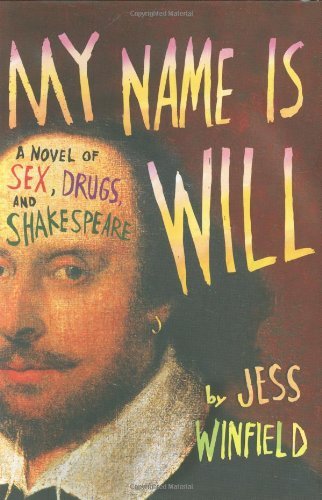
My Name is Will

Rate this book
"Utterly delicious, original, witty, hilarious and brilliant. Shakespeare In Love on magic mushrooms. The Bard has never been this much fun."
-Christopher Buckley, author of Boomsday and Thank You For Smoking

A Tale of two Shakespeares...

Struggling UC Santa Cruz grad student Willie Shakespeare Greenberg is trying to write his thesis about the Bard. Kind of...

Cut off by his father for laziness, and desperate for dough, Willie agrees to deliver a single giant, psychedelic mushroom to a mysterious collector, making himself an unwitting target in Ronald Reagan's War on Drugs.

Meanwhile, would-be playwright (and oppressed Catholic) William Shakespeare is eighteen years old and stuck teaching Latin in the boondocks of Stratford-upon-Avon. The future Bard's life is turned upside down when a stranger entrusts him with a sacred relic from Rome... This, at a time when adherents of the "Old Faith" are being hanged, drawn, and quartered as traitors.

Seemingly separated in time and place, the lives of Willie and William begin to intersect in curious ways, from harrowing encounters with the law (and a few ex-girlfriends) to dubious experiments with mind-altering substances. Their misadventures could be dismissed as youthful folly. But wise or foolish, the bold choices they make will shape not only the 'Shakespeare' each is destined to come... but the very course of history itself.

291 pages, Hardcover

First published July 8, 2008

40 people are currently reading
710 people want to read

About the author

Jess Winfield

8 books11 followers
Jess Winfield co-founded the The Reduced Shakespeare Company, co-authored the worldwide smash hit play The Complete Works of William Shakespeare (abridged), won two Daytime Emmy Awards as a writer-producer for the Walt Disney Company, and, most recently, authored MY NAME IS WILL: A NOVEL OF SEX DRUGS AND SHAKESPEARE, a New York Times Book Review "Editor's Choice" and a California Book Awards finalist. He has just completed his second novel and is working on his third.

Jess lives in Hollywood with his wife Sa, an accomplished ceramicist.

In his spare time, he blogs about Los Angeles's dynamic ethnic food scene (lafoodcrazy.blogspot.com).

Ratings & Reviews

What do you think?
Rate this book

Friends & Following

Create a free account to discover what your friends think of this book!

Community Reviews

5 stars
161 (14%)
4 stars
370 (33%)
3 stars
390 (34%)
2 stars
146 (13%)
1 star
51 (4%)
Displaying 1 - 30 of 215 reviews
Profile Image for Terence.
1,306 reviews468 followers
June 25, 2009
I was leaning toward 3 stars but the last half of this quirky novel pushed it into the 3.6-3.8 range.

My Name Is Will recounts the parallel stories of a critical-year-in-the-life of William Shakespeare and his modern-day namesake William Shakespeare Greenberg (Willie), a prodigal son cruising on auto-pilot through the grad program at UC Santa Cruz. Both he and Shakespeare face life-altering events as young men (Willie's in his 20s, Shakespeare is 18) that force both to focus their minds on what kind of men they want to become. The more interesting storyline is Shakespeare's; Willie's life and goals don't have the same gravitas, and it's only toward the end of the novel, when the two protagonists' lives intersect more and more, that Willie's dilemmas stir the same concern.

One of the greater pleasures of reading is catching all the people, events and even future lines arising in Shakespeare's thread that appear in his later plays and poems. And, on Willie's side, noting the parallels with the Bard's life.

The novel's tone is mostly light hearted but the final 25 pages or so take a more serious, though not unwelcome, turn. The change in tone makes sense and transitions smoothly, making the book a somewhat more profound reading experience than you might otherwise expect.

Verily, be warned, the book's subtitle - "A novel of sex, drugs and Shakespeare" - is accurate. There's quite a bit of shagging, as the British might say, and not inconsiderable drug use (as much in the 16th century as the 20th) so anyone put off by that sort of thing probably won't enjoy My Name Is Will. Otherwise, if you like Shakespeare and are looking for a not-too-heavy read, I can easily recommend it.
Profile Image for Idril Celebrindal.
230 reviews49 followers
September 24, 2015
God, the 1980s character was so unlikeable. Another one of those "completely boring, unwashed"--I'm being literal here--"always-stoned, personality-free guys who somehow has dozens of hot women want to bang him" that men write and seem to think are clever. And how dare his dad pay for his tuition, room, and meal plan and not also give him money for the drugs he spends literally all his time doing?! I wish there was a joke here that I was missing, that the author didn't expect me to sympathize with and like his character. I was supposed to be on his side, as least in a "friend who's a fuck-up but still a good time" way; instead I kept waiting for him to get hit by a bus.

Also, thanks for the two and half page, totally earnest screed on why Reagan was evil and the "war on drugs" was racist. Topical and cutting-edge in a book published in 2008, and how would I have truly understood the historical nuance of the author's college years without it?

The two stars are for the "real" Shakespeare sections. They were stupid plot-wise but pretty well written.
Profile Image for **alex**.
14 reviews30 followers
January 22, 2013
I wanted to like this book, at first I almost did. But then I really didn't. The story rotated chapters between Willie Shakespeare Greenberg, 1980-something, and William Shakespeare, circa 1580; as the story progressed, Willie's tale began to widely detract from what could have been a pretty decent story about the original Shakespeare, a young, 18 year old Bard. Largely filled with sex and drugs (which normally I'm all about in a fun read), Willie Greenberg's story was one I just didn't care about. I didn't feel sorry for this wannabe academic, or whether or not he could come up with a convincing thesis topic before his dad cuts him off financially. Or whether he'd unload a massive 'shroom and a pound of pot at a weird nerd rave Renaissance Faire without getting snitched on by Reagan narcs. Or that his sometimes girlfriend at Berkley wanted to grab sushi, but he only had 6 bucks to his name. It simply wasn't compelling, and the numerous fucks-on the bus, with two girls, in the ass, at an orgy, in a dream.... the only image these scenes conjured in my mind was of a horny author getting his rocks off at the keyboard for a minute. It just didn't seem at all necessary.

But then there were Shakespeare's chapters, the real Shakespeare, the Bard. And those had promise. Those chapters showed an author who, with a little work, could be pretty good. Winfield is obviously very familiar with Shakespeare, his works and his life, and even though the particular tale was historically inaccurate (he admits this at the end of the book: a few historical facts were tweaked in the making of this novel), it was well-written and well-paced throughout. There were only a few odd, superfluous sex scenes in the young Shakespeare tale; the most bizarre involving Shakespeare, a witch, a broom handle and a lube decoction made from 'shrooms. It was...an interesting image of the great Bard, to say the least. Otherwise, the story of Shakespeare as a closet Catholic tormented by a group of the Earl of Leicester's men appointed with the task of eradicating all practitioner's of the Old Faith after Henry VIII's creation of the Anglican Church, was entertaining to read. It was the intertwining with Willie's quest to deliver the shrooms that took away from this better written story. I understood what the author was trying to accomplish by mirroring the lives of these two Shakespeares, separated in life by hundreds of years, but only by a chapter in the book, however; mirroring the persecution of the Catholics against Reagan's War on Drugs was a weakly realized comparison. There could have been something there, but once again the author made it too juvenile to work.

All in all, unimpressed.
Profile Image for Brian.
825 reviews500 followers
January 12, 2016
"My Name is Will" is a fast paced romp through the intertwining lives of two Will Shakespeares. One a grad student in the 1980s, and one the "real deal". Refreshingly this novel is not a critical study of the Bard. I enjoyed it for its damned determination to make Shakespeare human. (The many jabs aimed at the theory of New Criticism were appreciated by this reader.)
The novel's two main protagonists have their stories told in alternating chapters, and the switching point of view is easy to follow. The chapters that focus on the real Shakespeare start with a short paragraph on the history or context. Chapters with the modern Will start with a quote from one of the real Shakespeare's works. It is a nice touch. The text has a nice progression and pace that culminates in a defining moment for both of its Wills. The main strength of the novel, and the point that I think Mr. Winfield tried so valiantly to make, is that Shakespeare's characters are so human, because he was! It seems an obvious point, but in today's world of Bard idolatry, people forget that Shakespeare was indeed one of us. This point is cleverly presented in a very understated manner by creating the device of the modern Will Shakespeare, and his process of maturation and finding life's purpose. What reader cannot see themselves in that device? Again, the connection of Shakespeare as one of us, who simply put into divine poetry what human experience is like, is made! This parallel plot device further highlights the more interesting tale (in my opinion) of the real Shakespeare's same process. With the parallel so spelled out for the reader, one has to be dense to not see the larger point.
Although quite funny, the novel also has some serious points to make and in Chapter 36 some surprisingly thoughtful ideas are presented about the role of religion and faith in our lives. There is something to chew on in this text.
Winfield also rewards those who are familiar with the Bard and his work by throwing in many allusions, lines, and references from Shakespeare's works and the point again is made that Shakespeare's art was probably a reflection of his life and experiences. Again, as it is for all of us.
Funny, interesting, witty, and thought provoking. Not bad at all! A worthwhile read.
Profile Image for Jen.
787 reviews37 followers
November 30, 2008
I've been stewing for days on how many stars to give this book. I wanted to give it 3.5, but goodreads doesn't give you that option.
Why, you ask, was this such a quandary?
Stuff that puts it in the fours column: unique voices, fun time-bending, I learned stuff about Shakespeare (he was a Catholic?!), Winfield does a good job keeping the plot moving, one of the best-written sex scenes I've ever read (mind you, I don't read a lot of smut)
Stuff that puts it in the threes column: grad student living off his parent's dime seems old and stale, there's a few plot moves that are so predictable that I had to say "Oh, come on!" out loud, female characters aren't developed enough (except for Shakespeare's sister!).
I ultimately decided on four stars because anyone who can make academic subjects fun and action-filled deserves a read. This novel is fun! You'll learn something! You'll feel smarter for reading about Shakespeare! And the sex scene - va va voom!
Profile Image for Shannon.
921 reviews1 follower
March 29, 2010
Apparently I can't give something zero stars. This book is drivel. It starts out promisingly enough, but never rises about mediocre before crash landing in a Port-O-Potty. The modern day main character is a lying, cheating, drug-addled wannabe academic unashamedly wasting his parents money while putting forth zero effort in his life. Yet he manages to find no less than sex with his stepmom, sex on a bus, a threesome AND an orgy - none of which involve his girlfriend. In one book! At the end, apparently some kind of metaphysical, time-traveling, wormhole-crashing collision mixes Shakespeare's English world with 1980-whatever Novato, CA. Who cares. (Also, this is the worst story that ever featured a renaissance faire.)
Profile Image for Gerald.
Author 62 books489 followers
April 26, 2016
It's something of a subgenre in historical novels these days where the main character bilocates between today and yesteryear. Imagine Will Shakespeare living in the Hippie era, smoking pot, poking around the Santa Cruz and Berkeley campuses, and trying to avoid trouble but habitually falling into it. And then there was that other guy, in the literally stinking times of Elizabethan England, who it seemed couldn't catch a break, not least because his wayward Willie kept impregnating the locals.

An imaginative portrait of the Bard, well researched and more than a bit amusing.
40 reviews2 followers
November 11, 2008
What I learned from this book:
* Quoting Shakespeare gets you laid inordinately often
* Being Shakespeare does as well
* Drugs do not impede sexual performance
* Opportunities occur: seize them

Finally, the fault lies most certainly in ourselves.

This book was written with verve, panache, style and wit. It's light, easy-to-read, and quite a bit of fun. And it's even better if you like Shakespeare.
Profile Image for Sarah.
348 reviews6 followers
April 9, 2009
It's fitting that I picked up this novel after finishing Hamlet in Purgatory. Both are concerned with Shakespeare's religious affiliations, but other than that, could not be more different. It helped, though, to have my memory jogged by Greenblatt's analysis of Catholicism in medieval and Elizabethan England. It prepared me for the rip-roaring ride between the two Will Shakespeares that author Jess Winfield creates here: the playwright and Willie Shakespeare Greenberg, a man who understands little about Shakespeare that he doesn't receive under the influence of a Rubik's Cube or psychedelic mushrooms.

For Winfield is telling two stories here: a surmise of what may have happened to make Shakespeare one of the greatest writers who ever lived, and the events surrounding a grad student in 1980s, his struggle to finish (or just plain start) his thesis, and the drug deal he undertakes for some extra cash. Seems like a weird combination, but the strongest points of these stories come when they intertwine.

Because Winfield is doing more than creating a story about drugs and spiritual enlightenment--he's actually comparing the two, as both young men experience ecstasy that rockets them into the past and the future, and see what the oppressive regimes of the 1580s and the 1980s are doing to those around them. This turns out to be Winfield's most original and strongest point: freedom to choose one's own limits and what one derives ecstasy from. Of course, most of Willie's choices end up with him in jail or experiencing guilt from one of many ill-advised sexual encounters. But it's a coming of age story for both the men (the first Shakespeare being the moody yet egotistical upstart crow he's usually fictionalized as), and Winfield does a good job creating tense yet fun environments for the Wills to grow up in.

I have two qualms with the book. One, its reaches into academia don't seem all that academic. Even with the supposedly brilliant revision by the story's end, Willie's thesis seems to have too broad a subject matter to make any honest, clear statements about Shakespeare's work. And we are supposed to think it has. However, that part of the story is set in the '80s, so Shakespearean scholarship might not have been so concerned yet with the marrying of the Bard's lost personal life to his work. Who knows?

Second: the female characters in My Name Is Will aren't all that compelling, with a few exceptions (all existing in William Shakespeare's world of the 1580s). They mostly torture Willie sexually, yet are drawn to him because he's supposedly more sensitive than most. I'm fine with women seeing an inner light in a character, but most of Willie's actions don't justify this. They must be looking pretty hard. Which I could accept, but we never understand why they're looking so hard in the first place.

Despite these issues, the rest of the story is told at a fun pace, and has enough provocative material to keep the audience hooked, so I didn't mind these glitches as much. Definitely a good debut novel; I would read his work again.
Profile Image for Rhonda.
74 reviews12 followers
August 19, 2008
I sent this to Jess Winfield at his website today:

Subject: So Good I Read It Twice!

More slowly the second time, of course, because my initial reaction to My Name is Will as fast vacation reading went something like Whoa! What just happened here? Was that Something? etc. I wasn’t entirely sure it was, but the suspicion grew.

So I read it again, and sure enough, your book really is that good. Your reach and your grasp are, almost miraculously, one. You really do get it all done—and more each time I revisit a passage or the connection between two passages, especially the combo chapter! Yikes. (Closest to that I’ve ever seen anyone come is when Larry McMurtry has the same scene in All My Friends Are Going to be Strangers and Terms of Endearment, the link being his character Danny Deck. But to no particular effect, whereas you pull off something I still can’t describe, and I’ve been trying for a week.)

You did the right thing, Jess—and I hope it pays off—quitting Disney to give the world such a nervy example—of how to write “historical” fiction, for starters. And then there’s the complexity of the personal and political relationships, and the growing self-awareness of both Ws; all that’s worth whatever it cost you. And the nontraditional angle on the Catholic situation: I’ve known what priest holes were, and who Walsingham was, for years—but I never really thought about what must have gone on, wondered whether/what/how much Elizabeth knew, or recognized the parallels (duh!) to what’s happening now, what we haven’t learned. Certainly what *I* haven’t learned! Maybe now I will.

And you did all that AND were funny. Like Shakespeare. Damn!

Congratulations and best wishes!
Profile Image for will.
65 reviews53 followers
January 14, 2009
My name is Will, and that is also the name of this book - coincidence? I don't think so. Someone, somewhere, thought it would be "amusing" to get me a book that's title is something I might say. Even betterer [sic:] the "friend" also got the book signed and dedicated by the author - dedicated to me! The author has written inside the book: "Your name is Will". The whole concept is genius! Shame I can't say the same for the book.

I hate to say bad things about a book, especially when I don't finish it. Who knows, maybe after the first 100 pages the whole thing takes off. Maybe the telling of two stories, one of the William Shakespeare the other of a Will Shakespeare, is a brilliant idea, and the two stories intertwine arriving at a brilliant and amazing conclusion. Unfortunately, I am old and have come to the opinion that I don't have too much time left on this earth - well, not enough time to read all the good books that are out there. And so, if the book doesn't bite in 100 pages then it is time to quit and move on. This book didn't "bite", in fact, as the kids are saying on the streets (so I hear), this book just bites. Bites and sucks. Both. At the same time.

Eighty four pages and I decided that "enough was enough". Enough about future Will and his hunt for drugs, his disastrous family, and his desire to get laid. Enough about real Will and his terrible puns, his disastrous family, and his desire to get laid. Enough.
Profile Image for Ross.
251 reviews
September 24, 2009
"Shakespeare in Love" meets "Julie and Julia" (or at least so far as I can tell without having actually seen that movie). The simultaneous plots follow a young William Shakespeare around the time he was becoming a playwright and William (“Willie”) Shakespeare Greenberg as he is struggling to finish his masters thesis on, you guessed it, Shakespeare. The author attempts to show parallels in the two protagonists’ lives through the use of alternating chapters. Surprisingly, this is not annoying, and in fact, it’s kind of cool to anticipate what the next chapter will bring for the other Shakespeare based on what has just happened to the first. The author is obviously quite an expert on Shakespeare himself, and the historical perspective on the persecution of Catholics in England under Queen Elizabeth is pretty interesting. It’s a short, quick read, which is good, because this gimmick would probably become tiresome at some point, but it actually made me want to crack open my Norton’s Anthology and read some original Shakespeare.
Profile Image for Judith.
1,675 reviews91 followers
March 15, 2010
The NYT had such a cute review of this book, and I am a big fan of Shakespeare, not to mention sex and drugs. However, I found this book tedious and could not force my way to the end. The book presents in alternating chapters a period of time in the life of William Shakespeare, as seen through the eyes of the bard himself, and a college student working on his graduate thesis based on Shakespeare as a persecuted Catholic and how that affected the Elizabethan theatre. Not such a bad idea, but it didn't work for me. It's like a cheap Hollywood film: sex isn't sexy if there's no build-up, no character development. By the same token, if the reader (viewer) doesn't get invested in characters, there is no tension or suspense in the story because you don't care what happens to these people, even if they are doing interesting drugs and having rollicking sex.
Profile Image for Elizabeth.
70 reviews1 follower
March 22, 2009
While this is fairly impressive as a debut novel from writer Jess Winfield, I had a hard time connecting to the characters. Winfield alternates between a contemporary grad student names Willy Shakespeare and the Bard himself in Elizabethan Stratford, England. I thought this was effective at the outset of the novel, but it quickly made me feel at loose ends with both Shakespeare characters. Winfield, however, does an excellent job of portraying the original Shakespeare and the world he lived in, using cunning language and a believable cast of characters. I just wish he had invested more in the emotional life of the contemporary Willy so that the chaotic plot didn't seem so superfluous.
Profile Image for Kathy.
1,429 reviews25 followers
April 27, 2018
I really wanted to like this book. And the William Shakespeare chapters were quite good. Can't say the same thing about the Will Greenberg chapters. There was nothing particularly original about those chapters - they were all sex, drugs, and loud music. Much more like 1968 than 1986.
Profile Image for Alexandra.
836 reviews138 followers
March 16, 2011
I read this because it was the book picked by Mondy for March's Writer and the Critic podcast, on which I was the guest (which is full of spoilers for the book). It's kinda my sort of book... and kinda really not.

I am a Shakespeare Fan. I love me some Bard. Not the comedies, though; I love the tragedies and the histories. Oh, and Much Ado, but that's a whole 'nother story (one involving Kenneth and Emma and Ben Elton and Michael Keaton and Keanu...). So, a book that alternates chapters about Will Shakespeare Greenberg, aspiring Masters student at UCal, with the late-teen years of William Shakespeare in Stratford-upon-Avon, is in theory a very appealing one to me. And Winfield clearly knows (or got to know) his Shakespeare: there are allusions, and direct quotes, in I think every single chapter - and they all seemed effortless, too. I enjoyed the development of sixteenth-century Stratford. I'm not entirely convinced by man-whore Shakespeare, but I see the point from a narrative point of view, and it's not a completely ridiculous suggestion. Overall it was a reasonably interesting portrayal of his early adulthood.

On the other hand, there was Will Greenberg. A book published in 2008 choosing the mid-1980s as its setting is kinda weird, although I understand why: Winfield was drawing (perhaps tenuous) connections between the persecution of Catholics by Elizabeth with the crackdown on drugs by the Reagan administration. The portrayal of a Masters student of literature was hugely stereotypical, sadly - although again I see the point from a narrative point of view, especially in terms of the drug use. It doesn't help the view of Arts students in general though, and the idea that marvellous ideas come in a flash of lightning or drug overdose is just annoying and unhelpful. It may be that I am a prude, but I got bored by the descriptions of drug use and the explicit sexual content; it got in the way of telling the story.

So... not really my thing, actually. Certainly well written, in the early modern bits in particular; as a former history/lit student myself I found the brief discussion of literary theory, especially the bagging of New Historicism, pretty funny (I am a big fan of Stephen Greenblatt, one of the original proponents). But the characters weren't that engaging and the story wasn't that compelling.
Profile Image for K..
395 reviews9 followers
August 25, 2008
My Name is Will presents a parallel narrative in alternating chapters. One story line follows Willie Shakespeare Greenburg, a slacker, pothead graduate student at California-Santa Cruz as he (sort of) works on his master's thesis which will advance the thesis, based on one line of one sonnet, that Shakespeare was Catholic.

The second story line follows William Shakespeare as he negotiates the difficulties of growing up in his parents' home, reflects on the Catholicism of his mother's family and the persecution Catholics in Stratford face, and reacts to the news that Anne Hathaway is pregnant with his child.

Winfield (who, along with two others, founded the Reduced Shakespeare Company and co-wrote The Complete Works of Shakespeare, Abridged) parallels the two stories nicely throughout the novel. Sex and drugs, as the title suggests, appear throughout the book, sometimes graphically, and sometimes, for me, a little over-the-top. But Winfield knows his Shakespeare, and presents realistic characters in both Willie and William.

Winfield says that his Shakespeare story-line is not meant to be true, that he only wishes to present a plausible possibility, and I think he succeeds in that. I enjoyed reading this book. It is never dull, and if I enjoyed William Shakespeare's story more than Willie S. Greenburg's, well, I don't suppose that is a surprise.
Profile Image for Gaby.
649 reviews22 followers
July 27, 2009
Synopsis:

Set simultaneously in California in 1986 and in England in 1582, My Name is Will introduces us to two young William Shakespeares.

Willie Shakespeare Greenberg, a graduate student in UC Santa Cruz, hasn't been focused on his thesis on William Shakespeare. Instead, he occupies himself with drugs, women, and agrees to deliver a large psychedelic mushroom to a client at a Renaissance Fair. While evading DEA operatives, Willie juggles his longtime girl friend in UC Berkeley, his sexy teaching assistant in UC Santa Cruz and a few willing women along the way.

While in 1582, William Shakespeare is an eighteen-year-old Latin teacher busy with women, drink and drugs. Shakespeare is also beginning to flirt with writing and Winfield gives us glimpses of the seeds of famous speeches, plays, and sonnets. Around young Will, the persecution of Catholics is on the rise. Family members, teachers and friends, and even Shakespeare himself are at risk as the local sheriffs hunt for practicing Catholics. Despite the danger, Shakespeare agrees to deliver a sacred relic from Rome to the family of an executed priest.

Review:

Full of double entendres and puns, this is Jess Winfield's debut novel and makes full use of Winfield's deep knowledge of Shakespeare and his experience in the Reduced Shakespeare Company. "A Novel of Sex, Drugs, and Shakespeare" describes it well.

My Name is Will is quirky, funny, silly, sexy, and well executed.


Publisher: Twelve, Reprint edition (July 3, 2009), 320 pages.
Profile Image for Julia.
2,040 reviews58 followers
August 20, 2008
If I had the option of more than five stars, this novel would have them. This is a unique pleasure!
This delightful novel has two Shakespeares narrating: UC Santa Cruz grad student Willie Shakespeare Greenberg in 1982 who is attempting to do everything but write his Master’s Thesis on the Bard and 18 year old William Shakespeare of Stratford- upon- Avon in 1582 who is stuck teaching Latin and trying to avoid those who would hurt him for being a Catholic. Greenberg gets the odd chapters and Shakespeare the even, until their lives come together.
“…You perform here, amongst this company, with seeming passion.”
“Seeming is our trade. And there’s profit in it, too. There is an insatiable hunger in England for theater. In London especially. A man may make a pretty penny on the stage, if he will but commit to London nine months a year.” (Shakespeare & Burbage)
“Shakespeare… helped create the modern man, didn‘t he, his influence is that pervasive. He held the mirror up to nature, but he also created that mirror: so the image he created is the very one we hold ourselves up to. It’s almost like a time- travel paradox, isn’t it?”
A thoroughly fun, fun, fun book, that had me both laughing out loud and anxious to know if the characters would be okay.
Profile Image for Valerie.
2,031 reviews183 followers
July 31, 2009
Every year I buy season tickets for Shakespeare Santa Cruz, and some of my best memories of UCSC involve a class with Professor Audrey Stanley in which, for credit, we wandered around Cowell College acting out Shakespeare scenes and discussing them. One of the best classes ever! With the same people who took this class, I worked a summer or two at the Renaissance Faire at Black Point, so the setting of this book resonated so much for me, that I'm not sure that I can evaluate the writing. I really enjoyed the wittiness of some of the dialogue, especially between Shakespeare and Roasaline.

Profile Image for Jeremy Stephens.
279 reviews7 followers
December 30, 2009


This was another one of those books that I've never heard of yet nonetheless seemed to leap off the shelf at me. It was well worth reading and afterwords made me ask myself, why don't more people know about this book.
I like how this book depicts Shakespeare as he very well could have been- a wild young womanizer struggling in the academic world. When compared to his conteperary counterpart, "Willie" in the book, shakespeare seems more realistic. He's less of a sort of romantic poet type and more of an every man who enjoys writing.
117 reviews1 follower
September 16, 2018
A fun take on Shakespeare, this book alternates between a historical fiction of William Shakespeare's life in the 1580s, and a college student of the same name in the 1980s in California. I enjoyed the historical parts, as I didn't know that much about the religious persecution of Catholics. The "modern" William Shakespeare was a bit too much for me- I just didn't like the narrator. Too much drugs, sex, and lack of responsibility. I wanted to root for him but just got more annoyed with him at the novel went on.
Profile Image for Carrie Honaker.
Author 2 books9 followers
December 24, 2009
Just finished this one in one afternoon. Very quick read. I loved the time shifting and all of the tidbits of Shakespeare's world. The language is raw at times and visually stunning. It gave me a renewed interest in Shakespeare's world and the politics going on at the time. It has strains of a Catcher in the Rye of modern times, a young man's disillusionment and search for identity, with a caustic witty dialogue! Give it a try.
Profile Image for Emi Yoshida.
1,662 reviews100 followers
November 5, 2008
Though I cringed at the subtitle, "A Novel of Sex, Drugs, and Shakespeare" I read it anyways. And to my surprise, didn't hate it. Winfield is definitely original, and this was a clever presentation of Shakespeare and his life and work to a modern audience. But still, I read a lot of the book with my nose wrinkled in distaste.
Profile Image for Linda Isakson.
431 reviews22 followers
December 28, 2014
This is a sometimes amusing, yet rather pointless story. If you're a diehard fan of Shakespeare it might have more significance. Mostly the story juxtaposes Shakespeare and Willie's lives as both come-of-age in a world full of drugs, persecution and lust.
Profile Image for AJ LeBlanc.
359 reviews44 followers
August 17, 2009
Crazy, funny, original... a fantastic book. It was a great pairing with Christopher Moore's Fool, which happened completely by accident.
Profile Image for Amanda.
438 reviews12 followers
May 15, 2012
This is my all time favorite book. If you enjoy Shakespeare and distorted truths you will certainly enjoy this book.
Profile Image for Richard Derus.
4,067 reviews2,257 followers
September 7, 2022
I RECEIVED AN ARC FROM THE PUBLISHER. THANK YOU.

My Review
: Tediously moralistic look at how Society tames us by taking hostages.

Heteronormative...shocking, I know...look at Will Shakespeare as horndog, transformed by Time (and parenthood) into...ya know what, if you like this kind of stuff you already know you like it. I don't much. Catholicism is a major vector for evil in this world, there's no denying that to anyone not an apologist; but Catholics ran the risk of horrible deaths in order to enact their fantasy of Religion. On the modern side, academia comes in for a lot of unkind "ribbing" that's meant to make one see that everyone is, at heart, a spoiled brat. These things are crumped together like they're somehow morally equivalent. They are not.

But worst of all, from my personal point of view, is the fact that I had to agree with the author about something:
Shakespeare, in some sense, helped create the modern man, didn't he, his influence is that pervasive. He held the mirror up to nature, but he also created that mirror: so the image he created is the very one we hold ourselves up to.

Stop with the deification already, recognize that there was a man called Shakespeare who wrote a bunch of cool stuff and take the rose-colored glasses off, he did whatever he did in his personal life and we can not speak about it because we don't know. Guessing is misleading, because you're going to think he did what you'd've done. Maybe...maybe not.

I didn't like it; I don't particularly recommend it; but it was not a waste of eyeblinks for that one excellent insight.
695 reviews3 followers
October 5, 2021
I decided to immerse myself in fiction about Shakespeare after finishing Hamnet. In this book we have two semi-parallel storylines. One, of course, imagines Shakespeare as an eighteen-year-old Latin tutor who has to put the brakes on his freewheeling life when he finds himself facing a shotgun wedding. His relationship with Anne Hathaway is much less romantic here than the one envisioned in Hamnet. The second storyline takes place in the 1980s and follows the even more freewheeling life of California grad student William (Willie) Shakespeare Greenberg. Willie plans to write his thesis on the effect of Shakepeare’s Catholicism on his work, but Willie’s progress is stalled by his extracurricular activities, as well as his lack of success in finding sufficient evidence of his premise. Both Williams are on a mission to deliver a package that contains contraband, and both have run-ins with the law. In Shakespeare’s time, Catholicism was basically deemed to be heresy, and Shakespeare manages to run afoul of a Protestant nobleman. Willie, on the other hand, gets arrested in an altercation during a protest rally against the war on drugs, not for the marijuana and hallucinogenic mushrooms that he is transporting to persons unknown at a Renaissance fair. This bawdy romp of a novel teeters on the edge of plausibility, and its clever wordplay does not quite compensate for its silliness.
Profile Image for Scott Wilson.
314 reviews33 followers
March 24, 2020
I picked this up because I like almost everything I can get my hands on that is related Shakespeare, almost everything.

This book had a couple ideas that could have been interesting like telling concurrent stories about two different William Shakespeares that lived 400 years apart but overall it just doesn't work.

My Name is Will tells the story of THE William Shakespeare and about a modern day college kid named William Shakespeare. Instead of complex characters or a fascinating story we gets a lot of gratuitous sex and I'm guessing the authors strong pro drug use and views.

If you find the following excerpt entertaining then by all means read the book. If you don't I would avoid this book.

"Juliet climbed on another man's shoulders to do the balcony scene. As she did, she farted audibly. A muffled voice came from the human balcony, "Juliet, you farted in my face!" and the hidden actor produced an impossibly tiny tinderbox and lit it with a flick of his thumb and waived it, and the groundlings gasped and laughed . Juliet called out, "Romeo, my Romeo!" and Will knew that in a moment a Romeo would enter and say, "But soft, what wind through yonder breaks"
Displaying 1 - 30 of 215 reviews

Can't find what you're looking for?

Get help and learn more about the design.