

What do you think?

The Upper Berth
Francis Marion Crawford (1854-1909) was an American writer noted for his many novels. He was born at Bagni di Lucca, Italy. In 1879 he went to India, where he studied Sanskrit and edited the Allahabad Indian Herald. Returning to America he continued to study Sanskrit at Harvard University for a year, contributed to various periodicals, and in 1882 produced his first novel, Mr Isaacs. This book had an immediate success, and its author's promise was confirmed by the publication of Doctor Claudius: A True Story (1883). After a brief residence in New York and Boston, in 1883 he returned to Italy, where he made his permanent home. He also published the historical works, Ave Roma Immortalis (1898), Rulers of the South (1900) renamed Sicily, Calabria and Malta in 1904, and Gleanings from Venetian History (1905). The Saracinesca series is perhaps known to be his best work, with the third in the series, Don Orsino, set against the background of a real estate bubble, told with effective concision. A fourth book in the series, Corleone, was the first major treatment of the Mafia in literature.
56 pages, Paperback
First published January 1, 1894
About the author
F. Marion Crawford
1,450 books89 followersFrancis Marion Crawford (1854-1909) was an American writer noted for his many novels. He was born at Bagni di Lucca, Italy. In 1879 he went to India, where he studied Sanskrit and edited the Allahabad Indian Herald. Returning to America he continued to study Sanskrit at Harvard University for a year, contributed to various periodicals, and in 1882 produced his first novel, Mr Isaacs. This book had an immediate success, and its author's promise was confirmed by the publication of Doctor Claudius: A True Story (1883). After a brief residence in New York and Boston, in 1883 he returned to Italy, where he made his permanent home. He also published the historical works, Ave Roma Immortalis (1898), Rulers of the South (1900) renamed Sicily, Calabria and Malta in 1904, and Gleanings from Venetian History (1905). The Saracinesca series is perhaps known to be his best work, with the third in the series, Don Orsino, set against the background of a real estate bubble, told with effective concision. A fourth book in the series, Corleone, was the first major treatment of the Mafia in literature.
Ratings & Reviews
Friends & Following
Create a free account to discover what your friends think of this book!
Community Reviews
Displaying 1 - 30 of 87 reviews

September 12, 2019
Brisbane is a sea faring man and tells his eerie story late at night to a crowd of eager listeners. What is so special with cabin 105 and why does the port hole opens up by itself after being closed properly? On the Kamtschatka passengers regularly go overboard. Are Brisbane and the captain able to prevent further catastrophies? Who or better what is behind those accidents? Masterly told the story evolves like a damn good compelling movie. There is even a showdown with the culprit! Highly recommended. A real good horror story!

October 7, 2021
As I read (or rather listened to) F. Marion Crawford’s short story The Upper Berth I became aware that I had read it before, at least once, if not twice. The American author F. Marion Crawford wrote many novels, and numerous articles, but he is most famous now for his weird and fantastic stories. Other classic macabre tales of his are “The Screaming Skull” (1908) and “The Dead Smile” (1899), but it is this very creepy story which is most often included in anthologies of classic horror stories. The Upper Berth was first published in “The Broken Shaft: Tales in Mid-Ocean”, which was the 1886 issue of “Unwin’s Christmas Annual”, although it was actually written a little earlier, in 1885. It is quite long for a short story, at just over 4 chapters.
We start in a familiar way for ghost stories of this time, in a gentleman’s club. The after-dinner conversation about sport, business and politics is becoming tiresome, and everyone is getting bored. Just as the party is about to disperse, Brisbane speaks up:
“‘It is very singular,’ he continued, ‘that thing about ghosts. People are always asking whether anybody has seen a ghost. I have.’”
His friends sit up, (and so do we). The situation is saved; Brisbane is going to tell a story.
Brisbane is a frequent sailor across the Atlantic, he says, and of course he has his preferred ships. Among them the “Kamtschatka" used to be a great favourite of his, but now he swears, nothing would induce him to sail aboard her. He tells of his last voyage aboard the ship.
Brisbane had booked the state-room 105, lower berth. The steward had seemed oddly startled at this, and doubtful that he could make the passage comfortable. Nevertheless, Brisbane settled in. Nothing much happened that first day; one passage across the Atlantic is very much like another. Brisbane had hoped that he would have the cabin to himself, but spotting some luggage on returning to his cabin, he realised he was to be disappointed. After he has gone to bed, his fellow passenger enters and takes the upper berth. Brisbane can’t resist taking a peek at him while he is sleeping, and thinks he looks a dubious character; a little odd.
Later that night, Brisbane is suddenly woken by a loud noise. He realises that the man must have leapt from the upper berth, and that this disturbance must be what woke him up. He is annoyed. What can be wrong with the fellow to fumble open the state-room door and race up the passage as if for his life? He closes the cabin door, and goes back to bed. Apparently the occupant of the upper berth must have returned while Brisbane dozes again, because the second time Brisbane wakes, it is to hear moving about and groaning from the upper berth. His cabin-mate must be sea-sick, he deduces, and sure enough, there is a sudden unpleasant smell of ocean and damp. Brisbane falls back to sleep.
“The ship was rolling heavily, much more than on the previous evening, and the grey light which came in through the porthole changed in tint with every movement according as the angle of the vessel’s side turned the glass seawards or skywards. It was very cold—unaccountably so for the month of June.”
He realises that it is now the next day. The smell has gone, but the porthole is open and hooked back. No wonder he is cold! The upper berth curtains remain closed. Irritated, Brisbane goes out on deck, where he meets the ship’s doctor, a cheerful young man from the West of Ireland: a happy-go-lucky, healthy sort of fellow.
The two start chatting, and Brisbane mentions the terrible damp in cabin 105. The doctor is suddenly all attention, and disturbed to hear Brisbane is in that particular state-room. He advises Brisbane to pack up and move in with him for the rest of the trip, but Brisbane declines. Almost immediately after, the steward informs Brisbane that the captain would like to see him.
We never return to the gentleman’s club. Our story ends there, having chilled us to the bone, and
revolted us in equal measure.
The Upper Berth feels comfortingly old-fashioned, with the quaint frame story. We are aware that Brisbane’s friends in the club are just on the lookout for a good yarn, and heaving a sigh of relief that they will not have to suffer any more of the more interminable conversation. They do not expect to be frightened—just to experience a few pleasantly mild shivers down the spine by the thought of ghosts. They are safe and warm in their club, replete after their meal, and enjoying their cigars and cognac—and after all, this is just a story. We too feel this way.
H.P. Lovecraft considered The Upper Berth to be F. Marion Crawford’s weird masterpiece and “one of the most tremendous horror-stories in all literature.” M.R. James too praised F. Marion Crawford’s supernatural fiction, saying:
“Marion Crawford and his horrid story of ‘The Upper Berth’, which (with ‘The Screaming Skull’ some distance behind) is the best in his collection of “Uncanny Tales”, and stands high among ghost stories in general.”
His own stories feel rather reminiscent of F. Marion Crawford’s, as do William Hope Hogson’s “Carnacki the Ghost Finder”. The Upper Berth, and stories of that ilk, paved the way for these authors. It is a sort of prototype.
M.R. James often wrote of confirmed old bachelors: curmudgeonly loners, who avoided others and thus strayed from communal safety and into the welcoming arms of … some inexplicable and malevolent apparition. And what do we have here? A pernickety misanthrope, Brisbane, who spends as much time as he can avoiding people, and complaining about his accommodation. His attitude is the opposite of the broad-chested, handsome doctor—or even the ship’s captain. It alienates him, and so he is primed and ready for a malevolent spirit to manifest itself. The other-world entity here is intriguing and original.
This homoerotic interpretation of The Upper Berth, is of course speculative, but it is certainly possible. I personally feel that the author may not have intended this on a conscious level, and might not have been aware that he was revealing himself and his hidden terrors quite so much. Direct sexual subtext aside, one’s bedchamber—or even more intimately, one’s actual bed—is one’s personal sanctuary, equivalent to a safe nest. Whatever invades our sanctuary terrifies us. We may have no fear of a spider outside in its rightful place, but put it in our bed, and we would feel very different. To have a bed with a curtains may seem cosy and intimate ordinarily, but their claustrophobic potential is enormous at night, when supernatural and malign entities rear their ugly heads.
We never really know what the answer is, but there are a lot of possibilities.
The primal power of The Upper Berth lies in its psychology. We experience horror and disgust certainly, but there is a philosophical dimension: a core of terror, and fearful anxiety caused by the suspension of the unknown. F. Marion Crawford prefers the terror of suggestion over explicit horror, so that while we have clues, we are never fully satisfied by the description of this creature as a “ghost.”
You may think this is merely projecting 21st century attitudes about sexuality onto a simple Victorian spooky tale. By all means read it as a disturbing classic ghost story, with no deeper meaning, if you wish. Nevertheless, there is a very deep strain of psychological anxiety in this story. It might be anxiety about being alone with your own inner demons, or an obsessive meticulousness: a fear of sleeping in a public bed which has already been used by all sorts of strangers. Or it could be about fear of intimacy with someone—of any gender. It might suggest something different to Brisbane than it would to you, or I; our fears are uniquely personal. But we all key into the primal anxiety lurking behind the closed curtain of the upper berth. We might think we read the story for its entertaining aspect, liking to be scared and momentarily horrified, from the safety of our own comfortable armchair. But something about the story will linger behind; will bother us (and perhaps follow us).
Others like this are Charles Dickens’s “The Signal Man”, and W.W. Jacobs’ “The Monkey’s Paw”. They are masterpieces of literary supernatural fiction because of this ability. They are not mere horror stories—although they do have that aspect—but they are also philosophically or psychologically distressing.
You can read this as a straightforward bogeyman story if you like, but I suspect you will never quite forget it. The slow build-up, the dread, the smells, textures, and imagined visuals; the looming danger, the gruesome discovery—and the lasting, disturbing mystery of it all.
We start in a familiar way for ghost stories of this time, in a gentleman’s club. The after-dinner conversation about sport, business and politics is becoming tiresome, and everyone is getting bored. Just as the party is about to disperse, Brisbane speaks up:
“‘It is very singular,’ he continued, ‘that thing about ghosts. People are always asking whether anybody has seen a ghost. I have.’”
His friends sit up, (and so do we). The situation is saved; Brisbane is going to tell a story.
Brisbane is a frequent sailor across the Atlantic, he says, and of course he has his preferred ships. Among them the “Kamtschatka" used to be a great favourite of his, but now he swears, nothing would induce him to sail aboard her. He tells of his last voyage aboard the ship.
Brisbane had booked the state-room 105, lower berth. The steward had seemed oddly startled at this, and doubtful that he could make the passage comfortable. Nevertheless, Brisbane settled in. Nothing much happened that first day; one passage across the Atlantic is very much like another. Brisbane had hoped that he would have the cabin to himself, but spotting some luggage on returning to his cabin, he realised he was to be disappointed. After he has gone to bed, his fellow passenger enters and takes the upper berth. Brisbane can’t resist taking a peek at him while he is sleeping, and thinks he looks a dubious character; a little odd.
Later that night, Brisbane is suddenly woken by a loud noise. He realises that the man must have leapt from the upper berth, and that this disturbance must be what woke him up. He is annoyed. What can be wrong with the fellow to fumble open the state-room door and race up the passage as if for his life? He closes the cabin door, and goes back to bed. Apparently the occupant of the upper berth must have returned while Brisbane dozes again, because the second time Brisbane wakes, it is to hear moving about and groaning from the upper berth. His cabin-mate must be sea-sick, he deduces, and sure enough, there is a sudden unpleasant smell of ocean and damp. Brisbane falls back to sleep.
“The ship was rolling heavily, much more than on the previous evening, and the grey light which came in through the porthole changed in tint with every movement according as the angle of the vessel’s side turned the glass seawards or skywards. It was very cold—unaccountably so for the month of June.”
He realises that it is now the next day. The smell has gone, but the porthole is open and hooked back. No wonder he is cold! The upper berth curtains remain closed. Irritated, Brisbane goes out on deck, where he meets the ship’s doctor, a cheerful young man from the West of Ireland: a happy-go-lucky, healthy sort of fellow.
The two start chatting, and Brisbane mentions the terrible damp in cabin 105. The doctor is suddenly all attention, and disturbed to hear Brisbane is in that particular state-room. He advises Brisbane to pack up and move in with him for the rest of the trip, but Brisbane declines. Almost immediately after, the steward informs Brisbane that the captain would like to see him.
We never return to the gentleman’s club. Our story ends there, having chilled us to the bone, and
revolted us in equal measure.
The Upper Berth feels comfortingly old-fashioned, with the quaint frame story. We are aware that Brisbane’s friends in the club are just on the lookout for a good yarn, and heaving a sigh of relief that they will not have to suffer any more of the more interminable conversation. They do not expect to be frightened—just to experience a few pleasantly mild shivers down the spine by the thought of ghosts. They are safe and warm in their club, replete after their meal, and enjoying their cigars and cognac—and after all, this is just a story. We too feel this way.
H.P. Lovecraft considered The Upper Berth to be F. Marion Crawford’s weird masterpiece and “one of the most tremendous horror-stories in all literature.” M.R. James too praised F. Marion Crawford’s supernatural fiction, saying:
“Marion Crawford and his horrid story of ‘The Upper Berth’, which (with ‘The Screaming Skull’ some distance behind) is the best in his collection of “Uncanny Tales”, and stands high among ghost stories in general.”
His own stories feel rather reminiscent of F. Marion Crawford’s, as do William Hope Hogson’s “Carnacki the Ghost Finder”. The Upper Berth, and stories of that ilk, paved the way for these authors. It is a sort of prototype.
M.R. James often wrote of confirmed old bachelors: curmudgeonly loners, who avoided others and thus strayed from communal safety and into the welcoming arms of … some inexplicable and malevolent apparition. And what do we have here? A pernickety misanthrope, Brisbane, who spends as much time as he can avoiding people, and complaining about his accommodation. His attitude is the opposite of the broad-chested, handsome doctor—or even the ship’s captain. It alienates him, and so he is primed and ready for a malevolent spirit to manifest itself. The other-world entity here is intriguing and original.
This homoerotic interpretation of The Upper Berth, is of course speculative, but it is certainly possible. I personally feel that the author may not have intended this on a conscious level, and might not have been aware that he was revealing himself and his hidden terrors quite so much. Direct sexual subtext aside, one’s bedchamber—or even more intimately, one’s actual bed—is one’s personal sanctuary, equivalent to a safe nest. Whatever invades our sanctuary terrifies us. We may have no fear of a spider outside in its rightful place, but put it in our bed, and we would feel very different. To have a bed with a curtains may seem cosy and intimate ordinarily, but their claustrophobic potential is enormous at night, when supernatural and malign entities rear their ugly heads.
We never really know what the answer is, but there are a lot of possibilities.
The primal power of The Upper Berth lies in its psychology. We experience horror and disgust certainly, but there is a philosophical dimension: a core of terror, and fearful anxiety caused by the suspension of the unknown. F. Marion Crawford prefers the terror of suggestion over explicit horror, so that while we have clues, we are never fully satisfied by the description of this creature as a “ghost.”
You may think this is merely projecting 21st century attitudes about sexuality onto a simple Victorian spooky tale. By all means read it as a disturbing classic ghost story, with no deeper meaning, if you wish. Nevertheless, there is a very deep strain of psychological anxiety in this story. It might be anxiety about being alone with your own inner demons, or an obsessive meticulousness: a fear of sleeping in a public bed which has already been used by all sorts of strangers. Or it could be about fear of intimacy with someone—of any gender. It might suggest something different to Brisbane than it would to you, or I; our fears are uniquely personal. But we all key into the primal anxiety lurking behind the closed curtain of the upper berth. We might think we read the story for its entertaining aspect, liking to be scared and momentarily horrified, from the safety of our own comfortable armchair. But something about the story will linger behind; will bother us (and perhaps follow us).
Others like this are Charles Dickens’s “The Signal Man”, and W.W. Jacobs’ “The Monkey’s Paw”. They are masterpieces of literary supernatural fiction because of this ability. They are not mere horror stories—although they do have that aspect—but they are also philosophically or psychologically distressing.
You can read this as a straightforward bogeyman story if you like, but I suspect you will never quite forget it. The slow build-up, the dread, the smells, textures, and imagined visuals; the looming danger, the gruesome discovery—and the lasting, disturbing mystery of it all.

May 21, 2020
This is my favourite type of classic ghostly tale; one that includes an unexplained occurrence in a much-avoided location and a protagonist determined to solve the unsolvable. The sea setting added a unique twist and despite this being no more than a novella's length story, many more twists and an unguessable ending were provided. I didn't find this a true terror fest but did feel a chill creep of dread permeating throughout and a heightened intrigue as the strange events accumulated.

August 16, 2015
A 19th century ghost story that was actually scary. Set on a boat on the open sea added an extra element to the horror. Francis Marion Crawford was a prolific American writer that I had never heard of. I discovered him on The Literature Network where most of his work is available to read free.

April 3, 2018
One of my favorite things to do as I read a novel is to look up books mentioned by the author, and Agatha Christie did this for Francis Marion Crawford's short story "The Upper Berth". As the quotes below from Christie's The Man in the Brown Suit.
“You know you told me to get Cabin 17 for an office?” “Well, what of it? Has the stationery trunk jammed in the doorway?” “The doorways are the same size in all the cabins,” replied Pagett seriously. “But I tell you, Sir Eustace, there’s something very queer about that cabin.”
"Memories of reading The Upper Berth floated through my mind". The Upper Berth by Francis Marion Crawford.
"If you mean that it’s haunted,” I said, “we’re not going to sleep there, so I don’t see that it matters. Ghosts don’t affect typewriters.” Pagett said that it wasn’t a ghost and that, after all, he hadn’t got Cabin 17. He told me a long, garbled story. Apparently, he and a Mr. Chichester, and a girl called Beddingfeld, had almost come to blows over the cabin."
Not very often but it has happened to me when I read I hear another voice saying the words in my mind. Let me explain, I am a huge Old Time Radio fan so I heard William Conrad's voice in the character of Bisbane. Conrad did a lot of episodes on the show "Escape" and this would have been the perfect story for that radio program.
What is the story in brief, a strong minded man sails the seas with strange occurrences in his berth.
This kindle edition included the short story by Crawford called "The Waters of Paradise" which my review will be found under that title.
🔻🔻🔻🔻🔻🔻🔻🔻🔻🔻🔻🔻🔻🔻🔻🔻🔻🔻🔻🔻🔻🔻🔻🔻🔻🔻🔻🔻🔻🔻🔻🔻🔻🔻🔻🔻🔻🔻🔻🔻🔻🔻🔻🔻spoiler alert 🔻🔻🔻🔻🔻🔻🔻🔻🔻🔻🔻🔻🔻🔻🔻🔻🔻🔻🔻🔻🔻🔻🔻🔻🔻🔻🔻
A man tells the story of having strange happenings in his berth. His neighbor runs out the first night and is gone. The ship doctor tells Brisbane about the others which had been in that berth and disappeared or jumped in the sea. Brisbane refuses to believe and decides to stay in the cabin. The first night the port was opened and he made the steward close and nail it done but that did not hold when the night continued. He then tries to find a person to help figure this situation out the third night and the captain of the ship agrees to help. They both see the happenings of the port and Brisbane grabs the ghostly shadow. After this occurrence the room is nailed shut and both men refuse to sail on the ship again.
“You know you told me to get Cabin 17 for an office?” “Well, what of it? Has the stationery trunk jammed in the doorway?” “The doorways are the same size in all the cabins,” replied Pagett seriously. “But I tell you, Sir Eustace, there’s something very queer about that cabin.”
"Memories of reading The Upper Berth floated through my mind". The Upper Berth by Francis Marion Crawford.
"If you mean that it’s haunted,” I said, “we’re not going to sleep there, so I don’t see that it matters. Ghosts don’t affect typewriters.” Pagett said that it wasn’t a ghost and that, after all, he hadn’t got Cabin 17. He told me a long, garbled story. Apparently, he and a Mr. Chichester, and a girl called Beddingfeld, had almost come to blows over the cabin."
Not very often but it has happened to me when I read I hear another voice saying the words in my mind. Let me explain, I am a huge Old Time Radio fan so I heard William Conrad's voice in the character of Bisbane. Conrad did a lot of episodes on the show "Escape" and this would have been the perfect story for that radio program.
What is the story in brief, a strong minded man sails the seas with strange occurrences in his berth.
This kindle edition included the short story by Crawford called "The Waters of Paradise" which my review will be found under that title.
🔻🔻🔻🔻🔻🔻🔻🔻🔻🔻🔻🔻🔻🔻🔻🔻🔻🔻🔻🔻🔻🔻🔻🔻🔻🔻🔻🔻🔻🔻🔻🔻🔻🔻🔻🔻🔻🔻🔻🔻🔻🔻🔻🔻spoiler alert 🔻🔻🔻🔻🔻🔻🔻🔻🔻🔻🔻🔻🔻🔻🔻🔻🔻🔻🔻🔻🔻🔻🔻🔻🔻🔻🔻
A man tells the story of having strange happenings in his berth. His neighbor runs out the first night and is gone. The ship doctor tells Brisbane about the others which had been in that berth and disappeared or jumped in the sea. Brisbane refuses to believe and decides to stay in the cabin. The first night the port was opened and he made the steward close and nail it done but that did not hold when the night continued. He then tries to find a person to help figure this situation out the third night and the captain of the ship agrees to help. They both see the happenings of the port and Brisbane grabs the ghostly shadow. After this occurrence the room is nailed shut and both men refuse to sail on the ship again.

January 13, 2020
So much creepy. I'm used to older horror stories being lackluster, compared to modern standards, but this was actually pretty enjoyable. A frequent ship traveler finds himself in a berth whose porthole keeps opening. At first he blames his cabin-mate, but soon learns that strange happenings are common around the room.
While the trope of a haunted room is common, I didn't feel like I was able to predict this story too much. It was simple, yes, but I still enjoyed it.
While the trope of a haunted room is common, I didn't feel like I was able to predict this story too much. It was simple, yes, but I still enjoyed it.

November 4, 2021
This is a straight-up ghost story from the late 1800s. I read this story as part of the collection 'Roald Dahl's book of Ghost Stories'. It is the last one. It has some good atmosphere and it was rather predictable.
This story is unusual in that it takes place on an ocean liner crossing the Atlantic. The Berth is a cabin on the ship. I guess there are ghost stories at sea like the flying dutchmen, but I don't think of them as being modern, so here is a modern one.
It is fairly short, so I won't say much here and I'll let people read it if they so choose.
This story is unusual in that it takes place on an ocean liner crossing the Atlantic. The Berth is a cabin on the ship. I guess there are ghost stories at sea like the flying dutchmen, but I don't think of them as being modern, so here is a modern one.
It is fairly short, so I won't say much here and I'll let people read it if they so choose.

April 2, 2017
Another creeper of a story. It would fit in well with Lovecraft's Cthulhu mythos.

January 10, 2011
Brilliantly creepy. I read it in Oxford Book of English Ghost Stories, and it was one of the standout stories in that volume. I definitely want to reread this one!

October 19, 2014
I reckon it's a complete coincidence that there was a ghost on today's episode of The Love Boat. (Please don't judge; I didn't have the clicker). That ghost was encouraging his... widowed wife?... to pick a new mate... I think. (I wasn't paying close attention, and was trying to read this at the same time). The Love Boat ghost was played by Jimmie Walker.

Thankfully the ghost on the ship in this story was nowhere near as obnoxious. The story itself was nothing special, and I was tempted to give it two stars, but there were a few witty phrases in it, and it was a pleasant reading experience, so up to three it goes. Also, I recognize that I might have enjoyed it more had the TV not been on and had I not been surrounded by family constantly interrupting me. Three stars is probably fair for the story as well.
Something a bit unusual about it is that the ghost also takes physical form, and can fight with people if it wants to, so I'm not sure if I should really call it a "ghost" story. They normally creep out in other ways, and often move objects, but don't wrestle with mortals. I guess it was a nice touch.

Thankfully the ghost on the ship in this story was nowhere near as obnoxious. The story itself was nothing special, and I was tempted to give it two stars, but there were a few witty phrases in it, and it was a pleasant reading experience, so up to three it goes. Also, I recognize that I might have enjoyed it more had the TV not been on and had I not been surrounded by family constantly interrupting me. Three stars is probably fair for the story as well.
Something a bit unusual about it is that the ghost also takes physical form, and can fight with people if it wants to, so I'm not sure if I should really call it a "ghost" story. They normally creep out in other ways, and often move objects, but don't wrestle with mortals. I guess it was a nice touch.

July 25, 2007
This was one of the first stories that really freaked me out as a child. A must read for all horror fans young and old.

June 13, 2023
5 stars for a bit of ghostly fun.

March 18, 2011
Wieder einmal reist Aldous Brisbane auf einem Dampfer über das Meer. Er ist ein erfahrener Seereisender und kaum etwas kann ihn noch aus der Fassung bringen. Er liebt es auf ihm bereits bekannten Schiffen zu reisen, nur diesmal hat er einen ihm unbekannten Dampfer gewählt. Seine Kabine mit der Nummer 105 liegt im Untedeck und mit ihr scheint etwas nicht ganz in Ordnung zu sein. Es riecht salzig muffig und auch der Steward ist sehr nervös als er seinen Koffer in die Kabine bringt.
Aldous Brisbane ist jedoch zu erschöpft um sich damit auseinanderzusetzten oder sich mit seinem Kabinengenossen anzufreunden. Als es nachts immer kälter wird, sein Kabinengenosse aufgebracht aus der Kabine rennt und dann auch noch das Bullauge am Morgen offen steht ärgert er sich zwar, denkt sich aber nichts böses. Auch über die mysteriösen Warnungen des Schiffsarztes Dr. Hollows, der ihn inständig bittet in seine Kabine umzuziehen kann er nur ein müdes Lächeln abgewinnen.
Als er jedoch zum Kapitän gerufen wird, beginnt er sich doch Sorgen zu machen. Sein unruhiger Kabinengenossen hat sich nachts ins Meer geworfen und er ist schon das vierte Opfer von Kabine 105, welches auf diese Weise starb. Die Mannschaft glaubt an Geister, doch Brisbane ist ein rationaler Mensch, und will ihnen nicht glauben. Als sich die Ereignisse in der folgenden Nacht jedoch wiederholen und geisterhafte Stimmen ihn zu warnen versuchen, wird es Brisbane doch Angst und Bange. Wird es ein weiteres Opfer geben? Wird auch er sich ertränken?
Francis Marion Crawford war um 1900 einer der berühmtesten englischsprachigen Autoren. Er schrieb über 40 Romane, von denen die meisten als Groschenheftchen erschienen. Des weiteren schrieb er auch Horrorgeschichten und beschäftigte sich, wie es damals populär war, mit Okkultem. Seine Horror und Mystery Geschichten sind seine noch heute bekanntesten Werke von denen auch einige zwischen 1915 - 1935 verfilmt wurden. "Die Obere Koje" erschien erschien 18886 unter dem Titel "The Upper Berth", und ist auch heute immer wieder als Klassiker in Horror Anthologien zu finden.
Es ist erstaunlich, wie Titania Medien es immer wieder schaffen, jedem Teil der Serie des Gruselbabinets eine ganz eigene Atmosphäre zu geben. Durch geschickten Einsatz von Musik und Soundeffekten wird eine einzigartig schauerliche Grundatmosphäre geschaffen, die an das viktorianische England mit seinem klassischen Gruselgeschichten erinnert. Eine kleine Zeitreise in die Zeit vor den Flugreisen nach USA, als man noch mehrere Tage bis Wochen an Bord eines Schiffes verbrachte, um von Europa nach USA überzusetzen.
Die Sprecher sind exzellent wie immer und lesen sich fast wie ein who's who der Synchronspreche. Auch diesmal begenen einem viele bekannte Stimmen auf Film und Fernsehen so Axel Malzacher als Aldous Brisbane – der deutschen Stimme von Brad Pitt oder Jürgen Jürgen Thormann der Stimme von Michael Caine als Schiffsarzt Dr. Hollows.
Aldous Brisbane ist jedoch zu erschöpft um sich damit auseinanderzusetzten oder sich mit seinem Kabinengenossen anzufreunden. Als es nachts immer kälter wird, sein Kabinengenosse aufgebracht aus der Kabine rennt und dann auch noch das Bullauge am Morgen offen steht ärgert er sich zwar, denkt sich aber nichts böses. Auch über die mysteriösen Warnungen des Schiffsarztes Dr. Hollows, der ihn inständig bittet in seine Kabine umzuziehen kann er nur ein müdes Lächeln abgewinnen.
Als er jedoch zum Kapitän gerufen wird, beginnt er sich doch Sorgen zu machen. Sein unruhiger Kabinengenossen hat sich nachts ins Meer geworfen und er ist schon das vierte Opfer von Kabine 105, welches auf diese Weise starb. Die Mannschaft glaubt an Geister, doch Brisbane ist ein rationaler Mensch, und will ihnen nicht glauben. Als sich die Ereignisse in der folgenden Nacht jedoch wiederholen und geisterhafte Stimmen ihn zu warnen versuchen, wird es Brisbane doch Angst und Bange. Wird es ein weiteres Opfer geben? Wird auch er sich ertränken?
Francis Marion Crawford war um 1900 einer der berühmtesten englischsprachigen Autoren. Er schrieb über 40 Romane, von denen die meisten als Groschenheftchen erschienen. Des weiteren schrieb er auch Horrorgeschichten und beschäftigte sich, wie es damals populär war, mit Okkultem. Seine Horror und Mystery Geschichten sind seine noch heute bekanntesten Werke von denen auch einige zwischen 1915 - 1935 verfilmt wurden. "Die Obere Koje" erschien erschien 18886 unter dem Titel "The Upper Berth", und ist auch heute immer wieder als Klassiker in Horror Anthologien zu finden.
Es ist erstaunlich, wie Titania Medien es immer wieder schaffen, jedem Teil der Serie des Gruselbabinets eine ganz eigene Atmosphäre zu geben. Durch geschickten Einsatz von Musik und Soundeffekten wird eine einzigartig schauerliche Grundatmosphäre geschaffen, die an das viktorianische England mit seinem klassischen Gruselgeschichten erinnert. Eine kleine Zeitreise in die Zeit vor den Flugreisen nach USA, als man noch mehrere Tage bis Wochen an Bord eines Schiffes verbrachte, um von Europa nach USA überzusetzen.
Die Sprecher sind exzellent wie immer und lesen sich fast wie ein who's who der Synchronspreche. Auch diesmal begenen einem viele bekannte Stimmen auf Film und Fernsehen so Axel Malzacher als Aldous Brisbane – der deutschen Stimme von Brad Pitt oder Jürgen Jürgen Thormann der Stimme von Michael Caine als Schiffsarzt Dr. Hollows.

February 20, 2020
4.6 stars
“The situation was saved; Brisbane was going to tell a story.”
― F. Marion Crawford
Brisbane had a hair-raising tale to tale, for sure. Lovecraft claimed that The Upper Birth was one of the scariest stories ever. Over one hundred years old, The Upper Birth creeps me out. The smoothest F. Marion Crawford's ghost story, of all.
“Before I had been long in bed he entered. He was, as far as I could see, a very tall man, very thin, very pale, with sandy hair and whiskers and colourless grey eyes. He had about him, I thought, an air of rather dubious fashion; the sort of man you might see in Wall Street, without being able precisely to say what he was doing there—the sort of man who frequents the Café Anglais, who always seems to be alone and who drinks champagne; you might meet him on a race-course, but he would never appear to be doing anything there either. A little over-dressed—a little odd. There are three or four of his kind on every ocean steamer. I made up my mind that I did not care to make his acquaintance, and I went to sleep saying to myself that I would study his habits in order to avoid him. If he rose early, I would rise late; if he went to bed late, I would go to bed early. I did not care to know him. If you once know people of that kind they are always turning up.”
― Francis Marion Crawford
Essential addition to any early 20th century horror collection.
“The situation was saved; Brisbane was going to tell a story.”
― F. Marion Crawford
Brisbane had a hair-raising tale to tale, for sure. Lovecraft claimed that The Upper Birth was one of the scariest stories ever. Over one hundred years old, The Upper Birth creeps me out. The smoothest F. Marion Crawford's ghost story, of all.
“Before I had been long in bed he entered. He was, as far as I could see, a very tall man, very thin, very pale, with sandy hair and whiskers and colourless grey eyes. He had about him, I thought, an air of rather dubious fashion; the sort of man you might see in Wall Street, without being able precisely to say what he was doing there—the sort of man who frequents the Café Anglais, who always seems to be alone and who drinks champagne; you might meet him on a race-course, but he would never appear to be doing anything there either. A little over-dressed—a little odd. There are three or four of his kind on every ocean steamer. I made up my mind that I did not care to make his acquaintance, and I went to sleep saying to myself that I would study his habits in order to avoid him. If he rose early, I would rise late; if he went to bed late, I would go to bed early. I did not care to know him. If you once know people of that kind they are always turning up.”
― Francis Marion Crawford
Essential addition to any early 20th century horror collection.

August 20, 2021
I loved this and don't really understand those who label it boring. Maybe they're American (sorry for generalising) and proponents of instant, filmic gratification. Unfortunately, this means necessarily missing out on nuance and the building of tension via a number of literary techniques.
Crawford does this so well, and it's evident from the beginning with the use of a frame narrative. This is often used to suggest narratorial credibility, and is enhanced here by the rational voice of Brisbane, who is at once worldly and yet unaffected enough to entice a room of bored listeners with a tale that belies his station.
Crawford's repetition, especially regarding the brass port hole details, is another technique used to slow the reader's pace and interrupt the action just enough to cause discomfort. The stateroom itself is wonderfully unheimlich. These are all elements of effective storytelling that direct the reader toward the sublime. If you've read it and found it boring, I hope you'll consider giving it another go without comparing it to modern horror movies; they're separate entities and such a reading does a disservice to both. :)
Crawford does this so well, and it's evident from the beginning with the use of a frame narrative. This is often used to suggest narratorial credibility, and is enhanced here by the rational voice of Brisbane, who is at once worldly and yet unaffected enough to entice a room of bored listeners with a tale that belies his station.
Crawford's repetition, especially regarding the brass port hole details, is another technique used to slow the reader's pace and interrupt the action just enough to cause discomfort. The stateroom itself is wonderfully unheimlich. These are all elements of effective storytelling that direct the reader toward the sublime. If you've read it and found it boring, I hope you'll consider giving it another go without comparing it to modern horror movies; they're separate entities and such a reading does a disservice to both. :)

May 4, 2016
Meh..
A gentleman decides to go to the bottom of the mystery of his cabin, cabin 105, a strange sea smell, a cold breeze, a porthole opening for no obvious reason and the occupents of the upper berth throwing themselves off board for no apparent reason in the last four trips..
It was supposed to scare but unfortunately it wasn't the case
A gentleman decides to go to the bottom of the mystery of his cabin, cabin 105, a strange sea smell, a cold breeze, a porthole opening for no obvious reason and the occupents of the upper berth throwing themselves off board for no apparent reason in the last four trips..
It was supposed to scare but unfortunately it wasn't the case

January 13, 2019
First published in 1894, this is one very creepy ghost story. It's even creepier as it's set on a steamship crossing the Atlantic Ocean. Even better, last night I just finished a great book about the Titanic. Score!

September 8, 2015
Super meh
I think I will not be reading this again.
I think I will not be reading this again.

October 29, 2016
A great little ghost story.
May 20, 2026
(1885) Delightful short horror story by the American Crawford. It’s about a haunted cabin in a transatlantic steamship and starts with a classic frame story. Received high praise from MR James and ecstatic praise from Lovecraft. Roald Dahl also included it in an anthology of ghost stories.
“Better give it up, sir—better give it up! It's a precious bad job…”
The perfectly atmospheric yarn delivers a couple shivers and more than a couple laughs, with such turns of phrase as:
“The conversation had assumed proportions which would have bored Prometheus on his rock…”
”The question of towels was left entirely to the imagination.”
”Pale-faced people spring from their seats and precipitate themselves towards the door, and each old sailor breathes more freely as his sea-sick neighbour rushes from his side, leaving him plenty of elbow room and an unlimited command over the mustard.”
”To the majority of us the most delightful moment of the day on board an ocean steamer is when we have taken our last turn on deck, have smoked our last cigar, and having succeeded in tiring ourselves, feel at liberty to turn in with a clear conscience.”
“Better give it up, sir—better give it up! It's a precious bad job…”
The perfectly atmospheric yarn delivers a couple shivers and more than a couple laughs, with such turns of phrase as:
“The conversation had assumed proportions which would have bored Prometheus on his rock…”
”The question of towels was left entirely to the imagination.”
”Pale-faced people spring from their seats and precipitate themselves towards the door, and each old sailor breathes more freely as his sea-sick neighbour rushes from his side, leaving him plenty of elbow room and an unlimited command over the mustard.”
”To the majority of us the most delightful moment of the day on board an ocean steamer is when we have taken our last turn on deck, have smoked our last cigar, and having succeeded in tiring ourselves, feel at liberty to turn in with a clear conscience.”

August 29, 2022
"La litera de arriba"
El estilo del autor y el foco de la historia me parecen impecables. Los hechos en sí, tan interesantes y bien construidos como los personajes. El final no me dejó tan satisfecho, se podría haber profundizado más en el fantasma. Su razón de ser, origen, motivaciones. La última escena me pareció algo floja.
"Junto a las aguas del paraíso"
El final es una decepción. La historia tiene un gran potencial, que no fue del todo explotado. Me imaginé decenas de posibilidades extravagantes, todas más interesantes que ese cierre simple y vago. Se sintió como una oportunidad perdida. Claro, formar dicho potencial ya es de por sí índice de un buen trabajo, así que tan mal no estuvo.
El estilo del autor y el foco de la historia me parecen impecables. Los hechos en sí, tan interesantes y bien construidos como los personajes. El final no me dejó tan satisfecho, se podría haber profundizado más en el fantasma. Su razón de ser, origen, motivaciones. La última escena me pareció algo floja.
"Junto a las aguas del paraíso"
El final es una decepción. La historia tiene un gran potencial, que no fue del todo explotado. Me imaginé decenas de posibilidades extravagantes, todas más interesantes que ese cierre simple y vago. Se sintió como una oportunidad perdida. Claro, formar dicho potencial ya es de por sí índice de un buen trabajo, así que tan mal no estuvo.

December 23, 2021
Very creepy nautical ghost story.

January 30, 2018
the narration is good but the story itself seems underwhelming.

July 22, 2022
“I remember that the sensation as I put my hands forward was as though I were plunging them into the air of a damp cellar, and from behind the curtains came a gust of wind that smelled horribly of stagnant sea-water. I laid hold of something that had the shape of a man’s arm, but was smooth, and wet, and icy cold.”
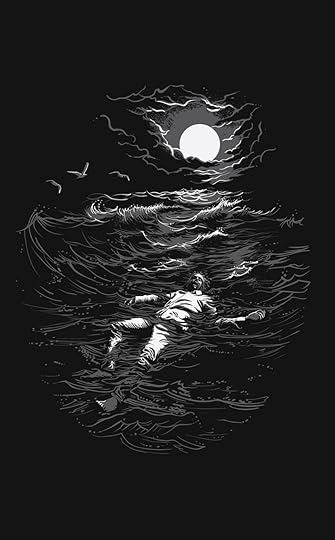
[Illustrating a scene from 'The Upper Berth', Peter Lloyd]
“The Upper Berth” by F. Marion is a very good ghost story with an appealing oceanic setting. Even the largest and most populated ships are still at the mercy of the ocean, so they are inherently a good location for a work of horror. I read the story because it is featured in The Literature of Lovecraft, Vol. 1, among other tales that influenced the American author H.P. Lovecraft.
HPL wrote about “The Upper Berth” in his book-length literary essay Supernatural Horror in Literature. In the introduction, HPL expresses that the literature of “cosmic fear” has “always existed, and will always exist,” and creates an “impulse which now then drives writers of totally opposite leanings to try their hand at it in isolated tales” (para. 5). Lovecraft references Charles Dickens, Robert Browning, Henry James, and Crawford among others. In the eighth chapter of the essay, titled The Weird Tradition in America, Lovecraft goes into more detail about Crawford and “The Upper Berth” specifically:
While I didn’t love “The Upper Berth” as much as HPL, it is a well-written story. The ghost - if it even was a ghost - is unique. Crawford does create an effective sense of dread.
Title: “The Upper Berth”
Author: Francis Marion Crawford
Dates: 1886
Genre: Fiction - Short story, horror
Word count: 8,667 words
Date(s) read: 7/19/22-7/20/22
Reading journal entry #217 in 2022
Link to the story: https://www.gutenberg.org/files/22246...
Link to Lovecraft’s essay: https://www.hplovecraft.com/writings/...
Sources:
Fifer, C., & Lackey, C. (2012, September 27). Episode 128 – The Upper Berth. H.P. Lovecraft Literary Podcast
https://www.hppodcraft.com/list/2012/...
Lovecraft, H. P., & Joshi, S. T. (2012). The annotated supernatural horror in literature (second edition). Hippocampus Press. https://www.hplovecraft.com/writings/... (Original work published 1927)
Crawford, F.M. (2021). The upper berth. In H.P. Lovecraft Historical Society (Ed.), The literature of Lovecraft, vol. 1. (S. Branney, Narr.; A. Leman, Narr.) [Audiobook]. HPLHS. https://www.hplhs.org/lol.php (Original work published 1886)
Pillsworth, A.M., & Emrys, R. (2017, February 1). The Horror of Cocktail Parties: F. Marion Crawford’s “The Upper Berth” TOR.COM. https://www.tor.com/2016/08/03/maybe-...
Link to the image: https://petelloydillustration.com/The...
The contents of The Literature of H.P. Lovecraft, Volume 1 are:
"The Adventure of the German Student" by Washington Irving
"The Avenger of Perdóndaris" by Lord Dunsany
"The Bad Lands" by John Metcalfe
"The Black Stone" by Robert E. Howard
The Boats of the "Glen Carrig" by William Hope Hodgson
"Count Magnus" by M.R. James
"The Dead Valley" by Ralph Adams Cram
"The Death Mask" by Henrietta Everett
"The Fall of the House of Usher" by Edgar Allan Poe
"The Ghost of Fear" by H.G. Wells (also called “The Red Room”)
"The Ghostly Kiss" by Lafcadio Hearn
"The Horla" by Guy de Maupassant
"The House and the Brain" by Edward Bulwer-Lytton
"The House of Sounds" by Matthew Phipps Shiel
"Idle Days on the Yann" by Lord Dunsany
"Lot #249" by Arthur Conan Doyle
"The Man-Wolf" by Erckmann-Chatrian
"The Middle Toe of the Right Foot" by Ambrose Bierce
"The Minister's Black Veil" by Nathaniel Hawthorne
"The Monkey's Paw" by W.W. Jacobs
"One of Cleopatra's Nights" by Théophile Gautier
"The Phantom Rickshaw" by Rudyard Kipling
The Place Called Dagon by Herbert Gorman
"Seaton's Aunt" by Walter de la Mare
"The Shadows on the Wall" by Mary E. Wilkins
"A Shop in Go-By Street" by Lord Dunsany
"The Signal-Man" by Charles Dickens
"Skule Skerry" by John Buchan
"The Spider" by Hanns Heinz Ewers
"The Story of a Panic" by E.M. Forster
"The Strange Case of Dr. Jekyll and Mr. Hyde" by Robert Louis Stevenson
"The Tale of Satampra Zeiros" by Clark Ashton Smith
"The Tapestried Chamber" by Sir Walter Scott
"The Upper Berth" by F. Marion Crawford
"The Vampyre" by John Polidori
"The Venus of Ille" by Prosper Mérimée
"The Were Wolf" by Clemence Housman
"What Was It?" by Fitz-James O'Brien
"The White People" by Arthur Machen
"The White Wolf of the Hartz Mountains" by Frederick Marryat
"The Willows" by Algernon Blackwood
"The Yellow Sign" by Robert W. Chambers
"The Yellow Wallpaper" by Charlotte Perkins Gilman
If you want to hear the stories in the order in which they were written, here's a guide.
The Vampyre (1819) - Chapter 46
The Adventure of the German Student (1824) - Chapter 1
The Tapestried Chamber (1828) - Chapter 44
The Minister's Black Veil (1836) - Chapter 25
The Venus of Ille (1837) - Chapter 47
The White Wolf of the Hartz Mountains (1839) - Chapter 51
The Fall of the House of Usher (1839) - Chapter 13
What Was It? (1859) - Chapter 49
The House and the Brain (1859) - Chapter 17
The Signal-Man (1866) - Chapter 37
The Man-Wolf (1876) - Chapters 21-23
The Ghostly Kiss (1880) - Chapter 15
One of Cleopatra's Nights (1882)
The Upper Berth (1886)
The Strange Case of Dr. Jekyll and Mr. Hyde (1886)
The Horla (1887)
The Phantom Rickshaw (1888)
The Middle Toe of the Right Foot (1891)
Lot #249 (1892)
The Yellow Wallpaper (1892)
The Ghost of Fear (1894) - also called The Red Room
The Yellow Sign (1895)
The Dead Valley (1895)
The Were-Wolf (1896)
The Monkey's Paw (1902)
The Shadows on the Wall (1903)
Count Magnus (1904)
The White People (1904)
The Willows (1907)
The Boats of the "Glen Carrig" (1907)
Idle Days on the Yann (1910)
The Story of a Panic (1911)
The House of Sounds (1911)
A Shop in Go-By Street (1912)
The Avenger of Perdóndaris (1912)
The Spider (1915)
The Death Mask (1920)
The Bad Lands (1920)
Seaton's Aunt (1922)
The Place Called Dagon (1927)
Skule Skerry (1928)
The Tale of Satampra Zeiros (1929)
The Black Stone (1931)
This review was written on 7/22/22
[Illustrating a scene from 'The Upper Berth', Peter Lloyd]
“The Upper Berth” by F. Marion is a very good ghost story with an appealing oceanic setting. Even the largest and most populated ships are still at the mercy of the ocean, so they are inherently a good location for a work of horror. I read the story because it is featured in The Literature of Lovecraft, Vol. 1, among other tales that influenced the American author H.P. Lovecraft.
HPL wrote about “The Upper Berth” in his book-length literary essay Supernatural Horror in Literature. In the introduction, HPL expresses that the literature of “cosmic fear” has “always existed, and will always exist,” and creates an “impulse which now then drives writers of totally opposite leanings to try their hand at it in isolated tales” (para. 5). Lovecraft references Charles Dickens, Robert Browning, Henry James, and Crawford among others. In the eighth chapter of the essay, titled The Weird Tradition in America, Lovecraft goes into more detail about Crawford and “The Upper Berth” specifically:
F. Marion Crawford produced several weird tales of varying quality, now collected in a volume entitled Wandering Ghosts. “For the Blood Is the Life” touches powerfully on a case of moon-cursed vampirism near an ancient tower on the rocks of the lonely South Italian sea-coast. “The Dead Smile” treats of family horrors in an old house and an ancestral vault in Ireland, and introduces the banshee with considerable force. “The Upper Berth”, however, is Crawford’s weird masterpiece; and is one of the most tremendous horror-stories in all literature. In this tale of a suicide-haunted stateroom such things as the spectral salt-water dampness, the strangely open porthole, and the nightmare struggle with the nameless object are handled with incomparable dexterity. (para. 16).
While I didn’t love “The Upper Berth” as much as HPL, it is a well-written story. The ghost - if it even was a ghost - is unique. Crawford does create an effective sense of dread.
Title: “The Upper Berth”
Author: Francis Marion Crawford
Dates: 1886
Genre: Fiction - Short story, horror
Word count: 8,667 words
Date(s) read: 7/19/22-7/20/22
Reading journal entry #217 in 2022
Link to the story: https://www.gutenberg.org/files/22246...
Link to Lovecraft’s essay: https://www.hplovecraft.com/writings/...
Sources:
Fifer, C., & Lackey, C. (2012, September 27). Episode 128 – The Upper Berth. H.P. Lovecraft Literary Podcast
https://www.hppodcraft.com/list/2012/...
Lovecraft, H. P., & Joshi, S. T. (2012). The annotated supernatural horror in literature (second edition). Hippocampus Press. https://www.hplovecraft.com/writings/... (Original work published 1927)
Crawford, F.M. (2021). The upper berth. In H.P. Lovecraft Historical Society (Ed.), The literature of Lovecraft, vol. 1. (S. Branney, Narr.; A. Leman, Narr.) [Audiobook]. HPLHS. https://www.hplhs.org/lol.php (Original work published 1886)
Pillsworth, A.M., & Emrys, R. (2017, February 1). The Horror of Cocktail Parties: F. Marion Crawford’s “The Upper Berth” TOR.COM. https://www.tor.com/2016/08/03/maybe-...
Link to the image: https://petelloydillustration.com/The...
The contents of The Literature of H.P. Lovecraft, Volume 1 are:
"The Avenger of Perdóndaris" by Lord Dunsany
"The Bad Lands" by John Metcalfe
"The Black Stone" by Robert E. Howard
The Boats of the "Glen Carrig" by William Hope Hodgson
"Count Magnus" by M.R. James
"The Dead Valley" by Ralph Adams Cram
"The Death Mask" by Henrietta Everett
"The Ghost of Fear" by H.G. Wells (also called “The Red Room”)
"The Horla" by Guy de Maupassant
"The House of Sounds" by Matthew Phipps Shiel
"Idle Days on the Yann" by Lord Dunsany
"Lot #249" by Arthur Conan Doyle
"The Middle Toe of the Right Foot" by Ambrose Bierce
"The Monkey's Paw" by W.W. Jacobs
"The Phantom Rickshaw" by Rudyard Kipling
The Place Called Dagon by Herbert Gorman
"Seaton's Aunt" by Walter de la Mare
"The Shadows on the Wall" by Mary E. Wilkins
"A Shop in Go-By Street" by Lord Dunsany
"Skule Skerry" by John Buchan
"The Spider" by Hanns Heinz Ewers
"The Story of a Panic" by E.M. Forster
"The Strange Case of Dr. Jekyll and Mr. Hyde" by Robert Louis Stevenson
"The Tale of Satampra Zeiros" by Clark Ashton Smith
"The Were Wolf" by Clemence Housman
"The White People" by Arthur Machen
"The Willows" by Algernon Blackwood
"The Yellow Sign" by Robert W. Chambers
"The Yellow Wallpaper" by Charlotte Perkins Gilman
If you want to hear the stories in the order in which they were written, here's a guide.
The Adventure of the German Student (1824) - Chapter 1
The Tapestried Chamber (1828) - Chapter 44
The Minister's Black Veil (1836) - Chapter 25
The Venus of Ille (1837) - Chapter 47
The White Wolf of the Hartz Mountains (1839) - Chapter 51
The Fall of the House of Usher (1839) - Chapter 13
What Was It? (1859) - Chapter 49
The House and the Brain (1859) - Chapter 17
The Signal-Man (1866) - Chapter 37
The Man-Wolf (1876) - Chapters 21-23
The Ghostly Kiss (1880) - Chapter 15
One of Cleopatra's Nights (1882)
The Upper Berth (1886)
The Strange Case of Dr. Jekyll and Mr. Hyde (1886)
The Horla (1887)
The Phantom Rickshaw (1888)
The Middle Toe of the Right Foot (1891)
Lot #249 (1892)
The Yellow Wallpaper (1892)
The Ghost of Fear (1894) - also called The Red Room
The Yellow Sign (1895)
The Dead Valley (1895)
The Were-Wolf (1896)
The Monkey's Paw (1902)
The Shadows on the Wall (1903)
Count Magnus (1904)
The White People (1904)
The Willows (1907)
The Boats of the "Glen Carrig" (1907)
Idle Days on the Yann (1910)
The Story of a Panic (1911)
The House of Sounds (1911)
A Shop in Go-By Street (1912)
The Avenger of Perdóndaris (1912)
The Spider (1915)
The Death Mask (1920)
The Bad Lands (1920)
Seaton's Aunt (1922)
The Place Called Dagon (1927)
Skule Skerry (1928)
The Tale of Satampra Zeiros (1929)
The Black Stone (1931)
*The difference between a short story, novelette, novella, and a novel: https://owlcation.com/humanities/Diff...
Vignette, prose poem, flash fiction: 53 - 1,000 words
Short Stories: 1,000 - 7,500
Novelettes: 7,500 - 17,000
Novellas: 17,000 - 40,000
Novels: 40,000 + words
This review was written on 7/22/22

May 10, 2022
This was my second read of this short story. I enjoyed it just as much on this second read. It's a very creepy nautical story. It's the classic haunted house story, only the haunted house is the ship. The description of the "dead thing" in the upper berth was incredibly visceral and eerie.

July 26, 2021
F. Marion Crawford's "Man Overboard!" is a masterpiece of seafaring short horror fiction, and so I thought this story--another nautical episode--would be as good as the previous. This wasn't the case, but it does come close. The main critique I have is that it doesn't contain the atmosphere of the other story--in my mind, he doesn't use the odd occurrences of cabin 105 to bring that chilling atmosphere home, even as we read of things that could have added it (the warning sea water smell and groaning are a good example of this). Regardless, the language he uses to convey information is superb, and his characterization of the narrator--his dislike for certain people, his internal feelings--adds an extra touch; I liked the ghost, which is something akin to a cold, slimy, sea-washed corpse with incredible strength and a death-wish; and the attempts at atmosphere, if I don't think the component parts come together fully, still creates a lingering sense of a particularly oceanic haunting.
Thematically, the story seems to be about science and the supernatural, but--unlike other stories--it positions the scientist (in any case, the doctor) as the one who wishes to hide from this other knowledge and the gentleman adventurer as the one who will figure out the truth of the matter. Both the captain and the gentleman, by the end, realize their mistake in investigating the mystery (the gentleman gaining a broken arm for his trouble), and learn, as the doctor fittingly advises, not to "'fiddle about with ghosts and things.'"
Thematically, the story seems to be about science and the supernatural, but--unlike other stories--it positions the scientist (in any case, the doctor) as the one who wishes to hide from this other knowledge and the gentleman adventurer as the one who will figure out the truth of the matter. Both the captain and the gentleman, by the end, realize their mistake in investigating the mystery (the gentleman gaining a broken arm for his trouble), and learn, as the doctor fittingly advises, not to "'fiddle about with ghosts and things.'"

August 6, 2020
The first part about bored men at a gathering before one of them told a ghostly story did not do much for the story in my opinion. If the author had omitted this or made it shorter, it would probably have been better for the story as a whole.
But once we got into this story about the man meeting a ghost, the story became engaging. I couldn't put the book down even though I read at midnight and knew well that this could be a somewhat creepy one. I enjoyed the way the author described the whole experience of the man who met the ghost.
This was perhaps one of the more horrifying tales in the Classic Tales of Horror compilation.
But once we got into this story about the man meeting a ghost, the story became engaging. I couldn't put the book down even though I read at midnight and knew well that this could be a somewhat creepy one. I enjoyed the way the author described the whole experience of the man who met the ghost.
This was perhaps one of the more horrifying tales in the Classic Tales of Horror compilation.

August 1, 2021
The short story “The Upper Berth” by American writer F. Marion Crawford tells a story that happened with the narrator while he was sailing on the Kamchatka ship.
The narrator bought a ticket for a place in cabin number 105. As it turned out, two people had already committed suicide before him. On the very first night, a man who also happened to be there and occupied the upper shelf (above the narrator) suddenly ran out into the corridor and never returned ... And no one saw him again ...
Despite all the prejudice, the narrator decided to find out the secret of the 105th cabin ...
This is the link to the text of the story:
http://gutenberg.net.au/ebooks06/0604...
The narrator bought a ticket for a place in cabin number 105. As it turned out, two people had already committed suicide before him. On the very first night, a man who also happened to be there and occupied the upper shelf (above the narrator) suddenly ran out into the corridor and never returned ... And no one saw him again ...
Despite all the prejudice, the narrator decided to find out the secret of the 105th cabin ...
This is the link to the text of the story:
http://gutenberg.net.au/ebooks06/0604...

July 16, 2020
A well-constructed nautical ghost story, set on a "modern" steamship in the most isolated place on Earth: the middle of the Atlantic ocean in the days before radio. I'm not sure the opening frame-narrative was necessary, but it lends the tale the feel of an urban legend ("this happened to a friend of a friend of mine"). The story takes its time with building suspense; for the first chapter or two, it's not even clear that anything unusual is happening. But the story redeems itself in the end, with a suitably frightening confrontation with the inexplicable and sinister.

March 8, 2021
https://archive.org/details/WeirdTale...
https://www.gutenberg.org/ebooks/22246
Weird Tales reprint of a short story first published in The Broken Shaft: Tales in Mid-Ocean, the 1886 issue of Unwin’s Christmas Annual. There's a couple of paragraphs edited out at the beginning of the story, but it helps adding to the suspense and surprise.
https://www.tor.com/2017/02/01/the-ho...
https://www.gutenberg.org/ebooks/22246
Weird Tales reprint of a short story first published in The Broken Shaft: Tales in Mid-Ocean, the 1886 issue of Unwin’s Christmas Annual. There's a couple of paragraphs edited out at the beginning of the story, but it helps adding to the suspense and surprise.
https://www.tor.com/2017/02/01/the-ho...
Displaying 1 - 30 of 87 reviews