

What do you think?

The Perfect King: The Life of Edward III, Father of the English Nation
He ordered his uncle to be beheaded, and usurped his father’s throne. Yet under his rule, England experienced its longest period of domestic peace in the Middle Ages. In this first full biography of Edward III (1327-77), he emerges as the father of the English nation and the English people.
536 pages, Hardcover
First published March 28, 2006
About the author
Ian Mortimer
37 books1,516 followersAKA James Forrester.
Dr Ian Mortimer is a historian and novelist, best known for his Time Traveller's Guides series. He has BA, MA, PhD and DLitt degrees from the University of Exeter and UCL. He is a Fellow of the Royal Historical Society and a Fellow of the Society of Antiquaries, and was awarded the Alexander Prize by the Royal Historical Society in 2004. Home is the small Dartmoor town of Moretonhampstead, which he occasioanlly introduces in his books. His most recet book, 'Medieval Horizons' looks at how life changed between the eleventh and sixteenth centuries.
He also writes in other genres: his fourth novel 'The Outcasts of Time' won the 2018 Winston Graham Prize for historical fiction. His earlier trilogy of novels set in the 1560s were published under his middle names, James Forrester. In 2017 he wrote 'Why Running Matters' - a memoir of running in the year he turned fifty.
At present he is concentrating on writing history books that have experimental perspectives on the past. One example is a study of England as it would have appeared to the people living in his house over the last thousand years. This is provisionally entitled 'The History of England through the Windows of an Ordinary House'. It is due for completion in December 2024 and publication in 2026.
Dr Ian Mortimer is a historian and novelist, best known for his Time Traveller's Guides series. He has BA, MA, PhD and DLitt degrees from the University of Exeter and UCL. He is a Fellow of the Royal Historical Society and a Fellow of the Society of Antiquaries, and was awarded the Alexander Prize by the Royal Historical Society in 2004. Home is the small Dartmoor town of Moretonhampstead, which he occasioanlly introduces in his books. His most recet book, 'Medieval Horizons' looks at how life changed between the eleventh and sixteenth centuries.
He also writes in other genres: his fourth novel 'The Outcasts of Time' won the 2018 Winston Graham Prize for historical fiction. His earlier trilogy of novels set in the 1560s were published under his middle names, James Forrester. In 2017 he wrote 'Why Running Matters' - a memoir of running in the year he turned fifty.
At present he is concentrating on writing history books that have experimental perspectives on the past. One example is a study of England as it would have appeared to the people living in his house over the last thousand years. This is provisionally entitled 'The History of England through the Windows of an Ordinary House'. It is due for completion in December 2024 and publication in 2026.
Ratings & Reviews
Friends & Following
Create a free account to discover what your friends think of this book!
Community Reviews
Displaying 1 - 30 of 249 reviews

August 13, 2021
Ian Mortimer has written a very comprehensive and fascinating book about the life and reign of King Edward III of England. I read the ebook format and found it to be chock-full of not only wonderful information but a plethora of research via: 8 Appendices, Genealogical Tables of the English Royal Family, pictures and notes.
I really knew nothing about Edward III prior to this read, but I am in awe of what he accomplished during his reign. Besides his being a military genius and fierce warrior, Edward worked tirelessly to keep war from reaching his country’s shores while establishing statutes with Parliament to bring about some balance (in Medieval times) for his common subjects. Edward also was the catalyst for the invention of a clock, the standardization of weights and measures, and the introduction of piping for hot and cold water within his bathroom. During peace time, Edward implemented a surge of fine architecture and building of which sadly only Windsor castle remains. Edward III believed in chivalry, loyalty to friends and allies, and duty to his country.
EDWARD III: THE PERFECT KING is a book I recommend!
I really knew nothing about Edward III prior to this read, but I am in awe of what he accomplished during his reign. Besides his being a military genius and fierce warrior, Edward worked tirelessly to keep war from reaching his country’s shores while establishing statutes with Parliament to bring about some balance (in Medieval times) for his common subjects. Edward also was the catalyst for the invention of a clock, the standardization of weights and measures, and the introduction of piping for hot and cold water within his bathroom. During peace time, Edward implemented a surge of fine architecture and building of which sadly only Windsor castle remains. Edward III believed in chivalry, loyalty to friends and allies, and duty to his country.
EDWARD III: THE PERFECT KING is a book I recommend!

May 24, 2012
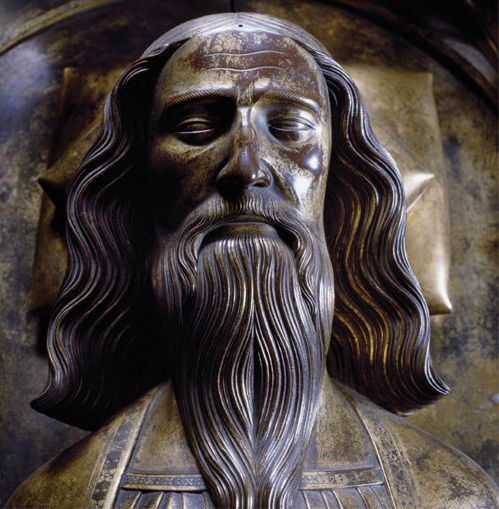
I like being able to put faces to people.
In my current exploration of the Hundred Years war it was time I began focusing a bit closer to a few of its actors. Individualizing may help me get a more defined picture of that long and complex period.
Of course, portraiture as we understand it today had not developed yet. People lived with images of types, and a King was an iconic type. A death mask was taken of Edward III and it was used later for his effigy. The sculpture seems to follow the basic features of his death mask, but the symmetrical wavy hair and beard makes one suspect that art was given preeminence over nature.

If not images, at least we have texts, and Mortimer’s account has certainly helped me to form my own mental image of this monarch. From the first pages my attention was engaged by Mortimer’s brilliant exposé of why we cannot judge people from past history using our own conventions. And it seems Edward’s notoriety has suffered throughout time. From his immediate posterity when he was considered an Arthurian paragon to the deprecation he suffered in the pens from various 19C historians.
Mortimer has given the subtitle of Perfect King, not because he is necessarily passing judgment –but I will return to this—but because the notion of the ‘perfect king’ is what Edward wanted to be. With an Arthurian idealism and the negative example of his father Edward II, our king strove to fulfil his vision of kingship.

He certainly was a fascinating character. During his long reign he managed to put England into some good shape while also trying to undo the shape of France’s borders. For after all, he is considered to have started the long bellicose conflict that would last longer than the years of its appellation. Mortimer is not the only one to understand this conflict as the result of a mixture of causes even though he thinks that it was the personal rivalry between Edward and Philippe of Valois that was the main propeller of the war.

Foremost, Edward was a soldier, and the choice of his bowl helmet as cover to the book, provides me probably with a more suitable face than his tomb effigy. And if his soldiery was undoubtedly his strength, it may have also been his weakness. As he lived up to a relatively advanced age for his time and his reign was long, when he no longer could exert his military abilities things began to fail. But may be part of the problem was the system. Hereditary monarchies that also exclude the female line, and in particular in a time before antibiotics and when pests could spread at the speed of the wind, have a very low success expectancy. And in this poor Edward reminds me of the poor Catholic Kings of Spain. All their military, political, economic work could be undone by sheer bad luck with their children. Even though Edward had twelve children out of his happy marriage to Philippa of Hainault, none of them could directly succeed him to the throne. Like it happened to the joint crowns of Isabel & Fernando, his crown passed on to a grandchild.

Nonetheless, he will remain as the monarch responsible for the triumph of Crécy and Calais, and under his guidance that of his son the Black Prince for the battle of Poitiers and for the extraordinary capture of the King of France, Jean II. Edward’s Order of the Garter became the model for later such chivalric pursuits, and his patronage of architecture, with his works on the Windsor Castle, and of literature, with the impetus he gave to the maturation of the insular vernacular and the incorporation of Chaucer in his court, will remain some of his most applauded achievements. Even his much criticized infatuation with the vilified Alice Perrers, is an incident that will be more willingly forgiven in today’s world.
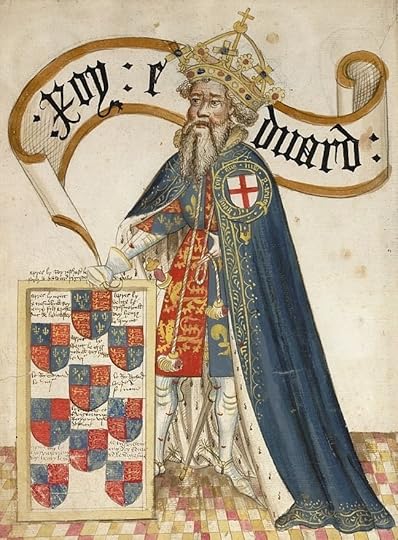
As Mortimer has set himself to restore the 19C vision and has focused on examining the extent to which Edward succeeded in approaching his goal of Perfection, Mortimer seems to be a bit too taken over by the task. Even though I enjoyed this read thoroughly, and plan to read more of his works, in this volume Mortimer seems just a tad too willing to excuse any possible failings, and to shine too bright a light over Edward’s chivalric figure, to the point that in my search for the face of the man, I sometimes felt I was looking at Mortimer’s Chinese shadows. I could list many examples, but a striking one is Edward’s crossing of the Somme being compared with Moses’s of the Red Sea.
For those more familiar with this period than I am, this book will also appeal because of Mortimer’s thesis on when and how Edward’s father died. This notion he defended in an earlier book The Greatest Traitor: The Life of Sir Roger Mortimer, Ruler of England 1327-1330, but is developed again here and supplemented by one of the various Appendixes with more historical data.
This reading then did succeed in drawing some sort of individualized features of this medieval actor. The strength of the text can be covered with the visual appearance of of medieval illuminations.


May 21, 2021
Undoing a Mess
This is one of the best medieval history books. Ian Mortimer is a superb historian and is certainly up there with the best. His writing style is engaging flows effortlessly and in this book he really opens up one of the greatest kings in English history, Edward III (1327-1377). Mortimer brings to life a king who, despite being less celebrated than his grandson Richard II or his ancestor Henry V, arguably shaped the course of English history more profoundly than either.
Mortimer begins by raising an interesting and controversial debate around Edward II’s death which is ultimately hard to argue with, as are so many of his other points, which I will not list here at risk of spoiling the book. It ultimately as a great winning style of excellent subject matter of a great man who overcame a difficult start to his reign, overcoming the domineering presence of his mother Isabella and ousting her lover Sir Roger Mortimer. Mortimer skilfully narrates this early period is skilfully showing how the young king deftly wrested control from his mother and her cohort, setting the stage for his long and largely successful reign.
Mortimer’s portrait of Edward III is that of a king who epitomised medieval kingship. The author does an excellent job of highlighting Edward's strengths: his military prowess, his chivalric ideals, and his ability to inspire loyalty and respect among his subjects. The narrative covers Edward's significant achievements, such as his victories in the Hundred Years' War, particularly the Battle of Crécy and the siege of Calais, as well as his establishment of the Order of the Garter, which Mortimer argues was part of Edward’s effort to foster a sense of national identity and unity.
One of The Perfect King’s greatest strengths is Mortimer’s ability to contextualise Edward’s reign within the broader European landscape, showing how his ambitions and policies influenced, and were influenced by, events beyond England’s borders. The analysis of Edward’s relationship with his contemporaries, such as Philip VI of France and the various Scottish kings, is particularly illuminating.
However, Mortimer is not uncritical of his subject. He does not shy away from examining the darker aspects of Edward’s reign, such as the brutal suppression of the Scots and the financial strains his continuous wars placed on the country. The author also delves into Edward’s later years, where the king’s effectiveness waned, and his once brilliant reign was marred by the rise of his unscrupulous son, the Black Prince, and the influence of his ambitious mistress, Alice Perrers. Mortimer’s writing style is engaging, making the book accessible to both scholars and general readers interested in medieval history. He skillfully combines detailed historical analysis with narrative flair, making complex political and military events easy to follow.
This is truly a superb biography that offers a well-rounded and insightful examination of Edward III. Ian Mortimer succeeds in presenting Edward not just as a medieval monarch, but as a pivotal figure in the development of the English nation. In his rise of power, he stabilised his kingdom and became strong enough to his challenge of the King of France and successes on the battlefield. The tragedy is that this started the 100 years war and Edward loved too long to be remembered as ‘the great.’ Ultimately his dynasty fell, but all monarchs since have claimed legitimacy is one sense or another through ancestry to him. This should help reiterate the importance of Edward III and why he should be taught in English schools today. If you are of English heritage, the last chapter will be also of extreme fascination to you too!
This is one of the best medieval history books. Ian Mortimer is a superb historian and is certainly up there with the best. His writing style is engaging flows effortlessly and in this book he really opens up one of the greatest kings in English history, Edward III (1327-1377). Mortimer brings to life a king who, despite being less celebrated than his grandson Richard II or his ancestor Henry V, arguably shaped the course of English history more profoundly than either.
Mortimer begins by raising an interesting and controversial debate around Edward II’s death which is ultimately hard to argue with, as are so many of his other points, which I will not list here at risk of spoiling the book. It ultimately as a great winning style of excellent subject matter of a great man who overcame a difficult start to his reign, overcoming the domineering presence of his mother Isabella and ousting her lover Sir Roger Mortimer. Mortimer skilfully narrates this early period is skilfully showing how the young king deftly wrested control from his mother and her cohort, setting the stage for his long and largely successful reign.
Mortimer’s portrait of Edward III is that of a king who epitomised medieval kingship. The author does an excellent job of highlighting Edward's strengths: his military prowess, his chivalric ideals, and his ability to inspire loyalty and respect among his subjects. The narrative covers Edward's significant achievements, such as his victories in the Hundred Years' War, particularly the Battle of Crécy and the siege of Calais, as well as his establishment of the Order of the Garter, which Mortimer argues was part of Edward’s effort to foster a sense of national identity and unity.
One of The Perfect King’s greatest strengths is Mortimer’s ability to contextualise Edward’s reign within the broader European landscape, showing how his ambitions and policies influenced, and were influenced by, events beyond England’s borders. The analysis of Edward’s relationship with his contemporaries, such as Philip VI of France and the various Scottish kings, is particularly illuminating.
However, Mortimer is not uncritical of his subject. He does not shy away from examining the darker aspects of Edward’s reign, such as the brutal suppression of the Scots and the financial strains his continuous wars placed on the country. The author also delves into Edward’s later years, where the king’s effectiveness waned, and his once brilliant reign was marred by the rise of his unscrupulous son, the Black Prince, and the influence of his ambitious mistress, Alice Perrers. Mortimer’s writing style is engaging, making the book accessible to both scholars and general readers interested in medieval history. He skillfully combines detailed historical analysis with narrative flair, making complex political and military events easy to follow.
This is truly a superb biography that offers a well-rounded and insightful examination of Edward III. Ian Mortimer succeeds in presenting Edward not just as a medieval monarch, but as a pivotal figure in the development of the English nation. In his rise of power, he stabilised his kingdom and became strong enough to his challenge of the King of France and successes on the battlefield. The tragedy is that this started the 100 years war and Edward loved too long to be remembered as ‘the great.’ Ultimately his dynasty fell, but all monarchs since have claimed legitimacy is one sense or another through ancestry to him. This should help reiterate the importance of Edward III and why he should be taught in English schools today. If you are of English heritage, the last chapter will be also of extreme fascination to you too!

January 24, 2011
Very good but one big flaw for me that stopped the 5 stars.
It is well written; lucid, logical and engaging. As a book on the life of a King, it is certainly not social history but then unlike some, I have time for both. A bit of King and a bit of dirt in equal measure does me fine.
The subject himself is rather impressive. Edward 1 is still my favourite warrior King but his grandson certainly gives him a run for his Italian lucre; he even founded the whole Honi Soit qui mal y pense thing which is something Gramps (and Great-Gramps) would have loved.
I don't like violence as a rule (or even at all) but you have to admire the sheer energy of these guys.
A typical Edward week-planner seems to be:
Monday: Execute one or half a dozen of my enemies.
Tuesday: Defeat French (on land)
Wednesday: Build (Big) Castle
Thursday: Make new laws (Pillage in the afternoon, weather permitting)
Friday: Defeat French (at sea)
Saturday: Chase Scots (or Irish if Scots are away) around
Sunday: Pilgrimage to atone for sins (just assuming there are some ;-))
Apparently, it is labelled for the "non-academic"; having read academic and non-academic history books this usually primarily means "easier to read". Of course, it could also mean that it has a narrative rather than a theme-based approach but this to me would seem like a peculiar way to decide on the academic merits of a work. It could also mean "this guy does not work for a respected academic institution"; once again this would seem like a form of the argument "you are wrong because of who you are not what you say".
It could just be snobbery.
Given that this book is clearly well-researched, has caused debate among academics and includes copious notes and primary source material then if I were the author then I would certainly be irritated by the label.
So my problem?
All that defensive stuff about Edward 11 not dying. I mean, I don't say he didn't survive but the author needs to make his point and move on rather than getting so worked up on it. Also, given that it is hard to know for sure; perhaps a little room for argument the other way? It is a more rational stance.
It's rather like the like the American stint in Martin Chuzzlewit; ruins an otherwise very pleasant read.
It is well written; lucid, logical and engaging. As a book on the life of a King, it is certainly not social history but then unlike some, I have time for both. A bit of King and a bit of dirt in equal measure does me fine.
The subject himself is rather impressive. Edward 1 is still my favourite warrior King but his grandson certainly gives him a run for his Italian lucre; he even founded the whole Honi Soit qui mal y pense thing which is something Gramps (and Great-Gramps) would have loved.
I don't like violence as a rule (or even at all) but you have to admire the sheer energy of these guys.
A typical Edward week-planner seems to be:
Monday: Execute one or half a dozen of my enemies.
Tuesday: Defeat French (on land)
Wednesday: Build (Big) Castle
Thursday: Make new laws (Pillage in the afternoon, weather permitting)
Friday: Defeat French (at sea)
Saturday: Chase Scots (or Irish if Scots are away) around
Sunday: Pilgrimage to atone for sins (just assuming there are some ;-))
Apparently, it is labelled for the "non-academic"; having read academic and non-academic history books this usually primarily means "easier to read". Of course, it could also mean that it has a narrative rather than a theme-based approach but this to me would seem like a peculiar way to decide on the academic merits of a work. It could also mean "this guy does not work for a respected academic institution"; once again this would seem like a form of the argument "you are wrong because of who you are not what you say".
It could just be snobbery.
Given that this book is clearly well-researched, has caused debate among academics and includes copious notes and primary source material then if I were the author then I would certainly be irritated by the label.
So my problem?
All that defensive stuff about Edward 11 not dying. I mean, I don't say he didn't survive but the author needs to make his point and move on rather than getting so worked up on it. Also, given that it is hard to know for sure; perhaps a little room for argument the other way? It is a more rational stance.
It's rather like the like the American stint in Martin Chuzzlewit; ruins an otherwise very pleasant read.

October 25, 2014
History to some may be all dates of events. To others, it is about the great powers and conflicts. To some, it is about how we got to where we are. For historiographers, those who study the way history is written, Edward the Third may be the most praised and most vilified king in English history. Why should scholars take such different views?
Edward the Third aspired to be the "perfect king" according to Ian Mortimer. This biography charts how he came to that aspiration and how well he succeeded. Mortimer starts with a consideration of the historiography of this Edward and ends up choosing to study his character rather than just his wars, battles and events of the kingship.
Mortimer is mining for diamonds and, much more than I expected, he succeeds. We come to know how he garnered such high praise during his lifetime (which could have been a lot shorter if mom, Queen Isabella, and her lover, Roger Mortimer, had maintained control of the crown). They had acted as regents for Edward during the first four years of his rule. His "friends" were able to rescue him from these regents and, thus, topple their rule. Edward ruled for fifty years and he was, generally, a delight to his subjects from nobility to the common folk. Mortimer quotes Joshua Barnes who wrote of Edward's reign as follows: "Fortunate beyond measure...wise and provident in counsel, well-learned in law, history, humanity and divinity....He was of quick apprehension, judicious and skillful in nature, elegant in speech, sweet, familiar and affable in behavior; stern to the obstinate and meek to the humble. Magnanimous and courageous above all the princes of his days; apt for war but a lover of peace.......He was of an exalted, glorious, and truly royal spirit..."
Yet 200 years later, during the Victorian Age, the judgment had changed. William Longman concluded: "...Courage he possessed in an eminent degree, however, with no small amount of chivalrous rashness...That he was unscrupulously despotic is clear enough...and...he was cruel and revengeful is far from doubtful..."
Mortimer gives us the full man, rather than just a two-dimensional portrait. We learn of the code of chivalry, which was the moral touchstone of all the kingdoms of Europe. We can appreciate that, as England emerged as a nation state, Edward was strong and able enough to be not only "head of state, he was his own prime minister, his own foreign minister and his own field marshal. He was his own lawmaker and justice." Any one of these tasks could have been a full-time job.
From the power of prophecy, to the oil of anointment, Mortimer takes us through the significant beliefs of this era. We come to understand both the man and the period he lived in. Even puzzling choices such as his ignoring of the Black Death on England's doorstep are not left unexplained. "It was not so much a strategy of putting his head in the sand as one of not deserting his royal duties. As a king, he was expected to be seen, give audiences, attend parliaments, provide leadership and hear certain law cases. He was expected to be lavish in his hospitality and his spending, the money spent being employment for many. To fail in these duties would be to give in to the plague."
There was much to learn in this book. Mortimer deserves praise for how he manages to provide it in manner that is neither dry nor dull.
Edward the Third aspired to be the "perfect king" according to Ian Mortimer. This biography charts how he came to that aspiration and how well he succeeded. Mortimer starts with a consideration of the historiography of this Edward and ends up choosing to study his character rather than just his wars, battles and events of the kingship.
Mortimer is mining for diamonds and, much more than I expected, he succeeds. We come to know how he garnered such high praise during his lifetime (which could have been a lot shorter if mom, Queen Isabella, and her lover, Roger Mortimer, had maintained control of the crown). They had acted as regents for Edward during the first four years of his rule. His "friends" were able to rescue him from these regents and, thus, topple their rule. Edward ruled for fifty years and he was, generally, a delight to his subjects from nobility to the common folk. Mortimer quotes Joshua Barnes who wrote of Edward's reign as follows: "Fortunate beyond measure...wise and provident in counsel, well-learned in law, history, humanity and divinity....He was of quick apprehension, judicious and skillful in nature, elegant in speech, sweet, familiar and affable in behavior; stern to the obstinate and meek to the humble. Magnanimous and courageous above all the princes of his days; apt for war but a lover of peace.......He was of an exalted, glorious, and truly royal spirit..."
Yet 200 years later, during the Victorian Age, the judgment had changed. William Longman concluded: "...Courage he possessed in an eminent degree, however, with no small amount of chivalrous rashness...That he was unscrupulously despotic is clear enough...and...he was cruel and revengeful is far from doubtful..."
Mortimer gives us the full man, rather than just a two-dimensional portrait. We learn of the code of chivalry, which was the moral touchstone of all the kingdoms of Europe. We can appreciate that, as England emerged as a nation state, Edward was strong and able enough to be not only "head of state, he was his own prime minister, his own foreign minister and his own field marshal. He was his own lawmaker and justice." Any one of these tasks could have been a full-time job.
From the power of prophecy, to the oil of anointment, Mortimer takes us through the significant beliefs of this era. We come to understand both the man and the period he lived in. Even puzzling choices such as his ignoring of the Black Death on England's doorstep are not left unexplained. "It was not so much a strategy of putting his head in the sand as one of not deserting his royal duties. As a king, he was expected to be seen, give audiences, attend parliaments, provide leadership and hear certain law cases. He was expected to be lavish in his hospitality and his spending, the money spent being employment for many. To fail in these duties would be to give in to the plague."
There was much to learn in this book. Mortimer deserves praise for how he manages to provide it in manner that is neither dry nor dull.
September 3, 2025
if there ever was a more fit King, he was not a King of England.
Incredible detail and research! Edward III was not a perfect king, rather, for the time period he most exemplified the notion of kingship and power demonstrated through his personality. He also probably did the least harm of any Plantagenet king.
At times, more information than I wanted. I am most interested in the story of Edward II's fake death, and how that impacted his son. The author presents all the modern evidence of Edward II's survival after his staged funeral. Edward III was very much an arrogant warmonger who claimed the throne of France, and did not prevent his army from raping and pillaging.
The Black Plague took 3 of his daughters; and his son, the Black Prince died at age 46 after spending 6 years infirm from battle injuries. The Black Prince's son--Richard II did not carry out the legacy of his grandfather when he became King, but that's a story for another history book.
I really enjoyed this, it was very engaging. I started to lose interest when the book went over his ongoing war with the French. It's just so incredibly detailed, and didn't connect me to his personal story. I am already looking for more books by the same author to continue piecing the puzzles together. Next: The Greatest Traitor: The Life of Sir Roger Mortimer, 1st Earl of March Ruler of England 1327-1330
Incredible detail and research! Edward III was not a perfect king, rather, for the time period he most exemplified the notion of kingship and power demonstrated through his personality. He also probably did the least harm of any Plantagenet king.
At times, more information than I wanted. I am most interested in the story of Edward II's fake death, and how that impacted his son. The author presents all the modern evidence of Edward II's survival after his staged funeral. Edward III was very much an arrogant warmonger who claimed the throne of France, and did not prevent his army from raping and pillaging.
The Black Plague took 3 of his daughters; and his son, the Black Prince died at age 46 after spending 6 years infirm from battle injuries. The Black Prince's son--Richard II did not carry out the legacy of his grandfather when he became King, but that's a story for another history book.
I really enjoyed this, it was very engaging. I started to lose interest when the book went over his ongoing war with the French. It's just so incredibly detailed, and didn't connect me to his personal story. I am already looking for more books by the same author to continue piecing the puzzles together. Next: The Greatest Traitor: The Life of Sir Roger Mortimer, 1st Earl of March Ruler of England 1327-1330

July 30, 2017
Dr. Mortimer has once again written an excellent account of a figure in Medieval Britain. In this narrative, the author tells us of the one of the Great Kings of England – Edward III. In his preface Dr. Mortimer gives a scathing attack on the three major biographies of Edward written in the Victorian era. He takes exception to there faulting Edward because he didn’t live up to Victorian ideal. They fault him for being a “War Monger” and not being faithful to his wife among other criticisms. Dr. Mortimer point of view is that you have to judge a historical figure by the societal norms of his day not yours. The rest of the narrative goes on to explain why he was a great king by the standards of HIS day and how close he came to being a perfect king by those standards.
The author really starts the narrative by looking the relationship between Edward and his father, Edward II and the role he played in the struggle between his father and his father's wife and queen, Isabella of France. Dr. Mortimer also looks Edward IIs legendary death at Berkley Castle after being defeated by Isabella and her lover Roger Mortimer. As a result Edward III was installed as King as a minor with Mortimer as Regent and head of government. The author spends considerable pages, including a fairly lengthy appendix, explaining why he thinks that Edward II escaped and fled to the Continent dying sometime after 1336.
The author then turns his attention to how and why Edward took power from Mortimer in 1330 and the results. After assuming power Edward secures the northern border with Scotland, defeating the Scots twice in major battles and at the same perfecting the tactics that would become famous in his wars with the French some 10 yrs later.
In looking at Edward the warrior, the author makes a case that he was maybe the greatest commander of his age. In my opinion he was probably the best tactician and a very good strategist. His reputation was also helped in his choice of enemies. The French nobility was steeped in the Chivalric Traditions a play right into his hands. The Welch/English long bowmen massacred the flower of French Nobility at both Crecy and later battles of what became known as the 100 yrs war.
In exploring the causes of the 100 yrs War, Dr. Mortimer looks at Edwards claim to the French throne and the reasons he decided to press the claim at that time. When Edward didn’t come to France to swear fealty in what the French considered a timely manor, Philip, the French King, stripped Edward of his French possessions. As a result of this, Edward decided he has a better claim to the crown than Philip and went to war. Dr. Mortimer's opinion seems to be is that the war was a negotiating ploy and what Edward really wanted was his French possessions outright with out any feudal obligations to the French throne.
In addition to his accomplishments as a warrior, the author looks at Edwards accomplishments as a builder. He cites many building projects undertaken during his reign, unfortunately very few remain. According to Dr. Mortimer, the greatest of his building projects was his castle at Queensborough down stream from London. The author feels this castle was every bit as impressive as his grandfather's Welch castles and was one the first to be build with artillery in mind. Unfortunately the castle was raised during the Civil Wars of the 1640s and only the foundations remain. At the same time Queensborough was being build, Edward also rebuilt the interior of Windsor Castle, again not much of this remains.
Edward’s relations with Parliament are also explored. The author feels that his relationship with the elected representatives set the pattern for all of the monarchs that have succeeded him.
Other topics explore include the effects of the Black Death on both the country and Edward personally. 2 of his daughters died of the plague during the epidemic. His relationship with the Papacy is also explored. To say it was uneasy is to put it mildly. During his reign the Papacy had relocated to Avignon and a Frenchman was seated on the Throne of St. Peter. Edward didn’t believe the Pope could be impartial in judging his claims in France or appoint prelates in England and Wales. The author states that his struggles with and the nature of the relationship between the Papacy and England set a precedent for Henry VIII’s break with Rome some 200 yrs later. Another topic explored is the founding of the Chivalric Order of the Garter and the effect it had on Chivalric orders founded in other countries.
Finally the author looks at his relationship with the women in his life. The main relationship was with his queen - Philippa of Hainault. While this was an arranged marriage, like most noble marriages of the era, the two seemed to have cared for each other. Phillipa and Edward had 13 children, 9 of which reached adulthood including 5 sons – setting the stage for what would become the Wars of the Roses. As Phillipa aged and sickened, the King took a mistress, Alice Perrers. His relationship with her and maybe more importantly her relationship with the nobility is also explored.
All in all I found this a fascinating look at a King whose goal it was to be a perfect King. By his lights and standards I think he came pretty close. If GR allowed this would be a 4.25 star read. The main fault I have with it is the amount of pages Dr. Mortimer spends on the death of Edward II
The author really starts the narrative by looking the relationship between Edward and his father, Edward II and the role he played in the struggle between his father and his father's wife and queen, Isabella of France. Dr. Mortimer also looks Edward IIs legendary death at Berkley Castle after being defeated by Isabella and her lover Roger Mortimer. As a result Edward III was installed as King as a minor with Mortimer as Regent and head of government. The author spends considerable pages, including a fairly lengthy appendix, explaining why he thinks that Edward II escaped and fled to the Continent dying sometime after 1336.
The author then turns his attention to how and why Edward took power from Mortimer in 1330 and the results. After assuming power Edward secures the northern border with Scotland, defeating the Scots twice in major battles and at the same perfecting the tactics that would become famous in his wars with the French some 10 yrs later.
In looking at Edward the warrior, the author makes a case that he was maybe the greatest commander of his age. In my opinion he was probably the best tactician and a very good strategist. His reputation was also helped in his choice of enemies. The French nobility was steeped in the Chivalric Traditions a play right into his hands. The Welch/English long bowmen massacred the flower of French Nobility at both Crecy and later battles of what became known as the 100 yrs war.
In exploring the causes of the 100 yrs War, Dr. Mortimer looks at Edwards claim to the French throne and the reasons he decided to press the claim at that time. When Edward didn’t come to France to swear fealty in what the French considered a timely manor, Philip, the French King, stripped Edward of his French possessions. As a result of this, Edward decided he has a better claim to the crown than Philip and went to war. Dr. Mortimer's opinion seems to be is that the war was a negotiating ploy and what Edward really wanted was his French possessions outright with out any feudal obligations to the French throne.
In addition to his accomplishments as a warrior, the author looks at Edwards accomplishments as a builder. He cites many building projects undertaken during his reign, unfortunately very few remain. According to Dr. Mortimer, the greatest of his building projects was his castle at Queensborough down stream from London. The author feels this castle was every bit as impressive as his grandfather's Welch castles and was one the first to be build with artillery in mind. Unfortunately the castle was raised during the Civil Wars of the 1640s and only the foundations remain. At the same time Queensborough was being build, Edward also rebuilt the interior of Windsor Castle, again not much of this remains.
Edward’s relations with Parliament are also explored. The author feels that his relationship with the elected representatives set the pattern for all of the monarchs that have succeeded him.
Other topics explore include the effects of the Black Death on both the country and Edward personally. 2 of his daughters died of the plague during the epidemic. His relationship with the Papacy is also explored. To say it was uneasy is to put it mildly. During his reign the Papacy had relocated to Avignon and a Frenchman was seated on the Throne of St. Peter. Edward didn’t believe the Pope could be impartial in judging his claims in France or appoint prelates in England and Wales. The author states that his struggles with and the nature of the relationship between the Papacy and England set a precedent for Henry VIII’s break with Rome some 200 yrs later. Another topic explored is the founding of the Chivalric Order of the Garter and the effect it had on Chivalric orders founded in other countries.
Finally the author looks at his relationship with the women in his life. The main relationship was with his queen - Philippa of Hainault. While this was an arranged marriage, like most noble marriages of the era, the two seemed to have cared for each other. Phillipa and Edward had 13 children, 9 of which reached adulthood including 5 sons – setting the stage for what would become the Wars of the Roses. As Phillipa aged and sickened, the King took a mistress, Alice Perrers. His relationship with her and maybe more importantly her relationship with the nobility is also explored.
All in all I found this a fascinating look at a King whose goal it was to be a perfect King. By his lights and standards I think he came pretty close. If GR allowed this would be a 4.25 star read. The main fault I have with it is the amount of pages Dr. Mortimer spends on the death of Edward II

November 10, 2016
Covers not only Edward as the great warrior king (the "lion" abroad) but as a ruler at home (the "lamb" to his subjects), and also his great building projects - he had hot and cold running water in his bathroom - and his fascination with the new inventions, like clocks. (The title refers to not what Mortimer thinks Edward was, but what his goal was.)
Also makes the argument, well argued, that Edward II did not die in 1327, and that Edward III was aware of it.
Well-written and recommended.
Also makes the argument, well argued, that Edward II did not die in 1327, and that Edward III was aware of it.
Well-written and recommended.

December 10, 2008
Here is the finest history book that I've read. Not 5 but 10 star. On a par with the Oxford History's 'Anglo Saxon England' by Sir Frank Stenton. Published 2006. The life of Edward III was monumental. (1312-77). From page 1 Ian Mortimer takes us through a brilliant roller coaster that was the reign of this perfect king.
What happened to Edward II is a real eye opener. The escape from Roger Mortimer is the stuff of Hollywood movies. The chivalric warrior who builds England's forces into the greatest war machine in the Europe of his day, culminating in Crecy. He provided the homeland with sixty years of peace and growing prosperity, only blighted by the Black Death.
Edward introduced the Knights of the Garter, the SAS of their day. He gave England it's patron saint, and national flag. He introduced the English language into Parliament and the courts. Encouraged the growth of the Commons, founded a Cambridge college, maintained libraries and patronised Italian art.
Underneath the armour was a compassionate, faithful and merciful man. A devoted figure to his wife, family and friends. There are so many great stories in this book, everyone should know about the life of the father of the English nation!
What happened to Edward II is a real eye opener. The escape from Roger Mortimer is the stuff of Hollywood movies. The chivalric warrior who builds England's forces into the greatest war machine in the Europe of his day, culminating in Crecy. He provided the homeland with sixty years of peace and growing prosperity, only blighted by the Black Death.
Edward introduced the Knights of the Garter, the SAS of their day. He gave England it's patron saint, and national flag. He introduced the English language into Parliament and the courts. Encouraged the growth of the Commons, founded a Cambridge college, maintained libraries and patronised Italian art.
Underneath the armour was a compassionate, faithful and merciful man. A devoted figure to his wife, family and friends. There are so many great stories in this book, everyone should know about the life of the father of the English nation!

November 20, 2009
A very good biography of England's Edward III. It's well organized and well written, with helpful maps, illustrations and genealogy charts. The author is attempting to restore Edward's reputation as a great king, which he claims lasted for several centuries after Edward's death but was diminished by "politicised" historians in the 18th and 19th centuries.
There's some fascinating history here: the rise of England as a political and military power; the domination of projectile warfare (peasants armed with longbows overwhelming armored knights); the origins of the Hundred Years' War; the development of Parliament and the rise of the commons; the founding of the Order of the Garter.
Mortimer is responsible for popularizing in recent years the theory that Edward II did not die an infamously grisly death in Berkeley Castle in 1327, but escaped and lived on as a recluse for more than a decade after his son assumed the throne. A good bit of the narrative and two appendices are devoted to Edward II and the impact of his secret survival on Edward III.
I suppose it was reasonable for the author to limit the scope of the book, but I was a bit surprised at how little was written about Edward's children. For example, John of Gaunt's entire relationship with Katherine Swynford is allocated a single sentence about the criticism John garnered for his shameless affair with his children's governess. And the author relates that one of Edward's last ceremonial acts was to knight his two ten-year-old grandsons, Richard of Bordeaux and Henry of Bolingbroke, but he doesn't mention a single word about what lies in the future for those two cousins.
Mortimer doesn't speak to this, but I've read commentary before that Edward's family was remarkably stable and happy for a British royal family; that his marriage was a love match and that his children were loyal to him and to each other. Mortimer does point out that Edward seems to have been unusually (for a medieval king) faithful to Philippa, borne out by the fact that no illegitimate children appear until Philippa was practically on her deathbed. (He was also apparently faithful to the notorious Alice Perrers after Philippa's death.)
There's some fascinating history here: the rise of England as a political and military power; the domination of projectile warfare (peasants armed with longbows overwhelming armored knights); the origins of the Hundred Years' War; the development of Parliament and the rise of the commons; the founding of the Order of the Garter.
Mortimer is responsible for popularizing in recent years the theory that Edward II did not die an infamously grisly death in Berkeley Castle in 1327, but escaped and lived on as a recluse for more than a decade after his son assumed the throne. A good bit of the narrative and two appendices are devoted to Edward II and the impact of his secret survival on Edward III.
I suppose it was reasonable for the author to limit the scope of the book, but I was a bit surprised at how little was written about Edward's children. For example, John of Gaunt's entire relationship with Katherine Swynford is allocated a single sentence about the criticism John garnered for his shameless affair with his children's governess. And the author relates that one of Edward's last ceremonial acts was to knight his two ten-year-old grandsons, Richard of Bordeaux and Henry of Bolingbroke, but he doesn't mention a single word about what lies in the future for those two cousins.
Mortimer doesn't speak to this, but I've read commentary before that Edward's family was remarkably stable and happy for a British royal family; that his marriage was a love match and that his children were loyal to him and to each other. Mortimer does point out that Edward seems to have been unusually (for a medieval king) faithful to Philippa, borne out by the fact that no illegitimate children appear until Philippa was practically on her deathbed. (He was also apparently faithful to the notorious Alice Perrers after Philippa's death.)

April 11, 2017
The title is about what Edward III wished to be rather than what we, in retrospect, think he was. He certainly had energy and achieved enormously; some of those achievements were perhaps more to the negative. I like Ian Mortimer but.....he's already well and truly visited his vexed issue of Edward II survival so why rehash it here, in a book about another family member? This raised a Tut! from me.
Sadly, after a very active and achieving youth and middle age Edward (I have to assume) developed some form and some extent of dementia and old age was not pleasant - and also marred by his attachment to Alice Perrers.
Sadly, after a very active and achieving youth and middle age Edward (I have to assume) developed some form and some extent of dementia and old age was not pleasant - and also marred by his attachment to Alice Perrers.

August 13, 2020
Outstanding book on British history! I absolutely loved it!

May 1, 2022
Comprehensive, this is s biography of the age as much as of the man.
Not sure I agree that Edward II survives past his commonly recorded death and thats a significant player in this book.
This is a bit wordy but so unbelievably detailed.
The narrator is decent which helps.
This is a complex and complicated time in history but this is very well handled.
Not sure I agree that Edward II survives past his commonly recorded death and thats a significant player in this book.
This is a bit wordy but so unbelievably detailed.
The narrator is decent which helps.
This is a complex and complicated time in history but this is very well handled.

November 2, 2019
“’The perfect king’ is not what Edward III was: it is what he tried to be. He was a prince who knew his job and did it.”
Better-than-average history. Mortimer goes behind battles and treaties to explore the personal, cultural and religious background of the high tide of the middle ages. Edward’s life is examined, warts and all, a feat in itself as reliable records are spotty.
“Edward III’s experiences are so extraordinary that the period 1326-50 reads at times like a fairy tale with footnotes.”
Beginning with Edward’s deliverance from his mother’s tyranny, Mortimer weaves this biography from the warp and weft of history, religion, economics, disease, family politics and personal drive. Along the way lists of tournaments, gifts, textiles, poems and galas gel into a picture of a real, if alien society and the man who, for one shining moment, stood atop Europe as King Arthur incarnate.
“The best way to avoid the inconvenience of war is to pursue it away from one’s own country.”
All of Edwards battles were fought in Scotland and France. Intentionally so. He changed the way wars were fought. The paragon of medieval chivalry, he was also its doom. Everyone mentions the English long bows, few remember Edward took hundreds of cannons to Crecy.
“The banner of aristocratic military splendor which characterizes the middle ages had been shredded, not in a single afternoon by a few thousand archers but by thirteen years of careful experimentation and thought as to how projectile-based warfare could be perfected.”
Written for an English audience, the book is detailed enough to engage and bore readers outside Britain.
“Edward and Phillip did not need to portray themselves as icons. They themselves were iconic.”
Better-than-average history. Mortimer goes behind battles and treaties to explore the personal, cultural and religious background of the high tide of the middle ages. Edward’s life is examined, warts and all, a feat in itself as reliable records are spotty.
“Edward III’s experiences are so extraordinary that the period 1326-50 reads at times like a fairy tale with footnotes.”
Beginning with Edward’s deliverance from his mother’s tyranny, Mortimer weaves this biography from the warp and weft of history, religion, economics, disease, family politics and personal drive. Along the way lists of tournaments, gifts, textiles, poems and galas gel into a picture of a real, if alien society and the man who, for one shining moment, stood atop Europe as King Arthur incarnate.
“The best way to avoid the inconvenience of war is to pursue it away from one’s own country.”
All of Edwards battles were fought in Scotland and France. Intentionally so. He changed the way wars were fought. The paragon of medieval chivalry, he was also its doom. Everyone mentions the English long bows, few remember Edward took hundreds of cannons to Crecy.
“The banner of aristocratic military splendor which characterizes the middle ages had been shredded, not in a single afternoon by a few thousand archers but by thirteen years of careful experimentation and thought as to how projectile-based warfare could be perfected.”
Written for an English audience, the book is detailed enough to engage and bore readers outside Britain.
“Edward and Phillip did not need to portray themselves as icons. They themselves were iconic.”

July 7, 2019
Very informative, easy to follow and well narrated (Audible edition). A great read for any interested in Edward III and/or the period in general.

April 10, 2019
Whenever you pick up one of Ian Mortimer’s non-fiction books, you know you’re guaranteed to be taken a meaningful and relevant journey through a period of British history, all while being engaged, educated and thoroughly entertained. The Perfect King, which tells the story of Edward III from boyhood to death, is no exception.
I confess to not knowing much about Edward before reading this book, my knowledge extending mainly to his famous son, John of Gaunt, grandchildren, the future kings, Richard II and Henry IV, and his much-maligned mistress, Alice Perrers.
Yet the story of Edward is not only about a young boy who though he was thrust into kingship when his father, Edward II was deposed and placed under the regency of manipulative men, grew into a martial and mostly just king, it’s a tale about a man who transformed the English nation in multiple ways. The title, The Perfect King isn’t a hyperbolic description of Edward’s time on the throne rather, as Mortimer explains, it’s aspirational in that it refers to what Edward always strived (yet often failed) to be. While his contemporaries and early historians granted him almost legendary status, later historians were not so kind, painting him as a war-monger who ran amok with foreign policy to the detriment of England. Mortimer determines to set the record straight and, using contemporary sources and revisiting evidence, accomplishes this. In the final chapter, he sums up the man’s reign with these words: “The hard fact is that Edward was hugely successful king, even though he had his fair share of failures and arguments and died lonely and in misery.”
The story of Edward’s reign is complex, fascinating, filled with deception (the story about his father’s deposition, supposed death and the cover-up around that is amazing), wars (the period known as the Hundred Years War began at this time), loyalty, chivalry, loss, tragedy, luck, misfortune, death, plague, and contradictions – but this is what makes this time and the man at its heart so damn interesting.
Edward may have started life in the shadow of his father and then as a pawn in someone else’s political machinations and ambitions, but once he overthrows them he quickly establishes himself as a king of which England could be proud. Not only was Edward responsible for changing parliamentary representation and giving the common people a genuine voice, he also ensured that by ordering ordinary men to train to shoot with the longbow, they not only became formidable fighters, but were held in an esteem previously reserved for knights. Suddenly, the peasants were also the fighters too giving them a certain status as well as propelling them into danger. Edward also undertook, after winning war after war in France and Scotland, a remarkable building program and sponsored and fostered the arts in a manner never seen before. He also, despite some later historians decrying the fact some of his peace negotiations failed or his many battles came with a great loss of life and cruelty, ensured no major battles were ever fought on English soil. In that way, he always kept England (though not necessarily his soldiers) safe. Further, he also heralded the change from French as the major spoken language to English – not just on the streets, but by the nobles and in parliament and through the passing of legislation (it was spoken in English and written in Latin). He was also responsible for establishing the Order of the Garter, which was emulated throughout the continent with varying degrees of success.
A multifaceted man, he had contradictory traits and flaws, but this is what made him potentially a good leader of men too – in that, he understood what made people tick.
Feared, admired, loved and loathed at the height of his reign, it’s indicative of the era, that once he passed his fiftieth year and thus was unable to be at the forefront of his beloved jousts or lead battles like he used to, he went into a slow decline in the public’s eye and, years later, in reality. When many of his beloved children died, then his closest friends and advisors and finally his wife, he retreated into the comfort of another woman’s arms, a woman to whom history has been mostly unkind, but who Mortimer chooses not to judge too harshly but, to his credit, understand.
Edward may have died with only a priest by his side, but in the aftermath of his death and the reign of his grandson, Richard II, he was remembered in almost legendary and deified terms – as a noble, courageous and wise man whose counterpart had not been seen for centuries except in the legends he so loved and which, it’s touted, likely inspired many of his actions and decisions: the tales of King Arthur and his knights.
This is an excellent book that draws you into the period and Edward’s life and reign in an uncompromising but always thoughtful way – a way always supported by facts but also intelligent supposition where necessary. A terrific book for anyone interested in English history and one of the not so perfect, but very human, rulers.
I confess to not knowing much about Edward before reading this book, my knowledge extending mainly to his famous son, John of Gaunt, grandchildren, the future kings, Richard II and Henry IV, and his much-maligned mistress, Alice Perrers.
Yet the story of Edward is not only about a young boy who though he was thrust into kingship when his father, Edward II was deposed and placed under the regency of manipulative men, grew into a martial and mostly just king, it’s a tale about a man who transformed the English nation in multiple ways. The title, The Perfect King isn’t a hyperbolic description of Edward’s time on the throne rather, as Mortimer explains, it’s aspirational in that it refers to what Edward always strived (yet often failed) to be. While his contemporaries and early historians granted him almost legendary status, later historians were not so kind, painting him as a war-monger who ran amok with foreign policy to the detriment of England. Mortimer determines to set the record straight and, using contemporary sources and revisiting evidence, accomplishes this. In the final chapter, he sums up the man’s reign with these words: “The hard fact is that Edward was hugely successful king, even though he had his fair share of failures and arguments and died lonely and in misery.”
The story of Edward’s reign is complex, fascinating, filled with deception (the story about his father’s deposition, supposed death and the cover-up around that is amazing), wars (the period known as the Hundred Years War began at this time), loyalty, chivalry, loss, tragedy, luck, misfortune, death, plague, and contradictions – but this is what makes this time and the man at its heart so damn interesting.
Edward may have started life in the shadow of his father and then as a pawn in someone else’s political machinations and ambitions, but once he overthrows them he quickly establishes himself as a king of which England could be proud. Not only was Edward responsible for changing parliamentary representation and giving the common people a genuine voice, he also ensured that by ordering ordinary men to train to shoot with the longbow, they not only became formidable fighters, but were held in an esteem previously reserved for knights. Suddenly, the peasants were also the fighters too giving them a certain status as well as propelling them into danger. Edward also undertook, after winning war after war in France and Scotland, a remarkable building program and sponsored and fostered the arts in a manner never seen before. He also, despite some later historians decrying the fact some of his peace negotiations failed or his many battles came with a great loss of life and cruelty, ensured no major battles were ever fought on English soil. In that way, he always kept England (though not necessarily his soldiers) safe. Further, he also heralded the change from French as the major spoken language to English – not just on the streets, but by the nobles and in parliament and through the passing of legislation (it was spoken in English and written in Latin). He was also responsible for establishing the Order of the Garter, which was emulated throughout the continent with varying degrees of success.
A multifaceted man, he had contradictory traits and flaws, but this is what made him potentially a good leader of men too – in that, he understood what made people tick.
Feared, admired, loved and loathed at the height of his reign, it’s indicative of the era, that once he passed his fiftieth year and thus was unable to be at the forefront of his beloved jousts or lead battles like he used to, he went into a slow decline in the public’s eye and, years later, in reality. When many of his beloved children died, then his closest friends and advisors and finally his wife, he retreated into the comfort of another woman’s arms, a woman to whom history has been mostly unkind, but who Mortimer chooses not to judge too harshly but, to his credit, understand.
Edward may have died with only a priest by his side, but in the aftermath of his death and the reign of his grandson, Richard II, he was remembered in almost legendary and deified terms – as a noble, courageous and wise man whose counterpart had not been seen for centuries except in the legends he so loved and which, it’s touted, likely inspired many of his actions and decisions: the tales of King Arthur and his knights.
This is an excellent book that draws you into the period and Edward’s life and reign in an uncompromising but always thoughtful way – a way always supported by facts but also intelligent supposition where necessary. A terrific book for anyone interested in English history and one of the not so perfect, but very human, rulers.

April 16, 2019
I picked this up for next to nothing in a charity shop, purely on the strength of the title: 'The Perfect King' is a strong opening move for any biography, and I wanted to see if Ian Mortimer could prove it.
Highly detailed and clearly written - although Mortimer does have a weird habit of never referring to events by their relative distance in time from one another, so you constantly have to check when the hell you are. This is definitely a biography, not a work of history - you follow Edward through his life in sequence, with very little connection to things happening elsewhere which do not involve him directly (with the occasional exception of his three eldest sons), which can leave the narrative feeling a little isolated from events.
My biggest problem with the book is that it dips far too often into hagiography. The title is explained away early on as deriving from prophetic expectations of the young Edward, expectations he felt he had to live up to, but then Mortimer goes on to seemingly try to prove the thesis anyway. Edward's warmaking, even at its most brutal, is brushed aside as just 'the way things went back then', despite occasional allusions to contemporary moral outrage, and this trend of making excuses is extended into the king's personal life as well. The final couple of chapters do depart from this, but I found it quite telling that this coincides with Edward's increasing physical infirmity and mental disability, as if the only thing Edward ever did wrong was get old and sick.
In Mortimer's favour, he did convince me that his argument that Edward II survived Berkley Castle in 1327 is plausible, something I had been VERY sceptical of previously. He also treats both Isabella of France and Edward III's mistress Alice Perrers with far more charity than most historians usually deign to give them, falling into the misogynistic stereotypes of the chroniclers they are drawing on. Also, he uses the phrase 'avarice of capitalism' during one of his rare forays into broader economic history, which wins him points from me.
All in all, worth reading for a detailed, favourable overview of the man Edward III, but lacking in broader context and any sustained critique of the king and his society.
Highly detailed and clearly written - although Mortimer does have a weird habit of never referring to events by their relative distance in time from one another, so you constantly have to check when the hell you are. This is definitely a biography, not a work of history - you follow Edward through his life in sequence, with very little connection to things happening elsewhere which do not involve him directly (with the occasional exception of his three eldest sons), which can leave the narrative feeling a little isolated from events.
My biggest problem with the book is that it dips far too often into hagiography. The title is explained away early on as deriving from prophetic expectations of the young Edward, expectations he felt he had to live up to, but then Mortimer goes on to seemingly try to prove the thesis anyway. Edward's warmaking, even at its most brutal, is brushed aside as just 'the way things went back then', despite occasional allusions to contemporary moral outrage, and this trend of making excuses is extended into the king's personal life as well. The final couple of chapters do depart from this, but I found it quite telling that this coincides with Edward's increasing physical infirmity and mental disability, as if the only thing Edward ever did wrong was get old and sick.
In Mortimer's favour, he did convince me that his argument that Edward II survived Berkley Castle in 1327 is plausible, something I had been VERY sceptical of previously. He also treats both Isabella of France and Edward III's mistress Alice Perrers with far more charity than most historians usually deign to give them, falling into the misogynistic stereotypes of the chroniclers they are drawing on. Also, he uses the phrase 'avarice of capitalism' during one of his rare forays into broader economic history, which wins him points from me.
All in all, worth reading for a detailed, favourable overview of the man Edward III, but lacking in broader context and any sustained critique of the king and his society.

May 11, 2013
Judging by the reviews of this book, there is clearly a point I'm missing. While it is thorough in it's approach, I felt an overwhelming sense of nausea as the author wrote time and time again of Edwards brilliance. Granted, he was probably as gooder king England ever had but Mortimer would have you believe everything ever done by him was wonderful.. he ruled for 50 years, surely any historian of merit can criticise at least something!
I guess the title of the book is a hint of this, and further proof is shown when Mortimer skims over the last twenty years of the reign as if he wanted to forget those two decades happened. The result is that the book is a bland one sided account of a topic which is otherwise very interesting.
Note: the insistence of Edward II survival over and over smacks of a cranky conspiracy theorist, not an esteemed historian!
I guess the title of the book is a hint of this, and further proof is shown when Mortimer skims over the last twenty years of the reign as if he wanted to forget those two decades happened. The result is that the book is a bland one sided account of a topic which is otherwise very interesting.
Note: the insistence of Edward II survival over and over smacks of a cranky conspiracy theorist, not an esteemed historian!

February 9, 2008
I really enjoyed this book. In my view, this is the best of the three Ian Mortimer books I have read. While all three of the books have been well researched and full of valuable information, this book really gave me an image of Edward III (who reigned from 327 to 1377) that I could get my teeth into.
By no means a perfect man, and not always a perfect king either. But a towering monarhc who oversaw a great number of events and changes to English institutions.
Well worth reading!
By no means a perfect man, and not always a perfect king either. But a towering monarhc who oversaw a great number of events and changes to English institutions.
Well worth reading!

February 2, 2024
It's early in the year to make superlative statements, but I believe Ian Mortimer's "Edward III" will be one of the best books I will read this year. Despite its academic rigor and audience, it was riveting from beginning to end. It was so excellently written that it often felt more like a novel than a bonafide history. It has it all: intrigue, conflict, and epic plot twists. The story contained in "Edward III" must have inspired several plot points in George R. R. Martin's "A Song of Ice and Fire" series.
The subtitle of this book is a flawless summary of Edward III's life. He truly was a perfect king. He was not a perfect man, but he was the archetypal king. Mortimer argues this from the first page and I must say his argument was extraordinarily compelling. Toward the end of the book, he speculates that all references to King Arthur after King Edward's death may describe Edward more than the legendary hero. (Think to yourself which attributes you associate with King Arthur. More likely than not, you're imagining a trait of Edward's.)
Mortimer is a superb storyteller and an equally insightful researcher. "Edward III: The Perfect King" does more than merely chronicle the king's life. It also argues forcefully for a reconception of its subject. The author argues on King Edward's behalf like an attorney before a jury (peer juries being one of King Edward's famous institutions). Each chapter is filled with overwhelming evidence of the King's grace, courage, ingenuity, and political skill. But Mortimer goes above and beyond arguing just for a reconception of King Edward. He also presents a mountain of evidence showing the early death of King Edward II (Edward III's father) was faked.
No kidding. Mortimer's claim is iconoclastic in every sense of the word. When he first claimed it, historians guffawed at his audacity. But he didn't back down; he doubled down. By the end of the book (there is an entire Appendix dedicated to this claim), I was wholly convinced of his argument. King Edward II was not murdered; he was deposed and shipped off to Italy, where he lived the remainder of his days as the pauper William the Welshman.
If you like medieval fantasy or medieval history, go find a copy of "Edward III: The Perfect King."
The subtitle of this book is a flawless summary of Edward III's life. He truly was a perfect king. He was not a perfect man, but he was the archetypal king. Mortimer argues this from the first page and I must say his argument was extraordinarily compelling. Toward the end of the book, he speculates that all references to King Arthur after King Edward's death may describe Edward more than the legendary hero. (Think to yourself which attributes you associate with King Arthur. More likely than not, you're imagining a trait of Edward's.)
Mortimer is a superb storyteller and an equally insightful researcher. "Edward III: The Perfect King" does more than merely chronicle the king's life. It also argues forcefully for a reconception of its subject. The author argues on King Edward's behalf like an attorney before a jury (peer juries being one of King Edward's famous institutions). Each chapter is filled with overwhelming evidence of the King's grace, courage, ingenuity, and political skill. But Mortimer goes above and beyond arguing just for a reconception of King Edward. He also presents a mountain of evidence showing the early death of King Edward II (Edward III's father) was faked.
No kidding. Mortimer's claim is iconoclastic in every sense of the word. When he first claimed it, historians guffawed at his audacity. But he didn't back down; he doubled down. By the end of the book (there is an entire Appendix dedicated to this claim), I was wholly convinced of his argument. King Edward II was not murdered; he was deposed and shipped off to Italy, where he lived the remainder of his days as the pauper William the Welshman.
If you like medieval fantasy or medieval history, go find a copy of "Edward III: The Perfect King."

January 26, 2023
While I was pretty familiar with the broad strokes of the life of Edward III, but was by no means prepared for the deep dive of this biography. I certainly should have been, as Edward III was one of the most consequential monarchs in English history. Taking far more after his grandfather, Edward I, than his poor father, Edward II, Edward III was a giant of foreign adventures, extending English territories to their greatest extent in France at the start of the Hundred Years War that it had been since the reign of Henry II. He was also a very successful monarch at home, regularly calling Parliament, regularly listening to The Commons and setting a standard for letting Parliament have a voice.
My biggest complaint is that Mortimer subscribes to the theory that Edward II wasn't killed and was kept in hiding in Italy following the deposition by Roger Mortimer and Queen Isabella. I don't find the evidence compelling and it just kind of smacks of the penchant for conspiracy theories. I do think that other than that Mortimer gives us a very good bio of a very important king. Under Edward III, England truly became a great power. He introduced innovations to warfare that had far-reaching impacts on the course of war and to the politics of Europe as it became clear that commoners with projectile weapons could defeat knights on horseback. Mortimer also did a very good job of showing us the later years of Edward and the impact his aging had. He was the longest reigning English sovereign until Victoria and it probably was detrimental that he outlived his eldest son, Edward, the Black Prince.
Overall, an interesting and thought provoking biography. I'd now really like to read good bios of both The Black Prince and John of Gaunt (Edward's fourth son and one of the richest and most powerful men in England during his life). It also definitely raises a lot of alternate history speculation, particularly had Edward chosen to advance on Paris following the Battle of Crecy instead of besieging and taking Calais.
My biggest complaint is that Mortimer subscribes to the theory that Edward II wasn't killed and was kept in hiding in Italy following the deposition by Roger Mortimer and Queen Isabella. I don't find the evidence compelling and it just kind of smacks of the penchant for conspiracy theories. I do think that other than that Mortimer gives us a very good bio of a very important king. Under Edward III, England truly became a great power. He introduced innovations to warfare that had far-reaching impacts on the course of war and to the politics of Europe as it became clear that commoners with projectile weapons could defeat knights on horseback. Mortimer also did a very good job of showing us the later years of Edward and the impact his aging had. He was the longest reigning English sovereign until Victoria and it probably was detrimental that he outlived his eldest son, Edward, the Black Prince.
Overall, an interesting and thought provoking biography. I'd now really like to read good bios of both The Black Prince and John of Gaunt (Edward's fourth son and one of the richest and most powerful men in England during his life). It also definitely raises a lot of alternate history speculation, particularly had Edward chosen to advance on Paris following the Battle of Crecy instead of besieging and taking Calais.
April 9, 2009
Edward III's life reads like a fairy tale.
His father the king is deposed and presumably murdered by his mother's lover who now rules the kingdom. The successful night attack with a loyal band of comrades that removes the usurper and puts him back on his throne. The battles he wins culminating in the astounding victory of Crecy. The creation of an Arthurian like band of knights in the Order of the Garter. The even more incredible victory of his heir, the Black Prince at Poitiers.
All this would have been enough for a riveting book. But the author adds the claim that Edward II actually survived, albeit in obscurity in Italy.
For the reader, the knowledge that the death of the Black Prince and Edward III's choice of heir set the scene for the Wars of the Roses only adds to the tragedy at the end of his reign.
Great book!
His father the king is deposed and presumably murdered by his mother's lover who now rules the kingdom. The successful night attack with a loyal band of comrades that removes the usurper and puts him back on his throne. The battles he wins culminating in the astounding victory of Crecy. The creation of an Arthurian like band of knights in the Order of the Garter. The even more incredible victory of his heir, the Black Prince at Poitiers.
All this would have been enough for a riveting book. But the author adds the claim that Edward II actually survived, albeit in obscurity in Italy.
For the reader, the knowledge that the death of the Black Prince and Edward III's choice of heir set the scene for the Wars of the Roses only adds to the tragedy at the end of his reign.
Great book!

March 23, 2011
I've never really known that much about Edward III: his reign was always sort of sandwiched between my interest in Henry III and Edward I and Simon de Montfort, and Richard II and John of Gaunt. It's a shame really, because reading this book really made me so what an important king he was and how much he contributed not only to the monarchy but to England itself. He was one of the first kings to really give the English people an identity and a common goal, in the conquest of France. And his reign heralded one of the longest stretches of peace within England that the country had ever known; he raised England's standing within the international community and he was the first to set warfare on the path to modernity. Not a bad legacy.

January 8, 2011
Often with historical biographies, it is very much the character that drives the quality of the story. This is very much the case here, a fantastic story of a young prince who throws off the shackles of his fathers authority, to become himself a great king. That said, it is all to easy for an author to dull the limelight on even the greatest of stories. Here Mortimer applies a careful touch, never allowing the story to grow stale. One thing of note, perhaps, is that Mortimer's views of Edward II are perhaps less conventional, though he is very open about this controversy.

March 26, 2017
I gave up on this book very quickly. After reading into the Introduction for what seemed like three days I was still only on page 11. The dense and boring prose was almost impossible to read. The introduction was so long and the information so redundant I had a headache. Not wanting to give up this easily, I skipped the last half of the introduction and read Chapter 1. It was no better. I gave up and started reading something else.

November 29, 2015
I had to abandon the book about 20% through it. This is really more of an historical novel than real history. I wanted to know what were the events in Edwards life and this author wanted to tell me about what Edward was thinking when he was 4 years old and Roger Mortimer was murdering Edward's father to seize power in England.

March 4, 2018
The Perfect King is an enjoyable and well written biography of Edward III. Mortimer thoroughly covers both Edward's reign and personal life. The author also offers quite a bit of analysis. This interpretative material is a bit of a double edged sword--some of it is truly fascinating, whereas other portions appear to be little more than educated guesses.

January 19, 2012
What can I say? This is a must-read for any serious historian interested in the life of King Edward III and the course of medieval european history.

April 15, 2021
Edward III of England was born in 1312, and became king in 1327, after his father was forced to abdicate, and soon died. His mother, Isabella, was sister to Charles IV of France. She and Roger Mortimer ran England as regents until Edward and others overtook and executed Mortimer in 1330. By then Edward had married Philippa of Hainault. Edward had three major problems during his kingship, troubles with Scotland, keeping control of his lands in France and stabilizing his power in England.
I have to admit that I read about a third of this book, became bored, and let it languish. Recent I picked it up and discovered that I had stopped at a low point and now found most of it very interesting. I enjoyed reading about Edward’s prowess as a warrior and as a battle tactician and the way he changed warfare by employing warriors with longbows. Knights had little defense against them. At one point in his reign, his forces controlled more of France than any other English king. His success made him very popular at home.
According to the author, Ian Mortimer, when Edward III was older he discovered that his father was alive and secretly living in Europe and they did meet. When he really died, Edward quietly buried and honored him.
By the time Edward was sixty, his wife, several of his sons, and his favorite knights and land owners were dead and Edward found little pleasure in life. He was lonesome. He died in 1377 at the age of 64.
Quotes to remember:
Edward III’s vision of kingship cannot be separated from the legends of King Arthur.
England had once been conquered by the duke of Normandy. Now England was returning the compliment.
The prophecies of his youth had not prepared Edward for this loss of health, children and friends, this loneliness, this death.
At forty he had been hailed a great conqueror, at fifty a great lawmaker, but at sixty he was a great memory.
These five great achievements—kingship, domestic peace, England’s standing in the international community, modernised warfare and participatory government…
In recent years I’ve read many general histories about the Middle Ages and am now reading some biographies of important people. I’m pleased that I read this one.
I have to admit that I read about a third of this book, became bored, and let it languish. Recent I picked it up and discovered that I had stopped at a low point and now found most of it very interesting. I enjoyed reading about Edward’s prowess as a warrior and as a battle tactician and the way he changed warfare by employing warriors with longbows. Knights had little defense against them. At one point in his reign, his forces controlled more of France than any other English king. His success made him very popular at home.
According to the author, Ian Mortimer, when Edward III was older he discovered that his father was alive and secretly living in Europe and they did meet. When he really died, Edward quietly buried and honored him.
By the time Edward was sixty, his wife, several of his sons, and his favorite knights and land owners were dead and Edward found little pleasure in life. He was lonesome. He died in 1377 at the age of 64.
Quotes to remember:
Edward III’s vision of kingship cannot be separated from the legends of King Arthur.
England had once been conquered by the duke of Normandy. Now England was returning the compliment.
The prophecies of his youth had not prepared Edward for this loss of health, children and friends, this loneliness, this death.
At forty he had been hailed a great conqueror, at fifty a great lawmaker, but at sixty he was a great memory.
These five great achievements—kingship, domestic peace, England’s standing in the international community, modernised warfare and participatory government…
In recent years I’ve read many general histories about the Middle Ages and am now reading some biographies of important people. I’m pleased that I read this one.

July 7, 2020
Ian Mortimer is an excellent historian and his biography on Edward III did not disappoint. Meticulously researched and thorough, "Edward III" is a comprehensive examination of the man who, despite having a weak father who Edward, his mother and her lover ultimately deposed, rose to become one of England's greatest monarchs.
I found the first third - Edward as a young man - and the last third - Edward in his later life - especially engaging. Learning of fledgling Edward taking on Roger Mortimer and rising to an unequivocal position of feared warrior-king was fascinating. Conversely, reading of Edward in old age, having outlived his wife, friends, children, grandchildren, and entering senility was a sad end to a great man. Having said this, I struggled a bit with the middle of the book. The thorough discussion of battle after battle lost my interest. As did the author's excuses of Edward's cruel behavior. Edward's vicious execution of Alexander Seton's son at Halidon Hill set the tone for a lifetime of convenient and merciless violence. I still can't get over the ruthlessness of Edward's repeated French campaigns where ultimate destruction, murders, and systemic rapes were considered normal.
Overall, this was a fascinating and comprehensive biography of one of England's greatest kings. In Edward's reign England perfected the deadly longbow and began to use projectile artillery like the canon. Edward had hot and cold running water installed in his castles and created the parliamentary system of government still in use. Although dense, I recommend this book to anyone interested in learning more about Edward III, the start of the Hundred Years War, or life in England in the mid-1300s. 4 stars.
I found the first third - Edward as a young man - and the last third - Edward in his later life - especially engaging. Learning of fledgling Edward taking on Roger Mortimer and rising to an unequivocal position of feared warrior-king was fascinating. Conversely, reading of Edward in old age, having outlived his wife, friends, children, grandchildren, and entering senility was a sad end to a great man. Having said this, I struggled a bit with the middle of the book. The thorough discussion of battle after battle lost my interest. As did the author's excuses of Edward's cruel behavior. Edward's vicious execution of Alexander Seton's son at Halidon Hill set the tone for a lifetime of convenient and merciless violence. I still can't get over the ruthlessness of Edward's repeated French campaigns where ultimate destruction, murders, and systemic rapes were considered normal.
Overall, this was a fascinating and comprehensive biography of one of England's greatest kings. In Edward's reign England perfected the deadly longbow and began to use projectile artillery like the canon. Edward had hot and cold running water installed in his castles and created the parliamentary system of government still in use. Although dense, I recommend this book to anyone interested in learning more about Edward III, the start of the Hundred Years War, or life in England in the mid-1300s. 4 stars.
Displaying 1 - 30 of 249 reviews