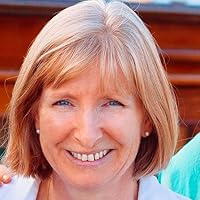
Defying everyoneís advice, armed only with her rudimentary knowledge of Chinese and Tibetan, Sabriye Tenberken set out to do something about the appalling condition of the Tibetan blind, who she learned had been abandoned by society and left to die. Traveling on horseback throughout the country, she sought them out, devised a Braille alphabet in Tibetan, equipped her charges with canes for the first time, and set up a school for the blind. Her efforts were crowned with such success that hundreds of young blind Tibetans, instilled with a newfound pride and an education, have now become self-supporting. A tale that will leave no reader unmoved, it demonstrates anew the power of the positive spirit to overcome the most daunting odds.
Sabriye Tenberken is a German socialworker and co-founder of the organisation Braille Without Borders.
She lost her eyesight slowly as a child due to retinal disease, and her parents took her to many places so she would store up many visual memories, before becoming totally blind by the age of 13. She studied Central Asian Studies at Bonn University. In addition to Mongolian and modern Chinese, she studied modern and classical Tibetan in combination with Sociology and Philosophy.
Helaas, wat jammer. Een aantal keren heeft het echt mijn aandacht verloren. Vandaar ook de drie sterren. Ik moest echt mijzelf min om meer dwingen bepaalde passages te lezen. Vanzelf kwam het systeem eerste regel, middelste regel en laatste regel van een bladzijde. Er zijn ook interessante stukken die ik graag gelezen heb. Het verhaal is boeiend dat is niet het probleem. Het is hier en daar het oersaaie doorvertellen van dezelfde dingen die je wat onrustig maken en je op het oude systeem van eerste regel, middelste regel en laatste regel doen terugvallen. Sabriye is een geweldig inspirerende vrouw daar ligt het zeker niet aan.
Sabriye is zelf blind en richtte een blinde school in Tibet op. Via een reis door Tibet ontmoette zij haar leerlingen. Dit boek combineert haar verhaal om als blinde door het leven te gaan en haar reis door Tibet en de blindenschool die ze daar oprichtte. Zij ontving meerdere prijzen waaronder de Moeder Theresa award.
Een stoere chick deze Sabriye. Rijd op de rug van een paard op ruig bergterrein en ziet zelf niets! Struikelblokken genoeg op haar reis maar met geduld en humor weet ze alle problemen de baas. Niet dat ze zich zo nu en dan niet opgelaten voelt of groen en geel ergert maar ze probeert het gewoon op te lossen en alles te accepteren zoals het komt. De uitleg van het omzetten van het Tibertaanse alfabet naar Braille is een van de onderdelen die de vaart uit het verhaal halen.
An impressive young woman, at the age of 26 Sabriye Tenberken moved to Tibet to found a school for the blind where she taught the Braille alphabet she had invented. This book records her experiences as a blind woman traveling on horseback to track down blind children in remote villages, starting her school in spite of the challenges of fund-raising, unhelpful bureaucracies, intense weather and a culture that saw the blind as cursed. I was impressed with her determination, courage and persistence. Through the book I learned a great deal about Tibetan culture (foreigners are not welcomed into Tibetan homes, although the culture is very welcoming otherwise; they drink a lot of hot salted butter tea) and about blindness. I especially appreciated her discussion of why the blind do not live in a world of "dark."
While I appreciated the book, I was not impressed with the amateurish writing. Tenberken would have benefitted from a co-writer to more appealingly share her story. But much more disappointing was Tenberken's tone: she was often highly critical of other people, so often that I had to think many of her problems were of her own making. She also was inconsistent in her expectations, at times complaining when sighted people "condescended" by offering to help her and then at other times complaining that help was not offered when she wanted it. So, all-in-all, an inspiring book and filled with information about Tibet, but disappointing in the quality of the writing and in some of the characteristics of the author. I feel bad giving only two stars to a book by such an incredible woman -- but of course I'm rating the book, not the person.
Menschen mit Beeinträchtigung. Sabriye Tenberken porträtiert in ihrem Buch, wie sehr Personen, welche von der gesellschaftlich - beurteilten Normalform abweichen, in Tibet am Rande der Gesellschaft marginalisiert und stigmatisiert sind. Umso mehr entsteht beim Lesenden eine Euphorie, als die blinde Autorin sich selbst für blinde Kinder in der tibetischen Region Lhasa einsetzt. Mir gefiel dabei besonders die realistischen Schilderungen, welche Höhen und Tiefen bei der Realisierung eines Projektes entstehen. Dennoch ist Tenberkens Charakter von einem unfassbar starken Durchhaltevermögen und Selbstbewusstsein geprägt. Sie hat für mich während des gesamten Buches eine Person verkörpert, welche Mut, Willensstärke und Eigenständig verkörpert und Menschen mit Beeinträchtigung ebenso dazu ermutigt.
I read this book as I find Tibet fascinating and partly because my daughter has a visual impairment. Sabriye's determination to go to Tibet and establish a school for blind children is inspiring on it's own. The fact that she took this on as a totally blind individual is even more inspiring. Her determination and resilience is quite remarkable. I would have given it more stars, but the writing is somewhat clunky. It may be the translation, as I believe it was originally written in German. Still, the story is quite engaging and well worth the read.
My Path Leads to Tibet is the incredibly inspiring memoir of a determined young woman. Although she herself is blind, and considered a "Westerner," she aspired to helping the blind children of Tibet, and to transform the prejudices of their families, communities and the general population. Faced with many obstacles on her journey, Sabriye opened the first school for the blind in Lhasa in 1998. She also created a Tibetan Braille alphabet. Although I really enjoyed this book, it would have benefited from some further editing.
I chose this book because I like to read about true adventures of real people in different countries. What a special woman Sabriye is. I am so glad she shared her story. I am also so happy she was so successful in taking care of those poor misjudged blind children.
I really enjoyed reading this book. Reading about this blind lady who starts a school for blind kids in Tibet was very inspiring to read. I highly recommend this book to everyone to read.
I hadn't heard of Braille without Borders before, so it was nice learning more about Tenberken's project. Not everything about the style of the book worked for me, but that's okay too.
At a young age, the author, at the time a college student, decides to go to Tibet. Against all advice, she goes completely on her own. Of course, there's one big complication--she can't see at all! Not to worry, she tells herself. In the past, whenever she needed assistance, she found that some kind soul would see her white cane, and offer assistance.
In China, however, the people don't know what a white cane is--they think it's some kind of walking stick! Many of the people who see her think she's some dimwit, who doesn't know how to avoid water puddles, or how to do simple navigation.
The author developed R.P (Retinitis Pigmentosa) at a very young age. Here's the key to the story: Instead of feeling sorry for herself, Sabriye decides to go where no one has gone before. She is intent on helping the poor blind children in Tibet--and no one is going to stop her!
And so, that is exactly what the author did. She didn't listen to all the naysayers and doubters. Overcoming a huge amount of obstacles the author establishes a home for blind children in Tibet. MY PATH LEADS TO TIBET is the story of this grand adventure. This book relates the adventures that the author encounters on this mind-boggling trip to bring braille to the little blind children. In Tibet, blind children were seen as either a curse, or a way to make money for the family (by begging.) Many of the blind kids were simply cast aside.
The author's journey sometimes meant riding horses near cliffs, sleeping in huts filled with rats, or having her visa canceled. Even her sponsoring organization was not faithful in supporting her, and saw Sabriye as more of a troublemaker than anything else. You name it, Sabriye encountered, then overcame these obstacles.
MY PATH LEADS TO TIBET is an absolutely unbelievable story! Except it REALLY HAPPENED. This book is an inspiration for others who suffer similar disadvantages. It's an inspiration to others who do NOT have these disadvantages.
Finally, this story has special meaning for this reviewer, since my daughter is gradually losing her sight to the same eye disease--R.P. I am glad that this wonderful person, Sabriye Tenberken, had the courage and inspiration to pursue her dreams. There are lots of little blind children in the world who have a better life thanks to the author. My hat is off to her.
Sabriye Tenberken beschließt nach ihrem Studium nach Tibet zu reisen und dort eine Blindenschule für Kinder zu eröffnen. Freunde und Familie sind entsetzt, immerhin ist Sabriye selbst blind und nach Meinung anderer doch hoffnungslos verloren und ausgeliefert in diesem fremden Land. Trotzdem hält sie an ihrem Entschluss fest und lässt sich nicht unterkriegen. Mit Hilfe einiger neuer Freunde schafft sie es Dörfer zu bereisen und nach potenziellen ersten Schülern zu suchen, die teilweise unter furchtbaren Verhältnissen aufgewachsen sind. Aller Anfang ist schwierig, eine Schule muss her, Unterrichtsmaterial und Spendengelder reichen auch nur gerade mal so eben über die Runden. Sabriye muss sich mit Ämtern abplagen, Lehrer verschwinden nach kurzer Zeit und die Schüler tanzen ihr auf der Nase herum. Trotzdem gibt sie nicht auf und macht weiter. Es lohnt sich. Mithilfe ihres Freundes Paul, der ihr zur Seite steht, gelingt es Sabriye etwas aufzubauen, was vor ihr kaum jemand geschafft hat...
Das Cover finde ich passend und einfach gehalten. Mir haben auch die Fotos in der Mitte des Buches sehr gut gefallen. Man konnte sich ein wenig ein Bild von der Gegend in und um Lhasa machen und auch Bilder einiger Blindenschüler von Sabriye sehen. Im Umschlag kann man zusätzlich ein wenig über Sabriyes Werdegang nachlesen.
Der Erzählstil ist wie so oft bei Biografien aus der Ich-Perspektive. Mich hat es am Anfang nur etwas verwirrt, dass die Geschichte mitten in der Handlung beginnt und später erst zu ihren Anfängen zurückkehrt. Besonders unterhaltsam sind die abenteuerlichen Reisen die Sabriye nach Tibet unternommen hat und was sie dort erlebte. Und das als Blinde, allein! Man lernt viel über blinde Menschen, wie sie die Welt sehen und wie Blinde in Tibet mit dem Alltagsleben klarkommen müssen.
Mir hat die Biografie ziemlich gut gefallen. Die Erwachsenen sind größtenteils sehr sympathisch und die Kinder wachsen einem sofort ins Herz. Zwischendurch gibt es immer wieder amüsante Anekdoten. Es ist gut nachzuvollziehen, wie Sabriye sich durchkämpfen musste um von ihren Mitmenschen ernst genommen zu werden. Ich bin schon sehr gespannt darauf, wie es im zweiten Teil ('Das siebte Jahr') weitergeht.
After watching a slew of Everest documentaries, I came across the documentary Blindsight about a school for the blind in Tibet and how a famous blind mountaineer took some of them climbing near Everest. The woman who founded the school, Sabriye Tenberken, is blind herself and had come from Germany to establish this school and offer a place for Tibet's blind children to learn. It was amazing and I was so moved that I immediately had to know more about these schools! I saw that Sabriye (sorry to be a little casual, she strikes me as the kind of lady who would insist on being known by her first name and not "Ms." anything!) had a memoir about her journey to Tibet and I bought it immediately and read it all in a single sitting.
I don't know that I can offer any comment on this woman's life that can compliment her accomplishments properly. Just a taste of the strength of this woman: she traveled to Tibet by herself with the idea to establish a school to teach braille because she had just created a Tibetan translation for braille. Then she headed into the countryside on horseback with only one companion - someone she met while traveling (she did not bring a 'sighted' companion with her on this journey, feeling that she didn't need one), broke down social stigma barriers related to blindness in encouraging the locals to ADMIT that there were, indeed, blind children (because most Tibetans are Buddhist, they believe that afflictions such as blindness are a penance for sins in a past life, so most blind people are shunned and treated poorly. When researching for this expedition, Sabriye was told by the government that there were NO blind people in Tibet.), then she goes and establishes a school and hires a staff and takes in a group of kids who are so eager to learn that you can't help but read with tears running down your face.
It's truly a remarkable story and Sabriye Tenberken is my hero.
After losing her sight by the time she reached double-digits, and suffering considerable irritation from people who think she is handicapped, Sabrye Tenberken decides to go and found a school for the blind in Tibet. Dispite challenges from local authorities and her sponsors in Germany, she manages to found her school. While I found the book readable, I have to give it an average rating though because I found she complains a bit about people helping her and then expects people to help her which was a little weird.
I gave this book 5 stars in spite of its lack of editorial polish (it was written by a blind person, after all, then translated from German). It's a great story from an inspiring woman who takes on more than seems possible under the circumstances. I originally learned of Sabriye from the movie "Blindsight" and just had to learn more about this courageous (and beautiful) woman and her efforts with Tibetan blind children. This is not a story about the handicapped-- it's an epic adventure that is all the more impressive and interesting because of the complication of blindness.
Una ragazza cieca si reca in Tibet per aprire una scuola per bambini non vedenti. C'erano tutte le premesse per una storia smielata. Invece la storia la scrive lei, così come l'ha vissuta. Realistica e appassionante. Un bello sguardo anche sulla povertà di quelle regioni. E poi è interessante vedere le cose dal punto di vista di una ragazza non vedente. Le difficoltà, ma anche la passione, la determinazione e il coraggio.
Overall, I enjoyed this book. I am fascinated with Tibet and would love to travel there someday, so this book caught my eye. The story is amazing. I think it would be difficult to travel to Tibet and I do not have any disabilities! The only reason I gave this book only three stars is because sometimes the author is just a little whiny. Other than that, great book!
Sabriye Tenberken is one of those rare individuals, who sees a problem and fixes it, rather than waiting on others to do so. She created a Tibetan Braille alphabet, and then implemented the education of blind Tibetan children by starting her own school.
The book gets three stars, since the story seems to jump from topic to topic sometimes, but the story it tells is worth five stars!
The fact that this book was relatively hard to come by means it's not being read by nearly enough people. Let's fix that shall we? Watch the documentary Blindsight, read this book, and you'll no doubt marvel at the intelligence, skill, and seemingly boundless generosity of Sabriye Tenberken.
How a blind german woman named 'Sabriye Tenberken' starts a school for blind kids in tibet (Braille Without Borders). Watch 'Blindsight' documentary as well that shows a story of blind children climbing Mount Everest.
Written by a blind woman who in her late 20's traveled to Tibet to start a blind school there. Very intersting. Braille Without Borders is her organization.
I thoroughly enjoyed reading this book. The author's native language is German, not English, so the writing seems a bit juvenile, but the story is truly inspiring.
really impressive story of a woman who knew just what she wanted to do in the world and did it. the writing isn't astounding, but the story makes up for it.
Very inspirational woman and story. By coincidence, after we had read the book, we found Sabriye's school in Lhasa and had a conversation with her partner. Sabriye turned up at the end.
This is a really interesting story but the writing didn't appeal to me. I've seen her in interviews (how I heard of the book) and really respect her but had to "work" to get through the book. Bummer.
Her perseverance to follow her dream is impressive, not the greatest writer though, made me realize I have zero desire to ever go to Tibet, not that it was on my "get to someday" list anyway.