"As violence in Iraq reaches unnerving levels in 2006, a second front in the war rages at the highest levels of the Bush administration. In his fourth book on President George W. Bush, Bob Woodward takes readers deep inside the tensions, secret debates, unofficial backchannels, distrust and determination within the White House, the Pentagon, the State Department, the intelligence agencies and the U.S. military headquarters in Iraq. With unparalled initimacy and detail, this gripping account of a president at war describes a period of distress and uncertainty within the U.S. government from 2006 through mid-2008." Inside cover comments.
Librarian Note: There is more than one author by this name in the Goodreads database.
Robert "Bob" Upshur Woodward is an assistant managing editor of The Washington Post. While an investigative reporter for that newspaper, Woodward, working with fellow reporter Carl Bernstein, helped uncover the Watergate scandal that led to U.S. President Richard Nixon's resignation. Woodward has written 12 best-selling non-fiction books and has twice contributed reporting to efforts that collectively earned the Post and its National Reporting staff a Pulitzer Prize.
The focus here is less on Bush per se than on the activities within the military, diplomatic and white house worlds on how to address the clear failure in Iraq. Bush seems almost a minor figure in the story told here.
It is clear that contrary to the claim that he listens to his commanders, Bush listens when they are saying what he wants to hear, and if they persist in saying things he does not want to hear, or if they fail to produce the results he wants, they are soon removed. Woodward offers a detailed view into the sundry policy reviews that were going on over the covered time period (2006-2008). It was clear that many within the military establishment realized that the Iraq war was a debacle and much effort went into examining not only what had gone wrong, but what was really going on at present and what needed to be done to achieve a successful outcome. A lot of first rate minds focused on these things, but only a small minority of their conclusions were ever presented to the president. Woodward brings us into the meetings, albeit with minimal attribution, offering eye-witness reports from those who were in attendance.
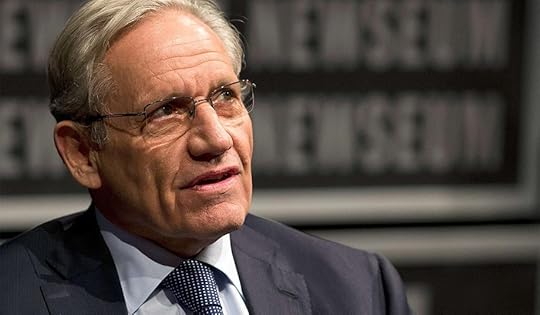
Bob Woodward - image from The National Review
And then there was Bush. Even when offered the benefit of professional analysis, he opted to go with his ill-informed gut, and the bellicose whisperings of Dick Cheney. While there are some items of note here, I cannot say that I learned a lot that was new. We already knew that Bush cared little for thoughtful analysis. We knew that there was dissent within the administration. Maybe we got more detail than we might have had re the politics of military succession and political maneuverings.
Woodward displays some old-fashioned anti-Clinton bias when describing a meeting at which former president Clinton is asked to speak with a military committee. He enthralled the group and remained far longer than he had promised. He was clearly the best mind in the room. The topic is Iraq, and Clinton was holding forth on related concerns like Afghanistan, and how the current force commitment in Iraq has impaired our ability to address concerns there. Woodward describes him as meandering, when in fact, he is the very one who is keeping a focus on the larger picture, seeing the significance of our Iraq debacle in light of whole-world realities.
One thing I learned from this book was that the gains largely attributed to the surge are in fact the result of a separate program aimed at fusing signals and human intelligence with special forces black ops to eliminate many of the insurgency leaders, (all very hush-hush—don’t say too much or you’ll endanger the program) the emergence of home-grown alliances among various groups for their mutual self-defense, and Moqtada el Sadr’s withdrawal from the field of battle.
Aside from the news (and that it is news is a surprise) that the USA had been bugging Iraqi prime minister Maliki, there was little new drama here. It was cheering that there were some within the DC institutions who tried to oppose the madness and not a huge surprise that the politicals ran end-runs around the military leaders to keep from having to cope with anything like real internal differences. Still, The War Within, while interesting and a worthwhile read, is the least of Woodward’s four Bush books.
An in depth look into the Bush White House, behind the scenes & all encompassing - Woodward is able to paint a vivid portrait of the machinations of the W playbook & presents all key names & factors at play without ever getting to judgemental or over politicising the facts.
A genuine look at one of the most intense times of an always intense tenure, enthralling!
This is Woodward's fourth book on the Bush Presidency at war. It's also, I thought, the best. As with all of Woodward's books, the reader is left to wonder how exactly Woodward acquired all of his insider information. However, it is clear he had access to the biggest players involved in the Bush Administration's efforts in Iraq. He obviously interviewed the most important people. Any criticisms from the pro-Bush crowd can be offered if those insiders feel so inclined. The White House itself issued a rebuttal of sorts, but still it seems that the bulk of Woodward's reporting has gone unchallenged. That may well be because those who know inside stuff cannot talk about it, but that's the way it goes in a democracy that treasures civil liberties and press freedoms. Whiners need not run for office (nor should anyone try to stop anyone else from whining). We can either not have the Woodward book, or we can have it with the understanding that there are likely certain inaccuracies. I'll take the latter, hands down. Those who had their mitts in devising poorly thought-out plans will have their shot at offering other perspectives (see Feith, Bolten, etc.) This book covers the Bush Administration from early 2006 until about mid 2008. We see the President try to deal with the increasing problems that were evident in Iraq, problems that contradicted President Bush's overly optimistic public statements. We also see the efforts of those in the Pentagon, State Department, and in Iraq as they tried to come up with a strategy to address the increasing violence. As we mostly now know, the "surge" and elements often incorrectly associated with that title have reduced the violence in Iraq. What we haven't known about, and what we hope Woodward is accurate about, are the discussions, arguments, etc., that went into coming up with the surge. Fascinating stuff. People of all political persuasions can take comfort in knowing that the smartest people in the world of every ideology were hard at work on the problem and all were striving with good intentions. (Certainly, good intentions do not ensure good policy and may at times encourage foolhardy policies.) When all is said and done, Woodward offers his thoughts on President Bush's war leadership, and Woodward makes a strong case for weak war leadership. Ultimately, Bush knew things weren't going well and was lying to the American people when he claimed all was well. He should have trusted the American people at an earlier stage of the war. Perhaps the Washington clock would have had a longer run time. The President should have also been more honest with himself. Contrary to claims of the right, the media was more accurate about the state of Iraq than the President was, and it seems that the President willed himself to believe things that were simply untrue. Who paid the price for those huge mistakes? He did to a small degree: his place in history will likely be among the lower ranked of our presidents. At best, he can hope for below average. We invaded Iraq because we believed that Saddam was a threat to us, and we believed Saddam was a threat because we believed he had WMDs. We now know we were wrong, and "the Decider" bears the most blame for that mistake. It was his call, and he got it wrong. Perhaps worse is that the US plan for winning there was disgracefully off the mark in every regard. From the initial invasion until final implementation of the surge, the Bush team made mistake after mistake, and history has recorded those facts. But those who paid the ultimate price for those mistakes are our brave servicemen and women and lots of Iraqis. Personally, I don't view George W. Bush as an evil man. His intentions were pure, but pure intentions... Also, though the US effort was in disarray in 2006, and although we know who is ultimately responsible for that tragic state of affairs, perhaps the best that can be said of President Bush is that he may have been the one man who could have made the surge the reality it needed to be because of his own mistakes. Time will tell, but the time that has passed so far is not flattering to President Bush, and Woodward writes about it in captivating detail.
Bob Woodward is amazing at what he does, and this book is worth a read/listen. That being said, I quit the book 2/3 the way through. I could have finished, I just didn't want to; as I listened, I just kept feeling increasingly depressed and frustrated because, well, we all know how well hubris worked out for the Greeks.
As a side note, the audio book reader does a great Bush impression but otherwise sounds a lot like Jack Nicholson. Can you say 'creepy'?
Completes Woodward's four-part series on the Bush Presidency. Clearly, delegating doesn't work if the team to which you delegate things does not work as a team. The lack of trust and cooperation between Rumsfeld, Chaney, Rice, Powell, and Hadley resulted in the prolongation of the Iraqi War and deflected attention from Afghanistan. For political and history junkies, a great book.
Sometimes I feel like reading a book like this. On politics, war and how decisions at the highest level are made. When events took place, I missed why things were done the way they were. And now, after reading this book I must admit, that it's still confusing. The outlook I had on 'the people in the White House (or in any other country's presidential/governmental level) know what they're doing and why they're doing it/give orders to do it has been shaken. Not surprisingly, given the circumstances then and the state of the world now. Despite that it was an interesting book.
Bob Woodward is seriously the most boring author I've ever read. How do you take "a secret White House history," which should be fascinating considering this administration's penchant for secrecy, and make it so drab?? I got through two discs before realizing that I hadn't heard a word the reader said. Moving on to better things.
The Bush at War series is a must read for anyone interested in US politics, history and the Iraq war. I actually found the four book series incredibly balanced in its assessment of the Bush White House - but this last book makes abundantly clear the level of mismanagement, obsfucation and resulting tragic loss of life that the 43rd President provided to the world. Very sad.
This was an awesome book. I was expecting Woodward to say things like how Bush was completely wrong like he did with Nixon in All the President's Men. But he didn't. He looked at all the facts from all the sides and gave his personal opinion.
This time Bush comes across as more engaged, actually asking questions. The pain of making decisions when there are no GOOD options is certainly comes across.
No ‘secret’ needed, The War Within is the fourth book by Bob Woodward about the Bush administration. This time around he focuses on the process of the administration arriving at and implementing the Surge, a push of roughly thirty thousand additional U.S. soldiers to set security in Iraq with a special level of attention paid to Baghdad. While the book’s title and inside jacket try to claim the pages inside reveal special information about how the administration worked there is nothing on display that remotely qualifies as a secret discovered or revealed. Time is spent trying to question why the various groups that were assembled to do reviews of the Iraq war situation weren’t some massive public forum, as if every single American had a legitimate counterinsurgency plan ready to hand up to the military. The actual meetings described are often recollections of people during interviews and their quotes are paraphrased throughout.
No major documents are cited, though there are more than a few items titled SECRET which are explained as the communications within the Bush administration. None of them are shown and rarely do they have a date instead of a date range to give context. At the end of the book Woodward does address where his sources are but argues that all decision making about Iraq that he wanted were classified and so only his interviews with firsthand sources served as the bulk of information. There are several sites after this explanation to show there were some documents that were quoted or reviewed but it is made clear that the bulk of information in every chapter is from interviews with persons who had first hand knowledge, including how many people in that position are quoted per chapter.
For people who lived through the period this is little more than a collection of reminders about what ultimately occurred during 2006-2008. For others or for those looking for a lightweight path into this subject matter, this book is fine. Bias against specific people, some positively, some negatively and all arguably deserved, and it is easy to spot while reading. But conclusions ignore the reality of what was happening by the end of the time this book is covering. The growing success of the Surge and what it allowed the Iraq government to begin to do on its own is a breezed over paragraph that gives way to restate the failures of planning throughout the years before and during the war. Those failures are important, and the book covered them, and then how the process of building a new plan that began with the Surge came to be. Why reach all the way back as if there were not some legitimate criticisms left for that administration during that two year end period? Why only Iraq as a subject for a book that’s sold as a secret history of the White House? Where are the rest of the goods?
Three out of Five stars – expected more from a fourth book in a series. He only wrote one about Obama and then a trilogy about Trump. Did the Bush administration really have so little of interest left?
I had this book in my shelves for years. Back then I brought it in one of my first ever BBW. Though it had been for years, I always had a trouble reading this. Something about the content seems unappealing. Even now I feel like the content can be trimmed.
That being said, the book isn't without its appeal. The book provide an intriguing window into the mood behind the war. It's view like this, that makes me doubt postulate by Noam Chomsky for instance on the undoubted control that the government like USA could exert. Don't get me wrong, there is no doubt some element of conspiracy and profiteering behind any war but I digress on the extend of manipulation that is to the T as proposed by Chomsky.
In Iraq war for instance, yes it is without a doubt an attempt by the Bush to removes Saddam for some ulterior motives (an incidentally furthering their war against Al-Qaeda). But ultimately, when the chips have fallen, USA ends up with a lot less than they bargained for. We saw this again and again in almost every modern conflict.
In this book, we see how the tug of war between Sunni faction (including Baathist loyalist), the Iraq Shia faction (including their death army), the Al-Qaeda of Iraq, the Kurds of Iraq, The Iran, and Syrian constantly tilting the table that the USA stood upon. Not only that, Bush had to contend with his own Republican comrade and Democrat opposition, house's leader, Sec of Defense, Sec of State the military top echelon. Literally everyone with their chips in the game.
While it may not be the best political book I have read, it does inculcate me with deeper understanding on the complexity of real world politics. USA especially and larger world in general.
Interesting the intel and political challenges in Iraq itself and the impact they had on Bush’s decision to surge. It is not that I didn’t know any of that was going on, but my piece of the puzzle was quite tiny.
Also, I found Woodward’s description of Bush’s impulsive, “gut” style sobering. Rightly, the Middle East is a region that defies easy solutions. It has consumed armies and politicians for more than a century. When Jimmy Carter brought Sadat of Egypt and Israeli leader Begin together in 1978, we felt like a new day had dawned. I’m sure it has shaped certain aspects of the region’s political dynamics since then, but it hardly solved all its problems. And administration after administration has appointed a Special Representative and meeting after meeting takes place, to little avail.
The most depressing aspect of the book was that it reflected events only up through 2008. So much has happened since then and Iraq is so far from being a stable functioning country by any stretch of the imagination. The wars have become part of two subsequent Presidents’ stories. As Woodward says in conclusion, “Every person has shortcomings. But a president’s shortcomings are visited upon an entire nation and, in a major war, they are visited upon the world.”
The War Within by Bob Woodward is damage control and a shift towards hope following the earlier State of Denial. President Bush and his administration finally woke up, and the question was what to do next. The president no longer had large amounts of political capital to spend at home, and his own leadership was thinking about accepting defeat and leaving. This book traces the darkest hours of the Bush administration's role in Iraq to the success that followed the Surge. Its an interesting tale, particularly when focusing on tensions between the old guard and the new. Arguably, as a success story, it should be perhaps the most important books of the four of the Bush at War series. At the same time, I feel like the downward spiral and the treasure trove of information provided in earlier books were more satisfying here. This feels very much like a conclusion that isn't a conclusion. We know the Bush administration will soon take hold, and we know that ISIS is lurking around the corner. There's too much hope at the end of this books, and most of it will go unrealized.
- تراخي المالكي بداية حكمه بقمع المليشيات الشيعية ببغداد وقبوله بأعمال العنف الي جانت تصير او حتى وجود احتمال انه هو قام بدعم هاي المليشيات لترسيخ وجودها حول بغداد، خوفاً من عودة حزب البعث.
- عبدالعزيز الحكيم الي جان بالضد من مشروع المصالحة الوطنية بقوله للبعثة الدبلوماسية الامريكية: (الشيعة و الكرد داعمين و مؤيدين للمشروع الاميركي في العراق الجديد فما حاجة لنا بالسنة؟ هل تريد ان تتصالح مع الصداميين و التكفيريين؟).
- المقاومة السنية بسامراء والفلوجة والمقاومة الشيعية بمدينة الصدر .. شلون الأولى جانت موجهة ضد الامريكان رغبة منهم بعودة البعث، بينما الثانية موجهة لأضعاف الحكومة لغرض انتزاع السلطة والهيمنة على الحكم (حسب وجهة نظر الامريكيين).
- الدعم السوري للجماعات المتطرفة وتزويدهم بالتدريب والسلاح وحتى يمكن الاموال، والدعم الايراني لـ جيش المهدي، خاصة بالبصرة.
- شلون تعنّد جورج بوش وعنجهيته ورفضه لمواجهة الواقع الي جان يتجه للأسوء كل يوم بالعراق، خلت أعمال العنف الطائفي تزيد.
- هواية تفاصيل ثانية حلوة بالكتاب، رغم انه اغلب تفاصيل الكتاب مسلط الضوء على الصراع الديمقراطي الجمهوري حول حرب العراق بداخل البيت الابيض اكثر من تسليطه الضوء ع ساسة العراق. ___
3 tháng để mình "cày" xong một cuốn sách khá nặng về nội dung, đồ sộ về nhân vật và sự việc - đặc biệt hơn toàn người thật việc thật. Phải nói rằng cần có kha khá kiến thức nền về bối cảnh Iraq những năm này, người đọc mới đủ hứng thú theo dõi hết cuốn sách.
Hơn 500 trang sách của Bob Woodward cho chúng ta thấy hình ảnh nước Mỹ đang lạc lối sau 3 năm tham chiến tại Iraq - mất lòng dân bản địa, Iraq vẫn chia phe phái trong chính trường, bạo lực triền miên, khả năng bảo an yếu kém từ lực lượng Iraq... Tất cả dẫn tới những phản đối lớn từ chính trong lòng nước Mỹ: tỉ lệ ủng hộ Tổng thống Bush giảm mạnh, những bất đồng lớn trong giới tướng lĩnh, giữa giới quân sự và Bộ Ngoại giao, hay giữa những đảng viên Cộng hoà. Bush "con" đã quá tin vào bản thân để nhận một kết cục khá cay đắng trong cuộc chiến "chống khủng bố" mà ông cùng phe Cộng hoà quyết tâm theo đuổi.
4.5 sao làm tròn là 5 ^_^
This entire review has been hidden because of spoilers.
With perspective of time I was ready to read Woodward's take on the Bush Administration..... This one being his fourth book I think made me sympathetic to president Bush. I think Woodward's narrative is very forgiving even as he comes to the conclusion that Bush was a weak unsuccessful President that left the country (specifically with his war) worse than he found it. He failed to provide leadership desperately seeking one of his advisors to lead.
If you are ready to go through and re-consider that time period this book is definitely on the list.
The unwinding of the administration from within is eye opening for sure. I think the thing you can take away most from this is Bush didn't learn any lessons. His administration changed, not only the people and their roles, but also their viewpoints. Bush (and for the most part Cheney as well) were too stubborn in their ways/views to see that there was no light at the end of the tunnel in Iraq with the policies they chose.
I believe that it was General Petraeus that predicted we would need to be in Iraq for 50 years not unlike our other overseas bases in Korea, Japan, and Europe, if we want to maintain our global power. Well it's now 2017 and counting...
The members of Bush's war cabinet didn't know their asses from a hole in a ground, let alone how to manage 'regime change'. The Iraq war is a study in chaos-management, most of it self-inflicted. I just want everybody to remember this as our current Tweeter-in-Chief assembles his own war cabinet.
As with the other Woodward insights to the White House, there is always so much going on behind the scenes. It is good to be able to see the thought processes that got us to where we are. Hopefully knowing how we got here can help get us out.
In this, his fourth book on President Bush at War, investigative journalist Bob Woodward takes the reader behind the curtain, and into the chaos that was the White House in 2006 -2008. A must read for all those interested in political and military history.
The best of the series, perhaps because Woodward had more content to reference and a better perspective on the overall history of the war. The early chapters on the Iraq Study Group are particularly great, including Clinton's interview (which is the first to argue that Afghanistan should have been the focus and that Iraq pulling resources from there was a huge mistake). The chapter on Admiral Fallon and his argument (also a part of the ISG report) that we should have had greater outreach to Iran was interesting, as was the fact that it was ignored. (Read an Esquire article about Fallon from April 2008 that was interesting as well.) Leon Panetta laying out the major recommendations of the ISG and then telling Steven Hadley that he and Bush did the exact opposite was mostly true. Those recommendations were: More diplomacy, especially with Iran and Syria; holding Iraqis to benchmarks and then threatening troop drawdowns; transitioning from combat to support by early 2008.
The last volume in Mr. Woodward's history of the Iraq/Afghanistan Wars as prosecuted by President George Bush. In it, Woodward describes how a way was found to make great progress towards the goals Bush originally envisioned for the wars, especially the Iraq War. I say a way "was found" because it was not Bush who found the way but rather others and Bush, ultimately, only adopted what those others had found. Whether the way was or is the correct way, and whether it remains so, is yet to be determined and may well not become clear for many years, if ever.
Similar to Woodward's previous books about the Iraq war, this one presents a collection of events & discussions at the White House. However, it's remarkably better than all those previous books, in that it presents a concluding opinion based on the collection.
Read for class. Everything I learn in school about Iraq feels like it is filtered through a memory strainer by people who don’t realize that Gen Z has no lived experience of the minutiae of the news cycle in 2006.
Woodward’s access to decision makers remains phenomenal, even though they must know he will write the unvarnished truth. It is so interesting to hear the inside story to events that are still fresh in the mind.