Jump to ratings and reviews
Rate this book

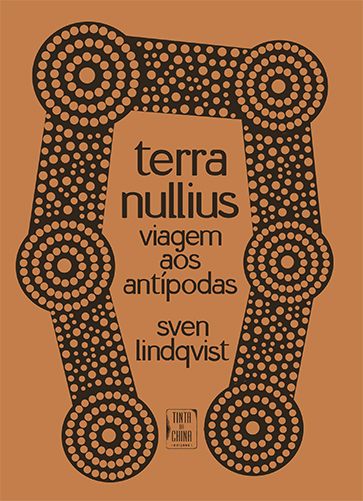
Terra nullius

Rate this book
Um livro de viagens que alia descrições líricas da Austrália — flora, fauna e geologia — à revisitação da história e da brutalidade com que foram tratados os povos aborígenes.
«Terra Nullius», que significa «terra de ninguém», designa ironicamente a terra expropriada a esta cultura quase extinta.

«A cultura de segregação permaneceu durante boa parte do século xx, e viajar pelo território australiano ao lado de Sven Lindqvist é procurar os vestígios dessa ausência, ainda traumática. A complexidade da questão adensa-se quando nos perguntamos se poderemos julgar o passado a partir do quadro mental que é hoje o nosso. Sem subirmos a um promontório não nos é dado ver o horizonte, como reconhece o próprio Lindqvist: "É a planura que nos faz crer que a Austrália é feia e vazia. A planura mantém-nos reféns entre os arbustos. Mas logo que a estrada se eleva um pouco e permite uma visão sobre o canto do matagal, abrem-se paisagens fantásticas."
Nessa elevação que nos permite ver mais longe estamos simultaneamente aos ombros de gigantes e sobre um terreno fertilizado por cadáveres. O passado não é um lugar tranquilo.», Carlos Vaz Marques

235 pages, Hardcover

First published April 1, 2005

22 people are currently reading
1058 people want to read

About the author

Sven Lindqvist

56 books158 followers
Dr. Sven Lindqvist was a Swedish author of mostly non-fiction.

He held a PhD in History of literature from Stockholm University (his thesis, in 1966, was on Vilhelm Ekelund) and a 1979 honorary doctorate from Uppsala University. In 1960–1961, he worked as cultural attaché at the Swedish embassy in Beijing, China. From 1956–86 he was married to Cecilia Lindqvist, with whom he had two children. He was married to the economist Agneta Stark since 1986. He lived in the Södermalm area of central Stockholm.

Ratings & Reviews

What do you think?
Rate this book

Friends & Following

Create a free account to discover what your friends think of this book!

Community Reviews

5 stars
189 (34%)
4 stars
238 (43%)
3 stars
104 (18%)
2 stars
17 (3%)
1 star
5 (<1%)
Displaying 1 - 30 of 63 reviews
Profile Image for Mewa.
1,230 reviews245 followers
December 7, 2023
Hm, „Wytępić to całe bydło“ podobało mi się zdecydowanie bardziej, bo tam wiele podstawowych założeń kolonializmu zostało wyjaśnionych, podczas gdy tutaj autor więcej fabularyzował i wtrącał więcej prywatnych fragmentów. W moim odczuciu. Bez „Wytępić to całe bydło“ ten tytuł traci, więc dobrze, że teraz są w jednym wydaniu. Ale! I tak daję cztery gwiazdki.
Profile Image for Jeremy Randall.
393 reviews23 followers
March 4, 2021
He leaves the last chapter epic. After building an amazing modern country like Australia on the backs of genocide, attempted genocide and destruction of culture and property and history, how does one heal those wounds as the perpetrators are all largely dead and those directly perpetrated against, too, are dead or old. But then he circles back using examples from Natives in America and his own Land Sweden. American Natives were given land because it was useless, until gold was found and then it was taken off them. Similar in Australia so this sets up a relationship between people group and government and the minds of those governed outside of that people group. Then the bigger narrative of - how does one financially or morally pay back these wrongs. African Americans asking for billions of dollars in compensation... who pays that? and what would that money go to. and who, other than a largely white elite, still profits from these wrongs... other than everyone? But then go further, what is wealth, what is the "better way" Lindqvist speaks of art and how the black people of Australia used art and song and poetry as both spiritual back bone, historical memory and maps. how they would get places and where they would get the things they need. I love my GPS, but what of communal beauty on the back of a GPS in shared song?
The whites thought putting clothes on black children and teaching them in schools was the best way. But this cut the black children off from knowing the land, knowing their communities, knowing their history.
I loved this book. It was uncomfortable to read but, good.
Profile Image for Joanna Slow.
471 reviews45 followers
December 31, 2020
„Terra Nullius” to w części reportaż podróżniczy, czytałam go będąc we wschodniej części Australii i dzięki Lindqvistowi zobaczyłam inny kraj i to nie tylko w sensie geograficznym.
W „Terra nullius” dziennikarz opowiada przede wszystkim o tym jak europejscy osadnicy zagarniali ziemię Aborygenów podpierając się autorytetem Darwina, któremu przypisywano twierdzenie, że wytępienie pierwotnej ludności tzw. narodów barbarzyńskich, za naturalny element procesu ewolucji.
A pozbywając się pierwotnych mieszkańców stwarzano ziemię niczyją, do której, zgodnie z doktryną „terra nullius”, nabywali prawa biali osadnicy.
Lindqvist pokazuje, że traktowanie Aborygenów jako rasy niższej było powszechne w XIX wieku i na początku wieku XX nie tylko wśród niewykształconych kolonizatorów, ale i wśród autorytetow świata naukowego jak Durkheim czy Freud czy świata literackiego i szerzej sztuki.
W reportażu znajdziemy też pozytywne odstępstwa od tego podejścia, wśród nich przykład Bronisława Malinowskiego, ale przede wszystkim powszechnie nieznanych osób dzięki zaangażowaniu których finalnie udało się odmienić postrzeganie Aborygenów.
Bardzo ciekawie i wyczerpująco opisana jest też rola sztuki w procesie zwracania Aborygenom ludzkiej twarzy.
Wiele w tym reportażu przykładów niewyobrażalnego okrucieństwa jak odbieranie matkom dzieci, seksualne wykorzystywanie, zmuszanie do niewolniczej pracy, a wszystko to opisane niepoprawnym politycznie językiem białych oprawców, co wzmacnia odbiór brutalnego przekazu tego reportażu.
I zostawia z pytaniem o współodpowiedzialność dzisiejszych mieszkańców Australii za wciąż nienaprawione i nienaprawialne krzywdy wyrządzone temu narodowi.
Profile Image for mafi.
43 reviews1 follower
December 31, 2024
4.5/5

ok último livro de 2024?? slay

fiquei surpreendida pelo lado positivo ao ler este livro, mas já tinha a suspeita que ia gostar logo quando comecei a ler a primeira página. pode ter demorado mais tempo do que inicialmente planeava, a partir do momento em que a escrita é bem acessível, mas apanhar um writer's block em dezembro já é normal e portanto não me surpreende.

sven lindqvist fornece uma perspetiva "nua e crua" sobre a história da austrália que provavelmente muitos leitores desconheciam na sua totalidade (eu incluída). o diálogo entre a viagem de lindqvist e a história do genocídio dos povos aborígenes foi algo que marcou muito a minha leitura, e é impossível ignorá-lo. somos confrontados com os horrores do colonialismo e as consequências que afetaram estes povos durante décadas. é ainda mais marcante quando nos apercebemos que isto não é um passado longínquo, visto que muitos dos relatos descritos por lindqvist ocorreram no século passado.
Profile Image for Naushad.
4 reviews1 follower
October 24, 2012
Unveiled Truth in all it's brilliance. Through documenting his travels of half the continent, Sven Lindqvist writes a better account of Australian history than most Australian historians. This book should be in the Australian history curriculum at every high school around the country.

One star short because no mention of:

1. Tasmanian genocide
2. Eastern states genocide
3. WEH Stanner and Selective White History
4. Corporate crimes through mining

5. Also using art as a means to success - could have said more about the problems of finding success through commodifying religious and spiritual elements and selling yourself into a western constructed culture of liberal capitalism.
2,819 reviews71 followers
March 11, 2020

“A history of mass killing, land theft, rape, kidnapping and other outrages.”

Australia is a part of the world with a long and established culture of racism, xenophobia and intolerance. Since white man first conquered the land it has been a haven for extremism and hatred. Like their big racist cousin, the USA, people of colour are overwhelmingly more likely to be harassed, arrested or murdered by police forces, and of course the offending officers are granted the same immunity and impunity afterwards as they get in the US. You know the drill – unarmed black man dies in police custody, police lie and cover up, it sometimes goes a little further, but the end result is police get away with it, (repeat to fade).

Lindqvist is on fine form here as he delves deep into the dark history of the world’s smallest continent and finds a catalogue of horrific events supported and enforced by a culture of hate and ignorance. One of the many things I learned about in here was the story of the black boy divers in and around Broome, who were taken away from their families as young as 6 years old. Most didn’t last two years as divers, and those who survived were often lame or invalids. If they ran away the police would return them back to their owners. There were many cases of them being tortured or left to die on the beach when the bends rendered them useless. Police would also kidnap children off the street and sell them onto white owners elsewhere throughout the country.

One of the more unforgiving moves by government was the implementation of The Migration Act of 1958, this allowed every foreigner without a visa to be interned. A total of 3,000 immigrants came to Australia from Vietnam, Cambodia, China, Iraq and Afghanistan between 1989 and 1997. 2,300 were refused entry after their interment. There were times when these places descended into concentration camps after men, women and children shut away for years, kept ignorant of their legal rights and deprived of contact with the outside world. At one stage this resulted in around 500 refugees breaking out. The Australians responded with barbed wire fences, water cannons and armed guards and a ban on visitors. Asylum seekers also set fire to a camp, which came after a series of hunger strikes, suicides and attempted suicides.

“As late as 1958, the police of Western Australia were defending use of neck irons by claiming the natives preferred them.”

One of the more disturbing recollections in this book concerns the treatment of native women who were infected with syphilis and other venereal diseases from white men. Black women were punished and sent to prison camps and consigned to years of slave labour under the tropical heat. Many died of experimental treatments. In some cases they were marched hundreds of kilometres and transported on ships to the so called “Islands of the Dead” of Bernier and Dorre.

Elsewhere we learn about Aborigines being removed from their land to make way for white farms, various mines and the nuclear weapon testing programme. Apparently today more than 19 kg of Plutonium remains in the sands of Australia. The UK government made a law to absolve itself of further responsibility, but this was later challenged. Lindqvist touches on various massacres of various Aboriginal tribes over centuries and we also learn of the grim events which took place at Moore River Native Settlement north of Perth, where at one stage there was only one teacher was teaching over 100 pupils of different ages.

On a lighter and more positive note we get to learn about the progress and development of the Aboriginal art movement, which enjoyed a major breakthrough during the The Bardon Men era which soon grew into a wider desert artists’ movement, as it became commercialised and commodified and sold to a wider audience throughout the world. We also see the small victories for Aboriginal rights which have been achieved through the decades, but these are sometimes curbed by a series of zealous, right wing governments and people like John Howard who believes Australians have a right to forget what their country did to the Aborigines for centuries and added, “I didn’t believe genocide had taken place, and I still don’t.”.

So this is another hugely absorbing piece of work from Lindqvist, his approach has occasional shades of Paul Theroux and even A.A.Gill, and aside from the random moments when he chooses to share his night time dreams, this is a fascinating and sometimes grim journey into some of Australia’s darkest secrets.
Profile Image for joseph.
26 reviews2 followers
May 31, 2021
takes the same form as exterminate all the brutes, a travelogue backed up by a heft of historical research, but ends on a positive note, emphasising the growth of organised resistance by australia's - and the rest of the world's - indigenous peoples. i learnt a great deal from this book. it's heavy on detail but written elegantly and accessibly. lindqvist is really adept at summarising and interrogating the key, and sometimes overlooked, historical sources and introducing historiographical debates. he covers so many deeply sad stories. the chapters on the moore river native settlement are really staying with me because what happened there seems to mirror what happened in the kamloops residential school in british columbia, where a mass grave of indigenous children was recently discovered. rip, down with settler colonialism.
Profile Image for Naeem.
530 reviews295 followers
October 27, 2007
Lindqvist uses the same form as in his Exterminate All the Brutes. That book is a masterpiece against which this one seems a bit hurried. But Terra Nullis has its own charms. Lindqvist still does four things: travelogue, dream interpretation, reportage of novels written about his travel places by writers of previous generations, and of course, the topic is always genocide.

I wish he had done more work on how we acquire the benefits of genocide. Powerful work after which one cannot think of Australia or its native populations in the same manner.

Thanks to Greg for this book.

March 2008,

A second, much more careful read of this book, changes my assessment. I still find that compared to his "Exterminate All the Brutes," this book is less subtle, slightly less devastating. But "Exterminate" is about the expression of a deep wound and the vocalization of enormous volcanic anger -- as expressed by a Swede, not by some one from Martinique (Fanon). Terra Nullius, accomplishes what Exterminate accomplishes that but with more directness, with more immediate punch.

I can see Sven's project shifting. He adds the element of responsibility, reparations, justice, and healing. He is slowly moving us to a policy recommendation, to some kind of mediation between our exploiter and exploited selves. I am told (by Sara Maria) that his next book is out and waiting to be translated into English. Can't wait.

In addition, the trope of "Terra Nullius" has enormous connectivity. It might be the central concept of modernity. Because of this innovation, Sven evermore simplifies his message.

Ah Sven, a few more books please, before you leave us....
Profile Image for Leiki Fae.
305 reviews7 followers
July 28, 2021
Cried and raged over every page of this book. It's sickening what colonization entails and what "civilization" costs. Suicidal tendencies of white culture, indeed. Even more accurate to describe white culture as sad-masochistic. We want to take over the world and will end up destroying ourselves and everything in it.
Profile Image for anna.
693 reviews1,997 followers
February 28, 2024
absolutely feels like the other side of the coin of "exterminate all the brutes", and i highly recommend reading them both close together. personally, i think this one is better, which seems to be putting me in the minority of reviewers.

focuses heavily on the anthropology side of things. and anyone who spent any time studying that field knows that the forefathers were all ridiculous racist white men who didn't so much try to learn about other societies, as prove their own theories on said societies, which they mostly based on, i don't know, vibes. lindqvist does a great job of showing us all the big names of early anthro & their ideas, and then undermining them in a few succinct sentences.

it's definitely a book on genocide, with all the questions that brings. is genocide carried out only by direct violence? what about bringing new diseases, striping the peoples of their culture & resources, brainwashing them into hating their very roots?
Profile Image for Henri.
115 reviews
March 28, 2019
Superb. I enjoyed it better than 'Exterminate the Brutes' of the same author. If you can ever really 'enjoy' the book about a genocide of sort. Lindqvist really knows how to tug at a nerve. Highly recommended.
Profile Image for Jeff Johnston.
338 reviews1 follower
April 21, 2021
Terra Nullius. A term that allowed European settlers to ignore the territoral rights of the first nations people. To commit intentional genocide by murder, alcohol and disease. To commit atrocities that leave you bewildered and seething to the core.

The scary part is the Australian general public's ignorance to these facts. I guess when you have the 'leader' of the country publicly announcing that Australia was not involved in slavery, then where to from there?

Well it seems pretty simple. Books such as these should be mandatory to our schools curriculum.

To teach our children the whole backstory of Australia's history. To allow them the opportunity to acknowledge, apologise and take responsibility for past wrongs. To allow them to include the First Nations people voice in the Constitution. To allow them to join hand in hand and stand as proud Australians.
Profile Image for Paul.
209 reviews11 followers
January 23, 2011
Another great book from Sven Lindkvist. This is a unique blend of informed travelogue with historical analysis, social anthropolgy, and the origins of modern Australian art & literature.


Lindkvist accounts for how the white European settlement of Australia in turn resulted in the wholesale systematic dispossession of the indigenous aboriginal peoples. Of course it doesn't end there - not only were their lands and waters stolen but there was a conscious attempt to actually exterminate them altogether. Citing countless and varied sources he demonstrates how this peaked in the 1930s - one exponent even calls it 'the final solution' - and would even continue in many aspects well into the post-WW2 era.


Families are seperated, children interned in labour camps, boys made to pearl-dive, girls sent away as maids (often to repeated sexual & physical abuse), mothers would have their babies taken away, and the men would be utterly disenfranchised and often arrested, rounded-up, beaten, disappeared, and even shot. Time after time the authorities would turn a blind eye or even encourage these acts. The prison islands for supposed carriers of STDs were little more than concentration camps for the thousands...


Towards its end, Lindkvist's book explores how through art the persecuted peoples have made a sort of breakthrough into modern Australian identity and consciousness. The subject of restitution is an ongoing one and has clearly become a hot political issue in 21st century Australia.


As others will doubtless echo - all Australians should read this book, but it isn't a story unique to that country alone. We should all look at our own countries and ask ourselves did this happen here? Did we do it over there? Are we still responsible for it happening?
Profile Image for C.R. Miller.
27 reviews
December 1, 2014
Depressing and enlightening, a travel book with history as its guide. At first I struggled with what I assumed to be a narrow focus on the mistreatment and atrocities suffered by Aborigines at the hands of the white settlers and Australian government. But as Lindqvist folded in more about the history of clumsy attempts to incorporate superficial knowledge of Aborigines into early theories of human cultural development, the book became grounded in a larger historical and intellectual context. But it was his endeavors to explain the Aboriginal worldview and spiritual life and connection to the earth that I found most fascinating and which provided a focal point for all of the historical critiques (and even tied in his at times resonant description of the temporal elements of his travels -- the landscape, weather, and light). This is the second book by Lindqvist that I've read, and they both come across with a very strong point of view and style of exposition that can be distracting or off-putting. But in the end I find myself impressed and satisfied at the depth of his research and analysis. The contemporary travelogue element of Terra Nullius brings additional depth and seasoning to what is otherwise a history book. Recommended.
Profile Image for Grady Ormsby.
507 reviews27 followers
August 7, 2014
Terra Nullius by Sven Lindqvist (translated from Swedish by Sarah Death) is at once a modern-day travelogue, a history of the nascent science of anthropology, the story of aboriginal displacement in Australia, a geographic and geologic survey of the continent and a deeply felt moral polemic on savagery, contrition and moral debt. There are two questions that echo throughout the book. The first is the one classically posed by Charles Darwin: what is it that makes us into human beings? Is it our speed, strength and cunning? Perhaps it’s our social skills, our sometimes reluctant tendency to cooperate and offer mutual help. More darkly, is it the ability to exterminate each other? The second question is that of moral debt. “When the misdeeds of the past are brought to light, when the perpetrators and their heirs confess and ask forgiveness, when we do penance, and mend our ways and pay the price-then the crime has a new setting and a new significance. No longer the inescapable extinction of a people, but its ability to survive and ultimately to have the justice of its claim acknowledged.” If one has in any way directly or indirectly benefitted from the misdeeds of one’s forebears, is responsibility then part of one’s moral inheritance?
Profile Image for Magda.
523 reviews1 follower
May 23, 2009
Nowhere is the horizon more important than in the desert. A sword-cut divides earth and sky. The landscpe is vast, the skyscape even vaster.

The main impression is of overpowering desolation. I wonder how Aboriginal children would react to the Swedish forests. I know how Faeroese children reacted when they found themselves in Norway. In the 1950s on the Faeroe Islands there were some thirty trees all told. Travelling fo rhours through millions of trees proved too much for the children, who burst into tears. In much the same way, the emptiness of the interior of Australia can be overwhelming for those used to a livelier field of vision.

Uluru is an inverse Grand Canyon. The same red sandstone, the same grandeur. But the Grand Canyon, unlike Uluru, is instantly comprehensible. You can see its cause -- the river -- and understand at once how it came about. Uluru is a visual mystery, lacking any perceptible cause. A huge red shape lies gleaming at sunrise and sunset. Its bulk is out of proportion with everything around it. It just rises up out of the ground, unexpectedly and for no apparent reason.
Profile Image for Lorraine.
30 reviews11 followers
July 2, 2012
A book written as a travel log and historical fact-finding mission by Swedish travel writer Sven Lindqvist. He travels Australia looking for reference to the original Australians. What follows is a gritty, emotion-packed, painful tete a tete between colonial past and a democratic present which seems to have obliterated the need for recognition of the cultural identity of the continent as it moves into its future. The consequences of this are devastating for many of the aboriginal Australians Lindqvst meets along the way.
Profile Image for Ashkin Ayub.
462 reviews228 followers
December 8, 2024
sven lindqvist’s work offers a searing indictment of australia's historical and ongoing legacy of violence, racism, and systemic oppression. through meticulous research and stark narrative, lindqvist exposes a deeply rooted culture of exploitation and dehumanization, laying bare a history that challenges the sanitized versions often presented in mainstream narratives.
from the very beginning of white colonization, australia’s history is marked by acts of violence against its indigenous population and other marginalized groups. lindqvist delves into chilling details, such as the systematic exploitation of young aboriginal boys as divers around broome—an industry where the survival rate was appallingly low. his accounts of forced labor, torture, and the brutal "ownership" of human beings reveal the horrifying extent of colonial atrocities, sanctioned and often enforced by authorities.

the book also examines the inhumane conditions under the migration act of 1958, where asylum seekers were detained in what can only be described as de facto concentration camps. the desperation of these detainees—marked by hunger strikes, suicides, and even arson—underscores the cruelty of policies that dehumanized individuals fleeing persecution, only to face further suffering in a country touting itself as a land of opportunity.
lindqvist uncovers grotesque practices such as the use of neck irons for aboriginal people and the incarceration and mistreatment of indigenous women infected with diseases introduced by white settlers. these atrocities, paired with forced removals of entire tribes from their ancestral lands for farming, mining, and nuclear testing, illuminate a systematic effort to erase aboriginal presence and autonomy.

the narrative also explores cultural genocide, with the removal of indigenous children from their families and the erasure of aboriginal languages and traditions, leading to generations of trauma and loss.
lindqvist critiques the tendency of australian society, spurred by leaders like john howard, to downplay or outright deny historical atrocities. the dismissal of terms like "genocide" reveals a broader unwillingness to confront uncomfortable truths, perpetuating cycles of ignorance and denial. lindqvist’s exploration of this phenomenon resonates globally, as many nations grapple with their histories of colonization and oppression.

despite the grim focus, lindqvist does highlight moments of resilience and progress. the flourishing of the aboriginal art movement, notably during the bardon men era, serves as a testament to the enduring spirit and creativity of australia’s indigenous peoples. these cultural triumphs, though commodified, have brought global recognition to aboriginal heritage. additionally, small but meaningful victories in aboriginal rights movements provide glimpses of hope in an otherwise grim narrative.

lindqvist's prose, reminiscent of paul theroux and a.a. gill, captures both the depth of australia’s darkest histories and the resilience of its marginalized communities. while his occasional digressions into personal dreams may feel out of place, they do not detract significantly from the compelling and often harrowing journey he presents.
this is a necessary work that refuses to let its readers look away from the uncomfortable truths of australia’s past and present. by documenting these injustices with such clarity and conviction, lindqvist contributes to a broader conversation about historical accountability and the urgent need for systemic change.
Profile Image for Georov.
19 reviews
July 3, 2025
Sven Lindqvist’s “Terra Nullius” applies his distinctive approach from “Exterminate All the Brutes” to Australia, seamlessly blending roadtrip memoir with historical analysis. His journey through the Australian landscape becomes a vehicle for examining how the legal doctrine of terra nullius enabled the dispossession and near-extermination of Aboriginal peoples.

The book maintains his meticulous research style, with extensive references that build credibility while he incorporates diverse historical perspectives, covering most topics comprehensively.

My key insights:

1. The Framework of Expansion: By illuminating the concept of Terra Nullius, Lindqvist made me consider the broader context of human expansion throughout history. He helped me understand the crucial distinctions between migration, colonization, and conquest - which differ fundamentally based on how each civilization perceives the existing life forms of the places they want to occupy. Terra nullius wasn’t merely a legal technicality that evolved through the centuries, but part of a broader pattern of expansion justification until very recently. Societies defined existing peoples as “not really people” or “not really there” or “not really using the land properly” to justify their actions.

2. Historical Guilt and Contemporary Responsibility: Perhaps the book’s most challenging element is Lindqvist’s exploration of liability transfer across generations. He argues that contemporary people are responsible for their ancestors historical wrongs, if they continue to reap benefits and/or take credit for past achievements ie if they show no actual sign or act of remorse & willingness to make up for the past. However, this raises important distinctions between societal and individual responsibility. While societies may bear collective responsibility for addressing historical consequences, individual guilt is more complex - just as people don’t usually take personal credit for ancestral achievements, neither should they feel personally liable for ancestral crimes. That distinctions I believe is a strong topic that isn’t thoroughly covered by Lindqvist.

The final chapter’s focus on the emergence of Aboriginal art as a way for Indigenous people to find a place in the “modern” world, while historically interesting, feels somewhat disconnected from the book’s main arguments.

Overall “Terra Nullius” offers another powerful example of Lindqvist’s ability to combine personal journey with historical reckoning. It challenges readers to confront not only uncomfortable historical truths but also contemporary questions about responsibility and how societies choose to remember or forget their pasts. Like his previous work, it leaves readers with unsettling questions extending beyond the specific case study.
Profile Image for L.L..
1,025 reviews19 followers
March 5, 2024
W sumie wolałem w jednym wydaniu tą i "Wytępić całe to bydło" tego samego autora (żeby sobie nie zawyżać liczby książek przeczytanych ;) ) ale znalazłem tylko osobne wydania, więc trudno. W sumie nie miałem też zamiaru rozpisywać się o nich i nie pisałem recenzji do "Wytępić...", ale na temat tej jednak muszę coś dopisać, bo jest... mocna. Choć bardziej zależało mi na "Wytępić...", to po przeczytaniu, ta jednak bardziej mnie poruszyła, pewnie dlatego że opowiada o losie australijskich Aborygenów po kolonizacji przez Europejczyków, a to jest temat, o którym nie wiedziałem nic, o którym nawet nigdy nie myślałem jakoś tak będąc przekonanym przez długi czas, że Australijczycy są po prostu biali... że tam byli jacyś Aborygeni, to dowiedziałem się... no na pewno później niż powinienem - ale to też już o czymś świadczy.
Bo że z Afryki brało się niewolników, to wie każdy. Co w USA robiono z ludnością natywną, to chyba też. Ostatnio mówi się też więcej o Kanadzie, coś tam o Ameryce Południowej też się wie (że Majowie, Aztekowie...), ale Australia jest, mam wrażenie, całkowicie pomijana. A tymczasem działo się tam tak samo źle jak w Afryce. Pewnie ta książka nie opisuje całego dramatu, na to jest za krótka, ale opisuje pewne wydarzenia dość dosadnie żeby było to poruszające.
Język autora też mi pasuje, jest dostatecznie przystępny, czasem nawet ociera się o hmm, jakby humor, np.:
"Wszystkich wielkich myślicieli szukających rozwiązania zagadki pochodzenia człowieka wśród rdzennych mieszkańców Australii łączyło jedno: nigdy nie byli w Australii. Morgan i Engels, Frazer i Freud, Kropotkin Durkheim i Malinowski - wszyscy ochoczo wypowiadali się o formach życia Aborygenów, a żaden z nich nigdy nie widział Aborygena."

"To zdarzenie dało Christisonowi do myślenia, a dla jego córki stało się ważnym życiowym doświadczeniem. Wszystko, czego ją do tej pory uczono o nieokrzesanych dzikusach i nieodpowiedzialnych tubylcach, stanęło pod znakiem zapytania. Zdumiona uzmysłowiła sobie, że czarni nie porzucają swoich pobratymców, lecz opiekują się nawet najbardziej bezradnymi i bezbronnymi członkami rodziny. Jak grom z jasnego nieba spadła na nią świadomość, że czarni w rzeczy samej są ludźmi."

:D

Ogólnie obie książki dość dobrze opisują realia przełomu XIX i XX wieku (i nie tylko) oraz skąd się wzięły uprzedzenia rasowe, a także teorię ras wywodzącą się z teorii ewolucji Darwina. To wszystko pozwala może nawet trochę przybliżyć kwestię rasizmu w polityce Hitlera, a na pewno pozwala wyobrazić sobie kontekst tamtych czasów.

(czytana/słuchana: 26.02-3.03)
4+/5 [7/10]
Profile Image for Witoldzio.
355 reviews6 followers
June 10, 2024
Ksiazka o kolonizacji Australii, trudna i uczciwa, czesto czyta sie ta sama strone trzy razy by dotarlo co sie tam rzeczywiscie stalo. Kubel zimnej wody dla tych ktorzy jezdza tam na plaze lub by pobawic sie z kangurami. Bardzo ciekawy aspekt ksiazki to zbiorowa terapia sztuka, temat rzadko podejmowany. Jest tez proba wejscia w struktury umyslowe Aborygenow.
Inny aspekt to historyczna analiza pogladow przeroznych (glownie niemieckich i brytyjskich) antropologow na struktury spoleczne autochtonow. Jest tez duzo opisow przyrody a ksiazka jest rowniez i przede wszystkim podroza po mapie. Temat finansowych rekompensat jest moralnie prosty, moim osobistym zdaniem jednak logistycznie niemozliwy, nie mowiac juz ze biale spolecznosci rowniez mialy wewnetrzne krzywdy i nierownosci, jak uregulowac te sprawy nie wiem.
Profile Image for Lauren.
47 reviews2 followers
November 6, 2025
Well-constructed history -come-travelogue, in which the Swedish author travels over 7,000 miles across the harsh environments of Australia, using his own journey as a map to pinpoint and discuss the colonial horrors done to Australian indigenous peoples, since the arrival of Captain Cook until the late 20th century.

Lindqvist poses important and thoughtful questions, offers biting criticism of the works of Western philosophers and scientists who sought to explain away the inferiority of aborigines, and does not shy away from the ugly truth of it all.

Significant in its absence is direct interaction, engagement and conversation with indigenous peoples - but otherwise an excellent if harrowing book.
Profile Image for Lucille Moala.
39 reviews1 follower
March 11, 2025
A recount of some of the more embarrassing and terrible parts of Australia’s history towards Aboriginal people - stealing land, destruction of sacred sites, obliterating native languages to name a few.

My one issue with this book was the authorship. It sometimes felt like the author was talking to himself as he drove through a vast and empty Australian landscape. I found it odd that the author was so well read on Aboriginal customs/ culture/ art/ history (he even goes so far as to discuss Aboriginals with a white historian) but he never bothers to speak directly to an Aboriginal person or to reflect his learnings from such an interaction. What is that about?
Profile Image for Tomasz.
159 reviews7 followers
May 9, 2017
Opowieść o Aborygenach. O próbie ich wyniszczenia przez władze Australii (wpierw kolonialne potem rodzime). O odbieraniu ziemi i prawa do istnienia. O odbieranych dzieciach, które wychowywane w przytułkach przypominających obozy pracy. O tym, jak można wpierw odebrać prawo do życia na swojej ziemi, potem miano człowieka, a na koniec jeszcze zrobić próby jądrowa na rodzimych i świętych ziemiach (bo czemu by nie). I wreszcie opowieść o odzyskaniu godności, walce o prawa i powrocie poprzez sztukę.
Profile Image for Nita Lorimer.
16 reviews
March 24, 2022
I read this book in its original language - Swedish - therefore I am not sure how the english version is. In Swedish it is a wonderfully written book. An amazingly interesting read. It is so much more than a travel book. Sven Lindqvist uses his travel through central and Western Australia to connect so much of th hinden history of Australia. This is a history book - a social history - a horrifying reality that we - as young Australian during the 50's and 60's lived good lives without realising what was really happening in our country.
Every Australian, or even everyone, whould read this book.
Profile Image for Rebecca.
Author 16 books155 followers
May 28, 2017
A travel writing that digs deep into sensitive issues concerning the Australian Aboriginal rights. Lindqist threw us a very throught-provoking question of whether the guilt concenring inhuman treatments towards the Aborigines is inherited and collective.

His journey into the no-man's land (terra nullius), was a mental, as much as it was a physical one, into this question. In the end, he gave us his answer, which is still up for a debate in my opinion.
19 reviews
May 24, 2017
Fascinating and important book to read. It helps to go someway to understand the horrible crimes perpetrated against Indigenous Australians but also the impact that flawed ethnographic studies of Aboriginal communities impacted key theories of human development that placed indigenous culture/history at the lowest point.
103 reviews
January 22, 2021
Not a pleasant read, if you have any empathy. Really makes you question your lace in the world, and your affect on the world. Very sad, and for a book that doesn't scream out in rage, it really makes you angry.
Displaying 1 - 30 of 63 reviews

Can't find what you're looking for?

Get help and learn more about the design.