

What do you think?

The Treasure of the Sierra Madre
A CULT MASTERPIECE—THE ADVENTURE NOVEL THAT INSPIRED JOHN HUSTON’S CLASSIC FILM, BY THE ELUSIVE AUTHOR WHO WAS A MODEL FOR THE HERO OF ROBERTO BOLAÑO’S 2666
Little is known for certain about B. Traven. Evidence suggests that he was born Otto Feige in Schlewsig-Holstein and that he escaped a death sentence for his involvement with the anarchist underground in Bavaria. Traven spent most of his adult life in Mexico, where, under various names, he wrote several bestsellers and was an outspoken defender of the rights of Mexico’s indigenous people. First published in 1935, The Treasure of the Sierra Madre is Traven’s most famous and enduring work, the dark, savagely ironic, and riveting story of three down-and-out Americans hunting for gold in Sonora.
308 pages, Paperback
First published January 1, 1935
About the author
B. Traven
103 books270 followersB. Traven was the pen name of a German novelist, whose real name, nationality, date and place of birth and details of biography are all subject to dispute. A rare certainty is that B. Traven lived much of his life in Mexico, where the majority of his fiction is also set—including his best-known work, The Treasure of the Sierra Madre (1927), which was adapted as the Academy Award nominated film of the same name in 1948.
Virtually every detail of Traven's life has been disputed and hotly debated. There were many hypotheses on the true identity of B. Traven, some of them wildly fantastic. Most agree, that Traven was Ret Marut, a German stage actor and anarchist, who supposedly left Europe for Mexico around 1924. There are also reasons to believe that Marut/Traven's real name was Otto Feige and that he was born in Schwiebus in Brandenburg, modern day Świebodzin in Poland. B. Traven in Mexico is also connected with Berick Traven Torsvan and Hal Croves, both of whom appeared and acted in different periods of the writer's life. Both, however, denied being Traven and claimed that they were his literary agents only, representing him in contacts with his publishers.
B. Traven is the author of twelve novels, one book of reportage and several short stories, in which the sensational and adventure subjects combine with a critical attitude towards capitalism, betraying the socialist and even anarchist sympathies of the writer. B. Traven's best known works include the novels The Death Ship from 1926 and The Treasure of the Sierra Madre from 1927, in 1948 filmed by John Huston, and the so-called Jungle Novels, also known as the Caoba cyclus (from the Spanish word caoba, meaning mahogany), a group of six novels (including The Carreta, Government), published in the years 1930-1939, set among Mexican Indians just before and during the Mexican Revolution in the early 20th century. B. Traven's novels and short stories became very popular as early as the interwar period and retained this popularity after the war; they were also translated into many languages. Most of B. Traven's books were published in German first and their English editions appeared later; nevertheless the author always claimed that the English versions were the original ones and that the German versions were only their translations. This claim is not taken seriously.
Virtually every detail of Traven's life has been disputed and hotly debated. There were many hypotheses on the true identity of B. Traven, some of them wildly fantastic. Most agree, that Traven was Ret Marut, a German stage actor and anarchist, who supposedly left Europe for Mexico around 1924. There are also reasons to believe that Marut/Traven's real name was Otto Feige and that he was born in Schwiebus in Brandenburg, modern day Świebodzin in Poland. B. Traven in Mexico is also connected with Berick Traven Torsvan and Hal Croves, both of whom appeared and acted in different periods of the writer's life. Both, however, denied being Traven and claimed that they were his literary agents only, representing him in contacts with his publishers.
B. Traven is the author of twelve novels, one book of reportage and several short stories, in which the sensational and adventure subjects combine with a critical attitude towards capitalism, betraying the socialist and even anarchist sympathies of the writer. B. Traven's best known works include the novels The Death Ship from 1926 and The Treasure of the Sierra Madre from 1927, in 1948 filmed by John Huston, and the so-called Jungle Novels, also known as the Caoba cyclus (from the Spanish word caoba, meaning mahogany), a group of six novels (including The Carreta, Government), published in the years 1930-1939, set among Mexican Indians just before and during the Mexican Revolution in the early 20th century. B. Traven's novels and short stories became very popular as early as the interwar period and retained this popularity after the war; they were also translated into many languages. Most of B. Traven's books were published in German first and their English editions appeared later; nevertheless the author always claimed that the English versions were the original ones and that the German versions were only their translations. This claim is not taken seriously.
Ratings & Reviews
Friends & Following
Create a free account to discover what your friends think of this book!
Community Reviews
Displaying 1 - 30 of 382 reviews

January 19, 2010
Hal Croves, agent to novelist B. Traven, visited the set of his client's film the treasure of the sierra madre. croves had a german accent. he aroused the suspicion of many people, including director john huston. croves swiftly disappeared only to resurface in the 1950s in mexico city. upon his death in 1969 it was discovered that no record of birth for Hal Croves ever existed.
Ret Marut was involved in leftist politics in germany in the 1920s. he was the editor of the radical magazine der ziegelbrenner. in 1922 he was sentenced to death for his involvement in the bavarian soviet republic. he escaped to london. he spent time in prison in brixton. upon his release, he went to work as a fireman on a ship. he was never heard from again. copies of der ziegelbrenner were found in Hal Croves's archive.
Traven Torsvan first emerged in mexico in 1925. he was involved in a number of archaeological digs, showed much interest in the welfare of mexico's indian population, and ran an inn where he was known to the locals as el gringo. the mexican journalist Luis Spota discovered a bank account in the name of B. Traven, operated by Torsvan. when Spota suggested that Torsvan was B. Traven, Torsvan disappeared from history.
Otto Feige was the name given to police when they questioned Marut in london in 1923. in the 1970s Feige's brother was located and confirmed that a picture of Marut/Croves was his brother Otto who disappeared in 1905. their father worked in a factory that made coal briquettes. der ziegelbrenner is translated as 'the brickburner'.
B. Traven had been photographed once. his voice exists on one recording. he had a german accent.
other pseudonyms used by Croves/Marut/Torsvan/Traven: Albert Otto Max Wienecke, Fred Gaudet, Goetz Ohly, Anton Raderscheidt, Robert Bek-Gran, Hugo Kronthal, Wilhelm Scheider, Heinrich Otto Becker.
if we follow the timeline from Feige to Marut to Torsvan to Croves, we find B. Traven drifting between the cracks like a literary phantom. we imagine Marut scribbling notes for novels between political rallies. or Torsvan, when all is silent and the inn's guests are asleep, plotting out the anti-capitalist pro-anarchist series of Traven's 'jungle' novels. we imagine Hal Croves having quite the laugh on the set of sierra madre as Croves, imaginary agent to B. Traven, the imaginary writer.
other theories claim that Marut/Croves/Torsvan/Traven was, in fact, the writer Jack London. some say he was Ambrose Bierce. others contend the true identity is Adolfo Mateos, former president of mexico. or that B. Traven is a name shared by many people, which could explain the anti-semitism of the early novels and the humanism of the later ones. others wonder why, if Croves lived until 1969, did Traven's output end by 1940. additionally: the cotton pickers was published in 1925, one year after Torsvan arrived in mexico -- could he, in that time, have absorbed such a rich sense of mexican culture and life?
Bolaño enthusiasts will notice something familiar: a german author who disappears and resurfaces throughout history, changing identities along the way, only to settle in mexico? B. Traven is, of course, Archimboldi.
the only known photograph of B. Traven:
[image error]
Ret Marut was involved in leftist politics in germany in the 1920s. he was the editor of the radical magazine der ziegelbrenner. in 1922 he was sentenced to death for his involvement in the bavarian soviet republic. he escaped to london. he spent time in prison in brixton. upon his release, he went to work as a fireman on a ship. he was never heard from again. copies of der ziegelbrenner were found in Hal Croves's archive.
Traven Torsvan first emerged in mexico in 1925. he was involved in a number of archaeological digs, showed much interest in the welfare of mexico's indian population, and ran an inn where he was known to the locals as el gringo. the mexican journalist Luis Spota discovered a bank account in the name of B. Traven, operated by Torsvan. when Spota suggested that Torsvan was B. Traven, Torsvan disappeared from history.
Otto Feige was the name given to police when they questioned Marut in london in 1923. in the 1970s Feige's brother was located and confirmed that a picture of Marut/Croves was his brother Otto who disappeared in 1905. their father worked in a factory that made coal briquettes. der ziegelbrenner is translated as 'the brickburner'.
B. Traven had been photographed once. his voice exists on one recording. he had a german accent.
other pseudonyms used by Croves/Marut/Torsvan/Traven: Albert Otto Max Wienecke, Fred Gaudet, Goetz Ohly, Anton Raderscheidt, Robert Bek-Gran, Hugo Kronthal, Wilhelm Scheider, Heinrich Otto Becker.
if we follow the timeline from Feige to Marut to Torsvan to Croves, we find B. Traven drifting between the cracks like a literary phantom. we imagine Marut scribbling notes for novels between political rallies. or Torsvan, when all is silent and the inn's guests are asleep, plotting out the anti-capitalist pro-anarchist series of Traven's 'jungle' novels. we imagine Hal Croves having quite the laugh on the set of sierra madre as Croves, imaginary agent to B. Traven, the imaginary writer.
other theories claim that Marut/Croves/Torsvan/Traven was, in fact, the writer Jack London. some say he was Ambrose Bierce. others contend the true identity is Adolfo Mateos, former president of mexico. or that B. Traven is a name shared by many people, which could explain the anti-semitism of the early novels and the humanism of the later ones. others wonder why, if Croves lived until 1969, did Traven's output end by 1940. additionally: the cotton pickers was published in 1925, one year after Torsvan arrived in mexico -- could he, in that time, have absorbed such a rich sense of mexican culture and life?
Bolaño enthusiasts will notice something familiar: a german author who disappears and resurfaces throughout history, changing identities along the way, only to settle in mexico? B. Traven is, of course, Archimboldi.
the only known photograph of B. Traven:
[image error]

August 6, 2022
I somehow stumbled onto the fact that that wonderful movie was based on a book written by the enigmatic B. Traven, and I decided to give the book a try. I'm glad I did. The book has a sufficient number of differences from the movie that the reader who knows the movie well will not be bored, and the additional stories and history found in the book are worthy additions to the tale told by the movie.
B. Traven was apparently a German communist or anarchist who fled Bavaria for Mexico under sentence of death, but little is known for certain. If that story of his early life is true, it explains some of the book's digressions on the abuse of workers by capitalists, governments, and the church.
Some of the dialogue is dated, and Traven disguises actual obscenities and vulgar language with phonetic approximations, but in general, the plot gallops.
B. Traven was apparently a German communist or anarchist who fled Bavaria for Mexico under sentence of death, but little is known for certain. If that story of his early life is true, it explains some of the book's digressions on the abuse of workers by capitalists, governments, and the church.
Some of the dialogue is dated, and Traven disguises actual obscenities and vulgar language with phonetic approximations, but in general, the plot gallops.

January 12, 2022
The film had such a great effect on me in my teens and early twenties, and I must have watched it ten or more times. The film, with its focus on greed, is a great adaptation of the book, but the book goes that little bit further in emphasizing the political aspects of the story. The included stories sometimes felt a little long and distracted from the central plot, but it was a good overall read that has me planning to go back and watch the film again.

July 10, 2015
Brilliant, radical, underrated, economically written in every sense of the word. I'm a big fan of the movie and I enjoyed the book even more, which is something I'm not necessarily always prone to do.
Powerfully captures the madness and paranoia inherent in the lust for riches, particularly when this takes place amid some hardscrabble vagabonds who don't really have much of a choice in the matter.
And the still-mysterious origins of the author (exiled German anarchist? Mexican scribbler? Moonlighting union man?) only adds another fun layer of enigma (evidently he's the inspiration for Archimboldi in Bolano's 2666) to what is a very accessible, readable, finely-honed tale of bad men in hard times under a pitiless climate.
"Anyone who is willing to work and is serious about it will certainly find a job. Only you must not go to the man who tells you this, for he has no job to offer and doesn't know anyone who knows of a vacancy. This is exactly the reason why he gives you such generous advice, out of brotherly love, and to demonstrate how little he knows the world."

October 8, 2017
I originally read this classic back in the 70s when I was serving in the military. And of course, the 1948 movie version starring Humphrey Bogart has always been a favorite of mine.
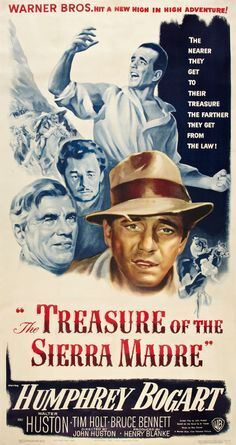
I have had this Time/Life version of the book on my shelves for several years and decided it was time for a reread. The book was originally published in 1935 by the author B. Traven whose real identity is still somewhat of a mystery. Some say it is the pen name of a German novelist named Frans Blom but this is still in dispute.
The novel tells the story of three men down on their luck who search for gold in the Sierra Madre mountains of Mexico. The story begins in the 1920s in the oil boomtown of Tampico where an American named Dobbs is destitute and resorts to begging for money. He eventually finds work as a roughneck on a rigging crew for little pay and when the oil contractor tries to stiff him of the money he earned, another worker named Curtin teams up with Dobbs to beat the contractor and make him pay. Later they meet an old-timer named Howard who has spent his life searching for gold. The three team up and head out to seek gold which they eventually find. After months of hard work, they get enough to satisfy themselves and decide to call it quits. So are they able to return to civilization with the gold intact? Anyone who has seen the movie knows the answer to this. The story shows how greed can destroy even strong friendships and can lead to self-destruction.
I enjoyed the story although I consider the movie version a real classic and prefer it over the novel. The author's politics were somewhat prevalent in the story including his left-wing bolshevism leanings. The writing was also a little stilted and dated and included some racial epithets and terminology that sometimes left me wondering. For example, throughout the novel the protagonists often talked about the presence of tigers and how they could attack without warning. This was a little bothersome to me because tigers are not found in the Americas. However, after doing a Google search, I found that jaguars are often referred to as tigers in Mexico. But overall I'm glad that I reread this classic story. It was really a good adventure novel full of action and it kept my interest throughout.
I have had this Time/Life version of the book on my shelves for several years and decided it was time for a reread. The book was originally published in 1935 by the author B. Traven whose real identity is still somewhat of a mystery. Some say it is the pen name of a German novelist named Frans Blom but this is still in dispute.
The novel tells the story of three men down on their luck who search for gold in the Sierra Madre mountains of Mexico. The story begins in the 1920s in the oil boomtown of Tampico where an American named Dobbs is destitute and resorts to begging for money. He eventually finds work as a roughneck on a rigging crew for little pay and when the oil contractor tries to stiff him of the money he earned, another worker named Curtin teams up with Dobbs to beat the contractor and make him pay. Later they meet an old-timer named Howard who has spent his life searching for gold. The three team up and head out to seek gold which they eventually find. After months of hard work, they get enough to satisfy themselves and decide to call it quits. So are they able to return to civilization with the gold intact? Anyone who has seen the movie knows the answer to this. The story shows how greed can destroy even strong friendships and can lead to self-destruction.
I enjoyed the story although I consider the movie version a real classic and prefer it over the novel. The author's politics were somewhat prevalent in the story including his left-wing bolshevism leanings. The writing was also a little stilted and dated and included some racial epithets and terminology that sometimes left me wondering. For example, throughout the novel the protagonists often talked about the presence of tigers and how they could attack without warning. This was a little bothersome to me because tigers are not found in the Americas. However, after doing a Google search, I found that jaguars are often referred to as tigers in Mexico. But overall I'm glad that I reread this classic story. It was really a good adventure novel full of action and it kept my interest throughout.

March 26, 2025
I have never read this book or seen the movie, although I was aware it was considered a classic in both forms. I'm glad to have read the book first, as it always gives much more depth and explanation than the film, no matter how closely Hollywood sticks to the story. But knowing that both Humphrey Bogart and John Huston played major roles was helpful in imagining the scenes.
This is a novel of greed, and gold, and the ability of both those things to turn good men into strangers even to themselves. Men willing to fight the elements and creatures of the jungle and work sunup to sundown for a few ounces of gold dust, the same men who had begged on the streets of a port city just to get enough for their next meal. Introduce fear, suspicion, and fighting off bandits willing to kill them for a few pesos and you have the makings of not only a great adventure tale, but a moralistic warning of what happens when you lose sight of what's important. The local Indians who lived simple lives of farming and hunting seemed to be able to resist the gold fever, hiding the mines to prevent the gringos from finding the gold in the first place.
"Why worry about your business? There is only one business on earth, and that is to live and be happy. What greater thing can you gain from life than happiness?"
This was satisfying in another way as well, as pretty much every character in this novel gets what they deserve in the end.
Next up, a good old-fashioned classic movie from 1935, which I am planning to enjoy soon.
This is a novel of greed, and gold, and the ability of both those things to turn good men into strangers even to themselves. Men willing to fight the elements and creatures of the jungle and work sunup to sundown for a few ounces of gold dust, the same men who had begged on the streets of a port city just to get enough for their next meal. Introduce fear, suspicion, and fighting off bandits willing to kill them for a few pesos and you have the makings of not only a great adventure tale, but a moralistic warning of what happens when you lose sight of what's important. The local Indians who lived simple lives of farming and hunting seemed to be able to resist the gold fever, hiding the mines to prevent the gringos from finding the gold in the first place.
"Why worry about your business? There is only one business on earth, and that is to live and be happy. What greater thing can you gain from life than happiness?"
This was satisfying in another way as well, as pretty much every character in this novel gets what they deserve in the end.
Next up, a good old-fashioned classic movie from 1935, which I am planning to enjoy soon.

February 2, 2021
Human greed. The ills of capitalism and religious fundamentalism. The gold rush during depression. These are some of the themes and events addressed by B Traven in The Treasure of the Sierra Madre. I enjoyed it. Not as much as the movie though. Here are some of my problems with the book.
The absence of a clear protagonist was a bit irritating. The book starts with the desperate Dobbs roaming around the city. Most of the action and plot centers around him. But during action sequences and conflicts, Traven acts like an omnipotent narrator, informing us of the thought processes and machinations of opposing groups or characters. This kind of takes the tension out of quite a few stand offs and brawls.
There is no uniform writing style. Its all quite haphazard, almost as if someone was holding a gun to Traven's head to finish the novel in a limited time. I felt like Traven even failed to give us a good sense of place. He also does not seem to know much about the local Mexicans and Indians. There is very little character development, even for the American characters. The book is almost like a one sided debate on capitalism. Not really. I am being too harsh. But the book could really have used more character development and descriptions of places. Show don't tell is an advice that Traven seems to have ignored while writing this novel.
There are three long stories within the story narrated by different characters. Maybe Traven was emphasizing the fact that in the 1920s, people were inspired by tall tales they told to each other sitting in bars, under trees and in front of campfires rather than popular culture. References to movies do exist in the novel. Dobbs and Curtin plan to start a movie house with the money they make from the gold.
Despite all its faults, The Treasure of the Sierra Madre is a pulsating action adventure with a pretty humbling message. I think the message seems to be - don't do what everyone else is doing. In the book, old man Howard, the character who leads Dobbs and Curtin on the expedition for gold finds his calling as a pseudo doctor to Indian villagers who do not know any better.
The plot twists are excellent and contributed to making the John Huston movie a real treat. Traven is no ordinary writer. This is no ordinary book. Definitely flawed. But very entertaining.
The absence of a clear protagonist was a bit irritating. The book starts with the desperate Dobbs roaming around the city. Most of the action and plot centers around him. But during action sequences and conflicts, Traven acts like an omnipotent narrator, informing us of the thought processes and machinations of opposing groups or characters. This kind of takes the tension out of quite a few stand offs and brawls.
There is no uniform writing style. Its all quite haphazard, almost as if someone was holding a gun to Traven's head to finish the novel in a limited time. I felt like Traven even failed to give us a good sense of place. He also does not seem to know much about the local Mexicans and Indians. There is very little character development, even for the American characters. The book is almost like a one sided debate on capitalism. Not really. I am being too harsh. But the book could really have used more character development and descriptions of places. Show don't tell is an advice that Traven seems to have ignored while writing this novel.
There are three long stories within the story narrated by different characters. Maybe Traven was emphasizing the fact that in the 1920s, people were inspired by tall tales they told to each other sitting in bars, under trees and in front of campfires rather than popular culture. References to movies do exist in the novel. Dobbs and Curtin plan to start a movie house with the money they make from the gold.
Despite all its faults, The Treasure of the Sierra Madre is a pulsating action adventure with a pretty humbling message. I think the message seems to be - don't do what everyone else is doing. In the book, old man Howard, the character who leads Dobbs and Curtin on the expedition for gold finds his calling as a pseudo doctor to Indian villagers who do not know any better.
The plot twists are excellent and contributed to making the John Huston movie a real treat. Traven is no ordinary writer. This is no ordinary book. Definitely flawed. But very entertaining.

December 13, 2023
El Tesoro de Sierra Madre
Una muy buena novela de B. Traven, un escritor misterioso dedicado a denunciar desigualdades en el México de principios del siglo XX. Se califica esta novela como de aventuras con fondo de western. Fue publicada en 1927.
Este escritor recuerda a los grandes de Norteamérica con un punto de la magia sudamericana. No es una simple novela de aventuras, Traven va más allá con sus reflexiones sobre su forma de ver la vida y la situación mexicana.
Rescata viejas leyendas sobre la fiebre del oro y sus consecuencias en la transformación codiciosa de los hombres.

La historia arranca con situaciones surrealistas típicas de la literatura hispanoamericana. enseguida nos encontramos con unos tipos que no tienen nada, viven a base de trabajos esporádicos, pero la ilusión de encontrar oro en la sierra les da una oportunidad.
El cambio paulatino de no tener nada a ser ricos, o casi, hará brotar la verdadera cara de los protagonistas. Aquí tenemos varias versiones del comportamiento humano siendo la codicia uno de ellos, pero no el único.
Traven cuenta su historia destacando la avaricia y la envidia como destructores de las relaciones humanas. Al mismo tiempo describe la situación de México en los años veinte todavía con las secuelas de la revolución.
Se hizo una película dirigida por John Huston en 1948 protagonizada por Humphrey Bogart en el papel del codicioso Dobbs. La película se llevó 3 Oscars. Tiene una calificación de 8.2/10 en IMDB.
Una muy buena novela de B. Traven, un escritor misterioso dedicado a denunciar desigualdades en el México de principios del siglo XX. Se califica esta novela como de aventuras con fondo de western. Fue publicada en 1927.
Este escritor recuerda a los grandes de Norteamérica con un punto de la magia sudamericana. No es una simple novela de aventuras, Traven va más allá con sus reflexiones sobre su forma de ver la vida y la situación mexicana.
Rescata viejas leyendas sobre la fiebre del oro y sus consecuencias en la transformación codiciosa de los hombres.
La historia arranca con situaciones surrealistas típicas de la literatura hispanoamericana. enseguida nos encontramos con unos tipos que no tienen nada, viven a base de trabajos esporádicos, pero la ilusión de encontrar oro en la sierra les da una oportunidad.
El cambio paulatino de no tener nada a ser ricos, o casi, hará brotar la verdadera cara de los protagonistas. Aquí tenemos varias versiones del comportamiento humano siendo la codicia uno de ellos, pero no el único.
Traven cuenta su historia destacando la avaricia y la envidia como destructores de las relaciones humanas. Al mismo tiempo describe la situación de México en los años veinte todavía con las secuelas de la revolución.
Se hizo una película dirigida por John Huston en 1948 protagonizada por Humphrey Bogart en el papel del codicioso Dobbs. La película se llevó 3 Oscars. Tiene una calificación de 8.2/10 en IMDB.

February 1, 2024
A whole lot more than Western noir
When I was in 5th grade and was required to memorize a poem, my father suggested that I commit Robert W. Service's The Cremation of Sam McGee to memory. So, from the age of 10, movies like Sierra Madre have summoned the famous Service line:
There are strange things done 'neath the midnight sun—by the men who moil for gold.
In particular, Service and the 1948 John Huston and Humphrey Bogart movie version were fused together in my mind. Because my father loved Westerns, I saw that classic with him around that same time I was memorizing Service. I immediately understood the story Huston put onto the screen as a parable of greed's corrupting influence to the point that ultimately the greedy don't win. They can't win—because they are consumed by their own folly. Or, so I understood these lessons back at that early age.
So, what a shock it was for me in college to discover B. Traven and, among several of his novels that I consumed, was the original 1927 (in German, then 1935 in English) The Treasure of the Sierra Madre. I actually had been assigned, in a comparative literature course, to read at least two of Traven's "Jungle Novels" before I finally got to Sierra Madre. So, by the time I read his original version of Sierra Madre, I understood that the mysterious B. Traven was digging for truths far deeper and more profound than gold.
As I emerged from college as a journalist in the mid 1970s, B. Traven remained a favorite author because no one seemed to be able to pin down his identity definitively. "Presumed to be German" and "lived for years in Mexico" are the two points of global consensus as of 2024. The other truth that is self evident from his novels is: He had a personal passion for the plight of the oppressed.
So, was B. Traven really a famous German anarchist who published an anarchist newspaper as well? Maybe. Or maybe not. There are at least several leading theories on his identity.
In any case, the beating heart of Traven's novels is the ruthless cruelty with which powerful men (and sometimes powerful women) could pursue their fortunes. Traven truly cared about the countless indigenous and minority communities that were slashed and burned through centuries of conquest and ongoing political, social and economic corruption in the Americas.
Is this just my interpretation, based on the plot twists? No, in fact, B. Traven makes his viewpoint quite clear! There are several passages in Sierra Madre in which Traven turns to readers—as if a character in John Huston's movie had suddenly decided to address the audience—and Traven preaches about the tragedy and trauma of this global-scale system of oppression.
A third of the way into Sierra Madre, for example, he writes:
The gold worn around the finger of an elegant lady or as a crown on the head of a king has more often than not passed through hands of creatures who would make that king or that elegant lady shudder. There is little doubt that gold is oftener bathed in human blood than in hot suds. A noble king who wished to show his high-mindedness could do no better than have his crown made of iron. Gold is for thieves and swindlers. For this reason they own most of it. The rest is owned by those who do not care where the gold comes from or in what sort of hands it has been.
Later in the novel, B. Traven also pauses in the narration to launch a full-scale indictment of the Catholic church for historically teaching, blessing and enforcing this cruel system of domination of the poor by the powerful. Whoever B. Traven really was, he had a deep understanding of the injustices that stemmed from the 1492 collision of Old and New Worlds and the centuries of slavery and oppression that followed in the Americas.
(And a note of clarification: Certainly, today, the Catholic church is a different institution than it was in the early centuries of colonization. As a journalist who specializes in religious diversity, I have reported on that evolution. But, even Catholic leaders today would acknowledge that B. Traven was at least partially correct in his indictment of oppression in the colonial era.)
So, reading the novel, even if you know the classic film by heart, is an entirely different experience.
Yes, many key scenes in the novel were translated (with some softening) directly into Huston's film. There are many differences, of course. The actual "stinking badges" quote is more brutal in the book than Hollywood censors allowed in the movie. And, well, there's a whole lot more action in the book—some of it quite violent—that was left on Huston's cutting room floor.
For instance, if you want an example of one of B. Traven's particularly greedy and violent rich woman, there's one in the middle of this novel who make you wince as you read her tale. But, her tangential story never made it into the movie, either.
I'm adding this review simply because it may prompt a few Goodreads friends to revisit the original by B. Traven. Even if the movie is seared into your memory, the actual novel is an eye-opening vision of a far larger and much more troubling world.
And who knows? Maybe some day I can update this review if some researcher ever does nail down B. Traven's identity. At least for now, the mystery continues far beyond the novel's pages.
When I was in 5th grade and was required to memorize a poem, my father suggested that I commit Robert W. Service's The Cremation of Sam McGee to memory. So, from the age of 10, movies like Sierra Madre have summoned the famous Service line:
There are strange things done 'neath the midnight sun—by the men who moil for gold.
In particular, Service and the 1948 John Huston and Humphrey Bogart movie version were fused together in my mind. Because my father loved Westerns, I saw that classic with him around that same time I was memorizing Service. I immediately understood the story Huston put onto the screen as a parable of greed's corrupting influence to the point that ultimately the greedy don't win. They can't win—because they are consumed by their own folly. Or, so I understood these lessons back at that early age.
So, what a shock it was for me in college to discover B. Traven and, among several of his novels that I consumed, was the original 1927 (in German, then 1935 in English) The Treasure of the Sierra Madre. I actually had been assigned, in a comparative literature course, to read at least two of Traven's "Jungle Novels" before I finally got to Sierra Madre. So, by the time I read his original version of Sierra Madre, I understood that the mysterious B. Traven was digging for truths far deeper and more profound than gold.
As I emerged from college as a journalist in the mid 1970s, B. Traven remained a favorite author because no one seemed to be able to pin down his identity definitively. "Presumed to be German" and "lived for years in Mexico" are the two points of global consensus as of 2024. The other truth that is self evident from his novels is: He had a personal passion for the plight of the oppressed.
So, was B. Traven really a famous German anarchist who published an anarchist newspaper as well? Maybe. Or maybe not. There are at least several leading theories on his identity.
In any case, the beating heart of Traven's novels is the ruthless cruelty with which powerful men (and sometimes powerful women) could pursue their fortunes. Traven truly cared about the countless indigenous and minority communities that were slashed and burned through centuries of conquest and ongoing political, social and economic corruption in the Americas.
Is this just my interpretation, based on the plot twists? No, in fact, B. Traven makes his viewpoint quite clear! There are several passages in Sierra Madre in which Traven turns to readers—as if a character in John Huston's movie had suddenly decided to address the audience—and Traven preaches about the tragedy and trauma of this global-scale system of oppression.
A third of the way into Sierra Madre, for example, he writes:
The gold worn around the finger of an elegant lady or as a crown on the head of a king has more often than not passed through hands of creatures who would make that king or that elegant lady shudder. There is little doubt that gold is oftener bathed in human blood than in hot suds. A noble king who wished to show his high-mindedness could do no better than have his crown made of iron. Gold is for thieves and swindlers. For this reason they own most of it. The rest is owned by those who do not care where the gold comes from or in what sort of hands it has been.
Later in the novel, B. Traven also pauses in the narration to launch a full-scale indictment of the Catholic church for historically teaching, blessing and enforcing this cruel system of domination of the poor by the powerful. Whoever B. Traven really was, he had a deep understanding of the injustices that stemmed from the 1492 collision of Old and New Worlds and the centuries of slavery and oppression that followed in the Americas.
(And a note of clarification: Certainly, today, the Catholic church is a different institution than it was in the early centuries of colonization. As a journalist who specializes in religious diversity, I have reported on that evolution. But, even Catholic leaders today would acknowledge that B. Traven was at least partially correct in his indictment of oppression in the colonial era.)
So, reading the novel, even if you know the classic film by heart, is an entirely different experience.
Yes, many key scenes in the novel were translated (with some softening) directly into Huston's film. There are many differences, of course. The actual "stinking badges" quote is more brutal in the book than Hollywood censors allowed in the movie. And, well, there's a whole lot more action in the book—some of it quite violent—that was left on Huston's cutting room floor.
For instance, if you want an example of one of B. Traven's particularly greedy and violent rich woman, there's one in the middle of this novel who make you wince as you read her tale. But, her tangential story never made it into the movie, either.
I'm adding this review simply because it may prompt a few Goodreads friends to revisit the original by B. Traven. Even if the movie is seared into your memory, the actual novel is an eye-opening vision of a far larger and much more troubling world.
And who knows? Maybe some day I can update this review if some researcher ever does nail down B. Traven's identity. At least for now, the mystery continues far beyond the novel's pages.

August 18, 2021
Ένα καλογραμμένο western, ένα εξαιρετικό ψυχογραφήμα στο πως τρυπώνει η απληστία στις ψυχές των ανθρώπων με φόντο τις αχανείς πεδιάδες του Μεξικό εν έτη 1930 και όλα αυτά με ταξικό πρόσημο, αν μην τι άλλο σπάνιος συνδυασμός, ωστόσο εάν διαβάσει κανείς το περιπετειώδες και ενδιαφέρον βιογραφικό του συγγραφέα εξηγούνται όλα. Δεν είναι τυχαίο εξάλλου ότι έγινε ταινία του John Huston με πρωταγωνιστή τον Humfrey Bogart. Η μετάφραση αρμονική δεν κλωτσάει πουθενά έστω και εάν είναι του 1986 (εκδόσεις γράμματα).

July 19, 2009
Traven’s classic novel, which became a classic movie, about greed, gold, and violence in the Mexican wilderness, is a thoughtful, entertaining morality tale. The movie followed Traven’s plot and dialogue pretty closely, except for some variation in the ending where the film collapses scenes for economy sake, and for a couple of long, but entertaining mining yarns told by Howard, the grizzled prospecting veteran. So if you have seen the movie, you know not only the plot and ending but you can see and hear the actors (Bogart, Tim Holt, the great Walter Huston, Alfonso Bedoya) performing the classic lines (“I don’t have to show you any stinking badges!”)
B. Traven, whose biography and even his identity remains a bit of a mystery, has a strong, punchy prose style (Hemingway meets Hammett). He also has a partisan, though not naïve, view of those who thrive and fail along the frontiers of civilisation, where the very rich and powerful, usually by proxy, and the very poor and often desperate play a stacked game where the winners are the usual suspects and the losers everyone else. Howard is wise to the fact that there are two enemies, maybe three, but only one truly matters. The wealthy corporations, the Church, the bandits might get you but if you’re smart and careful you can beat them. The enemy that ultimately gets you is yourself, your own greed, it will turn you against your friends, your partners, yourself. That’s Howard’s warning to his partners Dobbs and Curtin and, when the trio find their fortune and only need to get to Durango safely with it, suspicion and madness emerges from greed’s fertile imagination. Traven has knowledge and affection for the Mexican landscape and people that is evidenced in his writing. Lovely descriptions of the mountains and deserts, of Mexican village life, bring the setting not just authenticity but, as they say, almost rise to the level of a critical character in the drama. Traven occasionally slips in anti-capitalist and anti-Church digs, given Mexico’s history and his sympathies, this is neither surprising nor inappropriate. They are generally brief asides and therefore not particularly disturbing to the tale he is telling. But the main story and almost all of the writing is focused, compelling and vigorous. John Huston got the movie right but B. Traven first got the novel right. The Treasure of Sierra Madre is a very good novel.
B. Traven, whose biography and even his identity remains a bit of a mystery, has a strong, punchy prose style (Hemingway meets Hammett). He also has a partisan, though not naïve, view of those who thrive and fail along the frontiers of civilisation, where the very rich and powerful, usually by proxy, and the very poor and often desperate play a stacked game where the winners are the usual suspects and the losers everyone else. Howard is wise to the fact that there are two enemies, maybe three, but only one truly matters. The wealthy corporations, the Church, the bandits might get you but if you’re smart and careful you can beat them. The enemy that ultimately gets you is yourself, your own greed, it will turn you against your friends, your partners, yourself. That’s Howard’s warning to his partners Dobbs and Curtin and, when the trio find their fortune and only need to get to Durango safely with it, suspicion and madness emerges from greed’s fertile imagination. Traven has knowledge and affection for the Mexican landscape and people that is evidenced in his writing. Lovely descriptions of the mountains and deserts, of Mexican village life, bring the setting not just authenticity but, as they say, almost rise to the level of a critical character in the drama. Traven occasionally slips in anti-capitalist and anti-Church digs, given Mexico’s history and his sympathies, this is neither surprising nor inappropriate. They are generally brief asides and therefore not particularly disturbing to the tale he is telling. But the main story and almost all of the writing is focused, compelling and vigorous. John Huston got the movie right but B. Traven first got the novel right. The Treasure of Sierra Madre is a very good novel.

March 31, 2025
3.5 stars, rounded up for the brilliant satire and stories-within-the-story.
It’s the mid-1920’s in a dusty former oil boomtown in Mexico when a penniless American drifter named Dobbs meets a weathered old gold prospector named Howard in a down-and-out flophouse on the edge of town. Howard is almost out of money, but he's not out of stories. He spins one of his many cautionary tales of gold fever and its perils his first night at the Oso Negro hotel and Dobbs, sick of chasing oil, is immediately captivated. When Howard makes it known that he’s willing to partner up for a future expedition, Dobbs is in and proceeds to convince his former co-worker, a Californian named Curtin, to join the scheme. Scraping together Howard’s meager savings, Dobbs’ lucky lottery ticket winnings, and Curtin’s timely collection on a past loan, the trio bravely embark on their gold-hunting adventure deep in the Sierra Madre mountains. What follows is a tale of deprivation, backbreaking labor, superstition, greed, stupidity, madness and murder. This novel is a classic for a reason, with its timeless examples of man’s foibles, and the movie is said to be even better, with a famous cast and groundbreaking cinematography (and one of the first Hollywood movies to be filmed almost entirely on location outside the U.S.). While not my usual literary fare, this read was a nice change of pace with some jaw-dropping moments.
“It is that eternal curse on gold which changes the soul of man in a second.” ~ Dobbs
“It isn’t the gold that changes man. It is the power which gold gives to man that changes the soul of man.” ~ Curtin

February 29, 2024
בתור ילד הייתי שוכב לישון בשעה תשע בערב עם תחילת שידור מהדורת "מבט לחדשות". הלילה היה חשוך ושחור והיה זמנם של המבוגרים. שידורי הטלוויזיה הועברו בערוץ יחיד. בכל רביעי ושישי היו משדרים בו, בשעה עשר בערב, סרט קולנוע, סרט למבוגרים. אני לא הכרתי סרטים כאלו אלא רק סרטים לילדים (אם כי לא היה אז בישראל סיווג מדויק לסרטים לפי גיל הצופים).
יום אחד, מתישהו בתחילת לימודי בחטיבת הביניים, כשכבר הרגשתי שאני מתבגר ושעוד מעט לא אהיה עוד ילד, סיפר לי אחד מחברי שצפה בסרט למבוגרים ששודר יום קודם בטלוויזיה. קנאתי בו והחלטתי כי ביום רביעי הקרוב אשאר ער ואצפה גם אני בסרט שישודר. ואכן כך היה. הורי יצאו לבילוי, אחי הקטן הלך לישון ואני המתנתי לשעה עשר, להתחלת הסרט. הייתי מלא חששות: איזה סרט ישודר, אולי הוא יהיה משעמם או מפחיד מידי? האם אמצא בו עניין? האם אצליח להילחם בעייפות ולא להירדם באמצע הסרט?
הסרט ששודר באותו לילה היה "האוצר מסיירה מדרה", סרטו הקלאסי של ג'ון יוסטון. סרט שחור-לבן, כלומר בגוונים של אפור ושחור, דחוס במסך הטלוויזיה של הימים ההם - קמור, קופסתי, קטן יחסית וברזולוציה נמוכה. עטף אותו הסלון הקטן והאפל בו ישבתי ואת כולנו עטפו לילה שחור ועולם לא נודע. סרט שסיפר סיפור שהתרחש בזמנים לא ידועים לי ובמקומות זרים ומוזרים – ראשית המאה העשרים במקסיקו שכוחת האל. סיפור של מסע מפרך. בתחילתו עוד הזכיר לי את תבניתם של סרטי הילדים, בכך שבתום שורה של תלאות סיפק גם רגע של הקלה ותקווה עת גילו הגיבורים את מרבץ הזהב הנחשק.
אולם אז החלו העניינים להסתבך. הם הסתבכו והתהדקו בתוך נפשו של המפרי בוגארט, והם הסתבכו בין הגיבורים לבין עצמם, ובין הגיבורים והעולם העוין שארב מסביבם, חושף את שיניו, נוגס בם לאיטו ללא רחם, מכלה אותם ואת אוצרם. ואני נאבקתי בעייפות, כפי שנאבק בעייפות אחד הגיבורים שיידע כי כאשר יירדם יהרוג אותו בוגארט שתאוות הבצע השחירה את נשמתו. והלכתי איתם במסע. מסע ששלף אותי מרחם סיפורי הילדות וגרר אותי אל תוך הביצה הטובענית של עולם הבגרות. עולם שהרע אורב בו בכל מקום והנפש בו אינה אצילית ומחוסנת אלא נכנעת ונכלולית ואיומה. עולם ששולטת בו גזירת האובדן הדביק שאין לחמוק ממנו. דרך שסופה - בית הקברות המקסיקני, בו חופרים הפושעים את קבריהם במו ידיהם ואז נורים על פי הבור ונופלים לתוכו בהשלמה מבלי למחות ובלי יכולת להתנגד. כשהסתיים הסרט מצאתי את עצמי ער לאחר חצות. וכבר ניתקתי מעולם הילדות ומסרטיו וניצבתי בשתי רגלי בעולם המבוגרים על כל מוראותיו.
לא מזמן נזכרתי בסרט וצפיתי בו שוב ביוטיוב. גם קראתי אודותיו באינטרנט. מסתבר שהוא מבוסס על ספר בשם דומה שכתב סופר גרמני מסתורי בשם העט ב. טראוון. כנראה שהיה סוציאליסט, שאפילו כיהן כשר בממשלת מורדים קומוניסטית בגרמניה ששרדה שבוע. נמלט מגרמניה, חי באנגליה, עזב בלי ניירות, לעבודה על ספינות עבדות עד שהתגלגל למקסיקו וחי בה בזהות בדויה. כתב עשרות ספרים שזכו לפופולאריות (ורבים אף תורגמו לעברית) וביניהם גם הספר הזה. מעין שילוב בין קונרד לקארל מאי (למרות שבניגוד למאי גם התנסה ברבות מההרפתקאות שתיאר). על סט סרטו של יוסטון צץ יועץ מסתורי, שכעבור שנים נרמז שהיה טראוון עצמו. עוד על התעלומה האופפת את זהותו, תוכלו לקרוא באינטרנט.
רכשתי לי עותק ישן וקראתי בו. הספר עצמו נהדר. יש הבדלים בינו לבין הסרט – כמה סיפורי משנה שהושמטו מהסרט ופרטים ששונו. ישנן גם סצנות, כמו סצנת זהב השוטים וסצנת הלטאה הארסית במחבוא שמופיעות בסרט אף שבספר אין להן זכר. כמובן שחסרים גם משחקם של בוגארט ושל אביו של יוסטון, אך כנהוג בספרים המשחק מתורגם לאופן הסיפור (למען האמת - הסיפור תורגם למשחק כמובן) וטראוון הוא מספר סיפורים מוכשר מאוד. הספר יפה ומותח ומהנה וכמעט ולא התיישן. אומנם ישנה קצת הטפה סוציאליסטית ואנטי אמריקאית אך היא אינה מפריעה לסיפור. למרות שראיתי את הסרט לפני קריאת הספר, הדבר לא פגע בהנאתי. הוא מקבל 4.5 כוכבים בקלות ועוד חצי כוכב בגלל ההנאה מהקריאה. יתכן ובעתיד אדגום עוד מספריו, אולי זה על אניית המתים.
יום אחד, מתישהו בתחילת לימודי בחטיבת הביניים, כשכבר הרגשתי שאני מתבגר ושעוד מעט לא אהיה עוד ילד, סיפר לי אחד מחברי שצפה בסרט למבוגרים ששודר יום קודם בטלוויזיה. קנאתי בו והחלטתי כי ביום רביעי הקרוב אשאר ער ואצפה גם אני בסרט שישודר. ואכן כך היה. הורי יצאו לבילוי, אחי הקטן הלך לישון ואני המתנתי לשעה עשר, להתחלת הסרט. הייתי מלא חששות: איזה סרט ישודר, אולי הוא יהיה משעמם או מפחיד מידי? האם אמצא בו עניין? האם אצליח להילחם בעייפות ולא להירדם באמצע הסרט?
הסרט ששודר באותו לילה היה "האוצר מסיירה מדרה", סרטו הקלאסי של ג'ון יוסטון. סרט שחור-לבן, כלומר בגוונים של אפור ושחור, דחוס במסך הטלוויזיה של הימים ההם - קמור, קופסתי, קטן יחסית וברזולוציה נמוכה. עטף אותו הסלון הקטן והאפל בו ישבתי ואת כולנו עטפו לילה שחור ועולם לא נודע. סרט שסיפר סיפור שהתרחש בזמנים לא ידועים לי ובמקומות זרים ומוזרים – ראשית המאה העשרים במקסיקו שכוחת האל. סיפור של מסע מפרך. בתחילתו עוד הזכיר לי את תבניתם של סרטי הילדים, בכך שבתום שורה של תלאות סיפק גם רגע של הקלה ותקווה עת גילו הגיבורים את מרבץ הזהב הנחשק.
אולם אז החלו העניינים להסתבך. הם הסתבכו והתהדקו בתוך נפשו של המפרי בוגארט, והם הסתבכו בין הגיבורים לבין עצמם, ובין הגיבורים והעולם העוין שארב מסביבם, חושף את שיניו, נוגס בם לאיטו ללא רחם, מכלה אותם ואת אוצרם. ואני נאבקתי בעייפות, כפי שנאבק בעייפות אחד הגיבורים שיידע כי כאשר יירדם יהרוג אותו בוגארט שתאוות הבצע השחירה את נשמתו. והלכתי איתם במסע. מסע ששלף אותי מרחם סיפורי הילדות וגרר אותי אל תוך הביצה הטובענית של עולם הבגרות. עולם שהרע אורב בו בכל מקום והנפש בו אינה אצילית ומחוסנת אלא נכנעת ונכלולית ואיומה. עולם ששולטת בו גזירת האובדן הדביק שאין לחמוק ממנו. דרך שסופה - בית הקברות המקסיקני, בו חופרים הפושעים את קבריהם במו ידיהם ואז נורים על פי הבור ונופלים לתוכו בהשלמה מבלי למחות ובלי יכולת להתנגד. כשהסתיים הסרט מצאתי את עצמי ער לאחר חצות. וכבר ניתקתי מעולם הילדות ומסרטיו וניצבתי בשתי רגלי בעולם המבוגרים על כל מוראותיו.
לא מזמן נזכרתי בסרט וצפיתי בו שוב ביוטיוב. גם קראתי אודותיו באינטרנט. מסתבר שהוא מבוסס על ספר בשם דומה שכתב סופר גרמני מסתורי בשם העט ב. טראוון. כנראה שהיה סוציאליסט, שאפילו כיהן כשר בממשלת מורדים קומוניסטית בגרמניה ששרדה שבוע. נמלט מגרמניה, חי באנגליה, עזב בלי ניירות, לעבודה על ספינות עבדות עד שהתגלגל למקסיקו וחי בה בזהות בדויה. כתב עשרות ספרים שזכו לפופולאריות (ורבים אף תורגמו לעברית) וביניהם גם הספר הזה. מעין שילוב בין קונרד לקארל מאי (למרות שבניגוד למאי גם התנסה ברבות מההרפתקאות שתיאר). על סט סרטו של יוסטון צץ יועץ מסתורי, שכעבור שנים נרמז שהיה טראוון עצמו. עוד על התעלומה האופפת את זהותו, תוכלו לקרוא באינטרנט.
רכשתי לי עותק ישן וקראתי בו. הספר עצמו נהדר. יש הבדלים בינו לבין הסרט – כמה סיפורי משנה שהושמטו מהסרט ופרטים ששונו. ישנן גם סצנות, כמו סצנת זהב השוטים וסצנת הלטאה הארסית במחבוא שמופיעות בסרט אף שבספר אין להן זכר. כמובן שחסרים גם משחקם של בוגארט ושל אביו של יוסטון, אך כנהוג בספרים המשחק מתורגם לאופן הסיפור (למען האמת - הסיפור תורגם למשחק כמובן) וטראוון הוא מספר סיפורים מוכשר מאוד. הספר יפה ומותח ומהנה וכמעט ולא התיישן. אומנם ישנה קצת הטפה סוציאליסטית ואנטי אמריקאית אך היא אינה מפריעה לסיפור. למרות שראיתי את הסרט לפני קריאת הספר, הדבר לא פגע בהנאתי. הוא מקבל 4.5 כוכבים בקלות ועוד חצי כוכב בגלל ההנאה מהקריאה. יתכן ובעתיד אדגום עוד מספריו, אולי זה על אניית המתים.
July 3, 2013
Written in the 30's, this story provides intricate details about the adventures of the poor scrapping men trying to find work in Mexico. It is about Spanish and American imperialism, the power of capitalism, the despoiling of the environment (yet another oil boom), religious elitism and power mongering and (mostly) the omnipresent greed in the heart of every man. Three men seek their fortune in gold, finding that it is a chore and there are unimagined perils. An old man (grey in the beard) keeps them together, and spins tales and yarns aplenty and dispels wisdom that is largely ignored by the others. The writing is very masculine and quite humorous in the way the men dig at each other and use an unending assortment of nicknames for each other. The old man (Howard) seems to see into all their hearts and know what is coming. He assumes a zen-like presence, teaching the trade of prospecting and guiding them in their daily chores under the scorching heat and chilly nights. In the end there is much danger, and treachery and murder. But what mammon (gold in this case) creates in humans in universal, and morality weakens and greed wins in even the most strong. This is an anti-capitalistic book but highly entertaining and educational as we learn about the history of a time and place, native American and Spaniard domination, and the day to day habits of small town mountainous Mexico. The author seems to have had no editor, and the flawed grammar and syntax may be a translation problem, but it did not stymy my delight in the ribald dialogue and the . The author penetrated my vision with his crusty and flawed characters so easily recognizable by anyone who has mixed it up with those on the fringes of civilized life. In the end, the tragedy is complete as the object of the lads' efforts evaporates on the windswept plains and the cycle starts to repeat itself. OK, now I'm ready for the movie.

July 25, 2018
The movie has been one of favorites for many years, but I never read the book. Until now that is. I have to say that it's a very readable book. Traven excels at conveying what life would have been like in Mexico back in the Twenties. He's very strong at atmosphere and the section of the novel when the men are working the gold mine is excellent. The book held my interest and kept me turning the pages. However, it does have its faults.
Much of the dialogue, and there is a significant amount of dialogue, is contrived. Perhaps clunky would be the better descriptor. However, if the mysterious Mr. Traven was actually a German, then English would not have been his first language. No matter how skilled the translator converting one language to another always results in some artificiality and The Treasure of the Sierra Madre is not exempt from this phenomenon.
Another issue with the novel is Traven's anti-clerical and anti-capitalist attitudes tend to crash in at times. Not that I necessarily disagree, but I don't need to be hit in the face with a board and there are times it is laid on pretty heavy.
However, despite those two main quibbles (and a couple minor ones that I'm not going to go into at this time) the overall book is very good. It's an engrossing read and worth the time to dig into it.
Much of the dialogue, and there is a significant amount of dialogue, is contrived. Perhaps clunky would be the better descriptor. However, if the mysterious Mr. Traven was actually a German, then English would not have been his first language. No matter how skilled the translator converting one language to another always results in some artificiality and The Treasure of the Sierra Madre is not exempt from this phenomenon.
Another issue with the novel is Traven's anti-clerical and anti-capitalist attitudes tend to crash in at times. Not that I necessarily disagree, but I don't need to be hit in the face with a board and there are times it is laid on pretty heavy.
However, despite those two main quibbles (and a couple minor ones that I'm not going to go into at this time) the overall book is very good. It's an engrossing read and worth the time to dig into it.

January 23, 2024
Много, ама много приятно ме изненада този роман – без съмнение приключенско четиво, но по никакъв начин не ориентирано към детско-юношеската аудитория; съществува и екранизация по него - от края на 40-те години на миналия век, с Хъмфри Богард в главната роля.
Що се отнася до Б. Травен, освен че е знаел как умело да поддържа мистерията около собствената си особа (до ден днешен самоличността на автора продължава да е предмет на спорове от изследователите; според най-авангардните теории зад този псевдоним е творил Джек Лондон, установил се в Мексико, след инсценирането на самоубийството си или изчезналият в латиноамериканската държава прочут писател и журналист Амброуз Биърс), той се оказа и невероятен сладкодумник. Успя да вплете в увлекателния си сюжет легенди от времената на испанските завоеватели, простички, но звучащи все така актуално житейски мъдрости, че и социално-политически коментари, а финалните врътки спокойно можеха да конкурират всяка класна криминална черна комедия.
Явно ще се издирват и други книжлета, има няколко издадени у нас, които вървят за жълти стотинки по антикварните онлайн платформи.
Ето ви два цитата:
"Всеки народ, независимо от политическите разногласия и борбата за надмощието на една партия, изправен през война или пред опасността да изгуби най-важните си пазари, застава обединен зад водачите си. Това е причината хитрите държавници, предимно диктаторите, смятащи, че властта им е заплашена отвътре, да прилагат стария трик, като покажат на народа си, че върховният му враг е на подстъпите към отечеството. Роденият диктатор или деспот не смята, че нещо е с прекалено голяма цена, щом то ще го задържи на власт."
"Златото за пръстена на елегантна дама или за короната на кралска глава най често минава през ръцете на същества, които биха накарали краля или елегантната дама да потръпнат. Няма съмнение, че златото най-често се е къпало в човешка кръв, а не в гореща ароматна вана. За благороден крал, желаещ да покаже колко е почтен, е най-добре да си направи корона от желязо, златото е за крадците и измамниците. По тази причина те притежават по-голямата част от него. Останалото е при онези, които не ги е грижа откъде е дошло или в какви ръце е било.
Що се отнася до Б. Травен, освен че е знаел как умело да поддържа мистерията около собствената си особа (до ден днешен самоличността на автора продължава да е предмет на спорове от изследователите; според най-авангардните теории зад този псевдоним е творил Джек Лондон, установил се в Мексико, след инсценирането на самоубийството си или изчезналият в латиноамериканската държава прочут писател и журналист Амброуз Биърс), той се оказа и невероятен сладкодумник. Успя да вплете в увлекателния си сюжет легенди от времената на испанските завоеватели, простички, но звучащи все така актуално житейски мъдрости, че и социално-политически коментари, а финалните врътки спокойно можеха да конкурират всяка класна криминална черна комедия.
Явно ще се издирват и други книжлета, има няколко издадени у нас, които вървят за жълти стотинки по антикварните онлайн платформи.
Ето ви два цитата:
"Всеки народ, независимо от политическите разногласия и борбата за надмощието на една партия, изправен през война или пред опасността да изгуби най-важните си пазари, застава обединен зад водачите си. Това е причината хитрите държавници, предимно диктаторите, смятащи, че властта им е заплашена отвътре, да прилагат стария трик, като покажат на народа си, че върховният му враг е на подстъпите към отечеството. Роденият диктатор или деспот не смята, че нещо е с прекалено голяма цена, щом то ще го задържи на власт."
"Златото за пръстена на елегантна дама или за короната на кралска глава най често минава през ръцете на същества, които биха накарали краля или елегантната дама да потръпнат. Няма съмнение, че златото най-често се е къпало в човешка кръв, а не в гореща ароматна вана. За благороден крал, желаещ да покаже колко е почтен, е най-добре да си направи корона от желязо, златото е за крадците и измамниците. По тази причина те притежават по-голямата част от него. Останалото е при онези, които не ги е грижа откъде е дошло или в какви ръце е било.

January 14, 2009
The author of this book, B. Traven, is a mystery man but his novels are some of the best moral adventure tales that I have ever read. Treasure of the Sierra Madre is his best known novel, probably due to the film version directed by John Huston and starring Humphrey Bogart. In it three Americans down on their luck prospect for gold in the Mexican Sierra Madre. A genuinely exciting adventure tale, it is also a psychological novel that takes us through the disintegration of one of the three, Dobbs, as the gold they find corrupts his soul. The results provide for suspense and Traven's fine delineation of character makes the story both believable and interesting. Traven also explores the contrast of cultures with the white man's culture operating on the principle of greed while the Indians adhere to a myterious principle which they call "happiness". The difference between cultures is epitomized by the difficulty that Howard, the oldest member of the trio, has in explaining that for white men business is "happiness". The men in the novel are particular individuals but they are recognizable as universal types. The tone of the novel is serious but not without humor. with an ironic style Traven develops a well-rounded plot. The novel presents a powerful fable that is reminiscent of Chaucer's "Pardoner's Tale" in its lesson of "Radix malorum est Cupiditas" (greed is the root of all evil).
But most of all it is a story of outsiders, anarchic in its spirit, exciting in the adventure in spite of the tragic vision it portrays. I enjoyed both reading the novel and viewing the film adaptation. I highly recommend them.
But most of all it is a story of outsiders, anarchic in its spirit, exciting in the adventure in spite of the tragic vision it portrays. I enjoyed both reading the novel and viewing the film adaptation. I highly recommend them.

September 30, 2024
Kendisi de esrarengiz bir yazar olan B. Traven tarafından yazılan, Latin Amerika sömürü döneminde geçen ve esrarengiz Altın madeni efsaneleri, altın arayıcıları efsaneleri ve Kızılderili efsaneleri ile örülü, insan doğasına, dostluğa, onura ve hırsa ilişkin, daha sonra bir filme de konu olmuş bir macera romanı.
B. Traven, hem insan psikolojisini bilen, hem de farklı kültürleri ve bu farklı kültürlerin birbirine bakış açılarını, önyargılarını tanıyan, üstelik de tüm bunları, inanılmaz bir hikaye içerisinde yalın, göze batmayan ve çarpıcı bir şekilde anlatmayı başaran bir yazar.
Diğer anlatılarında olduğu gibi bu anlatısında da ezilen, sömürülen, toplum dışına itilmiş, aşağılanan kimliklere ve kişilere yer veriyor. Gerçek zenginlik, gerçek mutluluk, gerçek dostluk, gerçek insanlık konularında ders gibi bir roman. İnsan duygularının ve hatta karakterinin, paranın gölgesinde nasıl kendisinin bile farkına varmadan değişime uğradığına ilişkin, inanılmaz bir anlatı.
“... Kızılderililer hıristiyan olmadıklarına göre, onları soyarak altınlarına sahip olmak günah değildi. ...”, sf; 71.
”... Latin Amerika’daki İspanyol egemenliği kaçınılmaz bir biçimde çözülüyordu. Bu egemenlik de bir çeşit diktatörlük ve tiranlık yönetimi olduğu için, diktatörlüklerin sonu geldiğinde görülen koşullar burada da ortaya çıkıyordu. Diktatörlükler halkın kendi siyasal ve ekonomik sorunlarını düşünmelerine izin vermez, bu nedenle bir diktatörlük yıkılmaya başladı mı halk, değişen koşullara ayak uyduramaz ve bunun sonucu kaostur. Burada yetkililer her taraftan o biçimde sıkıştırılmışlardı ki, artık ülkede gelişmekte olan rahatsızlıklar başa çıkamıyorlardı. ...”, sf; 251.
B. Traven, hem insan psikolojisini bilen, hem de farklı kültürleri ve bu farklı kültürlerin birbirine bakış açılarını, önyargılarını tanıyan, üstelik de tüm bunları, inanılmaz bir hikaye içerisinde yalın, göze batmayan ve çarpıcı bir şekilde anlatmayı başaran bir yazar.
Diğer anlatılarında olduğu gibi bu anlatısında da ezilen, sömürülen, toplum dışına itilmiş, aşağılanan kimliklere ve kişilere yer veriyor. Gerçek zenginlik, gerçek mutluluk, gerçek dostluk, gerçek insanlık konularında ders gibi bir roman. İnsan duygularının ve hatta karakterinin, paranın gölgesinde nasıl kendisinin bile farkına varmadan değişime uğradığına ilişkin, inanılmaz bir anlatı.
“... Kızılderililer hıristiyan olmadıklarına göre, onları soyarak altınlarına sahip olmak günah değildi. ...”, sf; 71.
”... Latin Amerika’daki İspanyol egemenliği kaçınılmaz bir biçimde çözülüyordu. Bu egemenlik de bir çeşit diktatörlük ve tiranlık yönetimi olduğu için, diktatörlüklerin sonu geldiğinde görülen koşullar burada da ortaya çıkıyordu. Diktatörlükler halkın kendi siyasal ve ekonomik sorunlarını düşünmelerine izin vermez, bu nedenle bir diktatörlük yıkılmaya başladı mı halk, değişen koşullara ayak uyduramaz ve bunun sonucu kaostur. Burada yetkililer her taraftan o biçimde sıkıştırılmışlardı ki, artık ülkede gelişmekte olan rahatsızlıklar başa çıkamıyorlardı. ...”, sf; 251.

January 13, 2018
The enigmatic Travan first published this back in 1935; the subtitle should be "Down and out in Mexico." Our main protagonist, Dobbs, starts the novel in some unnamed Mexican port central to the oil boom at the time. Travan never really tells us how he got there, but he looks for work like lots of others. The oil boom is winding down, however. After being exploited by the owners and other capitalists, he joins with two other gringos to prospect in the Sierra Madres. Such a simple plot, but the beauty of the story consists in the telling. Further, Traven has lots to say about the economic and social conditions besetting the working population, Mexico and elsewhere, and that folks resides at the heart of this tale.
Just about everyone is familiar with the 1948 film of the same name but that film cut out most of the social and economic criticism that resides in the novel. Go figure! Also, while the plot moves the tale along, Traven imbues it with several lengthy 'tales' told among the lead characters, most of these were also omitted from the film. Traven also lays his cards on the table regarding his politics but is no idealist for sure. The powers that be he rakes over the coals left and right-- the oil companies, politicians and such he presents as greedy, ruthless and inherently exploitative, leaving little room for the average joe like Dobbs and the rest. Property and greed receive special attention, however, for early on before the three leads set out the Sierras, the 'old hand' Howard gives the others a lengthy tale on how gold (or other riches) often makes people, lets say, comprise on their morality. Singletons registering a claim or stake may be 'offed' by unscrupulous officials with gold on their brain. Teams of prospectors often face fallouts when they do hit the lode; after all, why split the booty three ways when someone can off his partners and keep it all! This moral challenge resides at the heart of the tale as our three prospectors head out to do their thing.
I was less enchanted with the portrayal of the indigenous population, but so be it. A timeless tale on the human condition under capitalism. Lowly exploited workers lucky to earn enough to fill their bellies; those that 'make it' become slaves to their property, and ruthless to keep/defend it. Some dark humor also litters the pages at times and the side tales I found usually gripping. One concerns a Spanish couple (doctor and wife) who came into possession of a rich mine (the doctor helped an Indian's son see again and that was the reward). The doctor so ruthlessly treated his workers they rebelled and killed him. His wife takes up the task to reopen the mine, treats the workers a little better, but even after amassing a fortune, she must transport the lode to the capital, some 1400 miles away. Even if you strike it big, until the gold/money is in a bank, you face a world of dangers. Good, classic stuff! 4 gold stars!!
Just about everyone is familiar with the 1948 film of the same name but that film cut out most of the social and economic criticism that resides in the novel. Go figure! Also, while the plot moves the tale along, Traven imbues it with several lengthy 'tales' told among the lead characters, most of these were also omitted from the film. Traven also lays his cards on the table regarding his politics but is no idealist for sure. The powers that be he rakes over the coals left and right-- the oil companies, politicians and such he presents as greedy, ruthless and inherently exploitative, leaving little room for the average joe like Dobbs and the rest. Property and greed receive special attention, however, for early on before the three leads set out the Sierras, the 'old hand' Howard gives the others a lengthy tale on how gold (or other riches) often makes people, lets say, comprise on their morality. Singletons registering a claim or stake may be 'offed' by unscrupulous officials with gold on their brain. Teams of prospectors often face fallouts when they do hit the lode; after all, why split the booty three ways when someone can off his partners and keep it all! This moral challenge resides at the heart of the tale as our three prospectors head out to do their thing.
I was less enchanted with the portrayal of the indigenous population, but so be it. A timeless tale on the human condition under capitalism. Lowly exploited workers lucky to earn enough to fill their bellies; those that 'make it' become slaves to their property, and ruthless to keep/defend it. Some dark humor also litters the pages at times and the side tales I found usually gripping. One concerns a Spanish couple (doctor and wife) who came into possession of a rich mine (the doctor helped an Indian's son see again and that was the reward). The doctor so ruthlessly treated his workers they rebelled and killed him. His wife takes up the task to reopen the mine, treats the workers a little better, but even after amassing a fortune, she must transport the lode to the capital, some 1400 miles away. Even if you strike it big, until the gold/money is in a bank, you face a world of dangers. Good, classic stuff! 4 gold stars!!

February 3, 2026
Aralık Yayınları baskısından (1998) okudum. Goodreads'te paylaşılan alıntılardan anladığım kadarıyla bu çeviri tam değil. Sanırım Sel Yayınları Traven'in tüm kitaplarını basıyor. Yeni baskıdan okumak daha mantıklı olabilir.
Kitaba gelince oldukça iyi anlatılmış bir hikaye. Günümüz okurları için tahmin edilebilir bir hikaye olmasına rağmen keyifle ve heyecanla okunuyor. Hemen her şeye değinmiş Traven; açgözlülük, yoksulluk, Meksika yerlileri, Latin Amerika'nın sömürülmesi, hatta Birinci Dünya Savaşı bile var kitapta. Ama bunları bence hikayeye iyi yedirmiş. Tam metnini okumak isterdim.
Humphrey Bogart'ın başrolünde oynadığı film uyarlamasının 1949 yılında üç Oscar (yardımcı erkek, senaro ve yönetmen) aldığını da eklemem lazım.
Kitaba gelince oldukça iyi anlatılmış bir hikaye. Günümüz okurları için tahmin edilebilir bir hikaye olmasına rağmen keyifle ve heyecanla okunuyor. Hemen her şeye değinmiş Traven; açgözlülük, yoksulluk, Meksika yerlileri, Latin Amerika'nın sömürülmesi, hatta Birinci Dünya Savaşı bile var kitapta. Ama bunları bence hikayeye iyi yedirmiş. Tam metnini okumak isterdim.
Humphrey Bogart'ın başrolünde oynadığı film uyarlamasının 1949 yılında üç Oscar (yardımcı erkek, senaro ve yönetmen) aldığını da eklemem lazım.

September 20, 2019
I was tasked to read this for a challenge. I understand the author is a mystery, the book is not. I enjoyed this story. I kept forgetting it was during the Depression, at times I felt I was in the 1800's. I had no idea about the oil fields in Mexico. There weren't jobs anywhere to be had during the Depression it seems. The characters were...well characters. I could see them and hear them clearly. I am not sure what else to say. I don't want to spoil anything, it is worth a read, you will not be disappointed.
Its really closer to 4 stars.
Its really closer to 4 stars.

June 2, 2019
30'larda yazılmış ve kült olmuş bir kitapmış The Treasure of the Sierra Madre, aynı isimle sinemaya da uyarlanmış ve academy dahil bir çok ödüle aday gösterilmiş ve bunların bir kısmını kazanmış. Türkiye'de kitap hali çok tanınmıyor sanırım çünkü sinema versiyonu da kitap versiyonu da dilimize özgün halinden farklı olarak çevrilmişler. Bununla birlikte yazarın da fazlasıyla gizemli kalmaya çalışması bunda etkili olabilir.
Eser, hayatının büyük kısmını Meksika'da geçiren B. Traven tarafından yaratılmış. Kendisinin Meksika'ya sonradan yerleştiği bilinmekle beraber öncesinde nerede yaşadığı bilinmiyor ama kullandığı dilin dozunda mizahı; şiirsellikten uzak, net, betimleyici, detaycı ve karakterlerin iç dünyasını (özellikle başkarakter Dobbs'un son bölümlerdeki vicdan muhakemesi yönüyle) gözler önüne sermesi açısından Amerikan edebiyatını çağrıştırdı bana (özellikle güneylileri).
Hikayemiz biraz zamanın etkisi biraz da coğrafyayla ilişkili bir konudan seçilmiş, Meksika'nın Sierra Madre sıradağlarında altına hücum eden 3 arkadaşı anlatıyor. Mesaj açıkça aç gözlülük, fazlası eksiği yok ama hikaye anlatımı gayet tatmin edici öyle ki kitabın sinemaya uyarlanışında hiç problem yaşadıklarını zannetmiyorum çünkü eserde adeta Dobbs'un tabancasından çıkan bir mermi kadar düzgün ve temiz bir olay örgüsü var. Bunun yanında betimlemeler o kadar güzel ve doğal ki ellerinizde o pudramsı sarı tozu hissedip, o kızıl kayaları ve boz çalıları geçenlerde görmüşsünüz gibi gözünüzün önüne getirebilirsiniz.
Yazarın okuduğum ilk kitabı olarak beni çok mutlu etti ve diğer eserlerine de göz atmam için bende merak uyandırdı. Üst sınırdan bir 4 *.
(Kendime ve belki umursayacaklara not: 2666 romanındaki Archimboldi sözde, Traven'den esinlenilerek oluşturulmuş bi karaktermişmiş.)
Eser, hayatının büyük kısmını Meksika'da geçiren B. Traven tarafından yaratılmış. Kendisinin Meksika'ya sonradan yerleştiği bilinmekle beraber öncesinde nerede yaşadığı bilinmiyor ama kullandığı dilin dozunda mizahı; şiirsellikten uzak, net, betimleyici, detaycı ve karakterlerin iç dünyasını (özellikle başkarakter Dobbs'un son bölümlerdeki vicdan muhakemesi yönüyle) gözler önüne sermesi açısından Amerikan edebiyatını çağrıştırdı bana (özellikle güneylileri).
Hikayemiz biraz zamanın etkisi biraz da coğrafyayla ilişkili bir konudan seçilmiş, Meksika'nın Sierra Madre sıradağlarında altına hücum eden 3 arkadaşı anlatıyor. Mesaj açıkça aç gözlülük, fazlası eksiği yok ama hikaye anlatımı gayet tatmin edici öyle ki kitabın sinemaya uyarlanışında hiç problem yaşadıklarını zannetmiyorum çünkü eserde adeta Dobbs'un tabancasından çıkan bir mermi kadar düzgün ve temiz bir olay örgüsü var. Bunun yanında betimlemeler o kadar güzel ve doğal ki ellerinizde o pudramsı sarı tozu hissedip, o kızıl kayaları ve boz çalıları geçenlerde görmüşsünüz gibi gözünüzün önüne getirebilirsiniz.
Yazarın okuduğum ilk kitabı olarak beni çok mutlu etti ve diğer eserlerine de göz atmam için bende merak uyandırdı. Üst sınırdan bir 4 *.
(Kendime ve belki umursayacaklara not: 2666 romanındaki Archimboldi sözde, Traven'den esinlenilerek oluşturulmuş bi karaktermişmiş.)

January 29, 2013
I’m very fond of the movie it inspired, so expected to enjoy this book. I did not. In my opinion the book is actually inferior to the film version. The writing is very uneven--some of it is downright atrocious. I’m not saying the book is without merit, but I approached it with expectations that were too high.
The story as it unfolds here is much darker than it was in the movie. The backdrop is Mexico, whose native population has been exploited for hundreds of years by the Catholic church, only to fall now, in the 1920’s, under the sway of foreign oil companies who exploit the environment and the locals with equal abandon. Life is cheap, greed is rampant.
The three men who form an uneasy alliance in order to make their fortunes in the Sierra Madre never let down their guard long enough to establish anything approaching real friendship. They have long become accustomed to believing that every man’s gain comes at the expense of another’s loss. Of the three, only the old man has any perspective. He is as eager to make his fortune as the others, but he also insists that the only real business of a man is “to live and be happy.” He respects the native peoples and the land. He shocks his partners by insisting that, before making off with their treasure, they must restore the mountain to the way it was when they found it. They grudgingly agree, and the time they spend at this task marks the closest they come to experiencing the joys of comradeship.
This is a terribly depressing story. It’s a bleak look at how industrialization and materialism have eroded the natural world as well as the hearts of men.
The story as it unfolds here is much darker than it was in the movie. The backdrop is Mexico, whose native population has been exploited for hundreds of years by the Catholic church, only to fall now, in the 1920’s, under the sway of foreign oil companies who exploit the environment and the locals with equal abandon. Life is cheap, greed is rampant.
The three men who form an uneasy alliance in order to make their fortunes in the Sierra Madre never let down their guard long enough to establish anything approaching real friendship. They have long become accustomed to believing that every man’s gain comes at the expense of another’s loss. Of the three, only the old man has any perspective. He is as eager to make his fortune as the others, but he also insists that the only real business of a man is “to live and be happy.” He respects the native peoples and the land. He shocks his partners by insisting that, before making off with their treasure, they must restore the mountain to the way it was when they found it. They grudgingly agree, and the time they spend at this task marks the closest they come to experiencing the joys of comradeship.
This is a terribly depressing story. It’s a bleak look at how industrialization and materialism have eroded the natural world as well as the hearts of men.

June 13, 2010
Bound: SunPost Weekly June 3, 2010
http://bit.ly/8Y8g5x
When Badass Books Become Kickass Flicks
The Treasure of the Sierra Madre
(Farrar Straus Giroux $16)
At first glance this tale may seem less pulpy than the above, but its heart consists wholly of the stuff pulp lives are made of. To wit: losers still looking to win despite lives filled with nothing but loss – and not a damn chance in hell they’ll succeed.
If you’ve seen John Huston’s 1948 adaptation of B. Traven’s desolate 1927 classic, you’ll know it stars Humphrey Bogart and Tim Holt as two down-at-heels Americans basically living on the streets of Mexico, and Walter Huston as the fogy prospector who’s willing to partner-up in a quest for gold. You’ll also know that they come about as close as one can get without succeeding. Mostly though you’ll probably recall how the young men are driven to a madness that the old coot manages to keep at bay with a healthy dose of pragmatic fatalism.
Scholars have said this is a retelling of Chaucer’s “The Pardoner’s Tale;” it might be more accurate to say it’s the American Dream exiled and then shot dead. Yes, visions of the good life dance in each of the principals’ heads, yet they’re undone by a paranoia that can only come from a deep distrust of their own damned selves. How can you have faith in a friend when you don’t even have faith in yourself? You can’t. And here the faithless are made to suffer their faults with a finality few could fathom, let alone endure.
http://bit.ly/8Y8g5x
When Badass Books Become Kickass Flicks
The Treasure of the Sierra Madre
(Farrar Straus Giroux $16)
At first glance this tale may seem less pulpy than the above, but its heart consists wholly of the stuff pulp lives are made of. To wit: losers still looking to win despite lives filled with nothing but loss – and not a damn chance in hell they’ll succeed.
If you’ve seen John Huston’s 1948 adaptation of B. Traven’s desolate 1927 classic, you’ll know it stars Humphrey Bogart and Tim Holt as two down-at-heels Americans basically living on the streets of Mexico, and Walter Huston as the fogy prospector who’s willing to partner-up in a quest for gold. You’ll also know that they come about as close as one can get without succeeding. Mostly though you’ll probably recall how the young men are driven to a madness that the old coot manages to keep at bay with a healthy dose of pragmatic fatalism.
Scholars have said this is a retelling of Chaucer’s “The Pardoner’s Tale;” it might be more accurate to say it’s the American Dream exiled and then shot dead. Yes, visions of the good life dance in each of the principals’ heads, yet they’re undone by a paranoia that can only come from a deep distrust of their own damned selves. How can you have faith in a friend when you don’t even have faith in yourself? You can’t. And here the faithless are made to suffer their faults with a finality few could fathom, let alone endure.

March 26, 2017
Every bit as noir as Hammett or Chandler. Every bit as existential as Camus. The Treasure of Sierra Madre is a great book often overlooked today, but still has a bit of a cult following. It's a must-read for lovers of crime novels of both the mystery & detective version and westerns.

January 13, 2024
I was definitely expecting something different with this book. But still a really good story!

November 29, 2025
Me parece una novela excesivamente discursiva y sermoneadora. Tanto debate en torno al deterioro moral causado por el oro o a la inmoralidad inherente al catolicismo termina resultándome pesado. Aunque la trama aventurera está bien planteada, se interrumpe constantemente con fábulas moralizadoras, especialmente el interludio cristero, que pinta poco y aporta menos.
Además, el desarrollo de los personajes —en especial el de Dobbs— no termina de convencerme: sus cambios y reacciones me parecen absurdos, ya que pasan de la camaradería al odio sin solución de continuidad, justificándose solo por el poder corruptor del oro, lo que resulta poco creíble.
Al final me ha resultado bastante aburrida.
Además, el desarrollo de los personajes —en especial el de Dobbs— no termina de convencerme: sus cambios y reacciones me parecen absurdos, ya que pasan de la camaradería al odio sin solución de continuidad, justificándose solo por el poder corruptor del oro, lo que resulta poco creíble.
Al final me ha resultado bastante aburrida.

January 9, 2020
Cynical and dark...this is a fantastic parable about human greed. Traven writes fine characters, and while some of this novel went slowly, its purpose was to set up the ultimate punchline. I never saw the film, so I went into this cold. Brilliant novel. A good place to start if you’re new to B. Traven.

June 16, 2014
A true writer! Did the man Traven really exist, and does it matter? His novels are existentialist as in "L'etranger" by Camus. I will read his other books as well.

October 31, 2022
So when the topic of movies that are better than the book comes up I have another entry to go along with The Godfather. Not that this is a bad book. It's actually quite good. And much like he did with The Maltese Falcon, screenwriter John Huston used Traven's novel as a very clear guidebook for the film. But where the film is superior is that Huston got rid of a number of diversions that Traven put in that were only of marginal interest, such as a couple of long stories about gold mines, and a much better and more concise ending.
It probably doesn't help that Treasure of the Sierra Madre is one of my favorite movies, one I've seen close to a dozen times. So if you're familiar with Dobbs, Curtin and Howard, all you're going to get out of this novel is what I consider to be padding. If you've not seen that masterpiece of a film then I definitely recommend the novel. It's an excellent look at the way greed motivates and manipulates men. It's also clear that Traven, whoever he actually was, was very familiar with Mexico at the time the novel was set (in the recent aftermath of World War I).
It probably doesn't help that Treasure of the Sierra Madre is one of my favorite movies, one I've seen close to a dozen times. So if you're familiar with Dobbs, Curtin and Howard, all you're going to get out of this novel is what I consider to be padding. If you've not seen that masterpiece of a film then I definitely recommend the novel. It's an excellent look at the way greed motivates and manipulates men. It's also clear that Traven, whoever he actually was, was very familiar with Mexico at the time the novel was set (in the recent aftermath of World War I).
Displaying 1 - 30 of 382 reviews