

What do you think?

The Last Kingdom #7
Uhtred el pagano
A comienzos del siglo x, Inglaterra se convulsiona. Tras la muerte de Alfredo el Grande, es Edward, su hijo, quien reina ahora. Wessex sobrevive como puede, pero parece que la paz es insostenible: los daneses, liderados por el vikingo Cnut Longsword, están preparados para invadir el condado. Uthred, el que fuera el mejor y más importante guerrero de Alfredo, no tiene ahora el favor del nuevo rey, y debe liderar un grupo de hombres fuera de la ley para reconquistar su antigua casa familiar, la gran fortaleza de Northumbria, Bebbanburg.
480 pages, Hardcover
First published September 26, 2013
About the author
Bernard Cornwell
535 books19.9k followersCornwell was born in London in 1944. His father was a Canadian airman, and his mother, who was English, a member of the Women's Auxiliary Air Force. He was adopted and brought up in Essex by the Wiggins family, who were members of the Peculiar People, a strict Protestant sect who banned frivolity of all kinds and even medicine. After he left them, he changed his name to his birth mother's maiden name, Cornwell.
Cornwell was sent away to Monkton Combe School, attended the University of London, and after graduating, worked as a teacher. He attempted to enlist in the British armed services at least three times but was rejected on the grounds of myopia.
He then joined BBC's Nationwide and was promoted to become head of current affairs at BBC Northern Ireland. He then joined Thames Television as editor of Thames News. He relocated to the United States in 1980 after marrying an American. Unable to get a green card, he started writing novels, as this did not require a work permit.
As a child, Cornwell loved the novels of C.S. Forester, chronicling the adventures of fictional British naval officer Horatio Hornblower during the Napoleonic Wars, and was surprised to find there were no such novels following Lord Wellington's campaign on land. Motivated by the need to support himself in the U.S. through writing, Cornwell decided to write such a series. He named his chief protagonist Richard Sharpe, a rifleman involved in most major battles of the Peninsular War.
Cornwell wanted to start the series with the Siege of Badajoz but decided instead to start with a couple of "warm-up" novels. These were Sharpe's Eagle and Sharpe's Gold, both published in 1981. Sharpe's Eagle was picked up by a publisher, and Cornwell got a three-book deal. He went on to tell the story of Badajoz in his third Sharpe novel, Sharpe's Company, published in 1982.
Cornwell and wife Judy co-wrote a series of novels, published under the pseudonym "Susannah Kells". These were A Crowning Mercy, published in 1983, Fallen Angels in 1984, and Coat of Arms (aka The Aristocrats) in 1986. (Cornwell's strict Protestant upbringing informed the background of A Crowning Mercy, which took place during the English Civil War.) In 1987, he also published Redcoat, an American Revolutionary War novel set in Philadelphia during its 1777 occupation by the British.
After publishing eight books in his ongoing Sharpe series, Cornwell was approached by a production company interested in adapting them for television. The producers asked him to write a prequel to give them a starting point to the series. They also requested that the story feature a large role for Spanish characters to secure co-funding from Spain. The result was Sharpe’s Rifles, published in 1987, and a series of Sharpe television films staring Sean Bean.
A series of contemporary thrillers with sailing as a background and common themes followed: Wildtrack published in 1988, Sea Lord (aka Killer's Wake) in 1989, Crackdown in 1990, Stormchild in 1991, and Scoundrel, a political thriller, in 1992.
In June 2006, Cornwell was made an Officer of the Order of the British Empire in the Queen's 80th Birthday Honours List.
Cornwell's latest work, Azincourt, was released in the UK in October 2008. The protagonist is an archer who participates in the Battle of Agincourt, another devastating defeat suffered by the French in the Hundred Years War. However, Cornwell has stated that it will not be about Thomas of Hookton from The Grail Quest or any of his relatives.
Cornwell was sent away to Monkton Combe School, attended the University of London, and after graduating, worked as a teacher. He attempted to enlist in the British armed services at least three times but was rejected on the grounds of myopia.
He then joined BBC's Nationwide and was promoted to become head of current affairs at BBC Northern Ireland. He then joined Thames Television as editor of Thames News. He relocated to the United States in 1980 after marrying an American. Unable to get a green card, he started writing novels, as this did not require a work permit.
As a child, Cornwell loved the novels of C.S. Forester, chronicling the adventures of fictional British naval officer Horatio Hornblower during the Napoleonic Wars, and was surprised to find there were no such novels following Lord Wellington's campaign on land. Motivated by the need to support himself in the U.S. through writing, Cornwell decided to write such a series. He named his chief protagonist Richard Sharpe, a rifleman involved in most major battles of the Peninsular War.
Cornwell wanted to start the series with the Siege of Badajoz but decided instead to start with a couple of "warm-up" novels. These were Sharpe's Eagle and Sharpe's Gold, both published in 1981. Sharpe's Eagle was picked up by a publisher, and Cornwell got a three-book deal. He went on to tell the story of Badajoz in his third Sharpe novel, Sharpe's Company, published in 1982.
Cornwell and wife Judy co-wrote a series of novels, published under the pseudonym "Susannah Kells". These were A Crowning Mercy, published in 1983, Fallen Angels in 1984, and Coat of Arms (aka The Aristocrats) in 1986. (Cornwell's strict Protestant upbringing informed the background of A Crowning Mercy, which took place during the English Civil War.) In 1987, he also published Redcoat, an American Revolutionary War novel set in Philadelphia during its 1777 occupation by the British.
After publishing eight books in his ongoing Sharpe series, Cornwell was approached by a production company interested in adapting them for television. The producers asked him to write a prequel to give them a starting point to the series. They also requested that the story feature a large role for Spanish characters to secure co-funding from Spain. The result was Sharpe’s Rifles, published in 1987, and a series of Sharpe television films staring Sean Bean.
A series of contemporary thrillers with sailing as a background and common themes followed: Wildtrack published in 1988, Sea Lord (aka Killer's Wake) in 1989, Crackdown in 1990, Stormchild in 1991, and Scoundrel, a political thriller, in 1992.
In June 2006, Cornwell was made an Officer of the Order of the British Empire in the Queen's 80th Birthday Honours List.
Cornwell's latest work, Azincourt, was released in the UK in October 2008. The protagonist is an archer who participates in the Battle of Agincourt, another devastating defeat suffered by the French in the Hundred Years War. However, Cornwell has stated that it will not be about Thomas of Hookton from The Grail Quest or any of his relatives.
Ratings & Reviews
Friends & Following
Create a free account to discover what your friends think of this book!
Community Reviews
Displaying 1 - 30 of 1,527 reviews

July 2, 2021
For the first time ever in the series, I actually think The Pagan Lord felt almost completely like a filler book.
I’ve been sitting on this review for almost five days now. It’s a rare occurrence for me to take this many days to sit and really write a review, but yes, I struggled that much trying to write a review for The Pagan Lord, the seventh book in The Last Kingdom series by Bernard Cornwell. I’m going to keep this review short.
Cornwell has always followed a structured—and repetitive—storytelling style with this series; that’s applicable for the past six books as well, not just this book. But even then, at least in the past six books, there were still surprises and the story’s progression that moves Uthred’s story and his relationship with the other characters forward. This is the biggest issue with The Pagan Lord. It’s understandable that due to the event of the previous book, it’s difficult to keep the storyline engaging and fresh, especially because the interesting side characters were almost all missing in this installment.
The plotline in the first half of this novel was great; it felt like Cornwell is preparing and moving the story forward here. Also, Uthred—despite being a prick occasionally—continues to be entertaining, and Cornwell’s prose plus the rehashed themes surrounding religion always felt intriguing. However, the second half was a pure struggle for me. The conflict with Cnut was quite likely the most uninteresting plotline of the entire series so far. I mean it, other than the great last chapter, I never felt trademarked tension found in the past six books. I’ll go as far as saying that I don’t think this volume was even necessary to read.
My opinion comes with the first time bias to consider; I watched the TV series adaptation first, and I do believe that season 3 and season 4—so far, because The Pagan Lord covers only the first half of the fourth season—have been superior compared to the novels. Cornwell himself often mentioned that the TV series adaptation did an excellent job adapting his novels, and I agree with him. The Pagan Lord was okay; it's the weakest of the series so far for me, and there’s nothing special with this one. I personally think that the big changes executed in the TV series did Cornwell’s novels justice. I hope The Empty Throne will be better than this.
You can order the book from: Book Depository (Free shipping)
You can find this and the rest of my reviews at Novel Notions | I also have a Booktube channel
Special thanks to my Patrons on Patreon for giving me extra support towards my passion for reading and reviewing!
My Patrons: Alfred, Annabeth, Ben, Blaise, Devin, Diana, Dylan, Edward, Ellen, Gary, Hamad, Helen, Jimmy Nutts, Jennifer, Joie, Luis, Lufi, Melinda, Mike, Miracle, Nicholas, Sarah, Sarah, Seth, Shaad, Summer, Wendy, Wick, Zoe.
I’ve been sitting on this review for almost five days now. It’s a rare occurrence for me to take this many days to sit and really write a review, but yes, I struggled that much trying to write a review for The Pagan Lord, the seventh book in The Last Kingdom series by Bernard Cornwell. I’m going to keep this review short.
“Because there could not be peace, not while two tribes shared one land. One tribe must win. Even the nailed god cannot change that truth. And I was a warrior, and in a world at war the warrior must be cruel.”
Cornwell has always followed a structured—and repetitive—storytelling style with this series; that’s applicable for the past six books as well, not just this book. But even then, at least in the past six books, there were still surprises and the story’s progression that moves Uthred’s story and his relationship with the other characters forward. This is the biggest issue with The Pagan Lord. It’s understandable that due to the event of the previous book, it’s difficult to keep the storyline engaging and fresh, especially because the interesting side characters were almost all missing in this installment.
The plotline in the first half of this novel was great; it felt like Cornwell is preparing and moving the story forward here. Also, Uthred—despite being a prick occasionally—continues to be entertaining, and Cornwell’s prose plus the rehashed themes surrounding religion always felt intriguing. However, the second half was a pure struggle for me. The conflict with Cnut was quite likely the most uninteresting plotline of the entire series so far. I mean it, other than the great last chapter, I never felt trademarked tension found in the past six books. I’ll go as far as saying that I don’t think this volume was even necessary to read.
“I'm getting old," I said again, and that was true. I had lived more than fifty years and most men were lucky to see forty. Yet all old age was bringing was the death of dreams.”
My opinion comes with the first time bias to consider; I watched the TV series adaptation first, and I do believe that season 3 and season 4—so far, because The Pagan Lord covers only the first half of the fourth season—have been superior compared to the novels. Cornwell himself often mentioned that the TV series adaptation did an excellent job adapting his novels, and I agree with him. The Pagan Lord was okay; it's the weakest of the series so far for me, and there’s nothing special with this one. I personally think that the big changes executed in the TV series did Cornwell’s novels justice. I hope The Empty Throne will be better than this.
You can order the book from: Book Depository (Free shipping)
You can find this and the rest of my reviews at Novel Notions | I also have a Booktube channel
Special thanks to my Patrons on Patreon for giving me extra support towards my passion for reading and reviewing!
My Patrons: Alfred, Annabeth, Ben, Blaise, Devin, Diana, Dylan, Edward, Ellen, Gary, Hamad, Helen, Jimmy Nutts, Jennifer, Joie, Luis, Lufi, Melinda, Mike, Miracle, Nicholas, Sarah, Sarah, Seth, Shaad, Summer, Wendy, Wick, Zoe.

May 13, 2016
After just a few pages Uhtred has murdered an abbot, kicked a former friend’s teeth in and disowned a son. He quickly names another his heir, then shortly afterwards his hall is burned down and his woman is abducted by a mysterious band of warriors. So it’s just another day for the mighty Pagan Lord Uhtred .
And he’s finally going home

Uhtred has very little left at this point. Most of his friends are dead, and he has been chased off his own land. There are no wars to fight and no enemies to slay. So why not make some new ones? His king ignores his request for aid; he wants to take back his childhood home once and for all, but no one else cares. He has no one to turn to. Even Ragnar has died of old age. So what does he do? He goes on a suicide mission and strikes at one of the most heavily guarded fortresses in the land with just thirty-six men.
He attempts to take back his impregnable fortress, which has a garrison into the hundreds. He certainly hasn’t got a lot of muscle on his side, but what he does have is subterfuge and eons of experience. He has a lifetime’s worth of experience in war, murder and glorious battle. No living warrior is his equal. He has been in many tight fights over the years, though this is without a doubt one of the most intense. His feud with his uncle finally receives its conclusion, which, unsurprisingly, only gives birth to more blood feuds. Such is the way of the warrior.
Forever the champion
These books tend to follow a really rigid formula, and, oddly enough, it’s not been worn out. Uhtered begins each book with a crime or banishment, sometimes a random adventure; he is then hated and goes on a little bit of a personal escape of Viking raiding; however, it never lasts because his oath to Wessex always calls him back. He is like a dog on a leash. This book is no different; he has his fun, and then he has to go back and fight another man’s war. This book is no different to this structure, I wouldn’t expect it to be, nor would I want it to be. Cornwell’s structure works time and time again.
So it was no surprise to see Uhtred save Alfred’s dream of England one more time. He gave his oath to a dying man, and he intends to keep it even if he lives to regrets it. I’m not going to talk about character development again because I think Uhtred had developed all he will. He’s coming towards the end of his fighting strength, and at this point I’m incredibly curious to see how this series will end. Will it be a bloodbath? Will it be with Uhtred’s death? I can’t wait to find out. But I think there will be a good few more books first. It’s like the author doesn’t want to stop writing the series. It’s not a case of beating a dead horse, but more like riding a warhorse in all its glory.
The Saxon Stories
1. The Last Kingdom- A fine five stars
2. The Pale Horsman- -A brilliant five stars
3.Lords of the North-A vengeful four stars
4.Sword Song- A familiar four stars
5.The Burning Land- A loyal five stars
6. Death of Kings A mighty five stars
7. The Pagan Lord - A tireless four stars

And he’s finally going home
Uhtred has very little left at this point. Most of his friends are dead, and he has been chased off his own land. There are no wars to fight and no enemies to slay. So why not make some new ones? His king ignores his request for aid; he wants to take back his childhood home once and for all, but no one else cares. He has no one to turn to. Even Ragnar has died of old age. So what does he do? He goes on a suicide mission and strikes at one of the most heavily guarded fortresses in the land with just thirty-six men.
He attempts to take back his impregnable fortress, which has a garrison into the hundreds. He certainly hasn’t got a lot of muscle on his side, but what he does have is subterfuge and eons of experience. He has a lifetime’s worth of experience in war, murder and glorious battle. No living warrior is his equal. He has been in many tight fights over the years, though this is without a doubt one of the most intense. His feud with his uncle finally receives its conclusion, which, unsurprisingly, only gives birth to more blood feuds. Such is the way of the warrior.
Forever the champion
These books tend to follow a really rigid formula, and, oddly enough, it’s not been worn out. Uhtered begins each book with a crime or banishment, sometimes a random adventure; he is then hated and goes on a little bit of a personal escape of Viking raiding; however, it never lasts because his oath to Wessex always calls him back. He is like a dog on a leash. This book is no different; he has his fun, and then he has to go back and fight another man’s war. This book is no different to this structure, I wouldn’t expect it to be, nor would I want it to be. Cornwell’s structure works time and time again.
So it was no surprise to see Uhtred save Alfred’s dream of England one more time. He gave his oath to a dying man, and he intends to keep it even if he lives to regrets it. I’m not going to talk about character development again because I think Uhtred had developed all he will. He’s coming towards the end of his fighting strength, and at this point I’m incredibly curious to see how this series will end. Will it be a bloodbath? Will it be with Uhtred’s death? I can’t wait to find out. But I think there will be a good few more books first. It’s like the author doesn’t want to stop writing the series. It’s not a case of beating a dead horse, but more like riding a warhorse in all its glory.
The Saxon Stories
1. The Last Kingdom- A fine five stars
2. The Pale Horsman- -A brilliant five stars
3.Lords of the North-A vengeful four stars
4.Sword Song- A familiar four stars
5.The Burning Land- A loyal five stars
6. Death of Kings A mighty five stars
7. The Pagan Lord - A tireless four stars

October 4, 2021
We don’t kill children. We wait until they are grown, then we kill them
4.5 Stars ⭐️
Mel 🖤🐶🐺🐾

April 16, 2020
Now forgive me for this but BERNARD CORNWELL WRITING UHTRED IS SO DAMN GOOD. I really can’t express how good this book is or do it any justice, but I’ll give it a go.
“Five things make a man happy,” I told him, “a good ship, a good sword, a good hound, a good horse, and a woman.”
“Not a good woman?” Finan asked, amused.
“They’re all good,” I said, “except when they’re not, and then they’re better than good.”
The Pagan Lord, Book 7 of the Saxon Chronicles is just over halfway in the saga. Some people say if you’ve read 1 Cornwell book then you’ve read them all but I will challenge each and every one of these people to a duel in the hazel rods with sword and shield. I cannot implore you enough to pic this series up. There is a mixture and tone here, of Bernard writing Uhtred and it is some of the greatest writing I’ve ever read. This is an author who really knows how to write a story and an author who really knows their characters inside and out. There is an issue in some historical fiction where authors feel the need to force some events but it comes naturally to Mr Cornwell.
“He was watching my eyes. A man who uses a sword with lethal skill always watches his opponent's eyes.”
Now I’ll not go into the plot for fear of spoilers, but I will say the plot in The Pagan Lord is one of the most unique and original of the series. Things REALLY happen and it is intense, electrifying and brilliant. Cnut is a sublime antagonist, as is Uhtred’s uncle and some other characters that were so much fun. There are new enemies, new friends and most importantly, new shield walls.
“When those blades cut, they cause tears that feed the well of Urdr that lies beside the world tree, and the well gives the water that keeps Yggdrasil alive, and if Yggdrasil dies then the world dies, and so the well must be kept filled and for that there must be tears.”
Uhtred is 50 years old and a completely grey and grumpy old grizzled warrior who is feared, loved and respected in equal measures (just mostly feared within the clergy). I loved Uhtred as a young man finding him as relatable as is possible, but this old, savage Uhtred is just even better. His interaction with his sons is so much fun, and he and Finan are getting tired with the constant killing. It was a tonic to find Uhtred realising that he is slowing down and beginning to fear his younger enemies.
“The art of war,” I told him, “is to make the enemy do your bidding.”
The setting of 9th Century Britain is told extremely well, from the combat to the clothing on the characters backs, to the ship building and the landscapes. The dialogue is witty and The Pagan Lord really feels like a golden ticket here. I cannot wait to continue this series.
“Serpent-Breath was in my hand and anger in my soul.”
5/5 - absolutely nothing I can say about The Pagan Lord that I didn’t like, I loved it all. Uhtred is a beast and this 7th story of the saga does not slow down. 5 Saxon shields out of 5.
“Five things make a man happy,” I told him, “a good ship, a good sword, a good hound, a good horse, and a woman.”
“Not a good woman?” Finan asked, amused.
“They’re all good,” I said, “except when they’re not, and then they’re better than good.”
The Pagan Lord, Book 7 of the Saxon Chronicles is just over halfway in the saga. Some people say if you’ve read 1 Cornwell book then you’ve read them all but I will challenge each and every one of these people to a duel in the hazel rods with sword and shield. I cannot implore you enough to pic this series up. There is a mixture and tone here, of Bernard writing Uhtred and it is some of the greatest writing I’ve ever read. This is an author who really knows how to write a story and an author who really knows their characters inside and out. There is an issue in some historical fiction where authors feel the need to force some events but it comes naturally to Mr Cornwell.
“He was watching my eyes. A man who uses a sword with lethal skill always watches his opponent's eyes.”
Now I’ll not go into the plot for fear of spoilers, but I will say the plot in The Pagan Lord is one of the most unique and original of the series. Things REALLY happen and it is intense, electrifying and brilliant. Cnut is a sublime antagonist, as is Uhtred’s uncle and some other characters that were so much fun. There are new enemies, new friends and most importantly, new shield walls.
“When those blades cut, they cause tears that feed the well of Urdr that lies beside the world tree, and the well gives the water that keeps Yggdrasil alive, and if Yggdrasil dies then the world dies, and so the well must be kept filled and for that there must be tears.”
Uhtred is 50 years old and a completely grey and grumpy old grizzled warrior who is feared, loved and respected in equal measures (just mostly feared within the clergy). I loved Uhtred as a young man finding him as relatable as is possible, but this old, savage Uhtred is just even better. His interaction with his sons is so much fun, and he and Finan are getting tired with the constant killing. It was a tonic to find Uhtred realising that he is slowing down and beginning to fear his younger enemies.
“The art of war,” I told him, “is to make the enemy do your bidding.”
The setting of 9th Century Britain is told extremely well, from the combat to the clothing on the characters backs, to the ship building and the landscapes. The dialogue is witty and The Pagan Lord really feels like a golden ticket here. I cannot wait to continue this series.
“Serpent-Breath was in my hand and anger in my soul.”
5/5 - absolutely nothing I can say about The Pagan Lord that I didn’t like, I loved it all. Uhtred is a beast and this 7th story of the saga does not slow down. 5 Saxon shields out of 5.

August 18, 2013
(This is an ARC…which by now is not terribly advanced at all. But anyway, I won it here on Goodreads and I thought I should mention that…but now that I think about it, why should I mention that? I mean, I'm going to give my honest opinion of the thing no matter how I came about my copy, so what the hell?! This is the worst disclosure statement ever.)
In this latest episode of his Saxon series, Bernard Cornwell proves again that he is the modern master of action-packed historical fiction.
The story, in all its mud, guts and glory, is delivered via first person narrative in the simple, gritty language of his leathery, warrior hero Uhtred of Bebbanburg. We trudge up and down England with him and his tiny though loyal crew of cast-offs as he searches for a place to call his own. Implementing his tried and true technique, Cornwell makes Uhtred out to be a bloody-minded tough thug with a heart of gold who has been wronged. This author is fantastic at drawing sympathy from his readers, regardless of how repulsive he paints his protagonists.
In my fairly extensive experience of having read him, Cornwell has always been good about tailoring his words to fit his story and the action there in. He doesn't use flowery language when describing a gory battle. Instead, he uses quick jabbing phrases, explosive verbs or creative adjectives that shove the stench right up your nose. Uhtred is not an overly educated man. He is a brutal warrior and his narrative reflects that. No, it's not all grunts and curses…not all of it anyway. Also, with this series Cornwell colors his pre-England country with use of the old Anglo Saxon terms for the place names. Glad he didn't also use period-appropriate dialogue. My Old English is a bit rusty.
Certainly The Pagan Lord is loaded with a good deal of action, but it's not packed from cover to cover, and occasional scenes drag a bit, but just a few. And honestly, if you're a history buff, you'll actually enjoy some of these down-times, because Cornwell does his research and uses it. So, the reader is treated to some lively scenes of life in what were once known as the Dark Ages for good reason. Some of you may even find yourself asking, how did people live like this?!
I've only read three of the seven books that comprise this series to date, and while the other two I read prior didn't thrill me, this one made me want to go back and read the other four I skipped over.
Rating: A strong 4 stars!
In this latest episode of his Saxon series, Bernard Cornwell proves again that he is the modern master of action-packed historical fiction.
The story, in all its mud, guts and glory, is delivered via first person narrative in the simple, gritty language of his leathery, warrior hero Uhtred of Bebbanburg. We trudge up and down England with him and his tiny though loyal crew of cast-offs as he searches for a place to call his own. Implementing his tried and true technique, Cornwell makes Uhtred out to be a bloody-minded tough thug with a heart of gold who has been wronged. This author is fantastic at drawing sympathy from his readers, regardless of how repulsive he paints his protagonists.
In my fairly extensive experience of having read him, Cornwell has always been good about tailoring his words to fit his story and the action there in. He doesn't use flowery language when describing a gory battle. Instead, he uses quick jabbing phrases, explosive verbs or creative adjectives that shove the stench right up your nose. Uhtred is not an overly educated man. He is a brutal warrior and his narrative reflects that. No, it's not all grunts and curses…not all of it anyway. Also, with this series Cornwell colors his pre-England country with use of the old Anglo Saxon terms for the place names. Glad he didn't also use period-appropriate dialogue. My Old English is a bit rusty.
Certainly The Pagan Lord is loaded with a good deal of action, but it's not packed from cover to cover, and occasional scenes drag a bit, but just a few. And honestly, if you're a history buff, you'll actually enjoy some of these down-times, because Cornwell does his research and uses it. So, the reader is treated to some lively scenes of life in what were once known as the Dark Ages for good reason. Some of you may even find yourself asking, how did people live like this?!
I've only read three of the seven books that comprise this series to date, and while the other two I read prior didn't thrill me, this one made me want to go back and read the other four I skipped over.
Rating: A strong 4 stars!

October 21, 2016
Exciting because I was there!
I'd gone to these battles sites an d seen the castles of Wales last year. Oh I love to read this stuff too. (Historical fiction of course). Wessex then becomes the springboard for the campaigns that will reconquer the north and create a unified country of the English-speaking tribes: England. By the time of Alfred’s death in AD 899, the north, all but for impregnable Bebbanburg, is under Danish rule, while the center of the country is split between Danes and Saxons. Yet slowly, inexorably, West Saxon armies advance northward. That process was far from over in 910, but by winning the decisive victory at Tettenhall, the West Saxons drive the Danes out of the Midlands. New burhs in the conquered territory will consolidate the gains. Yet the Danes are far from beaten. They will invade again, and their hold on the north is still powerful, but from this point on they are mostly on the defensive. Edward, Alfred’s son, and Æthelflaed, Alfred’s daughter, are the driving forces behind this process, yet neither will live to see the final victory, which results, at last, in a country called England. That victory will be won by Æthelstan, Edward’s son, and Uhtred will be there to witness it. But that is another story.
I'd gone to these battles sites an d seen the castles of Wales last year. Oh I love to read this stuff too. (Historical fiction of course). Wessex then becomes the springboard for the campaigns that will reconquer the north and create a unified country of the English-speaking tribes: England. By the time of Alfred’s death in AD 899, the north, all but for impregnable Bebbanburg, is under Danish rule, while the center of the country is split between Danes and Saxons. Yet slowly, inexorably, West Saxon armies advance northward. That process was far from over in 910, but by winning the decisive victory at Tettenhall, the West Saxons drive the Danes out of the Midlands. New burhs in the conquered territory will consolidate the gains. Yet the Danes are far from beaten. They will invade again, and their hold on the north is still powerful, but from this point on they are mostly on the defensive. Edward, Alfred’s son, and Æthelflaed, Alfred’s daughter, are the driving forces behind this process, yet neither will live to see the final victory, which results, at last, in a country called England. That victory will be won by Æthelstan, Edward’s son, and Uhtred will be there to witness it. But that is another story.

April 19, 2017
If you've gotten this far in the series you know the pattern. Uhtred threatens priests, leaves Wessex in a tizzy, returns to save the day because of Ethelred, priests proclaim it's the nailed god, Uhtred does a facepalm. These are an easy read and guilty pleasure.
February 14, 2022
“When those blades cut, they cause tears that feed the well of Urdr that lies beside the world tree, and the well gives the water that keeps Yggdrasil alive, and if Yggdrasil dies then the world dies, and so the well must be kept filled and for that there must be tears.”
With the trailer for the FINAL season of The Last Kingdom being released last week, I needed to binge as much of this series as I can before it is released! The trailer looked so awesome, and I am now over halfway through reading the books. You cannot get enough of Uhtred!
I was disappointed with the previous instalment, but The Pagan Lord was certainly a return to form in my opinion. The series does often follow a template, but this also has numerous moments that makes it stick out as an individual tale, with the ending of this book being particularly brilliant. It was hilarious, but emotional and moving at the same time, with subtle character exploration and culmination of so much of what the previous books have been building towards.
“The art of war,” I told him, “is to make the enemy do your bidding.”
Whilst it retains the 'template form' with Uhtred facing a new threat that tests his loyalties, in which he must gather a force and end the book in a climactic action sequence, The Pagan Lord at the same time felt very different. It still has those beats, but the character interactions and standout characters make it feel fresh. And, as I said before, the ending is fantastic. One of the best endings of any book, ever. It said so much about Uhtred who we have now followed for seven books, in what was a humorous but also emotional scene. If you've read this, then you know!
This is a great series, and Bernard Cornwell has created one of my favourite characters in this series. Uhtred is a complex, divided man who feels the responsibility of leadership as well as the conflict of loyalty. Born a saxon, raised a dane, there are those he loves on both sides, but the struggle between the two is always present, and executed brilliantly.
5/5 STARS
With the trailer for the FINAL season of The Last Kingdom being released last week, I needed to binge as much of this series as I can before it is released! The trailer looked so awesome, and I am now over halfway through reading the books. You cannot get enough of Uhtred!
I was disappointed with the previous instalment, but The Pagan Lord was certainly a return to form in my opinion. The series does often follow a template, but this also has numerous moments that makes it stick out as an individual tale, with the ending of this book being particularly brilliant. It was hilarious, but emotional and moving at the same time, with subtle character exploration and culmination of so much of what the previous books have been building towards.
“The art of war,” I told him, “is to make the enemy do your bidding.”
Whilst it retains the 'template form' with Uhtred facing a new threat that tests his loyalties, in which he must gather a force and end the book in a climactic action sequence, The Pagan Lord at the same time felt very different. It still has those beats, but the character interactions and standout characters make it feel fresh. And, as I said before, the ending is fantastic. One of the best endings of any book, ever. It said so much about Uhtred who we have now followed for seven books, in what was a humorous but also emotional scene. If you've read this, then you know!
This is a great series, and Bernard Cornwell has created one of my favourite characters in this series. Uhtred is a complex, divided man who feels the responsibility of leadership as well as the conflict of loyalty. Born a saxon, raised a dane, there are those he loves on both sides, but the struggle between the two is always present, and executed brilliantly.
5/5 STARS

September 2, 2020
Another solid entry in this great series. The ending was awesome and some of the newer, younger characters are really starting to shine too.
July 15, 2021
4/5 Estrellas.
Volver a esta serie es como volver a casa después de un largo viaje en el que has pasado momentos agradables y otros no tanto. Sabes que vas a llegar a un lugar acogedor, un ambiente controlado, donde intuyes que nada puede fallar y puedes confiar en recuperar fuerzas por un periodo más o menos prolongado.
Perdonadme este símil viajero, pero es que esta serie nunca falla, conserva más o menos los mismos ingredientes, más o menos los mismos protagonistas y la misma estructura, pero mantiene el nivel de acción, la trama y los personajes.
Estamos en el año 910. El rey Eduardo el Heredero (hijo de Alfredo), ha conseguido mantener la estabilidad del reino durante un periodo de 10 años sin grandes sobresaltos, ni alteraciones en el equilibrio interno de Britania entre Sajones y Daneses. Uthred sigue al frente de su hacienda en Mercia, y muy "cercano" a Etelfleda, hermana de Eduardo y esposa del principal noble de Mercia y gobernante subordinado a Wessex, Etelredo.
Sin embargo las cosas se empiezan a torcer, los principales líderes daneses en Mercia y Northumbria comienzan a agitarse. Extrañas intrigas y maquinaciones sitúan a Uthred en una difícil situación de proscripción y debe abandonar Mercia. En medio de su vagar en busca de un lugar donde asentarse se convierte en pieza clave en los movimientos que concluyen en la batalla de Tettenhall, punto de inflexión que marca el avance, por primera vez, de los sajones frente a la ola danesa que había invadido Britania.
Cabe destacar el mérito que tiene tejer estas historias en el vacío que existe respecto a los acontecimientos históricos relatados, de los que sólo se conocen nombres de personajes, de batallas y fechas aproximadas. Todo es ficción, pero es creíble y es muy disfrutable. Quizá en la última batalla, a fuer de ser precisos en la descripción de las distintas situaciones que se van sucediendo, y de la disposición geográfica de los contendientes, creo que no me enterado entre quien retrocedía, avanzaba, atacaba o aparecía por una u otra dirección, esta todo un poco confuso....que bien vendría un pequeño esquema en estos casos Sir Bernard.....
En definitiva, muy recomendable.
Volver a esta serie es como volver a casa después de un largo viaje en el que has pasado momentos agradables y otros no tanto. Sabes que vas a llegar a un lugar acogedor, un ambiente controlado, donde intuyes que nada puede fallar y puedes confiar en recuperar fuerzas por un periodo más o menos prolongado.
Perdonadme este símil viajero, pero es que esta serie nunca falla, conserva más o menos los mismos ingredientes, más o menos los mismos protagonistas y la misma estructura, pero mantiene el nivel de acción, la trama y los personajes.
Estamos en el año 910. El rey Eduardo el Heredero (hijo de Alfredo), ha conseguido mantener la estabilidad del reino durante un periodo de 10 años sin grandes sobresaltos, ni alteraciones en el equilibrio interno de Britania entre Sajones y Daneses. Uthred sigue al frente de su hacienda en Mercia, y muy "cercano" a Etelfleda, hermana de Eduardo y esposa del principal noble de Mercia y gobernante subordinado a Wessex, Etelredo.
Sin embargo las cosas se empiezan a torcer, los principales líderes daneses en Mercia y Northumbria comienzan a agitarse. Extrañas intrigas y maquinaciones sitúan a Uthred en una difícil situación de proscripción y debe abandonar Mercia. En medio de su vagar en busca de un lugar donde asentarse se convierte en pieza clave en los movimientos que concluyen en la batalla de Tettenhall, punto de inflexión que marca el avance, por primera vez, de los sajones frente a la ola danesa que había invadido Britania.
Cabe destacar el mérito que tiene tejer estas historias en el vacío que existe respecto a los acontecimientos históricos relatados, de los que sólo se conocen nombres de personajes, de batallas y fechas aproximadas. Todo es ficción, pero es creíble y es muy disfrutable. Quizá en la última batalla, a fuer de ser precisos en la descripción de las distintas situaciones que se van sucediendo, y de la disposición geográfica de los contendientes, creo que no me enterado entre quien retrocedía, avanzaba, atacaba o aparecía por una u otra dirección, esta todo un poco confuso....que bien vendría un pequeño esquema en estos casos Sir Bernard.....
En definitiva, muy recomendable.
June 3, 2016
It's fate, isn't it? One moment we're in the sunlight, and the next every dark cloud in Christendom is pissing all over us.
Uhtred of Bebbanburg is getting old and cranky. Ten years of relative peace in the kingdoms of Wessex and Mercia don't do much to improve his temper, despite having good sons, a young wife, lands and liegemen and a reputation as the fiercest warrior in all the Saxon lands. The hot-blooded Uhtred digs his own grave when he accidentally kills one of the local Bishops, and finds himself an outcast, a renegade, a pauper - something that actually happens in every single installment of Bernard Cornwell Saxon Chronicles. His hero is bred for war and not for peace, and the tenth century England provides ample opportunity to indulge his passions.
Speaking of passions, Uhtred at the start of his fifth decade is a bit slower in his drinking and skirt chasing, but his hatred of Christian duplicity is as strong as ever, and his readiness for adventure is unchanged over the decades. In every disaster thrown at him, Uhtred finds an opportunity to wipe the slate clean and start life anew. In this episode he goes back to his roots - to the quest of regaining control of his father's castle at Bebbanburg and to his love for raiding the sea lanes:
I love the whale'a path, the wind flecking the world with blown spray, the dip of a ship's prow into a swelling wave and the explosion of white and the spatter of saltwater on sail and timbers, and the green heart of a great sea rolling behind the ship, rearing up, threatening, the broken crest curling, and then the stern lifts to the surge and the hull lunges forward and the sea seethes along the strakes as the wave roars past. I love the birds skimming the grey water, the wind as friend and as enemy, the oars lifting and falling. I love the sea. I have lived long and I know the turbulence of life, the cares that weigh a man's soul and the sorrows that turn the hair white and the heart heavy, but all those are lifted along the whale's path. Only at sea is a man truly free.
From the very first book of the Saxon series I was captivated not only by the historical recreation of a turbulent period in history, but also by the spiritual struggle for men's souls between the Pagans and the Christians. The author's sympathies are clearly skewed towards the warrior culture of the Norsemen, but Cornwell is a subtle enough writer who doesn't shy away from the seeing the good points of the priesthood and the disastrous results of total war. In the tenth century, the country that was to become England was slowly coming under the control of the Church, but this process was only made possible by the military developments of walled cities (burhs) and by the valiant efforts of the despised professional killers like Uhtred. Yet, looking at the centuries that preceded and at the centuries that followed the rule of Alfred the Great, the reader is reminded that these particular times came to be known in history as the Dark Ages:
The remnants of Rome always make me sad, simply because they are proof that we slide inexorably towards the darkness. Once there was light falling on marbled magnificence, and now we trudge through the mud.
Both the Church and the Norse Gods promise reincarnation and life eternal for their chosen ones, but while one creed advocates meekness and submission, the other rewards the fighting spirit and the joy of life. My favorite passage is a fragment of the Norse Sagas that acknoledges the terrible Fate the Gods have decreed for mankind (through the threads woven by the Norns) without advocating resignation.
So Uror, Veroandi and Skuld would decide our fate. They are not kindly women, indeed they are monstrous and malevolent hags, and Skuld's shears are sharp. When those blades cut they feed the well of Uror that lies beside the world tree, and the well gives the water that keeps Yggdrasil alive, and if Yggdrasil dies then the world dies, and so the well must be kept filled and for that there must be tears. We cry so the world can live.
>><<>><<>><<
The Pagan Lord may be a late installment in the Saxon Chronicles, but for me it is one of the best episodes, mostly for its extensive action sequences : a storm at sea, an attack against a fortified castle, the sacking of a major fortress, the glorious final battle. Uhtred can be found each and every time in the midst of the carnage, where he rules over the battlefield like a true Lord of War:
A battle is the shield wall. It's smelling your enemy's breath while he tries to disembowel you with an axe, it's blood and shit and screams and pain and terror. It's trampling in your friend's guts as enemies butcher them. It's men clenching their teeth so hard they shatter them. Have you ever been in battle?
Cornwell has taken some liberties with the source material, an unavoidable decision, given the scarcity of historical detail about the people and the battles that shaped modern England. But his books are the kind of novels that I would have loved to learn my history from in my school days, same as I used Alexandre Dumas or Victor Hugo to get interested in French history. I know the series is unfinished and that it is in danger of becoming drawn out and unfocused, but I will keep buying them Uhtred yarns as long as Cornwell continues to write them.

April 26, 2013
This may sound odd coming from a woman, but I identify with the main character of this series in many ways and as long as Bernard Cornwell doesn't mess with that character too much then he will always hit true with me as each new book in the Warrior Chronicles (officially known as the Saxon Stories in the US, France and some other countries) is released.
The lowest I have ever rated a book in this series is 3 stars (out of 5) and I believe, of all seven books so far in this series, I have only done that once. With Sword Song. Book Four.
The Pagan Lord, number seven in the Warrior Chronicles, was one I had been practically foaming at the mouth to read. The name alone got my guts churning. The Pagan Lord. A violent kiss of a title that had most Uhtred of Bebbanburg fans clamouring to pre order.
Would this be the book in which he won back his ancestral right? His beloved Bebbanburg? Would he be able to usurp his Christian uncle, Aelfric, and take back his home? We know it happens eventually. After all, from book one he is narrating as a very old man happily ensconced in his Northumberland fastness. Safeguarded from the flagrant whims and judgements of Christians Kings and their nobility. A pagan lord of Northumberland in his twilight years. Only, what age he gains it all back has been a secret the author has been reluctant to share. Maybe Cornwell did not know himself when it should happen. Who knows. But it is an act of revenge the fans have longed for since the very first book, The Last Kingdom.
If he takes Bebbanburg or not, is up to you to discover. If you are a fan of this series then you would know it is the greatest of prizes and the surprise should be yours to stumble upon. I hate ruining surprises so I will only speak of how this book made me feel, and of the non spoiler elements. The plot itself, it is all yours. So go get it when you are ready.
Considering the churning guts and the clamouring to preorder, it seems wrong to give the book less than a perfect score, but I had to give it 4 stars out of 5.
It is a great story and Uhtred is back in force. Age has not overwelmed him yet. He is as strong and as forthright as he has ever been, only he is probably a lot grumpier.
He was always a grumpy and condescending sod of course, only now his grumpy is erring to the side of old man grumpy. You know the sort. Bullish, quick to temper, short of tongue, a form of irascible that only age or pain can make you. And, if that were not enough, he is a father to boot. Of adult sons. What a treat that was. To see Uhtred in a whole new light. Portrayed in a way we have not seen before.
Giving Uhtred some age and some grown sons gave the book a freshness that I appreciated. I did not neccesarily like every plot turn and perhaps I did wish for more originality out of the plot turns I did get. There was also some odd repetition. Events described or relayed in the narration that were repeated nearly word for word a few chapters on (was that always the case? Did I just not notice this happening in previous books in the series?).
I also felt that Cornwell may have blown a perfectly good chance to hit the market with a crisp and shiny new formula that would excite fans for the books still to come. There was some newness to the formula in the form of, as expressed, an older main character with adult children, but it wasn't entirely what I was after in this book.
All that aside, it was terrific to be back in Uhtred of Bebbanburg's head and while the plot had it's flaws for this rabid fan, I was positively glowing as I joined my old kindred spirit once more on his life journey.
There is no character like Uhtred of Bebbanburg and for that alone I am grateful. The formula may follow the same lines in a way and the books are always too short, but my gratitude translates to unashamed joy and I will line up in a couple years, frantically foaming at the mouth once more, to feed my unhealthy Uhtred addiction.
*NB: I got to interview the author, Bernard Cornwell, about The Pagan Lord and the series in September for the Historical Novel Society (of which I am not a member so this is no shameless plug for the HNS). http://historicalnovelsociety.org/sna...
The lowest I have ever rated a book in this series is 3 stars (out of 5) and I believe, of all seven books so far in this series, I have only done that once. With Sword Song. Book Four.
The Pagan Lord, number seven in the Warrior Chronicles, was one I had been practically foaming at the mouth to read. The name alone got my guts churning. The Pagan Lord. A violent kiss of a title that had most Uhtred of Bebbanburg fans clamouring to pre order.
Would this be the book in which he won back his ancestral right? His beloved Bebbanburg? Would he be able to usurp his Christian uncle, Aelfric, and take back his home? We know it happens eventually. After all, from book one he is narrating as a very old man happily ensconced in his Northumberland fastness. Safeguarded from the flagrant whims and judgements of Christians Kings and their nobility. A pagan lord of Northumberland in his twilight years. Only, what age he gains it all back has been a secret the author has been reluctant to share. Maybe Cornwell did not know himself when it should happen. Who knows. But it is an act of revenge the fans have longed for since the very first book, The Last Kingdom.
If he takes Bebbanburg or not, is up to you to discover. If you are a fan of this series then you would know it is the greatest of prizes and the surprise should be yours to stumble upon. I hate ruining surprises so I will only speak of how this book made me feel, and of the non spoiler elements. The plot itself, it is all yours. So go get it when you are ready.
Considering the churning guts and the clamouring to preorder, it seems wrong to give the book less than a perfect score, but I had to give it 4 stars out of 5.
It is a great story and Uhtred is back in force. Age has not overwelmed him yet. He is as strong and as forthright as he has ever been, only he is probably a lot grumpier.
He was always a grumpy and condescending sod of course, only now his grumpy is erring to the side of old man grumpy. You know the sort. Bullish, quick to temper, short of tongue, a form of irascible that only age or pain can make you. And, if that were not enough, he is a father to boot. Of adult sons. What a treat that was. To see Uhtred in a whole new light. Portrayed in a way we have not seen before.
Giving Uhtred some age and some grown sons gave the book a freshness that I appreciated. I did not neccesarily like every plot turn and perhaps I did wish for more originality out of the plot turns I did get. There was also some odd repetition. Events described or relayed in the narration that were repeated nearly word for word a few chapters on (was that always the case? Did I just not notice this happening in previous books in the series?).
I also felt that Cornwell may have blown a perfectly good chance to hit the market with a crisp and shiny new formula that would excite fans for the books still to come. There was some newness to the formula in the form of, as expressed, an older main character with adult children, but it wasn't entirely what I was after in this book.
All that aside, it was terrific to be back in Uhtred of Bebbanburg's head and while the plot had it's flaws for this rabid fan, I was positively glowing as I joined my old kindred spirit once more on his life journey.
There is no character like Uhtred of Bebbanburg and for that alone I am grateful. The formula may follow the same lines in a way and the books are always too short, but my gratitude translates to unashamed joy and I will line up in a couple years, frantically foaming at the mouth once more, to feed my unhealthy Uhtred addiction.
*NB: I got to interview the author, Bernard Cornwell, about The Pagan Lord and the series in September for the Historical Novel Society (of which I am not a member so this is no shameless plug for the HNS). http://historicalnovelsociety.org/sna...

July 31, 2013
‘...I was sent to Hel and heard her dark cockerels crowing! They announced my coming... and the Corpse-Ripper came for me...The Corpse-Ripper... all rotted flesh peeling from his yellow bones and his eyes like fire and his teeth like horns and his claws like gelding knives. And there was a bone on the floor, a thigh bone, and I picked it up and I ripped it to a point with my own teeth and then I slew him...I am the dead... come to collect the living...’
Uhtred of Bebbanburg is back with a vengeance. Clothed in mail, clad in steel and leather, slapping down the cheek pieces of his wolf-crested helm, flexing gauntlets gripping his sword, Serpent-Breath, – When Uhtred is dressed in his war glory it is not hard to imagine that even the corpse-ripper trembles.
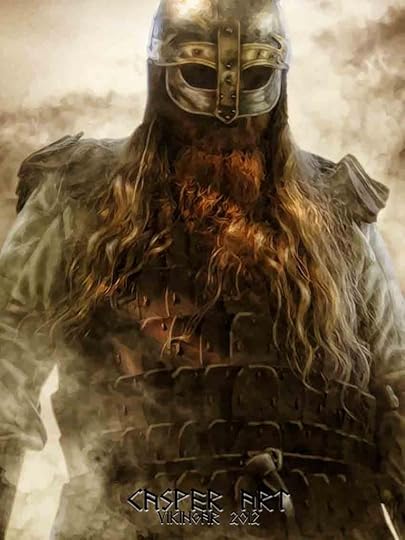
Uhtred is a lord of war. A pagan who fights for the Christianised Saxons of Wessex and Mercia(who he hates) against the pagan Danes (who he likes). So is the pleasure of the three Norns who sit at the root of the great tree and weave his life’s threads according to their own amusement.
‘Wyrd bið ful āræd - Fate is inexorable.
In times of war, Uhtred is the Saxon’s hero. But in times of peace, nobody wants a murdering, priest killing, nightmare inspiring demon from hell living in a land of abbots and bishops and churches. To be fair, the priest was an accident, he only meant to knock him out – how was he supposed to know the cross he ripped out of the abbot’s hand had a pointy end on the bottom.
Still, Uhtred soon gets himself in enough trouble to be declared outcast and kicked out of Mercia...but Uhtred knows something in his gut...
‘The peace is ending,’ I said.
‘They’ll be crying for you to return,’ Finan said.
‘They can kiss my pagan arse first.’

But priests can’t lead armies
‘Have you ever fought in a battle? I know you burned down my barns, but that isn’t a battle, you stinking piece of rat-gristle. A battle is the shield wall. It’s smelling your enemy’s breath while he tries to disembowel you with an axe, it’s blood and shit and screams and pain and terror. It’s trampling in your friends’ guts as enemies butcher them. It’s men clenching their teeth so hard they shatter them. Have you ever been in a battle?’

I listened to this on Audible and really enjoyed Matt Bates Audio narration. I loved his varying accents between the Saxons and the Danes and he really brought the book to life. Bernard Cornwell is still my favourite historical fiction writer, and the Saxon Tales are still one of my favourite all time series even seven books in. Cornwell researches his stuff well from armour to weaponry to battle tactics of the late ninth century Britain. The battle scenes in these books are second to none and he really gets across the dirty business of war from the POV of a soldier. You can literally feel the battle fever and the terror and smell the blood and sweat and shit churning in the mud where the shield walls clash.
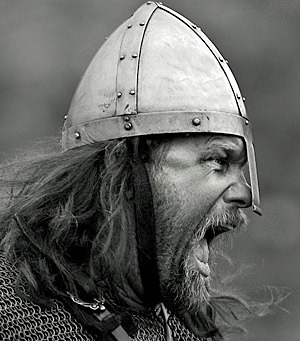
I don’t know how much further this series can go. Uhtred never gets old for me – but really, he is getting on now, and his dream of taking back his birthright, Bebbanburg, seems to be getting further and further away.
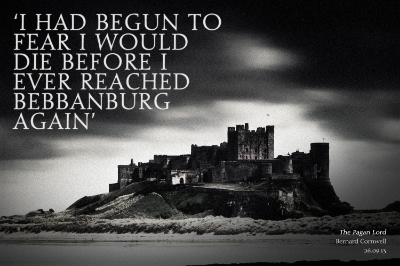
Will this be the book where he assaults the unassailable walls and takes back his inheritance from his uncle? You’ll have to read and find out. For now all I can say is...
‘Wyrd bið ful āræd' - Fate is inexorable.
5 stars
Uhtred of Bebbanburg is back with a vengeance. Clothed in mail, clad in steel and leather, slapping down the cheek pieces of his wolf-crested helm, flexing gauntlets gripping his sword, Serpent-Breath, – When Uhtred is dressed in his war glory it is not hard to imagine that even the corpse-ripper trembles.
Uhtred is a lord of war. A pagan who fights for the Christianised Saxons of Wessex and Mercia(who he hates) against the pagan Danes (who he likes). So is the pleasure of the three Norns who sit at the root of the great tree and weave his life’s threads according to their own amusement.
‘Wyrd bið ful āræd - Fate is inexorable.
In times of war, Uhtred is the Saxon’s hero. But in times of peace, nobody wants a murdering, priest killing, nightmare inspiring demon from hell living in a land of abbots and bishops and churches. To be fair, the priest was an accident, he only meant to knock him out – how was he supposed to know the cross he ripped out of the abbot’s hand had a pointy end on the bottom.
Still, Uhtred soon gets himself in enough trouble to be declared outcast and kicked out of Mercia...but Uhtred knows something in his gut...
‘The peace is ending,’ I said.
‘They’ll be crying for you to return,’ Finan said.
‘They can kiss my pagan arse first.’
But priests can’t lead armies
‘Have you ever fought in a battle? I know you burned down my barns, but that isn’t a battle, you stinking piece of rat-gristle. A battle is the shield wall. It’s smelling your enemy’s breath while he tries to disembowel you with an axe, it’s blood and shit and screams and pain and terror. It’s trampling in your friends’ guts as enemies butcher them. It’s men clenching their teeth so hard they shatter them. Have you ever been in a battle?’
I listened to this on Audible and really enjoyed Matt Bates Audio narration. I loved his varying accents between the Saxons and the Danes and he really brought the book to life. Bernard Cornwell is still my favourite historical fiction writer, and the Saxon Tales are still one of my favourite all time series even seven books in. Cornwell researches his stuff well from armour to weaponry to battle tactics of the late ninth century Britain. The battle scenes in these books are second to none and he really gets across the dirty business of war from the POV of a soldier. You can literally feel the battle fever and the terror and smell the blood and sweat and shit churning in the mud where the shield walls clash.
I don’t know how much further this series can go. Uhtred never gets old for me – but really, he is getting on now, and his dream of taking back his birthright, Bebbanburg, seems to be getting further and further away.
Will this be the book where he assaults the unassailable walls and takes back his inheritance from his uncle? You’ll have to read and find out. For now all I can say is...
‘Wyrd bið ful āræd' - Fate is inexorable.
5 stars

April 19, 2026
Another 5 stars despite the way it ended...
This series is awesome!
This series is awesome!

September 29, 2019
So damn good!

March 30, 2022
How does this series still manage to get better and better?!?! Definitely one of my favorite battles yet! Just when I think Finan is my favorite character, Uhtred does something heroic or witty again, and then Steapa walks onto the page… and I realize I love them all.

February 28, 2022
Im not sure if it's because I read 3 books of the Saxon stories straight or what.
But, I'm seeing a pattern to the way Cornwell writes and it has become predictable to me.
Didn't really enjoy this book as much as the previous ones but still tolerable.
Actual rating: 2.5
But, I'm seeing a pattern to the way Cornwell writes and it has become predictable to me.
Didn't really enjoy this book as much as the previous ones but still tolerable.
Actual rating: 2.5

November 20, 2023
کرنول از معدود نویسندههاییه که میتونه یه فرمول رو بارها تکرار کنه و هربار به اندازه دفعه اول لذت بخش باشه.

June 5, 2017
Another great "chapter" from life story of Uhtred of Bebbanburg. I love this series!

January 30, 2017
Executive Summary: This might be the weakest of the series so far, but I still continue to enjoy it. 3.5 Stars.
Full Review
This series is starting to feel a bit formulaic. Uhtred pisses off some people, does something stupid, then redeems himself through battle. I'd like to see some more progress to the overarching story than we got. I'm hoping things start to pick up more in the next book.
In particular, I found the early part a bit slow. Things did pick up as the book went on however and I still flew through the book. I still love to read about Uhtred and his exploits. He's a fun character to read about. The supporting characters, both new and old help to add to his story. He is many things to many people, but at his core he'll do anything for those he cares about.
The blend of fiction and fantasy continues to be top notch. I never know just how much of what I'm reading is "based on a true story" and how much of it comes from the author's imagination.
I will say this had a terrible cliffhanger ending, and I'm glad I was able to jump right into the next book. If I had had to wait for the next book, I'd be pretty annoyed.
It's always a sign of a good book when you're eager to jump right into the next one. If you haven't given this series a look yet, I continue to recommend that you do so.
Full Review
This series is starting to feel a bit formulaic. Uhtred pisses off some people, does something stupid, then redeems himself through battle. I'd like to see some more progress to the overarching story than we got. I'm hoping things start to pick up more in the next book.
In particular, I found the early part a bit slow. Things did pick up as the book went on however and I still flew through the book. I still love to read about Uhtred and his exploits. He's a fun character to read about. The supporting characters, both new and old help to add to his story. He is many things to many people, but at his core he'll do anything for those he cares about.
The blend of fiction and fantasy continues to be top notch. I never know just how much of what I'm reading is "based on a true story" and how much of it comes from the author's imagination.
I will say this had a terrible cliffhanger ending, and I'm glad I was able to jump right into the next book. If I had had to wait for the next book, I'd be pretty annoyed.
It's always a sign of a good book when you're eager to jump right into the next one. If you haven't given this series a look yet, I continue to recommend that you do so.

September 24, 2013
Reread and augmented by the audiobook.
The more than a dozen books in The Saxon Tales are complete. Why am I re-reading some of the volumes?
There is not the slightest doubt that Cornwell had more than a general outline when he began writing these tales. The characters involved come in and out of the picture, but the reader is never sure when they will reappear.
The plots contain many subtleties of politics, religion, ethnicity and revenge.
The depth of the history of the founding of England is both fascinating and enlightening.
This book holds a special place in the series because Uhtred is almost continually a victim of circumstances, some of his own making and many beyond his control. He sets his will against those forces, and the result is the central conflict of The Pagan Lord.
One exchange captures that larger pattern. It illuminates Uhtred’s immediate dilemma, but it also contains foreshadowing I did not understand when I first read the book. Readers who have finished The Saxon Tales will know what I mean.
“The harvest will be poor,” I told Osferth as we rode.
“Like last year, lord.”
“We’d best look to see who’s selling grain.”
“The price will be high.”
“Better than dead children,” I told him.
“You’re the hlaford,” he said.
I turned in my saddle. “Aethelstan!”
“Lord Uhtred?” The boy quickened his stallion’s pace.
“Why am I called a hlaford?”
“Because you guard the loaf, lord,” he said, “and a hlaford’s duty is to feed his people.”
I grunted approval of his answer. Hlaford is a lord, the man who guards the half, the loaf. My duty was to keep my people alive through winter’s harshness and if that took gold, then gold must be spent. I had gold, but never enough. I dreamed of Bebbanburg, of the fortress in the north that had been stolen from me by Aelfric, my uncle. It was the impregnable fort, the last refuge on Northumbria’s coast, so grim and formidable that the Danes had never captured it. They had taken all of northern Britain, from the rich pastures of Mercia to the wild Scottish frontier, but they had never taken Bebbanburg, and if I was to take it back I needed more gold for men, more gold for spears, more gold for axes, more gold for swords, more gold so we could beat down the kinsmen who had stolen my fortress. But to do that we would have to fight through all the Danish lands, and I had begun to fear I would die before I ever reached Bebbanburg again.”
Uhtred’s longing for his ancestral castle is only one of several plot elements driving the book. There has been an uneasy peace among the Saxon kingdoms and with the Danes farther north. Uhtred has substantial lands in Mercia and many followers, but when he is summarily evicted, the story turns onto a different path. And then there is Finan, whose loyalty gives that reversal its emotional weight. “Finan and I had been friends for so many years. We had shared slavery together, and then stood shoulder to shoulder in the shield wall…” “The Christians have been looking for a reason to be rid of you,” Finan said. “You’re a Christian,” I said, “so why did you stay with me?”… “What one priest decrees another priest denies. So if I stay with you, I go to hell? I’m probably going anyway, but I’ll easily find a priest who’ll tell me different…” “It’s fate, isn’t it? One moment we’re in the sunlight, and next every dark cloud in Christendom is pissing all over us. So Lord Athelred wants to go to war?”
“So I hear.”
“His woman and her brother want it. And when he’s driven Mercia into chaos they’ll be screaming for us to come back and save their miserable lives…And when we do come back they’ll forgive us. The priests will be putting wet kisses all over our arses, so they will.”
“…We get old,” I said. “We do, but no wiser, eh?” he laughed.”
The device of having the elderly Uhtred (not the 50-year-old man in this story but a 60 something ancient in a society where most were dead before 40) telling this story allows this character to comment on what he knew, what he should have known and what was keeping him from that knowledge. It humanizes the man in many ways.
The earlier discussion of hlaford returns here with sharper force. A lord has responsibilities to those who live and work on his land, but to be a lord he must have land, and Uhtred has been evicted from his Wessex estate. The title remains; the foundation beneath it has been stripped away. “I am a hlaford, a lord. A lord must provide for his men. He is their gold-giver, their ring-giver, their silver-lord. He must feed his men, shelter them, and enrich them, and in return they serve him and make him a great lord, one whose name is spoken with respect. And my men had a homeless lord, a lord of sand and ashes, a one-ship lord. And I did not know what to do.”
And last, but not least, Matt Bates is the perfect reader for this series. Listening, this time to the audio, I am impressed by the nuance and dramatic dimensions he adds to the story.
If you haven’t begun this series, it is almost compulsory to start at the beginning. The Last Kingdom https://www.goodreads.com/review/show...
Some final thoughts on religion. It is easy to conflate Uhtred’s ideas about religion with those of the author. I do not believe that Cornwell is usually speaking “through Uhtred.” Uhtred has had a life full of conflict from the time his father was killed and he was taken as a prisoner/slave by a Dane warchief. He was exposed to the panoply of Norse gods from this early age and subjected to the teachings of Christianity. He had to make his own way and that has included looking for signs (and omens) of the gods wishes and trying to come to grips with working for the Christian King, Alfred the Great, while not becoming a Christian. At one point in this book, he shares with us his thoughts of these topics: “My uncle and cousin were Christians, so the angels might protect them, if such magical winged creatures even exist. Perhaps they do. I believe in the Christian god, but I do not believe he is the only god. He is a jealous, sullen, solitary creature who hates the other gods and conspires against them. Sometimes, when I think about him, I see him as being like Alfred, except Alfred had some decency and kindness, but Alfred never stopped working or thinking or worrying. The Christian god also never stops working and planning. My gods like to loll in the feasting-hall or take their goddesses to bed, they are drunk, dissolute and happy, and while they feast and fornicate, the Christian god is capturing the world.”
Rated R? Some of the insults exchanged:
In modern warfare, soldiers, more often than not, never see the enemy. But, in this period the opponents were shield to shield pushing, thrusting and slashing. And before that clash began there were the exchange of insults.
“The Danes were still shouting. We were women, we were boys, we were shit, we were cowards, we were dead men….
Shit-slimed bastard
Bile-brained slug
Rancid shit-wit
Spavined weasel
Toad-fart
Dog returning to its vomit
Bloated piece of shit
Yule-fattened pig
Etc.
The book arrived today.......how many things on my chore list won't be done on schedule?
Bernard Cornwell is unique among historical novelists. Unlike most, he doesn't concentrate on a particular era, though he does confine most of his writing to situations relating to Britain. The research he does must be enormous because he takes almost two thousand years of English history and makes each place and time palpable. His care with history, language, and plot is what makes his stories so gripping.
This is the seventh book in The Saxon Tales, and we have reached circa 900. Our protagonist, Uhtred, was King Alfred's greatest warrior, but Alfred has passed and Uhtred is out of favor. In about thirty pages, Cornwell moves the action along at a gallop. Uhtred, the pagan vassal of Christians, goes to retrieve his son from a gathering of priests. In two breaths, he has killed a saintly leader, disowned a son, has his woman kidnapped, his manor burned to the ground, met his old Northumbrian enemy, Cnut, and been driven into exile.
Uhtred has been a pagan in a Christian world. He keeps his word to the Kings of Wessex when his natural alliance would be with the Danes of Northumberland. Uhtred shares with us why the Danes (Vikings)believe 13 is unlucky. It is not because Judas was the 13th at the table who betrayed Jesus. It is because Loki, the trickster, is the 13th god in the Norse panoply of gods. Which is appropriate, because deceit and trickery are woven into this tale of the aging Uhtred who longs to regain his family home at Bebbanburg Castle.
Cornwell's writing is focused on what it takes to survive and what it takes to succeed in a given society. His perspective is usually that of the common soldier. And, as he does in other works, including the Battle of Agincourt and the Napoleonic Wars (Sharpe Series), he shows the many faces of fear. The fear of the Lord who realizes he might lose his succession; the fear of the yeoman who might lose his lord; the fear of a woman who has no control of her life; the fear of a peasant who depended on his lord for bread and protection; the fear of the soldier whose life may be forfeit by a slight misjudgment of his leader. It is through this, and other means, that we become acquainted with life as it is lived in this time and place. This is not the usual stuff of history books.
Cornwell's larger interest I would describe as: "What is England and how did it get that way?"
The Saxon Tales take place just before there is an England, which Cornwell/Uhtred characterize as the dream of King Alfred. And a tenuous and precarious dream it is. This book (and the whole Saxon Tales series) make it clear how close they came to being a Norse province under the Danelaw.
George R.R. Martin is quoted: "Bernard Cornwell does the best battle scenes of any writer I've ever read, past or present."
The Washington Post says, "Bernard Cornwell is a gifted and prolific historical novelist who seems at home in virtually every era..."
No disagreements from me. This may be his best series, and perhaps the best book of the series. Though, I believe he is leaving it open for another volume.
The more than a dozen books in The Saxon Tales are complete. Why am I re-reading some of the volumes?
There is not the slightest doubt that Cornwell had more than a general outline when he began writing these tales. The characters involved come in and out of the picture, but the reader is never sure when they will reappear.
The plots contain many subtleties of politics, religion, ethnicity and revenge.
The depth of the history of the founding of England is both fascinating and enlightening.
This book holds a special place in the series because Uhtred is almost continually a victim of circumstances, some of his own making and many beyond his control. He sets his will against those forces, and the result is the central conflict of The Pagan Lord.
One exchange captures that larger pattern. It illuminates Uhtred’s immediate dilemma, but it also contains foreshadowing I did not understand when I first read the book. Readers who have finished The Saxon Tales will know what I mean.
“The harvest will be poor,” I told Osferth as we rode.
“Like last year, lord.”
“We’d best look to see who’s selling grain.”
“The price will be high.”
“Better than dead children,” I told him.
“You’re the hlaford,” he said.
I turned in my saddle. “Aethelstan!”
“Lord Uhtred?” The boy quickened his stallion’s pace.
“Why am I called a hlaford?”
“Because you guard the loaf, lord,” he said, “and a hlaford’s duty is to feed his people.”
I grunted approval of his answer. Hlaford is a lord, the man who guards the half, the loaf. My duty was to keep my people alive through winter’s harshness and if that took gold, then gold must be spent. I had gold, but never enough. I dreamed of Bebbanburg, of the fortress in the north that had been stolen from me by Aelfric, my uncle. It was the impregnable fort, the last refuge on Northumbria’s coast, so grim and formidable that the Danes had never captured it. They had taken all of northern Britain, from the rich pastures of Mercia to the wild Scottish frontier, but they had never taken Bebbanburg, and if I was to take it back I needed more gold for men, more gold for spears, more gold for axes, more gold for swords, more gold so we could beat down the kinsmen who had stolen my fortress. But to do that we would have to fight through all the Danish lands, and I had begun to fear I would die before I ever reached Bebbanburg again.”
Uhtred’s longing for his ancestral castle is only one of several plot elements driving the book. There has been an uneasy peace among the Saxon kingdoms and with the Danes farther north. Uhtred has substantial lands in Mercia and many followers, but when he is summarily evicted, the story turns onto a different path. And then there is Finan, whose loyalty gives that reversal its emotional weight. “Finan and I had been friends for so many years. We had shared slavery together, and then stood shoulder to shoulder in the shield wall…” “The Christians have been looking for a reason to be rid of you,” Finan said. “You’re a Christian,” I said, “so why did you stay with me?”… “What one priest decrees another priest denies. So if I stay with you, I go to hell? I’m probably going anyway, but I’ll easily find a priest who’ll tell me different…” “It’s fate, isn’t it? One moment we’re in the sunlight, and next every dark cloud in Christendom is pissing all over us. So Lord Athelred wants to go to war?”
“So I hear.”
“His woman and her brother want it. And when he’s driven Mercia into chaos they’ll be screaming for us to come back and save their miserable lives…And when we do come back they’ll forgive us. The priests will be putting wet kisses all over our arses, so they will.”
“…We get old,” I said. “We do, but no wiser, eh?” he laughed.”
The device of having the elderly Uhtred (not the 50-year-old man in this story but a 60 something ancient in a society where most were dead before 40) telling this story allows this character to comment on what he knew, what he should have known and what was keeping him from that knowledge. It humanizes the man in many ways.
The earlier discussion of hlaford returns here with sharper force. A lord has responsibilities to those who live and work on his land, but to be a lord he must have land, and Uhtred has been evicted from his Wessex estate. The title remains; the foundation beneath it has been stripped away. “I am a hlaford, a lord. A lord must provide for his men. He is their gold-giver, their ring-giver, their silver-lord. He must feed his men, shelter them, and enrich them, and in return they serve him and make him a great lord, one whose name is spoken with respect. And my men had a homeless lord, a lord of sand and ashes, a one-ship lord. And I did not know what to do.”
And last, but not least, Matt Bates is the perfect reader for this series. Listening, this time to the audio, I am impressed by the nuance and dramatic dimensions he adds to the story.
If you haven’t begun this series, it is almost compulsory to start at the beginning. The Last Kingdom https://www.goodreads.com/review/show...
Some final thoughts on religion. It is easy to conflate Uhtred’s ideas about religion with those of the author. I do not believe that Cornwell is usually speaking “through Uhtred.” Uhtred has had a life full of conflict from the time his father was killed and he was taken as a prisoner/slave by a Dane warchief. He was exposed to the panoply of Norse gods from this early age and subjected to the teachings of Christianity. He had to make his own way and that has included looking for signs (and omens) of the gods wishes and trying to come to grips with working for the Christian King, Alfred the Great, while not becoming a Christian. At one point in this book, he shares with us his thoughts of these topics: “My uncle and cousin were Christians, so the angels might protect them, if such magical winged creatures even exist. Perhaps they do. I believe in the Christian god, but I do not believe he is the only god. He is a jealous, sullen, solitary creature who hates the other gods and conspires against them. Sometimes, when I think about him, I see him as being like Alfred, except Alfred had some decency and kindness, but Alfred never stopped working or thinking or worrying. The Christian god also never stops working and planning. My gods like to loll in the feasting-hall or take their goddesses to bed, they are drunk, dissolute and happy, and while they feast and fornicate, the Christian god is capturing the world.”
Rated R? Some of the insults exchanged:
In modern warfare, soldiers, more often than not, never see the enemy. But, in this period the opponents were shield to shield pushing, thrusting and slashing. And before that clash began there were the exchange of insults.
“The Danes were still shouting. We were women, we were boys, we were shit, we were cowards, we were dead men….
Shit-slimed bastard
Bile-brained slug
Rancid shit-wit
Spavined weasel
Toad-fart
Dog returning to its vomit
Bloated piece of shit
Yule-fattened pig
Etc.
The book arrived today.......how many things on my chore list won't be done on schedule?
Bernard Cornwell is unique among historical novelists. Unlike most, he doesn't concentrate on a particular era, though he does confine most of his writing to situations relating to Britain. The research he does must be enormous because he takes almost two thousand years of English history and makes each place and time palpable. His care with history, language, and plot is what makes his stories so gripping.
This is the seventh book in The Saxon Tales, and we have reached circa 900. Our protagonist, Uhtred, was King Alfred's greatest warrior, but Alfred has passed and Uhtred is out of favor. In about thirty pages, Cornwell moves the action along at a gallop. Uhtred, the pagan vassal of Christians, goes to retrieve his son from a gathering of priests. In two breaths, he has killed a saintly leader, disowned a son, has his woman kidnapped, his manor burned to the ground, met his old Northumbrian enemy, Cnut, and been driven into exile.
Uhtred has been a pagan in a Christian world. He keeps his word to the Kings of Wessex when his natural alliance would be with the Danes of Northumberland. Uhtred shares with us why the Danes (Vikings)believe 13 is unlucky. It is not because Judas was the 13th at the table who betrayed Jesus. It is because Loki, the trickster, is the 13th god in the Norse panoply of gods. Which is appropriate, because deceit and trickery are woven into this tale of the aging Uhtred who longs to regain his family home at Bebbanburg Castle.
Cornwell's writing is focused on what it takes to survive and what it takes to succeed in a given society. His perspective is usually that of the common soldier. And, as he does in other works, including the Battle of Agincourt and the Napoleonic Wars (Sharpe Series), he shows the many faces of fear. The fear of the Lord who realizes he might lose his succession; the fear of the yeoman who might lose his lord; the fear of a woman who has no control of her life; the fear of a peasant who depended on his lord for bread and protection; the fear of the soldier whose life may be forfeit by a slight misjudgment of his leader. It is through this, and other means, that we become acquainted with life as it is lived in this time and place. This is not the usual stuff of history books.
Cornwell's larger interest I would describe as: "What is England and how did it get that way?"
The Saxon Tales take place just before there is an England, which Cornwell/Uhtred characterize as the dream of King Alfred. And a tenuous and precarious dream it is. This book (and the whole Saxon Tales series) make it clear how close they came to being a Norse province under the Danelaw.
George R.R. Martin is quoted: "Bernard Cornwell does the best battle scenes of any writer I've ever read, past or present."
The Washington Post says, "Bernard Cornwell is a gifted and prolific historical novelist who seems at home in virtually every era..."
No disagreements from me. This may be his best series, and perhaps the best book of the series. Though, I believe he is leaving it open for another volume.

March 28, 2022
Holy smokes, this story opened up with an unpleasant bang! That scene was awful. Uhtred unintentionally kills someone, and the repercussions from this murder are pretty darned serious. If you have read Uhtred's story up to this point, you know how pigheaded, violent and impulsive he can be. But that scene was upsetting for so many reasons.
Left at loose ends, he sets off to reclaim Bebbanburg which is still under his rotten uncle's control. Many, many things happen, some of which were quite twist-y and really threw me for a loop. One thing led to another, and everything finally culminates in a battle against the Danes at Teotanheale in the Mid-lands. This is circa 910 AD.
The characters are, as always, excellent. The antagonists on the Dane side are Cnut Ranulfson, Sigurd Thorrson, and the rotten bastard Haesten. When will he get his comeuppance?! I want a front row seat! On the A-Team, along with Uhtred, is Finan the fabulous Irishman, Aethelflaed, Father Pyrlig (my favorite Welshman), King Edward's son, Uhtred's son, and a number of others.
An aspect of the book that I really enjoyed were the scenes with Uhtred trading insults with, well, a lot of people actually! And the way he dealt with the premature rumors of his death that were circulating. He had a ball with those! They just served to increase his already formidable reputation.
This was another good entry in this terrific series. I already own the rest so I will be reading the others. Maybe after a light book of fluff, though!
Left at loose ends, he sets off to reclaim Bebbanburg which is still under his rotten uncle's control. Many, many things happen, some of which were quite twist-y and really threw me for a loop. One thing led to another, and everything finally culminates in a battle against the Danes at Teotanheale in the Mid-lands. This is circa 910 AD.
The characters are, as always, excellent. The antagonists on the Dane side are Cnut Ranulfson, Sigurd Thorrson, and the rotten bastard Haesten. When will he get his comeuppance?! I want a front row seat! On the A-Team, along with Uhtred, is Finan the fabulous Irishman, Aethelflaed, Father Pyrlig (my favorite Welshman), King Edward's son, Uhtred's son, and a number of others.
An aspect of the book that I really enjoyed were the scenes with Uhtred trading insults with, well, a lot of people actually! And the way he dealt with the premature rumors of his death that were circulating. He had a ball with those! They just served to increase his already formidable reputation.
This was another good entry in this terrific series. I already own the rest so I will be reading the others. Maybe after a light book of fluff, though!

August 15, 2018
Bernard Cornwell has brought Uhtred of Bebbanburg to life in such a brilliant manner. I love this series. Uhtred is such a rebel, but he is always compelled to live by his own moral codes. The friction between being a rebel and having moral codes makes this a great book, but it also makes a great series.
The opening scene had Uthred not being the best fatherly role model, but it just didn't matter. As the reader, I completely understand him and his antics. I love when that happens, especially in historical fiction.
The opening scene had Uthred not being the best fatherly role model, but it just didn't matter. As the reader, I completely understand him and his antics. I love when that happens, especially in historical fiction.

August 26, 2020
Another slam dunk by Mr. Cornwell.
I had put this series aside a couple of years ago in favor of other books. Picking it up again felt like returning home. I had almost forgotten just how good Mr. Cornwell's writing is.
Will probably start the next one today.
I had put this series aside a couple of years ago in favor of other books. Picking it up again felt like returning home. I had almost forgotten just how good Mr. Cornwell's writing is.
Will probably start the next one today.
July 22, 2026
Uhtred manages to live through another of his novels through luck, cunning, and his sword Serpent Breath. This hero beats the odds of being a pagan in a Christian army by being the man who can do the dirty work that many Saxons don't have the stomach to do. The Pagan Lord is set in a time when the Danes could have made England into Daneland if their offensive against the Saxons had succeeded. The man who is instrumental in stopping this is Uhtred the worshipper of the same Gods as the Danes but who is bond by an oath to serve the Christian Saxons that he has some contempt for. I liked the book but in some ways it seems to be a rehash of the previous novels with the same scenario of Uhtred saving the day.

August 9, 2018
In this book in the series, Uhtred is now middle-aged. Which means, by the standards of the time, that he is becoming an old man. However, he is still a very smart warrior, with an uncanny instinct for the motives and intentions of others. Two aspects of this series continue to engage me. First, in each book, Uhtred devises some neat tricks to out-smart his enemies. Second, it is amazing how superstitious people are, and in many ways, naive. During the Middle Ages, there is no such thing as "science", and people are all too willing to believe in just about any supernatural phenomenon.
The previous book in this series, Death of Kings seemed to lag behind the others in the level of plot and excitement. It was just a bit too slow. However, This seventh book in the series stepped up the pace somewhat, and I can heartily recommend it.
I listened to this book as an audiobook, narrated by Matt Bates. He does an excellent job, and I was rarely if ever confused by the dialogs. The reason is that Matt Bates is able to differentiate the different characters with different voices and accents. As a result, listening to the book is very enjoyable.
The previous book in this series, Death of Kings seemed to lag behind the others in the level of plot and excitement. It was just a bit too slow. However, This seventh book in the series stepped up the pace somewhat, and I can heartily recommend it.
I listened to this book as an audiobook, narrated by Matt Bates. He does an excellent job, and I was rarely if ever confused by the dialogs. The reason is that Matt Bates is able to differentiate the different characters with different voices and accents. As a result, listening to the book is very enjoyable.

January 8, 2014
I'm relatively new to this series, so this book was the first I really had to wait for, and the fact that I finished this book in two sittings is a testament to how much I missed Uhtred. He's definitely a singular presence in fiction. He's an utter he-man but in the most likable way, and blessedly free of cheesy, ham-handed masculinity. It's not like "I'm a badass because I think I look cool in mail and a helmet with a wolf's-head crest" type stuff which would be terribly annoying. Uhtred is a badass because killing Danes has literally been his chosen career for like forty years at this point. He's like the CEO of Wessex & East Anglia Dane Slaying, INC. and he has to come to work with his expensive suit (of mail), his litany of crude sexual and scatological insults, and mastery of all things martial. It also helps that he's a clever and ruthless bastard.
The plot? It's pretty standard Uhtred stuff; the Danes (who were apparently the worst neighbors ever) are restless and Uhtred is the man to sniff out exactly what's going on. There's plenty of meetings in darkened halls and conspiracies and that kind of thing, which reminded me of the intriguey Death of Kings. You also get a new experience in really witnessing Uhtred the father. Previous books definitely had his family in it but in this one you see him really dealing with the role of fatherhood. It's obviously not a huge part of the book but it does make Uhtred a more complex man. He's...fifty-three if I remember correctly in this book and pretty much the coolest old man ever. Definitely a different guy in this book than he was in the first couple. (Older people please don't be offended at me calling Uhtred "old", being fifty-three in 910 was like being 90.)
I probably liked this one a bit more than the last. The plot seemed to be more fast-paced and consistent. The book opens with a very Uhtredaerwe moment and sustains the headlong pace until the author's note. Even this being the like 300th "author's note" by Cornwell's I've read I always have to laugh at the segue, as the page before ends with something like "The sun was rising, the crows were feasting and we had slaughtered the Danes. I could smell their shit and piss and felt the battle-joy of gut-spilling slaughter and it was fucking awesome." And then it's like two pages of this sober, professorial prose. You can't really get any better than this, and getting a good lesson on the evolving historical topography of this legendary island is just icing on the cake. As usual, this is easy enough stuff so that newcomers would probably enjoy it but I always recommend starting at the beginning.
The plot? It's pretty standard Uhtred stuff; the Danes (who were apparently the worst neighbors ever) are restless and Uhtred is the man to sniff out exactly what's going on. There's plenty of meetings in darkened halls and conspiracies and that kind of thing, which reminded me of the intriguey Death of Kings. You also get a new experience in really witnessing Uhtred the father. Previous books definitely had his family in it but in this one you see him really dealing with the role of fatherhood. It's obviously not a huge part of the book but it does make Uhtred a more complex man. He's...fifty-three if I remember correctly in this book and pretty much the coolest old man ever. Definitely a different guy in this book than he was in the first couple. (Older people please don't be offended at me calling Uhtred "old", being fifty-three in 910 was like being 90.)
I probably liked this one a bit more than the last. The plot seemed to be more fast-paced and consistent. The book opens with a very Uhtredaerwe moment and sustains the headlong pace until the author's note. Even this being the like 300th "author's note" by Cornwell's I've read I always have to laugh at the segue, as the page before ends with something like "The sun was rising, the crows were feasting and we had slaughtered the Danes. I could smell their shit and piss and felt the battle-joy of gut-spilling slaughter and it was fucking awesome." And then it's like two pages of this sober, professorial prose. You can't really get any better than this, and getting a good lesson on the evolving historical topography of this legendary island is just icing on the cake. As usual, this is easy enough stuff so that newcomers would probably enjoy it but I always recommend starting at the beginning.

April 26, 2013
Uthred is back with a vengeance. After a somewhat disappointing outing in the previous book of the series, this entry starts with a bang (figuratively or course) and the saga continues at a brake neck speed. The plot is a bit formulaic, but it is a tried and true formula and there are enough tweaks to it to make this a truly enjoyable read.
This is vintage Cornwell, well researched background combined with excellent characters make for a very readable and page turning read. As always it seems Uthred's first response to any trouble is swordplay. Also, as usual with Mr. Cornwell, the battle sequences are well done and the reader can almost feel the fear as the participants are waiting the start of the battle and the rush of adrenalin as the battle is joined.
The spring board for this entry's plot is the destruction of Uthred’s home and estate by Danish Raiders. As Uthred tries to find the raiders he sucked into a search that leads him back to Babbenburg and his legacy. The question is can he seize and hold that legacy
Uthred is also realizing his age and wondering how long he can continue in the Shield Wall. I found that humanizing him a bit added to my appreciation of his character.
My rating is a solid 4 + stars
This is vintage Cornwell, well researched background combined with excellent characters make for a very readable and page turning read. As always it seems Uthred's first response to any trouble is swordplay. Also, as usual with Mr. Cornwell, the battle sequences are well done and the reader can almost feel the fear as the participants are waiting the start of the battle and the rush of adrenalin as the battle is joined.
The spring board for this entry's plot is the destruction of Uthred’s home and estate by Danish Raiders. As Uthred tries to find the raiders he sucked into a search that leads him back to Babbenburg and his legacy. The question is can he seize and hold that legacy
Uthred is also realizing his age and wondering how long he can continue in the Shield Wall. I found that humanizing him a bit added to my appreciation of his character.
My rating is a solid 4 + stars

May 1, 2013
First of all!
Dear, Local Library, NO! You set me a book that's been to (at least 3!) a smoking home AND it had been properly assaulted by salt n vinegar crips.... of the chipsticks variety I think too....
Off to a bad start already & about a 1/3rd of the way throu' it struck me as to how devoid of real characters we had left in the series, ok Uhtred was on form & we had Uhtred junior (that is the new Uhtred junior) & one of my favs, The Irishman Finan. But that was really it, ok they die, it's an occupational hazard with Vikings I know but there wasn't any new ones to hang onto & so we had more of a narrated style about the book through to the last 100pg's or so (the finale that is). i'll admit to skip reading in places too, also an overwhelming sense of deja-vu with this tale.
I nearly lapsed into giving this tale a 4 star rating as I fairly ripped off the final chapters which were a rip-roaring-rollicking-read (no doubt a red-top rags quote - but there yer go) when in truth all that went before was a very very average read. I did like the ending, very apt I thought & gives options as to the series.
I'm glad it's only a library book, I would have felt a little stung shelling out for this read at jus over 300pg's, a library book that I was tempted to wrap in fish n chip papers on it's return.
Dear, Local Library, NO! You set me a book that's been to (at least 3!) a smoking home AND it had been properly assaulted by salt n vinegar crips.... of the chipsticks variety I think too....
Off to a bad start already & about a 1/3rd of the way throu' it struck me as to how devoid of real characters we had left in the series, ok Uhtred was on form & we had Uhtred junior (that is the new Uhtred junior) & one of my favs, The Irishman Finan. But that was really it, ok they die, it's an occupational hazard with Vikings I know but there wasn't any new ones to hang onto & so we had more of a narrated style about the book through to the last 100pg's or so (the finale that is). i'll admit to skip reading in places too, also an overwhelming sense of deja-vu with this tale.
I nearly lapsed into giving this tale a 4 star rating as I fairly ripped off the final chapters which were a rip-roaring-rollicking-read (no doubt a red-top rags quote - but there yer go) when in truth all that went before was a very very average read. I did like the ending, very apt I thought & gives options as to the series.
I'm glad it's only a library book, I would have felt a little stung shelling out for this read at jus over 300pg's, a library book that I was tempted to wrap in fish n chip papers on it's return.

April 26, 2013
If you want shield walls then this is the book you want.
interesting reading, not sure about the last chapter at all, feeling numb.
interesting reading, not sure about the last chapter at all, feeling numb.
Displaying 1 - 30 of 1,527 reviews