

What do you think?

Don't Look Now
Daphne du Maurier wrote some of the most compelling and creepy novels of the twentieth century. In books like Rebecca, My Cousin Rachel, and Jamaica Inn she transformed the small dramas of everyday life—love, grief, jealousy—into the stuff of nightmares. Less known, though no less powerful, are her short stories, in which she gave free rein to her imagination in narratives of unflagging suspense.
Patrick McGrath's revelatory new selection of du Maurier's stories shows her at her most chilling and most psychologically astute: a dead child reappears in the alleyways of Venice; routine eye surgery reveals the beast within to a meek housewife; nature revolts against man's abuse by turning a benign species into an annihilating force; a dalliance with a beautiful stranger offers something more dangerous than a broken heart. McGrath draws on the whole of du Maurier's long career and includes surprising discoveries together with famous stories like "The Birds". Don't Look Now is a perfect introduction to a peerless storyteller.
Patrick McGrath's revelatory new selection of du Maurier's stories shows her at her most chilling and most psychologically astute: a dead child reappears in the alleyways of Venice; routine eye surgery reveals the beast within to a meek housewife; nature revolts against man's abuse by turning a benign species into an annihilating force; a dalliance with a beautiful stranger offers something more dangerous than a broken heart. McGrath draws on the whole of du Maurier's long career and includes surprising discoveries together with famous stories like "The Birds". Don't Look Now is a perfect introduction to a peerless storyteller.
346 pages, Paperback
First published March 7, 2007
About the author
Daphne du Maurier
438 books10.8k followersDaphne du Maurier was born on 13 May 1907 at 24 Cumberland Terrace, Regent's Park, London, the middle of three daughters of prominent actor-manager Sir Gerald du Maurier and actress Muriel, née Beaumont. In many ways her life resembles a fairy tale. Born into a family with a rich artistic and historical background, her paternal grandfather was author and Punch cartoonist George du Maurier, who created the character of Svengali in the 1894 novel Trilby, and her mother was a maternal niece of journalist, author, and lecturer Comyns Beaumont. She and her sisters were indulged as a children and grew up enjoying enormous freedom from financial and parental restraint. Her elder sister, Angela du Maurier, also became a writer, and her younger sister Jeanne was a painter.
She spent her youth sailing boats, travelling on the Continent with friends, and writing stories. Her family connections helped her establish her literary career, and she published some of her early work in Beaumont's Bystander magazine. A prestigious publishing house accepted her first novel when she was in her early twenties, and its publication brought her not only fame but the attentions of a handsome soldier, Major (later Lieutenant-General Sir) Frederick Browning, whom she married.
She continued writing under her maiden name, and her subsequent novels became bestsellers, earning her enormous wealth and fame. Many have been successfully adapted into films, including the novels Rebecca, Frenchman's Creek, My Cousin Rachel, and Jamaica Inn, and the short stories The Birds and Don't Look Now/Not After Midnight. While Alfred Hitchcock's films based upon her novels proceeded to make her one of the best-known authors in the world, she enjoyed the life of a fairy princess in a mansion in Cornwall called Menabilly, which served as the model for Manderley in Rebecca.
Daphne du Maurier was obsessed with the past. She intensively researched the lives of Francis and Anthony Bacon, the history of Cornwall, the Regency period, and nineteenth-century France and England. Above all, however, she was obsessed with her own family history, which she chronicled in Gerald: A Portrait, a biography of her father; The du Mauriers, a study of her family which focused on her grandfather, George du Maurier, the novelist and illustrator for Punch; The Glassblowers, a novel based upon the lives of her du Maurier ancestors; and Growing Pains, an autobiography that ignores nearly 50 years of her life in favour of the joyful and more romantic period of her youth. Daphne du Maurier can best be understood in terms of her remarkable and paradoxical family, the ghosts which haunted her life and fiction.
While contemporary writers were dealing critically with such subjects as the war, alienation, religion, poverty, Marxism, psychology and art, and experimenting with new techniques such as the stream of consciousness, du Maurier produced 'old-fashioned' novels with straightforward narratives that appealed to a popular audience's love of fantasy, adventure, sexuality and mystery. At an early age, she recognised that her readership was comprised principally of women, and she cultivated their loyal following through several decades by embodying their desires and dreams in her novels and short stories.
In some of her novels, however, she went beyond the technique of the formulaic romance to achieve a powerful psychological realism reflecting her intense feelings about her father, and to a lesser degree, her mother. This vision, which underlies Julius, Rebecca and The Parasites, is that of an author overwhelmed by the memory of her father's commanding presence. In Julius and The Parasites, for example, she introduces the image of a domineering but deadly father and the daring subject of incest.
In Rebecca, on the other hand, du Maurier fuses psychological realism with a sophisticated version of the Cinderella story.
She spent her youth sailing boats, travelling on the Continent with friends, and writing stories. Her family connections helped her establish her literary career, and she published some of her early work in Beaumont's Bystander magazine. A prestigious publishing house accepted her first novel when she was in her early twenties, and its publication brought her not only fame but the attentions of a handsome soldier, Major (later Lieutenant-General Sir) Frederick Browning, whom she married.
She continued writing under her maiden name, and her subsequent novels became bestsellers, earning her enormous wealth and fame. Many have been successfully adapted into films, including the novels Rebecca, Frenchman's Creek, My Cousin Rachel, and Jamaica Inn, and the short stories The Birds and Don't Look Now/Not After Midnight. While Alfred Hitchcock's films based upon her novels proceeded to make her one of the best-known authors in the world, she enjoyed the life of a fairy princess in a mansion in Cornwall called Menabilly, which served as the model for Manderley in Rebecca.
Daphne du Maurier was obsessed with the past. She intensively researched the lives of Francis and Anthony Bacon, the history of Cornwall, the Regency period, and nineteenth-century France and England. Above all, however, she was obsessed with her own family history, which she chronicled in Gerald: A Portrait, a biography of her father; The du Mauriers, a study of her family which focused on her grandfather, George du Maurier, the novelist and illustrator for Punch; The Glassblowers, a novel based upon the lives of her du Maurier ancestors; and Growing Pains, an autobiography that ignores nearly 50 years of her life in favour of the joyful and more romantic period of her youth. Daphne du Maurier can best be understood in terms of her remarkable and paradoxical family, the ghosts which haunted her life and fiction.
While contemporary writers were dealing critically with such subjects as the war, alienation, religion, poverty, Marxism, psychology and art, and experimenting with new techniques such as the stream of consciousness, du Maurier produced 'old-fashioned' novels with straightforward narratives that appealed to a popular audience's love of fantasy, adventure, sexuality and mystery. At an early age, she recognised that her readership was comprised principally of women, and she cultivated their loyal following through several decades by embodying their desires and dreams in her novels and short stories.
In some of her novels, however, she went beyond the technique of the formulaic romance to achieve a powerful psychological realism reflecting her intense feelings about her father, and to a lesser degree, her mother. This vision, which underlies Julius, Rebecca and The Parasites, is that of an author overwhelmed by the memory of her father's commanding presence. In Julius and The Parasites, for example, she introduces the image of a domineering but deadly father and the daring subject of incest.
In Rebecca, on the other hand, du Maurier fuses psychological realism with a sophisticated version of the Cinderella story.
Ratings & Reviews
Friends & Following
Create a free account to discover what your friends think of this book!
Community Reviews
Displaying 1 - 30 of 643 reviews

May 1, 2017

Gripping, absolutely gripping – my listening to three Daphne du Maurier tales on audio: No Motive and two from this collection, Don’t Look Now and the author’s famous The Birds. Each reading spanning an hour and a half, the storytelling so compelling, picking up dramatic momentum every single minute, I dare not take a break until the shocking conclusion. And to add a bit more atmosphere to my listening to The Birds, out my apartment window, down at the pond, a gaggle of Canadian Geese started honking and fighting and honking some more.
Patrick McGrath writes in his astute Introduction to this New York Review Books (NYRB) edition how Daphne du Mauier possessed an uncanny genius to craft her stories in ways to sustain tension right up until the the final sentence, an ending frequently shocking and disturbing in the extreme.
I enjoyed each of the nine pieces collected here but two most especially: Don’t Look Now with its clairvoyant older twins and creepy happenings and the story serving as the focus of my review: The Birds. And please don't think of the Hitchcock film - other than attacking birds and terrorized humans, Daphne du Maurier's tale is a hundred shades darker, incomparably more ominous and threatening, even to the point of impending cataclysm for the entire human race.
THE BIRDS
“Black and white, jackdaw and gull, mingled in strange partnership, seeking some sort of liberation, never satisfied, never still. Flocks of starlings, rustling like silk, flew to fresh pasture, driven by the same necessity of movement, and the smaller birds, the finches and the larks, scattered from tree to hedge as if compelled.”
Handyman Nat Hocken lives in remote farming country out on a peninsula in England and remarks to one of the farmers how there’s something quite strange about all the bird behavior this autumn. Just how strange? Nat finds out very quickly when that very night birds enter the bedroom window of his son and daughter, dozens of little birds, attacking both of them, trying to peck out his son’s eyes. Nat takes immediate action, gets his children out of the room, closes the door, and frantically swings a pillow left and right, up and down, to kill as many birds as he can.
The next morning: “Nat gazed at the little corpses, shocked and horrified. They were all small birds, none of any size, there must have been fifty of them lying there upon the floor. There were robins, finches, sparrows, blue tits, larks, and bramblings, birds that by nature’s law kept to their own flock and their own territory, and now, joining one with another in their urge for battle, has destroyed themselves against the bedroom walls, or in the strife had been destroyed by him.” And this is only the beginning.
Later that day Ned is attacked by bigger birds out in a field and, after he races home for protection, both he and his wife hear on the radio that the government of England has called a state of emergency, advising all citizens to remain inside and take the necessary precautions to ensure their safety. But, above all else, people are urged to remain calm.
Time Out for Facts: there exists almost ten thousand different species of birds and according to some experts, the total worldwide bird population could total as many as four-hundred-billion. Whoa! Four-hundred-billion. No matter how you look at it, that’s a lot of birds. Imagine what would happen if, as if directed and coordinated by some unseen unifying force, all those birds began an attack en masse on humans.
Slovenian philosopher and cultural critic Slavoj Žižek believes the author was targeting the prevailing welfare state for their inability to effectively deal with the attacking birds. Patrick McGrath notes how du Maurier’s story anticipates a global ecological disaster. I myself think McGrath is on the mark and Žižek is way off the mark. As Nat Hocken asserts, survival, at least immediate survival, has everything to do with the sturdiness of one's shelter. Sorry, Slavoj - politicians of any stripe will be of little help in fending off a nonstop attack conducted by billions of birds.

Daphne du Maurier delves into the unsettling psychology produced by such an attack. Almost to be expected, initial reactions revolve around denial and rationalization. Very understandable since the cycle of human existence is completely dependent on the laws of nature.
And the more we understand the laws of nature, the more we feel we are in control. Herein lies the terror of the tale – the laws of nature remain intact with one glaring exception: the behavior of the birds. All of a sudden nature has transformed itself into the unknown. As writers such as H.P. Lovecraft recognized, there is no stronger human emotion than fear and no great fear than fear of the unknown.
As per the well-worn admonition, “Don’t just stand there, do something!” humans being humans, there is a natural instinct to take action. Upon hearing a roaring sound, Nat reflects how the authorities have sent out airplanes but knows this is sheer suicide since aircraft would be useless against thousands and thousands of birds flinging themselves to death against propellers, fuselages and jets.
Then Nat hears another sound, a sound prompting him to have one last smoke: “The hawks ignored the windows. They concentrated their attack upon the door. Nat listened to the tearing sound of splintered wood, and wondered how many million years of memory were stored in those little brains, behind the stabbing beaks, the piercing eyes, now giving them this instinct to destroy mankind with all the precision of machines.”
Did I mention gripping? I can assure you, you will never encounter a more chilling, spellbinding, mesmerizing tale then this one. Darn, down at the pond, those Canadian Geese are still honking up a storm. But no attacks on humans have been reported . . . yet.

November 20, 2022
Efficient both in language and plot, I might like du Maurier’s short stories even better than her novels. This says a lot, as short stories almost never wow me. I was blown away by both Rebecca, and House on the Strand, but that was when I was 15. I read My Cousin Rachel a few years back, and enjoyed that, but not as much as most of these. The stand-outs for me were The Birds, so different from Hitchcock’s film, and to me, worlds better; and Monte Veritá, which is fabulous and worth reading on its own. The titular story played with perception in a way I appreciate, but it wasn’t as strong as the other two. All stories were deliciously dark. I highly recommend this to fans of Patricia Highsmith, Muriel Spark, or any author of taut, mid-century menace.
July 29, 2011
I recalled reading these gorgeous, macabre stories while flying an international flight almost 20 years ago.
It was my first experience reading “Don’t Look Now” the haunting story about a couple Laura and John Baxter haunted by the memories of their drowned daughter. As they attempt to create romantic memories in Venice- it’s a haunting Venice that is a departure from the sun drenched images that Patricia Highsmith and Henry James had written in their books. The climax of the story is chilling as it is sad.
The 1971 Nic Roeg film adaptation starring Julie Christie and Donald Sutherland is also just as stunning and horrifying, with sex scenes thrown in the middle of the couple getting dressed, as an attempt to process loss and trying to gain each other’s love again in both the physical and spiritual sense.
“The Birds” is a masterpiece of psychological dread, trapped in an attic where man vs animal must battle each other for survival. It’s a departure from the classic Hitchcock thriller for sure, but it’s a much more intimate, terrifying tale that’s sure to give you the creeps.
“Split Second” is a mind bending story of Mrs. Ellis whose reality from warped visions go back and forth when she feels uneasy after she notices people have moved into her home after leaving for the day.
I have read Bette Davis starred in a TV adaptation of this story during the 1950s, and will definitely watch it when I find it.
It was my first experience reading “Don’t Look Now” the haunting story about a couple Laura and John Baxter haunted by the memories of their drowned daughter. As they attempt to create romantic memories in Venice- it’s a haunting Venice that is a departure from the sun drenched images that Patricia Highsmith and Henry James had written in their books. The climax of the story is chilling as it is sad.
The 1971 Nic Roeg film adaptation starring Julie Christie and Donald Sutherland is also just as stunning and horrifying, with sex scenes thrown in the middle of the couple getting dressed, as an attempt to process loss and trying to gain each other’s love again in both the physical and spiritual sense.
“The Birds” is a masterpiece of psychological dread, trapped in an attic where man vs animal must battle each other for survival. It’s a departure from the classic Hitchcock thriller for sure, but it’s a much more intimate, terrifying tale that’s sure to give you the creeps.
“Split Second” is a mind bending story of Mrs. Ellis whose reality from warped visions go back and forth when she feels uneasy after she notices people have moved into her home after leaving for the day.
I have read Bette Davis starred in a TV adaptation of this story during the 1950s, and will definitely watch it when I find it.
September 4, 2025
I am.. speechless. This was so up my alley and I am finding it hard to pick my jaw up off the floor. Wow. My first Daphne Du Maurier of many!
More eloquent review to come!
More eloquent review to come!

July 4, 2026
'Don't Look Now' is a perfect psychological thriller with the elements of horror which makes it really gripping. But at the same time the story is a deep exploration of loss followed by grief and, different human reactions to it. The tragedy takes its toll on the relationship and Daphne du Maurier is brilliant at depicting the motives and the emotional state of the both protagonists.

November 29, 2011
Daphne Du Maurier is very British. And I am very not. Her language leaves me at a cool, unengaged distance, mostly—which clearly isn't desirable for the kind of fiction she traffics in (i.e., horror, basically, but of a more cerebral variety). Two of the stories in this collection ('The Birds' and 'Don't Look Now') have been adapted into films by Alfred Hitchcock and Nicholas Roeg, respectively. In the former case, Du Maurier's story easily outshines Hitchcock's goofy, overlong film—and is certainly the best and perhaps only truly visceral story in the collection—and in the latter case... well, let's just say neither the film nor the story is terribly successful. And in the film there's a distressing amount of Donald Sutherland nudity. (And any amount of Donald Sutherland nudity is, as you might well guess, a distressing amount.) I've read these stories over a month, and I can't remember many of them. I can't make up my mind whether to blame this on my memory or Du Maurier's failure as a writer, but either way I'm probably being too generous by giving this three stars. (Yeah, just look at me being all generous. And you thought I was an asshole.)
November 1, 2019
I'd be hard-pressed to identify weak links in this collection. "Indiscretion" is light and fun, but maybe doesn't pack as much of a wallop as the author intended; the last and longest story, "Monte Verita", is a bit obvious and sentimental, but still ambitious and different. Other than that, I really enjoyed these...let's call them uncanny stories, most of which are fairly dark and perverse; not quite, say, Paul Bowles-level dark and perverse, but with a real gratifyingly sharp edge to them, just as sharp as...well, let's not spoil anything.
It's a pretty much unanimous opinion here on GR that "Don't Look Now" and "The Birds" stand out from the rest, and I can't help but agree- these are probably two of the best short stories I've ever read. The former is at least as good as the movie, which is saying something, and "The Birds" is excellent as well- no, not just excellent, but unique, and rich enough to be interpreted about 37 different ways- much better than Hitchcock's adaptation, in my opinion. His story is almost entirely different, and one element that he omitted (unless I didn't notice it) was the explicit parallel that Daphne du Maurier (1907-1989) draws between the attack of the birds and the Blitz. The birds are Nazis, actually, it seems to me:
Nat listened to the tearing sound of splintering wood, and wondered how many million years of memory were stored in those little brains, behind the stabbing beaks, the piercing eyes, now giving them this instinct to destroy mankind with all the deft precision of machines.In fact, a theme that runs throughout these stories, at least as I read them, is that the war experience in England has somehow altered the nature of reality. Birds are no longer what they were, and neither are people...either that, or they've been revealed as what they were all along. In "The Blue Lenses", for example, a woman whose vision is restored suddenly sees everyone around her as an animal- including a high number of vultures. In "Kiss Me Again, Stranger", a disturbed woman recalls growing up in shelters, her parents' home having been bombed during the Blitz. And in the subtle and eerie "Escort", a British ship stalked by a German submarine is guided to safety by an old British crew...a very old British crew.
My favorite to least favorite:
1) Don't Look Now
2) The Birds
3) Kiss Me Again, Stranger
4) Escort
5) The Blue Lenses
6) A Split Second
7) Indiscretion
8) La Sainte-Vierge
9) Monte Verita
The 2020 version of du Maurier's classic, by the way, would be called "The Drones."

November 1, 2010
(ETA Movie Review at the end)
It's hard to review collections of short stories. I look at collections of short stories as either being good. Or bad. Rarely am I on the fence about all the stories in the set - there's usually one or two that I enjoy, probably another one or two that I thought were lame, etc.
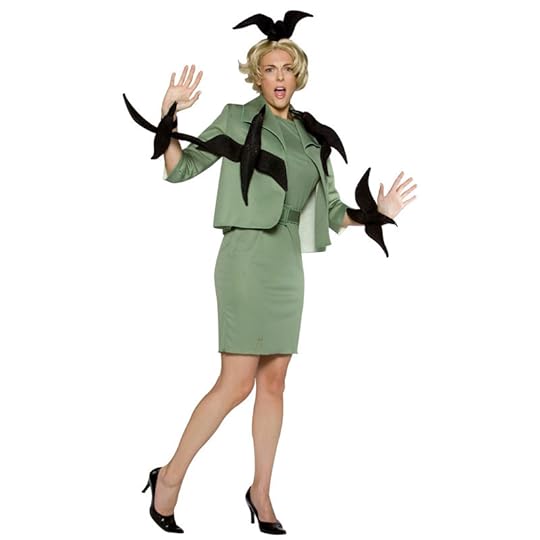
With Don't Look Now I can't say that I liked some and didn't like others. They were all brilliant. Du Maurier had a knack for writing purely from the imagination. I saw it first in Rebecca and The House on the Strand, but I think these short stories blow them both away as far as the depth and range of her imagination. Her stories are absolutely creepy, full of psychological turmoil which is really what's scary in our lives, isn't it? It's not monsters under the bed or in the closet; it's not always the ghosts in the stairwell raising a crooked finger at us. It's what's inside that can scare the holy crap out of a kid, and du Maurier had the ability to take a person's deepest, darkest fears and turn them into a fantastic little story. How many people are scared of birds after watching Hitchcock's The Birds? That movie wouldn't have been made if du Maurier hadn't written the story first. So you have her to thank as you watch the skies in terror, especially at this time of the year when birds make their migration south for the winter. When you see birds all lined up on the telephone polls - run. Run like hell. Those bitches will get you. You think they don't notice you? You're dumb. RUN.
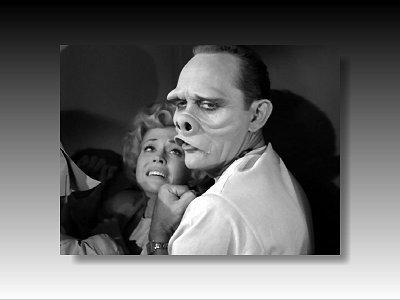
The other stories in this collection are just as charming as The Birds. I also especially liked The Blue Lenses, the story of a woman who has had her eyes fitted for new lenses which should make her see. Upon first unwrapping of her head she sees everyone as they actually are - one nurse has the head of a snake, her husband has the head of a vulture. There's a Twilight Zone episode similar to that, isn't there? The pig faces?
Seriously, some of these stories will scare the tuna right out of you. And that's the genius of them, because you can imagine them all actually happening. Granted, I can also imagine Pennywise the clown hanging out in the sewer (thanks, Stephen King), so maybe my imagination is pretty wonderful too. But obviously that's what draws me to writers like du Maurier. This was the perfect time of year to read these stories (right around Halloween) - the dreary weather that is setting in is the perfect atmopshere. Be warned, though - these stories often take place in the daytime, right at the exact moment you think you're safest. I'd keep my eyes open if I were you.
ETA (02/21/12): So last night I saw the 1973 film Don't Look Now. Oh, the Seventies. I wish I had known you better. I came into the world when the Seventies might as well have been the Eighties, so I missed out on so much. Like Donald Sutherland's hair! and mustache! and a very brief shot of his wee-wee!
Movies from the Seventies had some of the craziest sex scenes ever. It's not that the lovemaking scene in this movie wasn't touching - it probably was. But it went on for a very long time, which I realize probably had to do with the fact that the movie is based on a short story - operative word being short. Hmm, how do we make this short story a full-length movie? I know! SEX! And then there were important moments like Julie Christie biting her lipstick. Yeah, I dunno either. It was the Seventies, what can I say?
But really, the movie had some great creepy moments, but in the way that a lot of those movies from that period were creepy - lots of sudden musical explosions or other noises that aren't necessarily scary but they wanted to scare ya, and rapid scene changes, and, of course, a blind woman. Blind women are always creepy in movies, yeah?
Did I mention Donald Sutherland's hair was pretty scary? Out of control. I think that's probably what the title is really referring to: DON'T LOOK NOW or Donnie Sutherland's hair will EAT YOU.
It's hard to review collections of short stories. I look at collections of short stories as either being good. Or bad. Rarely am I on the fence about all the stories in the set - there's usually one or two that I enjoy, probably another one or two that I thought were lame, etc.
With Don't Look Now I can't say that I liked some and didn't like others. They were all brilliant. Du Maurier had a knack for writing purely from the imagination. I saw it first in Rebecca and The House on the Strand, but I think these short stories blow them both away as far as the depth and range of her imagination. Her stories are absolutely creepy, full of psychological turmoil which is really what's scary in our lives, isn't it? It's not monsters under the bed or in the closet; it's not always the ghosts in the stairwell raising a crooked finger at us. It's what's inside that can scare the holy crap out of a kid, and du Maurier had the ability to take a person's deepest, darkest fears and turn them into a fantastic little story. How many people are scared of birds after watching Hitchcock's The Birds? That movie wouldn't have been made if du Maurier hadn't written the story first. So you have her to thank as you watch the skies in terror, especially at this time of the year when birds make their migration south for the winter. When you see birds all lined up on the telephone polls - run. Run like hell. Those bitches will get you. You think they don't notice you? You're dumb. RUN.
The other stories in this collection are just as charming as The Birds. I also especially liked The Blue Lenses, the story of a woman who has had her eyes fitted for new lenses which should make her see. Upon first unwrapping of her head she sees everyone as they actually are - one nurse has the head of a snake, her husband has the head of a vulture. There's a Twilight Zone episode similar to that, isn't there? The pig faces?
Seriously, some of these stories will scare the tuna right out of you. And that's the genius of them, because you can imagine them all actually happening. Granted, I can also imagine Pennywise the clown hanging out in the sewer (thanks, Stephen King), so maybe my imagination is pretty wonderful too. But obviously that's what draws me to writers like du Maurier. This was the perfect time of year to read these stories (right around Halloween) - the dreary weather that is setting in is the perfect atmopshere. Be warned, though - these stories often take place in the daytime, right at the exact moment you think you're safest. I'd keep my eyes open if I were you.
ETA (02/21/12): So last night I saw the 1973 film Don't Look Now. Oh, the Seventies. I wish I had known you better. I came into the world when the Seventies might as well have been the Eighties, so I missed out on so much. Like Donald Sutherland's hair! and mustache! and a very brief shot of his wee-wee!
Movies from the Seventies had some of the craziest sex scenes ever. It's not that the lovemaking scene in this movie wasn't touching - it probably was. But it went on for a very long time, which I realize probably had to do with the fact that the movie is based on a short story - operative word being short. Hmm, how do we make this short story a full-length movie? I know! SEX! And then there were important moments like Julie Christie biting her lipstick. Yeah, I dunno either. It was the Seventies, what can I say?
But really, the movie had some great creepy moments, but in the way that a lot of those movies from that period were creepy - lots of sudden musical explosions or other noises that aren't necessarily scary but they wanted to scare ya, and rapid scene changes, and, of course, a blind woman. Blind women are always creepy in movies, yeah?
Did I mention Donald Sutherland's hair was pretty scary? Out of control. I think that's probably what the title is really referring to: DON'T LOOK NOW or Donnie Sutherland's hair will EAT YOU.
June 3, 2009
Well-written, well constructed, patient stories that nearly all veer into the supernatural. Sometimes they border on gimicks and a few of them are twilight zone material (one, "Blue Lenses," actually was a Twilight Zone episode, I think). At least one equisite little tale "La Sainte-Vierge" comes to perfect closure and then tacks on a superfluous "explanation" of something that is otherwise fully explained by the story itself. Such sporadic moments of questionable taste exihibit Du Maurier's populism, which is otherwise to her credit. "Don't Look Now" is perfect, and "The Birds" is horrifying in a very different way than Hitchcock's interpretation; "Split Second" and "Kiss Me Again Stranger" are very good.

October 13, 2019
An absolute classic and an utterly weird one. The movie version of the story is equally disturbing and effective. The ending both of the book and film is genuinely terrifying. It almost gave me a heart attack the first time I watched it.

July 20, 2023
i will be reviewing this book along the way through my progress of each story and give a short review for each.
Don’t Look Now
this story was actually very gripping. Du Maurier was able to maintain tension and foreboding throughout the entire story. and even the end, even though i thought the ending was kind of silly and underwhelming, i still felt myself aching towards that last page of the story, waiting to see what happens next. i really enjoyed this story. 4 stars
The Birds
the birds is a very special story. i think i made the mistake of watching the hitchcock film prior to reading this, because in a way i enjoyed the hitchcock film a tad more. though the oedipus complex and the complete omission and addition of certain characters when translating the story to the screen is quite unfaithful to the source material, the film led a bit more of gripping story. while it was still slow paced and at times boring, the film maintained tension and an uproarious and cliffhangery ending that was a bit more satisfactory than the story. the film relies more on the thriller and horror elements, whilst the short story ventures more towards a dystopian narrative. the short story was still very enjoyable. 4.25 stars
Escort
i’m not a fan of nautical related things, and so this story didn’t really appeal to me as much. i do think however that Daphne du Maurier is able to masterfully alter her perspective and writing style for the sake of a character and it’s situation, and i think that’s memorable. we see a certain style of writing for the preceding two stories where the POV was in third person, and the writing style was the same. but here, when it changed to first person, the writing style was altered in a way that felt more apt to the character. and i don’t see this often especially when reading short stories. other than that, i couldn’t tell you a single thing that happened in this story. 2 stars
Split Second
this story was alright. The beginning ran quite slow, but the ending was good. didn’t like the last line. I don’t know if i missed something to not make me understand or if it just was insufficient, but i didn’t get it. the story also felt a bit cliché and the execution was alright. 3 stars
Kiss Me Again, Stranger
this was one of the shortest stories in the book and one of my favourites. it feels like a slight ode to the story of the Heart of Guiscardo. a very enjoyable and simple story. 4.25 stars
The Blue Lenses
this was so silly i’m sorry wtf. 2.5 stars
La Sainte-Vierge
i didn’t really understand what happened in this story so i don’t know what to write here. 2.5 stars?
Indiscretion
a simple and quite frankly useless story to the collection. had minimal sustenance but at the same time i can’t help but appreciate daphne’s ability to write so i cant be too mad. 3 stars
Mounte Veritá
i think this was one of the most satisfactory stories in this book. and also the longest. however the story felt like it had a full arc to it. with the other stories, there was nebulosity to it, something that was dangling on the edge of the table, waiting to fall but never does. and i felt quite chastised by this potential energy in all of these stories. except for this one, where the ending still leaves you wanting to know what happens, but not dying. it allows you to make up your own inferences, in a way that feels allowing, not restraining. i really enjoyed it. 4.5 stars
Don’t Look Now
this story was actually very gripping. Du Maurier was able to maintain tension and foreboding throughout the entire story. and even the end, even though i thought the ending was kind of silly and underwhelming, i still felt myself aching towards that last page of the story, waiting to see what happens next. i really enjoyed this story. 4 stars
The Birds
the birds is a very special story. i think i made the mistake of watching the hitchcock film prior to reading this, because in a way i enjoyed the hitchcock film a tad more. though the oedipus complex and the complete omission and addition of certain characters when translating the story to the screen is quite unfaithful to the source material, the film led a bit more of gripping story. while it was still slow paced and at times boring, the film maintained tension and an uproarious and cliffhangery ending that was a bit more satisfactory than the story. the film relies more on the thriller and horror elements, whilst the short story ventures more towards a dystopian narrative. the short story was still very enjoyable. 4.25 stars
Escort
i’m not a fan of nautical related things, and so this story didn’t really appeal to me as much. i do think however that Daphne du Maurier is able to masterfully alter her perspective and writing style for the sake of a character and it’s situation, and i think that’s memorable. we see a certain style of writing for the preceding two stories where the POV was in third person, and the writing style was the same. but here, when it changed to first person, the writing style was altered in a way that felt more apt to the character. and i don’t see this often especially when reading short stories. other than that, i couldn’t tell you a single thing that happened in this story. 2 stars
Split Second
this story was alright. The beginning ran quite slow, but the ending was good. didn’t like the last line. I don’t know if i missed something to not make me understand or if it just was insufficient, but i didn’t get it. the story also felt a bit cliché and the execution was alright. 3 stars
Kiss Me Again, Stranger
this was one of the shortest stories in the book and one of my favourites. it feels like a slight ode to the story of the Heart of Guiscardo. a very enjoyable and simple story. 4.25 stars
The Blue Lenses
this was so silly i’m sorry wtf. 2.5 stars
La Sainte-Vierge
i didn’t really understand what happened in this story so i don’t know what to write here. 2.5 stars?
Indiscretion
a simple and quite frankly useless story to the collection. had minimal sustenance but at the same time i can’t help but appreciate daphne’s ability to write so i cant be too mad. 3 stars
Mounte Veritá
i think this was one of the most satisfactory stories in this book. and also the longest. however the story felt like it had a full arc to it. with the other stories, there was nebulosity to it, something that was dangling on the edge of the table, waiting to fall but never does. and i felt quite chastised by this potential energy in all of these stories. except for this one, where the ending still leaves you wanting to know what happens, but not dying. it allows you to make up your own inferences, in a way that feels allowing, not restraining. i really enjoyed it. 4.5 stars
January 18, 2026
The best short story collection I’ve ever read and my first 5 -star read less than 3 weeks into 2025. Every story straddled this delicious line between unsettling and bizarre. My favourites were Split Second and The Blue Lenses - but to be clear there are no losers in the bunch. Now excuse me while I go do a double feature of Carnival of Souls and Inland Empire for absolutely no reason at all…

September 23, 2014
a 3.8 rounded up
If you've read Rebecca and you think that's all there is to Daphne Du Maurier, think again. This collection goes well beyond Manderley, taking the reader into lives that seem very normal until you begin to notice that something is just not quite right -- and by then, it's too late to stop reading.
If you want the longer version, feel free to click on through to my online reading journal ; otherwise, stick with the shorter version here.
You'll find that the author covers a range of themes: isolation, love, loss, grief, dislocation, revenge, obsession, fate -- all very human attributes that here take on a different sort of significance in the lives of her characters. The beauty in these tales is that her people are just going about their every day lives -- at least at first. For example, In "Don't Look Now," a husband and wife are in Venice on holiday to help them to deal with their grief over their dead child. In "Split Second," a widow with a young daughter away at school steps out to take a walk and returns home. "The Blue Lenses" is expressed from the point of view of a woman who is recovering from eye surgery. All of these things are very normal, very mundane, and described very well by the author. But soon it begins to dawn on you that something is just off -- that things are moving ever so slightly away from ordinary, heading into the realm of extraordinary. By that time, you're so caught up in the lives of these people that you have to see them through to the end. The joke is on the reader, though -- in some cases the endings do not necessarily resolve things, but instead, point toward another possible chapter in the characters' futures. While the author doesn't do this in every story, when she does, it's highly effective and leaves you very unsettled and in my case, filled with a sense of unease thinking about what's going to happen to these people next. As one character notes, "Nothing's been the same since. Nor ever will be," and that's the feeling I walked away with at the end of several of these stories.
All in all, a fine collection of stories, definitely recommended. NYRB classics has really done readers a great service by bringing these stories together -- my advice: if you're interested in trying out Du Maurier's short stories, this edition would be the perfect starting place.
If you've read Rebecca and you think that's all there is to Daphne Du Maurier, think again. This collection goes well beyond Manderley, taking the reader into lives that seem very normal until you begin to notice that something is just not quite right -- and by then, it's too late to stop reading.
If you want the longer version, feel free to click on through to my online reading journal ; otherwise, stick with the shorter version here.
You'll find that the author covers a range of themes: isolation, love, loss, grief, dislocation, revenge, obsession, fate -- all very human attributes that here take on a different sort of significance in the lives of her characters. The beauty in these tales is that her people are just going about their every day lives -- at least at first. For example, In "Don't Look Now," a husband and wife are in Venice on holiday to help them to deal with their grief over their dead child. In "Split Second," a widow with a young daughter away at school steps out to take a walk and returns home. "The Blue Lenses" is expressed from the point of view of a woman who is recovering from eye surgery. All of these things are very normal, very mundane, and described very well by the author. But soon it begins to dawn on you that something is just off -- that things are moving ever so slightly away from ordinary, heading into the realm of extraordinary. By that time, you're so caught up in the lives of these people that you have to see them through to the end. The joke is on the reader, though -- in some cases the endings do not necessarily resolve things, but instead, point toward another possible chapter in the characters' futures. While the author doesn't do this in every story, when she does, it's highly effective and leaves you very unsettled and in my case, filled with a sense of unease thinking about what's going to happen to these people next. As one character notes, "Nothing's been the same since. Nor ever will be," and that's the feeling I walked away with at the end of several of these stories.
All in all, a fine collection of stories, definitely recommended. NYRB classics has really done readers a great service by bringing these stories together -- my advice: if you're interested in trying out Du Maurier's short stories, this edition would be the perfect starting place.
June 27, 2011
03/2013
"The Birds" is an amazing story. "The Blue Lenses" is also pretty phenomenal.
"The Birds" is an amazing story. "The Blue Lenses" is also pretty phenomenal.
May 18, 2016
Du Maurier is difficult to pin down. I see her as a far superior sort of prototype to the drivel of our latter-day "literature". All the Kings, Rices, Rowlings and their ilk. She's also a far superior, off-kilter author in the vein of HP Lovecraft who couldn't move past the same adjective set and increasingly stuffy and impotent imaginary universe.
Du Maurier populates the world with oddly misunderstood clairvoyance ("Don't Look Now"), menacing waterfowl ("The Birds"; yes, that "The Birds"! It was originally a story that is so much better than the film that for a moment you'll hate Hitchcock for changing it so much), world-shattering corrective eye surgery ("The Blue Lenses") and existential mountain-climbing (the supremely awesome "Monte Verita"). Much of her material and style might feel familiar. She's one of those authors that get ripped off a lot, aped, and copied, but no one can capture her singular dryness, wit, and, let's face it, quiet sensuality.
Remarkable, peeps.
Du Maurier populates the world with oddly misunderstood clairvoyance ("Don't Look Now"), menacing waterfowl ("The Birds"; yes, that "The Birds"! It was originally a story that is so much better than the film that for a moment you'll hate Hitchcock for changing it so much), world-shattering corrective eye surgery ("The Blue Lenses") and existential mountain-climbing (the supremely awesome "Monte Verita"). Much of her material and style might feel familiar. She's one of those authors that get ripped off a lot, aped, and copied, but no one can capture her singular dryness, wit, and, let's face it, quiet sensuality.
Remarkable, peeps.

October 8, 2011
When this was selected for October for the NYRB Classics Group, I was willing but skeptical. I expected the stories to be similar to Rebecca, a very gothic novel which I characterized as being about "mysterious dead wives and big bleak mansions" when I read it.
I was pleasantly surprised. These still have some of the gothic tone, but there is more of a horror in the familiar that I'm used to from the old-fashioned horror short story, and Daphne du Maurier fits right into that company. Not to mention that she wrote the story "The Birds," which inspired Hitchcock to make his movie.
See my longer review on my blog.
I was pleasantly surprised. These still have some of the gothic tone, but there is more of a horror in the familiar that I'm used to from the old-fashioned horror short story, and Daphne du Maurier fits right into that company. Not to mention that she wrote the story "The Birds," which inspired Hitchcock to make his movie.
See my longer review on my blog.

August 31, 2011
Another well-written book. I'm getting spoiled. I haven't read anything by DuMaurier for years and had forgotten her talent which is well displayed in these stories. No wonder that two were eventually taken for films and one by Rod Serling for The Twilight zone. And I've seen them all. Truthfully, the written word is still better. Even with the images in my mind, the stories manage to give me more feelings of dread. But that has always been the ability of a truly skilled writer in my opinion.
I strongly recommend these stories for those who enjoy good writing with an edge.
I strongly recommend these stories for those who enjoy good writing with an edge.

January 17, 2022
not to shock anyone but i finished a fucking book 😤 i started reading this in October lol. this is not my original thought i'm pretty sure it's in the introduction but Daphne understands narrative tension so well and nails the landing of every story. desperately trying to rub my brain cells together for one more thought and coming up empty so ta-ta...for now...
Read
May 9, 2023La típica història de suspens de Daphne du Maurier. Ideal per si estàs agobiada i necessites posar el teu cervell en mode avió: estaràs devorant pàgina rere pàgina per poder resoldre el misteri i no haver de pensar en els teus problemes

October 30, 2011
I was initially worried about this story, thinking that it was going to be something of a disappointment, leaving me hanging on the resolution like The Birds did... but it wasn't, and didn't.
This story was rather eerie, and the music that accompanied the reading heightened this effect quite a bit. Often, when I'm listening to audiobooks, I think of the story in terms of format and try to compare. I know that a reader can add or detract from the story, that sounds or music (which I'm not usually a fan of) can do the same, and that the experience of reading and listening can be quite different from each other. This audio was fantastic, and the music was used tastefully and to great effect. I think that one twist's significance in the story might have actually been... maybe not missed, but perhaps overlooked until viewed in hindsight, but the way the audio was done, I not only understood immediately, but was also startled and creeped out. Awesome. :D
This story had a very gothic horror feel, and was full of twists and turns and hints and the like, and it seems that nothing is quite what it seems. I tried guessing what the actual twist was going to be, and failed miserably. None of my twist-guesses made sense unless there was either one overused explanation, or unless there was a really huge explanation that could be plausible but unlikely. The one in the book was better by far. Probably why I read books and don't write them. You're welcome, world.
I thought that there was one detail which was introduced a bit late in the story that wasn't really necessary, but worked toward the ending. The ending would still have worked without this, but I guess for those people who might have been a bit baffled, it served as a kind of "There's your answer" bit. Me personally, I think that had it been left out, it would have been even creepier and with even more "What the fuck?!" thrown in. But that's just preference.
All in all, I really liked this one, probably the most of any of du Maurier's stories I've read so far. The tally is now up to a whopping 3. I'm on a roll!
Horror October 2011: #14
This story was rather eerie, and the music that accompanied the reading heightened this effect quite a bit. Often, when I'm listening to audiobooks, I think of the story in terms of format and try to compare. I know that a reader can add or detract from the story, that sounds or music (which I'm not usually a fan of) can do the same, and that the experience of reading and listening can be quite different from each other. This audio was fantastic, and the music was used tastefully and to great effect. I think that one twist's significance in the story might have actually been... maybe not missed, but perhaps overlooked until viewed in hindsight, but the way the audio was done, I not only understood immediately, but was also startled and creeped out. Awesome. :D
This story had a very gothic horror feel, and was full of twists and turns and hints and the like, and it seems that nothing is quite what it seems. I tried guessing what the actual twist was going to be, and failed miserably. None of my twist-guesses made sense unless there was either one overused explanation, or unless there was a really huge explanation that could be plausible but unlikely. The one in the book was better by far. Probably why I read books and don't write them. You're welcome, world.
I thought that there was one detail which was introduced a bit late in the story that wasn't really necessary, but worked toward the ending. The ending would still have worked without this, but I guess for those people who might have been a bit baffled, it served as a kind of "There's your answer" bit. Me personally, I think that had it been left out, it would have been even creepier and with even more "What the fuck?!" thrown in. But that's just preference.
All in all, I really liked this one, probably the most of any of du Maurier's stories I've read so far. The tally is now up to a whopping 3. I'm on a roll!
Horror October 2011: #14

September 25, 2022
Okay, definitely enjoyed reading every story to some degree. HOWEVER (that's an all caps "However" folks), I was unsatisfied with every single ending (it's a book of short stories—in case you didn't read the book's cover.) The stories were creepy and definitely interesting, with great Twilight Zone-esque premises and settings.
And I think Daphne du Maurier is a great writer, and I would be open to reading one of her novels, which might be more complete. But every story seemed to have the same dark and cynical world-view that she almost seemed to often enjoy ending on. But that could just be the nature of creepy short stories. Still, I think she might be a nihilist.
But thank you Keara:)
And I think Daphne du Maurier is a great writer, and I would be open to reading one of her novels, which might be more complete. But every story seemed to have the same dark and cynical world-view that she almost seemed to often enjoy ending on. But that could just be the nature of creepy short stories. Still, I think she might be a nihilist.
But thank you Keara:)

July 5, 2023
Un relat de suspens molt ben portat pel que fa a intensitat. Potser no és tan rodó com alguns dels relats de Zweig (les comparacions són odioses, però perquè en tingueu una idea), però sens dubte és molt recomanable.
---
Un relato de suspense muy bien traído a nivel de intensidad narrativa. Puede que no esté tan bien hilado como algundos de los relatos de Zweig (las comparacines son odiosas pero para que tengáis una idea), pero sin duda es muy recomendable
---
Un relato de suspense muy bien traído a nivel de intensidad narrativa. Puede que no esté tan bien hilado como algundos de los relatos de Zweig (las comparacines son odiosas pero para que tengáis una idea), pero sin duda es muy recomendable

July 3, 2023
Desconcertant i intrigant, com sempre amb Du Maurier, però amb un final que m'ha semblat massa precipitat.

August 26, 2019
This is top-shelf stuff, guys. This collection was my first encounter with the work of Daphne du Maurier and I can't wait to read more (I'll be setting out on "Rebecca" soon). Excellently selected and introduced by Patrick McGrath, these are ominous stories of normal people getting sudden bad vibes, the sensation that something terrible is about to happen. Some work better than others, but the finest are shocking, harrowing, and sometimes quite profound.
We open with a double-whammy: "Don't Look Now" and "The Birds", probably the two most famous short stories du Maurier ever wrote. "Don't Look Now" is a terrifying and grimly absurdist tale of grief and human anxieties surrounding death, featuring a brilliantly-written married couple (du Maurier excels at the little lived-in details that bring these characters off the page) and an incredible evocation of Venice. The ending, even if known, shocks and thrills. It drives home this cataclysmic moment as sharply as its famous Nicolas Roeg adaptation, even if its symbolism is more muddled than the film's.
In his introduction McGrath asserts that "The Birds" is the masterpiece, and it's hard not to agree with him: it's a genuinely harrowing story, positively quaking with a driving, primordial energy. While du Maurier draws her characters sharply and with great skill, her main focus is devoted to communicating an *experience*: a direct, unvarnished account of an event so terrifying in its ferocity that it borders on the absurd. It draws the reader along relentlessly, each despairing twist unfolding with the inevitability of the nightmare. She just keeps ratcheting up the tension, and by the end (the only appropriate end to a story like this) one is biting one's nails.
The book lags a bit with its next two pieces. "Escort", a conventional tale of a ghost ship, is the weakest link in the book. "Split Second", though it attains a disturbingly dreamlike quality by its final paragraphs, is too predictable for its lengthy page count. (I would have been interested in seeing what someone with the economy of, say, Shirley Jackson, du Maurier's American counterpart, would have done with the premise). Fortunately, the next entry, "Kiss Me Again, Stranger", more than compensates. An alluring blend of melancholic romance, subtle humor, and gothic aesthetics, it features the most distinctive character in the book--though to say much about her would be a spoiler. Like "Split Second", it can be a tad predictable, but the ride here is much smoother and more enjoyable. If not quite the paragon of craft we see in a story like "The Birds", it's still an entertaining story, and one of my favorites in the book.
Things go off the walls with "The Blue Lenses", the craziest piece included here, and one of the absolute best. Apparently it was written for a collection du Maurier penned during a near-nervous breakdown, and it definitely shows. Bordering on the ridiculous (but retaining absolute terror), this druggy paranoiac episode following a woman recovering from eye surgery stuns with its audacity and imagination. She layers on twist after twist, culminating in a truly enigmatic and eerie ending, delightfully suggestive (as the best horror stories are) of darker things to come. It takes the somewhat similar "Eye of the Beholder" episode of "The Twilight Zone" and punts it all the way across the park, putting it to shame. It is easily one of her finest and most original works.
None of the remaining three stories are quite horror stories: one is a darkly pessimistic fable with some lightly spooky traces, another is a straight-up comedy with uneasy consequences, and the final is a hauntingly strange (but never frightening) existential fantasy. "La Sainte-Vierge" and "Indiscretion" are paired well as blackly comedic tales built around bitter twist endings, but "La Sainte-Vierge" works better, both because of the innocence of its tone and the eerie little details, meant to suggest a cosmic aloneness and abandonment, that almost move the story to this side of horror: "A fly settled on the nose of the Sainte-Vierge, and brushed a scrap of coloured plaster off her cheek." The twist is truly cutting and memorable. "Indiscretion" tries to pull a similar trick, but, though it's well-crafted and quite funny, it comes off as feeling somewhat slight in comparison to its sharper, bleaker predecessor. The twist is fun, but not exactly surprising; perhaps if du Maurier hadn't telegraphed the fallout of the ending so clearly at the start things might have been a bit more unexpected. Still, both tales are well-done and pair perfectly.
McGrath closes the book perfectly, however, with "Monte Verità": a masterpiece, I would argue, and one that comfortably stands alongside "Don't Look Now", "The Birds", and perhaps "The Blue Lenses" as one of the supreme accomplishments of du Maurier's short fiction. The longest piece in the book--clocking in at nearly eighty pages, it's a novella by anyone’s standards--the story is a wide-ranging, deeply moving examination of gender, meaning, and spirituality with beautiful (if sometimes purple) writing and sharply-drawn characters. This is definitely the territory of weird fiction, using an extremely odd yet pronounced metaphor to explore increasingly ambiguous ideas about the nature of life, death, and identity. I was most attracted to the extremely queer subtext here, heightened by the knowledge of du Maurier's "Venetian tendencies" and her private assertions that she had a "boy's mind and a boy’s heart". But there's plenty else to explore in the story: a literary terrain as confounding and mystical as the titular mountain itself.
This is a superb, essential collection. One comes for the titular story and for "The Birds"--and, certainly, neither disappoints. But you stay because of superb stories like "The Blue Lenses", which takes a wacky premise and works it to its most distressing effect; for something like "Monte Verità", a powerful and heart-breaking existential enigma. Are they all perfect? No. But I wouldn't have these stories any other way.
We open with a double-whammy: "Don't Look Now" and "The Birds", probably the two most famous short stories du Maurier ever wrote. "Don't Look Now" is a terrifying and grimly absurdist tale of grief and human anxieties surrounding death, featuring a brilliantly-written married couple (du Maurier excels at the little lived-in details that bring these characters off the page) and an incredible evocation of Venice. The ending, even if known, shocks and thrills. It drives home this cataclysmic moment as sharply as its famous Nicolas Roeg adaptation, even if its symbolism is more muddled than the film's.
In his introduction McGrath asserts that "The Birds" is the masterpiece, and it's hard not to agree with him: it's a genuinely harrowing story, positively quaking with a driving, primordial energy. While du Maurier draws her characters sharply and with great skill, her main focus is devoted to communicating an *experience*: a direct, unvarnished account of an event so terrifying in its ferocity that it borders on the absurd. It draws the reader along relentlessly, each despairing twist unfolding with the inevitability of the nightmare. She just keeps ratcheting up the tension, and by the end (the only appropriate end to a story like this) one is biting one's nails.
The book lags a bit with its next two pieces. "Escort", a conventional tale of a ghost ship, is the weakest link in the book. "Split Second", though it attains a disturbingly dreamlike quality by its final paragraphs, is too predictable for its lengthy page count. (I would have been interested in seeing what someone with the economy of, say, Shirley Jackson, du Maurier's American counterpart, would have done with the premise). Fortunately, the next entry, "Kiss Me Again, Stranger", more than compensates. An alluring blend of melancholic romance, subtle humor, and gothic aesthetics, it features the most distinctive character in the book--though to say much about her would be a spoiler. Like "Split Second", it can be a tad predictable, but the ride here is much smoother and more enjoyable. If not quite the paragon of craft we see in a story like "The Birds", it's still an entertaining story, and one of my favorites in the book.
Things go off the walls with "The Blue Lenses", the craziest piece included here, and one of the absolute best. Apparently it was written for a collection du Maurier penned during a near-nervous breakdown, and it definitely shows. Bordering on the ridiculous (but retaining absolute terror), this druggy paranoiac episode following a woman recovering from eye surgery stuns with its audacity and imagination. She layers on twist after twist, culminating in a truly enigmatic and eerie ending, delightfully suggestive (as the best horror stories are) of darker things to come. It takes the somewhat similar "Eye of the Beholder" episode of "The Twilight Zone" and punts it all the way across the park, putting it to shame. It is easily one of her finest and most original works.
None of the remaining three stories are quite horror stories: one is a darkly pessimistic fable with some lightly spooky traces, another is a straight-up comedy with uneasy consequences, and the final is a hauntingly strange (but never frightening) existential fantasy. "La Sainte-Vierge" and "Indiscretion" are paired well as blackly comedic tales built around bitter twist endings, but "La Sainte-Vierge" works better, both because of the innocence of its tone and the eerie little details, meant to suggest a cosmic aloneness and abandonment, that almost move the story to this side of horror: "A fly settled on the nose of the Sainte-Vierge, and brushed a scrap of coloured plaster off her cheek." The twist is truly cutting and memorable. "Indiscretion" tries to pull a similar trick, but, though it's well-crafted and quite funny, it comes off as feeling somewhat slight in comparison to its sharper, bleaker predecessor. The twist is fun, but not exactly surprising; perhaps if du Maurier hadn't telegraphed the fallout of the ending so clearly at the start things might have been a bit more unexpected. Still, both tales are well-done and pair perfectly.
McGrath closes the book perfectly, however, with "Monte Verità": a masterpiece, I would argue, and one that comfortably stands alongside "Don't Look Now", "The Birds", and perhaps "The Blue Lenses" as one of the supreme accomplishments of du Maurier's short fiction. The longest piece in the book--clocking in at nearly eighty pages, it's a novella by anyone’s standards--the story is a wide-ranging, deeply moving examination of gender, meaning, and spirituality with beautiful (if sometimes purple) writing and sharply-drawn characters. This is definitely the territory of weird fiction, using an extremely odd yet pronounced metaphor to explore increasingly ambiguous ideas about the nature of life, death, and identity. I was most attracted to the extremely queer subtext here, heightened by the knowledge of du Maurier's "Venetian tendencies" and her private assertions that she had a "boy's mind and a boy’s heart". But there's plenty else to explore in the story: a literary terrain as confounding and mystical as the titular mountain itself.
This is a superb, essential collection. One comes for the titular story and for "The Birds"--and, certainly, neither disappoints. But you stay because of superb stories like "The Blue Lenses", which takes a wacky premise and works it to its most distressing effect; for something like "Monte Verità", a powerful and heart-breaking existential enigma. Are they all perfect? No. But I wouldn't have these stories any other way.

December 26, 2024
This is a great short story collection by a gifted storyteller. The stories are atmospheric, suspenseful, psychologically complex, and plotted with economy. The author deftly played with coincidence, clairvoyance, identity, and the nuances of time and spatial awareness, demonstrating masterly control throughout. I would read this again.
Read
September 9, 2024Thank you to Liam for giving me this!!! Hope you're having fun in Bristol!!!
Read
July 11, 2026An eerie, disorienting short story collection exploring grief, the relationship between man and nature, men and women, and psychological horror. I liked all nine stories but my favorites were Don't Look Now, The Birds, Split Second, Kiss Me Again Stranger, and Monte Verità.
“It was as though I walked alone on the earth’s rim, the universe below me and above. No one trod this empty discus but myself, and it spun its way through space to ultimate darkness” - Monte Verità
“Nat listened to the tearing sound of splintering wood, and wondered how many million years of memory were stored in those little brains, behind the stabbing beaks, the piercing eyes, now giving them this instinct to destroy mankind with all the deft precision of machines.” - The Birds
“It was as though I walked alone on the earth’s rim, the universe below me and above. No one trod this empty discus but myself, and it spun its way through space to ultimate darkness” - Monte Verità
“Nat listened to the tearing sound of splintering wood, and wondered how many million years of memory were stored in those little brains, behind the stabbing beaks, the piercing eyes, now giving them this instinct to destroy mankind with all the deft precision of machines.” - The Birds
June 30, 2024
Amb una trama misteriosa i amb tantes intrigues que no pots parar de llegir. Final inesperadíssim. Un llibre que es llegeix sol i m'ha ajudat airejar el cervell.
*Li pujo la cinquena estrella després d'una relectura perquè, d'acord, té serrells i el final potser és precipitat, però a mi em funciona i no me'l trec del cap des que el vaig llegir (n'he fet una segona lectura i no fa ni dos mesos de la primera!). Candidat a convertir-se en un dels meus imprescindibles.
*Li pujo la cinquena estrella després d'una relectura perquè, d'acord, té serrells i el final potser és precipitat, però a mi em funciona i no me'l trec del cap des que el vaig llegir (n'he fet una segona lectura i no fa ni dos mesos de la primera!). Candidat a convertir-se en un dels meus imprescindibles.
January 16, 2025
A solid 4.
Daphne du Maurier undoubtedly possesses the elements of thriller and suspense in her stories; however, most of the stories fall short of delivering on their promising concepts. While they all begin with compelling premises featuring rich atmospheres and ominous setups, most of their endings often feel flat or anticlimactic, leaving the potential of the story unfulfilled.
I personally enjoyed two stories the most: "Don't Look Now" which is the first story, and "Split Second".
Daphne du Maurier undoubtedly possesses the elements of thriller and suspense in her stories; however, most of the stories fall short of delivering on their promising concepts. While they all begin with compelling premises featuring rich atmospheres and ominous setups, most of their endings often feel flat or anticlimactic, leaving the potential of the story unfulfilled.
I personally enjoyed two stories the most: "Don't Look Now" which is the first story, and "Split Second".


December 12, 2016
A wonderful collection of short stories.
My favorite was Blue Lenses, which was about a woman who has an eye surgery so she can see again. The new eye lenses cause her to see people as they really are, inside.
My favorite was Blue Lenses, which was about a woman who has an eye surgery so she can see again. The new eye lenses cause her to see people as they really are, inside.
Displaying 1 - 30 of 643 reviews