The Shogun himself has given Retsudo a stern do something about Itto Ogami, the Lone Wolf, or the Yagyu clan will fall out of favor. Now Retsudo must turn to the Fire Watchers, a select band of warriors, for help — as well as the last surviving members of the legendary Kurokuwa ninja clan! As death stalks him, Ogami is confronted by desperate, impoverished peasants who want him to share his fortune with the suffering. With Ogami's cub, Daigoro, caught in the middle, what will he decide? Find out what everyone can't stop talking about.
This volume contains the following Firewatchers of the Black Gate The Immortal Firewatchers Paper Money Lifeline Twilight of the Kurokuwa
Kazuo Koike (小池一夫, Koike Kazuo) was a prolific Japanese manga writer, novelist and entrepreneur.
Early in Koike's career, he studied under Golgo 13 creator Takao Saito and served as a writer on the series.
Koike, along with artist Goseki Kojima, made the manga Kozure Okami (Lone Wolf and Cub), and Koike also contributed to the scripts for the 1970s film adaptations of the series, which starred famous Japanese actor Tomisaburo Wakayama. Koike and Kojima became known as the "Golden Duo" because of the success of Lone Wolf and Cub.
Another series written by Koike, Crying Freeman, which was illustrated by Ryoichi Ikegami, was adapted into a 1995 live-action film by French director Christophe Gans.
Kazuo Koike started the Gekika Sonjuku, a college course meant to teach people how to be mangaka.
In addition to his more violent, action-oriented manga, Koike, an avid golfer, has also written golf manga.
I’m trying to speed up my read through the series, at the risk of reaching saturation point in terms of gore and of repetitive duels of one lone swordsman against impossible odds, but I’m not there yet. Somehow, the team of Koike and Kojima manage to discover a different angle to present the battles, a new sort of weapon to launch against Ogami Itto, a new province to visit with its own unique set of social or economic problems, a new subtle variation of the bushido code. And they save the best story for last, the one that tugs at the heart strings and the one that makes you look forward to the next step on the Meifumado Road for the renegade samurai and his son.
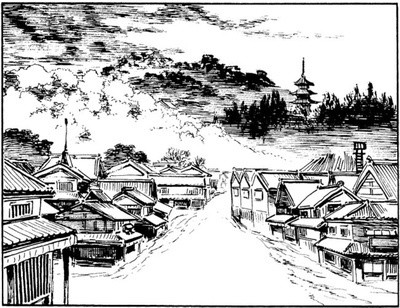
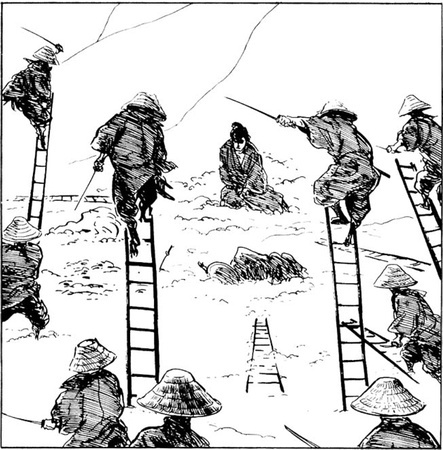
Firewatchers of the Black Gate brings us to Edo, on the eve of New Year Celebrations. A festive occasion that requires all daimyo and lesser vassals to make obeisance to the Shogun : the absolute lord of the country, who has remained aloof so far in the series, but finally decides to make an entrance now and to inform Yagyu Retsudo that he has one month to resolve his feud with Ogami Itto, before the full wrath of the Shogunate descends on him. Retsudo, the last of his clan, walks beside the Shogun’s litter on the day’s pilgrimage to the Black Gate, where the leader will pay homage to his ancestors. The temple is guarded by an elite group of samurai, the private bodyguards of the Shogun, whose main task is to guarantee the safety of the sacred pilgrimage from the high point of their stepladders.
Since this is one of the last groups of expert ninjas that haven’t been decimated yet by the Lone Wolf, they are tasked with the hunting of the former Kogi Kaishakunin. The confrontation takes place in winter, in one of the high mountain valleys that serve as a refuge and a hideout for the fugitive duo. The confrontation is a draw, with Ogami Itto holding his own against the Firewatchers then managing to flee with a little help from his son Daigoro. The Firewatchers are soon in pursuit.
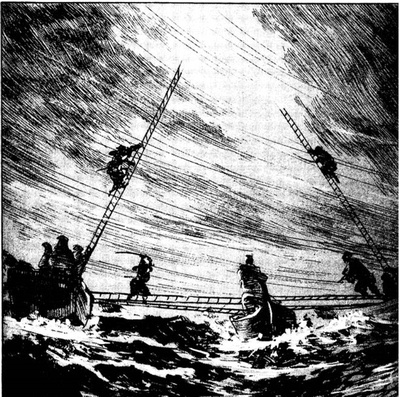
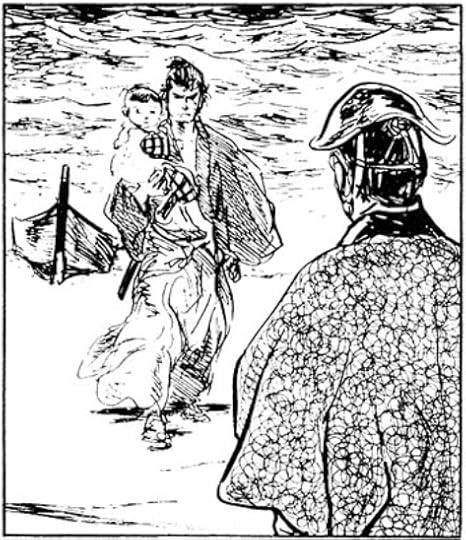
The Immortal Firewatchers catch up with the Lone Wolf at sea and engage him in a highly acrobatic battle at night, with the stepladders acting as a dynamic prop for bridging the distances between boats. Even with these advantages, the black hooded ninjas cannot prevail against the dothanuki battle sword of Itto, so their leader challenges Lone Wolf to a one-on-one duel ashore.
After the duel, honour demands the Firewatchers return home and let the enemy who bested them follow his own path.
Paper Money is an unplanned stop on the way to Edo, as Ogami Itto sees a huge bonfire on a hill at night, a fire shaped like one of the roadside pictograms he used to advertise his services as an assassin (a sort of Batman signal projected on the night sky). Even if this might be a trap, Itto steers his boat towards shore to investigate.
The local samurai tries both pleading and threatening the Lone Wolf in order to obtain 10000 ryu for building an irrigation canal that would save his province from years of drought. He knows Itto has saved a huge sum from his assassin contracts, and hopes that when he witnesses the ravages of famine in the village, he can be prevailed to help them. Or, if not, that he can arrest Itto at gunpoint and claim the reward promised by the Yagyu. Itto replies that this samurai is dealing in ‘paper’ or fictional money, and that only death can stop him from following the road to Hell. Meifumado knows no mercy, nor delays.
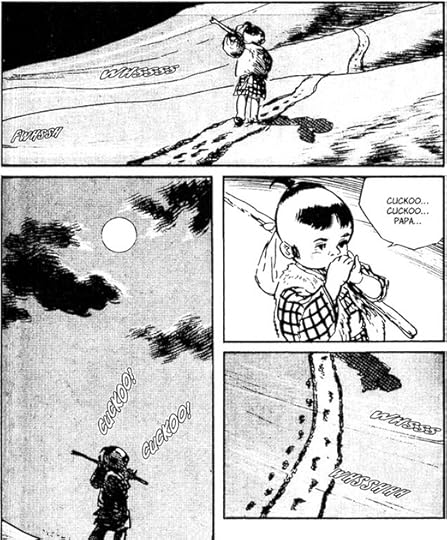
Lifeline is one of those charming wordless stories that are a speciality of Daigoro, a refreshing change of perspective from the more bloodthirsty episodes dominated by his father’s sword. We also learn one of the traditional folk tales about the cuckoo. Since the roadside reward notices mention a father and son travelling with a cart towards Edo, Itto decided to separate from Daigoro and to lead the way by the sea shore, leaving the small boy to follow the tracks left in the sand by the wooden cart.
The problem is that the tracks are run over by fishermen returning from the sea with their catch. Moreover, someone in the crowd has witnessed one of the Lone Wolf’s previous battles and recognizes him even without Daigoro in tow. Both the elements and the people conspire to drive the two apart, leaving Daigoro to cry alone for his father, lost among the sand dunes like the cuckoo bird.
Twilight of the Kurokura is the case of saving the best for last that I mentioned at the beginning of my review. Yagyu Retsudo is scrapping the bottom of the barrel, after losing both family members and allied ninja organizations in his feud with Ogami Itto. The Kurokura, secret retainers in his service, have already been decimated. The only survivors are five elderly ninjas who managed to live through decades of battle and earned their right to a peaceful retirement at a remote farm. Retsudo pays them a visit and presses them back into service for a last job: kill Lone Wolf and his cub.
These five may be decrepit and missing limbs or eyes, but they are the best of the best – the only ones that survived through skills and deceit. They prepare their ambush carefully, observing from cover and in disguise the two outcasts, testing for weak points and opportunities. They might even have a chance of finally defeating the formidable suyo-ryu swordsmanship.
Somehow I think the next volume will still be about Ogami Itto and Daigoro, and not about these five pensioners.
‘Firewatchers of the Black Gate’: I’ve said it before, but part of the appeal to me of the Lone Wolf and Cub series is the sense of immersion that I get for the Tokugawa era of Japan. I understand that the creators did a lot of research into the culture of the time, but I still often wonder how much of their stories are pulled from elements of recorded history and how much is pure imagination on their part. In some cases this is obvious, but in others it is not so clear to me. For example in this story we are introduced to yet another intriguing group of warriors, the Kemuridome-shu or ‘Firewatchers’, whose job was apparently to guard the way of the Shogun on his yearly pilgrimage to his family shrine and ensure that no fires or other catastrophes caused any problems. Hand-picked from the lowest level of the samurai class, the ashigara, they were nevertheless also an elite force of bodyguards whose battle technique, in this story at least, included an ingenious use of ladders as both tools and weapons in addition to their more traditional samurai paraphernalia. In this story the Shogun himself appears and informs Retsudo of his displeasure in his retainer’s inability to deal with the problem of Ogami Itto and the uproar that this is causing in his domain. He allows Retsudo to use his elite Firewatchers in the hopes that this will at last solve the problem of Lone Wolf and Cub and forever remove this thorn that has made his warriors and retainers little more than a laughingstock. The elite force tracks down Itto and Daigoro in a high mountain pass and once again the assassin faces a challenge to even his superlative martial skills.
‘The Immortal Firewatchers’: On his quest to reach Edo in order to use the secret of the Yagyu letter to bring down his enemies Itto takes a boat and follows the coast, hoping that this will allow him not only to avoid the many enemy forces that are tracking him, but also to try and minimize the number of civilian casualties that could result from his taking the common highways due to the huge price on his head. The Firewatchers of the Shogun, however, are still hot on Itto’s trail and he must not only battle these fearsome warriors once again, but face their legendary leader in a duel if his quest is to continue.
‘Paper Money’: Lone Wolf and Cub are lured into Tsuda han when their leader learns that the assassin is travelling nearby via sea and he lights a bonfire in the shape of a trailmarker that requests his aid. Is this simply a trap to lure in the man worth 5000 ryu in gold, or does the Daikan have some other reason for requesting the presence of the assassin? In the end we come to see how far Itto is willing to go in the pursuit of his quest and discover if he truly does follow the way of meifumado, or still harbours some human feelings for his fellow man in his heart.
‘Lifeline’: Once again separated from each other, for reasons that I must admit I am not clear on, Itto leaves a trail for Daigoro to follow as the former makes his lone way to Edo. The boy silently witnesses parts of the lives of those whose paths he crosses and overcomes difficulties in losing the trail. Itto, for his part, fights off his enemies and does his best to ensure that his tenuous trail is maintained for his son.
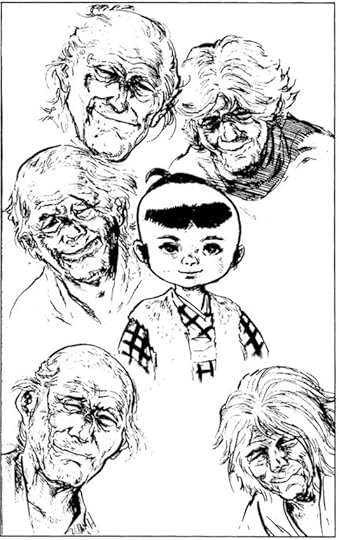
‘Twilight of the Kurokuwa’: Retsudo comes to a peaceful village inhabited by a small group of aged, and in many cases crippled people. After some surprising tests in which each of the five inhabitants proves that they are far more than they appear we learn that this is actually a sort of retirement home for Kurokuwa ninjas no longer able, or at least willing, to practice their killing art. Retsudo enlists these former warriors, the very last of their clan, in the fight against Lone Wolf and Cub in the hopes that surprise, mingled with their former skill, will be able to overcome his enemy. Unwilling at first, the former ninjas take to the road to observe their enemy and decide how they will handle this last battle of their lives.
Lone Wolf and Cub is a true gem of immense radiance on innumerable levels. Whether it’s the amply portrayed visuals tied to corresponding lo-fi pencil-work, the floral and richly textured language, or even the fantastically well researched and implemented history within, everything here screams top notch. However, as Vol. 18 shows, its truly the maturity of vision that trumps all other values.
There’s a lot that could be carelessly shuffled through by a younger reader but, under more aged (and hopefully more experienced eyes) there is an enormous width of human realism within. From the most basic of human emanations, whether it is in the simplest of commercial exchanges to purchase food, or to something a bit more commode-related (amusingly enough the former is absent from the series) the overlooked that actually makes up most of life are perfectly illustrated to the umpteenth degree. Unadorned humanity is the true golden core here.
Sure, the sword fighting is cool (especially when its creatively modulated). And of course revenge is a timeless trope that we can all get excited about. But what truly sets Lone Wolf and Cub apart from its puerile peers is its enthronement of its unique and deeply human vision.
Her zamanki gibi olağanüstü bir ciltti. Yagyu artık Ogami Itto ve Daigorocuğumun hakkından gelebilmek için varilin dibini kazımaya başladı. Bak Yagyu zaten bitmesin diye ağır ağır okuyorum hele de Daigorocuğuma birşey yaparsan iki elim yakanda bilmiş ol.
Kara Kapının Ateş Gözcüleri resmen tarih kitabı gibi anlatarak ve planlarla hikayeye giriş yapıyor. Ve o nasıl bir yetenek? Atı bile ne kadar olağanüstü çizmişler. Merdivenli kızak ve puset kayağı gerçekten ilginç detaylardı.
Ölümsüz Ateş Gözcüleri nde yine deniz ve fırtına sahnelerine vuruldum. Hep söylerim, ilk başta siyah beyaz oluşuna biraz içerlemiştim ama şimdi düşünüyorum da acaba daha mı iyi oldu? Bu bölümde babası sayısız düellolarından birini yaparken Daigoro'nun hüzünlü gözlerine bir bakın.
Kefen Parası nda Ogami Yagyu'yu alt ettikten sonra Edo'ya rüşvet vermek için para biriktiriyor gibi bir dedikodu çıkıyor. Benim de düşündüğüm gibi Ogami rüşvetle işim olmaz diyor ama açık söyleyeyim ben de o altınlar nerede çok merak ediyorum. Sonuçta o dönemde bile para emanet edebileceğiniz "banka" işlevi gören yerler var ama şehir merkezindedir. Ogami de oralara hiç gidemiyor, zaten 500 ryo'luk suikastlerin çoğu kırsalın ortasında oluyor. O zaman bu altınlar nerede?
Bu arada "ebisu koban" da "kefen parası"ymış ve Japonlarda da böyle bir tabir varmış. Ogami ve Daigoro'ya silah doğrulttuklarında Daigoro'nun koşarak kayıktan mızrak alması da nedir? "Eli silah tutma yaşı" 13'se bu çocuk daha 4 yaşında bile değil! Aslanım Daigoro. O değil de az kalsın babası Daigoro'yu bırakıp gidiyordu. Gitti mi yoksa?
Yaşam Çizgisi nde Daigorocuğum kumsalda babasının izlerini takip ediyor. Gerçekten çok üzüldüm. Bir yandan kızıyorum ama bir yandan da Daigoro'nun bu şartlarda hayatta kalabilmesi için zor durumlarla mücadele edebilmesi lazım diyorum. Hele bugün bir çocuğun tek başına neler yapabildiğini düşündükçe.
Bölümdeki şu hikaye beni çok üzdü. Guguk kuşunun bir bacağı beyazmış çünkü bir baba oğlunu kapan kartalın peşinden koşarken tozluklarının birini giyememiş ve guguk kuşuna dönüşmüş. Guguk guguk sesleri de aslında "oğlum eve dön" demekmiş. Daigorocuğum da resmen guguk guguk baba baba diyor. Gözlerde yaş pıt. Allahım beni oğlumdan ayırma amin.
Şunu düşündüm. Ogami'yi takip eden eli kılıç tutmayı bilmeyen köylülerin sonbahar yaprakları gibi dökülmesi onları öldüren Ogami'nin suçu mu, yoksa başlarına 5000 ryo ödül koyup onları imkansız bir hayale sürükleyen Yagyu'nun mu?
Ve Kurokuwa'nın Alacakaranlığı . Off Kurokuwa köylülerine Yagyu'nun olanları anlattığı sahneleri nasıl güzel yapmışlar. Her bir karakterin yüzü nasıl da farklı. Daigoro'nun kara çiş yapıp pıt pıt izler bırakması, koşarak gidip kaka yapmaya çalışması inanılmaz insalcıl detaylar. Ve Yagyu'nun bir avuç emekli köylüden medet umması.
Sadece 10 cilt kaldı. Ne olursunuz bu ayarda bir seri varsa söyleyin. Artık konvansiyonel mangalara dayanamıyorum ama bu çok daha başka birşey. Öneriniz varsa memnuniyetle dinlerim.
Kurokuwa clan, with tearful eyes, I salute and respect you.
In the past volumes, I sympathized for Retsudo Yagyu from the sacrifices he has made for the Yagyu clan, giving up the lives of his sons and daughter and yet victory had eluded him. Now after reading this volume, I hate him so much! To be this desperate to order the very last Kurokuwa ninjas to fight tge wolf is utter evil in desperation. I was really moved and disturbed by this last chapter in the book, more sad than any of the previous chapters.
In the Yagyu's eyes, dignity is all but lost in his clan as the shogun himself mocks his inability to subdue just one man. That must feel extremely bad for "jiji" Retsudo. That was his own fault anyway.
With ten more volumes left and Itto Ogami getting a step closer to Edo, I expect the story to get even better.
Lobo Solitario 18 Parece que la historia ya se va a centrar en el conflicto Lobo-Yagyu. Los capítulos de los Guardias anti-humo, me gustaron, y sus técnicas con escaleras, interesantes. 4 star SPOILERY
Sad as ever. The end of the Kurokuwa moved me a little. They wer'nt really bad (except that they were in fact bad). I mean, they were human, and a bunch of them were sad fulfilling an order.
Many tough battles for ogami itto to win, and the fact that these battles don't involve swords is what makes them so tough.
Twilight of the Kurukuwa was a beautiful ending to this arc, although maybe the journey is starting to sag under its own wait. The fire watchers added a new and interesting element to the story as well.
Esta vez los capítulos son menos espirituales, pero aprecié mucho que los primeros dos capítulos fueran una historia más larga, y el enfrentamiento contra el guardián antihumo de la puerta negra es realmente épico, tenía varios tomos que no nos mostraban un duelo tan tenso. El último capítulo del tomo avanza la historia bastante, vemos a Retsudo Yagyu casi derrotado, mendigando ayuda y tratando por todos los medios de cumplir la misión de eliminar a Itto Ogami, pero las cosas nunca resultan como el esperaba. Este último capítulo me gustó mucho, se me hizo muy emotivo. De nuevo el arte es completamente envolvente y en este tomo tenemos muchos ambientes y situaciones diferentes: hay montañas nevadas, hay mares, hay bosques, etc. Y todo eso es retratado a la perfección como nos han acostumbrado estos autores. Diez tomos más y llegamos al final, espero que pronto de un giro radical porque se está volviendo un poco repetitiva y no sé cómo van a llenar diez tomos más sin que me aburra.
Another superb entry that finds Ogami Itto and his son, Diagoro, continuing their journey to Eco, only to deal with separations and assassins. Koike keeps this epic tale moving towards its epic conclusion as Lone Wolf & Cub's journey is beset at every turn, a notable one being a group of starving peasants wishing for his money to help him. It remains matched by Goseki Kojima's gorgeous and crisply realistic art, whether depicting feudal Japan or its epic action. One of the best manga's ever.
It was a great change of pace volume. Rather than everyone's trying to kill Lone Wolf every chapter there was a chapter where they asked Ogami to fund an irrigation canal for the starving village. Another chapter from the point of view of the antagonist convincing some retired ninjas to kill Ogami because no one else could but they decided to die not by the sword. Another great volume.
We finally see (sort of) the Shogun and find out what he thinks of Yagyu's war with Ogami Itto. The Shogun gives Yagyu permission to use his elite force called the Firewatchers. This group lasts multiple chapters. Then we see that some of the peasant class are sympathetic to Ogami Itto.
Some of the fights in this are better, more drawn out.
Shit is really starting to pop off between LWaC and Yagyu Retsudo and yet I somehow still have 10 volumes of this jawn left. Still enjoying the ride though!
Otra excelente entrega. Lo mejor del asunto es que finalmente se está viendo un hilo argumental más centrado y menos dedicado a cada parada, un problema. Pero también regresamos a la tendencia de que la historia que le da cierre al tomo se convierte en la mejor del mismo. altamente recomendable
Die Melancholie des Zwielichts spiegelt sich in diesen Geschichten wider. Die Kurokuwa, einst die Eliteshinobi der Yagyu, größtenteils ausgelöscht durch einen einsamen Wolf ("Twilight of the Kurokuwa"). Die "Feuerwächter" des Shoguns, abgestellt um Retsudo zu helfen, endgültig einen Schlussstrich um die langsam peinliche Geschichte zu ziehen, bis auf wenige Überlebende vernichtet ("The Immortal Firewatchers").
Es bleibt nicht mehr viel, was Yagyu Retsudo dem Wolf in den Weg stellen kann auf seinem Weg nach Edo.
Konsequent, wie Ogami die Bittsteller in "Paper Money" behandelt - die Autoren halten ihre Charakterisierung streng durch, auch wenn dies dem Leser (und auch Daigoro!) wenig gefällt.
Ein ruhiger, aber sehr trauriger Band der Reihe. Wie üblich zu beachten: Die 4 Sterne spiegeln nur die subjektive Qualität innerhalb der Reihe wieder und bedeuten mehr als 5 Sterne bei anderen Büchern.
El shogun le ha dado un ultimátum a Retsudo: debe cazar cuanto antes al lobo. Unos nuevos guerreros, los guardianes antihumo de la Puerta Negra, se han sumado a la cacería del lobo y su cachorro. Itto y Daigoro se dirigen hacia Edo para cumplir su venganza. Todos los caminos, por tierra y mar, están cercados para ellos. Itto Ogami cada vez más inflexible dentro del meifumado, entre los límites del bien y el mal de Rikidu Shisho, y sin perder de vista su objetivo y sin vincularse y distraerse en otras causas.
Padre e hijo han dejado de ser cazadores para ser cazados y no tendrán descanso. Extrañamente este número no tiene capítulos que me parezcan muy memorables.