Bertrand Court is a captivating novel told in story form, intertwining seventeen luminous narratives about the secrets of a cast of politicos, filmmakers, and housewives, all tied to a suburban Washington, DC, cul-de-sac. Linked through bloodlines and grocery lines, they respond to life's bruises by grabbing power, sex, or the family silver. As they atone and forgive, they unmask the love and truth that hop white picket fences.
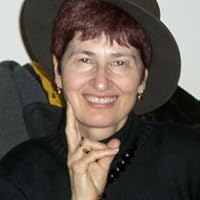
Writing is not my first gig. I’ve also worked as a coffee barista, radio advertising salesperson, and filmmaker, among other jobs. My resume reads like a ransom note, yet this assortment of life experiences has propelled me toward my big passion, the coaxing and telling of stories.
As a filmmaker, the stories that surfaced after the cameras stopped rolling drove me to write some bad short fiction. I kept writing, though, and eventually earned an MA in fiction writing from Johns Hopkins University. My short fiction has since won some nice awards, including a special mention in the Pushcart Prize Anthology, and my essays and stories have appeared in Slate, the Washington Post, the Los Angeles Review of Books, Tablet, Lilith Magazine, the minnesota review, and numerous other publications. I am currently at work on my third book of fiction, a novel titled Status Change.
In addition to my own writing, I help others find and tune their narrative voices. I teach creative writing at The Johns Hopkins MA in Writing Program, the George Washington University, The Washington Center for Psychoanalysis’ New Directions Program, and smaller workshops throughout the Washington, DC area. In 2003, I founded Yeah Write, a writing coaching business.
A Milwaukee,Wisconsin native and University of California, San Diego alum, I still dream about Kopp’s custard and La Jolla Cove swims. I now live just north of the Washington, DC border, in Glen Echo, Maryland, with my husband and two children.
First of all, the first story in this collection, "Shhh: Baby #5 and Danny Weiss, March 1993," is the most powerful, emotional, beautiful, poignant piece I have ever read about early pregnancy loss. After I read it, I had to close the book and just let myself absorb it all. When I finished the book, I went back and re-read the first story. Again, it literally took my breath away. So I recommend this book just for the first story. But the rest of the collection didn't disappoint either. It reminded me of the movie Short Cuts where the lives of 20+ characters all intersect in predictable and surprising ways. The stories "You're Next," "Georgia and Phil" and "More So" were the other winners in the collection. Reading linked short stories is a different reading experience from novels and stand-alone stories but it doesn't mean they are any less enjoyable or satisfying. Keep an open mind and give these a try . . .
2 stars. I'm shocked at all the glowing reviews. The premise was interesting but wow did this book disappoint. The first few stories were good, except where there were glaring problems. Um, anyone emailing cell phone numbers in 1992 was emailing interoffice only and MAYBE a car phone. Maybe. And also the WW2 monument in DC, "new" in 1995? Yeah no. Not even broken ground. Opened in 2004. And there were more problems like this in the first half of the book. This kind of ruined the book for me. That and the HUGE problem of way too many characters, none of whom were fleshed out enough at all. Well, maybe one or two were. The author should have chosen fewer characters to focus on, maybe the Solonsky family OR only the actual families on Bertand Court. And then the problem of how this was supposed to be a DC book. Nope. Simply mentioning a restaurant or street doesn't give a book that city's flavor. As someone in book club said, this could have been set in Kansas City. Yep. I'm no writer. But to find out it took 15 years to write. Yikes. Editing missed the mark in a huge way. And then the author thought it would show differences between urban and suburban life? Yeah no. I'll stop now, but I could go on. Just glad it was short and a fast read. Didn't waste too much time. Plus it made for a really good discussion.
When done right, linked short stories are my favorite to read. Bertrand Court is done right. Each story is told from the point of view of someone connected to Bertrand Court in D.C. The stories, of everyday life of suburban people, are relatable and beautifully crafted. While the stories meander in a lovely way, they work together to create a cohesive whole. The opening story took my breath away it was so amazing and the final story capped the collection perfectly, leaving you with plenty to think about. Love this collection.
Bertrand Court by Michelle Brafman is a collection of linked stories set in Washington, DC. Seventeen chapters explore moments in the lives of a range of characters, most of whom are related by blood or marriage and/or live on the same cul-de-sac in suburban Washington.
Brafman's stories deal with relatively small moments - a child's birthday party seen through the eyes of her mother and grandmother, a pregnant woman's anxiety about miscarriage, a visit to a boyfriend's family in Wisconsin. They are vignettes in the characters' lives, mere blips on the overall arc of their relationships. But Brafman manages to find the profound in these small moments, teasing out the conflicts, passions and tenderness at the heart of these friends, spouses, partners and parents.
I love Brafman's writing. She focuses on small details that seem insignificant but help paint such an immediate, realistic picture of what is happening. There's also a nice feeling of tension that propels the stories- you know they are building up to something, and it's fun finding out what it is. I think I grew to appreciate the book more and more as I read it and saw how Brafman really got to the core of these characters and relationships in 20 pages or so.
I had expected Bertrand Court to feel particularly Washingtonian, as it is billed as a book about "politicos, filmmakers and housewives", but to be honest, I didn't really find it all that resonant of my hometown. This could have taken place in any suburb where smart, engaged people live. (It *does* have a lot of Jewish people in it - that is true. And they felt pretty familiar to me.)
My favorite chapters were "You're Next", "Minocqua Bats" and "Would You Rather".
At times it can be hard to keep everybody straight (though Brafman does include a list of the characters and their relationships in the beginning), but ultimately, I decided it didn't matter if I couldn't remember how everyone related to each other, each time. The stories worked on their own.
Bertrand Court is a big-hearted book to savor and to nod at in wistful recognition.
While I usually don't enjoy short stories, I did enjoy this collection very much. The characters ring true and show a family and their friends with their different experiences and ways of expressing their American Judaism. I was only disappointed that the last story didn't give a satisfying conclusion, like it ended on a cliffhanger.
I enjoyed this book and I think there is many different issues to discuss among different generations of women. I loved the way the stories loosely hung together. I am thankful for the chart at the front of the book and referred to it many times. I thought it ended with a very interesting twist and need discuss that story with someone. This might be a book group book for me.
‘Bertrand Court’ reveals the extraordinary in everyday life. Seventeen stories connected through a cul-de-sac in the Washington area show that familial ties can bind or chafe, lovers connections can linger, and everyone has fragile moments. Brafman has a wonderful grasp of the inner voices of her characters. Genre: Fiction, short stories Locale: Washington DC area Time: 1970 – 2000s Read this for well-crafted stories of the extraordinary elements of everyday life. Perfect to savor in small bites. One of the most difficult things an author can do is make the commonplace events of daily life compelling. In Michelle Brafman’s new collection, Bertrand Court, families and friends, colleagues and lovers reveal and conceal themselves in the Washington suburbs. Although some of the people in these stories have careers that are very Washington, the underlying circumstances and insecurities of their personal lives are much more universal. For a more detailed review go to: http://www.findingmywings.com/bertran...
I just had the pleasure of tearing through this book in two days. I kept elbowing the author in my imagination to underscore her amazing insights and language! As wine lovers say about their favorite blends, the characters and flavors are so deliciously complex and play off each other. Early on my favorite line was Goldie making dinner while also carrying on a testy conversation with her sister: "the smell of the onion tore through the kitchen like a brush fire." And the lines just kept mounting up. What a feat of imagination and connectivity/disconnectivity Brafman has captured in these people. Also, I love DC as the backdrop, from Amy's zoo apartment to drunken noodles from Spices to lobbyists who lose their job because of hanging chads--all of it real as opposed to the painted DC scenes we're so often presented with. This would be a fabulous book to read with friends!
Thanks to Library Thing for this book. Quick, easy read. Love books set in my area of Washington, D.C. and places I recognize.
I really enjoyed this book about the residents and friends of Bertrand Court. There were a lot of minor characters that I could have lived without but I get how they are connected. There was a name guide in the beginning of the book for quick reference and needed to use it a few times to see who was related to who in families and how they interconnected with others.
I was intrigued by the synopsis of this book. I live in the Washington D.C. area so anytime I hear of a book that is set here I usually want to read it. This book is written like a collection of short stories but they are all connected. It was a VERY fast read for me (read in a day). I enjoyed it. Everyone featured in this book was relatable, they all could have been my very own neighbors. If you are looking for something intriguing but not too "heavy" to read this is a good one.
This is a very nice collection of stories that are tied into a cul-de-sac in D.C. The author uses several different points of view, with an accompanying change in narrative. Some of the stories are dramatic, some are heart wrenching, but all are fascinating.
I really enjoy stories told from different view points and Bertrand Court is no exception. Through the narrators we learn more about the characters and about our neighbors, friends, families, and ourselves.
This book is what an AI would spit out if told to reproduce a Nancy Myers film as a book. It's all affluent, straight white people being affluent, straight, and white. I was really anticipating a scene where a bunch of women danced around a beautiful suburban kitchen while singing ABBA.
The first third is this book is good--a collection of stories, loosely tied together by a circle of friends/siblings, and their husbands--mainly because it focuses on the real problem of fertility and how it impacts not only one person but everyone around them. How an uncontrollable incident spurs mental anguish and how that resonates throughout a group. It also tied this moment beautifully into heritage by bringing up the mother of a group of sisters and the rivalry/love between those two.
Then it got to the story of Rosie. Yeesh. It's time reading buffs acknowledge the grossness of this recent moment in literature when every author was writing in the first-person as someone with high-functioning autism, or people on the spectrum in general. It's incredibly insulting and borders on disturbing how people think it is okay to do this unabashedly and call it 'art' or 'brave' or whatever audiences and critics tell themselves to feel good about reading about those with autism. It's fine to do it in third-person, under the right circumstances, but every writer who goes into this mode of first-person autism needs to be dragged and hard.
The Rosie portion (oddly, with its similar name to another famous terrible novel about a man with autism) was indicative of the middle and later portions of the book...that the author, when pulling away from the sibling circle, often repeated her ideas, themes, and concerns about 40-year-olds in relationships in general...specifically 40-year-old rich people. That they get tired, and need reminders of what sparked them, etc., etc. There just wasn't anything there. Each story (aside for Rosie's) was simply, "it's hard fucking and committing when you're rich and want to be young again and hard in love, you know."
For this book, the author should have avoided the first-person when dealing with anyone who wasn't a white woman in general. The men, when in first-person, are pretty rote and barely capture what makes them masculine or attractive. They are written as if the author believes that all men only think about their dicks in relating to the world. They barely have a thought outside of their crotches or their wives'. Again, pretty insulting!
Astray ideas -Can we get a person of color or a some LGBT representation in this damn book? It takes place mainly in Washington, D.C., and it's all white people all the time in a city known for its growing diversity. -The author's bio says she's "not really an author, but barista, a film producer..." Yeah, you got published. You're an author. Stop couching your bad writing by claiming you're something else. -Nancy Myers would love this. This had "turn me into a Myers movie" written all over it. -There are other ways to write a subtle surprised reaction than "raised an eyebrow."
Not as moving as her novel, WASHING THE DEAD, but still a charming look at some Jewish and non-Jewish families living in and around a fictional Washington, DC suburb.
The stories are interconnected; they can be read separately but there's no denying a progression to the characters throughout. I'd say that the chief characters who appear in or around most of the stories are the Solonsky siblings and spouses, and we track them from the first stories, when they're young adults, to the last where they're more middle aged.
I also developed a bit of a soft spot for Becca Coopersmith, Hannah Solonsky's neighbor and college roommate, who, although appearing to be a little too loud and non-intuitive, was a bit of an adult spiritual seeker. That, and I kinda felt bad for her given how a couple of people used her in some of the stories. :P
Here are the ones that really stood out to me--"Sssh," which uses the daring device of having a fetus narrate to give a sense of Hannah and her husband's problems with fertility. "Sylvia's Spoon," a more traditional take on this issue, which I also heard Brafman read aloud on a Lilith Magazine podcast. So I may have had some outside bias. :P "What Hannah Never Knew," which is about Hannah's grandmother and her sister, and which admittedly I mostly appreciated for fleshing out Hannah's familial past.
"Skin" takes place around the dramatic bris of a baby boy from an interfaith family and touches upon the tensions of confronting different traditions (extra irony--the non-Jewish mother, who had a little bit of a meltdown, was a diversity counselor. :P) "You're Next," which deals with the changes in generational norms of parenting and the usual push and pull of mother/daughter relationships. "Georgia and Phil," where a romantic tryst isn't all that it seems, and ok, I might be mostly into it because of the cat issues. :P And "More So," which, from a male perspective, deals with the fears of middle age, a brief fling and a possible STD.
My favorite story was "In Flight," which was told from the perspective of an adult woman on the autism spectrum. Her condition appears to be worse than mine (and I later read an essay by Brafman, which seemed to imply that this story was influenced by her own sister-in-law) but speaking as someone on the spectrum, I think that she nailed the awkwardness of feeling out of the loop sometimes when neurotypicals talk. Not to mention how it complicates family dynamics.
A few of the middle stories were more of a shrug for me, and the one that I liked the least was "Molly Flanders." It featured a rich heiress dealing with her jealousies about not belonging to something deeper than a famous name, but the execution felt a little shallow to me.
All in all, though, a lovely collection to round off my Chanukah! And an extra treat, as someone who also lives right outside of DC, to get several of the geographical references. :D
Betrand Court is a novel that revolves around the lives of several friends, family members and in-laws (most of them Jewish) living in the Washington DC area. The story spans over decades.
If it seems as though I’m struggling to come up with a clear book description for Bertrand Court it’s because I am. Calling it a “captivating novel told in story form, intertwining seventeen luminous narratives about the secrets of a cast of politicos, filmmakers, and housewives, all tied to a suburban Washington, DC, cul-de-sac” is probably about as close to an actual book description as you’re going to get and this was the main issue I had with the book.
There never seems to be a clear focus. It reads much more like a somewhat connected short story collection (sort of) than a novel. Characters appear, disappear and then reappear again. POV bounces around. Time period bounces around. As soon as I thought we were getting to something interesting, the author changed it up again. This made it extremely difficult to connect with the characters. It also made it difficult to maintain interest. I grew bored quickly and had trouble finishing, yet I still did just to see where things would go.
There were many Yiddish words sprinkled throughout. Aside from yenta and putz I’m lost when it comes to Yiddish, so I found it slightly annoying to have to keep wondering what all the Yiddish words meant. The reappearing ice box cake reference got on my nerves.
I didn’t hate this book; it was more that I was frustrated. The author’s writing is intelligent, but it’s clear that her background is in writing short fiction stories and essays (as it says in her bio). I was expecting a novel, as it states in the description, but instead I received a book of somewhat connected/disconnected short stories and I felt a bit cheated.
I downloaded this book on my Kindle when I saw it took place in the Washington DC area, where I currently live...and the few local references were the main reason I enjoyed this book. That said, this collection of stories is very disjointed. None of the characters are super fleshed out, and I found it hard to keep track of everyone. I thought it was strange that everyone who lives on Bertrand Court is conveniently interconnected, and I was confused as to how all these interconnected people from different parts of the US ended up in Washington in the first place. True, Washington is a transient community and draws transplants from everywhere...yet, all the Solonsky siblings--who grew up in Milwaukee--end up in the DC area, minutes away from each other, without explanation. This is also true for college friend characters that went to school together nowhere near the DC area. You can’t chock up the convenient location of all these characters to the Washington’s stereotype as a “transplant city.” Washington is so much more than that…and life is also usually more complicated than that.
Bertrand Court is a shallow book with a lot of shallow characters. It presents a shallow perspective of DC, which is far more than the self-absorbed, immature characters Brafman show cases throughout her stories. While I did enjoy the few local references, Brafman’s writing didn’t particularly impress me, and the lack of cohesion in her stories made Bertrand Court difficult to appreciate as whole.
Bertrand Court is a collection of short stories, all intertwined and dealing mostly with the members of one large extended Jewish family (and the neighbours who share the cul-de-sac with some of the family members).
The first story starts off strong, but then I wasn’t overly impressed by the next few. However, the further I got into book, the deeper and more meaningful the stories seemed to get. The book definitely grew on me; I would have given it only 1 or 2 stars if I’d stopped three or four stories in. I'm glad I kept going. One of my favourite stories was “You’re Next”, which at the beginning showcases the differences and tensions between a mother and daughter (played against the background of a 5-year old’s birthday party), yet by the end we see the daughter coming around to understand that she has underestimated her mom and they really aren’t so different after all. A lot of the stories focus on family relationships.
There are many characters thrown into the mix and my advice would be just to dive in and don’t worry too much about remembering how they all connect. By the end you’ll figure most of them out, but if you don’t, I really don’t think it matters too much. (There is a list at the front of the book of all the characters… 36 of them, not including the children!!!... for any readers who are determined to keep track of them from the beginning.)
This is one of those books that as reading it, it seems like it should be boring and yet somehow it is not. Nothing spectacular happens in the book. It is is a look into a collection of different lives. They have their secrets, lies, scandals, affairs. No different than can be found in just about anyone's family history. Yet it still makes for a compelling read.
It is both a novel and a collection of stories. Each chapter/story could be read on its own as a stand alone episode but they revolve around the same location and the characters intertwine in each other's lives. Connected by blood, marriage, friendship, lovers.
The biggest issue I had with this book was the fact that I found it difficult to actually keep track of all the characters and how they were related to each other. Also the way the book jumped through time made it hard to keep track of the order of some of the event.
The ending felt like it lacked a certain sense of conclusion and connectivity. I had thought/hoped the end would somehow tie all the different stories/lives together a bit more
I started this review with 4-stars, but as I thought about it more, I decided that a 3-star was more appropriate. The beginning chapter was by far the best, telling the story of a Hannah and Danny and their relationship struggles as Hannah suffers through miscarriages. This first story is worth a re-read and was amazing, even if the rest of the book struggled to keep everything together.
I liked seeing how each character imagined another's life as better, only to move onto that character and see that their life wasn't so perfect either. Yet, there really wasn't enough of any of the characters to really see into their lives-- once the character started getting interesting, we'd skip to the next one. I would have preferred to see more of what happened to the characters we were starting to get emotionally invested in.
Having such disjointed stories really left the ending bland- there is a lack of conclusion that would have really made this book more memorable.
I was initially intrigued with this book after hearing the author speak on a panel at the Virginia Festival of the Book. The seventeen stories that make up this novel revolve around a group of individuals whose lives are linked through family and friends living in a cul-de-sac just outside Washington, D.C. Since I was raised in the D.C. area, I'm drawn to books set in that location. However, other than mentioning specific neighborhoods and restaurants, I missed a feel for the actual city and felt that the collection could have been set pretty much anywhere USA. However, I greatly enjoyed the relationships that developed among the characters as events played out and people found themselves in different and difficult life situations.
Interesting little book about a bunch of different people who live in a cul-de-sac and their intertwined lives, each chapter mainly about one or two of the characters, delving into their life, past and present in a voyeuristic way. It's like looking into the windows of these people, peeping into their private lives. It is character studies and they are interesting, provocative and entertaining. There really isn't a plot and each chapter is almost a stand alone story. The author helps the reader by listing all the characters and their relationships at the front of the book. The last chapter ended abruptly and left me dangling.
Without giving anything away...just keep in mind as you read this book of individual vignettes: each of these mini-stories is linked. By remembering this, you will get a much stronger feeling for the whole story rather than just a series of little pieces that make up the whole. You will find familial relationships, friendships, love interests, work interactions,sibling rivalry...many pieces that come together to complete the story rather than just leaving you feeling as if you have read a series of journal entries, or essays, or compositions. And, the truth of the matter is, we all live on Bertrand Court in one way or another!
I loved how these interwoven short stories travel around a Washington, DC area neighborhood and produce surprising people and surprising stories like the woman who some man used not only for his sexual needs but to take care of his cat so what does she do when she accidentally finds out she was his doormat——not to mention his laundress—-she steals his cat. And really he isn't just some man but one known to several of the other characters and liked. What Michelle Brafman achieves is show various sides of her characters. Some laugh out-loud moments in this entertaining book. My main criticism is that it ended to abruptly. Should of could of been more.
I started reading this book on my lunch break and literally couldn't sleep until I finished it around 1 am the next morning. I was really impressed by Brafman's deft handling of female relationships--the love and competition between siblings and between mothers and daughters was really poignant. The first story, on pregnancy loss, brought me to tears. The way these linked stories all hearkened back to the Jewish community and the many iterations of faith within one faith tradition (including someone wanting to be included who goes about it in all the wrong ways) reminded me of concentric ripples going out from a pebble thrown into a pond. I highly recommend it.
This set of connected stories is really great. I love how characters in one story reappear in another, so even though this isn't technically a novel, it feels like one. As in her first novel, "Washing the Dead," Brafman does a good job with the numerous Jewish characters in this story, but I thought the characters who were not Jewish were equally well-done here. She also really "gets" suburbia and the difference between surface-level appearances and the reality of the lives lived beneath the surface. Big thumbs-up on this one.
Bertrand Court sounds boring; the introduction of the characters at the first is intimidating; I almost didn't even try this one. However, except for the abrupt and unsatisfying ending, I enjoyed the book. It was little more than a collection of character studies and examination of relationships, but the author has great facility of language and insight that made the reading interesting.
I have a special love of Jewish stories, and these are stories about Jewish people (a Jewish family) above everything else. But beyond that, I found the majority of the stories to be well-written and engaging. I also enjoy when short stories are connected to each other somehow, and these were done perfectly.
I didn't think I would like or get into this book. I was wrong! I was quickly sucked into the lives of those in Bertrand Court. This book had so much potential! And then {screech} DONE. Nothing. No ending, no closure. Just done. That was incredibly irritating and disappointing.
I really enjoyed these interlinking short stories, there were some terrifying tales that really hit home. The short of it is: how self-involved we are, and how we excuse ourselves, but hold others to such high standards. She's a brilliant writer who picks apart the middle-class angst and anger with such quiet brilliance. Read it if you enjoy books which ask tricky questions of you.
The story of a Jewish family and their neighbors tied together by their neighborhood, Bertrand Court, is an engaging light read. The book jumps from character to character, telling the story from another point of view with each chapter. Fortunately, the author includes a genealogy in the front. When I came to the end of the book and the Goodreads review page popped up, I wondered where the other chapters were. Too many loose ends.