What do you think?
Rate this book


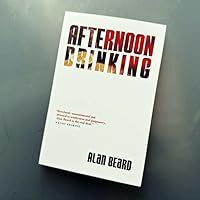
181 pages, Hardcover
First published January 1, 1983
More and more now he found that after he had gotten his one valuable thing out of a house and into his car he wanted to go back in the house and simply stand there, feeling the house as a kind of ongoing zone around him. He had been taking things that had no value from the very beginning, even though he did not know what he would do with them. Outside the house they had come from, they lost whatever magic they had seemed to possess – a spoon that said NEW JERSEY, a small plastic syrup bottle in the shape of a bear, a half-size railroad spike that someone had had brass-plated. They were things that had acquired a sort of magnetic charge from having been in one place, where people actually had lived, for a long time. Outside of those places they seemed not inert but diminished.
You can’t see the image of a camera obscura unless you’re inside it. You can’t know what a magnetic field is like unless you’re inside it. If you stand outside it, all you can see is the effects of its being there, the designs of the iron filings…
 come to my blog!
It was how intensely he felt the thrill of being in the house. It was a place to live, and partly it was so delicious because it was so absolutely forbidden, much more forbidden than the stealing, this being where other people have their life. . . They were trying to make this house become part of them, and the whole time it was standing all around them, containing them inside itself, holding them in its own body. (22)Are not these houses and rooms the very books themselves within which we readers undertake a habitation when we take up a new fiction? Each book feels like another room, another field of possible experience, the ‘what it’s like’ to be a particular, other consciousness.
They were things that had acquired a sort of magnetic charge from having been in one place, where people actually had lived, for a long time. Outside of those places they seemed not inert but diminished. Some of the older pieces he eventually threw away because they had lost whatever it was that had prompted him to take them in the first place. He had forgotten which houses they had come out of. But he always took the money things--stereos, TVs, jewelry. They formed the public reason for his being in the houses at all.How can such a passage not be read as a critique of the reader who approaches a book in order ‘to get something out of it’? Not only does that which we ‘take away from’ a book disintegrate and lose its being, its meaningfulness, when it is ripped away from its articulated existence, but this burglarizing of a book is merely a public alibi for our dwelling with pleasure within the text of our fiction. It is a thin justification offered to the public for our mere and illicit being there within the consciousness of a fictional life, in that world within which the characters dwell.