

What do you think?
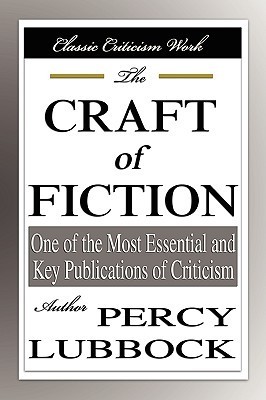
The Craft of Fiction
The Craft of Fiction is an important Criticism work by essayist, and literary critic Percy Lubbock. Lubbock's outlook in this publication is an obvious extension to that of Henry James and he works to illustrate the craft by referencing many important and classic novels including Leo Tolstoy's Anna Karenina, Gustave Flaubert's Madame Bovary and Henry James' The Ambassadors. The Craft of Fiction is highly recommended for those who enjoy literary criticism works and also for those who are interested in the key writings of Percy Lubbock.
232 pages, Paperback
First published January 1, 1931
Ratings & Reviews
Friends & Following
Create a free account to discover what your friends think of this book!
Community Reviews
Displaying 1 - 24 of 24 reviews

February 7, 2011
A star rating doesn't seem appropriate here...but it's a worthwhile book, so I'll give it four.
While the dramatic takes precedence in a novel, picture-making is also important. I feel my MFA education emphasized the former and downplayed the latter, though Lubbock does not. He doesn’t dismiss the picture-makers; in fact, aside from female authors and Turgenev, he doesn’t seem to dismiss anyone. One of my favorite aspects of his criticism is that he genuinely recognizes genius, even as he critiques the book. The flaws don’t keep these books from being great books, and you get the sense that Lubbock truly believes that.
The subject dictates the method. A close third person is the most advantageous POV. Scene trumps the pictorial, but is expensive and often needs the pictorial to prepare it. Also, books that are pictorial in effect can be scenic in method. These are the few concrete nuggets to be pulled from what Lubbock says, and they are worth reflecting on.
While the dramatic takes precedence in a novel, picture-making is also important. I feel my MFA education emphasized the former and downplayed the latter, though Lubbock does not. He doesn’t dismiss the picture-makers; in fact, aside from female authors and Turgenev, he doesn’t seem to dismiss anyone. One of my favorite aspects of his criticism is that he genuinely recognizes genius, even as he critiques the book. The flaws don’t keep these books from being great books, and you get the sense that Lubbock truly believes that.
The subject dictates the method. A close third person is the most advantageous POV. Scene trumps the pictorial, but is expensive and often needs the pictorial to prepare it. Also, books that are pictorial in effect can be scenic in method. These are the few concrete nuggets to be pulled from what Lubbock says, and they are worth reflecting on.

March 22, 2014
A deeply intelligent analysis of how an author's choices of POV and narrative distance impact the story a novel tells. I would not have appreciated this book before I had completed my novel. Now that I understand the mechanics of my own choices (or sometimes not!), this book has helped me see exactly what I can achieve, and how powerfully I can do that, during my revisions.
This is a rare analysis/craft book that goes deeper than a categorization of approaches a novelist can take, or formulaic prescriptions for "how to choose a POV," which are definitely helpful in the initial stages, if one is pondering how to to start writing a novel. Also, readers generally looking to understand what makes novels tick, but not immersed in the writing of one, might find the detailed treatment repetitive. But if you are revising your first novel or even a series of short stories, a close reading of this book could be worth an entire class in an MFA program.
This is a rare analysis/craft book that goes deeper than a categorization of approaches a novelist can take, or formulaic prescriptions for "how to choose a POV," which are definitely helpful in the initial stages, if one is pondering how to to start writing a novel. Also, readers generally looking to understand what makes novels tick, but not immersed in the writing of one, might find the detailed treatment repetitive. But if you are revising your first novel or even a series of short stories, a close reading of this book could be worth an entire class in an MFA program.

April 29, 2015
كتب الناشر في غلاف الكتاب الخلفي كثيراً وهو يمدح هذا الكتاب ويُعلي من قدره ، واستعان ببعض المقولات لبعض الأشخاص لتدعم موقفه ، وكان يباهي بأنهم أضافوا للمكتبة العربية رافداً مهماً سيساهم في بناء الثقافة العربية .. والحقيقة أني لم أرَ شيئاً من هذا في الكتاب !
الكتاب ممل جداً ، ولم يأتِ بجديد ، ومع تقديري لمكانة الكاتب فكتابه أخذ سمعةً لا يستحق بعضاً منها . وأنا شخصياً لم أستفد من قراءته مطلقاً ، بل خسرت عليه وقتاً كان أحرى أن يُنفق على غيره .
استشهادات الكاتب بروايات قديمة لم يكن موفقاً ، وكان يتحدث عن الرواية تلميحاً وكأن الكل يعرفونها وقد قرأوها معه ! .. لذا كان اسلوب الكتاب مبهماً ولا يبعث على الارتياح .
أما الترجمة فهي مضحكة ، ولم تصل حتى لمستوى ترجمة قوقل .. واقترن سوء الترجمة مع غموض المؤلف ، فكان النتاج رديئاً ..
الخلاصة : لا أنصح به أبداً !
الكتاب ممل جداً ، ولم يأتِ بجديد ، ومع تقديري لمكانة الكاتب فكتابه أخذ سمعةً لا يستحق بعضاً منها . وأنا شخصياً لم أستفد من قراءته مطلقاً ، بل خسرت عليه وقتاً كان أحرى أن يُنفق على غيره .
استشهادات الكاتب بروايات قديمة لم يكن موفقاً ، وكان يتحدث عن الرواية تلميحاً وكأن الكل يعرفونها وقد قرأوها معه ! .. لذا كان اسلوب الكتاب مبهماً ولا يبعث على الارتياح .
أما الترجمة فهي مضحكة ، ولم تصل حتى لمستوى ترجمة قوقل .. واقترن سوء الترجمة مع غموض المؤلف ، فكان النتاج رديئاً ..
الخلاصة : لا أنصح به أبداً !

March 4, 2022
Virginia Woolf recommended this book to aspiring writers. In it Percy Lubbock goes through examples of some of the greatest writers in history and shows us their strengths and weaknesses. He’s not afraid to praise and criticize great writers like Tolstoy and Balzac. He stresses the importance of reading as much as possible and explains what we, as writers, can gain from it.
This is a decidedly academic book, but a sincere attempt to enlighten the reader. Percy finally warms up at the end and expresses that beautifully. If embraced with an open heart Lubbock will not only enlighten but inspire the reader.
This is a decidedly academic book, but a sincere attempt to enlighten the reader. Percy finally warms up at the end and expresses that beautifully. If embraced with an open heart Lubbock will not only enlighten but inspire the reader.
July 31, 2020
No spoilers ahead, even if I will show you how the book ends:
“Every word we say of it, every phrase I have used about a novel in these pages, is loose, approximate, a little more or a little less than the truth. We cannot exactly hit the mark; or if we do, we cannot be sure of it. […] The author of the book was a craftsman, the critic must overtake him at his work and see how the book was made.”
This is a short book that concerns itself with four notions found in the theory of literature. If they are paired they would look like this:
1. showing and telling --notions that are connected to the narratorial voice. It speaks on the relationship that is built between the reader and the narrator, how the last one chooses to presents the events to the reader.
2. dramatic and picturesc--the second level of representation, once the reader is immersed in the act, those notions describe the level of intimacy that one have with the events. To simplify, the dramatic representation is the knight with the sword in hand. It is the middle of the battle. His horse took off. He is surrounded by cadavers. He turns around ready to slash at another one that comes on wobbly legs to kill him.
Whereas, the picturesc is the reader contemplating the battle hill where a knight is fighting for his life while the valley wails in pain for the blood that soaked its dales.
The voice that presents all this techniques is a kind and friendly one. You can read it just for the joy it brings to have a friendly monologue about some well known book. On that note, I should mention that you have to have some titles in your “read” shelf to be able to understand what is going on. For example, you should be aware of Tolstoy Lev, ThackerayThackeray, William Makepeace, Charles Dickens, just to name a few. The introduction on the books is quite abrupt and not sufficiently explained if you have no idea of the books presented. When he starts talking about Ana Karenina good luck at trying to understand the scenes he refers to whiteout having even watched the movie.
But, I have to say that for a book that was written in 1921 is quite capable to speak to the present of the 2020. Nearly one hundred years ago. Talk about actualized reading material.
Instagram
“Every word we say of it, every phrase I have used about a novel in these pages, is loose, approximate, a little more or a little less than the truth. We cannot exactly hit the mark; or if we do, we cannot be sure of it. […] The author of the book was a craftsman, the critic must overtake him at his work and see how the book was made.”
This is a short book that concerns itself with four notions found in the theory of literature. If they are paired they would look like this:
1. showing and telling --notions that are connected to the narratorial voice. It speaks on the relationship that is built between the reader and the narrator, how the last one chooses to presents the events to the reader.
2. dramatic and picturesc--the second level of representation, once the reader is immersed in the act, those notions describe the level of intimacy that one have with the events. To simplify, the dramatic representation is the knight with the sword in hand. It is the middle of the battle. His horse took off. He is surrounded by cadavers. He turns around ready to slash at another one that comes on wobbly legs to kill him.
Whereas, the picturesc is the reader contemplating the battle hill where a knight is fighting for his life while the valley wails in pain for the blood that soaked its dales.
The voice that presents all this techniques is a kind and friendly one. You can read it just for the joy it brings to have a friendly monologue about some well known book. On that note, I should mention that you have to have some titles in your “read” shelf to be able to understand what is going on. For example, you should be aware of Tolstoy Lev, ThackerayThackeray, William Makepeace, Charles Dickens, just to name a few. The introduction on the books is quite abrupt and not sufficiently explained if you have no idea of the books presented. When he starts talking about Ana Karenina good luck at trying to understand the scenes he refers to whiteout having even watched the movie.
But, I have to say that for a book that was written in 1921 is quite capable to speak to the present of the 2020. Nearly one hundred years ago. Talk about actualized reading material.

May 6, 2018
This 1921 book attempts to create a standard by which to begin to discuss novels. Using examples from Tolstoy, James, Balzac, and a few others, Lubbock discusses the two main approaches to filling a novel - the pictorial or general, wide covering of events and personalities across space and time; and the dramatic or the laying out of action, dialogue, or thought as it happens in a way to make the reader see what is occurring. He also spends a great deal of time discussing the advantages and disadvantages of point of view. Put them all together, and acknowledging that the mind is incapable of remembering more than a fragment of the novel after it is finished, he eventually concludes that he has just made a beginning step towards useful criticism. In his mind, an understanding of the decisions the author has made, the choices between formal elements, is the most likely path towards beginning to grasp the true nature of the book itself. As a lover of criticism, I'm always down to learn in such detail of a critic's specific approach, and Lubbock's discussions are erudite and intoxicating in their range and grasp.

February 25, 2019
This book appealed to me because of the title, ‘The Craft of Fiction’. I have always been convinced that novel writing is a craft rather than an art because a novel is a functional object designed to convey story and characters to the readers.
The first chapter was a fascinating look at the problems of critiquing a novel because; “As quickly as we read, it (the novel) melts and shifts in the memory.” We read a novel in instalments, experiencing it as a moving stream of impressions. This means that the structure of the book can’t be held in the brain by itself the way a picture or sculpture can and although we have a sense of character and structure, there is nothing properly solid to analyse.
What’s more; the language of literary criticism is the same one we use for other arts and don’t properly fit the written word as well. The aim of the book is to try and give the critic or informed reader a way to analyse structure and the language to do it with.
The next chapter was a little more about the relationship between reader and writer. Because an author can’t “transfer his book like a bubble into the brain of a critic,” it is up to the reader to piece the book back together again. Luckily, the ability to do this is hard-wired into us and we use these faculties all day long to process our impressions of the day into meaningful content.
“The novel asks for no other equipment in its readers than this common gift, used instinctively as the power of breathing by which we turn flat impressions in out senses into solid shapes.” A good reader is someone who manages to do this with detail and precision so a reader must take some responsibility for the enjoyment of a book. The author’s responsibility is to give all the information to aid this process as easy as possible.
Great books are distinguished by the skill of the author to lead the reader as clearly and accurately as possible. “The well-made book is the book in which the subject and the form coincide and are indistinguishable.” I would personally agree with this statement wholly, a book as painfully digressive as ‘Tristram Shandy’ works because the characters are interesting but also because the subject of the book is the digressive nature inherent in life. According to Lubbock, a book’s theme can usually be expressed in no more than ten words.
As much as I agreed with much of this analysis, I did find it interesting that Lubbock never notes how a novel is written in piecemeal as much as it is read that way. To only be concerned with the piecemeal nature of reading seems to miss an important part of the novel’s crafting, often taking a period of months and years.
The book then looks at various books, including ‘War and Peace’ and ‘Madame Bovary’. From his point of view, ‘War and Peace’ is not as good as it could have been as it has two conflicting themes, although he was full of praise for the novel, he paints a picture of a tighter, stronger novel that focuses on one theme. In “Madame Bovary’, Flaubert paints most of the book from Emma’s perspective but needs to pull back slightly at time as Emma and all the other characters lack the perspicacity to fully grasp what is happening.
Most of the rest of the book takes the issue of point of view. He takes great issue with an omniscient author, as the introduction of a storytelling character causes the reader to question how the narrator knows the story and to remove the reader from it. He says that an omniscient author needs ‘charm and genius’ to pull the trick off, to be such a captivating teller that problems of veracity are ignored.
Much more successful, to Lubbock, is the use of a more direct way of telling. “In one case, the reader faces the storyteller and listens to him, in the other he turns towards the story and watches it.” A first-person perspective gives veracity and immediacy to a story but can often obscure the central character as there is no one to describe them solidly. He goes through different methods of fudging and manipulating point of view, describing the different ways authors have done so.
He alights upon Henry James as the ultimate hero of point of view - at this point the book becomes a true Henry James love-in. I have a little problem with this as I have never been able to read a page of Henry James without feeling inescapably sleepy. The special trick of James, as Lubbock sees it, is the enactment of the drama of inward thought, as opposed to simple reportage.
This is the best point of view, as Lubbock sees it, because it gives the strength and veracity of first person but allows them to give a view of the character also. He also sees this to be the best method as it unites his other obsession, the need for authors to show, which he calls ‘picture’, and show, which he calls ‘drama’. A skilled author weaves between the two and he sees Henry James’s method as the most dextrous way to do it.
The struggle between showing and telling comes about because telling is the main method a novelist is given that other narrative forms don’t. As such a novelist can include multiple viewpoints and great swathes of action. The price of this is that telling loses intensity. It’s up to a writer to dramatise great moments in scenes, to choose them and pay them off. However, telling is needed to set them up and often to pay them off. Again, Lubbock sees that Henry James is the most subtle of writers, being able to use his point of view to bring the intensity of drama to the vagueness of thought.
This is a book which I immediately got on board with, but as he went into his details of point of view and showing/telling, he seemed to have another goal in mind, to venerate Henry James. This ultimately lost me.
That said, I am having great difficulty with the novel I am currently writing. I think the characters are okay, the plot and themes are fascinating but the storytelling keeps coming out flat. It revealed to me that the problem with the novel is one of point of view and if I can just get a hold of the right one then I can make the book sing again. I might even submit myself to Henry James.
The first chapter was a fascinating look at the problems of critiquing a novel because; “As quickly as we read, it (the novel) melts and shifts in the memory.” We read a novel in instalments, experiencing it as a moving stream of impressions. This means that the structure of the book can’t be held in the brain by itself the way a picture or sculpture can and although we have a sense of character and structure, there is nothing properly solid to analyse.
What’s more; the language of literary criticism is the same one we use for other arts and don’t properly fit the written word as well. The aim of the book is to try and give the critic or informed reader a way to analyse structure and the language to do it with.
The next chapter was a little more about the relationship between reader and writer. Because an author can’t “transfer his book like a bubble into the brain of a critic,” it is up to the reader to piece the book back together again. Luckily, the ability to do this is hard-wired into us and we use these faculties all day long to process our impressions of the day into meaningful content.
“The novel asks for no other equipment in its readers than this common gift, used instinctively as the power of breathing by which we turn flat impressions in out senses into solid shapes.” A good reader is someone who manages to do this with detail and precision so a reader must take some responsibility for the enjoyment of a book. The author’s responsibility is to give all the information to aid this process as easy as possible.
Great books are distinguished by the skill of the author to lead the reader as clearly and accurately as possible. “The well-made book is the book in which the subject and the form coincide and are indistinguishable.” I would personally agree with this statement wholly, a book as painfully digressive as ‘Tristram Shandy’ works because the characters are interesting but also because the subject of the book is the digressive nature inherent in life. According to Lubbock, a book’s theme can usually be expressed in no more than ten words.
As much as I agreed with much of this analysis, I did find it interesting that Lubbock never notes how a novel is written in piecemeal as much as it is read that way. To only be concerned with the piecemeal nature of reading seems to miss an important part of the novel’s crafting, often taking a period of months and years.
The book then looks at various books, including ‘War and Peace’ and ‘Madame Bovary’. From his point of view, ‘War and Peace’ is not as good as it could have been as it has two conflicting themes, although he was full of praise for the novel, he paints a picture of a tighter, stronger novel that focuses on one theme. In “Madame Bovary’, Flaubert paints most of the book from Emma’s perspective but needs to pull back slightly at time as Emma and all the other characters lack the perspicacity to fully grasp what is happening.
Most of the rest of the book takes the issue of point of view. He takes great issue with an omniscient author, as the introduction of a storytelling character causes the reader to question how the narrator knows the story and to remove the reader from it. He says that an omniscient author needs ‘charm and genius’ to pull the trick off, to be such a captivating teller that problems of veracity are ignored.
Much more successful, to Lubbock, is the use of a more direct way of telling. “In one case, the reader faces the storyteller and listens to him, in the other he turns towards the story and watches it.” A first-person perspective gives veracity and immediacy to a story but can often obscure the central character as there is no one to describe them solidly. He goes through different methods of fudging and manipulating point of view, describing the different ways authors have done so.
He alights upon Henry James as the ultimate hero of point of view - at this point the book becomes a true Henry James love-in. I have a little problem with this as I have never been able to read a page of Henry James without feeling inescapably sleepy. The special trick of James, as Lubbock sees it, is the enactment of the drama of inward thought, as opposed to simple reportage.
This is the best point of view, as Lubbock sees it, because it gives the strength and veracity of first person but allows them to give a view of the character also. He also sees this to be the best method as it unites his other obsession, the need for authors to show, which he calls ‘picture’, and show, which he calls ‘drama’. A skilled author weaves between the two and he sees Henry James’s method as the most dextrous way to do it.
The struggle between showing and telling comes about because telling is the main method a novelist is given that other narrative forms don’t. As such a novelist can include multiple viewpoints and great swathes of action. The price of this is that telling loses intensity. It’s up to a writer to dramatise great moments in scenes, to choose them and pay them off. However, telling is needed to set them up and often to pay them off. Again, Lubbock sees that Henry James is the most subtle of writers, being able to use his point of view to bring the intensity of drama to the vagueness of thought.
This is a book which I immediately got on board with, but as he went into his details of point of view and showing/telling, he seemed to have another goal in mind, to venerate Henry James. This ultimately lost me.
That said, I am having great difficulty with the novel I am currently writing. I think the characters are okay, the plot and themes are fascinating but the storytelling keeps coming out flat. It revealed to me that the problem with the novel is one of point of view and if I can just get a hold of the right one then I can make the book sing again. I might even submit myself to Henry James.
July 8, 2024
Found this in one of those free library houses

Read
June 1, 2025Really enjoyed the discussions on Madame Bovary and had interesting things to say about point of view in the novel and showing versus telling. Particular enjoyed his discussions about accelerating, summarising writing (versus scenic writing), when writers speed through to "tell" information very fast, which is something I've wondered about before.
Some excerpts:
- If the story is to be shown to us, the question of our relation to the story, how we are placed with regard to it, arises with the first word. Are we placed before a particular scene, an occasion, at a certain selected hour in the lives of these people whose fortunes are to be followed? Or are we surveying their lives from a height, participating in the privilege of the novelist—sweeping their history with a wide range of vision and absorbing a general effect? Here at once is a necessary alternative. Flaubert, as a matter of fact, gives us first a scene—the scene of Bovary's arrival at school, as a small boy; the incident of the particular morning is rendered; and then he leaves that incident, summarizes the background of the boy's life, describes his parents, the conditions of his home, his later career as a student. It is the way in which nine novels out of ten begin—an opening scene, a retrospect, and a summary. And the spectator, the reader, is so well used to it that he is conscious of no violent change in the point of view; though what has happened is that from one moment to another he has been caught up from a position straight in front of the action to a higher and a more commanding level, from which a stretch of time is to be seen outspread. This, then, is one distinction of method; and it is a tell-tale fact that even in this elementary matter our nomenclature is uncertain and ambiguous. How do we habitually discriminate between these absolutely diverse manners of presenting the facts of a story? I scarcely know—it is as though we had no received expressions to mark the difference between blue and red. But let us assume, at any rate, that a "scenic" and a "panoramic" presentation of a story expresses an intelligible antithesis, strictly and technically.
- And so with the devices that I distinguish as scenic and panoramic—one watches continually to see how this alternation is managed, how the story is now overlooked from a height and now brought immediately to the level of the reader. Here again the need of the story may sometimes seem to pull decisively in one direction or the other; and we get a book that is mainly a broad and general survey, or mainly a concatenation of particular scenes. But on the whole we expect to find that the scene presently yields to some kind of chronicle or summary, and that this in turn prepares the way and leads into the occasion that fulfils it. The placing of this occasion, at the point where everything is ready for it, where it will thoroughly illuminate a new face of the subject and advance the action by a definite stage, is among the chief cares of the author, I take it, in planning his book. A scene that is not really wanted, and that does nothing in particular—a scene that for lack of preparation fails to make its effect—is a weakness in a story that one would suppose a novelist to be always guarding against. Anyhow there is no doubt that the scene holds the place of honour, that it is the readiest means of starting an interest and raising a question—we drop into a scene on the first page and begin to speculate about the people concerned in it: and that it recurs for a climax of any sort, the resolution of the question—and so the scene completes what it began. In Madame Bovary the scenes are distributed and rendered with very rare skill; not one but seems to have more and more to give with every fresh reading of it. The ball, the comices, the evening at the theatre, Emma's fateful interview with Léon in the Cathedral of Rouen, the remarkable session of the priest and the apothecary at her deathbed—these form the articulation of the book, the scheme of its structure. To the next in order each stage of the story is steadily directed. By the time the scene is reached, nothing is wanting to its opportunity; the action is ripe, the place is resonant; and then the incident takes up the story, conclusively establishes one aspect of it and opens the view towards the next. And the more rapid summary that succeeds, with its pauses for a momentary sight of Emma's daily life and its setting, carries the book on once more to the climax that already begins to appear in the distance.
But the most obvious point of method is no doubt the difficult question of the centre of vision. With which of the characters, if with any of them, is the writer to identify himself, which is he to "go behind"? Which of these vessels of thought and feeling is he to reveal from within? I suppose his unwritten story to rise before him, its main lines settled, as something at first entirely objective, the whole thing seen from without—the linked chain of incident, the men and women in their places. And it may be that the story can be kept in this condition while it is written, and that the completed book will be nothing but an account of things seen from the point of view of the author, standing outside the action, without any divulging of anybody's thought. But this is rare; such restraint is burdensome, unless in a very compact and straightforward tale. Somewhere the author must break into the privacy of his characters and open their minds to us. And again it is doubtless his purpose to shift the point of view no more often than he need; and if the subject can be completely rendered by showing it as it appears to a single one of the figures in the book, then there is no reason to range further. Haphazard and unnecessary plunges into the inner life of the characters only confuse the effect, changing the focus without compensating gain. But which is the centre, which is the mind that really commands the subject? The answer is not always evident at once, nor does it seem to be always correctly divined in the novels that we read. But of course in plenty of stories there can be little doubt; there is somebody in the middle of the action who is clearly the person to interpret it for us, and the action will accordingly be faced from his or her position. In Flaubert's Bovary there could be no question but that we must mainly use the eyes of Emma herself; the middle of the subject is in her experience, not anywhere in the concrete facts around her. And yet Flaubert finds it necessary, as I said, to look at her occasionally, taking advantage of some other centre for the time being; and why he does so a nearer inspection of his subject will soon show.
Some excerpts:
- If the story is to be shown to us, the question of our relation to the story, how we are placed with regard to it, arises with the first word. Are we placed before a particular scene, an occasion, at a certain selected hour in the lives of these people whose fortunes are to be followed? Or are we surveying their lives from a height, participating in the privilege of the novelist—sweeping their history with a wide range of vision and absorbing a general effect? Here at once is a necessary alternative. Flaubert, as a matter of fact, gives us first a scene—the scene of Bovary's arrival at school, as a small boy; the incident of the particular morning is rendered; and then he leaves that incident, summarizes the background of the boy's life, describes his parents, the conditions of his home, his later career as a student. It is the way in which nine novels out of ten begin—an opening scene, a retrospect, and a summary. And the spectator, the reader, is so well used to it that he is conscious of no violent change in the point of view; though what has happened is that from one moment to another he has been caught up from a position straight in front of the action to a higher and a more commanding level, from which a stretch of time is to be seen outspread. This, then, is one distinction of method; and it is a tell-tale fact that even in this elementary matter our nomenclature is uncertain and ambiguous. How do we habitually discriminate between these absolutely diverse manners of presenting the facts of a story? I scarcely know—it is as though we had no received expressions to mark the difference between blue and red. But let us assume, at any rate, that a "scenic" and a "panoramic" presentation of a story expresses an intelligible antithesis, strictly and technically.
- And so with the devices that I distinguish as scenic and panoramic—one watches continually to see how this alternation is managed, how the story is now overlooked from a height and now brought immediately to the level of the reader. Here again the need of the story may sometimes seem to pull decisively in one direction or the other; and we get a book that is mainly a broad and general survey, or mainly a concatenation of particular scenes. But on the whole we expect to find that the scene presently yields to some kind of chronicle or summary, and that this in turn prepares the way and leads into the occasion that fulfils it. The placing of this occasion, at the point where everything is ready for it, where it will thoroughly illuminate a new face of the subject and advance the action by a definite stage, is among the chief cares of the author, I take it, in planning his book. A scene that is not really wanted, and that does nothing in particular—a scene that for lack of preparation fails to make its effect—is a weakness in a story that one would suppose a novelist to be always guarding against. Anyhow there is no doubt that the scene holds the place of honour, that it is the readiest means of starting an interest and raising a question—we drop into a scene on the first page and begin to speculate about the people concerned in it: and that it recurs for a climax of any sort, the resolution of the question—and so the scene completes what it began. In Madame Bovary the scenes are distributed and rendered with very rare skill; not one but seems to have more and more to give with every fresh reading of it. The ball, the comices, the evening at the theatre, Emma's fateful interview with Léon in the Cathedral of Rouen, the remarkable session of the priest and the apothecary at her deathbed—these form the articulation of the book, the scheme of its structure. To the next in order each stage of the story is steadily directed. By the time the scene is reached, nothing is wanting to its opportunity; the action is ripe, the place is resonant; and then the incident takes up the story, conclusively establishes one aspect of it and opens the view towards the next. And the more rapid summary that succeeds, with its pauses for a momentary sight of Emma's daily life and its setting, carries the book on once more to the climax that already begins to appear in the distance.
But the most obvious point of method is no doubt the difficult question of the centre of vision. With which of the characters, if with any of them, is the writer to identify himself, which is he to "go behind"? Which of these vessels of thought and feeling is he to reveal from within? I suppose his unwritten story to rise before him, its main lines settled, as something at first entirely objective, the whole thing seen from without—the linked chain of incident, the men and women in their places. And it may be that the story can be kept in this condition while it is written, and that the completed book will be nothing but an account of things seen from the point of view of the author, standing outside the action, without any divulging of anybody's thought. But this is rare; such restraint is burdensome, unless in a very compact and straightforward tale. Somewhere the author must break into the privacy of his characters and open their minds to us. And again it is doubtless his purpose to shift the point of view no more often than he need; and if the subject can be completely rendered by showing it as it appears to a single one of the figures in the book, then there is no reason to range further. Haphazard and unnecessary plunges into the inner life of the characters only confuse the effect, changing the focus without compensating gain. But which is the centre, which is the mind that really commands the subject? The answer is not always evident at once, nor does it seem to be always correctly divined in the novels that we read. But of course in plenty of stories there can be little doubt; there is somebody in the middle of the action who is clearly the person to interpret it for us, and the action will accordingly be faced from his or her position. In Flaubert's Bovary there could be no question but that we must mainly use the eyes of Emma herself; the middle of the subject is in her experience, not anywhere in the concrete facts around her. And yet Flaubert finds it necessary, as I said, to look at her occasionally, taking advantage of some other centre for the time being; and why he does so a nearer inspection of his subject will soon show.

December 25, 2016
للأسف الكتاب رغم قوة عنوانه إلا أنه لن يقدم الكثير للقارىء أو حتى الكاتب
وأنا هنا لا أعيب عليه فهو كتب في زمن غير زمننا هذا
ولكن حتى إن كنت أعيش في الخمسينيات لكنت أرى وأقرأ لكتاب كثر قد استخدموا تقنيات أعلى بكثير مما ذكر هنا في هذا الكتاب
اكثر ما أعجبني هنا هو أن (بيرسي لوبوك) وضع حجر زاوية (الرؤية)، وميّز بين (العرض)، و(السرد) فأكّد أنه في (العرض) يتحقق حكي القصة نفسها بنفسها دون وسيط. بينما في (السرد) راوٍ عالم بكل شيء، يقدم الحكاية. ثم حدّد وجهات النظر في ثلاث، هي:
1 ـ التقديم البانورامي، حيث نجد (الراوي) مطلق المعرفة.
2 ـ التقديم المشهدي، حيث نجد (الراوي) غائباً، والأحداث تُقدّم مباشرة للمتلقي.
3 ـ اللوحات، حيث تتركز الأحداث على ذهن (الراوي) أو على إحدى الشخصيات.
وأنا هنا لا أعيب عليه فهو كتب في زمن غير زمننا هذا
ولكن حتى إن كنت أعيش في الخمسينيات لكنت أرى وأقرأ لكتاب كثر قد استخدموا تقنيات أعلى بكثير مما ذكر هنا في هذا الكتاب
اكثر ما أعجبني هنا هو أن (بيرسي لوبوك) وضع حجر زاوية (الرؤية)، وميّز بين (العرض)، و(السرد) فأكّد أنه في (العرض) يتحقق حكي القصة نفسها بنفسها دون وسيط. بينما في (السرد) راوٍ عالم بكل شيء، يقدم الحكاية. ثم حدّد وجهات النظر في ثلاث، هي:
1 ـ التقديم البانورامي، حيث نجد (الراوي) مطلق المعرفة.
2 ـ التقديم المشهدي، حيث نجد (الراوي) غائباً، والأحداث تُقدّم مباشرة للمتلقي.
3 ـ اللوحات، حيث تتركز الأحداث على ذهن (الراوي) أو على إحدى الشخصيات.

January 15, 2020
Published in 1921, a fascinating (if long-winded) book of literary criticism, which takes apart masterpieces (including War and Peace, Vanity Fair, and Anna Karenina) dares to say they are not as good as they could have been, and analyses why. Lubbock thoughtfully and persuasively examines the different purposes and powers of the omniscient authorial voice, the retrospective first person narrative, the close third person narrative, and variants of the above, guided by the crucial principle of how well they serve a book’s core subject matter. He was a friend of Henry James, whom he sees as a pioneer in the use of close third person. This book was itself a pioneer in analysing ‘point of view’ and ‘show versus tell’.

November 16, 2022
Written in 1921, this book still resonates. The author classifies the function of narrative as either 'pictorial' or 'scenic', with a combination of the two comprising a 3rd category. Of the 3, 'scenic' (dramatic) is seen by Lubbock as a fiction writer's most effective tool. Of narrative itself, he analyzes, with examples, three modes: objective/omniscient storyteller, 1st person narrator, and 'absent' narrator who, by oblique detailing of a character's mood or gestures, gives significant information to the reader. Lubbock's prose is an absolute delight.

November 9, 2017
A bit esoteric, but what do you expect from a critic. Some good food for thought though.
Read
August 19, 2019كتاب في غاية الأهمية للناقد والروائي

April 9, 2020
دبیت گەلەک یا باش بیت د هندەک بیاڤان دا لێ من هندەک دیتنێن تیوری دڤیان، ەڤ پەرتوکەزێدەتر لسەر رومانا دئاخفت
June 12, 2020
Interesting and a unique take on what makes novels tick.
April 2, 2022
Um bom livro, embora um pouco datado.
October 29, 2024
More thesis research. Dense, but a thoughtful and worthwhile reflection on the modes of narration and forms within fiction. Helpful contrasts of drama vs. picture and showing vs. telling.
February 23, 2025
Pretty cool book. Different way of writing analysis than nowadays; I loved the Henry James love.

Want to Read
January 22, 2009First paragraph: 'To grasp the shadowy and fantasmal form of a book, to hold it fast, to turn it over and survey it at leisure--that is the effort of a critic of books, and it is perpetually defeated. Nothing, no power, will keep a book steady and motionless before us, so that we may have time to examine its shape and design. As quickly as we read, it melts and shifts in the memory; even at the moment when the last page is turned, a great part of the book, its finer detail, is already vague and doubtful. A little later, after a few days or months, how much is really left of it? A cluster of impressions, some clear points emerging from a mist of uncertainty, this is all we can hope to possess, generally speaking, in the name of a book. The experience of reading it has left something behind, and these relics we call by the book's name; but how can they be considered to give us the material for judging and appraising the book? Nobody would venture to criticize a building, a statue, a picture, with nothing before him but the memory of a single glimpse caught in passing; yet the critic of literature, on the whole, has to found his opinion upon little more. Sometimes it is possible to return to the book and renew the impression; to a few books we may come back again and again, till they do in the end become familiar sights. But of the hundreds and hundreds of books that a critic would wish to range in his memory, in order to scrutinize and compare them reflectively, how many can he expect to bring into a state of reasonable stability? Few indeed, at the best; as for the others, he must be content with the shapeless, incoherent visions that respond when the recollection of them is invoked.'

September 26, 2016
Graham Greene says in his autobiographical A Sort of Life, "My long studies in Percy Lubbock's The Craft of Fiction had taught me the importance of 'the point of view'." So, I bought myself a nice old 1928 copy of The Craft of Fiction and I've found it really useful. It's a bit flowery in places, but there are some really useful insights. I'd recommend it to anyone aspiring to write novels (after all, it was good enough for Graham Greene!)
October 27, 2009
Read it for a class. Informative, but hardly the end-all of information about writing fiction.

August 10, 2014
I've wanted read for years. Glad I finished. Loved the deep analysis of narrative. His style and language kept it interesting.

October 16, 2015
At one time, this was the manual of writing.
I can't remember anything notable about it beyond that historical footnote....
I can't remember anything notable about it beyond that historical footnote....
Displaying 1 - 24 of 24 reviews