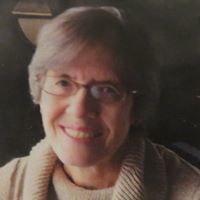
"Poignant memoir tells of overcoming childhood abuse." – Pleasanton Weekly In Less than Human , Allen Long tells the story of his often nightmarish childhood in the wealthy suburbs of D.C., the wonders and mysteries of teenage love, his ill-advised journeys into corporate America and a hellish marriage, and ultimate breakdown. And yet, his story is mostly one of triumph. He draws strength from the joys of fatherhood, he finds true love in his second marriage, and through working with psychotherapists and leading a life rich in self-examination, he overcomes both child abuse and the resulting PTSD, finally learning that instead of being less than... he is, indeed... human. Less than Human follows an unconventional path, arranged as much by theme and association as by chronology. These stories take many forms, from driving narrative to lyrical reverie, at times evoking mythic overtones, and this variety, along with an unflinching confrontation with the conditions and consequences of childhood abuse, creates its own form of suspense-in what direction will this book take us next?
Very short book, and is a little all over the place. Bounces back and forth from being a young child and then as an adult. Found it hard to follow along because it reads like a bunch of short stories, but at different time frames of the authors life. Wasn't any real flow to the narrative. Liked that it was about mental illness and getting through it. I enjoy the different views of mental illness and it is great that the author has told his story.
An autobiography written with open clarity and candor, Less than Human holds nothing back in its self-portrait of a man possessing the fortitude and tenacity to fight against his outer and inner demons for nearly six decades, the courage to look straightway into the mirror, and the wisdom and presence of mind to let go. His refusal to lay blame against himself as a victim of other people's cruel mentalities puts the blame squarely where it belongs. In a series of vignettes, he allows the reader glimpses into his story, thus inviting the reader into his skin to experience the sensation of mental recall in no particular order: much like the true processes of the mind which remembers all from beginning to end in non-linear fashion. The glorious ending will evoke tears as an aftertaste.
Allen Long is a remarkable writer bringing to life childhood trauma and its resonance throughout his life. This memoir is a Hero's Journey, a testament to the process of overcoming trauma's stranglehold and the new freedom to move forward in the wake of it. Like literary fiction's best characters, Mr. Long's parents are complicated individuals. They appear to be like any other average middle-class couple with two children living in a suburban Virginia neighborhood outside of Washington, DC. Behind closed doors, they become ferociously abusive. Mr. Long is an exceptional human being for having survived childhood trauma, and a heroic writer for returning to those memories to deliver such an eloquent and engaging narrative.
“Less than Human,” Allen Lang’s compelling memoir of overcoming childhood abuse, is a page-turning story that will bring you to tears and touch your heart but ultimately leave you feeling uplifted and inspired. You’ll gain from this book an understanding about the residual effects of child abuse that can surface later in life such as depression, anxiety and a tendency to accept abuse as a condition of love. You may even identify with some events author’s story to gain a better understanding of your own life. In any case, “Less Than Human” is ultimately a story of leaving behind sadness and finding joy and is a thought-provoking, discussion-worthy and worthwhile read.
This collection of mostly previously published essays provides an engaging look at crucial moments in the author's life. Although there are moments bogged down in telling/summarizing and they occasionally take on too much, as opposed to digging deeper into crucial moments, the writing is crisp and vivid. The voice carries these essays, offering an appropriately positive take on often grim events. This offers hope to anyone who has experience something similar in life--he can make, so can you. Although the essays are strong on their own, as a collection they left me wanting more--which isn't a bad thing, necessarily. I wanted to know what happened in the time between essays. Still, this is a worthwhile collection handled by a skilled storyteller.
Like Roman God Janus, Allen Long looks bravely back into his life while simultaneously finding the strains in his experiences that will lead him forward. In these stories, he confronts childhood traumas, divorce, and his own journey as a father and human being, with unblinking honesty. If writing great nonfiction is about the act of discovery, Allen has done it here. These stories are beautifully wrought, deeply felt, and full of the detail that brings the past vividly to life.