In the newest high-stakes historical thriller from master storyteller Davis Bunn, skepticism vies with faith amid the grit and grandeur of post-World-War-I Europe. It’s 1923, and a resilient Paris is starting to recover from the ravages of World War I and the Spanish Flu Epidemic. Enter young Muriel Ross, an amateur American photographer tasked with documenting the antiques that her employer, U.S. Senator Tom Bryan, has traveled to France in order to acquire. Although she’s exhilarated to have escaped her parents and the confines of their stifling Virginia home, Muriel has lingering questions about why the senator has chosen her for this grand adventure. Nevertheless, she blossoms in her new surroundings, soaking up Parisian culture and capturing the sights and sounds of Paris on her camera. But events take a dangerous turn when she discovers that the senator is on a mission far more momentous—and potentially deadly—than a mere shopping trip. At the Cathedral of Notre Dame, Senator Bryan asks Muriel to photograph an astonishing artifact: a piece of the True Cross, discovered by Empress Helena—a historical figure familiar to readers of The Pilgrim. When rumors surface that another fragment has been unearthed, Muriel becomes enmeshed in a covert international alliance dedicated to authenticating the fragment—and protecting it from those who will stop at nothing to steal and discredit it.
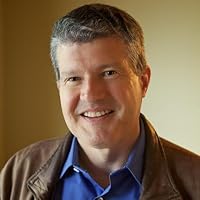
Davis Bunn is an internationally-acclaimed author who has sold more than eight million books in twenty languages.
Honored with four Christy Awards for excellence in historical and suspense fiction, Davis was inducted into the Christy Hall of Fame in 2014.
His bestsellers include The Great Divide, Winner Take All, The Meeting Place, The Book of Hours, and The Quilt. A sought-after lecturer in the art of writing, Bunn was serves as Writer in Residence at Regent's Park College, Oxford University.
Davis Bunn also writes under the names Thomas Locke (for his epic fantasy and techno-thriller novels) and T. Davis Bunn (for books published prior to 2002).
Franciscan Media recently sent me a complimentary copy of The Fragment in exchange for an honest evaluation of its merits. Bunn's previous book, The Pilgrim, provides an interpretation of Helena's discovery of the True Cross of Christ. In The Fragment, we travel to Europe in 1923, where American researcher Muriel Ross is pulled into risky, yet spiritually rewarding search for a piece of this most most auspicious of relics.
Having both taught history and written my own tale about a piece of the True Cross, I can tell you first hand that Bunn's attention to historical accuracy is spot-on. But, where others might have fun taking a more mystical approach, Bunn travels the higher road and focuses on characters being changed from the inside.
Bunn's writing is always poetic and never pretentious, leaving me enchanted and, to be honest, a shade envious. His details about life in 1920s Paris and Constantinople both ring true and, at times, make the reader crack a smile.
The book is a quick read, and well worth the investment of your time. In The Fragment, it’s clear Davis Bunn has mastered the art of weaving history and story together in a seamless fashion.
Davis Bunn has done it again. That seems to be the way that most of my reviews begin of his books. However it remains true. Every time I read one of his books, I am always amazed and entertained. The Fragment is a stand-alone story in many ways, but to fully grasp the importance of the Fragment you need to read his other book, The Pilgrim, which was released in July. You can read my review of that book here. The reason I say it can stand alone is that if you didn’t read the first book, you still get enough of the story in the second book for the plot to make perfect sense. The reader is transported back in time in The Fragment and we are introduced both to a historical period and some great new characters. My only experience in Paris was a layover in the airport but I feel as if I have been there after reading this book. The other section of the story happens in old Constantinople or Istanbul for the modern reader and the setting is the time when the nation of Turkey is being born. Having been to Istanbul many times and toured some of the sites mentioned in the book, I can tell you that Bunn has done a marvelous job of describing the architecture and ethos of that wonderful city. You will know exactly what it looks like as you read the pages of this book. The story is compelling and draws the reader into a world of intrigue, romance, adventure, and faith. It is not only believable but it makes you want to get to know the people involved in a deeper way. The historical side is accurate, the settings are true, and the characters are developed in the typical excellence style of Davis Bunn. After getting started reading this work, I found myself reading non-stop. I didn’t want to put my ipad down. I read during football games and basketball games over the weekend. My only regret was reaching the last page. Perhaps there is another story in there that will link the ancient characters of the Pilgrim through the period characters of The Fragment and connect to the characters we met in The Patmos Deception! Once release is closer I will include links to the plot and character summaries provided by the publisher. But for now, this is a book you want to pre-order to read the day it becomes available. I think he has done it again and I can’t wait until the next release! I received a free copy of the book from the publisher for my honest review and feedback!
You sit down and find yourself sipping hot chocolate at a café in Paris. Suddenly you're whisked away, through the glittering halls of a palace, the simple walls of a chapel, and the streets of a city trying to heal. Finally you find yourself trapped within the confines of a politically-explosive city, the borders of which are lined with secrets, legends, and intrigue. This is what it's like experiencing "The Fragment". You feel the characters' emotions and struggles; you see the light shifting through stained glass; you taste the dust of the streets on your tongue. You can't help but be swept along with the endearing heroine, viewing the world through the simple lens of her trusting heart.
This latest novel of Davis Bunn's is not his longest, and yet he tucks an unbelievable amount of intrigue, suspense, love, and hope, within the pages. My official rating would have to be 4.5 stars, due to the religious opinion that he shares regarding the combination of religions under an umbrella of Christianity close to the book's start. This is not a belief I share, and is quite frankly one I find dangerous to toy with. The section was brief, however, and the rest of the plot captivated me to the last page. I think the most accurate way to describe my reading of this book would be to say I devoured it! I loved the author's skill at describing one's surroundings. I truly felt like I was there, experiencing every moment - both the bitter and the sweet. Very well written.
I received a complimentary copy of this book from Franciscan Media in exchange for my honest review.
I'd compare this book to a sleeper movie -- you know a quiet little film that becomes a success despite having very little promotion. The Fragment is like that...at least in the corner of cyberspace I frequent. I didn't even know about it's release until I spotted a copy on the new release shelf at my public library. I was familiar with Davis Bunn as a quality Christian author and intrigued by the back cover blurb enough to take it home and give it a try. And I'm glad I did.
It's a short book -- 168 pages -- but the story carries an alluring mystique that captivated me. Told entirely from twenty-three-year-old Muriel's point of view, the author takes us on a fantastical, faith-filled journey across post-war Europe. Muriel's wide-eyed innocent wonder makes a sharp contrast to the worldly events that transpire. Mystery and intrigue and a myriad of secrets against the opulent backdrop of Paris and Constantinople -- including a trip on the Orient Express! I found The Fragment to be both riveting and puzzling...but uplifting nonetheless.
Davis Bunn books absolutely never disappoint and I am glad to say how very fantastic this book is. Such an adventure for a young 1920's woman to have. Travel to France and then Constantinople. Mr. Bunn uses vocabulary that paints beautiful pictures and allows one to feel as though they are right there in the place being described. The idea of finding a relic has always fascinated me and this is a most satisfying story. The only problem is....I wanted the story to go on and on and on. Highly recommend this book. I received a copy in exchange for an honest review.
Ah, this brought back happy memories of reading the Acadian series and Acts of Faith series. It's been awhile since I've read this author's books and I was happy to grab a chance to read this for review! There is the same depth as his other books that drew me in at once.
I was confused at the beginning-trying to figure out why Muriel was chosen and how she had connection with the Senator, but it didn't take me too long to piece things together. As more characters were introduced and the history involving the fragment was played out, I was thoroughly intrigued. It is full of emotion, especially involving Charles. His character really drew me in because of my interest for the effect on soldiers during the Great War.
There are many historical details in this that are intriguing. Some might finding it boring, but it set the right tone for the book.
My main drawback from this book was the brief mention toward the beginning of all denominations coming together as one with their faith. I do not agree with this, but it did not take away the effect the book had for me as a whole.
I highly recommond this author!
*I received this from Netgalley in exchange for an honest review*
While for me, this was a good story, there was not suspense, it felt like it strolled along and then it ended... Others certainly seem to think it is a great story, but I did not find it up there with the best from Davis... Still enjoyable...and it gives enough of the gospel to make people think about life in Jesus...
Books like this are exactly why I was a European Studies major in college. The history! The languages! The poli sci! I loved every minute of this book. So much win.
I had high hopes for The Fragment after hearing so many good things about Davis Bunn, but unfortunately this book is pretty average fare for a Christian adventure novel. It’s not that it’s bad; it’s just… a bit silly for the kind of story with the magnitude the author attempts. Somewhere inside The Fragment is a fascinating storyline that combines Indiana Jones and National Treasure with Anastasia and The Saints, but ultimately, this is kind of the Hallmark Movie version.
The year is 1923, and Muriel Ross, a young photographer and antiquities expert, is whisked away by family friend Senator Thomas Bryan to Paris, where the French people are slowly building back their country after the devastating Great War. Muriel is surprised when Senator Bryan gains her admittance to several high-profile political events, but she is more surprised when she learns the true purpose of her mission in Paris: to authenticate a fragment of the True Cross, hidden in a reliquary in the Notre Dame Cathedral. However, Muriel quickly becomes swept into an espionage plot involving ambassadors, foreign spies, and assassins, and her second mission — to travel to Constantinople and verify yet another, more heavily guarded fragment of the True Cross — will force her to reevaluate her Christian faith and her innocent trust in others.
I had heard nothing but rave reviews for Davis Bunn’s Christian fiction writing, so The Fragment was a bit of a letdown for me in that area. Bunn’s storytelling (at least in this novel) is amateur and contrived, with the caliber of writing I would expect from a very young or very old, inexperienced author. His concepts are lovely, and I wish Bunn had spent more time cultivating his prose and exposition — he has quite a few really lovely little turns of phrase, which I can only assume he uses to greater effect in his other, more popular novels. As it is, The Fragment is plagued by extremely unnatural dialogue that often reads like Bunn saw a bunch of great movies and is trying to rewrite them from memory. Apparently The Fragment is sort of a tie-in with Bunn’s novel The Pilgrim, which follows Saint Helena’s quest to preserve the True Cross. I did like that The Fragment takes place in a little-discussed period of history: the collapse of the Ottoman Empire following the brutal Dardanelles Campaign in Gallipoli, which reminded me of Russell Crowe’s The Water Diviner.
The Fragment suffers from a confused, muddled series of plot points that never feel explicitly connected. We begin with a mysterious antique-hunting plot that is revealed to be a cover for a search for the True Cross, which then bleeds into a political strategy narrative, which then is forgotten in favor of yet another search for another fragment of the True Cross… which has nothing to do with the first half of the book. Important story elements are glossed over, while low-stakes moments are overemphasized. The storyline itself is contrived and often illogical, leaving me with more questions than answers. Even with its simple progression of plot points and lack of complexity, The Fragment managed to keep me confused as to what was even going on, especially when Bunn launches into pages-long expositions about the history of Paris, Constantinople, and anything else vaguely relevant to the plot.
As mentioned, Bunn’s overarching idea — a Grail-like hunt for ancient Christian artifacts, combined with an interesting historical setting and a suspense-thriller sort of espionage plot — is good, and somewhere hidden inside The Fragment is a truly great story. With the setting of postwar Paris trying to rebuild after the devastation of WWI, Bunn highlights issues like post-traumatic disturbance, survivor’s guilt, and the struggles of the Lost Generation. The Parisian setting is elegant and exciting, especially as the plot revolves around things such as relic-hunting and artistic photography, and Bunn’s decision to set the second half of the novel in Turkish-occupied Constantinople (one year before it was renamed Istanbul) is clever. Appearances by real-life historical figures — Coco Chanel, Raymond Poincaré, Maurice Maunoury, and Sultan Abdülmecid I, to name a few — are fun, and the disorganized plot is benefited by Bunn’s incorporation of recognizable places like Élysée Palace, Notre Dame Cathedral, the Orient Express, Dolmabahçe Palace, the Hagia Sophia, and the RMS Majestic.
One of the biggest issues with The Fragment is that Bunn doesn’t give his own story enough room to breathe. He introduces us to main characters with a throwaway description, then expects us to connect with them emotionally after one backstory-revealing conversation. We are thrown into a number of scenes that require a great deal of emotional investment to be powerful, but these scenes are so cliché that the overarching message of the novel is often lost. The political players often seem weak and childish, put in their place by Muriel’s ability to go to the library and brush up on her history, and all the looming threats of danger feel almost cartoonish. Bunn often mentions a higher calling by Christ on Muriel and Bryan’s lives, but the purpose of that calling is never very clearly articulated.
The Christian elements in The Fragment are a bit hit or miss as well, though thankfully none struck me as heretical. Bunn is a Protestant author, which keeps this novel (much of which takes place in Catholic cathedrals dealing with Catholic saints and Catholic relics in Catholic reliquaries) from slipping away from the truth. Bunn’s message is a very simple one — hope in Christ can be found even amid the devastation of war, and there are many wounds that can only be healed through God’s grace — and these concepts are nicely illustrated through the characters’ struggles. Bunn also depicts Muriel and Thomas, our heroes, as having very strong personal faith of their own, which Muriel attempts to share with Charles when she realizes how much he struggles with his own loss of faith. Muriel’s connection with the cross of Christ through her dreams is a nice (if kind of vague) element. Bunn also spins this Grail-like narrative into a small glimpse at Christian persecution and a desire to preserve the legacy of ancient Christianity through relics.
Muriel Ross is a charming if undefined protagonist, characterized by her compassion, innocence, and ability to see what others do not. She’s an intelligent, book-loving, modern-thinking young woman at odds with her society, fascinated by the idea of adventure but quickly intimidated when she realizes she’s in over her head. My main issue with Muriel was the fact that Bunn repeatedly insists (through the mouths of his characters) that Muriel is “a very remarkable young lady,” despite the fact that she doesn’t do anything remarkable until over halfway into the book. The entire idea that Senator Bryan would sponsor Muriel’s education and career as an antique photographer, then drag her to Paris so she could verify a reliquary under the cover of a diplomatic mission, then drag her to war-torn Constantinople where Muriel manages to outwit all the highest military and political powers in Europe is… a bit of a stretch, to say the least.
The Fragment utilizes an unusually small cast of characters, none of whom break beyond the borders of stereotype. Charles Fouchet, attaché to the French Prime Minister, is a WWI veteran with a tragic past and a strong admiration for Muriel, despite the fact that they’re on opposite sides of a political conflict. Thomas Bryan is an uncle-like mentor to Muriel, a man of powerful convictions and fierce determination, but I was a bit weirded out by his flirtatious comments to Muriel and his willingness to put her in constant danger. Other supporting cast members appear for a few pages, either to provide cryptic warnings, be amused at the goings-on of our protagonists, or supply even more historical exposition. The relationships between characters aren’t really given room to blossom, either appearing out of nowhere or lacking in convincing chemistry.
The love story between Muriel and Charles is subtle, and while their scenes together often feel contrived and rushed, the lesson on not being able to fix someone as long as they’re holding onto the past was a good one. The obstacles separating their possible relationship were significant — irreconcilable views on faith, rival political backgrounds, etc. — which adds some charm to their stiff scenes together.
The Fragment ultimately ends up feeling like a decent rough draft of what could have been a great novel. It’s marketed as a high-stakes thriller, but Bunn’s jumbled plot, poor pacing, and lack of convincing dialogue leaves a lot to be desired, especially when compared with the media that inspired it. Still, The Fragment had a couple of surprises for me, and I did appreciate some of the messages he incorporated concerning the Christian faith. It’s not outstanding in any way, but it’s worth a quick afternoon read if you’re into these kinds of stories.
*This is an analytical review; for plot overview please read the book description or other reviews. My goal here is to help you understand in which ways you will be influenced by this book (in addition to offering a few suggestions at a literary level). But don’t worry: no spoilers.
Davis Bunn returns to the page with his latest historical fiction The Fragment.
Readers of The Pilgrim will recognize familiar elements ranging from characters (a primary female protagonist, a faithful supporting friend, and an angry critic of the faith) to an artifact of special significance. In fact The Fragment develops the characters better, although the weight and purpose, even the reasons and transitions are less understood. But for readers and enjoyers of The Pilgrim, The Fragment offers a unique vantage point in an overlooked period of history while etching in the same worldview: the world is full of critics & skeptics, dangers & threats which try to distract humanity from the healing offered through Christ. The Fragment adds some color to this philosophy in showing readers that…
The physical world is first a distraction from the things that truly matter, and only secondly the necessary context for discovering true reality.
Indeed, God has given and continues to give his grace to those who trust him. Healing and wholeness are available for any who seek it; any and all of life’s despairs can be absorbed by faith in God who uses people, things, and circumstances to encourage his children.
Although I disagree with the second part of this book’s philosophy (that the physical world is only significant in its bridge to the spiritual), Bunn imbues it in the narrative expertly. And he frequently weaves the subordinate truths throughout his narrative in a way that nearly compensates for his halting, mosaic plot structure.
The plot begins at breakneck speed only to come to a grinding halt 1/3 of the way through. From there it progresses slowly, eventually gaining some momentum to ultimately end. When I tried to map the structure, the story begins with constant conflict, followed by a resolve, then rising action, conflict, resolve… Now while many books utilize dual-conflict/climax in plots, I’ve never read a story which literally starts back at ground level for the second. This odd setup was compounded by Bunn’s chapter endings which were nearly all cliff-hanger. Each new chapter would begin in a new location at a later time with some decision having been made during the page edge between. This made it difficult to understand what, why, and why I the reader should empathize with the characters and story. Perhaps if the author simply reasoned with me on the page I wouldn’t be left wondering when Bunn tries to create artificial “aha” moments. I should state that sometimes it worked… particularly in the first 1/3 when everything was moving so quickly, but in that latter 2/3 it simply bogged me down like jeans slogging through a swamp and trying to do jumping jacks. Consequently I vacillated between belief and incredulity at the story’s events.
Ultimately, if Bunn is writing for Christians, which I believe he is, he succeeds in presenting them with an encouraging historical narrative. The book doesn’t really challenge Christians to believe anything different except perhaps that there isn’t always a happy physical ending. So I give it 9/10 stars despite its plot flaws, but I’ll round up for its target audience: 5/5.
I recommend this book to readers who enjoyed The Pilgrim or Christians looking for a one-day beach read.
I received a free copy of this book in exchange for my honest review. This review is crosslisted on Goodreads, Amazon, my blog, and CBD.
The year is 1923 and World War I has just ended. The world is changing with dizzying speed and in the midst of this young Muriel Ross is plucked from obscurity in the halls of the Smithsonian to assist Senator Thomas Bryan in Paris. Muriel, an amateur photographer, will supposedly take pictures of the antiques that Senator Bryan is interested in acquiring. With her fluent command of the French language and her knowledge of antiquities, reliquaries in particular, Muriel is an asset to the Senator’s cause. While in Paris she pretty much has the run of the city. She spends her days photographing the people and soaking up the culture. Then, one day, Senator Bryan takes her to Coco Chanel’s boutique to purchase clothing fit for a princess. He takes her to a reception where she meets the French Premier. She so charms the man with her enthusiasm for Paris and the French people that he grants the Senator access to a viewing ceremony at the Cathedral of Notre Dame. On the way there, the senator confides that this is but a step towards his true goal: they are on the trail of a fragment of the True Cross that has been missing for over a thousand years. Muriel’s adventures take her on The Orient Express to Constantinople, Turkey where she is practically cloistered. The dangers are real and imminent. Can Muriel and Senator Bryan find a way to contact those who can help them locate the relic they seek if they can’t leave the embassy? When Muriel’s agile mind finds that avenue, can they then evade those who want to destroy and discredit the relic they find? Wow! Talk about international intrigue! The Fragment by Davis Bunn starts out slow and gentle but ramps up to a page-turner that rivals any spy novel out there. Muriel Ross is a smart, strong, empathetic female character. I kept going back to check her age again because she seemed far too knowledgeable for someone who is only 23. No wonder she is able to impress not only the French Premier but the Bishop of St. Denis and various other high-ranking officials. Her daily reliance on God only makes her a stronger heroine for this story. I love how strongly she is affected by her first glimpse of the True Cross reliquary. Her faith sustains her as their journey gets more difficult. When I read a historical fiction book, I especially enjoy learning about events that shaped the past. The Fragment brings in World War I, the Spanish Flu epidemic, the downfall of the Ottoman Empire and the founding of modern day Turkey. I would definitely recommend this book, especially to history buffs. It is a winner as far as I am concerned! I received this book from the publisher via NetGalley in exchange for my honest review.
Deb’s Dozen: Quest for the True Cross—A Reliquary Lost in Shadows of Time
The Fragment opens in the year 1923. The world is recovering from the privations of the Great War. Muriel Ross, a researcher at the Smithsonian, has had a dream come true. She is to accompany Sen. Thomas Bryan to Paris! Once in Paris, Muriel falls in love with the people. A photographer of some great skill, she photographs people in all walks of life—struck by the joy she sees in their faces, despite the ordeals of the war.
Sen. Bryan, however, is there on another task—and he hopes Muriel will be the key person he needs to realize his dream. Wearing a gown designed and fitted by none other than Coco Chanel herself, Muriel meets the Prime Minister of France. She impresses him with her knowledge and demeanor, so she (and the senator) are taken to the Cathedral of Notre Dame where she is allowed to photograph a reliquary holding, tradition states, a piece of the True Cross.
So begins their adventure—from Paris via Orient Express to Constantinople. Muriel finds herself stretched and intrigued and overwhelmed by her experiences. Will they attain their quest? Atatürk is besieging Constantinople … battles rage … alliances shift. The result …?
Muriel Ross is a well-written, very likable character. Beset by doubts and wonderings about her destiny, she nonetheless retains her strong faith. The romantic interest (every story has to have one, correct?) is less believable. Charles Fouchet, an aide to a French official, accompanies them on their quest. Charles has lost a wife and child to the influenza epidemic and, apparently, has lost his faith as well. Given the descriptions, I had a hard time believing Muriel would find him attractive.
The history of the area—of Paris after the war, of the legends of the Cross, of Constantinople prior to Atatürk—is very detailed, but, I’m afraid, most readers will skip the history to get to the story. Unfortunately, the story without the history is quite slim. I, personally, was enthralled by the history but found the presentation of the historical facts contrived, especially toward the denouement. Four stars—not for The Fragment, but for the historical education and the heroine.
Davis Bunn is a prolific and much-awarded author. In 2014, he was awarded the Lifetime Achievement Award by the Christy Award board of judges. He is also the Writer-in-Residence at Regent’s Park College at Oxford, England.
Franciscan Media gave me a copy of The Fragment in exchange for my unbiased review.
Muriel Ross was born at the turn of the 20th century. Now 23, she’s exhibiting an independent streak her mother doesn’t understand. Instead of looking for a husband, Muriel researches Byzantium artifacts at the Smithsonian. Her employer invites her to France on a research trip but she doesn’t know why she’s been selected for this trip when there are others more worthy of the trip. But Muriel speaks fluent French and is an amateur photographer with an empathic eye; qualities the Senator and others believe are vital for their secret quest.
The book begins with Muriel already in France and Bunn moves the action along at a steady pace. I was surprised at just how short this novel was, yet nothing seemed to be missing. It’s full of quiet detail, some of which admittedly feels like it comes from a history book or tourist guide. It’s a time of change in Europe. France is recovering from the war and Muriel is able to freely roam Paris with her camera. Her movements in Constantinople, however, are extremely limited as the Ottoman Empire is in the process of collapsing. It’s in Constantinople that Muriel faces her biggest test and the decision she must make reminded me of the one Indiana Jones had to make in The Last Crusade. It all comes down to faith. How much faith does Muriel have, in herself and in God?
The publisher’s summary of The Fragment references The Pilgrim, a previous title by Davis Bunn. I’ve not read it and don’t feel the omission took anything away from my enjoyment of this book. If you have knowledge of Saint Helena, you’ll be fine here.
Thank you to Franciscan Media for my complimentary electronic copy of The Fragment, which I downloaded from NetGalley in exchange for my honest review.
The Fragment appears to be a deceptively simple and straight-forward story at the beginning. A young woman named Muriel in the early 1920s travels to post-WWI Paris with a friend of the family, a Senator, on a mission to find an antique. Muriel is a college-educated historian, specializing in ancient history and is an amateur photographer who was asked to accompany the Senator to authenticate the antiquity. A battle-weary French diplomat, named Charles Fouchet, serves as a guide to the Senator and Muriel.
The story becomes more mysterious, sinister and political as the Senator’s contacts take them to a church where they are allowed to view a reliquary housing a piece of the True Cross of Christ. A previous book, The Pilgrim, tells the story of how Helena, mother of Roman Emperor, Constantine, found the True Cross and how fragments of the cross were distributed. One found its way to Paris and another, it was believed, was in Constantinople.
Muriel, Senator Bryan and Charles Fouchet, travel to Constantinople on the Orient Express. Constantinople, now called Istanbul, is in a political upheaval on the point of revolt as “Ataturk, an upstart general from the hinterlands” has captured parts of Turkey and factions are in revolt in the city. Muriel, the Senator and Charles Fouchet strive to locate and authenticate the fragment of the True Cross before it is lost forever.
This is an exciting, hard to put down, tale of political intrigue and revolution while on the trail of a lost religious artifact as sought after as the Holy Grail. I particularly enjoyed the history as well as the believable characters whose faith and courage are tested at every turn.
I received a complimentary copy of this book from Franciscan Media in exchange for my honest review.
(Minimal spoilers here—I like to assess the novelist’s expertise in the craft and understanding of the culture and history.)
My favorite books involve well developed characters that I grow to like and love to root for—ideally in a setting that teaches me something about history and different cultures. The Fragment fits that bill brilliantly. Davis Bunn introduces you to Muriel, a humble young woman who has been groomed for a special mission by a family friend. When she’s thrust into the upper crust of foreign society, she expertly navigates the maze with both an innocence and expertise that makes you wish she was your personal friend. The book introduces the reader to post World War I Paris, a city still reeling from the ravages of the war at its doorstep. Davis weaves fictional and historical characters into the story. I’ve spent time in Paris and some of the other locations in this book and studied this great city and era in history. But this novel took me several levels deeper in my understanding and appreciation of this era. This novel is a sequel of sorts to his book, The Pilgrim. I recommend that book as well but you can enjoy The Fragment without first reading The Pilgrim. A great read with solid moral lessons—without getting preachy. You’ll come away with a new friend in Muriel Ross and a new appreciation for post-WWI Paris and its people. Highly recommend it.
*I received a free advanced reader copy in exchange for an honest review. Since I appreciate Davis’ excellence at the craft of writing and storytelling, I enjoy that exchange :-)
“The Fragment,” by Davis Bunn, is a work of historical fiction. As always, Davis Bunn has done his research. He is very thorough in his descriptions of each place that is visited; he includes many details about the leadership, battles, cathedrals, and the people in this time period. He is very skilled at describing the sights in each city as well as the cameras used in this era.
The story takes place in 1923, as main character Muriel Ross, accompanied by an old family friend, Senator Thomas Bryan, travel to Paris, and then to Constantinople. “The Fragment” is about a search for a piece of the cross. Muriel has been trained, and is an expert of antiquities, and it is her job to determine the “real” fragment from a fake. In her free time Muriel uses her skills as a photographer to really “see” people. In the midst of this trip of a lifetime is the constant conflict, opposition, fear and spies. Throughout this story Muriel’s faith is tested. But time is short and Muriel must make the right decision and then escape. The lives of others are dependent on the choices she makes!
Initially this was a fast moving story. I found the middle to be slower, but by the end I didn’t want to put the book down! The story is clean, and is filled with historical facts. It is obvious that Bunn is very well educated, and a couple times some historical things went right over my head. Lovers of history and travel will greatly enjoy this story.
I received a complimentary copy of this book from Franciscan Media in exchange for my honest review.
From Chanel in Paris to the Orient Express, Davis Bunn's latest novel set in the 1920s is full of all the things that I have come to expect from his writing - mystery and action with solid faith themes. It was short and easy to read but still engaging. Muriel's quest for the reliquary is a wonderful story that I will enjoy sharing with my family and friends.
What Davis is so gifted at doing as a writer is transporting you to the places he writes about. I didn't merely sit on my sofa and read about Muriel in Chanel. It felt as if I was really there. His descriptions are so vivid that is as if I stepped through a door and into Muriel's world. The other thing I really love about Davis's writing is that he has such keen insight into people and culture. His characters have depth to them, and they often feel like real people and not just characters. His descriptions of the cultures and political climates of the time are well researched and historically accurate. While he writes fiction, it rings true to what really happened.
I was also challenged by Muriel's perception. As a photographer, she has keen insight into people. She saw what was written on people's faces when others did not. She saw faith, despair, longing, distrust, and hope on the faces of those she saw through the camera lens. It made me think about how often I walk through life without ever seeing who is around me. I always find myself challenged to grow after reading one of Davis's novels.
I received a complimentary copy of this book from Franciscan Media in exchange for my honest review.
Here she was, for the first time in her life, caught up in the world's affairs, and still she was happiest when she could place the camera between her and events.
Muriel Ross has the chance of a lifetime when the U.S. senator she's accompanied to Paris asks her to photograph an important artifact in the history of the Church. But that's only the beginning of a mission that could prove deadly in The Fragment, a historical thriller by author Davis Bunn.
I've experienced this author's superb storytelling a number of times before, and this instance was no exception. The imminent danger permeating the post-World War I atmosphere is virtually palpable throughout the story, but moments of beauty, tranquility, and the quiet fierceness of faith still shine through.
The characters are intriguing, and although religious reliquaries and such aren't something I fully "get," personally, the symbolism here succeeds in remaining intimately connected with its deeper meaning. While the story's pacing borders on rushing in some places, there isn't the feeling of idle time or artificial "filler" to pad the plot, and the rather steady clip kept me turning the pages.
With its compelling mix of danger and poignancy, I'd recommend this book to fans of international thrillers and historical fiction alike. ___________________ Franciscan Media provided me with a complimentary copy of this book for an honest review.
It is 1923, after the events of World War I in which Paris is rebuilding. Muriel Ross is Tom Bryant's personal aide in helping to bolster their walk of faith. Charles Fouchet is a war veteran sworn to protect Muriel Ross and Tom Bryant no matter the cost.
Muriel Ross, a young woman in the employ of the Smithsonian Institute, is being hosted by U.S. Sentaor Tom Bryant in Paris. Her expertise in reliquaries, ancient artifacts, is of import to him. She is also an avid photographer who loves taking pictures of real life. And it is this reason the Caliph in Constantinople needs her help in making sure their reliquary is in fact the right one.
The Fragment is fraught from start to finish with high stakes, non-stop action mixed with heart pounding action. It is the second book by Davis Bunn following his previous book The Pilgrim.
I give this book a five star rating due to the fact it's well written, and it's based on actual history of the Ottoman Empire.
Davis Bunn has authored books with sales over seven million copies translated into twenty languages for twenty-four years. Bunn's book Lion of Babylon was named Best Book of the year in 2011. The follow up, Rare Earth, won Bunn his fourth Christy Award for Excellence in Fiction in 2013.
Disclaimer - I received a complimentary copy of this book from Franciscan Media l in exchange for my honest review.
A MEMORABLE AND TOUCHING BOOK. As usual Davis Bunn does a wonderful job in creating three-dimensional characters in this story – they are never card-board cut-outs or caricatures, but complex people who you care about and continue to think about after the last page is turned. He also manages to capture and convey what it must have been like in Europe between the two World Wars and after the influenza epidemic – an atmosphere of exhaustion, despair, and political tension as well as fragile but persistent hope and great beauty. He does this in a few poignant paragraphs, using the medium of Muriel’s camera and what she see through it of the lives around her – glimpses of humanity in Paris and Turkey. What made this for me a truly memorable read and one I will return to more than once was Davis Bunn’s treatment of the spiritual realities of faith and despair as the focal point of the story, which he did beautifully without being “preachy” or jumping out of the story to present a mini sermon. In this way the impact of the characters’ spiritual struggles and questions was far greater and for me immensely touching. Add to this an exciting story and some fascinating history and this is why Davis Bunn is one of my all-time favourite authors. I received a complimentary copy of this book from Franciscan media in exchange for my honest review.
Muriel Ross is doing what she had only dreamed of, traveling and being immersed in the study of people and history. Employed by Senator Bryan to authenticate a relic, she finds herself in the middle of political conflict and the test of faith. Davis Bunn writes a story that illustrates keeping and sharing your faith in the midst of conflict in The Fragment.
There are two main pieces to this book, the story itself and the message behind it. The story is one that holds your attention throughout. Though it is not what I would call fast paced, it has a fluid and continuous movement. The characters and places are detailed enough that you can picture yourself there beside them seeing what they are going through. Even with the relatively short length, the plot is well developed and easy to follow.
The message is what I like best; standing firm in your faith even when you aren't sure what it is you're getting ready to face. Muriel is unsure of the events that she goes through, unsure of what the outcome will be. However, she knows that God will be with her and that Jesus' love is enough to hold her up. She also lives out this love, both by sharing it with others and by putting her wants aside to help others.
Davis Bunn has written another great book that I really enjoyed reading.
I received a free copy of The Fragment in exchange for this review.
My only disappointment with this book is that it ended. I wanted to keep reading. The drama is intense as Muriel Ross and Senator Bryan, a lifelong friend of her family, make their way to France where she has the opportunity to photograph and study an astonishing artifact, a small portion of the cross of Jesus. I enjoy photography but cannot imagine what Muriel experienced taking pictures of an ancient piece of the cross on which our Savior died. What an amazing opportunity! While there, she learns their true quest is a reliquary in Constantinople containing another fragment of the cross. The story takes place shortly after the end of World War I, so travel is much different than it would be today. Safety is of utmost concern even as it is now in much of the Middle East, especially for a venture of this nature. The interaction between Muriel and various other characters was quite intriguing considering the status of women at that time in history in the United States. It was even more tenuous in the countries to which they traveled. Davis Bunn does a remarkable job bringing this story to life. I hope we will be reading more of Muriel’s story in the future. I recommend this as an excellent historical novel. I received a complimentary copy of this book from Franciscan Media in exchange for my honest review.
One thing I have always admired about Davis Bunn is that whatever the subject, the characters, the location, the time frame, etc. I can always count on the fact that he has done his research. While I am enjoying his story, I also seem to be absorbing some facts I didn’t know before. What a delightful way to learn!
During the days following World War 1, as the world is beginning to rebuild, Muriel Ross joins Senator Bryan in Paris ostensibly to photograph antiquities. Little does she realize that she has been groomed for this task by her training at the Smithsonian. She soon discovers the true reason she has been summoned and finds herself in the midst of an adventure that takes her from the Cathedral of Notre Dame in Paris to the U.S. Embassy in Constantinople and more danger than she could imagine.
The story is woven around the search for a fragment of the true cross and is filled with political intrigue between nations and the danger of a country on the verge of revolution. Faced with conflict and life-threatening events, Muriel is forced to choose if she will stand firm in her beliefs.
As expected, I thoroughly enjoyed “The Fragment”. My only complaint is that it ended much to soon.
I received a complimentary copy of this book from Franciscan Media in exchange for my honest review.
The Fragment, by Davis Bunn, is a marvelous post-WWI novel that will delight readers of historical fiction. Bunn gives a splendid glimpse of Paris and Constantinople from the perspective of Smithsonian researcher and photographer, Muriel Ross. She has been chosen by a family friend who is a U.S. Senator to accompany him to Europe to photograph a piece of the True Cross. While in Paris, she meets Charles, a young man from the French embassy and realizes all may not be as it was originally told to her. Can she trust the Senator? Can she trust Charles? Just why was she chosen for this project? Where does her faith in Christ fit into all that is happening around her? Bunn details the history of this post-WWI era in an interesting and intriguing manner. As he notes regarding Constantinople--the names were spiced by centuries of tales. The characters are beguiling, believable, and likable. Despite the ordeals, threats, and disappointments, Muriel knows there is a promise of hope. The Fragment, a thrilling tale of a piece of the Cross and its impact on those seeking it. Don't miss this newest book by Davis Bunn. I received a complimentary copy of this book from the publisher, Franciscan Media, in exchange for an honest review.
I received a complimentary copy of this book from Franciscan Media in exchange for my honest review. I loved this book. Davis Bunn is one of my favorite authors. I got a copy of The Fragment for my kindle and read it over the holidays that my works gives us. Muriel Ross is a photographer, and research fellow at the Smithsonian Institute. US Senator Tom Bryan, a friend of her parents, took her to France in 1923, right after WWI, for her expertise in Christian artifacts. She has very progressive ideas in her old fashion parents world and she comes alive in France. The Senator, buys her fancy clothes to fit the role is giving her to look at a fragment of a artifact that has been lost to history. Enter Charles Fouchet, a man lost in the pain of fighting in WWI, losing his wife and child to the influenza epidemic and seemingly nothing to really live for. There is intrigue as someone seems to be following the Senator and Muriel when they took the Orient Express. The Fragment was a story of christian growth as Muriel and the Senator look for the fragment of the reliquary they go looking for. I would recommend this book and can't wait for the next book of Davis Bunn's to be written.
This was my first book that was set around 1920 and didn't have direct world war connections.
And i loved it!
I loved the writing, the characters and the story plot itself was very well done as well.
I really enjoyed the main character who was so smart, and logical and didn't get flustered in difficult situations, and i also loved how she followed her dreams, her ambitions during a time where that was not necessary something women where encouraged to do. And she did it with such a natural grace and as if she had no other choice then doing what she does. I loved it.
The writing was fantastic as well. It really sucked me into the story, into the year and really connected me with the plot and the characters.
And while i personally don't feel a connection to anything religious going on in the story it was still very interesting to read and discover the story along with the characters.
I highly recommend this book -if that was not already completely made clear from the rave i just did.
And i really want to see what else is out there similar to this book!
* Thank you to NetGalley, the publishers and the author for giving me a free ebook copy of this book in exchange for a free and honest review. *
Davis Bunn is an award-winning author who has appeared on a number of bestseller lists over the course of his career. The Fragment will remind you just how he earned his reputation.
Post-WWI is the backdrop for this historical thriller that opens with young Muriel Ross jumping at the opportunity to travel to Paris with U.S. Senator Tom Bryam, her father’s good friend. The senator is hoping to purchase an antique he’s been seeking for years. Muriel thinks she will be photographing the Parisians in natural settings, but soon her real mission is revealed as her skills as a Smithsonian researcher are called on to document the authenticity of an artifact she never thought she would see.
She interacts with ambassadors, priests, and one French veteran of war, and not all are to be trusted. Political intrigue, potential theft, and personal safety drive the plot. Muriel’s knowledge of the artifacts and the stories they hide adds another layer to the book.
Bunn’s reputation is bolstered by this newest addition to his body of work.
*I received a free advanced reader copy in exchange for an honest review.
Enter the world of 1923. The war is over, and the influenza has eased. Find twenty-three year old Muriel Ross, a researcher at the Smithsonian. She's concerned that she will remain an observer on the sidelines of her life. The outlook changes when Senator Thomas Bryan secures her assistance and expertise in Late Roman and early Byzantine antiquities, especially reliquaries. Travel with them to Paris and visit the designer boutique of Madame Coco Chanel. Witness as the Ottoman Empire begins to fall. All the action is focused toward the recovery of a reliquary containing the True Cross.
Davis Bunn has penned an adventure story wrapped in historical details and seasoned with strong accents of Christian faith. The characters are believable. The plot moves along at an understandable pace. History comes alive in this totally enjoyable novel.
While this is a great piece of fiction, I can see using it in a Christian study group. It is rich with discussion points. It's a natural selection for book groups.
I was given a complimentary copy of "The Fragment" is exchange for my unbiased review.