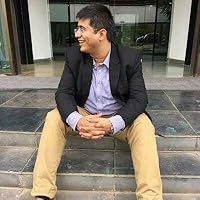
When Salil Tripathi began writing a travel column for a well known newspaper, he consciously decided to veer off the beaten track and not showcase the food and drink or the fabulous hotels and world class restaurants of a country. Instead, it was his insights into a place that defined a country and its people when viewed from the prism of history, culture and literature. Culled from his extensive travel writings, Detours: Songs of the Open Road is split into three parts, the first section called, War & After is a riveting account of places that were shattered due to terrible wars or human rights violations; the second titled, Words & Images, about places he visualised better because certain writers or artists made those places fascinating; and the third called Loss & Remembrance, is a wonderful personal journey about countries he visited with his wife who died in 2006 and which he later revisited with his sons as remembrance to a beloved. Detours: Songs of the Open Road is a remarkable travel diary of a man who holds your hand and takes you through fascinating journeys which you make your own by the end of his travel.
Salil Tripathi was born in Bombay, India. He is a contributing editor at Mint and at Caravan in India. In the UK, he was board member of English PEN from 2009 to 2013, and with novelist Kamila Shamsie, he co-chaired PEN’s Writers-at-Risk Committee. In November 2011, he won the third prize at the Bastiat Awards for Journalism about free societies, in New York. In 1994 in Hong Kong, he received one of the awards at the Citibank Pan Asia Journalism Awards for economic journalism. He was a correspondent in India from 1987 to 1990 and moved to Singapore (and later Hong Kong) from 1991 to 1999. He moved to London in 1999.
Salil has written for The Wall Street Journal, The International Herald Tribune, The Washington Post, The New York Times, The New Republic, The New Yorker, The San Francisco Chronicle, Salon, and The Philadelphia Inquirer in the United States; The Guardian, The Independent, The New Statesman, The Spectator, Prospect, and Index on Censorship in the United Kingdom; Far Eastern Economic Review in Hong Kong; Global Asia in South Korea; The National in the United Arab Emirates; Shinchosha in Japan, and a few other publications. In India, he had been assistant editor at the Indian Post and senior correspondent at India Today.
He has been a senior visiting fellow for business and human rights at the Kennedy School, Harvard University, and is also an adviser to several global initiatives involving business and human rights. He studied at the New Era School in Bombay and graduated from Sydenham College at the University of Bombay. He later obtained his Masters in Business Administration from the Amos Tuck School of Business Administration at Dartmouth College in the United States.
The author (Salil Tripathi) writes with nostalgia and nuance about the places that he has stayed or visited in the past from around the world - whether it is discovering Tagore in Bangladesh or Shanghai, or a near death experience in Nigeria or retracing the steps of Hemingway in Paris and Spain or Picasso in Spain and France.
I loved the way the author has brought the places to life especially referencing works of other authors with excerpts from their books - like Neruda's Poetry in Chile or Tagore's/Satyajit Ray's literary/cinematic imagery in Bangladesh. It also made me reflect on the similar spaces that I have visited in my travels.
The books is to be savoured by reading slowly, taking in the aromas, sounds and tastes of the places that the author describes. I found shades of Pico Iyer in his writing. A fantastic set of travel reminiscences.
If you wish to know about the haunts of various authors, poets and some artists in the different cities of the world then this is the book to read.
The author has traveled far and wide and has followed the footsteps of many an author. The book is an outcome of these travels.
He has traveled to many War torn countries, countries preferred and frequented by authors, poets and artists. He also has a set of essays on countries which he had visited with his wife and which he revisited either alone or with his sons.
From Columbia to Cambodia he has visited most countries, some exotic some popular.
Decent read. Don't expect to learn any culture or too much of history about the countries.
The book does not bring in a list of places to visit or things to do in the various destinations it embarks upon within its chapters. What it does is present to you a cerebral and emotional experience of visiting these places. War, inspiration or loss, all things considered within this book allow you to look beyond the rubber stamp of an immigration official and to delve deeper, to experience travel and not just record it. Take this book slowly. Read it. Devour it. And maybe, revisit it once you have been to the places mentioned. Or better yet, look back upon your own travels and see how many detours you have graced upon and how many you may have missed.
Lovely book. Part travelogue Part life (like all good travelogues). The author talks about all his travels across the world (one place per chapter) giving a overview of history, geography, politics and of course poetry. There is a collection of his poems in the end but mainly if you love travel you will find this book a great read.