Terry Gilliam sits, and bear with me when I posit this argument, somewhere outside the space of what many people think of when they reflect on Monty Python. It's unfair and certainly not a reflection on his contribution to the group's work over the decades, yet he is definitely an 'other'. Part of this comes from being an American, another part comes from his focus on art, drawing and cinema, and yet another part comes from his iconoclastic directorial achievements. The other Pythons, alive and dead, are all individuals (please, no 'Life of Brian' jokes here), yet they are relatively homogenuous in class, nationality, writing and acting careers. Gilliam stands both within and without that celebrated group.
It comes as no surprise then that Gilliamesque:A Pre-Posthumous Memoir reflects Gilliam's rather different life and career, especially when juxtaposed with the likes of Idle, Cleese, Chapman, Jones and Palin. This is fascinating autobiography in that not only does the author step up and really give the reader a fulsome impression of who Gilliam is (or at least who he thinks he is), but also his work is a well-constructed argosy through much of the sixty or so years of Anglo-American history and pop culture.
In the course of his story Gilliam reflects not just upon his Python entanglements (which, after all, were relatively limited in time), but also his time working with many iconic artistic and creative people who have helped define entertainment and culture in recent decades. For example, in an early chapter Gilliam details his experiences at 'Help' magazine in the 1960s, including working with the likes of Harvey Kurtzmann and Woody Allen. Gilliam was at the Monterey Pop festival in 1967, taking photos of the likes of Janis Joplin and Jimi Hendrix as part of his job. Post-Python Gilliam has been able to work with the likes of Robert de Niro, Hunter S Thompson and Heath Ledger, whilst calling people such as George Harrison and Ralph Steadman a friend.
There's no doubt that Gilliamesque:A Pre-Posthumous Memoir maps the incredibly rich and rewarding life of Terry Gilliam, however it's more than just a simplistic recounting of who did what, where, when, how and why. Gilliam is not shy of arguing certain points, such as his belief that the Bible has lost much of its valid importance as a culture influence ("Stories like David and Bathsheba are the building blocksof our culture, but who knows Bathsheba now? Who even knows David?"). Don't mistake this for some right wing conservative reaction against secularism; as Gilliam states on numerous occasions he holds little truck with the faith that was important to his upbringing during the 1940s and 1950s. For Gilliam it's all about cultural capital, and as his work is both derived from and contributes to this construct, he has strong views on the matter.
There's plenty of insight offered into Gilliam's film making career, which is perhaps where he really has defined himself away from the Pythons, and he offers lots of useful commentary and information on both his specific and general directorial work. The 'battle' for 'Brazil' is duly noted, as is the financial debacle of 'The Adventures of Baron Munchhausen' and the (then failure) to finish his original version of 'Don Quixote'. There are a few neat observations offered by the author on his aesthetic and how he has developed his approach to filming, including how his films "...having a vertiginous aspect - because it's taken (me) decades to process the overwhelming impact of (my) first arrival in New York.". He rails against the modern predilection for superhero films and positions himself as a film maker who is perhaps out of his time. Gilliam's autobiography may not be a complete analysis and discussion of his movies, but it sure as hell reminds one of how important, interesting and provocative his films are.
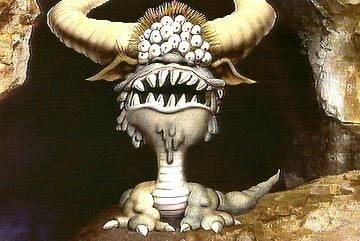
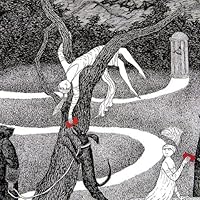
An important and valuable aspect of Gilliamesque:A Pre-Posthumous Memoir is that it is illustrated with copious drawings, photo s and other images. It seems only right that as Gilliam is first and foremost a visual artist that his life and work is presented in such a way. Many of the pictures remind one that Gilliam has serious chops as an animator, illustrator and visual artist, and whilst this might be hyperbole I would suggest when it comes to post-WW2 Surrealist artists Gilliam should rank in the top echelon.
There's lots to like about Terry Gilliam's autobiography, and not just for the mad Python fan like yours truly. Those with a keen eye for cinema culture and history, devotees of modern art and anyone intrigued by life in Baby Boomer America and the UK will get lots out of Gilliamesque:A Pre-Posthumous Memoir. This is a superlative autobiography and one that is very much worth the effort in reading.