In Late Wife, a woman explores her disappearance from one life and reappearance in another as she addresses her former husband, herself, and her new husband in a series of epistolary poems. Though not satisfied in her first marriage, she laments vanishing from the life she and her husband shared for years. She then describes the unexpected joys of solitude during her recovery and emotional convalescence. Finally, in a sequence of sonnets, she speaks to her new husband, whose first wife died from lung cancer. The poems highlight how rebeginning in this relationship has come about in part because of two couples’ respective losses.
The most personal of Claudia Emerson’s poetry collections, Late Wife is both an elegy and a celebration of a rich present informed by a complex past.
Born and raised in Chatham, Virginia, Claudia Emerson studied writing at the University of North Carolina, Greensboro. Her poetry, steeped in the Southern Narrative tradition, bears the influences of Ellen Bryant Voigt, Betty Adcock, and William Faulkner. Of the collection Late Wife (2005), poet Deborah Pope observed, “Like the estranged lover in one of her poems who pitches horseshoes in the dark with preternatural precision, so Emerson sends her words into a different kind of darkness with steely exactness, their arc of perception over and over striking true.”
Emerson’s volumes of poetry include Pharaoh, Pharaoh (1997); Pinion: An Elegy (2002); Late Wife (2005), which won the Pulitzer Prize; Figure Studies (2008); and Secure the Shadow (2012).
Her honors include two additional Pulitzer Prize nominations as well as fellowships from the Library of Congress, the Virginia Commission for the Arts, and the National Endowment for the Arts. In 2008 she was appointed poet laureate of Virginia, a two-year role.
Emerson was poetry editor for the Greensboro Review and a contributing editor for Shenandoah. She taught at Washington and Lee University, Randolph-Macon Women’s College, and the University of Mary Washington. She died in 2014.
With the year winding down, I am attempting to finish many challenges and goals that I set for myself. One has been to read twenty Pulitzer winners across all platforms, and another is to complete twenty collections of poetry. Late Wife by Claudia Emerson, having won the 2005 award, checks off both challenges, although I still have one play plus a compelling nonfiction book left to read. In a telling collection of epistolary correspondence with her husband, Claudia Emerson paints a picture of an emotional second marriage for both spouses, one stained by the grief of the past.
While only fifty four pages in length, Late Wife packs a powerful punch and one that had me emotionally drained after this short collection. Normally, I read poetry to help me relax at night, but I am fortunate to have read this volume during the day. Emerson writes metaphorically about nature and the rebirth of the seasons and how this has helped both her and her husband cope with the pain that they had experienced in the past. The first two sections of the collection emphasize nature and the changing seasons, and Emerson's mood in here mirrors the bleakness of winter. She writes in Chimney Fire that she "learned to dread winter early, before fall showed any real sign of itself, the world still filled with locusts, crickets, bees in the boneset, ashen moths quickening the dusk." Despite the still summery months, Emerson's mood seemed drawn to winter. Living in a rural area, she had to collect firewood and prepare her home for the upcoming winter months. This bleak existence would make anyone depressed as she writes about "our breathing had turned to ice, blooming like white lichen on the insides of windowpanes." Winter, for this poet, was not a wonderland but a wasteland.
One poem, however, does point to a positive memory. In Second Bearing, 1919, which Emerson dedicates to her father, she tells the story of a peach tree which somehow survives a fire. This tree became confused about the current season as "blossoms whitened, opened. Peaches appeared against the season- an answer, an argument. Word carried. People claimed the fruit was sweeter for being out of time. They rode miles to see it." Although still in winter, the blooming of luscious peach flowers and fruit signifies a rebirth and hope for the future. While Emerson continues to write about upsetting events during her second section, the story of the peach tree sets the stage for more positive events which will occur in the future.
In her final section, Emerson paints the picture of a happy marriage with her husband Kent. He had suffered from the death of a previous spouse and had been grieving when Emerson came into the picture. She writes that her predecessor's soul and memories penetrate their entire home, her presence constantly felt by all. Emerson begins this section with "The Hospital" and notes the upsetting memories her husband must sense while the two of them are out on a walk. His previous wife's existence is noted in additional poems as "Daybook," "X-rays," and "Homecoming," all noting how even the minutest reminder can precipitate one in grieving for a lost loved one. This third and final section was especially moving and one can only hope that Emerson's husband enjoyed happier memories later in his life.
While this Late Wife won the Pulitzer in 2006, Claudia Emerson passed away in 2014, causing her husband to commence in another round of grief. I pray by now that he has found some inner peace in his life. Late Wife is a collection of powerful poems and deserving of the awards it has received. Even though it is not my favorite collection of this year, Emerson's words are memorable and should be considered as part of her enduring legacy as a poet. As this could be the final poetry collection that I read this year, I am reminded how fortunate I am in my station in life after reading Emerson's emotional words.
I read an interview of Edgar Kunz, and he happened to mention two collections he found excellent -- this one by the late Claudia Emerson, and Natasha Threthewey's Native Guard.
Late Wife took the Pulitzer Prize for Poetry. As the title indicates, the first part of this collection is about the dissolution of a marriage. Like death, divorce is a great muse. It is, after all, a small death of sorts, no?
It's not all bad news, though. Later poems in this collection follow the narrative arc and lift it into newfound love with a new man and a second marriage. Thus, if you're into the thrill of victory and the agony of defeat (love edition), this might just be your cuppa. Here's a sample of her work:
Pitching Horseshoes
Some of your buddies might come around for a couple of beers and a game, but most evenings, you pitched horseshoes
alone. I washed up the dishes or watered the garden to the thudding sound of the horseshoe in the pit,
or the practiced ring of metal against metal, after the silent arc—end over end. That last
summer you played a seamless, unscored game against yourself, or night falling, or coming in the house.
You were good at it. From the porch I watched you become shadowless, then featureless, until I knew
you couldn't see either, and still the dusk rang out, your aim that easy; between the iron stakes you had driven
into the hard earth yourself, you paced back and forth as if there were a decision to make, and you were the one to make it.
-- originally appeared in Blackbird, published by VCU.
RIP Claudia Emerson. This is my second condolence in as many days.
I read this Pulitzer Prize winning collection a few months ago, but hadn't reviewed. What I love about poets like Claudia Emerson is that they're accessible, yet still musical. Her poems have a cadence, a beauty of language, but you don't need a code breaker to find their meaning. In my opinion, these are the best kind of poets and the kind whose work will be remembered and read through the ages.
Yet again, this is a sad loss for poetry. At 57, Emerson was in her prime.
Metaphor
We didn't know what woke us-just cold moving, lighter than our breathing
The world bound by an icy ligature, our house to the bat a warmer
hollowness that now it could not leave. I screamed for you to do something
So you killed it with the broom, cursing, sweeping the air. I wanted
I'd forgotten these are epistolary poems, a characteristic which makes me like them more because it holds the poet to a discipline and to higher standards which I think Emerson meets. The heart of the volume may be the 3d part, a sonnet sequence adding other restrictions to be dealt with. And making the poet's feat even more impressive. These are poems about marriage and breakup, about dealing with cancer and grief. To me the overall tone of the poems is that of a heavy, opaque atmosphere through which the poems cut as with an edge. They illuminate and inform. Though intense and often sad, they're each beautiful. They're all vividly alive. Their finest quality may be that they peel away the layers of sadness and discord to reveal the kernals of those involved.
Claudia Emerson's Pulitzer Prize winning collection, Late Wife, deals with death, as you might imagine, considering the title. But not just death in the literal sense. Here there is death of love, death of a house and death of a home, (two very different things). The death of animals, seasons, and even furnaces, along with the traditional death of the body.
And she writes beautifully about them, there is no doubt. She's a good poet. And yet, reading these poems, I didn't feel the emotional pull one would expect when reading about loss. There's a restraint there, underlying it all, that leaves me cold. In ine of the poems at the end of the book, "Old English", the poet writes
I buried the sheepdog for you, trying/ to save you from that grief,...
And it appears that she is trying to save her readers from the full impact of grief as well.
So, do I think the Pulitzer was deserved? Meh, I think I'd have to read more of what was published in 2005. Will the poetry stick with me? No, probably not.
I am torn between giving this book a three or a four, personally, although the quality of writing deserves a five. Why if it is worthy of a five do I rate it lower? The subject matter feels dark within the first few poems and remains that way throughout, and I felt somewhat smothered by the bleakness of it. This is not to say the book is not written well, just not uplifting. This book is a success because Emerson transposes these emotions onto her readers. I just finished reading it in one sitting and feel emotionally drained. I did feel as though I had an insight to the lives spoke of throughout the poems. I really enjoyed the poem Second Bearing, 1919, from the second portion of the book, but by far in my mind the third segment, Late Wife, letters to Kent, was undoubtedly the best. I loved several of the poems in this third section. The imagery in this section is simply beautiful.
This is a clean even eloquent collection of poems that somehow didn't move me as much as it ought to have. I am willing to admit the fault to be in myself. Sometimes wonderful books come to us at the wrong time.
The book has three sections: Divorce Epistles, Breaking Up the House, and Late Wife. The last section, mostly loosely rhymed sonnets, is haunted by the ghost of the lover's late wife. This is the section that spoke most to me, though I read it in a noisey cafeteria.
For a long time there would be the small resurfacing of things you had forgotten to throw away, or ceased to see at all. These returned her, not to you, but to me the way I had seen a spider unknot itself...
I just can't explain how much I love this collection. That may seem odd considering the subject, but Emerson taps into so much emotion, and curiosity. I've read my copy of late wife so many times and I find myself inspired every time. Her writing is beautiful, soulful, and achingly brilliant.
Сетивата ми работят по такъв начин, че щом доловят някой да казва „американска модерна поезия”, моментално мозъкът активира ушите ми. Но веднага след това, ако този някой добави „американската поетеса”, признавам, че ентусиазмът ми се смъква с един градус по ска?лата на интереса. Да, за някои женски имена той остава непроменен, дори се изкачва още по-нагоре. Например такива, като: неземната Емили Дикинсън на първо място, изключителната Ан Карсън (която всъщност е канадка, но нищо), прекрасната Мери Оливър, Трейси К. Смит, Кей Раян, Рей Армънтраут, Мери Кар, Дебора Ландау, Наташа Третауей, Рут Стоун, Елън Браянт Войт, Ан Секстън, Елизабет Александър, Джори Греъм, Мая Анджелоу, Гуендолин Брукс, както и Силвия Плат с известни уговорки. (Това все пак е само една малка част от тях.) Повечето от тези прекрасни дами имат вкъщи на рафта върху камината наградата „Пулицър.” Защото са изключителни поети. Но отново с известни уговорки. Като Шарън Олдс например, която спечели наградата миналата година за стихосбирката „Stag's Leap”. Всяко едно от стихотворенията в книгата описва някаква неприятна черта на вече бившия й съпруг, който напуска поетесата след дълги години брак заради по-млада жена. Всяко едно от стихотворенията е изпълнено с нейното страдание и болка, и тъга. Интересно, би си казал средностатистическият читател на поезия, но той може би не знае кои са двата първи закона за писането, които научава всеки един поет още в началото на пътя си по белия лист и които никога не трябва да допуска да се появяват върху същия лист. А те са следните: „Никога не казвай на читателя онова, което той вече знае за живота” и „Никога не си мисли, че ти единственият човек на този свят, който страда”! Това е! А госпожа Олдс с лек жест ги е прескочила и двата. Резултатът? Отличената с „Пулицър” стихосбирка. Освен това самата тема е клиширана и експлоатирана сто и десет милиона пъти, (в такъв случай трябва да изнамериш друг подход, за да избегнеш баналността), езикът е муден, постройката – във формата на своеобразен дневник – също. За мен наистина е загадка как успя да получи тази престижна награда. Както е и още по-голяма загадка как по принцип суровите в предпочитанията си англичани й връчиха наградата на името на един от най-големите си поети - Томас Стърнз Елиът. Казвам това, за да направя известен паралел между наистина добрите поетеси, които споменах в началото и Шарън Олдс. Казвам това, защото тези дни попаднах на още една изключителна американска поетеса, наградена с „Пулицър” още през 2006 г. за поетичната си сбирка „Късна съпруга”, която не знам как съм пропуснал още тогава. Но тази неправда беше поправена благодарение на издателство „Фрост”, което ни я предоставя на всички нас, за да се потопим в красивите й страници. Тук следва да кажа, че преводачът Благовест Петров след преводите си на големите поети Тед Кусър, Били Колинс и Карл Денис, сега ни позволява да се срещнем на негова територия с една от гранддамите на съвременната американска поезия – Клаудия Емерсън и нейната „Късна съпруга.” Основната тема в книгата на Клаудия Емерсън е животът на Клаудия Емерсън, но както споменах преди това, тя не ни казва неща, които вече знаем за него, а ни плъзва по една крива, опасала нейната съдба и ни води по нея, докато разказва например за змията, която открила да снася яйцата си в чекмеджето с приборите, паяците и техните торбички с яйца, като фини, преплетени перли, плъховете, мишките, прилепите, къртиците, пчелите, термитите с тяхната кралица – един красив бестиарий. Промените в живота й, разводът, загубата на любовта – са разказани между другото, неусетно за читателя, така както трябва да е – без нравоучения, без проповеди и изповеди. Емерсън работи много добре с езика. В ръцете й той се превръща в сочна и гъвкава материя. Тя сътворява много дълбоки метафори, но доловими и с просто око. Ето един прекрасен и буквален пример за това.
МЕТАФОРА
Не разбрахме какво ни събуди – едва повяващ хлад, по-неуловим и от дъха ни.
Светът бе повит в ледена превръзка, къщата ни беше за прилепа затоплена
кухина, която вече може да не напуска. Изпищях да направиш нещо.
И ти го уби с метлата, свистяща във въздуха, ругаейки. Исках
да го направиш – докато не го направи.
Емерсън е много по-архитектурна в словото си, отколкото артистична – тя обича да изгражда простичка красота, а не да се фука с някакви сложни силогизми, глупави алитерации и заплетени препратки към класиците. Историите, които разказва в книгата си лични, но са написани по такъв начин, че всеки лесно би могъл да приеме за свои, да ги изсънува, а и защо не – да ги изживее. От това следва, че освен всичко друго, тя е един много добър разказвач, който не се страхува да приобщи непоетичното слово в служба на поезията. Да, наистина, доста често стиховете й ми заприличваха на кратки разкази, на стихове в проза, но след последната дума, сигурен съм, че читателят винаги ще си каже – това е добра поезия! Тя не е като толкова много други стихоплетци, които усложняват занаята прекалено много, показват дълбоки, но ненужни познания по някоя съвсем отдалечена от конкретната тема наука или митология. Клаудия Емерсън няма да ви хване за ръка и да ви поведе по приказната алея към цветната градина, само, за да се окаже накрая, че там няма никаква градина, а тухлена стена. Следващото стихотворение е един много добър образец на това, за което говоря.
БИЛЯРД
Беше игра, на която бяхме заложили петдесет цента под изтощения вентилатор на тавана,
под вечната спирала на дима. Приглушени, мътни светлини просветваха в далечината. Бях изморена, но ти
настоя за още една, така че натрих с креда щеката – надупчената синя, почупена, надраскана.
За теб бе нещо обичайно да разчистиш масата, да не ми оставиш
нищо. Но аз си припомням лесния удар, който пропусна, и след това начинът,
по който и двамата го изследвахме, обикаляйки – понесли каквото между нас ми беше оставил.
В момента търся дума, с която да успея най-добре да опиша поезията на Емерсън и мисля че най-правилната ще да е тази, която се появи в мозъка ми, когато за пръв път прокарах очите си по редовете й, а именно – еклектична. Точно така! Нейната поезия е еклектична. Точно като катедрала! Цялостна, монолитна, изящна, но въпреки това в нея са въплътени най-различни елементи, които обаче обогатяват, а не натежават. Словото й не е скала, а по-скоро мрамор, над който е работил Праксител. Стилът й на писане е простичък, изчистен, бавен, но самата тя се чете бързо. Това е достояние само на големите и можещи поети. Тези, които всеки ден, когато седнат пред листа, изваждат сърцето си и го изтръскват върху думите, разливат се в речта, размиват се със словото. Онези заради, които поезията съществува. В заключение ще кажа, че тази книга е една от малкото преводни книги с поезия, появили се на българския литературен пазар, на които трябва да се обърне внимание. Повярвайте ми, те наистина са много малко. Примерно колкото са пръстите на невнимателен шлосер. Затова потърсете я, питайте за нея из книжарниците, поръчвайте я от интернет книгопродавниците и след като я прочетете можете да я поставите в библиотеката, пъхната между обемистите и мощни руски поети. Те няма да се ядосат, а Клаудия Емерсън, като една истинска дама, ще се почувства изключително приятно.
Клаудия Емерсън. Късна съпруга. Изд. „Фрост”. София, 2014
This was my Day 16 book for #thesealeychallenge2023, and it is a Pulitzer Prize winner.
Titled sections, epigraphs, and tight free verse, especially tercets, couplets, and quatrains make up this slim full-length collection. The poems are a Master Class in poetry: there is not a superfluous word or image or metaphor to be found.
Section 1: marriage and divorce (husband is the "you" in every poem) Section 2: speaker's family, particularly her mother Section 3: the husband's first wife, who is dead (husband is again the "you," and most poems in this section are 14 lines) Unlike a few poetry books where the sections seem arbitrary, these make sense.
Although this book focusing on relationships, there is a lot of nature in here as well. Descriptive, metaphoric, detailed, specific--the natural world reflects the book's overall themes.
A truly incredible book that--if I were still teaching--I would teach so students could really see how tight can poetry be.
Three poems--Natural History Exhibits, The Practice Case, and Furnace--each have a surprising line break that are important and meaningful and so well done. (A little weird to point out line breaks in 3 poems, but that's how awesome they are.)
Some favorite poems: Rent, Natural History Exhibits, Metaphor, The Audubon Collection, Atlas, The Cough, Stringed Instrument Collection, and Second Bearing, 1919.
Some favorite bits:
"I became formless as fog . . . " --Aftermath
"I fear this more than what it warns because I cannot remember I will survive it." --Migraine: Aura and Aftermath
" . . . seeing through our transience the lasting of desire." --Homecoming
This book will stay with me for a long time. I am so glad I read it for #TheSealeyChallenge.
Beautiful little poems of domestic cleavings (the dissolution of a marriage, the genesis of a relationship in the shadow of a dead wife) and misbegotten wildlife rescues. Just my kind of thing. Glad to have discovered her; sorry to learn she passed away so young.
Favorites "Waxwing" "Drought" "Migraine: Aura and Aftermath"
Late Wife by Claudia Emerson offers a beautiful collection of poems formatted similarly to a short story. Each poem ebbs and flows into the next, depicting both dramatic and enthralling situations from her own life. Beginning with “Natural History Exhibits” which captures the guilt of a failed marriage, she illuminates the stage for the first section “Divorce Epistles”. She uses not only language but also the format of her poems to illustrate profound emotion. The poems found in “Divorce Epistles” and “Breaking Up The House” are choppy and confusing to the eyes but as you read into “Letters To Kent” they transform into sonnet formation mostly. This could be because sonnets are romanticized and she has high hopes for the success of her next marriage.
Claudia is a former professor of mine, so be warned – this is a totally, 100% biased review. I’m not even trying to be impartial.
I read this book shortly after the end of a very bad relationship and at the very beginning of wonderful but risky one. Now, clearly, the life events described in the book are much more weighty than mine were – I had no marriage, no divorce, no death - but the fears, the anxieties, the atmosphere... oh, I knew them well. And these poems gave me comfort at a point when nothing else really could. Maybe that's not the best standard for analyzing poetry, but it works for me, for this book.
While reading "Late Wife," it gradually dawned on me that I read some of them before, and I eventually realized that I had read the entire collection before--at least five years ago, I'm guessing. That's not to say the poems are drab or forgettable. It just took a little while for that spark of recognition to really catch fire. This is a very quiet collection, and yet there are some remarkable poems in here.
Emerson divides "Late Wife" into three sections: I. Divorce Epistles, II: Breaking Up the House, and III: Late Wife. My favorites are in that second section. My very favorite is "The Practice Cage," which tells the story of stopping during a run to free a trapped hawk. I enjoy it because I can relate so well to the experience of running, noticing, and ruminating. "Migraine: Aura and Aftermath" is another one that resonates with me on a personal level. And "Pond Turtle" is darkly funny. The act of caring for the ingrate turtle reminds me of parenting--teenagers in particular. Section III: Late Wife explores the presence-in-absence of a spouse or lover's previous wife, who died of cancer and inevitably left many little traces of herself in the house and spouse she left behind.
Glad my poetry circle chose this book and gave me a chance to revisit it.
So I started another poetry collection earlier today and had to set it aside for a while. My aunt died a few days ago, and I don’t know if I can explain why I felt the compulsion to read Claudia’s book right now except that she’s another woman I was glad to know (albeit briefly) and who we lost. The book, too, is a catalogue of loss. Loss of relationships, loss of partners, loss of homes, loss of control, loss of love, and loss of lives—both human and animal. Yet somehow she is unflinching in confronting these losses, in plumbing their implications and what they say about us. Claudia was such a gorgeous poet. She could craft a poem that carried you along like a gentle stream that would then plunge you into the swiftest rapids at the end, which is to say, she guts us tenderly. I feel her loss every time I pick up this book but just saw there have been some posthumous collections released that I didn’t know about. A cold comfort to be sure, but I’m glad to have a few more words from her.
Nothing to see here. Actually, nothing memorable enough for me to dedicate even the slim shelf space it requires.
I know this won the Pulitzer Prize for Poetry in 2006 and I probably bought this at that time. Emerson has since passed away (2014) and it's wonderful that she left her mark on the world with this collection.
There was nothing inherently wrong with the poems, in fact, they were lovely. That's not a good reason for me to own this though. Lovely poems are just that: lovely. And lovely is generally boring to me. The poems are mostly themed around her marriage (maybe a second marriage for him) and the memories of another wife. Or maybe the poems are about this other woman's death. I don't know. I don't care enough to parse it out.
The last dozen or so poems are mostly written as sonnets. Loosely following the form. The first couple of sonnets were good, the poet demonstrating her deft hand with the form. The next ten just sounded like the first two. Boring.
Finishing this book I thought: this is ephemeral, I'll forget I ever read it almost immediately. But then I looked back at the pages I'd dog-eared (I bought this secondhand at a thrift store, and the pages were already creased, so don't think I abuse books! Although, that's a misdirection: I do in fact dog-ear even books I buy new, because it's the nature of good poetry to be re-read.). And I found some really astoundingly lovely poetry, which I would consider framing if I was the sort of person to actually put art on my walls. And not only that, but I found that the book's structure was more deliberate and meaningful than I had first seen.
So, I have a lot of dog-eared poems in this book, but "Atlas" is probably my favorite-favorite. It exhibits Emerson's strength with poetic structure, delivering vivid images in spiderweb-delicate triplets that carefully, deliberately takes every step necessary to deliver you to a soul-rendingly lovely revelation.
Last Thanksgiving I was given this collection to read. It has been on my shelf waiting to be read since then. I haven't read much poetry in the last year. I tried to work my way into Auden and Thomas to no avail. I've made two attempts through Anne Sexton's complete poems and one attempt through Sylvia Plath's collected poems. Yet again, I had no success in gaining traction during my reading. After about 4 months of no poetry I made another attempt at this short collection and it was completely worth it.
This is a wonderful collection of poems. What really helped me with this collection was the fact that these poems are accessible. The language used in this collection is simple enough that the average reader can enjoy it, while at the same time, arranged in a way that is powerful. I found myself at the end of multiple poems muttering to myself, "wow."
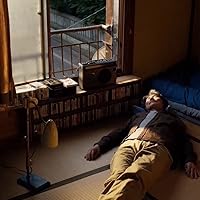
A short book of longer prose poems, with some beautiful and heartbreaking language about growing up and becoming disillusioned with your life and longing to make some kind of change. The cover perfectly sums up the feeling of reading this - like sitting in a dark room in the middle of a summer day, sweaty beneath the sheets, watching dust motes circle in the rays of sunlight breaking through the curtains. The poems are very narrative and focused mostly on the dissolution and impermanence of human relationships. Very despondent and without much hope, but still very enlightening.
I actually read this collection through two times. My initial impressions were nearly the same as the first reading. There are poems where the author creates a sense of pathos--especially in the section of the book that shares the book's title--Late Wife. However, many of the poems just sort of trail off with tepid endings. My favorite poems are "The X-Ray," and "Furnace." I am rather shocked that this collection is a Pulitzer Prize winner, but I've never figured out how judges make their decisions anyway.
This book is beautifully written - subtle. There is a certain restraint. No raised voices or slamming doors. Many of the poems a gentle air stirring the leaves, a music that can play without racket. And even so almost each poem spoke volumes to me. I understood these emotions and thoughts too well. A picture was painted - brushstrokes I felt upon my skin. Poetry is very subjective. I am not an impartial judge.
3.5ish stars. My first time reading Claudia Emerson. These poems are masterfully written. The line breaks, deft word choices, and precision are the signs of a master, veteran writer. I think anyone who has lost a partner and tried to remarry with another person who either lost a partner or was divorced will find this collection quite moving. It is a portrayal into lost love and found love. And loving what is here while it is or, at least, while the small 'i' is.
Although I'm not the biggest fan of poetry, surprisingly, I did enjoy this one for some reason. I could feel through the author's words the pain and struggle she's going through and, even though I didn't think that would be the case, I could even relate to some of her poems.
All in all, I thought the book was a worthwhile read and I'm so glad I picked it up.
Beautifully and emotionally written. Emerson's words pulled me into, and out of, myself. Whenever I read good poetry I find myself wanting to write words of my own, to match the Poet's, but for them to be just mine. Emerson's words gave me that desire again.
I am saddened to know that Claudia passed away from cancer, as her husband's former wife did prior to their marriage.
This short poetry collection explores not just the loss of a person thenselves, but the loss of all that surrounds that person. This person leaves a whole in your life where they once were. The echos of their life pop up in every day objects, a lost glove, a journal, or a horseshoe. These sentiments are expressed eloquently by Emerson in this collection
A brief, beautiful set of poems charting a journey through the dissolution of a marriage on through the beginning of a second one to a widower. Emerson’s success here is not just dealing with the heaviness of the subject matter, but also the everyday motions of living and remembering, the wandering mind contending with each thought as it comes.