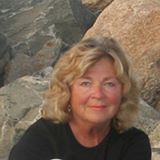
Nancy Mairs was an author who wrote about diverse topics, including spirituality, women's issues and her experiences living with multiple sclerosis. She received an AB from Wheaton College, and an MFA in writing and a Ph.D. from the University of Arizona.
She was diagnosed with MS when she was 28, and wrote several essays on her experiences as a self-described "cripple", including "On Being a Cripple," "Sex and the Gimpy Girl," and the memoir Waist High in the World.
Gave up about 2/3 of the way through for reasons of "I am sick of reading about white women coming to feminism in middle age." And the French feminism herein is not written well. Moving on.
3.5 stars. I do love Nancy Mairs and a couple of these essays contained her usual brilliance about disability and the female (writing) experience; however, a majority were much more academic and relied heavily on feminist theory I am less familiar with.
This was one of the books Martine Leavitt mentioned in a VCFA lecture on Voice. I found it interesting and, in some parts, incisive and painfully accurate. She straddles writing and academe in familiar ways, so I was sort of depressed about this also, since a lot is familiar: the hollowness of most academic writing and thought, the artificial distinctions between "real" inquiry and story-writing, etc. It was also a bit disheartening, though predictable, to see that some of the problems I think I face alone are really shared -- the quest to unify a life, navigate gender prisons, etc are largely structural (disheartening because they won't relent in my lifetime, I guess). Those insights are won my the fact that Mairs knows her theory, but also brings the passion of a writer determined to place her own life at the center of the writing, "keeping it real."
Having experienced the same MFA program and having known some of the same professors, this book has its interesting points, but what frustrates me is that at the same time that Mairs claims that she is not like the average scholar, she almost immediately lapses into these conversations with herself, throwing around the names of French philosophers like helium balloons. The end of the book was more engaging for me; I especially appreciated the chapter regarding the "Literature of Personal Disaster" as this is the kind of work I seem to tackle again and again. Other books by Mairs have intrigued me more, but this is still worth a read.
This book was inspiring and full of great "writerly" advice. There were a few uses of feminist theory where she lost me, but this is still a powerful book to read if one is embarking on a serious writing project.
I think this is one of the best books for women writers, especially women writers who are searching for a voice in a world of language that doesn't always speak their stories.