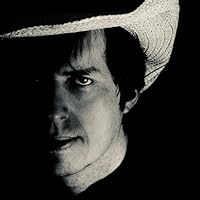
Steve Rasnic Tem was born in Lee County Virginia in the heart of Appalachia. He is the author of over 350 published short stories and is a past winner of the Bram Stoker, International Horror Guild, British Fantasy, and World Fantasy Awards. His story collections include City Fishing, The Far Side of the Lake, In Concert (with wife Melanie Tem), Ugly Behavior, Celestial Inventories, and Onion Songs. An audio collection, Invisible, is also available. His novels include Excavation, The Book of Days, Daughters, The Man In The Ceiling (with Melanie Tem), and the recent Deadfall Hotel.
As other readers have stated, I have mixed feelings about this one. It had a creepy climax which I enjoyed, but it still left me confused. And the build up was just too slow. It's hard to rate. It wasn't horrible, but it was plodding and I feel like the novel didn't quite complete what it was trying to accomplish. Perhaps Tem is just much better at short stories than novels?
As I said, I didn't hate it, but I don' think I'd recommend it.
Its premise is interesting: the protagonist, a professional archaeologist, excavates the ruins of his boyhood home, a metaphorical unburying of repressed family horrors; these embody themselves in a strange beast, neither human nor bear but partaking of both, which stalks his hometown. As the town becomes increasingly overwhelmed by its resurgent past, it becomes literally awash with its dead, but these are not so much traditional revenants as they are manifestations of hidden emotions, mostly regret, guilt, and anger.
There are imaginative moments scattered throughout, particularly a few scenes which unexpectedly and ingeniously depict events from the point of view of the "bear", and the "ghosts" are interestingly unorthodox. But the novel seems spun out at excessive length (Tem was, and is, a master of short fiction), and the pace is often plodding. There are many superfluous characters, and focus on the protagonist is lost and diffused, when it should be central to the narrative. His character is awkwardly developed: pains are taken at the beginning to depict his present home life, but as the story unfolds all this proves largely irrelevant and could have been condensed into a single chapter (indeed, the novel would work much better as a novella, with all the unnecessary bric-a-brac ruthlessly pruned).
Tem's prose is flat and detached, and although one is never in doubt of the author's intelligence and thoughtfulness, the book has an oddly perfunctory air, as if he were attempting to write an orthodox horror bestseller, but was unsuited to the task by temperament, and not particularly enthusiastic about the venture. Nevertheless, the novel was nominated for a Stoker, and it's possible that readers approaching it with lower (or no) expectations might not find themselves as frustrated with it as I was.
The first 85% of the novel meanders on as though the author were high on salvia, and then in the last few chapters, he started hitting the cocaine. Meandering atmospheric passages capture the sad feel of memories lost in an old Kentucky mountain town ravaged by the strip mining industry, but nothing much happens. Then the reader is bombarded with a cacophony of shifting perspectives between multiple characters, many lasting just for two sentences before moving on to the next and the next, while all types of supernatural nonsense gets crammed into the last four chapters. The reader is forced to slog through hours of very dull, but competent, writing that promises a big payoff, but the only reward for patiently getting to the end is hysteria and chaos that is just confusing and not at all frightening or exciting. None of it is coherent, not a single story arc is followed through, and nothing is resolved. The whole result is an incredibly poorly-paced first effort that makes no sense and is very unsatisfying. When this book is discussed by horror fans, inevitably the fact that it was nominated for a Bram Stoker is mentioned with bewildered amusement. Now I understand why.
This book is copy 106 of 200 copies of the hardcover signed and numbered by Steve Rasnic Tem. The book is number 1 of volume 4 of the Dark Essential Series.
The series consists of:
Book #1: "Excavation" by Steve Rasnic Tem - 200-copies Book #2: "Untigahunk: Stories and Myths of the Little Brothers" by Rick Hautala - 200-copies Book #3: "Prototype" by Brian Hodge - 200-copies Book #4: "Demonologist" by Michael Laimo - 200 copies
“He watched in fascination as the concrete slab suddenly seemed flexible, buckling all up and down its length like a series of piano keys being played.”
That slab again, those layers of archaeology, and even Reed is rescued upon a floating stone wall! That says something so lateral, so oblique, it takes the breath away.
The detailed review of this book posted elsewhere under my name is too long or impractical to post here. Above is one of my observations at the time of the review.
It's a fairly tedious read. It has some good ideas and gave some insight into strip mining that I wouldn't of had otherwise. I read it for the cover.
An archaeologist returns home to excavate his family home which had been buried by a flood. Also supernatural things occur. It's a cool concept but man it was hard to get through.
The Plot: An archeologists returns home to find closure after running away from his abusive father. Unbeknownst to him, however, literal ghosts from the past have risen to wreck havoc throughout his hometown.
Verdict (No spoilers): Ultimately, the book is okay. It’s got some cool ideas, especially near the end. However, gaps in its world building hampered the ending and made the story unsatisfying for me.
Thoughts (Spoilers): First of all, I’d like to clarify something relatively important about this book. It’s about ghosts. Not vampires. Not zombies. Ghosts. I feel this clarification is necessary because everything from this book’s cover, blurb, and preview would seem to suggest it’s about corporeal undead monsters.
That said, this book wasn’t terrible. At its best moments, it reminded me a great deal of the Silent Hill franchise. I loved its ideas around a ghost flood and the potentially haunted lake that results from it.
However, the book also left a number of questions unanswered that disappointed me. For example, there’s no explanation as to why the ghosts of the protagonist’s family are the town’s primary antagonists for a majority of this book. As the climax amply demonstrates, there’s countless spirits left restless and angry by the last flood, but they don’t appear until the story’s end. Furthermore, the horde of ghosts destroying the town during the climax even pause their rampage just so the protagonist can finally confront his ghostly parents. There’s no explanation as to why the protagonist and his family are so special in this regard. It’s almost as if such questions were purposely left unanswered for some sequel to fill in the gaps, but there’s no sequel to this book that I’m aware of.
Despite these complaints, there’s still fun to be had in reading this book. I’d just advise against expecting a fully satisfying ending.
This entire review has been hidden because of spoilers.
As a born and raised Kentuckian I was excited to find a horror novel set in the Bluegrass State. I'm not sure what I was expecting, but I was hoping for some good old fashion ooky spooky. The foundation was there. A prodigal archeologist returning to his birthplace to excavate his childhood home which was buried by a dam burst. I appreciated the discussion about strip mining and what it's done to the area, the rape of a land and its people. Maybe if the haunting had been a bit more traditional or sensical I would have enjoyed it, but turning MC's Dad into a bear and his mother into a flame atronach and setting them loose on the town was an interesting choice. The climax of the town flooding once again and being turned into a lake was fantastic, but fireplacing the final confrontation between MC and his shadow-self was kind of a cheap move. In the end, the story had good bones but the Tem chose the wrong paint color.
This entire review has been hidden because of spoilers.
I’ve read short stories by Steve Rasnic Tem before, and they’ve almost always struck me as stiff and arty, full of odd imagery that took some craftsmanship to create but didn’t seem to go anywhere or do anything useful. That’s not all that uncommon in short stories, but I hoped that over the course of a novel-length work Tem would be able to cut down on the experimental prose and just tell a tale. No such luck. I think there actually is a good story in here someplace, but like the protagonist’s past it’s buried under a flood of other stuff. I’m not opposed to strange, undefined terrors, but when the whole book is strange and undefined then the terrors don’t stand out too well. And that’s really too bad. Tem’s bizarre horrors could have been real spine-tinglers if they cropped up in more comfortable, familiar surroundings.
Ok, I have a bunch of mixed opinions about this book. I will touch upon some of them.
Firstly, I really resonated with Reed Taylor as a character in general. He is a hard-working, quick on his feet scientist with a boatload of familial trauma. This initial connection with the character really brought me into the text, despite my lack of knowledge of anthropology/archeology. I really enjoyed the dialogue supplied by Rem with the connection between layers of the Earth and layers of the psyche. I thought this was actually quite genius and makes a bunch of sense; a parallel I never thought of before. There are ghosts in every layer of the past that eventually get brought back to the surface to haunt us again at some time. This part of the story I really cared for.
But then comes the parts of the books that left me thinking "what the fuck is going on". First off, the bear. What the hell? At first I was really hoping that Harold? - hopefully the correct name for guy who was in a mining accident (Inez cares for him), can't remember but the vision of him butt naked from pink pajamas muttering demonic shit is still in my head - and the bear had some connection. They said that Harold left part of his brain in the mine. I thought, oh maybe the bear ate it or something and that is why the bear is having these visions, but that idea was never explored. Once Harold started to get his visions of the lady with flaming hair, this is when the book went to complete shit for me.
Like why does everyone think the bear looks like Reed? Is the bear even a bear or a figment of imagination? The author alludes to the answer vaguely saying that "you become what controls you". Well I thought about that. Reed had a vision when excavating where he saw his angry father and his sad mother. He had the opportunity to stand up to his dad, but he never did. So is the bear holding the spirit of Reed's dead dad? But then that ideology fails when you think about how Emil (grandpa) was the same way. So my question is - where did this evil or this "thing that controls" the Taylors come from? There was no explanation. I really despise books that leave me with more questions than answers and does not attempt to answer them with a follow-up or sequel.
Regardless, Dorris Papkey might be my "work role" spirit animal. The intuitive and emotionally in-tune character with much intuition and knowledge of what is happening, but no one takes seriously and treats like shit until it is too late. Let the slab and Simpson's Creek burn in muddy bloody Hell.