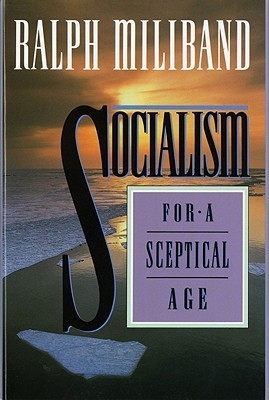
This outstanding and original volume offers a critical examination of a number of developments which in recent years have undermined the idea of socialism and eroded its electoral appeal. Among these developments are the collapse of Communist regimes, the fragmentation of the constituencies upon which earlier socialist advances had depended, changes in the organization and the dynamics of capitalism and a dearth of agencies committed to the socialist project. The book also takes up and seeks to rebut older objections to socialism, such as the notion that it is inevitably totalitarian, that it is based on too optimistic a view of human nature and that it fails to take account of the tendency of power to accumulate in the hands of minorities.
The book argues that a social order dominated by the logic of capital and competition cannot, despite all the positive claims made on its behalf, produce the conditions which make true citizenship and community possible. By contrast, socialism offers an attractive and feasible programme for the realization of those ideals. Miliband argues that socialism cannot be seen as an answer to all the ills which have plagued humankind. Socialism, in his view, has to be understood as part of an age-old struggle for a more just society, and he believes that, seen in this light, socialism remains not only desirable but also perfectly possible. Moreover, he believes, socialism will, in time, come to command a majority support which its advancement requires. Socialism has to be seen as a permanent striving for the achievement of democracy, egalitarianism and the creation of an economy under democratic control.
Although this was written in the late 1990s and is thus somewhat out of date, much of what the author writes is still very current, and of all the books I've read on this topic, it alone addresses how, exactly, a socialist government would be able to function and what the limitations and difficulties are that it would face as it tried to mend the damage capitalism has done to the majority of any given nation's population. He also stresses repeatedly that such a government could only succeed (and avoid descending into the distortions of socialism that we have seen in the past) by drawing on the support of a majority of the population with its various civic and social organisations and on local structures. Thus, the vital task - both before and after a socialist government comes to power - is to bring such support into being.
It's sad that the book reads in many parts as a bittersweet message from a defeated and departing Miliband (released after his death) to a pessimistic movement at one of its lowest points. While we are still not too far past that lowest point, there are reasons to believe as he did that the long-term project of socialism is possible and necessary.
At this later point in his career, Miliband is unhesitant to depart from traditional Marxist thought where he feels it is necessary for socialism to be achieved, particularly in an advanced capitalist bourgeoise democracy. This leads to what might be controversial propositions about the parts of the current system to be maintained, particularly in relation to the private markets, constitutionalism and the existing bureaucracy. There are aspects of this that I find hard to disagree with (strictly in the context of countries like England, Australia, etc.) and yet others that aren't sufficiently persuasive.
Ultimately, so late in his life, Miliband provides his final word on questions posed his earlier work, about socialism as a long-term political project and the practical actions this would require. It's up to the reader as to whether he did so comprehensively and successfully, and to carry the baton if so.
Miliband's confrontation of many of the misconceptions surrounding capitalism remain relevant more than 25 years after this book's initial publication. Socialism for a Sceptical Age is a measured but compelling presentation of a democratically socialised Britain.