

What do you think?

Freddy's Book
"Combines the fascination of a fairy tale . . . with beautifully defined characters and an underlying seriousness of purpose that makes it something far more important . . . Freddy's Book is the work of a master storyteller."-Anne Tyler
In a gloomy mansion in Madison, Wisconsin, a sheltered and sensitive young man slips a visiting professor his secret manuscript-a staggering and beautiful fantasy of knights, knaves, and fools, a rich tale of timeless battles with the devil himself over power and destiny.
John Gardner (1933 - 1982) was a major figure of twentieth-century letters.
245 pages, Hardcover
First published January 1, 1973
About the author
John Gardner
429 books490 followersJohn Champlin Gardner was a well-known and controversial American novelist and university professor, best known for his novel Grendel, a retelling of the Beowulf myth.
Gardner was born in Batavia, New York. His father was a lay preacher and dairy farmer, and his mother taught English at a local school. Both parents were fond of Shakespeare and often recited literature together. As a child, Gardner attended public school and worked on his father's farm, where, in April of 1945, his younger brother Gilbert was killed in an accident with a cultipacker. Gardner, who was driving the tractor during the fatal accident, carried guilt for his brother's death throughout his life, suffering nightmares and flashbacks. The incident informed much of Gardner's fiction and criticism — most directly in the 1977 short story "Redemption," which included a fictionalized recounting of the accident.
From Wikipedia http://en.wikipedia.org/wiki/John_Gar...
Gardner was born in Batavia, New York. His father was a lay preacher and dairy farmer, and his mother taught English at a local school. Both parents were fond of Shakespeare and often recited literature together. As a child, Gardner attended public school and worked on his father's farm, where, in April of 1945, his younger brother Gilbert was killed in an accident with a cultipacker. Gardner, who was driving the tractor during the fatal accident, carried guilt for his brother's death throughout his life, suffering nightmares and flashbacks. The incident informed much of Gardner's fiction and criticism — most directly in the 1977 short story "Redemption," which included a fictionalized recounting of the accident.
From Wikipedia http://en.wikipedia.org/wiki/John_Gar...
Ratings & Reviews
Friends & Following
Create a free account to discover what your friends think of this book!
Community Reviews
Displaying 1 - 30 of 54 reviews

July 12, 2011
2024 re-read thoughts: I’m still uncertain of what, if any, final answers Gardner is giving in this book, but I am certain that it’s still a great read.
I was hoping that I might find further clues on the character of Freddy in his story of a knight and the devil, but I’m afraid I didn’t find further certainties there either…other than that he was a very thoughtful boy.
Original review:
3.5 - 4 stars
“I have a son who’s a monster.”
So declares Prof. Sven Agaard, an old-school historian of former glory, now an outcast at his own university. His audience is Prof. Jack Winesap, the academic star of the moment and expert in the somewhat rarefied (and questionable?) area of “psycho-history” (no, not Asimov’s). He is Agaard’s polar opposite, sitting happily on the other end of the academic spectrum in terms of both popularity and academic rigour. Despite the animosity that Agaard displays towards Winesap and his field he ends up inviting him to his home. For his part Winesap is intrigued, who or what can this monster be? Why is this obviously antagonistic man even speaking to him? Of course he accepts. Thus Gardner sets up the mystery that will lead us into the first part of the novel which plays out this uncomfortable, though enlightening, scenario.
In the course of an evening where Winesap is snowed in and forced to partake of Agaard’s ‘hospitality’ he comes to learn the answers to some of his questions. Freddy, Agaard's son, turns out to be an outcast himself. A giant of a boy, he not only has a physical appearance that sets him apart, but is apparently subject to rages that make his cohabitation with others somewhat dangerous. At the boy’s own instigation locks and bars are kept on all of the doors and windows of Agaard’s drafty old house, meant not to keep Freddy in, but to keep others out. What at first seems like a horrific confinement comes to take on a different colour as we learn more about this small family and come to see that Agaard is not just a crusty old man hiding an unwanted child from the world, he is a father sick at heart over the pain he has seen Freddy suffer whenever he has been exposed to the world at large. Freddy has thus learned to be an introvert with an intellectual bent. His entire experience of the world has come from books and his room is cluttered with them, along with the various drawings and dioramas he has made based on their contents.
It also appears, much to Agaard’s chagrin, that Freddy is something of a fan of Winesap’s and so he has called in this man, whom he views with nothing but disdain and contempt, in the hopes that he can reach out to his son who otherwise remains locked in an ivory tower of his own making. Their initial meeting does not seem to go well. Winesap is nonplussed while Freddy is virtually silent, doing his best to hide his enormous bulk from view. Ready to set the matter at a dead loss as he readies himself for bed, Winesap is surprised when Freddy creeps up to his room in the dead of night and leaves behind a present for him. It is the eponymous book of the title, and is also, perhaps, the only method Freddy has learned of communicating freely with another person.
What follows, and which contains the bulk of the novel’s content, is the text of Freddy’s manuscript that is half fable and half history, detailing the adventures of a 16th century Swedish Knight and his conflict with the devil. I’m a little uncertain of how to proceed with this review. Gardner packs so much into this relatively slim volume that to cover all of the ideas he explores would be counter-productive. Suffice it to say that this is an existential novel and as we follow the main character Lars-Goren in his travails we touch on a host of philosophical and political issues that run the gamut of human experience. Lars-Goren and his cousin Gustav Vasa begin the story watching as their kinsman Sten Sture and his fellow revolutionaries are slaughtered for their revolt against the Danes that currently rule Sweden. Lars and Gustav barely escaped this fate and long to avenge the deaths of their family and friends. At this point the devil appears and, taking Gustav under his wing, the road starts to be paved for the rise of King Gustav and the expulsion of the Danes from Sweden. Lars-Goren, a man who has known no fear in his life, suddenly becomes gripped by this unknown sensation. Of what is he afraid? Upon examination he realizes it is neither his death, nor eternal damnation that worries the knight. Just what it is proves to elude him and his search for an answer takes up the rest of the story.
Into the tale of Gustav’s rise comes another major figure: Bishop Hans Brask, an old confrère of the devil’s and a man able to easily weather the numerous instances of political turmoil his nation has undergone with equanimity and safety. He is a man ahead of his times, an ironic and disillusioned cynic in the dying days of the age of faith. The idealism of his learned youth has given way to realpolitik on a political scale and nihilism on the metaphysical. Brask first uses Gustav for his own ends, lending his support to his rise when it suits his purposes, but willing to let him hang when he is no longer of use. Much to the chagrin of both Brask and the devil Gustav turns out to be a much wilier fox than they had anticipated. Lars-Goren can do little more than watch in dismay as his cousin moves from idealist to tyrant. He wishes for no further part in things, especially as they concern the devil, and wants only to return to his own family and demesne.
Gustav is convinced that it is only the prince of darkness that stands in the way of his true success as king, for it seems that everything he touches goes astray and every plan he makes goes awry…whose fault could it be other than the devil himself? As a result Brask and Lars-Goren get thrown together by Gustav and tasked with the impossible commission of killing the devil. Thus we have the seemingly simple, though deep thinker Lars-Goren, who still wants to believe in the good of the world with Brask, the man who has seen it all and is certain that the world ultimately holds no meaning. What will they learn from each other, and how in the world will they kill the devil?
Gardner (or, if you wish, Freddy) uses each of his characters to evaluate the different ways of looking at the world and struggling with its eternal questions. One can see in this novel a real cry of pain from the post-modern man who has at once both embraced the view that all of the old meanings no longer hold sway and that new methods are leaving even the concept of ‘meaning’ as a questionable one at best, with the nostalgic looking-back to these beliefs with a yearning that is nearly all-consuming. I’m not really quite sure what answer, if any, Gardner comes up with. I will have to think about this book a lot more before I even pretend to have an opinion on that, but there is ample food for thought here. My biggest complaint would probably be that we never return again to “our” world and see Freddy, Winesap and Agaard again. I’m fairly certain that Gardner felt that any answers we wanted about Freddy’s life, and any meaning he derived from it, were contained in the text of his tale of knights, kings and devils, but I would have liked to visit him again for some kind of closure to his own tale.
Also posted at Shelf Inflicted
I was hoping that I might find further clues on the character of Freddy in his story of a knight and the devil, but I’m afraid I didn’t find further certainties there either…other than that he was a very thoughtful boy.
Original review:
3.5 - 4 stars
“I have a son who’s a monster.”
So declares Prof. Sven Agaard, an old-school historian of former glory, now an outcast at his own university. His audience is Prof. Jack Winesap, the academic star of the moment and expert in the somewhat rarefied (and questionable?) area of “psycho-history” (no, not Asimov’s). He is Agaard’s polar opposite, sitting happily on the other end of the academic spectrum in terms of both popularity and academic rigour. Despite the animosity that Agaard displays towards Winesap and his field he ends up inviting him to his home. For his part Winesap is intrigued, who or what can this monster be? Why is this obviously antagonistic man even speaking to him? Of course he accepts. Thus Gardner sets up the mystery that will lead us into the first part of the novel which plays out this uncomfortable, though enlightening, scenario.
In the course of an evening where Winesap is snowed in and forced to partake of Agaard’s ‘hospitality’ he comes to learn the answers to some of his questions. Freddy, Agaard's son, turns out to be an outcast himself. A giant of a boy, he not only has a physical appearance that sets him apart, but is apparently subject to rages that make his cohabitation with others somewhat dangerous. At the boy’s own instigation locks and bars are kept on all of the doors and windows of Agaard’s drafty old house, meant not to keep Freddy in, but to keep others out. What at first seems like a horrific confinement comes to take on a different colour as we learn more about this small family and come to see that Agaard is not just a crusty old man hiding an unwanted child from the world, he is a father sick at heart over the pain he has seen Freddy suffer whenever he has been exposed to the world at large. Freddy has thus learned to be an introvert with an intellectual bent. His entire experience of the world has come from books and his room is cluttered with them, along with the various drawings and dioramas he has made based on their contents.
It also appears, much to Agaard’s chagrin, that Freddy is something of a fan of Winesap’s and so he has called in this man, whom he views with nothing but disdain and contempt, in the hopes that he can reach out to his son who otherwise remains locked in an ivory tower of his own making. Their initial meeting does not seem to go well. Winesap is nonplussed while Freddy is virtually silent, doing his best to hide his enormous bulk from view. Ready to set the matter at a dead loss as he readies himself for bed, Winesap is surprised when Freddy creeps up to his room in the dead of night and leaves behind a present for him. It is the eponymous book of the title, and is also, perhaps, the only method Freddy has learned of communicating freely with another person.
What follows, and which contains the bulk of the novel’s content, is the text of Freddy’s manuscript that is half fable and half history, detailing the adventures of a 16th century Swedish Knight and his conflict with the devil. I’m a little uncertain of how to proceed with this review. Gardner packs so much into this relatively slim volume that to cover all of the ideas he explores would be counter-productive. Suffice it to say that this is an existential novel and as we follow the main character Lars-Goren in his travails we touch on a host of philosophical and political issues that run the gamut of human experience. Lars-Goren and his cousin Gustav Vasa begin the story watching as their kinsman Sten Sture and his fellow revolutionaries are slaughtered for their revolt against the Danes that currently rule Sweden. Lars and Gustav barely escaped this fate and long to avenge the deaths of their family and friends. At this point the devil appears and, taking Gustav under his wing, the road starts to be paved for the rise of King Gustav and the expulsion of the Danes from Sweden. Lars-Goren, a man who has known no fear in his life, suddenly becomes gripped by this unknown sensation. Of what is he afraid? Upon examination he realizes it is neither his death, nor eternal damnation that worries the knight. Just what it is proves to elude him and his search for an answer takes up the rest of the story.
Into the tale of Gustav’s rise comes another major figure: Bishop Hans Brask, an old confrère of the devil’s and a man able to easily weather the numerous instances of political turmoil his nation has undergone with equanimity and safety. He is a man ahead of his times, an ironic and disillusioned cynic in the dying days of the age of faith. The idealism of his learned youth has given way to realpolitik on a political scale and nihilism on the metaphysical. Brask first uses Gustav for his own ends, lending his support to his rise when it suits his purposes, but willing to let him hang when he is no longer of use. Much to the chagrin of both Brask and the devil Gustav turns out to be a much wilier fox than they had anticipated. Lars-Goren can do little more than watch in dismay as his cousin moves from idealist to tyrant. He wishes for no further part in things, especially as they concern the devil, and wants only to return to his own family and demesne.
Gustav is convinced that it is only the prince of darkness that stands in the way of his true success as king, for it seems that everything he touches goes astray and every plan he makes goes awry…whose fault could it be other than the devil himself? As a result Brask and Lars-Goren get thrown together by Gustav and tasked with the impossible commission of killing the devil. Thus we have the seemingly simple, though deep thinker Lars-Goren, who still wants to believe in the good of the world with Brask, the man who has seen it all and is certain that the world ultimately holds no meaning. What will they learn from each other, and how in the world will they kill the devil?
Gardner (or, if you wish, Freddy) uses each of his characters to evaluate the different ways of looking at the world and struggling with its eternal questions. One can see in this novel a real cry of pain from the post-modern man who has at once both embraced the view that all of the old meanings no longer hold sway and that new methods are leaving even the concept of ‘meaning’ as a questionable one at best, with the nostalgic looking-back to these beliefs with a yearning that is nearly all-consuming. I’m not really quite sure what answer, if any, Gardner comes up with. I will have to think about this book a lot more before I even pretend to have an opinion on that, but there is ample food for thought here. My biggest complaint would probably be that we never return again to “our” world and see Freddy, Winesap and Agaard again. I’m fairly certain that Gardner felt that any answers we wanted about Freddy’s life, and any meaning he derived from it, were contained in the text of his tale of knights, kings and devils, but I would have liked to visit him again for some kind of closure to his own tale.
Also posted at Shelf Inflicted

May 23, 2021
Lasīju un par burvīgu atzinu izdevniecības Balta 1993.gadā izdoto "Fredija grāmatu".
– Es jums pateikšu, kāpēc vēsturi nevar mācīties no pasakām, – viņš turpināja, balsij drebot aiz saviļņojuma.[..] – Tās ir nejēdzīgas – itin visas, pat vislabākās! Viena vienīga varaskāre, nekādu cēlāku jūtu, nekādas konsekvences attiecībā uz morāli, ergo (tātad – lat.v.) – nekādas vēstures! Primitīvisms! Precīzi dzīves īstenības tēlojumi kā vienmuļi līdzenumi starp vēstures kalnu grēdām! Ierodas skaistais princis, atrod savu līgavu, un viņi dzīvo laimīgi līdz mūža galam, bet gar pamātes īstajām meitām nevienam vairs nav nekādas daļas, – viņš nīgri pasmīnēja.
[..] – Tādi ļaudis kā jūs, profesor Vainsep, varētu iežēloties par īstajām meitām un veco, nejauko pamāti. Iespējams, ka jūs pat censtos ar psihoanalīzes metodēm viņas izprast. Jūs varētu izprātot, ka ļaunā ragana, kura patiesībā pie visa ir vainīga, arī ir vajadzīga pasaulē, jo ar savām ļaundarībām liek labajiem kļūt vēl labākiem. [..] Bet jums nemūžam neienāks prātā, ka gan labā Pelnrušķīte, gan ļaunā ragana vadās pēc viena un tā paša principa: skaistajiem palīdz viss, arī viltība un meli, neglītajiem nepalīdz nekas.
Grāmatas bilde un manas izjūtas ar citātu birumiem šeit: https://lililasa.wordpress.com/2021/0...
– Es jums pateikšu, kāpēc vēsturi nevar mācīties no pasakām, – viņš turpināja, balsij drebot aiz saviļņojuma.[..] – Tās ir nejēdzīgas – itin visas, pat vislabākās! Viena vienīga varaskāre, nekādu cēlāku jūtu, nekādas konsekvences attiecībā uz morāli, ergo (tātad – lat.v.) – nekādas vēstures! Primitīvisms! Precīzi dzīves īstenības tēlojumi kā vienmuļi līdzenumi starp vēstures kalnu grēdām! Ierodas skaistais princis, atrod savu līgavu, un viņi dzīvo laimīgi līdz mūža galam, bet gar pamātes īstajām meitām nevienam vairs nav nekādas daļas, – viņš nīgri pasmīnēja.
[..] – Tādi ļaudis kā jūs, profesor Vainsep, varētu iežēloties par īstajām meitām un veco, nejauko pamāti. Iespējams, ka jūs pat censtos ar psihoanalīzes metodēm viņas izprast. Jūs varētu izprātot, ka ļaunā ragana, kura patiesībā pie visa ir vainīga, arī ir vajadzīga pasaulē, jo ar savām ļaundarībām liek labajiem kļūt vēl labākiem. [..] Bet jums nemūžam neienāks prātā, ka gan labā Pelnrušķīte, gan ļaunā ragana vadās pēc viena un tā paša principa: skaistajiem palīdz viss, arī viltība un meli, neglītajiem nepalīdz nekas.
Grāmatas bilde un manas izjūtas ar citātu birumiem šeit: https://lililasa.wordpress.com/2021/0...
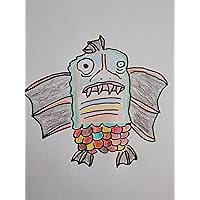
June 14, 2020
Confounding and enchanting in equal measures, FREDDY'S BOOK defies easy categorization. Yet its compelling story...or should that be stories?...and their elusive meanings intrigue me to this day.
A professor visiting a university spends the night at the home of one of the local academics. The academic reveals his son is a..."monster". Of a sort. The professor meets the son, a young man named Freddy, who is a shy, sensitive person, but of tremendous height. A giant, in effect. Before the professor leaves, Freddy slips him a secret manuscript...a tale of a knight in the middle ages, locked in a titanic struggle with the devil himself, and all the terrible powers of darkness...
I'm not the first reviewer to say he prefers the opening sequence in 'reality' compared to the subsequent fantasy setting. Nor am I the first that laments the fact that we never return to the realistic setting, and see how Freddy's story ends. Yet, on reflection, I think that misses the point. We know how Freddy's story ends. He's rejected by society, held in contempt by his own father. There's nowhere for him to go. Likely he will spend the rest of his days a recluse in his house.
His only means of escape is into fantasy, to create a world where he...or an ideal version of himself...may be free. His only escape is his book.
If this novel is about anything, then it is about the very act of imagination itself, and what desperate circumstances may inspire it. I think it has a few things to say about the kinds of authors that tend to come up with truly strange fantastical tales, and how a struggle for acceptance may be futile in life, but not so futile in fiction.
It's a strange, bittersweet novel, with lovely prose and some sensitively drawn characters. The fantastical setting, while perhaps not as resonant as the realistic one, is also evocatively described, and the knight's noble struggle with the devil is highly memorable. Yet it's perhaps natural that it's Freddy...poor, doomed, ugly, beautiful Freddy who makes the deepest and most powerful impression. I think this may be my favorite Gardner book.
A professor visiting a university spends the night at the home of one of the local academics. The academic reveals his son is a..."monster". Of a sort. The professor meets the son, a young man named Freddy, who is a shy, sensitive person, but of tremendous height. A giant, in effect. Before the professor leaves, Freddy slips him a secret manuscript...a tale of a knight in the middle ages, locked in a titanic struggle with the devil himself, and all the terrible powers of darkness...
I'm not the first reviewer to say he prefers the opening sequence in 'reality' compared to the subsequent fantasy setting. Nor am I the first that laments the fact that we never return to the realistic setting, and see how Freddy's story ends. Yet, on reflection, I think that misses the point. We know how Freddy's story ends. He's rejected by society, held in contempt by his own father. There's nowhere for him to go. Likely he will spend the rest of his days a recluse in his house.
His only means of escape is into fantasy, to create a world where he...or an ideal version of himself...may be free. His only escape is his book.
If this novel is about anything, then it is about the very act of imagination itself, and what desperate circumstances may inspire it. I think it has a few things to say about the kinds of authors that tend to come up with truly strange fantastical tales, and how a struggle for acceptance may be futile in life, but not so futile in fiction.
It's a strange, bittersweet novel, with lovely prose and some sensitively drawn characters. The fantastical setting, while perhaps not as resonant as the realistic one, is also evocatively described, and the knight's noble struggle with the devil is highly memorable. Yet it's perhaps natural that it's Freddy...poor, doomed, ugly, beautiful Freddy who makes the deepest and most powerful impression. I think this may be my favorite Gardner book.

January 2, 2011
I can't think of the last time I was so confounded and enchanted by a book, both at once. This is a book more about morality and the consequences (intentional or otherwise) of the choices we make than any other I can think of, but I'm not sure I can pin down exactly where John Gardner was going, philosophically. Some reviewers call it a nihilist book, and I'd certainly disagree with that -- while there are definitely passages in which Lars-Goren struggles with finding any meaning behind or any extrinsic justification of his actions (or anyone else's, for that matter), we without a doubt sympathize with him, and until the end he refuses to give up hope that there are right choices and wrong choices.
I'd argue, I guess, that it's a book about the struggle to remain moral in a world of shifting morality. Damn, it doesn't sound like much to drive a plot forward, but there you have it.
(Worth noting: it's a shorty but I had to put it down for a day or two. There are a few moments that are so bleak that I needed to take a little break.)
I'd argue, I guess, that it's a book about the struggle to remain moral in a world of shifting morality. Damn, it doesn't sound like much to drive a plot forward, but there you have it.
(Worth noting: it's a shorty but I had to put it down for a day or two. There are a few moments that are so bleak that I needed to take a little break.)

April 15, 2020
Gardner sets up this allegorical fable with an introductory scenario that works better than the allegory itself. It's always disappointing when the undercard performs better than the main event. From the start it appears that Gardner has an agenda, though it isn't clear what it is. Nor is it clear how the introduction relates to the allegory, though I suppose this mystery should qualify it for a book discussion group.
A scholar of 'psycho-history' (whatever that is) is snowed in and recieves a book written by a colleague's misfit "monster" of a son, viz., Freddy, and it is of course Freddy's book that is the allegorical end of this pantomine horse. Freddy's story is a medieval tale of power and corruption, politics and war, religion and the devil. It's St George and the Dragon retold, more or less. It doesn't seem like the work of an overgrown, alienated, agoraphobic shut-in. Perhaps it's Gardner's comment on academia? It is well written, of course, and entertaining, but ultimately baffling. Maybe I need the discussion group, or a biography of the author, to figure this one out.
A scholar of 'psycho-history' (whatever that is) is snowed in and recieves a book written by a colleague's misfit "monster" of a son, viz., Freddy, and it is of course Freddy's book that is the allegorical end of this pantomine horse. Freddy's story is a medieval tale of power and corruption, politics and war, religion and the devil. It's St George and the Dragon retold, more or less. It doesn't seem like the work of an overgrown, alienated, agoraphobic shut-in. Perhaps it's Gardner's comment on academia? It is well written, of course, and entertaining, but ultimately baffling. Maybe I need the discussion group, or a biography of the author, to figure this one out.

November 25, 2014
...don't use a framing device on one end of your book but not the other. Just write the deeply metaphorical, overly symbolic novella of 16th century Scandinavia without introducing it in the modern era. It's better for everyone--that way we can read your well constructed prose without wondering when we'll get back to the giant in the attic.
If you're into Scandinavia, Satan and Existential questions, feel free to peruse this novel. You'll enjoy the blatant author mouthpieces that he calls characters. Ugh.
If you're into Scandinavia, Satan and Existential questions, feel free to peruse this novel. You'll enjoy the blatant author mouthpieces that he calls characters. Ugh.
July 23, 2007
I've been meaning to read Gardner's Grendel for years now. In fact, I'm still meaning to. However, my fiance put this book in my hand and told me to read it, so read it I did. The book is astounding. Gardner's writing is beautiful and evocative. If you're a writer, you should pick up his book The Art of Fiction, or any of his books on writing, as they are pretty fantastic. Read his books on writing, then read him practicing what he preaches in his fiction. I can think of few more arresting passages than the unveiling of the statue in Freddy's Book.
John Gardner was a proponent of what he called "moral" writing, not so much writing that preaches values, but writing that examines humanity in a discerning yet humanistic way, wishing to discover the underlying mechanisms of true humanity, not the ironic winking or postulating that he believed populated much of modern fiction. This belief can be seen vividly in Freddy's Book, which is at its heart an examination of men finding their place within the machinery of society.
It's been a few months since I read this, and writing about it now only makes me want to go back and read it again. The book is a quick read, but the thoughts and emotions it brings up last a good long while. A worthwhile and wonderful book.
John Gardner was a proponent of what he called "moral" writing, not so much writing that preaches values, but writing that examines humanity in a discerning yet humanistic way, wishing to discover the underlying mechanisms of true humanity, not the ironic winking or postulating that he believed populated much of modern fiction. This belief can be seen vividly in Freddy's Book, which is at its heart an examination of men finding their place within the machinery of society.
It's been a few months since I read this, and writing about it now only makes me want to go back and read it again. The book is a quick read, but the thoughts and emotions it brings up last a good long while. A worthwhile and wonderful book.

September 25, 2011
It was an excellent read, one that i really enjoyed. I liked the fact that there was a story within the story, the only disappointment i had with the book was i felt that the ending just dropped off. Otherwise it was a very good read.

May 31, 2021
good start, good writing, but the story lost itself after its middle and i had to force myself to finish the whole thing

October 23, 2020
A finely written fable — something like a version of Grendel set in Renaissance-era Sweden but with much higher philosophical ambitions — but what does it really say? The ultimate message seems to be a bleak existentialism. There's also a well expressed description of the theory that words cannot grasp reality, or that we create what we think is reality through words. The elusiveness is attractive on one level but disappointing on another. The characters, all of them fully human, tend to redeem the disappointment.
I recall being thoroughly impressed by Gardner's work in the 1970s and '80s but have felt less so during rereads in recent years, despite his superior way with words. This book stands out as more satisfying now than some others like The Wreckage of Agathon and Nickel Mountain. Like other reviewers, I was puzzled by the failure to bookend the novel with a return to the introductory story that led to Freddy's story; on the other hand, that open-endedness adds to the sense of mystery as well as forcing readers to think things through on their own, if possible.
I recall being thoroughly impressed by Gardner's work in the 1970s and '80s but have felt less so during rereads in recent years, despite his superior way with words. This book stands out as more satisfying now than some others like The Wreckage of Agathon and Nickel Mountain. Like other reviewers, I was puzzled by the failure to bookend the novel with a return to the introductory story that led to Freddy's story; on the other hand, that open-endedness adds to the sense of mystery as well as forcing readers to think things through on their own, if possible.
February 22, 2015
Very, very skillfully written, but I was ultimately disappointed. I read Grendel back in college and now prefer it to Beowulf (which is saying something for me). I still very much appreciate Gardner plying his craft, and I thought the concept on which this book was based to be interesting. What disappointed me was that this wasn't one book, it was two. I had hoped for some kind of interchange between the two stories, but it never happened. Gardner does a great deal of exploration into the writer's craft towards the beginning of the book and then completely abandons it with an entirely separate narrative. The exploration of the original characters I had hoped for would have deepened and lent additional credence to his meditations on writing. Instead, he took a very easy way out with a much more straightforward method of execution. This isn't a masterpiece, it's an old master's sketchbook.
This entire review has been hidden because of spoilers.

January 19, 2021
This was a troublesome book. A travail in that it was a dense tale, beginning at a reception of writers, scholars and friends of tall tales--fairy tale fictions. The story blends fantastic perceptions of reality, history, and yes, grim tales, beginning when a old, crotchety professor blurts out to the lecturer, that his son is a monster. We, with the narrator, are compelled to go to the old man's house, a dark, gloomy, disheveled, rotting mansion, and meet Freddy, and enter his book.
Beneath the fantasy being told, the reader finds a thunderstorm of ideas, thoughts and questions about the nature of good and evil. A compelling book, with ideas and questions that will simmer in the oven of your brain for a very long time. Who knows what the baking will produce and it will ever be done?
Beneath the fantasy being told, the reader finds a thunderstorm of ideas, thoughts and questions about the nature of good and evil. A compelling book, with ideas and questions that will simmer in the oven of your brain for a very long time. Who knows what the baking will produce and it will ever be done?

May 6, 2017
Another strange book. It feels like it has a frame story, but the frame is only on one side of the frame, so it isn't truly a frame. The first story informs you in how to read the second. A book written by a monster is about how a monster is defeated. All of the characteristics that are embodied in the character of the first monster, are those intrinsic to the hero who defeats the second.
It is an allegory. The second story has no point without the first, or more accurately, the first story inverts the second and changes it's entire meaning.
It is an allegory. The second story has no point without the first, or more accurately, the first story inverts the second and changes it's entire meaning.

April 16, 2025
Sometimes I know why I am a reader and not a writer
Because sometimes it is hard to know what to say
I don’t know what to say about this book
And I fall into my habit of cajoling ill formed emotions, ideas, understanding,
and typing something.
Good? Great?
Definitely a different kind of book.
The first 60 pages a setup involving academics, like many, many, other writers who were also teachers. Then the bulk of the book is a medieval/reformation era heroic/fantasy tale.
Anyway, I found the intro captivating but he doesn’t come back to it so we never learn what happens to those earlier characters.
But the “Freddy’s Book” section is the adventure story from a much earlier age where the devil is whispering in everybody’s ear just to cause chaos. Hmmmm, I thought this was a bit of an escapist read, but it also fits, maybe, into our age of Trump, with people falling in love with bad ideas ,and chaos the most reliable result of those ideas. But enough of that.
This has such a distinctive feel, I could imagine if it rubbed you the wrong way you could dislike it. But for me it was wonderful. I am not sure “what it meant” or even if it made “sense”, although even in some of the quirky and maybe illogical plot points, somehow it still seems right.
The hero Lars is charged by the King to kill the devil, who helped to make him king (but now works against him) and they have this exchange…
[Lars say about the devil]..."Surely he is here," he said
Gustav’s look became sharper. “In me you mean? Speak plainly, old friend and kinsman!”
Around the steeple of the church, sparrows flew crazily, unwilling to rest. Lars-Goren pointed up at them. “in the birds – in you – in the cobblestones under our feet perhaps. Who knows where the devil ends and the rest begins?” Pg 194
So he is off to kill the devil, and the devil may be part of us…? Sure.
The cynical bishop is a foil for the good hearted Lars but I think he may also be a stand in for the author. Here him thinking about writing, and from some Googling I think this may tie into John Gardner’s opinions about writing moral fiction
The attempt to write had come to nothing, of course. It was not that fact that he brooded on now, but the odd fact that he had wanted to write at all, that somehow, below reason and contrary to it, the childish impulse to tell the truth was still alive in him, that indeed he still believed, in some back part of his brain, that there existed some truth to tell. Pg 170
There is a side story about the Laplanders and their wisdom born from extreme simplicity required to survive.
In the endless snowfall, one could not tell which of them were men, which of them were women, which of them reindeer. The Lapps called their reindeer “the people of six eyes.” It was reference to their queer alertness, their attunement with the wind and snow. Pg. 237
I just thought it was neat.
Because sometimes it is hard to know what to say
I don’t know what to say about this book
And I fall into my habit of cajoling ill formed emotions, ideas, understanding,
and typing something.
Good? Great?
Definitely a different kind of book.
The first 60 pages a setup involving academics, like many, many, other writers who were also teachers. Then the bulk of the book is a medieval/reformation era heroic/fantasy tale.
Anyway, I found the intro captivating but he doesn’t come back to it so we never learn what happens to those earlier characters.
But the “Freddy’s Book” section is the adventure story from a much earlier age where the devil is whispering in everybody’s ear just to cause chaos. Hmmmm, I thought this was a bit of an escapist read, but it also fits, maybe, into our age of Trump, with people falling in love with bad ideas ,and chaos the most reliable result of those ideas. But enough of that.
This has such a distinctive feel, I could imagine if it rubbed you the wrong way you could dislike it. But for me it was wonderful. I am not sure “what it meant” or even if it made “sense”, although even in some of the quirky and maybe illogical plot points, somehow it still seems right.
The hero Lars is charged by the King to kill the devil, who helped to make him king (but now works against him) and they have this exchange…
[Lars say about the devil]..."Surely he is here," he said
Gustav’s look became sharper. “In me you mean? Speak plainly, old friend and kinsman!”
Around the steeple of the church, sparrows flew crazily, unwilling to rest. Lars-Goren pointed up at them. “in the birds – in you – in the cobblestones under our feet perhaps. Who knows where the devil ends and the rest begins?” Pg 194
So he is off to kill the devil, and the devil may be part of us…? Sure.
The cynical bishop is a foil for the good hearted Lars but I think he may also be a stand in for the author. Here him thinking about writing, and from some Googling I think this may tie into John Gardner’s opinions about writing moral fiction
The attempt to write had come to nothing, of course. It was not that fact that he brooded on now, but the odd fact that he had wanted to write at all, that somehow, below reason and contrary to it, the childish impulse to tell the truth was still alive in him, that indeed he still believed, in some back part of his brain, that there existed some truth to tell. Pg 170
There is a side story about the Laplanders and their wisdom born from extreme simplicity required to survive.
In the endless snowfall, one could not tell which of them were men, which of them were women, which of them reindeer. The Lapps called their reindeer “the people of six eyes.” It was reference to their queer alertness, their attunement with the wind and snow. Pg. 237
I just thought it was neat.

August 11, 2017
I'm sure everyone has heard "Don't judge a book by its cover", but that's exactly what drew me to this book--the awesome artwork on the cover. Then, reading the jacket synopsis, it sounded intriguing enough to read. And it's a "novel within a novel" in the same way that "The Lion, the Witch and the Wardrobe" is, between the world outside the Wardrobe and Narnia, except in this case, I was much more intrigued with the world outside, than inside.
On the "outside", a professor of Scandinavian history is drawn to the home of a folklorist by the words "I have a son who's a monster"--and I was interested to learn more about this "monster" and his life, but instead, the vast majority of the book is actually a novel that the "monster" has written and sneaks to the professor in the middle of the night. A tale of 16th century Scandinavia--of lords, and bishops and knights and kings... and people with names like Gustav Vasa and Lars-Goren or Hans Brask. Of the troubles between the Church and the Lutherans. And with the Devil thrown into the mix, guiding, tempting and beguiling the characters all the way through.
It was an okay book, but, again, I wish there had been more about the "monster" but somehow it seems as if that was just an opening excuse for the rest of the book--even at the end of the book, (which should have been the end of the book written by the "monster") it doesn't return to the professor and how he felt about the book or anything of the sort. It simply ends in 16th Century Scandinavia, as if that is where it all began.
On the "outside", a professor of Scandinavian history is drawn to the home of a folklorist by the words "I have a son who's a monster"--and I was interested to learn more about this "monster" and his life, but instead, the vast majority of the book is actually a novel that the "monster" has written and sneaks to the professor in the middle of the night. A tale of 16th century Scandinavia--of lords, and bishops and knights and kings... and people with names like Gustav Vasa and Lars-Goren or Hans Brask. Of the troubles between the Church and the Lutherans. And with the Devil thrown into the mix, guiding, tempting and beguiling the characters all the way through.
It was an okay book, but, again, I wish there had been more about the "monster" but somehow it seems as if that was just an opening excuse for the rest of the book--even at the end of the book, (which should have been the end of the book written by the "monster") it doesn't return to the professor and how he felt about the book or anything of the sort. It simply ends in 16th Century Scandinavia, as if that is where it all began.

February 20, 2025
This, by an author I have heretofore respected highly, left me scratching my head. The book inside the book is not written as high fantasy, nor as a fairy tale or fable. It's an omniscient historical narrative about Gustav Vasa, a real person, with lots of tedious political information and no reason to care unless you ALREADY know the history of 16th C Sweden.
Once the history lesson is over, the characters meet to discuss Gardner's pet issues: morality, the meaning of our time on Earth, and so forth. Kirkus, when the book came out, called it "pretentious and didactic". I agree.
I turned to ChatGPT : Tell me what the fuck I just read, please.
Thank you, ChatGPT. You're much more generous than I. This was, in my opinion, a failed novel by a writer of middling talent whom I once revered, 50 years ago.
Once the history lesson is over, the characters meet to discuss Gardner's pet issues: morality, the meaning of our time on Earth, and so forth. Kirkus, when the book came out, called it "pretentious and didactic". I agree.
I turned to ChatGPT : Tell me what the fuck I just read, please.
"Freddy's Book" by John Gardner explores several key themes:
The Power of Storytelling: The novel emphasizes the importance and impact of storytelling. The frame story and the inner story both highlight how tales can shape perceptions and convey deeper truths.
The Nature of Evil: The presence of the Devil as a character in the inner story raises questions about the nature of evil and its role in human history and personal struggles.
The Artist's Struggle: Freddy's character represents the artist's struggle against societal norms and expectations. His "monstrousness" is a metaphor for the artist's unique and often misunderstood perspective.
Historical Fiction: The inner story, "King Gustav & the Devil," blends historical events with fantasy, exploring how history can be interpreted and reimagined through fiction.
Father-Son Relationships: The strained relationship between Freddy and his father reflects broader themes of familial conflict and the struggle for acceptance and understanding.
Thank you, ChatGPT. You're much more generous than I. This was, in my opinion, a failed novel by a writer of middling talent whom I once revered, 50 years ago.
April 1, 2014
I approached this novel with anticipation, having read Gardner’s October Light over 30 years ago, enjoying it very much. I also have an unread copy of Sunlight Dialogues on tap. About a year ago I re-read his Grendel, shortly after having read Sean Heaney’s vivid translation of Beowulf, and I found that thin novel better the second-time round than when I’d taken it in as a young man. I began Freddy’s Book, I knew that I was entering the novel via an anteroom, a first-person narrator’s fussy and mannered story about how came into possession of Freddy’s book. This first-person narrator is a minor league psycho-historian, making the rounds at mid-west colleges, presenting himself and his work to small academic crowds. After a lecture in Madison, before he is to set off for Chicago, Professor Jack Winesap receives an invitation to join Professor Sven Agaard at his home that day so that he might meet his “monster” of a son. This allusion to monstrosity has arisen out of the discussion of his lecture the previous evening, when Professor Agaard blurted out that he has a son who is a monster, then abruptly and uneasily left the gathering.
Professor Winesap accepts the invitation from the old professor (whose work he had studied and respected when he was a graduate student), and at the old man’s house, he notes that the boy is apparently kept locked in. Agaard explains that it is his son who has locked others out, that as a father he has done what he’s believed is best and left his very large, albeit obese and unhealthy, and very intelligent son to his own devices. Against inclinations, told that the boy Freddy has shown an interest in his psycho-historical studies, Winesap meets the shy, diffident Freddy. They say little. Later, Winesap delivers to the boy a copy of the lecture he was going to give in Chicago. Late that night, when the house is dark and silent, snowed in, Winesap hears and faintly sees Freddy come into his room and leave for him a copy of the book he’d been writing for the past two years. Thus ends the prelude, and the rest of the novel, with no further mention of Winesap, Agaard, or Freddy, is the story of King Gustav and the Devil.
This tale is set in 16th century Sweden, when its people are trying to free themselves from the league to which they belong (Norway, Sweden, Denmark), where the Denmark’s King Kristian is dominant. Swedish rebels have for more than 50 years tried to break free of this league. The principals in this story are Gustav (who will become king of an independent Sweden), his advisor and friend knight Lars-Goren, and Catholic Bishop Brask. Each are dealing with the devil incarnate, a demon who is able to change his appearance, and who comes to each of them (and others) sowing ambition and confusion, inevitably leading everyone into evil and violence. The Devil supposedly resides in the land of the Lapps, north of Sweden and Norway. Gustav and Lars-Goren meet the devil shortly after escaping and witnessing the execution and immolation of their rebel compatriots who’d fought for Swedish independence.
Lars-Goren is a stolid practical and sage man, prone to think things through slowly. There is the suggestion throughout the narrative that he will deal the devil some great blow. Gustav is more impatient, a man of action, whose chief virtue is having the wisdom to let the slower acting Lars-Goren review his intended actions. Bishop Brask at one time had been a devout Catholic and a connoisseur of literature and fine art, but by this time is a cynic, neither religious nor hopeful about mankind in general. He sees about him only the work of the devil: treachery and lust for power. Back and forth fighting, intrigue, double-crosses, and other chicanery transpire, but Gustav still holds control of Sweden and is making headway toward gaining independence for the country. He knows the devil is afoot and he sends Lars-Goren and Bishop Brask off to Uppsala to deal with the devil.
After a time in Lars-Goren’s home in Uppsala, where he is the leading authority, Bishop Brask comes to admire Lars-Goren and envy him his Edenic existence, but he feels that Lars-Goren’s view of good and evil is unduly influenced by his fortunate surroundings, that scale prevents him from fully appreciating how difficult it is to keep evil at bay as populations grow and more people become entangled. His argument, finally, is that evil resides in each man. Before much more can be made of this, news that Gustav, for some reason upset that the devil is not dead, has now sent troops to Uppsala to kill the two. They flee to the land of the Lapps, where the people live as one with the reindeer, holding life in a simple, magical balance. Brask dies while attempting to kill the devil, and Lars-Goren succeeds, though it is clear that evil still exists in the world.
The inconclusiveness of the symbolic and incarnate versions of the devil support the version of good and evil that Brask espouses. Gustav leaves Lars-Goren in peace, and the knight and advisor lives out his life in Uppsala with his family, apparently peacefully. How all this relates back to Freddy is still something of a mystery, as there is no apparent link between the evil in 16th century Sweden and in 20th century Madison, Wisconsin. That Freddy is bright and beleaguered by prejudice and mischief seems too far a stretch. That the story he writes is a fairy tale is perhaps a connection to the psycho-history Winesap practices, and it shows a reality underneath the facts. Still, that’s a lot of to do for so small a point. It was an entertaining read, though there was some slogging through the first part of Freddy’s book, when he lays the factual and historical groundwork. The preamble and the book both entertained, but as a whole, they did not cohere.
Professor Winesap accepts the invitation from the old professor (whose work he had studied and respected when he was a graduate student), and at the old man’s house, he notes that the boy is apparently kept locked in. Agaard explains that it is his son who has locked others out, that as a father he has done what he’s believed is best and left his very large, albeit obese and unhealthy, and very intelligent son to his own devices. Against inclinations, told that the boy Freddy has shown an interest in his psycho-historical studies, Winesap meets the shy, diffident Freddy. They say little. Later, Winesap delivers to the boy a copy of the lecture he was going to give in Chicago. Late that night, when the house is dark and silent, snowed in, Winesap hears and faintly sees Freddy come into his room and leave for him a copy of the book he’d been writing for the past two years. Thus ends the prelude, and the rest of the novel, with no further mention of Winesap, Agaard, or Freddy, is the story of King Gustav and the Devil.
This tale is set in 16th century Sweden, when its people are trying to free themselves from the league to which they belong (Norway, Sweden, Denmark), where the Denmark’s King Kristian is dominant. Swedish rebels have for more than 50 years tried to break free of this league. The principals in this story are Gustav (who will become king of an independent Sweden), his advisor and friend knight Lars-Goren, and Catholic Bishop Brask. Each are dealing with the devil incarnate, a demon who is able to change his appearance, and who comes to each of them (and others) sowing ambition and confusion, inevitably leading everyone into evil and violence. The Devil supposedly resides in the land of the Lapps, north of Sweden and Norway. Gustav and Lars-Goren meet the devil shortly after escaping and witnessing the execution and immolation of their rebel compatriots who’d fought for Swedish independence.
Lars-Goren is a stolid practical and sage man, prone to think things through slowly. There is the suggestion throughout the narrative that he will deal the devil some great blow. Gustav is more impatient, a man of action, whose chief virtue is having the wisdom to let the slower acting Lars-Goren review his intended actions. Bishop Brask at one time had been a devout Catholic and a connoisseur of literature and fine art, but by this time is a cynic, neither religious nor hopeful about mankind in general. He sees about him only the work of the devil: treachery and lust for power. Back and forth fighting, intrigue, double-crosses, and other chicanery transpire, but Gustav still holds control of Sweden and is making headway toward gaining independence for the country. He knows the devil is afoot and he sends Lars-Goren and Bishop Brask off to Uppsala to deal with the devil.
After a time in Lars-Goren’s home in Uppsala, where he is the leading authority, Bishop Brask comes to admire Lars-Goren and envy him his Edenic existence, but he feels that Lars-Goren’s view of good and evil is unduly influenced by his fortunate surroundings, that scale prevents him from fully appreciating how difficult it is to keep evil at bay as populations grow and more people become entangled. His argument, finally, is that evil resides in each man. Before much more can be made of this, news that Gustav, for some reason upset that the devil is not dead, has now sent troops to Uppsala to kill the two. They flee to the land of the Lapps, where the people live as one with the reindeer, holding life in a simple, magical balance. Brask dies while attempting to kill the devil, and Lars-Goren succeeds, though it is clear that evil still exists in the world.
The inconclusiveness of the symbolic and incarnate versions of the devil support the version of good and evil that Brask espouses. Gustav leaves Lars-Goren in peace, and the knight and advisor lives out his life in Uppsala with his family, apparently peacefully. How all this relates back to Freddy is still something of a mystery, as there is no apparent link between the evil in 16th century Sweden and in 20th century Madison, Wisconsin. That Freddy is bright and beleaguered by prejudice and mischief seems too far a stretch. That the story he writes is a fairy tale is perhaps a connection to the psycho-history Winesap practices, and it shows a reality underneath the facts. Still, that’s a lot of to do for so small a point. It was an entertaining read, though there was some slogging through the first part of Freddy’s book, when he lays the factual and historical groundwork. The preamble and the book both entertained, but as a whole, they did not cohere.

Did Not Finish
August 19, 2022The first quarter of this book was great, it was about a pompous history professor going to the house of a deranged history professor who claims to have a son who is monster. He meets the son, who is not a monster, but just has some sort of "glandular problem", but he's writing a book. This is all just a frame story for Freddy's book, which the professor reads. Except it's not really a frame story, because it never returns to the professor's viewpoint. Freddy's book is all there is for the rest of the pages, and I was not into it at all... it was about a Swedish knight trying to kill the devil or something, but like old Arthurian tales, it gives very little reason to care about the characters or what's going on.
Abandoned for now, and probably forever.
Abandoned for now, and probably forever.

November 8, 2017
A very different story. Loved the tale within the tale and the illustrations (my original attraction to the book) were fantastic. One is not supposed to judge a book by it's cover but in this case I would give 3 stars just for the art.
I did not get why the author chose to use the initial device of introducing the inner story and I felt like there was no resolution to why and who the monster-boy was introduced. I clearly missed the resolution/conclusion of the Swedish Knight's tale with what it had to do with the original story.
I did not get why the author chose to use the initial device of introducing the inner story and I felt like there was no resolution to why and who the monster-boy was introduced. I clearly missed the resolution/conclusion of the Swedish Knight's tale with what it had to do with the original story.

July 19, 2023
Conceptually delectable. The element most complained about (at least by users of this particular site) is my absolute favorite decision of the whole novel. Gardner, maybe as self-serious as he is definitely fixated on the ponderously tortured, weaves a little riddle without a practical answer. Of course, all of Lars-Goren and Brask's batted back-and-forth discussions about the nature of good and evil are similarly inconclusive. Gardner can be unbelievably expressive when he wants to be. Usually he opts for tricky suggestion instead. Oh, before I forget -- speaking of inconclusiveness:

January 4, 2025
This is definitely a unique story in terms of structure and tone. I found myself wanting more of the first story in the book and maybe a little bit less of the second. However, the book does have good writing and interesting ideas.

June 20, 2022
Um. Where did Freddy go? Why introduce us to a fascinating character and not catch up with him at the end? Very weird
January 13, 2025
Compelling and imaginative fantasy.
February 16, 2026
2.5. I lOVED Grendel and I like the theme of monstrous bodies but eh
January 9, 2020
Memorable.

October 20, 2008
I can't remember where this book came from, I either purchased it from a second hand bookstore or from a garage sale. The main reason I had purchased it was because the author's name "John Gardner" was an author I had recently begun reading after Ian Fleming's family hired him to continue the James Bond saga. I am pretty sure now that these authors are two different people. Nevertheless, the book has been in my possession for a number of years (10 or more) and I have attempted to read it a number of times. It is unusual for me to start and book and not finish it. But, I have started this book at least FIVE times, if not more, each time getting a little farther than before. This time, I am hoping to actually finish it.
In it's day (released in 1980), it was a national bestseller. It's 214 paperback pages make it a rather quick read. It took me longer because I am also in the process of reading 6 other books. Freddy's Book is a fascinating story within a story. The 2nd story is longer than the first, and the first story is never revisited or brought to a conclusion, but in reading the second story, you get the feeling that that there's a parallel. There is a lot of theology woven into the content of the 2nd story, and insightful discussion about whether good could exist without the presence of evil or whether there is such a thing as "good" to begin with.
This book will be released into the wild this afternoon. You can find out more by searching for it at www.bookcrossing.com.
In it's day (released in 1980), it was a national bestseller. It's 214 paperback pages make it a rather quick read. It took me longer because I am also in the process of reading 6 other books. Freddy's Book is a fascinating story within a story. The 2nd story is longer than the first, and the first story is never revisited or brought to a conclusion, but in reading the second story, you get the feeling that that there's a parallel. There is a lot of theology woven into the content of the 2nd story, and insightful discussion about whether good could exist without the presence of evil or whether there is such a thing as "good" to begin with.
This book will be released into the wild this afternoon. You can find out more by searching for it at www.bookcrossing.com.

July 25, 2011
This book has left me puzzled but inspired, sure of less but feeling wiser.
Unlike with other metafictional novels I've read, I didn't feel like I have a strong read on the thematic connections between the two sections. I feel this is, in part, because we never return to the introductory story, so while I was able to feel for ways in which the fantasy novel was commenting on the academic episode, I never got to see it framed with the real world returning to comment on the novel within it. I'm not sure if this is the reason I felt the first section was weaker, but I wasn't that moved, emotionally or intellectually, by it.
The novel within the novel, though, really gripped me. At first, I was thought Gardner would make his shut in write a standard fantasy novel, but "King Gustav and The Devil" isn't a bloated epic ala Tolkien or Game of Thrones; it is a precisely written philosophical adventure novella. Which isn't to say there is any precise philosophy in the end; Gardner's plot, dialogue, and descriptions are marvelously tight, but the questions the novel asks don't get answered as much as they open up into a mystery. A newly palpable mystery, though.
Only more so when as I go back and try to make sense of how this confusion relates to the introductory story. I'm having trouble even describing what the book is about. The ways in which we relate to and control each other? The relationship between gregarious strength and lonesome despair? Psycho-history? I'll probably be pondering this one for a while.
Unlike with other metafictional novels I've read, I didn't feel like I have a strong read on the thematic connections between the two sections. I feel this is, in part, because we never return to the introductory story, so while I was able to feel for ways in which the fantasy novel was commenting on the academic episode, I never got to see it framed with the real world returning to comment on the novel within it. I'm not sure if this is the reason I felt the first section was weaker, but I wasn't that moved, emotionally or intellectually, by it.
The novel within the novel, though, really gripped me. At first, I was thought Gardner would make his shut in write a standard fantasy novel, but "King Gustav and The Devil" isn't a bloated epic ala Tolkien or Game of Thrones; it is a precisely written philosophical adventure novella. Which isn't to say there is any precise philosophy in the end; Gardner's plot, dialogue, and descriptions are marvelously tight, but the questions the novel asks don't get answered as much as they open up into a mystery. A newly palpable mystery, though.
Only more so when as I go back and try to make sense of how this confusion relates to the introductory story. I'm having trouble even describing what the book is about. The ways in which we relate to and control each other? The relationship between gregarious strength and lonesome despair? Psycho-history? I'll probably be pondering this one for a while.

February 12, 2017
Clever, multi-layered narrative, magical use of langugage.

October 26, 2025
2nd read. Many moments of brilliance. Many moments of profundity. But still frustration due to lack of a coda. For the first 60 pages, Professor Winesap enters the gothic homestead of Sven Agaard and obtains a manuscript novel written by Agaard’s son, Freddy. After which, we leave the present time and spend the next 200 pages in medieval Sweden. This Sweden, like the Oz into which (in the 1939 MGM motion picture) Dorothy disembarks—with image echos of her Depression-era Kansas farm, connects to and is informed by Freddy’s present world and condition. I mean, I’m sure it’s meant to connect, but I’m not strongly confident I know how exactly. I feel today as I felt when I first read the book 40 years ago that there ought to be a coda, where we would get Winesap’s reaction, and reflection. Winesap’s shtick is psycho-history—presumably he’s based on Erik Erickson—so he is uniquely poised to draw the connections between Freddy’s book and Freddy’s life situation. Frustratingly for me, Gardner leaves this act undocumented.
This entire review has been hidden because of spoilers.

August 15, 2013
I have read and enjoyed several of Mr. Gardner's books, but this one was...different. A visiting professor meets a local professor at a cocktail party, who invites him to his home to meet his "monster" son, the titular Freddy. This happens, and the painfully shy son visits the visitor's bedroom later to leave a manuscript of the book he has written. End of framing story. The remaining 2/3 of the book is this manuscript, telling the story of a 16th C. Swedish king and his closest advisor.
The book, which I'm sure reaches high literary standards, reads more like a writing assignment than a novel. I got no sense of atmosphere from it, or that any character or indeed the author himself was emotionally involved in the story. The best word I could use to describe it is bland.
Maybe it's me.
The book, which I'm sure reaches high literary standards, reads more like a writing assignment than a novel. I got no sense of atmosphere from it, or that any character or indeed the author himself was emotionally involved in the story. The best word I could use to describe it is bland.
Maybe it's me.
Displaying 1 - 30 of 54 reviews