Jump to ratings and reviews
Rate this book

Congo Inc. : Le testament de Bismarck

Rate this book
Troppo alto per i pigmei ma troppo basso per tutti gli altri, il giovane Isookanga non si rassegna a vivere nel suo villaggio sperduto nella foresta equatoriale e a piegarsi alle tradizioni come vorrebbe il vecchio zio Lomama. Affascinato da internet e dalle infinite opportunità offerte dalla globalizzazione, decide di tentare la fortuna a Kinshasa, dove si unisce agli shégué – i ragazzi di strada – e diventa socio di un cinese che commercia in sacchetti di acqua potabile. Anche le sue quotazioni in campo sentimentale sono in crescita ma Isookanga non vuole distrazioni: è «un mondialista che aspira a diventare un globalizzatore» e niente gli impedirà di raggiungere il successo. Intanto, nella giungla urbana della capitale congolese, gli uomini continuano a dare prova di meschinità e cinismo, mentre nei posti di comando si fa a gara per accaparrarsi le ricchezze naturali del paese. Tutti – sventurati e prepotenti, personaggi loschi e anime pure – vanno a comporre nella loro coralità questa farsa esilarante e amara, una dirompente commedia umana che è stata definita il «Satyricongolese». Con una scrittura incalzante e spietatamente lucida, ma senza rinunciare mai alla leggerezza, Bofane racconta meglio di tutti i reportage e le inchieste la crudele realtà del Congo contemporaneo e il lascito materialista e destabilizzante del colonialismo europeo.

304 pages, Paperback

First published April 1, 2014

51 people are currently reading
1195 people want to read

About the author

In Koli Jean Bofane

5 books38 followers
In Koli Jean Bofane is a Congolese writer. Bofane was born in Équateur province in 1954; his mother left his father for a Belgian settler and he grew up mainly on his stepfather's coffee plantation.After independence in 1960, they lost everything and had to leave the country for their safety, travelling to Belgium from where Bofane made constant return trips to the Congo as he grew up. He established himself in Kinshasa where he worked in advertising and founded a publishing company, Les Publications de l'Exocet.

He finally left the country permanently in 1993, settling in Brussels. His first book, a children's story published in 1996, won a major Belgian literary prize and he went to win acclaim with his first novel, Mathematiques Congolaises in 2008.

Ratings & Reviews

What do you think?
Rate this book

Friends & Following

Create a free account to discover what your friends think of this book!

Community Reviews

5 stars
100 (21%)
4 stars
181 (39%)
3 stars
128 (28%)
2 stars
41 (8%)
1 star
6 (1%)
Displaying 1 - 30 of 65 reviews
Profile Image for Orsodimondo.
2,458 reviews2,433 followers
June 8, 2025
COMMEDIA UMANA


Il Congo è il secondo paese più grande dell’Africa (dopo l'Algeria), ha una superficie di 2.400.000 chilometri quadrati, e per due terzi è ricoperto da foreste così.

In Congo ci sono troppi interessi. Tutti vogliono riempirsi le tasche. I ribelli servono a questo, tutti i rapporti lo confermano. Anche i nostri caschi blu si comportano come chiunque altro, è semplice.

Le foreste hanno creato il primo problema del Congo quando re Leopoldo II del Belgio decise che il caucciù era necessario all’economia occidentale: per procurarselo dimezzò la popolazione locale, da venti a dieci milioni. Gli altri dieci morirono grazie alla cura belga.
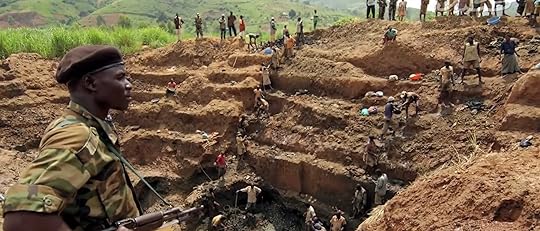
Ma per quanto utili per caucciù e legname, le foreste possono però diventare un ostacolo se quello che preme ottenere sta sotto terra, sotto gli alberi, le radici, sotto quell’immenso manto verde, al di sotto della giungla.


Con le miniere congolesi sono in tanti ad arricchirsi, ma non quelli che ci lavorano dentro.

Per questo Kiro Bizimungu, meglio noto come Kobra Zulu gran signore della guerra nel Kivu, che è stato trasformato da comandante di milizia a direttore dell’agenzia per mantenimento del grosso parco naturale, sogna di deforestizzare il Congo col napalm e mettere le mani su…

Oro, diamanti e petrolio, rame, stagno, cobalto, uranio (di Shinkolobwe, che vetrificò Hiroshima e Nagasaki), coltan… Il Congo è il più ricco paese al mondo di materie prime.
E proprio questa è probabilmente la sua iattura e condanna.
Prendiamo il coltan: cellulari, computer, tablet, playstation et similia. Lo si trova solo qui e in Australia, pare.


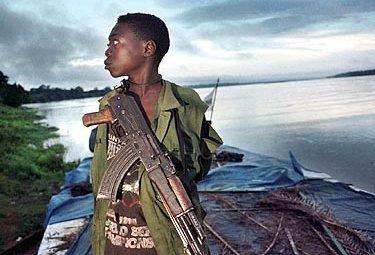
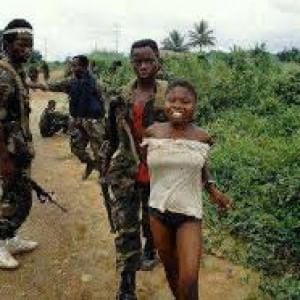
Bambino soldato del Kivu.

La corruzione africana, quell’aspetto che abbiamo finito per considerare endemico al continente nero:
Erano tutti coinvolti in qualche attività più o meno confessabile: piccoli accomodamenti tra amici o, peggio, tra nemici. Per farla breve, in quel paese tutti tenevano sotto controllo tutti.

Il neoliberismo, la globalizzazione: uno dei personaggi principali è un giovane cinese, Zhang Xia, nostalgico del Grande Timoniere, finito in un meccanismo più grande di lui, che vende buste di acqua fresca al Grand Marché, e rappresenta la potenza cinese nel continente africano, la maggiore forza economica straniera presente nel territorio (ormai da decenni): in fondo che cosa potranno mai fare i cinesi che gli occidentali non hanno già fatto?


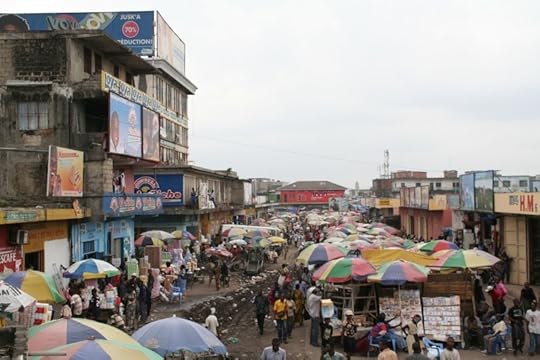
Il mercato di Kinshasa dove vivono gli shégué, i bambini di strada: nella capitale se ne contano almeno 25mila.

Il protagonista è un pigmeo di venticinque anni.
Già aver scelto un personaggio principale così basso è spiazzante: ma non basta, Isookanga è basso, ma meno della media pigmea in quanto le loro donne sono dedite alla poliandria e quindi è figlio di padre ignoto, ma palesemente più alto di un pigmeo.
Inoltre, dato che la madre, oltre che andare con più padri, si è dimenticata di farlo circoncidere, lui è ancora vergine, le donne non lo vogliono impaurite dalle malattie che potrebbe trasmettere.
Isookanga vuole “mondializzarsi”, cioè vivere la globalizzazione: studia e impara il neoliberismo attraverso un videogioco che gli insegna come funziona il mercato azionario, l’economia globale, le lobby, le multinazionali, l’ONU…


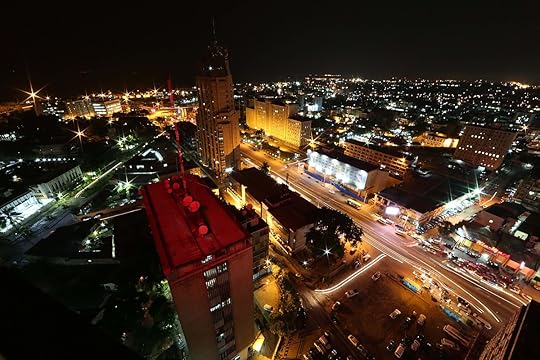
Kinshasa by night.

La guerra nel Kivu che in venticinque anni ha prodotto cinque o sei milioni di morti, e almeno cinquecentomila donne stuprate e mutilate.
Il signore della guerra già citato è di etnia tutsi: e qui (e altrove) Bofane non risparmia nessuno, punta esplicitamente il dito sul Rwanda e il suo presidente Kagame responsabili in buona parte della situazione in Kivu e della spoliazione di minerali del suo paese (il Rwanda esporta materie prime per importi ben superiori a quelli che le reali disponibilità del suo sottosuolo possono giustificare, ed esporta materie prime che non possiede, tutta ricchezza depredata al Congo – e così fa l’Uganda. Entrambi con protezione statunitense).


Navigando sul fiume Congo, Isookanga lascia il villaggio e raggiunge la capitale. Percorre il fiume all’inverso a fine romanzo. Lo stesso fa suo zio.

Le donne.
Questo libro è dedicato alle ragazze, , alle bambine, alle donne del Congo, vittime di violenza stupro mutilazione.
Ci vengono regalati due memorabili personaggi femminili, entrambi provenienti dal Kivu. Una è Shasha, soprannominata la Iattanza, che dopo aver visto morire il padre, con la testa spaccata in due dal machete, e la mamma, con un palo infilato nella vagina, scappa a piedi verso ovest insieme ai due fratellini, cammina e cammina in direzione della capitale, uno dei due fratellini si ammala e Shasha è costretta ad abbandonarlo perché nella sua marcia non può sobbarcarsi il peso di entrambi: ma quando più avanti il fratello più piccolo muore, lei torna indietro a recuperare l’altro. e lo porta in salvo a Kin’, come in gergo viene chiamata Kinshasa: diventano bambini di strada, vivono e dormono nel mercato, lei quattordicenne si prostituisce per mantenere la “famiglia”, e il suo cliente più assiduo è un ufficiale lituano delle forze di pace dell’ONU, un berretto blu, più che casco blu.
L’altra è Adeito che Kobra Zulu ha risparmiato da morte violenta per portarsela dietro come amante. Alla fine lei riuscirà a ricompensarlo con un braccialetto africano.


Questo romanzo è dedicato alle ragazze, alle bambine, alle donne del Congo. Vittime di raccapricciante violenza.

Ci sono ancora personaggi che non è facile dimenticare.
Un ex campione locale di wrestling che si trasforma in pastore della Chiesa della Moltiplicazione, fede che fa riferimento a dio ma è stata creata dallo stesso reverendo: e per Moltiplicazione intende in senso letterale la moltiplicazione delle sue finanze ottenuta tramite un sistema che farebbe invidia a Maddock.
L’antropologa umanitaria belga che spara un luogo comune dietro l’altro.
Il vecchio zio di Isookanga, capo del villaggio, che dalla morte del Grande Leopardo capisce il futuro della foresta: bisogna salvarla.
La moglie del cinese, il poliziotto cinese, Chiara Argento, nata sullo Jonio, che lavora all’ONU e vuole scoprire cosa è successo nel Kivu quel determinato giorno, perché sei caschi blu uruguayani sono stati uccisi.


Isookanga vive in un villaggio così, di cui suo zio è il capo, e un giorno il giovane ne prenderà il posto.

Ma la ricchezza di situazioni e personaggi non è l’unica forza di questo libro.
Il tono che Bofane adotta per la maggior parte del tempo è pregno di quel cinismo scanzonato e irriverente che ho imparato ad amare leggendo Kourouma e Ndione: ma all’improvviso, quando meno te lo aspetti, scarta, dall’umorismo si passa alla descrizione glaciale di violenza e dramma che non risparmia nulla.
Gran bella scoperta questo Congo Inc. Anche se, abbasso il testamento di Bismarck.


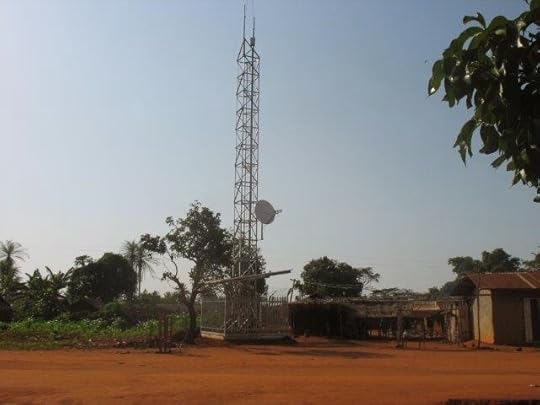
Tutto comincia da qui: nel villaggio di Isookanga arriva un elicottero russo che trasporta un’antenna cinese, Isooganka ruba il portatile dell’antropologa belga, persa in un altro dei suoi luoghi comuni sull’Africa, e può finalmente giocare a Raging Trade.
Profile Image for Warwick.
Author 1 book15.4k followers
August 21, 2016
One of those excellent, world-expanding novels that you know not enough people will read…once again I find myself struggling not to introduce a book about the Congo by means of a lengthy prelude on conflict minerals and geopolitics, the same way these books are always introduced in the LRB or the Literary Review. And you do feel the need to justify it, it's weird, I could see when I started talking to friends about this book that they'd mentally dismiss it as concerning some obscure African country which has nothing to do with them. In fact the Congo is much, much more important to your life than – I don't know – Italy, or Canada. Unless you're Italian or Canadian, I suppose. Maybe even then!

Although in one sense the country has had a disproportionately large place in literary history – from Conrad to Kingsolver, via André Gide and VS Naipaul – nevertheless actual Congolese people are often a distant presence in these works, and the country can easily find itself reduced to a general backdrop of ‘incomprehensible African chaos’. Unlike Chinua Achebe, I don't think there's anything wrong with that in itself – but it is definitely nice to see that there are now some (generally expatriate) Congolese authors being published globally who have their own, less alienated take on the situation there.

If you're a writer, it seems there's two ways you can go when you're trying to explain the Congo to people. Either you do what Fiston Mwanza Mujila did in Tram 83, and examine an EXTREME CLOSE-UP of a few individuals in one microcosmic bar – or, you do what In Koli Jean Bofane does in this book, which is to see the country as a vast panorama of different people and places participating in a truly global web of interrelations.

So the characters here include an Ekonda pygmy, a Lithuanian UN commander, an Italian diplomat in New York, a child prostitute, a Tutsi warlord, a Belgian ethnologist, a revivalist pastor and the Chongqing Chief of Police. It's an exhilarating cast list; it's also hugely ambitious and it takes, I think, a pretty confident author even to attempt this kind of top-level view of things.

The book's opening is characteristic of the way the novel plays with readers' preconceptions and stereotypes. We first meet the book's main protagonist, the young pygmy Isookanga, in what we take to be his natural habitat, catching caterpillars in the equatorial jungle. Within a few pages, though, Bofane whips the rug out from under us by having Isookanga run back home to swap his bark loincloth for a pair of Superdry jeans and a Snoop Dogg T-shirt, and boot up his laptop. This is just the first of a whole series of bait-and-switch scenes where you're never sure whether Bofane is going to show you the DRC as a kind of playground of atavistic lawlessness, or alternatively as the willing cornerstone of twenty-first-century globalisation.

Isookanga heads for the big city to follow his dream of becoming a globalist, and ends up living on the streets among Kinshasa's vast population of shégués, or street-children, who accept him because of his diminutive size. In his downtime he plays an online MMORPG called Raging Trade, in which players take the role of various military-industrial multinationals and compete for the control of the mineral resources of a fictional country, to which end they use any means at their disposal, including ‘heavy bombardments, ethnic cleansing, population movements, slavery…’.

The irony is not especially subtle, but it's powerful. Bofane's black humour and his flair for juxtaposition provide many similar examples – as for instance the extraordinary moment when a former child soldier finds a water-pistol at a market. The teenager turns the coloured toy around in the sunlight, examining the barrel, the trigger, and finally squirting himself in the face as his heart ‘swelled with an emotion that he was not able to identify’. Bofane tells us little else, but what he lets you infer – about the boy's past experience with guns, but also about his lack of experience with toys – made it one of the most beautiful scenes I've read in months.

At other times his writing is less reflective and more raw, even frenetic. This is not the case when he writes about the violence in the east of the country, where the narrative voice becomes very controlled (though the sexual violence is described in extremely challenging detail) – but, rather, it's in the moments of interpersonal negotiations and emotional upset that he becomes more experimental. One character, a visiting anthropologist, finds herself developing feelings for Isookanga – a physical attraction which for her as a Belgian is tinged with ‘un délicieux sentiment de culpabilité’. When the two of them finally have sex, Bofane's prose suddenly veers away from naturalistic description into something altogether more heated:


Braced over her thighs, he was unaware that every thrust he made was, for her, like the lash that his ancestors had suffered during slavery; that every assault between her open legs was as pitiless as the axes that had chopped people's hands off, as the whip inflicted by Leopold II and his descendants; that every penetration of his member caused a frenzy worthy of a pro-independence riot; that every ‘Unggh!’ from his mouth recalled those made by the Belgian Gérard Soete as Patrice Lumumba's body was sawn into pieces; that every shudder of his sensitised abdomen reverberated like the salvos fired off by a wild neocolonialism, like the diktats of the International Monetary Fund, like UN resolutions, like a new edition of Tintin in the Congo, like the Dakar speech of an ill-informed French president, like the propagation of racist comments in the Twittersphere.


Wow! What a passage. Bofane was raised by his Belgian stepfather and grew up on his coffee plantation, a fact which, he says, has given him a unique viewpoint on racial and postcolonial issues in the Congo. There is certainly a lot of that to get stuck into in this book, but it's also just a really great, ambitious attempt by a writer to put his country in its proper global context with scenes of violence and humour and transcendence that you're unlikely to see anywhere else. An English translation is apparently forthcoming from Indiana University Press, and I heartily recommend it to any Canadians, Italians, and other curious globalists.

Profile Image for Veronika Sebechlebská.
381 reviews139 followers
February 11, 2021
Bolo prvého, keď som sa rozhodla, že sa v rámci výzvy suchý február vzdám svojej najväčšej drogy a až do marca si nekúpim žiadnu novú knižku, takže, keď som sa ani nie tri dni nato prichytila, ako pod rúškom noci sliedim na Martinuse a odklikávam položku za položkou, uvedomila som si, že mám problém, a že to sama asi nezvládnem a v tejto ťažkej chvíli som si spomenula na Reda Formana z Tých rokov sedemdesiatych, ktorý, keď v jednej časti načapal syna s cigaretou v ruke, donútil ho vyfajčiť rovno celú krabičku a pri tejto spomienke som dostala vnuknutie a uložila som si i ja sama sebe trest, spočívajúci v tom, že dorazím do konca každú jednu knihu, čo som si kedy kúpila, a to aj keby ma malo roztrhnúť a prisahám, že ak ma dočítanie Conga s.r.o až do posledného horkého písmena nezbaví nutkavej potreby kupovať si ďalšie knihy, tak už asi nič, lebo napačmaná anotáciou, brúsila som si zuby na Rivers of Babylon po konžsky, lenže namiesto nálože čierneho humoru, sa mi dostalo len trochy prvoplánového sarkazmu, veľa smútku a ešte viac klišé a asi to na mne aj zanechalo nejaké následky, lebo všimnite si, že v tomto podobenstve vystupujem ako otec, syn i duch svätý a to som ani nič nefajčila!
Profile Image for Thomas Coombes.
8 reviews5 followers
August 28, 2014
This is one of the best books I have ever read. Mainly because it delivers such strong messages through tongue-in-cheek narrative and storyline.

This is a book about globalisation and the lasting legacy of colonialism.

The book employs a plethora of different characters to give life to various aspects of modern-day Congo that can become banal through the prism of NGO reports. Best of all is the application of euphemistic language of the market to daily life. The mineral wealth of Congo that drives conflict is not just in the ground, it pervades the book through language, through food and through the protagonists lives.
Profile Image for Patryx.
459 reviews151 followers
September 30, 2021
Avete mai pensato che quello che si fa in maniera brutale in certi videogiochi viene giornalmente fatto in Africa?
Io no e non solo perché non sono una gamer (anzi mi scuso con tutti gli appassionati del settore se ho usato il termine "videogioco", probabilmente desueto).
In questo romanzo, con feroce ironia e utilizzando anche la metafora del gioco virtuale, viene raccontato come la zona del Kivu (a cavallo tra RDC e Ruanda) viene depredata delle sue terre rare, missione in cui gli abitanti locali sono solo un impiccio di cui sbarazzarsi perseguendo massacri (che ci vengono raccontati con dovizia di particolari).
Altro annoso problema sono tutti quegli alberi che ricoprono la zona: se non ci fossero, l'estrazione dei metalli rari sarebbe più semplice e darebbe meno nell'occhio.
L'autore non risparmia nessuno: siamo tutti colpevoli, anche se ovviamente le responsabilità di ciascuno sono molto diverse.
Un elemento consolante tra tanta indifferenza e sofferenza: tra i buoni, c'è una italiana (pugliese per la precisione).
Profile Image for Charlotte L..
338 reviews144 followers
September 8, 2016
Ce livre est un mélange détonnant de rires et d'horreurs, d'espoir et de désespoir. Le genre de lecture qui laisse vraiment une trace ...
Profile Image for Andy Weston.
3,199 reviews226 followers
February 28, 2020
This was the first book I’ve read from a series from the Indiana University Press called Global African Voices.
26 year old Isookanga, from the Ekonda clan, who are unkindly and demeaningly referred to as ‘Pygmies’, leaves his family deep in the forest of the Congo to explore the world of commerce and technology in Kinshasa. Initially he struggles to make any money or friends, and settles amongst a group of street children; due to his small stature he is mistaken as a child. Though Isookanga, his enterprise of selling bottled water, and other themes of globalisation exploiting the Congolese, provide the backbone to the novel, the real interest is in the street children, or shégués who have experienced military raids on their rural villages, domestic abuse, and prostitution. After one of them is killed on the streets, the awful character of the entirely unreformed warlord Kiro Bizimungu is introduced. He is of Rwandan Tutsi origin, one who fled the genocide towards the Democratic Republic of Congo (a few were left alive to tell the story of the horrors) and then began to hunt down Hutus who fled from post-genocide Tutsi-dominated Rwanda into the Congo which in turn led to genocide-style activities similar to which they had been subjected themselves. In scenes that flashback to those times Bofane’s writing is some of the most horrific and powerful that I have ever read. Unsurprisingly, the main storyline of the novel becomes of much less interest than that of the fate of Bizimungu.
This is a very impressive work on the heart of contemporary Africa; vivid in its description, in some places disturbingly so, and giving a fascinating insight into life in Kinshasa, aswell as the country's recent history, and what the population has had to deal with.
Profile Image for Beverly.
1,710 reviews406 followers
February 4, 2022
Brilliant, Profoundly Moving, Witty

At the beginning of this storyline we meet the main character twenty-six year old Isookanga from the Ekonda clan living in the vast resource-rich forest area in training under his uncle, the Chief, to be the heir and protector of the land. He is a Pygmy, who is ten centimeters (4 inches) taller than all Ekondas, as his father was not a Pygmy, and spends his time as one of the top player in online game, Raging Trade, where players compete to ruthlessly exploit natural resources.

As Isookanga clashes with the Chief on the future direction of the forested land, he leaves his village for Kinshasa to make his fortune as a “globalist.”

Here in the cast of characters quickly expands to highlight not only the present conditions of the citizens and foreigners harmed/displaced/exploited under the guise of globalization but how the legacy of colonialism has influenced the current direction of the Democratic Republic of the Congo (DRC).

Bofane conjures of the lives involved with wit and heart-breaking vividness.

The translation is fluent and the translator has kept the Congolese sayings where it makes sense with the translation as a footnote on the page. This did not disrupt my reading pleasure as the literal translation would often not seem to be in flow with the characters voices.

The Forward provides the necessary background information to help center the reader in keeping in the present and helped refresh my memory of the history of DRC.

While at times it was a disquieting read, it is the balance by the humor and resilience of the characters that makes this a very worthwhile book.

TW: There are graphic scenes of sexual violence.
Profile Image for Wim.
329 reviews44 followers
June 5, 2022
Congo Inc est un roman intrigant sur la tragédie de la RDC, écrit de façon très originale, une critique sociopolitique rassemblant toute une série d'aspects alimentant l'impunité et la violence cruelle dans lesquelles les gens de la RDC tentent de survivre.

Le livre est plein d'humour, mais aussi de scènes très violentes et cruelles, décrites comme s'il s'agissait de banalités: cette overdose de cruauté m'a freiné un peu dans ma lecture.
Profile Image for peg.
338 reviews6 followers
April 11, 2019
Longlisted for the 2019 Best Translated Book Award, I started by reading up on the Congo countries and their colonial history, which helped a lot with understanding the book. However the mixture of cyber-punk, black humor and intense descriptions of brutal torture along with the one-dimensional characters did not really make for a good reading experience in my opinion. I will round the 2.5 up because of the importance of the subject matter (I realize that all books don’t have to be “pleasant” to read to be a literary success).

Will it make the short list? Nope
Profile Image for TheAuntie.
210 reviews43 followers
June 10, 2021
non scrivo un commento su questo libro perché non sarei in grado di rendergli giustizia. Ma sono rimasta ammirata dalla capacità di imbastire una trama romanzesca (apparentemente leggera e dai risvolti quasi comici) su tanti fatti atroci che ancora oggi si perpetrano in questo paese.
6 reviews1 follower
Read
March 11, 2025
Une peinture réaliste du Congo. Entre violence et désir de mondialisation
Profile Image for Philippe.
11 reviews
September 25, 2014
Voici un roman plein d'humour qui nous fait gravement réfléchir sur le colonialisme, le néo-colonialisme, la mondialisation, les ONG, l'ONU et tous les prédateurs qui peuplent notre planète. A découvrir absolument!!
Profile Image for Elwira Księgarka na regale .
232 reviews125 followers
December 30, 2023
Pierwsze pytanie: czy czytaliście wcześniej jakąkolwiek powieść o Kongo lub kongijskiego autora? Bo ja ze wstydem przyznaję, że nie, dlatego ależ było moje zaskoczenie, gdy dotarła do mnie książka od Wydawnictwa w Podwórku. Drugie pytanie: czy kiedykolwiek zdarzyło Wam się opuścić fragment książki, ponieważ był tak bestialski, że nie mogliście go znieść? Mnie pierwszy raz przydarzyło się czytając niniejszą powieść, gdy natrafiłam na stronę opisującą okaleczenie i morderstwa kobiet z wyjątkowym okrucieństwem. Zadziałał podobny mechanizm, gdy oglądam film z brutalnymi scenami - mimowolnie odwracam wzrok.

Jednak od reszty powieści nie mogłam się absolutnie oderwać. Na głównego bohatera autora wybrał młodego mężczyznę imieniem Isookanga, Pigmeja z plemienia Ekonda, który ma już dość życia w rodzinnej wsi, zagubionej gdzieś w ostępach kongijskiej dżungli. „Nie chce dłużej zbierać w lesie gąsienic dla wodza plemienia i wysłuchiwać jego nieustannego gderania na zmieniający się świat. Młodzieniec właśnie odkrył Internet i czuje, że musi działać. Wyrusza więc na podbój stolicy kraju, Kinszasy, z jednym celem w sercu: chce globalizować i być globalizowany.”

Isookanga nie chce jednak zobaczyć oczywistego - tego, że to ten globalny świat trzyma Kongo w ryzach i wstrzymuje jego rozwój. Stolica roi się od okrutnych zbrodniarzy wojennych obsadzających intratne stanowiska rządowe, fałszywych proroków, nieletniej prostytucji, biedy i przedstawicieli między­narodowych misji pokojowych wykorzystujących swoje kongijskie placówki, by się wzbogacić.

Nie bójcie się tej powieści, ponieważ autor przybliża nam swoją ojczyznę barwnym językiem pomalowanym odrobiną zjadliwego humoru, nie zapominając jednocześnie, by przedstawić nam szeroką panoramę dzisiejszego Konga.
16 reviews
October 12, 2024
This was difficult to rate as I started really enjoying it but nearly stopped partway through because of the unnecessary depiction of graphic sexual violence. I would have happily rated it a 4/5 if it wasn't for that, as I found the style really powerful, giving such a sarcastic and bitter depiction of Congo at grips with neocolonialism and exploitation. Through its many characters, we're brought to see so much of the country's geopolitical landscape and I learnt so much, including how some of the wars in North Kivu related to the Rwandan genocide.
My hot take: if it had been written by a woman, I'm sure this book would have been perfect.
Profile Image for Thibaut Creton.
35 reviews2 followers
January 24, 2016
[Sélection Prix du 2ème roman, 6/6]

"Le nouvel État du Congo est destiné à être un des plus importants exécutants de l'œuvre que nous entendons accomplir..." C'était à la Conférence de Berlin en 1885, Bismarck était chancelier.

Aujourd'hui, le Congo est resté ce vaste territoire qui suscite toujours autant d'envie, en raison de ses ressources minières. Les intérêts de puissances, de groupes armés s'y concentrent mais ne convergent pas toujours. Dans tous les cas, les populations locales finissent par en payer le prix.

Ce roman suit ainsi le parcours d'un jeune Pygmée avide de quitter son village perdu, et doté d'une confiance incroyable en la mondialisation. Bien entendu, il ne se rend pas compte que derrière les projets qu'il mène, des individus et organisations très puissants, de Washington à Chogqing, en passant par Kigali, La Haye et (quand même) un peu Kinshasa tirent presque toutes les ficelles...

On ressort de là avec l'impression que le Congo est aujourd'hui un immense bourbier, où corruption, malhonnêtetés, violences s'exercent quotidiennement. L'écriture est âpre, et l'auteur ne nous épargne aucun événement, jusqu'à la transcription de massacres, malheureusement bien nécessaire pour un peu nous faire prendre conscience de ce qui se passe là-bas.
Profile Image for Brooke Salaz.
256 reviews13 followers
May 12, 2018
I found this book truly exceptional and startling. I was not expecting to be so sucked into this story of a young pygmy in the Democratic Republic of Congo who leaves his village for the big city of Kinshasa. His survival skills, resilience, adaptability to crazy circumstance make Isookanga and endearing and lively presence. His sense of optimism, ambition and chutzpah are remarkable and the story of this budding "globalist's" tale leave one with a very conflicted and complex view of this region whose people have suffered so greatly. His friendship with the young man from China who has participated in the mapping of mineral wealth for future exploitation, the world of street market children he smoothly enters, his role in defusing a volatile situation with the police, his rapport with a high level Tutsi who is looking to exploit his home village for mineral wealth, all reveal skills in navigating a complex society we can envision later being used for good or ill in his upcoming role as designated village leader. Lots of food for thought.
23 reviews1 follower
July 22, 2022
This book has been recommended to me by my mother. As we both share a friend from DRC, she knew the topic would interest me. Even though the book is not based on a true story, it tells a lot about the Congolese and African culture in the new modern age. Of course it tells of the monstrosities happening in the villages and towns all across the country. It tells a story of about 10 people. But those ten people might as well represent the majority of the country's population.

The book is very well paced and the author has a nice approachable style. There are some passages that can bring you closer to the foreign language as well, which I found interesting.
Profile Image for Rosie Kasongo.
5 reviews
December 31, 2015
une manière très drôle de critiquer , de contester la situation et de la souffrance du peuple congolais(RD) , de défendre les droits des femmes congolaises . cette histoire te fait découvrir le Congo aux yeux d`un petit homme.
je vous le recommande fortement, si vous aimez des livres qui utilise du sarcasme ou autres pour parler d`une situation dans le monde ou de contester sur la non action du monde ,vous allez adorer ce livre.
This entire review has been hidden because of spoilers.
212 reviews
March 4, 2025
Author In Koli Jean Bofane appears in the documentary Soundtrack to a Coup d'Etat with quotes from Congo Inc., which put this book on my radar. From the film, I had not realized that this book was a work of fiction, but it is one rooted in the very real atrocities of colonialism, imperialism, and corporate exploitation in the Democratic Republic of Africa. The grim satire follows the story of an Ekonda man Isookanga who leaves is village to make his fortune in the capital Kinshasa. Isookanga takes inspiration from an online video game in which participants take world's natural resources by any mean's necessary. Along the way he encounters various figures ranging from UN leaders to diplomats to warlords to street kids to a Chinese national. Bofane pulls no punches in his descriptions of violence, including sexual violence, depicted in this novel. It's not a pleasant book to read but an important one.

Favorite Passages:
So this was it, the big city. And all that merchandise. What they used here in one day, in terms of textiles, kitchen utensils, hardware, stationery, tools, could have supplied his village for at least twenty years. And, the abundance notwithstanding, children were sleeping in the street; it was inhuman. Old Lomama didn’t get it. To go so far as to abandon a child? To what kind of extreme were people driven to reach this point?

The algorithm Congo Inc. had been created at the moment that Africa was being chopped up in Berlin between November 1884 and February 1885. Under Leopold II’s sharecropping, they had hastily developed it so they could supply the whole world with rubber from the equator, without which the industrial era wouldn’t have expanded as rapidly as it needed to at the time. Subsequently, its contribution to the First World War effort had been crucial, even if that war—most of it—could have been fought on horseback, without Congo, even if things had changed since the Germans had further developed synthetic rubber in 1914. The involvement of Congo Inc. in the Second World War proved decisive. The final point had come with the concept of putting the uranium of Shinkolobwe at the disposal of the United States of America, which destroyed Hiroshima and Nagasaki once and for all, launching the theory of nuclear deterrence at the same time, and for all time. It contributed vastly to the devastation of Vietnam by allowing the Bell UH1-Huey helicopters, sides gaping wide, to spit millions of sprays of the copper from Likasi and Kolwezi from high in the sky over towns and countryside from Danang to Hanoi, via Huế, Vinh, Lao Cai, Lang Son, and the port of Haiphong. During the so-called Cold War, the algorithm had remained red-hot. The fuel that guaranteed proper functioning could also be made up of men. Warriors such as the Ngwaka, Mbunza, Luba, Basakata, and Lokele of Mobutu Sese Seko, like spearheads on Africa’s battlefields, went to shed their blood from Biafra to Aouzou, passing through the Front Line—in front of Angola and Cuba—through Rwanda on the Byumba end in 1990. Disposable humans could also participate in the dirty work and in coups d’état. Loyal to Bismarck’s testament,8 Congo Inc. more recently had been appointed as the accredited supplier of internationalism, responsible for the delivery of strategic minerals for the conquest of space, the manufacturing of sophisticated armaments, the oil industry, and the production of high-tech telecommunications material.
Profile Image for Leonardo Previti.
17 reviews
April 21, 2025
Descobri esse livro através do documentário "Trilha-sonora para um Golpe de Estado", no qual são incluídas algumas passagens - muito fortes, por sinal, do romance de Jean Bofane.

Congo Inc. é um livro interessante, mistura uma ficção-(quase) científica com sátira social, denunciando o horror da globalização sobre a República Democrática do Congo. A história, no entanto, sofre com muitas digressões e há alguns personagens que parecem mais panfletos do que pessoas (o chinês, por exemplo). Outros, como o comandante Kobra Zulu, sua esposa e Shasha La Jactance me interessaram muito mais - uma pena que a eles não foi dado o protagonismo.

O autor mostra-se bastante sensibilizado com as questões ambientais e ao desenvolvimento ruinoso que o capitalismo promove nas suas periferias - Kinshasa é, na verdade, um símbolo do que todo o mundo vai vir a ser no futuro.

Segue a passagem mais forte do livro, justamente a que está no documentário:

"L’algorithme Congo Inc. avait été imaginé au moment de dépecer l’Afrique, entre novembre 1884 et février 1885 à Berlin. Sous le métayage de Léopold II, on l’avait rapidement développé afin de fournir au monde entier le caoutchouc de l’Equateur, sans quoi l’ère industrielle n’aurait pas pris son essor comme il le fallait à ce moment-là. Ensuite sa contribution à l’effort de la Première Guerre mondiale avait été primordiale, même si celle-ci aurait pu – la plupart du temps – se mener à cheval, sans le Congo, et si les choses avaient changé depuis que les Allemands avaient élaboré le caoutchouc synthétique dès 1914. L’engagement de Congo Inc. dans le second conflit mondial fut décisif. Pour y apposer un point final, le concept mis à la disposition des Etats-Unis d’Amérique l’uranium de Shinkolobwe qui vitrifia une fois pour toutes Hiroshima et Nagasaki, instituant, du même coup et pour l’éternité, la théorie de la dissuasion nucléaire. Il contribua généreusement à la dévastation du Vietnam en permettant aux hélicoptères Bell H1-Huey, les flancs béants, de cracher du haut des airs des millions de gerbes du cuivre de Likasi et Kolwezi à travers les villes et les campagnes, de Da Nang à Hanoï, en passant par Hué, Vinh, Lao Kay, Lang So et le port de Haïpong. Durant la guerre dite froide, l’algorithme demeura brûlant. Le combustible garant de son bon fonctionnement pouvait aussi être constitué d’hommes. Les guerriers Ngwaka, Mbunza, Luba, Basakata ou Lokele de Mobutu Sese Seko, tels des fers de lance sur les champs de batailles d’Afrique, allèrent répandre leur sang, du Biafra à Aouzou en passant par la Front Line – face à l’Angola et Cuba –, par le Rwanda du côté de Byumba, en 1990. Les consommables humains pouvaient également prendre part à de basses besognes et à des coups d’Etats. Fidèle du testament de Bismarck, Congo Inc. fut plus récemment désigné comme le pourvoyeur attitré de la mondialisation, charger de livrer les minerais stratégiques pour la conquête de l’espace, la fabrication d’armements sophistiqués, l’industrie pétrolière, la production de matériel de télécommunication high-tech."
Profile Image for Lawrence.
951 reviews23 followers
July 21, 2024
A vicious satire of the toll of the modern world, we follow Isookanga, a 25 year old Pygmy to the big city in search of “globalization”. Our narrator rejects everything his stuck-in-the past uncle says about nature and balance and strikes up a relationship with a warlord to try to exploit the mineral rights under his protected forest.

In the meantime we have a Belgian activist tortured and aroused by her racial guilt, a videogame where you play as multinational corporate oligarchies, the starved and exploited street children and the violence of the Rwandan exploitation, as well as the Chinese workers and power brokers insinuating themselves into the game. It is not subtle, but it can be very funny.

The Chinese labourer’s complete knowledge of Marxist thought helps to plan a revolution immediately undermined by Isookanga using the opportunity to hawk water. The scummy preacher’s venality, the grossness of the UN worker turned arms dealer. It all can work well when Boufane isn’t repeating his overt notes.

That said, the treatment of women in the satire is messy. Everyone is subject to sexual violence, and it at times feels more rote than intelligent writing. It falls flat or gross, though not surprising given the forces at play. When the novel ends as it must, with things falling apart but nothing really changing we are left with a dark and bitter satire that will cling to us as the world continues to burn.
Profile Image for Sodatime.
73 reviews20 followers
January 12, 2017
Issokanga, jeune pygmée, découvre par hasard l'internet dans sa foret. Nait alors chez lui une féroce envie de mondialisation.Il débarque un jour à kinshasa réaliser ses rêves de grandeur, renonçant à son statut traditionnel d'héritier de chef de son village. la-bas, il échoue parmis les shégués, des enfants orphelins, il rencontre un chinois venant tenter fortune au Congo, avec qui il commencera une petite entreprise de vente d'eau fraiche.
C'est à partir de la que l'histoire d'Issokanga entre en écho avec celle d'un enfant soldat, d'un casque bleu véreux, d'un seigneur de guerre, d'un pseudo pasteur... Bref presque du Congo entier, empêtrer dans des rouages politico-economiques planétaires . Le pays est dans une impasse et la sensibilité et les rêves de certains y ramène comme un petit peu de fraicheur.
L'auteur, avec sa plume cynique et abondante, démultiplie les histoires, tend des fils entre ses personnages dont chacun des destins rentre en écho avec celui d'un monde globalisé.

C'est bien. Ca glace un peu le sang et fait bien rigoler. Mais j'ai eu un peu de mal avec l'écriture, trop alambiqué, ce qui permet cette démultiplication d'histoires justement, mais quand même, il faut tenir le rythme un peu trop soutenu parfois pour mon petit coeur.

Ca reste quand même un très bon livre intéressant, informatif et drôle.
Profile Image for Tutankhamun18.
1,405 reviews28 followers
October 24, 2022
I really loved this novel which focuses on globalization, belonging, nature, connection value and tradition vs. modernity. Isookanga, a Pygmy from the Ekonda clan, who should replace his uncle as chief of his remote village, but instead of valueing nature for its biodiversity, he plays an online Game called Raging Trade and hopes to escape to the city and become Globalized. He manages to find his way to the city where he meets street children who have lived through horrors and have lost their childhood in trying to survive, he teams up with a Chinese man, who is stuck in Africa after his boss who brought him there disappeared, to sell water infused with the rainforest (ie dirt) and become a globalist. The story centers on his conflict between the traditional ways of life and globalization and modernity, highlighting the positive and many negative aspects. We follow mainly Isookanga, but also other characters, giving the context of place beyond one individual.


I enjoyed this book so much, found it very thought provoking, at times funny and the characters to be honestly rendered in threedimensions.

Profile Image for Priscille B. Fatuma.
48 reviews1 follower
March 22, 2023
In Koli Jean Bofane est un écrivain hors-pair et son talent est une chose que je suis contente d'avoir découverte pour la première fois à travers Congo Inc.: Le testament de Bismarck. Son ouvrage m'a appris et révélé beaucoup de choses sur le Congo avec un sens de l'humour qui rend la lecture agréable pour ne pas dire supportable.

La guerre au Kivu et ses répercussions continuent et continueront de me faire froids dans le dos. Je ne m'y habituerai jamais et personne ne le devrait. Ce qui me rend triste c'est que certains de mes compatriotes sont nés au milieu de ce chaos et n'ont pas connue autre chose jusqu'ici que la guerre.

J'aime ce que ce récit a fait de beau: il m'a donnée un vue plus développée de l'histoire de la RDC qui n'est pas seulement cette guerre pour les richesses minières car il y a aussi toute une civilisation qui a survécue au colonialisme don't font parti les Pygmées et autres peuples mal connus et dont l'histoire est souvent mal racontée. Mais Congo Inc. m'a permis d'en savoir plus. Merci à l'auteur pour ces recherches et talents qui ont contribué à cette oeuvre de qualité.
Profile Image for Kaleb Stevens.
16 reviews
December 8, 2024
A satirical introduction to the Congo told via the life of Isookanga, a young man from the village with dreams of being an internationalist. When Isookanga leaves home to make his way in Kinshasa, a spiral of events unfolds explaining the history of the conflict in Congo and demonstrating the reasons why there is no end in sight.

The first two chapters were slow to get through, but by the story picks up considerably when Isookanga arrives in the city. Full of sobering insights told comically to stave off the cold, reading this felt like a good early step to take in learning more about the region, its history, and its people.
Profile Image for Purple Iris.
1,083 reviews4 followers
September 10, 2017
This man can write. The plot did not always keep my attention -- maybe too many characters and storylines? -- but sharp writing. And so many truths. Un livre difficile à lire dans beaucoup d'endroits, surtout en ce qui concerne la description de la violence, physique et sexuelle, oui, mais aussi la violence de l'impérialisme. J'ai longtemps remarqué (dans les textes littéraires) les similarités entre Haiti et Congo-Brazza. Ce roman me révèle qu'en fait les similarités sont entre Haiti et Congo tout court. Hallucinant.
1 review
October 12, 2022
interesting and gripping novel

Exposing the multiple layers of contemporary Kongo. A Human jungle where personal histories are crafted into a horrid daily routine. Where religion, corruption, abuse, goodwill, friendship, computer games, foreigners and locals create a shared living. Where the ripples of every personal inner storm caresses someone else’s inner storm and changes their life course. We could call this globalisation. Very interesting and gripping novel
Profile Image for PATRICE PRIVAT.
214 reviews
October 20, 2022
Read it in French, great book. You learn, among lots of other things, how we still plunder and torture people to grab rare minerals for our industries, with the complicity of Western governments (my own among the worst ones), with the blessings of the banks, a sombre world where private armies, political militia and even the UN lay their hands on tribes that have the bad luck to live on rich soil.

Displaying 1 - 30 of 65 reviews

Can't find what you're looking for?

Get help and learn more about the design.