Jump to ratings and reviews
Rate this book

The Body Builders: Inside the Science of the Engineered Human

Rate this book
By uniting machine and human, hacking our genetic codes, and understanding the body’s molecular structure through engineering principles, cutting-edge scientists are pushing us beyond our natural limitations. And it’s not really about gold-medal Olympics performances. From regrowing damaged legs to using telepathy to assist those who can no longer speak, these new techniques are helping ordinary individuals everywhere build better bodies and better lives.

384 pages, Hardcover

Published March 14, 2017

116 people are currently reading
1037 people want to read

About the author

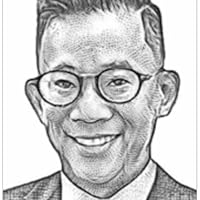
Adam Piore

4 books14 followers
Adam Piore is an award-winning journalist based in New York. A former editor and correspondent for Newsweek Magazine, his narrative features have appeared in Conde Nast Traveler, GQ, Discover Magazine, Mother Jones, Playboy, Scientific American, the Atavist, BusinessWeek and many others. He is currently a contributing editor at Popular Science and Discover Magazines.

Ratings & Reviews

What do you think?
Rate this book

Friends & Following

Create a free account to discover what your friends think of this book!

Community Reviews

5 stars
113 (32%)
4 stars
134 (37%)
3 stars
82 (23%)
2 stars
19 (5%)
1 star
5 (1%)
Displaying 1 - 30 of 48 reviews
Profile Image for Ollie.
456 reviews31 followers
April 7, 2017
One of the greatest things science can offer us is the ability to better ourselves: improve where possible, correct mistakes, fix what might be broken. That work is certainly going on right now and Adam Piore’s Body Builders presents itself as a look behind all the science that goes behind engineered humans. It’s right there in the title. The problem is that that isn’t really the case, or maybe we have different definitions of what an engineered human is. Engineering to me means something like genetic tampering to cause a desired phenotype. That’s not what this book is about. If you’re thinking in the scope of the 6 million dollar man, then you have a better idea of the subjects we encounter in this book. I like to think of these more as humans with gadgets.

Although Piore makes a valiant effort to tell his story, unfortunately Body Builders suffers from some major pitfalls that are much too frequent in popular science writings. For starters Piore seems to focus too much on the boring experimental details involved in the science yet still not painting a clear enough picture of what’s going on. Look, these experiments are just boring, and we don’t need to know where every single wire is placed. Some charts or drawings would have helped us understand what’s going on. Other times, Piore presents the results in a confusing manner. For example, when he tells the story of how recording the neuron activity in patients listening to Pink Floyd can lead to scientists pulling Another Brick in the Wall out of the data, I think what he means that the brain patterns can be interpreted into melodies that can be played back like something akin to a midi track. Cool stuff, for sure, but Piore makes it sound like we can hear a segment of the actual song.

Then there’s the fact that Piore just isn’t a very exciting storyteller. While someone like Oliver Sacks manages to tell compelling stories behind his subjects and focuses on the important details, numerous times the reader will simply get frustrated as Body Builders keeps telling the story of the scientist, the collaborators, and the science that preceded it and so on instead of just focusing on what they’re trying to do in the present moment.

Body Builders has a lot of potential but ultimately just ends up being a fragmented and unfocused read. Although there is some cool science discussed it happens too seldom to make this a real page-turner.
Profile Image for Joshua.
Author 2 books38 followers
April 18, 2017
This book was amazing. From start to finish I was left spellbound by the possibilities of technology that, is no longer the stuff of science fiction, but a steadily growing reality. Stories about a blind woman "seeing" again to a man becoming a musical prodigy after suffering a severe concussion, and a man essentially regrowing limbs offer up a profound sense of possibility for the future. Scientists and engineers are most likely the target audience of this book, but I hope that lovers of literature and future writers take the time to read Piore's work because it provides a glimpse into the future of what human civilization can and will be.

Technology forever alters the reality of those that participate and use it in their daily lives, and each time a new innovation reaches the markets or industries human changes significantly. Whether it was the industrial revolution or even the simple art of sharpening stones, humans beings rely on technology. Our creativity and being is intimately connected to innovation. Our reality is steadily going to change, and so a book like The Body Builders is a chance to reflect on what is possible, what is coming, and then ask the ultimate question, what will it mean to be a human being?

These questions are important, and I'll allow the reader to come to their own conclusion. But Piore provides at least one of the most clear answers in that being human is overcoming obstacles through persistence, innovation, and sheer force of will.
Profile Image for Mike.
326 reviews1 follower
May 10, 2021
Pretty good book. Could have used more on the Brain Computer Interface. And on other mechanisms to help blind people see and deaf people hear. I could use more on the bionics, too, as well as the strides we've taken in prosthetics and bionics.

Not as good as Endure: Mind, Body, and the Curiously Elastic Limits of Human Performance or even The Sports Gene: Inside the Science of Extraordinary Athletic Performance, but still really good.
1 review2 followers
March 30, 2017
This book did a great job of balancing a number of typically opposing forces—human narratives and hard science, hopes and fears for the future, excitement about technology improving us yet concerns about losing our humanity in the process. At its heart, it's a book about optimism and hopes for the future, but it's very much grounded in the present-day state of technology and scientific research. It's detailed enough to be informative but written engagingly and compellingly. Strongly recommended to anyone interested in the cutting edge of medical research, transhumanism, or the relationship between people and technology. I will warn you, though—the descriptions of the diseases these doctors are trying to treat can be pretty grim. Thankfully, we're closer than ever to curing them, thanks to the valiant efforts of the people described in this book and others.
Profile Image for Olsa.
13 reviews1 follower
July 10, 2022
Te cztery gwiazdki to tylko za to, że pod koniec zasnęłam. Reszta była świetna!
Profile Image for Andrei Khrapavitski.
111 reviews32 followers
July 28, 2017
Do you like your body? You’d better. That’s the only one you have. But if you think of it, it is full of imperfections. Many of us like watching superhero movies maybe because we fancy some incredible abilities our bodies can’t give us. In addition to being imperfect, our bodies age. We get sick. We die. That’s the story of each and every one of us.

The only way we can, at least, attempt to do something about it is through accelerating research into the fields of science which would allow us to be healthier and live longer. What if through invention and deployment of novel technologies, we could control biological processes within the body in order to repair or even eradicate them? What if there no such thing as human disability?

Adam Piore, a contributing editor at Popular Science and Discover Magazines, has written a fascinating book about the quest to enhance human bodies. He split the book into three parts. The first one is about scientific breakthroughs in replicating the way we move: bionic arms and legs, decoding the genome and rewriting it, regenerative medicine and attempts to regrow limbs; the second is about sensing: understanding the neuroplasticity of the brain (for instance, a case of a woman who can see with her ears), attempts to come up with learning pills, soldiers with spidey sense, intuition and implicit learning, decoding the brain and imagined speech; finally the third part is about thinking: why some people remember much more than others, attempts to improve memory, deep brain stimulations as a way to treat some severe conditions like depression, etc., and also a chapter about savants and scientific quests to understand and enhance creativity.

This book will acquaint you with patients whose conditions and their treatment led to some great insights and scientific breakthroughs. It is also a book about scientists who are leading some cutting edge research, like Edam Eskander’s exploration in deep brain stimulation and Hugh Herr’s bionics, Gerwin Schalk’s research into brain-computer interfaces, etc.

Adam Piore doesn’t offer a Kurzweilian promise, although this is a pretty optimistic book. At the end of each chapter and in the conclusion, he poses some ethical questions as to what consequences these technologies might have on our society, especially if misused. However, I fully agree with him when he writes: “To me, fears of government mind reading seemed distant indeed next to the story of David Jayne, paralyzed and no longer able to speak, using technology to clown around with his two little children at dinnertime, and tell them he loves them. Or of a blind Pat Fletcher standing in the desert weeping because she could “see” the mountains again—by using her ears. For me, concerns about the remote possibility of a terminator created in some distant future quickly faded when juxtaposed against images of Hugh Herr out for a brisk jog around Walden Pond on prosthetic runner’s legs.”

Indeed, these new technologies are already giving hope to millions of people suffering from various illnesses which just a decade ago seemed incurable. Piorre beautifully sums up: “These new technologies need not be contemplated with dread, or seen simply as tools to transform or transcend humanity. Any efforts to augment our abilities for our immediate future are not the main point. The most important story is the one about enhancing not our abilities, but our humanity—our ability to do that which in the final analysis makes life meaningful and worth living.”

Highly recommended for all curious readers interested in neuroscience, bionics and transhumanism.
Profile Image for Jason Leow.
1 review2 followers
June 26, 2017
This book is hard going, not because the science is dense (it is for novices) but because there is so much over-reporting, sometimes within single sentences. Often the protagonist's narrative in each chapter is overlayed with the stories of other multiple characters involved in the scientific breakthroughs. I wish the author had just focused on the protagonist and had narrated the science straight. This book demonstrates story-telling on overdrive and is exhausting to read!

Eg. "Engineers across the Charles River at Draper Laboratory are working closely with Dougherty and Eskander to develop the needed hardware."

"A thick jumble of mesh-covered wires protrudes from the opening at the top of the skull, as if she were related to Jabba the Hutt's sand-colored majordomo, the tail-headed Bib Fortuna."
Profile Image for Zech Tan.
20 reviews
August 11, 2017
Fascinating facts from the book:
Extra Cellular Matrices (ECM) e.g. from pig bladders contain "cryptic peptides" that attract stem cells to an injured area = potential to regenerate limbs
Neurons connected by synapses "talk" by passing electrochemical signals; Hebian learning = synapses that fire together wire together
'Efference copy' = an internal impression the brain creates about what an action feels like so it can check the resulting output and make corrections if necessary
Acquired savant syndrome = brain trauma that results in superhuman new abilities
Possible to unlock creativity by suppressing frontal lobe
Profile Image for Sara.
235 reviews37 followers
December 23, 2017
I found this book soooooo painful to read and I love this topic!

I just didn’t love the author’s writing style, organization, and explanations.

Some of the content is quite interesting like how to see without sight or sudden genius. But much insight could have been gleaned by an image of any kind at all. Some chapters got super repetitive and dull as well.

To be honest I only finished this to meet my challenge. 🤷🏻‍♀️
3 reviews
October 18, 2017
Only read up to Chapter 7. Couldn't make myself finish the rest of it. The first couple of chapters weren't bad but I think it is full of unnecessary details. I'm a Human Kinetics graduate and even I didn't want to read that amount of detail. I was hoping for more on the philosophical questions that bio-engineering poses.
6 reviews
May 22, 2021
Really liked this book, it was the reason that made me decide to study Biomedical Engineering at University. The first story about Hugh Herr was the most inspiring, even wrote about it in my University applications, but the sections about vOICe and organs on a chip were fascinating as well. Highly recommend.
61 reviews1 follower
February 6, 2019
Collection of interesting short stories related to different fields in bioengineering from a non-bioengineer.
Profile Image for Pi.
1,357 reviews22 followers
August 4, 2020
Ależ to był ładunek pełen „kosmicznych” informacji – istna burza z gradobiciem! Adam Piore podarował mi wiedzę, która ociera się o jakieś sf i odwołuje się do komiksów o superbohaterach… tylko, że to fakty, nauka, prawda i realne możliwości.
Tak naprawdę, to my nic o sobie nie wiemy. Jesteśmy chodzącą zagadką z niezwykłą bestią pod czaszką, którą nazywamy mózgiem, a która zdaje się nie mieć ograniczeń.
Podróżowałam razem z autorem po wielu ośrodkach badawczych, szpitalach, laboratoriach, klinikach, odwiedzałam prywatne domy i poznawałam osobiste opowieści. Bardzo podobało mi się to, że Adam Piore przede wszystkim skupił się w swojej książce na ludziach. To właśnie te pojedyncze, niesamowite i graniczące z cudem historie nadają „Magii bioinżynierii” wymiar ponadczasowy i wyjątkowo czuły na drugiego człowieka.
Trudno napisać, co wywarło na mnie największe wrażenie, bo każdy przypadek „rozwalał system”, że się tak wyrażę. W pamięci zapewne zostanie mi (a o pamięci też wiele w tej książce można znaleźć) historia Hugh Herra, który chodzi, biega, wspina się – a nie ma nóg… a przynajmniej nie ma „normalnych” nóg. Jest to opowieść o ogromnej sile i woli życia, to historia, która może inspirować i którą dobrze znać i sobie o niej przypominać, gdy na końcu języka ma się zdanie „Ale ja mam już dość! Ale mi się nie chce!”.
Moją wyobraźnię zaś poruszyła opowieść o kobiecie, która widzi uszami i tak, to się dzieje naprawdę. Za pomocą specjalnych dźwięków jej mózg, bazując na doświadczeniu, wytwarza obrazy. Może nie widzi tak jak my, ale widzi i nie potrzebuje już psa przewodnika, a spacery po górach są jak najbardziej możliwe.
Ogromnie zainteresowała mnie również kwestia intuicji i tego, czym „intuicja” tak naprawdę jest. Podczas czytania zdaje się, że oczy robiły mi się większe i większe, aż weszły na zdania i zaczęły je tarmosić ze zdziwienia i poruszenia.
Mogłabym tak pisać jeszcze długo i opowiadać wam, co to za cuda szykują się dla człowieka w przyszłości, jak będzie wyglądał „ludź” w egzoszkielecie i gdy utną nam głowę, ona odrośnie. Cóż, prawda jest taka, że my naprawdę mało wiemy, a to co wiemy, jest jedynie koślawym szkicem wymagającym poprawek.
Muszę wspomnieć również o stylu Adama Piore, bo jest bardzo dobry. Czuć tę reporterską, dziennikarską smykałkę, dzięki czemu czytelnik łatwo łapie kontakt z najtrudniejszymi zagadnieniami i badaniami. Myślę, że to sztuka - tak napisać książkę, by pomimo jej naukowej tematyki, odbiorca nawiązał wręcz osobisty, intymny stosunek z opisywanymi zjawiskami. Najbardziej podobał mi się właśnie ten aspekt reporterski, to wychodzenie autora do drugiego człowieka, ta jego zdolność słuchania i opowiadania. Czułam jego zaangażowanie i dzięki temu i ja się angażowałam.
Nie byłabym sobą, gdybym nie napisała o aspekcie moralnym, o którym autor również wspomina. Należy prowadzić badania, ale nigdy nie przeginać. Etyka, to niezbędny element takich doświadczeń. Mimo to, czasem trzeba zaryzykować, by komuś pomóc i ja to rozumiem i ja to popieram. Lecz pamiętajmy: Po pierwsze, nie szkodzić.

Polecam wszystkim spragnionym wiedzy i szukającym odpowiedzi.

7/10 bardzo dobra książka!

* Okładka... czyż już sama ona nie zachęca do pożarcia?
1,098 reviews4 followers
November 11, 2021
It’s just amazing how technological advances have made the human body more resilient and more able to heal, and perhaps someday just simply better. This is a fascinating review of many of these advances, divided into three parts — moving, sensing and thinking. Moving begins by telling the story of a guy, Hugh Herr, who lost his legs during a harrowing mountain climbing trip up Mount Washington in NH (a mountain I have climbed many times, with little incident, but then, Herr went in January, which is not especially advisable). Being a world-class rock climber, he wondered if there was a way to replace his “real” legs with something more conducive to rock climbing — then he designed and built them. Each of the many advances Piore describes in this book are illustrated by amazing stories — the woman who learned to “see” with her ears, the young father who created a way for “locked in” people to communicate and interact with the world (he had ALS, but others become locked in for different reasons), and many others. He also delves pretty heavily into genetic therapy, including a section on CRISPR. He does not shy away from the many ethical questions involved — not just “can we?” but “should we?” though he soft-pedals his own beliefs a bit. But as an audiobook, it’s just riveting from beginning to end, with enough technical detail to help you understand what’s being done, but not too much so you are bored and/or clueless. Piore is a former writer for Newsweek, so he knows how to tell a story, and his subjects are incredible both as people and as technological miracles.

Grade: A
Profile Image for Alejandro Teruel.
1,340 reviews253 followers
March 28, 2018
The title only covers the first third of the book, the rest would be more aptly titled The Mind Changers. It provides tantalizing glimpses into ongoing studies on prosthetics, regenerative medicine, gene therapy, neuroplasticity, implicit learning, deep brain stimulation, brain-computer interfaces, biochemical memory enhancement, and how the brain enhances or inhibits creativity. The author set himself an impossibly ambitious project and winds up with a fragmented and confusing jumble of bits and pieces. The book would have been better if it were better focused and edited. After all there is nothing wrong with what I consider was the starting point for the book:
...I found myself focusing on what to me seemed the more powerful ideas and uses for these technologies, and the stories that stayed with me. They all related to what drew me to bioengineering in the first place -that ability to restore to those who have lost them, the things that allow us to express our humanity and connect with the world and those around us.
I found Norman Doidge's probably somewhat dated The Brain That Changes Itself: Stories of Personal Triumph from the Frontiers of Brain Science (2007) on neuroplasticity much better integrated and if you are at all interested in the mysteries of neuropsychiatry, Oliver Sacks is a far more interesting and better writer.
Profile Image for David.
1,521 reviews12 followers
July 8, 2022
Great topic, mediocre book.

The book is written like a series of articles from the science section of a newspaper. Lots of extraneous biographical facts about the names and affiliations of every person interviewed for the book, while glossing over a lot of the details about the actual subject being discussed.

As a result of this overly journalistic approach, the whole organisation of the book suffered greatly. Rather than start with an introduction to each topic (for instance, the various methods currently being researched with the goal of restoring sight to the blind), we are instead presented with a gruesome description of people being maimed in industrial accidents, wilderness misadventures, and battlefield injuries. The story in each section follows that person and their associated doctors and scientists through their efforts. While case studies are certainly valid to illustrate concepts and personalize technological progress, they don't generalize well to the larger picture on their own. And because the book focused so much on a few specific cases, whole areas of promising research were completely ignored.
Profile Image for Katie.
494 reviews6 followers
July 13, 2017
I heard this author on NPR and thought that his book sounded interesting enough to grab it off the shelf in the library. I'm really glad I did because I loved it! The author goes through a variety of ways that people have tried to augment and re-engineer the human body. My undergrad was in Bio Engineering and some of the topics that were covered brought me back to some of those classes from long ago. He discussed ways prosthetics are being re-engineered, attempts to tinker with our genomes, attempts to regenerate limbs and tissue, re-wiring our brains and learning, and inspiring creative thoughts. He goes into a fair amount of detail about the scientists doing the cutting edge work, their motivations, their experiments and some of the context, history and assumptions they are working with. I really liked the science in the book and learned a lot! I am hanging on to the book as long as the library will allow because I need to review it, there were a lot of details I've already forgotten!
527 reviews3 followers
February 6, 2024
The theme here is using technology to somehow enhance the human body. But that’s slightly misleading, as 2/3 of the book is really using technology to affect the brain (in positive ways). Which is kinda too bad, as that 2/3 was less interesting (to me). Lots of it seemed awfully speculative—making you more creative, or allowing blind folks to use the optical part of the brain for something else---or based on a very small sample.

But the body stuff---better prosthetics for those who have lost a limb, or regrowing a body part that has suffered some trauma, like lizards can re-grow tails---seemed realistic. Not sure if that says more about me or more about the author.

The writing is pretty good, and he explains complicated things in ways that I could understand. Also kind of interesting in that most of the researchers seem to want to genuinely help people who need help; but are constantly asked to improve athletic or military performance.
Profile Image for Christina Dudley.
Author 28 books265 followers
April 2, 2018
Vastly interesting book about different aspects of fiddling with the human body: prostheses, gene manipulation, regrowing tissues, "mind-reading" with computers, and so on. Some of the topics repeated other books I'd read, especially if they were brain-related. (Patient H.M. put in a typical appearance, for example.) The great fun of reading nonfiction is the hope it gives you in learning about treatments for all our ailments and injuries.

One note for the editor, or whoever can still fix the ebook edition: for Pete's sake, correct all the "basal ganglia" references that are misspelled "basil" ganglia! It's like everyone was fixated on pesto when they wrote/edited those passages.
Profile Image for Joe Loncarich.
200 reviews2 followers
August 10, 2017
Since I am a stupid person. I glanced at the cover, saw Body Builders, and thought this would be a Meathead's delight filled with hilarious anecdotes about the world of professional bodybuilding. This is not that book, but it's still super good. I don't stay up on advances in science all that well, and this book really opened my eyes to how far we have come scientifically. There have been incredible breakthroughs in what doctors can now do for ailments, and it's pretty damn exciting to see where things go in the future.
Profile Image for Chris.
520 reviews1 follower
October 9, 2019
5/10

I really liked how this one started. The first half was what you would think - prosthetics leading to bionics. I really liked the first half, but the second half was all neurology. Typically I enjoy neuroscience books, but this one didn't hold me at all. Had I not been listening to the audiobook I would have had a really hard time finishing.

I don't know why the neuro post didn't hold me. Maybe it is because I want expecting it from this. I was hoping to get more about exoskeletons, ocular implants, super hearing, maybe more senses - akin to how sharks can sense electric fields.
44 reviews2 followers
February 5, 2021
A vision for how humanity will interact with technology in the future. This book taught me a lot about the work that is currently being done to help mitigate human suffering in its various forms and leaves us hopeful that we as a collective will make the right choices when it comes to inevitably integrating technology into biology.

The detailed descriptions of the science behind the technologies were a bit unnecessary for me, but I'm sure others with a more scientific background would appreciate those parts of the book more than I.
Profile Image for Steve Nolan.
589 reviews
August 8, 2017
Book progressively got worse, but only really b/c I'm way more interested in biomechanics than I am brain-stuff. It's written pretty well for a general audience though! Maybe gets into experimental minutia a bit much, but adds some cool stories. Would have prolly given it 3 stars if I didn't like, have a bioengineering degree already. (Is a degree-drop a thing? Like a name-drop, but with more studying?)
Profile Image for David Baer.
1,071 reviews6 followers
July 24, 2022
I may have been in a bad mood at the beginning where the author explained that he intends to share the amazing science by means of a bunch of heartfelt and harrowing personal stories. I thought "typical journalist approach: can’t or won’t understand the science well enough, so focus on the anecdotal." Anyway I could not figure out where he was going with the Cambodian refugee conversation and I decided I was out.
Profile Image for Ruth.
192 reviews
May 24, 2017
Fascinating & well-written, this book is a composite of some of the research & applications currently in Biomedical Engineering. It does not require any previous knowledge in the area to understand & appreciate.
777 reviews3 followers
July 26, 2017
Science Fiction becomes Reality

A very well researched book that was written for the general public. A disabled person my self, there are not enough people like Peter Meijer in this world. Thank You sir for taking the time to come to this country to help Pat Fletcher.
Profile Image for anjani sreeprada.
10 reviews1 follower
November 5, 2019
This book feeds the curiosity of anyone who is slightly interested in medicine, human bodies and minds- especially the mind part for me! The author does a great job with storytelling. I read it out of my interest in science writing. Definitely recommend it for popular science fans.
273 reviews
March 12, 2020
Interesting book, even though it did include several case studies that get repeated in every book on neuroscience. I'm totally on board with pursuing new technologies that reduce disability and impairment, but not on board with using those technologies to build super humans.
Profile Image for John McPhee.
948 reviews35 followers
September 17, 2020
Science and Medicine

And what’s possible. This is The Who what when where how (and sometimes why) of Rain Man and Rain Man for senses and limbs. It’s an interesting series of stories and is well-researched and summarized.
Profile Image for Nancy Lilly F.
118 reviews
December 9, 2020
A very interesting book regarding the human body and it’s complexities paired with futuristic methods being utilized and studied in order to overcome various injuries or maladies. I had no idea that these studies and procedures were being performed. I found it very encouraging.
Displaying 1 - 30 of 48 reviews

Can't find what you're looking for?

Get help and learn more about the design.