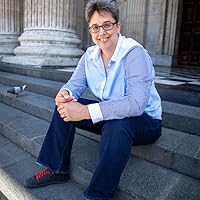
Memorandum is a haunting collection of poems that summons voices from the shadows of the First World War. Vanessa Gebbie transforms prosaic records of ordinary soldiers, and the physical landscape of battles, war graves and memorials, into poignant reflections on the small and greater losses to families and the world. Vanessa Gebbie is a writer of prose and poetry. Author of seven books, including a novel, short fictions and poetry, her work has been supported by an Arts Council England Grant for the Arts, a Hawthornden Fellowship and residencies at both Gladstone's Library and Anam Cara Writers' and Artists' Retreat. She teaches widely. www.vanessagebbie.com "From the idea of a shell reverting to its unmade, peaceful state to dead men buried in Brighton and France being mourned by their mother in Glasgow ... heartrending images such as the Tower of London's ceramic poppies seen as callow recruits, doubts about a corpse's identity and how dregs at the bottom of a cup can be reminiscent of the deadly Flanders mud. This is a modern view, wise and compassionate, of Europe's fatal wound." Max Egremont, author of Siegfried Sassoon and Some Desperate Glory, The First World War the Poets Knew "Vanessa Gebbie is that rare breed of poet who understands the trials and tribulations of the ordinary Tommy." Jeremy Banning, military historian and researcher, battlefield guide "The dead who linger around memorials and battlefields slowly step again into the light. History may remember them collectively, but Gebbie's achievement is to present, with sensitivity and without sentimentality, lives rooted in the particular rhythms of hometowns, families, and memories." John McCullough, author of Spacecraft and The Frost Fairs "These poems rise like ghosts from a scarred landscape." Caroline Davies, author of Convoy
Vanessa Gebbie is a novelist, short storyist, editor, writing tutor and occasional poet. Her novel The Coward’s Tale (Bloomsbury) was selected as a Financial Times Book of the Year and Guardian readers’ book of the year.
She is author of two collections: Words from a Glass Bubble - a collection of mainly prize-winning stories - and Storm Warning (Salt Modern Fiction). She is contributing editor of Short Circuit - Guide to the Art of the Short Story (Salt). Her fifth book in as many years is forthcoming later in 2012.
Vanessa's stories have been commissioned by literary journals, the British Council, for BBC Radio 3 and BBC Radio 4, and are widely anthologised. Married with two grown sons, she lives in Sussex. www.vanessagebbie.com
My first response was a personal one, having been affected so much by my father’s loss of his own father after the second world war, his near silence about it, and his poems that tried to make sense of it. My dad was an evacuee, my great-uncles died in the trenches, and my great-grandfather almost did. I recently lost both of my grandmothers, who were Londoners of different kinds, and had lived through the second world war – through them I can feel my own connection with it.
Secondly, the direct observation from life and site-specific writing is striking in Memorandum – it created an extra level to the collection for me – because I could imagine myself stepping into the narrator’s shoes and standing in the places the poems describe, making them all the more poignant. The effect of the ordinary and mundane meeting the sacred and ethereal is also conspicuous; I imagined different varieties of weather as I was reading and people walking past the monuments in the background, some without seeing them. Whether we choose to see the effects of recent history in our everyday lives is a pertinent question.
Reading Memorandum reminded me of the sense of collective trauma we have experienced on a cultural level because of the two world wars – and as with any trauma that we attempt to push away, it will reoccur until we face it. These poems seem to be a way of facing it – or (if I can get away with a double negative) a refusal not to face it. It’s easy to read poetry as too soft, too tangential, but these poems give the lie to that, because they offer the chance for healing. Powerful stuff.