

What do you think?
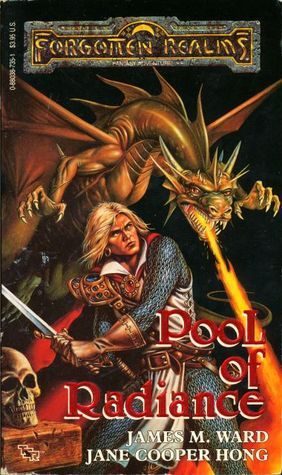
Forgotten Realms: Pools #1
Pool of Radiance
(Cover art by Clyde Caldwell)
316 pages, Mass Market Paperback
First published November 1, 1989
About the author
James M. Ward
119 books58 followersJames M. Ward (b. 1951) is an American game designer and fantasy author.
Ratings & Reviews
Friends & Following
Create a free account to discover what your friends think of this book!
Community Reviews
Displaying 1 - 30 of 104 reviews

March 21, 2015
Stellar writing or crafty plotting? Not particularly. But, this was my post-Tolkien teenage fantasy gateway drug that paved the way for the discovery of Brooks/Salvatore/Eddings/Feist/Rawn/Martin/Abercrombie/Rothfuss/Sanderson/Weis and Hickman/et al, and for that reason alone, it's a seminal classic in my heart.
Also, Ren is a badass and made me want to be a forest ranger. I somehow ended up in legal marketing instead, but that's just because I wanted to pursue something that would keep me on the constant edge of danger.
Also, Ren is a badass and made me want to be a forest ranger. I somehow ended up in legal marketing instead, but that's just because I wanted to pursue something that would keep me on the constant edge of danger.
May 13, 2014
This was the very first novel I'd ever read. I fondly remember my father buying books at the bookstore every weekend, and one day I asked if he would buy one for me. "Yeah, bud, pick one out," he said, and I went straight to the fantasy section looking for a book with a dragon on the cover, because to a 10 year old dragons are awesome. This is the book I ultimately took home with me.
It's been many years since that day, and I would venture to say if I read it now it would not be half as magical as it was to me then, but it will always be the book that made me love reading.
It's been many years since that day, and I would venture to say if I read it now it would not be half as magical as it was to me then, but it will always be the book that made me love reading.

September 8, 2024
A Ranger, a Cleric, and a Mage walk into a bar. Well, it was more than just that trope. This 1989 TSR novel was based on the rather popular at the time SSI 5 1/4 inch floppy disc computer game that I played along with two friends huddled around a computer and using the keyboard for action and movement. Different times here folks.
But this book is pretty solid and did remind me a lot of the game with missions and level advancement and such. It took me until now to realize that the first initials of the three main characters spell out “TSR” with Tarl, Shal, and Ren. Clever.
But this book is pretty solid and did remind me a lot of the game with missions and level advancement and such. It took me until now to realize that the first initials of the three main characters spell out “TSR” with Tarl, Shal, and Ren. Clever.

September 22, 2008
Much like Terry Brooks's Shannara series, these books, as crappy as they are, were formative fantasy books for me. My cousin gave them to me to read when I was nine, and I thought they were AMAZING.
Completely don't hold up on a reread at all, so I choose to enjoy the memory instead. And they did push me forward on the path of being a fantasy addict.
Completely don't hold up on a reread at all, so I choose to enjoy the memory instead. And they did push me forward on the path of being a fantasy addict.

June 21, 2012
This was my first D&D novel, and I still have vivid memories of several of the scenes. I remember the young mage first starting out, and accidentally using several of her wish spells on innocuous wishes. I remember her going to a partially ruined city, and monsters lived in the ruined sections. I remember how, at the end, when all seemed lost, and the dragon was about to kill her, the mage remembered she had one wish left. For twelve year old me, it was pretty great stuff.

April 10, 2019
In the ruins of Phlan, an ancient evil is stirring. Three heroes - the wizard Shal Bal, the ranger/thief Ren, and the cleric of Tyr, Tarl - each find themselves on a personal quest of vengeance and self-discovery as they band together to restore order to the ancient city.
Written as a tie-in novel for the seminal SSI CRPG of the same name released in 1988, Pool of Radiance doesn't just wear its influences on its sleeve: it uses them to inform pretty much every scene in the book, resulting in a story that is not so much a novel as a blow-by-blow account of an entertaining D&D campaign. The three protagonists are paper-thin and wield skills, abilities and spells that are word-for-word borrowed from the source material.
The plot, such as it is, is incredibly simple. Working for the obviously corrupt councilman Cadorna, our heroes must overcome a succession of challenges - essentially levels - that bring them closer to discovering the obvious truth behind the goings-on in Phlan. The book does an admirable job of following the game's structure, with the predictable downside that it feels utterly artificial.
Though deus ex machina in D&D is nothing new, in this book low-level characters being saved by divine providence, or at least magical items that achieve the same result, is a matter of course. Rarely has a young wizard apprentice had so much handed to them on a plate as Shal Bal, who, at the start of the novel, inherits a Staff of Power, a Ring of Wishes, a magical horse familiar, and a piece of fabric that acts as multiple Bags of Holding from her murdered master, Ranthor. Not bad going for a 3rd-5th level character!
Why didn't Ranthor use the Ring of Wishes to save himself and kill his assassin, and therefore avoid the need for the whole resulting fiasco in the first place? This is never explained. Amusingly, it is explicitly stated that Shal could use the Ring of Wishes to bring her master back to life - except he doesn't want her to do that, for spurious reasons. Perhaps he comes back in a later novel as a lich and is revealed as a villain. I guess I'll find out when I get to it.
Either way, the fact that Shal can - and does, in the end - kill anything simply by wishing it dead does rather undermine our heroes' journey as they survive increasingly deadlier obstacles and enemies. As with everything else in the book, character relationships are trite, undeveloped, and scarcely believable. Perhaps the most noteworthy thing about Pool of Radiance is how Shal Bal inadvertently wishes herself from waif-sized to very large near the start of the book. It's entertaining to see her struggle with her new physical reality while nonetheless getting to pick from her two male traveling companions, who both vie for her attention. I'm not sure the body-positive feminism on display here really holds up in 2019 (she is constantly described as a curvaceous and all-woman in a decidedly male-gazey manner), but it was an interesting twist to what is otherwise a forgettable character.
Pool of Radiance is pretty much what you expect a computer game adaptation to be: flat, perfunctory, and, just like its primary protagonist, forced to take a shape it is not entirely comfortable wearing. It is undoubtedly nonsense - but it is easy-to-read and entertaining nonsense that will doubtless scratch that nostalgia itch for those who remember the 1988 computer game (and among those of a certain age, that is a sizeable demographic).
Written as a tie-in novel for the seminal SSI CRPG of the same name released in 1988, Pool of Radiance doesn't just wear its influences on its sleeve: it uses them to inform pretty much every scene in the book, resulting in a story that is not so much a novel as a blow-by-blow account of an entertaining D&D campaign. The three protagonists are paper-thin and wield skills, abilities and spells that are word-for-word borrowed from the source material.
The plot, such as it is, is incredibly simple. Working for the obviously corrupt councilman Cadorna, our heroes must overcome a succession of challenges - essentially levels - that bring them closer to discovering the obvious truth behind the goings-on in Phlan. The book does an admirable job of following the game's structure, with the predictable downside that it feels utterly artificial.
Though deus ex machina in D&D is nothing new, in this book low-level characters being saved by divine providence, or at least magical items that achieve the same result, is a matter of course. Rarely has a young wizard apprentice had so much handed to them on a plate as Shal Bal, who, at the start of the novel, inherits a Staff of Power, a Ring of Wishes, a magical horse familiar, and a piece of fabric that acts as multiple Bags of Holding from her murdered master, Ranthor. Not bad going for a 3rd-5th level character!
Why didn't Ranthor use the Ring of Wishes to save himself and kill his assassin, and therefore avoid the need for the whole resulting fiasco in the first place? This is never explained. Amusingly, it is explicitly stated that Shal could use the Ring of Wishes to bring her master back to life - except he doesn't want her to do that, for spurious reasons. Perhaps he comes back in a later novel as a lich and is revealed as a villain. I guess I'll find out when I get to it.
Either way, the fact that Shal can - and does, in the end - kill anything simply by wishing it dead does rather undermine our heroes' journey as they survive increasingly deadlier obstacles and enemies. As with everything else in the book, character relationships are trite, undeveloped, and scarcely believable. Perhaps the most noteworthy thing about Pool of Radiance is how Shal Bal inadvertently wishes herself from waif-sized to very large near the start of the book. It's entertaining to see her struggle with her new physical reality while nonetheless getting to pick from her two male traveling companions, who both vie for her attention. I'm not sure the body-positive feminism on display here really holds up in 2019 (she is constantly described as a curvaceous and all-woman in a decidedly male-gazey manner), but it was an interesting twist to what is otherwise a forgettable character.
Pool of Radiance is pretty much what you expect a computer game adaptation to be: flat, perfunctory, and, just like its primary protagonist, forced to take a shape it is not entirely comfortable wearing. It is undoubtedly nonsense - but it is easy-to-read and entertaining nonsense that will doubtless scratch that nostalgia itch for those who remember the 1988 computer game (and among those of a certain age, that is a sizeable demographic).

June 7, 2015
I was going to give this two stars since it's essentially D&D fan fiction with romance elements thrown in for teenagers, but the writing is smooth and it's thoroughly unpretentious in its aims, so.

June 15, 2016
I played this as a game on the commodore 64 way back in the 80s and I read the book when I first saw it way back when...I came across it all these years later and decided to reread this series. Well I can see the difference 20+ years has on my perspective that's for sure. I got very nostalgic and wished to play the game again. I will say that this is an easy read without too much mystery or deep thought provoking ideas but for the value of childhood memories it was priceless.

December 29, 2018
Four stars not because it's such a great book, but because it was a good classic fantasy adventure book. In other words it was fun and met the Expectations pretty well.
December 18, 2023
When I decided to read Pool of Radiance, I knew that I wasn’t getting a fantasy literary classic or epic fantasy story that spans kingdoms and decades. This was a pure adventure story with larger-than-life heroes set in the world of the Forgotten Realms, with the spells, classes, creatures, and magical items of early D & D gaming. For these reasons I really enjoyed this book.
Three characters make up the heart of this story. Shal, a wizard apprentice, not in her full power finds herself on a quest to avenge the death of her master who was murdered while trying to help another wizard in the city of Phlan. Ren is a ranger-thief, in possession of stolen magical ioun stones, and mourning the loss of the woman he loved, who was killed because of the ioun stones. Ren has taken refuge in the city of Phlan where he plots revenge on the person responsible for the death of his beloved. Tarl is a newly made cleric of the god Tyr. He is entrusted with his cleric brothers to bring a holy artifact to the city of Phlan. When a mistaken turn takes the clerics into a graveyard, the dead rise and even their God cannot save them. Tarl survives the encounter with the undead but is left haunted by the deaths of brothers and loss of the artifact.
By chance the three heroes meet in Phlan, a city that is split into civilized and uncivilized areas. The uncivilized area of Phlan is overrun with many of the classic creatures of fantasy such as orcs, hobgoblins, kobolds, animated skeletons and vampires all seemingly under the control of the Lord of the Ruins. After being arrested for brawling the three heroes find themselves in the sites of a corrupt and ambitious city councilman, Porphyrys Cardona, whose scheming involves using the three heroes as pawns in his attempt to gain power. Overlaying the whole story is a greater evil controlling uncivilized Phlan but hungering for more. As Cardona attempts to use the three heroes they come to the attention of the Lord of the Ruins.
What I liked about this book?
In the story the heroes undergo a series of mini quests that ultimately lead them to a confrontation with evil power controlling the denizens of unciviled Phlan. As the heroes work through each quest, they grow in power, and abilities both physical and magical. They come to trust each other and become friends. These quests within the larger story work to showcase each of the heroes while bringing in all the classic fantasy aspects you expect from the Forgotten Realms setting. Magical artifacts and weapons, classic spells such as Burning Hands and Sleep,potions of healing and a magical familiar all add to the classic fantasy appeal of this story. The Lord of Ruins is the big, bad evil at the heart of the story. Each of the heroes work to find answers to their personal trauma that brought them to Phlan, it all comes back to the evil lurking in uncivilized Phlan. Who is this evil creature and what is his connection to the pool of radiance? How is the Lord of the Ruins related to Shal, Ren and Tarl? What does it all mean for Phlan, our heroes and all of Faerun?
The Pool of Radiance is classic 1980’s fantasy adventure with all the hallmarks of fantasy from the world of the Forgotten Realms. If you decide to read this book, go in understanding that it is a fun magical adventure with every classic fantasy trope you can think of. Enjoy it accordingly.
Three characters make up the heart of this story. Shal, a wizard apprentice, not in her full power finds herself on a quest to avenge the death of her master who was murdered while trying to help another wizard in the city of Phlan. Ren is a ranger-thief, in possession of stolen magical ioun stones, and mourning the loss of the woman he loved, who was killed because of the ioun stones. Ren has taken refuge in the city of Phlan where he plots revenge on the person responsible for the death of his beloved. Tarl is a newly made cleric of the god Tyr. He is entrusted with his cleric brothers to bring a holy artifact to the city of Phlan. When a mistaken turn takes the clerics into a graveyard, the dead rise and even their God cannot save them. Tarl survives the encounter with the undead but is left haunted by the deaths of brothers and loss of the artifact.
By chance the three heroes meet in Phlan, a city that is split into civilized and uncivilized areas. The uncivilized area of Phlan is overrun with many of the classic creatures of fantasy such as orcs, hobgoblins, kobolds, animated skeletons and vampires all seemingly under the control of the Lord of the Ruins. After being arrested for brawling the three heroes find themselves in the sites of a corrupt and ambitious city councilman, Porphyrys Cardona, whose scheming involves using the three heroes as pawns in his attempt to gain power. Overlaying the whole story is a greater evil controlling uncivilized Phlan but hungering for more. As Cardona attempts to use the three heroes they come to the attention of the Lord of the Ruins.
What I liked about this book?
In the story the heroes undergo a series of mini quests that ultimately lead them to a confrontation with evil power controlling the denizens of unciviled Phlan. As the heroes work through each quest, they grow in power, and abilities both physical and magical. They come to trust each other and become friends. These quests within the larger story work to showcase each of the heroes while bringing in all the classic fantasy aspects you expect from the Forgotten Realms setting. Magical artifacts and weapons, classic spells such as Burning Hands and Sleep,potions of healing and a magical familiar all add to the classic fantasy appeal of this story. The Lord of Ruins is the big, bad evil at the heart of the story. Each of the heroes work to find answers to their personal trauma that brought them to Phlan, it all comes back to the evil lurking in uncivilized Phlan. Who is this evil creature and what is his connection to the pool of radiance? How is the Lord of the Ruins related to Shal, Ren and Tarl? What does it all mean for Phlan, our heroes and all of Faerun?
The Pool of Radiance is classic 1980’s fantasy adventure with all the hallmarks of fantasy from the world of the Forgotten Realms. If you decide to read this book, go in understanding that it is a fun magical adventure with every classic fantasy trope you can think of. Enjoy it accordingly.

June 16, 2019
Fun read, well paced, even if the characters were lampoonish and incoherent in how they’re made. It’s as though two different people created the protagonists

May 22, 2025
Sećam se da sam uživala u knjizi pre nekih 20ak godina kada sam je čitala, ali da me je previše podsećala na neku igricu i da sam to smatrala manom 😅 Mislim da se danas ne bih složila 😅
December 27, 2025
This polycule is super racist towards Gnolls.

March 22, 2012
A book based on a computer game
22 May 2012
Like seriously, what the …! Pools of Radiance was a computer game and they wrote a book about it. In fact it wasn't even all that original because it pretty much followed the plot of the game. Come on, can't these writers do any better than write a book based so closely on a computer game that only those who simply can't get enough of the game will pick it up a read it. Okay, granted, I did, but back in those days I was basically reading anything with the Dungeons and Dragons logo on it. This is not the first time they did this either (as we shall discover shortly), but at least Curse of the Azure Bonds actually had a decent story, and the game was based on the book rather than the other way around.
The story is set in the Forgotten Realms in the city of Phlan (which was created specifically for the computer game). For some reason (I can't remember) the city had been destroyed, however some colonists have arrived to attempt to rebuild the city. Mind you, the ruined city is not uninhabited, it had been taken over by tribes of humanoids who are led by some dragon that has been possessed by an evil spirit. On top of this there are corrupt councillors who are attempting to trap the heroes and prevent them from digging too far into the mystery. However, the catch is that every time they are sent on a quest, they complete it and move one step forward to defeating the bad guy.
I might mention a bit about the game now. Pools of Radiance was pretty much the first official Dungeons and Dragons game ever released. There were some experiments beforehand, but nothing actually released by TSR. This was the first and it was also very primitive. As they began to release more games the style became better and the development of the next always seemed to move forward from the original. Like the book, the players explore the ruins of an old city with the intention of clearing it out so that colonists may move in and retake the city.
It is an interesting concept, though in the past when cities were destroyed, they were either built over, or completely raised to the ground. However, in most cases there is usually a very good reason why a city would have been built where it was, and despite an enemy's attempts to destroy a city, some how it would always come back. There are some exceptions though, such a Ninevah and Mycene, but if you travel around Europe you will discover that in many cases the modern city is either near, or on top of, the ancient city. Take Napoli for example, there is pretty much nothing left of the Ancient Greek (or even Roman) city, however take a wonder around the old city and you may encounter some holes where you can see the old city. Further, there is a basilica in the old city where, if you go down into the cellars, you will come out in the ancient market place (though it is completely underground). Here is an incident of the newer city being built on top of the old.
The other issue with this book is its neo-colonial attitude. It was written in the 80s and in a way I thought we had moved on from colonialism (we actually haven't). Despite the fact that the city is ruined, it is still inhabited. The players are told that the inhabitants are bad and must be cleared out. However, who actually says that they are bad? The alignment system that Dungeons and Dragons uses? Probably. Also, why is it they are always bad? Is it because they kill humans. Well, guess what, humans kill goblins, but humans aren't bad. Elves kill orcs, but elves aren't bad. Why is it that orcs and goblins are bad? The only reason I can understand is because they are ugly. Personally, that is pretty low and pathetic in my opinion. Also, who gives the humans the right to kick the orcs, goblins, and other races out of the city? Seriously, let us move on from this narrow minded, racist roleplaying game and actually make something that is worthy of our enlightened society (hold it, that's right, we aren't enlightened).
22 May 2012
Like seriously, what the …! Pools of Radiance was a computer game and they wrote a book about it. In fact it wasn't even all that original because it pretty much followed the plot of the game. Come on, can't these writers do any better than write a book based so closely on a computer game that only those who simply can't get enough of the game will pick it up a read it. Okay, granted, I did, but back in those days I was basically reading anything with the Dungeons and Dragons logo on it. This is not the first time they did this either (as we shall discover shortly), but at least Curse of the Azure Bonds actually had a decent story, and the game was based on the book rather than the other way around.
The story is set in the Forgotten Realms in the city of Phlan (which was created specifically for the computer game). For some reason (I can't remember) the city had been destroyed, however some colonists have arrived to attempt to rebuild the city. Mind you, the ruined city is not uninhabited, it had been taken over by tribes of humanoids who are led by some dragon that has been possessed by an evil spirit. On top of this there are corrupt councillors who are attempting to trap the heroes and prevent them from digging too far into the mystery. However, the catch is that every time they are sent on a quest, they complete it and move one step forward to defeating the bad guy.
I might mention a bit about the game now. Pools of Radiance was pretty much the first official Dungeons and Dragons game ever released. There were some experiments beforehand, but nothing actually released by TSR. This was the first and it was also very primitive. As they began to release more games the style became better and the development of the next always seemed to move forward from the original. Like the book, the players explore the ruins of an old city with the intention of clearing it out so that colonists may move in and retake the city.
It is an interesting concept, though in the past when cities were destroyed, they were either built over, or completely raised to the ground. However, in most cases there is usually a very good reason why a city would have been built where it was, and despite an enemy's attempts to destroy a city, some how it would always come back. There are some exceptions though, such a Ninevah and Mycene, but if you travel around Europe you will discover that in many cases the modern city is either near, or on top of, the ancient city. Take Napoli for example, there is pretty much nothing left of the Ancient Greek (or even Roman) city, however take a wonder around the old city and you may encounter some holes where you can see the old city. Further, there is a basilica in the old city where, if you go down into the cellars, you will come out in the ancient market place (though it is completely underground). Here is an incident of the newer city being built on top of the old.
The other issue with this book is its neo-colonial attitude. It was written in the 80s and in a way I thought we had moved on from colonialism (we actually haven't). Despite the fact that the city is ruined, it is still inhabited. The players are told that the inhabitants are bad and must be cleared out. However, who actually says that they are bad? The alignment system that Dungeons and Dragons uses? Probably. Also, why is it they are always bad? Is it because they kill humans. Well, guess what, humans kill goblins, but humans aren't bad. Elves kill orcs, but elves aren't bad. Why is it that orcs and goblins are bad? The only reason I can understand is because they are ugly. Personally, that is pretty low and pathetic in my opinion. Also, who gives the humans the right to kick the orcs, goblins, and other races out of the city? Seriously, let us move on from this narrow minded, racist roleplaying game and actually make something that is worthy of our enlightened society (hold it, that's right, we aren't enlightened).

January 2, 2022
I've returned to this book for the third time and I still love it because it is the closest thing to reading a (good) D&D campaign I've come across. Our heroes grow in power and personality through the book and face a variety of threats, linked together but feeling separate at the same time. There are a few pacing issues with some of the interpersonal relationships, but those can be forgiven.
Maybe this time, I will actually continue reading the other books in this series.
Maybe this time, I will actually continue reading the other books in this series.

May 26, 2017
Holy magical inheritance, Treasure Seekers! This tome drags like a large reptile's tail. I listened this while painting, so no doubt I missed some of the nuance, but I blanked out twice and some big baddies died. Beginning is strong, middle is mushy, end is. . . meh. Let's just say I didn't clap, or cry, or go order the sequel. If undead bore you as much as they bore me, you might want to skip this.

October 1, 2022
Not good
In my memory this book was good, mostly because I read it as a kid and it got my imagination going. Unfortunately I've now read it as an adult and it reads like a D&D manual. The story itself is fine, 3 adventurers become friends through some random plot device and then go off to slay some monsters, but the writing is wooden and the characters are very 2-dimensional. Ah well. I'll still read the other two in the series, even if I don't remember them as fondly as this one.
In my memory this book was good, mostly because I read it as a kid and it got my imagination going. Unfortunately I've now read it as an adult and it reads like a D&D manual. The story itself is fine, 3 adventurers become friends through some random plot device and then go off to slay some monsters, but the writing is wooden and the characters are very 2-dimensional. Ah well. I'll still read the other two in the series, even if I don't remember them as fondly as this one.

June 2, 2024
Not bad, but not good either.
D&D literature doesn't get a lot of attention and reputation around these parts, and with good reason. It started as precursors to the modern LitRPG genre, in a more subtle, modest way. Pool of Radiance is a novel based on the PC game of the same name, rather than an actual D&D adventure module, it follows, from what I've read, the same structure and narrative as the original game. And that is to say, it's okay, I guess.
The story is just pure mildness, there is not a lot going on and the plot is as basic as it gets, it exists just to give the novel an excuse to have its own adventure, and while that's not bad on its own, it never really manages to grow past that point, sometimes dragging on and on, repeating the same series of events over and over. Just like an actual D&D game, the story and the characters are mostly set around a single city, with only a handful of characters that resemble basic medieval tropes, and of course, the keep of the big-bad-evil-guy that the party must face at the end.
If you've played a D&D module before, than you already pretty much know how the entire story will resolve. There's tons of references, and the game mechanics are translated to the way the characters function in the story. It is entertaining, mostly for its goofy nature, and I'm sure a D&D fan would enjoy catching the references here and there.
But at its own weight, Pool of Radiance is a mediocre book that, at least, doesn't suffer much from bad prose, and instead from its lack of complexity, simpleton characters, uninteresting events, and predictable plot. I read it just because of historical curiosity, and while I don't regret it, I also wouldn't recommend it to anyone, except hardcore D&D fans.
D&D literature doesn't get a lot of attention and reputation around these parts, and with good reason. It started as precursors to the modern LitRPG genre, in a more subtle, modest way. Pool of Radiance is a novel based on the PC game of the same name, rather than an actual D&D adventure module, it follows, from what I've read, the same structure and narrative as the original game. And that is to say, it's okay, I guess.
The story is just pure mildness, there is not a lot going on and the plot is as basic as it gets, it exists just to give the novel an excuse to have its own adventure, and while that's not bad on its own, it never really manages to grow past that point, sometimes dragging on and on, repeating the same series of events over and over. Just like an actual D&D game, the story and the characters are mostly set around a single city, with only a handful of characters that resemble basic medieval tropes, and of course, the keep of the big-bad-evil-guy that the party must face at the end.
If you've played a D&D module before, than you already pretty much know how the entire story will resolve. There's tons of references, and the game mechanics are translated to the way the characters function in the story. It is entertaining, mostly for its goofy nature, and I'm sure a D&D fan would enjoy catching the references here and there.
But at its own weight, Pool of Radiance is a mediocre book that, at least, doesn't suffer much from bad prose, and instead from its lack of complexity, simpleton characters, uninteresting events, and predictable plot. I read it just because of historical curiosity, and while I don't regret it, I also wouldn't recommend it to anyone, except hardcore D&D fans.

April 9, 2025
I honestly don't think this book deserves two stars, but I'm giving them out of nostalgia. I have fond memories of playing the computer game this novel was based on on my old Commodore 64 computer (yes, I'm old) and this was one of the first Forgotten Realms novels I read. Even then I didn't think it was very good (though I did like the cover), and my opinion isn't more favourable now.
The story - our three main characters are drawn together in the city of Phlan (which is a stupid name), each on a mission of vengeance - young mage Sharl seeks the monster who murdered her master, the cleric Tarl needs to recover a holy relic of his god from a horde of undead and ranger turned thief Ren seeks the murderer of his lover. Their meeting leads them being sent out on missions outside the centre of the city. Phlan, you see, is a city that has been previously ruined, and the sections outside New (or Civilized) Phlan are now home to a variety of monsters that need to be chased away so the humans can reclaim their home.
The plot is incredibly basic - the characters are given their motives for revenge and brought together very quickly, and sent off to wipe out the monsters or recover treasure, or some other equally bland motive. The characters are equally basic - they're fairly standard character types, though of course remarkably good at what they do - and Shal the mage starts with a whole load of powerful goodies from her late master, which gives her a real advantage over the usual wimpy magic user.
I mentioned playing the game many years ago, and while I enjoyed creating an adventuring party and clearing the blocks of the city of monsters, it's not exactly an exciting thing to read about. Even the battle scenes in this book are crude and dull, and the end was disgustingly easy.
This book is the first of a trilogy, but although I have the other two books on my shelf of FR novels I'm considering whether I actually want to bother reading them. I've heard book two is worse than this one (I haven't read the sequels), and I don't want to waste my time on it if it's really bad.
I honestly don't recommend this one; there are far better Forgotten Realms novels available.
The story - our three main characters are drawn together in the city of Phlan (which is a stupid name), each on a mission of vengeance - young mage Sharl seeks the monster who murdered her master, the cleric Tarl needs to recover a holy relic of his god from a horde of undead and ranger turned thief Ren seeks the murderer of his lover. Their meeting leads them being sent out on missions outside the centre of the city. Phlan, you see, is a city that has been previously ruined, and the sections outside New (or Civilized) Phlan are now home to a variety of monsters that need to be chased away so the humans can reclaim their home.
The plot is incredibly basic - the characters are given their motives for revenge and brought together very quickly, and sent off to wipe out the monsters or recover treasure, or some other equally bland motive. The characters are equally basic - they're fairly standard character types, though of course remarkably good at what they do - and Shal the mage starts with a whole load of powerful goodies from her late master, which gives her a real advantage over the usual wimpy magic user.
I mentioned playing the game many years ago, and while I enjoyed creating an adventuring party and clearing the blocks of the city of monsters, it's not exactly an exciting thing to read about. Even the battle scenes in this book are crude and dull, and the end was disgustingly easy.
This book is the first of a trilogy, but although I have the other two books on my shelf of FR novels I'm considering whether I actually want to bother reading them. I've heard book two is worse than this one (I haven't read the sequels), and I don't want to waste my time on it if it's really bad.
I honestly don't recommend this one; there are far better Forgotten Realms novels available.

February 8, 2016
This book is a classic D&D novel, adapted from the "Forgotten Realms" adventures from TSR and then made into the popular video game of the same title by SSI.
For anyone that has a background in gaming and more specifically in D&D, this book will read like a very simplified version of your classic fantasy adventure. You can almost picture mentally the group who made these characters and set out for good ol' fashioned adventure and dungeon crawling - with little need for in-depth characters or complicated plot. This is both a good reason to read it and a good reason not to, depending on how much you want out of a novel or more accurately, a novel based on a role-playing game.
I would recommend this book to anyone who wants a very simple introduction into the world of Dungeons and Dragons or knows someone that is interested in getting their proverbial gamer feet wet. The story is very simple. The characters are straightforward and easy to understand. The plot is also similarly simple and easy to follow. It would serve quite well as an introduction to Dungeons and Dragons for a young person or someone completely unfamiliar to the genre/world.
Is it a sophisticated read? No. Would I recommend it to anyone who has extensive readership into Dungeons and Dragons novels? No, or at least not for anyone who doesn't want to read it as what it is - a classic that is part of the tradition of Dungeons and Dragons. It is like reading a classic children's novel or watching a television show from your youth - it doesn't wholly live up to the memories and it lacks detail but it is still pleasurable for those who want to walk down fantasy novel memory lane.
For anyone that has a background in gaming and more specifically in D&D, this book will read like a very simplified version of your classic fantasy adventure. You can almost picture mentally the group who made these characters and set out for good ol' fashioned adventure and dungeon crawling - with little need for in-depth characters or complicated plot. This is both a good reason to read it and a good reason not to, depending on how much you want out of a novel or more accurately, a novel based on a role-playing game.
I would recommend this book to anyone who wants a very simple introduction into the world of Dungeons and Dragons or knows someone that is interested in getting their proverbial gamer feet wet. The story is very simple. The characters are straightforward and easy to understand. The plot is also similarly simple and easy to follow. It would serve quite well as an introduction to Dungeons and Dragons for a young person or someone completely unfamiliar to the genre/world.
Is it a sophisticated read? No. Would I recommend it to anyone who has extensive readership into Dungeons and Dragons novels? No, or at least not for anyone who doesn't want to read it as what it is - a classic that is part of the tradition of Dungeons and Dragons. It is like reading a classic children's novel or watching a television show from your youth - it doesn't wholly live up to the memories and it lacks detail but it is still pleasurable for those who want to walk down fantasy novel memory lane.

February 11, 2009
I think this is good book, although it was a bit hard to swallow at times. It was an enjoyable and easy read, with good character development. The authors seemed to do a good job at making the characters feel real and likable at the same time.
My only complaint (don't worry, no spoilers) is that the character Shal's magic goes from apprentice level to SUPER WIZARD POWERS ridiculously fast. That seemed hard to believe due to her being a complete novice/apprentice at the beginning of the novel. By the middle of the book she was taking on a formidable foe that, well.. just read the book and you'll see what I mean.
Never the less it was an overall fun and enjoyable read, and I would recommend it to fans of the Realms. I just think it could have been more believable in spots.
My only complaint (don't worry, no spoilers) is that the character Shal's magic goes from apprentice level to SUPER WIZARD POWERS ridiculously fast. That seemed hard to believe due to her being a complete novice/apprentice at the beginning of the novel. By the middle of the book she was taking on a formidable foe that, well.. just read the book and you'll see what I mean.
Never the less it was an overall fun and enjoyable read, and I would recommend it to fans of the Realms. I just think it could have been more believable in spots.
June 18, 2011
Paper-thin characters. Zero character development. Every fantasy stereotype is used.. Simplistic, completely implausible plot. Zero story twists. No insight into any character's persona. Plenty of deus ex machina situations. Dialogue so contrived and inane it makes my toes curl. This might be a good book for kids, but it certainly doesn't make for interesting reading for anyone over the age of twelve.
I finished this only because of dogged perseverance born from a desire to read most or all D&D novels.
I finished this only because of dogged perseverance born from a desire to read most or all D&D novels.

October 27, 2014
I'd been saving this for a rainy day when I couldn't handle anything more than a big dumb book and that day finally hit a few weeks ago. I'd been reading a lot of non-fiction about typography and programming--two topics I dearly love--and it just got to be too much.
Have almost nothing to say about this book other than I'm glad I read it and glad I'm done with it. It's a collection of "cool" scenarios that would be (and probably are!) way more fun to play than read about. It's like hearing about someone else's D&D campaign without any of the metagame.
Have almost nothing to say about this book other than I'm glad I read it and glad I'm done with it. It's a collection of "cool" scenarios that would be (and probably are!) way more fun to play than read about. It's like hearing about someone else's D&D campaign without any of the metagame.
July 14, 2015
I was gifted this book when I was in the 5th grade by my favorite cousin. I was instantly drawn to it due to it's cover. I read it that same month and I recall enjoying it quite a bit, but I think that was mostly due to the fact that it's easy to digest and the story isn't too complex. But what does one really expect from a high-fantasy novel based on a video game? I just recently finished a re-read of this last month and while it was definitely more childish for me now, I still had a fun time reading it.

May 6, 2016
This is not a book with deep themes or a well balanced level-appropriate D&D adventure, but damn is it fun. It is the story of three big buff beauties who learn the value of teamwork and the beauty of buffness, while beating up monsters together. There's a ring of wishes that gets used foolishly, an artifact that gets lost in the dumbest way possible, and a horse that is perfectly fine living in an extradimensional storage device, but you wind up cheering for the protagonists anyway because they are sweet people who really grow to care about each other.

May 2, 2015
While I enjoyed this book, if your looking for a book with an amazing plot or great writing; you won't find it here. However, the character development was great. I loved all the characters, heroes, villains and even the talking horse!
I love that it reads like a classic d&d game. The party, the random encounters and even the characters. A ranger cross classed with a rogue!
While the story was a little draw out, it was still good. Definitely worth the read though, not a waste of time!
I love that it reads like a classic d&d game. The party, the random encounters and even the characters. A ranger cross classed with a rogue!
While the story was a little draw out, it was still good. Definitely worth the read though, not a waste of time!

November 13, 2023
D&D at its finest! I say that as someone who has played for years, as part of many groups.
A Mage, a Cleric and a Ranger/Rogue walk into a bar……. Not all at the same time, but close enough to notice each other and get arrested together for brawling. As a punishment they are sent into the old abandoned area of the city on a mission. Upon their return the corrupt councilman that sent them recognising an opportunity for exploiting their skills to propel him to power.
A Mage, a Cleric and a Ranger/Rogue walk into a bar……. Not all at the same time, but close enough to notice each other and get arrested together for brawling. As a punishment they are sent into the old abandoned area of the city on a mission. Upon their return the corrupt councilman that sent them recognising an opportunity for exploiting their skills to propel him to power.

May 29, 2018
Comes across as the novelised version of a D&D play session. The writing is easy on the eye, and it flows smoothly, but it's as profound as a puddle of water. Play the SSI Gold Box game based on this novel (or it is the other way around?) as it's good fun for an old DOS game.

December 11, 2012
A good hack and slash novel based very closely to the old editions of D&D. Quite fun.
Fantasy environmentalism.
The power of a wish.
Fantasy environmentalism.
The power of a wish.
November 15, 2021
This was my first experience with the fantasy genre. It will forever be in my top 10.
Displaying 1 - 30 of 104 reviews