

What do you think?
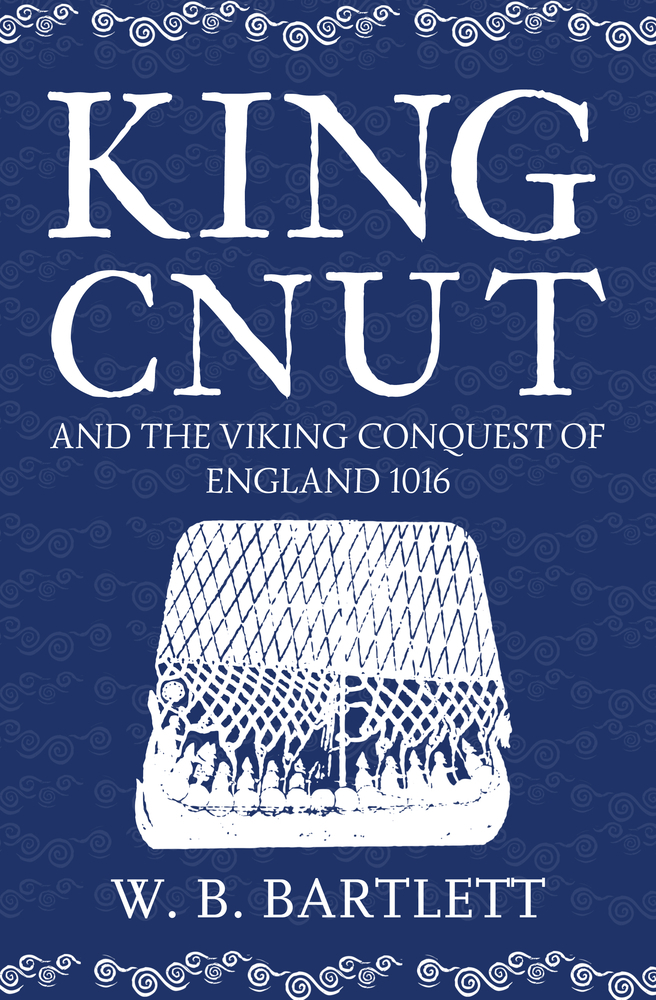
King Cnut and the Viking Conquest of England 1016
The Viking Conquest of England in 1016 – a far tougher and more brutal campaign than the Norman Conquest exactly half a century later – saw two great warriors, the Danish prince Cnut and his equally ruthless English opponent King Edmund Ironside, fight an epic campaign. Cnut sailed in two hundred longboats, landing first in September 1015 on the Wessex coast with 10,000 soldiers. The two forces fought each other to the point of exhaustion for the next fourteen months. It was a war of terrifying violence that scarred much of England, from the Humber to Cornwall. It saw an epic siege of the great walls of London and bruising set-piece battles at Penselwood, Otford, and the conclusive Danish victory at Assandun on 18 October 1016.
Edmund’s death soon afterwards finally resolved a brutal, bloody conflict and ended with Cnut becoming the undisputed king of England. This book tells the extraordinary story of Cnut the Great’s life. Cnut was far removed from the archetypal pagan Viking, being a staunch protector of the Christian Church and a man who would also become Emperor of the North as king of Denmark and Norway. His wife, Emma of Normandy, was a remarkable woman who would outlive the two kings of England that she married. Their son Harthacnut would be the second and last Danish king of England, but the greatness of his dynasty did not long survive his death. This saga also features the incompetent Æthelred the Unready, the ferocious Sweyn Forkbeard and the treacherous Eadric Streona, recreating one of the great stories of Dark Age England.
Edmund’s death soon afterwards finally resolved a brutal, bloody conflict and ended with Cnut becoming the undisputed king of England. This book tells the extraordinary story of Cnut the Great’s life. Cnut was far removed from the archetypal pagan Viking, being a staunch protector of the Christian Church and a man who would also become Emperor of the North as king of Denmark and Norway. His wife, Emma of Normandy, was a remarkable woman who would outlive the two kings of England that she married. Their son Harthacnut would be the second and last Danish king of England, but the greatness of his dynasty did not long survive his death. This saga also features the incompetent Æthelred the Unready, the ferocious Sweyn Forkbeard and the treacherous Eadric Streona, recreating one of the great stories of Dark Age England.
336 pages, Hardcover
First published April 1, 2018
About the author
W.B. Bartlett
24 books17 followersW.B. Bartlett has worked across the globe in almost twenty countries and has spent time in over fifty. He is the author of many history books for Amberley Publishing, including titles on the Titanic, Medieval History and Dam Busters. He lives in Bournemouth.
Ratings & Reviews
Friends & Following
Create a free account to discover what your friends think of this book!
Community Reviews
Displaying 1 - 20 of 20 reviews

December 31, 2016
Ask the man in the street how many times England has been successfully invaded and he’ll reply, “Twice: the Romans and the Normans.” Ask a historian, particularly one specialising in constitutional history, and he’ll add a third: William and Mary’s invasion in 1688.
They’re all wrong. There have been at least five successful invasions of England. These three, plus the slow-motion carving out of an England separate from Britain by the Anglo-Saxons and then, fifty years before the one date in English history everyone knows, the Vikings finally succeeded in what they’d been trying to do for the previous 150 years: grab the country.
This long-overdue book is about the Viking invasions that first crippled and then ended the reign of England’s worst-ever king, Æthelred, and the man who finally succeeded him, Cnut. In Denmark, his homeland, Cnut’s name is invariably followed by his appellation, ‘the Great’, but in England, where he spent most of his adult life and where he was buried, he is all but forgotten, his fame as a conqueror eclipsed by the man who followed him, fifty years later. Bartlett’s book seeks to redress that balance and it does a good job of demonstrating what a remarkable king Cnut was, holding together a sea-spanning empire encompassing Denmark, England, Norway and much of Sweden.
As a sea pirate with imperial pretensions, Cnut did all that he could to ensure the history makers of his time – the clerks of the Church – were on his side, as well as doing what he could in later life to atone for the judicious murders of his early life that had made his grasp of the crown more secure. The book is thorough in its exploration of the man and his time, although a little on the bloodless side. This is no fault of the author, but rather inherent in the limited contemporary sources – mainly chronicles and charters – which do not lend themselves to rounded character portraits. Later Norse sagas add colour but the careful historian, and Bartlett is careful, has to be cautious about adding these details to what is a sober assessment of England’s forgotten conqueror.
And the tide story? First related by Henry of Huntingdon in the 12th century (a century after Cnut’s death).
They’re all wrong. There have been at least five successful invasions of England. These three, plus the slow-motion carving out of an England separate from Britain by the Anglo-Saxons and then, fifty years before the one date in English history everyone knows, the Vikings finally succeeded in what they’d been trying to do for the previous 150 years: grab the country.
This long-overdue book is about the Viking invasions that first crippled and then ended the reign of England’s worst-ever king, Æthelred, and the man who finally succeeded him, Cnut. In Denmark, his homeland, Cnut’s name is invariably followed by his appellation, ‘the Great’, but in England, where he spent most of his adult life and where he was buried, he is all but forgotten, his fame as a conqueror eclipsed by the man who followed him, fifty years later. Bartlett’s book seeks to redress that balance and it does a good job of demonstrating what a remarkable king Cnut was, holding together a sea-spanning empire encompassing Denmark, England, Norway and much of Sweden.
As a sea pirate with imperial pretensions, Cnut did all that he could to ensure the history makers of his time – the clerks of the Church – were on his side, as well as doing what he could in later life to atone for the judicious murders of his early life that had made his grasp of the crown more secure. The book is thorough in its exploration of the man and his time, although a little on the bloodless side. This is no fault of the author, but rather inherent in the limited contemporary sources – mainly chronicles and charters – which do not lend themselves to rounded character portraits. Later Norse sagas add colour but the careful historian, and Bartlett is careful, has to be cautious about adding these details to what is a sober assessment of England’s forgotten conqueror.
And the tide story? First related by Henry of Huntingdon in the 12th century (a century after Cnut’s death).

August 14, 2020
Contents:
Maps and Genealogical Tables
Introduction
Prelude: A Viking Saga
1. England: The Long Road to Conquest (991-1002)
2. Sweyn Forkbeard: From Raider to King (1002-1014)
3. Cnut of Denmark: The Prince without a Land (1014-1015)
4. Ironsides: Battle to the Death (1015-1016)
5. King of England: Victory and Kingship (1016-1018)
6. King of Denmark: The Years of Consolidation (1018-1027)
7. Emperor of the North: The Years of Greatness (1027-1034)
8. Cnut the Great: A Life Assessed (1035)
Bibliography
Notes
Acknowledgements
Index
About the Author
Having just finished reading this I realise why History has always been my favourite subject.
The author outlines the history of the Viking (a catch-all label for Danes as ‘viking’ denotes inhabitants of a very specific area of Denmark) raids on England. At first ‘quick wins’ on easy targets such as isolated monasteries. The next stage was cashing in (literally) on weak English leadership and poor defences. Aethelred II is aptly named the ‘Unready’. The King would pay the Vikings to go away. They did. But then they would keep coming back, raising the price each time. Only by screwing his people harder and harder could Aethelred raise the Viking's demand. Eventually the invaders saw little point in keeping their part of a bargain with a weak king and stayed. England offered an easy solution to land hunger in Denmark. The Danes were canny slave traders too and would help themselves to the native English. They knew the market pretty well. Fair women in particular would command high prices from Islamic customers.
Sweyn Forkbeard, Cnut’s father, inspired fear and paved the way for his son in England. But Cnut first had to deal with Edmund Ironsides, a king with more bottle than Aethelred. The King and would-be King struck a deal: The country was to be divided between them, the survivor to rule the whole kingdom on the first one’s death. Edmund died conveniently, shortly afterwards. This was a pattern throughout Cnut’s life – his enemies, real or imagined, tended to disappear at convenient moments. He appears a shrewd operator.
In between raiding and assorted acts of violence, including the murder of an Archbishop of Canterbury, the Danes embraced Christianity. Cnut was especially generous towards some of the religious targets which had fared badly from attacks by his countrymen. But canniness was part of Cnut's DNA it seems: he had the murdered Archbishop Aelfheah’s body disinterred from St Paul’s in London and rehoused in a magnificent tomb at Canterbury. London was a potential trouble spot for the Danish king and this sainted Archbishop and martyr, Aelfheah, was attracting pilgrims to his tomb. These were presumably Saxon pilgrims who might become a rallying point for anti Danish sentiment. Far better to have him re-homed at Canterbury, well endowed by Cnut, and under the watchful eye of the current loyal Archbishop.
This Christian king would next visit Rome and the pope at least once and gain kudos from it. He used his audience to gain tax concessions for the English clergy which translated into brownie points for the King from the English church. Whilst in Rome he attended the coronation of the Holy Roman Emperor Conrad II, returning home with Imperialist plans in the direction of northern Europe, and a useful political ally to assist or at least to keep neutral. He had a new crown made, influenced it seems by the one worn by Conrad. Cnut’s second wife, Emma of Normandy, was the widow of the dead king Aethelred and the Danish interaction with the Dukedom kept the Duchy at least neutral.
Cnut chose to be buried in Winchester, his favoured capital city. Alfred the Great is buried here too. Interestingly the ‘Great’ would attach to Cnut only in his native Denmark but more of his time seems to have been spent in England. A case of absence making the heart grow fonder, perhaps?!
Recommended, though a more detailed genealogical chart and fuller maps would have enhanced it.
Maps and Genealogical Tables
Introduction
Prelude: A Viking Saga
1. England: The Long Road to Conquest (991-1002)
2. Sweyn Forkbeard: From Raider to King (1002-1014)
3. Cnut of Denmark: The Prince without a Land (1014-1015)
4. Ironsides: Battle to the Death (1015-1016)
5. King of England: Victory and Kingship (1016-1018)
6. King of Denmark: The Years of Consolidation (1018-1027)
7. Emperor of the North: The Years of Greatness (1027-1034)
8. Cnut the Great: A Life Assessed (1035)
Bibliography
Notes
Acknowledgements
Index
About the Author
Having just finished reading this I realise why History has always been my favourite subject.
The author outlines the history of the Viking (a catch-all label for Danes as ‘viking’ denotes inhabitants of a very specific area of Denmark) raids on England. At first ‘quick wins’ on easy targets such as isolated monasteries. The next stage was cashing in (literally) on weak English leadership and poor defences. Aethelred II is aptly named the ‘Unready’. The King would pay the Vikings to go away. They did. But then they would keep coming back, raising the price each time. Only by screwing his people harder and harder could Aethelred raise the Viking's demand. Eventually the invaders saw little point in keeping their part of a bargain with a weak king and stayed. England offered an easy solution to land hunger in Denmark. The Danes were canny slave traders too and would help themselves to the native English. They knew the market pretty well. Fair women in particular would command high prices from Islamic customers.
Sweyn Forkbeard, Cnut’s father, inspired fear and paved the way for his son in England. But Cnut first had to deal with Edmund Ironsides, a king with more bottle than Aethelred. The King and would-be King struck a deal: The country was to be divided between them, the survivor to rule the whole kingdom on the first one’s death. Edmund died conveniently, shortly afterwards. This was a pattern throughout Cnut’s life – his enemies, real or imagined, tended to disappear at convenient moments. He appears a shrewd operator.
In between raiding and assorted acts of violence, including the murder of an Archbishop of Canterbury, the Danes embraced Christianity. Cnut was especially generous towards some of the religious targets which had fared badly from attacks by his countrymen. But canniness was part of Cnut's DNA it seems: he had the murdered Archbishop Aelfheah’s body disinterred from St Paul’s in London and rehoused in a magnificent tomb at Canterbury. London was a potential trouble spot for the Danish king and this sainted Archbishop and martyr, Aelfheah, was attracting pilgrims to his tomb. These were presumably Saxon pilgrims who might become a rallying point for anti Danish sentiment. Far better to have him re-homed at Canterbury, well endowed by Cnut, and under the watchful eye of the current loyal Archbishop.
This Christian king would next visit Rome and the pope at least once and gain kudos from it. He used his audience to gain tax concessions for the English clergy which translated into brownie points for the King from the English church. Whilst in Rome he attended the coronation of the Holy Roman Emperor Conrad II, returning home with Imperialist plans in the direction of northern Europe, and a useful political ally to assist or at least to keep neutral. He had a new crown made, influenced it seems by the one worn by Conrad. Cnut’s second wife, Emma of Normandy, was the widow of the dead king Aethelred and the Danish interaction with the Dukedom kept the Duchy at least neutral.
Cnut chose to be buried in Winchester, his favoured capital city. Alfred the Great is buried here too. Interestingly the ‘Great’ would attach to Cnut only in his native Denmark but more of his time seems to have been spent in England. A case of absence making the heart grow fonder, perhaps?!
Recommended, though a more detailed genealogical chart and fuller maps would have enhanced it.
June 12, 2020
I read a lot of medieval history but the time period before the Battle of Hastings is more sketchy for me so this was a fascinating read, especially that 50 years before 1066, England had been conquered by the Vikings after a couple of centuries of looting and raiding.
The author covers the time period from when King Æthelred the Unready was unable to stop the Viking invasions no matter how much 'danegold' he paid them to the end of the life of his successor (King Cnut) in 1035. Despite the limited primary resources of this time, I thought the author delivered a fascinating story of the time period for the modern reader and showed what an extraordinary man Cnut was.
He was not only King of England (and likely only about 18-20 when he succeeded as King) but also head of Denmark and Norway. He was very politically astute with the secular leaders of the time and the church. He converted to Christianity and worked with the church to enhance and secure his power as King. He was King of England from 1015 to 1035 and died at about the age of 38-40.
He isn't remembered because he wasn't Anglo-Saxon (like Alfred the Great) nor did his children ascend the throne, both dying in their 20's. Instead King Æthelred's son (known to history as Edward the Confessor) became King. And in 1066 with Anglo Saxon England taken over by the Normans, whilst Cnut is still remembered as "Cnut the Great" in his birthplace of Denmark, his legacy as "a great" King in England is almost unknown and has been lost to history.
The author covers the time period from when King Æthelred the Unready was unable to stop the Viking invasions no matter how much 'danegold' he paid them to the end of the life of his successor (King Cnut) in 1035. Despite the limited primary resources of this time, I thought the author delivered a fascinating story of the time period for the modern reader and showed what an extraordinary man Cnut was.
He was not only King of England (and likely only about 18-20 when he succeeded as King) but also head of Denmark and Norway. He was very politically astute with the secular leaders of the time and the church. He converted to Christianity and worked with the church to enhance and secure his power as King. He was King of England from 1015 to 1035 and died at about the age of 38-40.
He isn't remembered because he wasn't Anglo-Saxon (like Alfred the Great) nor did his children ascend the throne, both dying in their 20's. Instead King Æthelred's son (known to history as Edward the Confessor) became King. And in 1066 with Anglo Saxon England taken over by the Normans, whilst Cnut is still remembered as "Cnut the Great" in his birthplace of Denmark, his legacy as "a great" King in England is almost unknown and has been lost to history.

March 10, 2022
This is a really thorough look at this time period and players.
Complicated time very well handled.
Complicated time very well handled.

September 10, 2017
Bartlett lays out a coherent chain of events that anyone of any interest level can follow. He makes frequent use of evidence of all kinds, but not in a way that detracts from the ultimate story arch, and provides a good basis for those looking to do further research while still being entertaining. Biographies (and writing in general) on Cnut are few and far between, but this does a good job of filling the gap. There is the Yale English Monarchs biography of Cnut, which admittedly I have not read, but this biography is more accessible to the aveerage reader and more entertaining than books in that series often are. So as far as writings on Cnut go, this book is certainly a good place to start.

December 11, 2024
A (mostly) well written book that was a good overview of Cnut, who I have flirted with being interested in since we watched a doco about him in year 8 english. My dad got me this book for my birthday because we watched Vikings: Valhalla together, so of course I had to read it. I did enjoy it! And it was good to get some of the real history that the show twists into very strange shapes. Two things stuck out to me: 1. How globalised the world has always been and 2. How much we have to fill in the gaps about pre-modern/early-modern history. It’s strange for someone who is so steeped in modern history, where the burden of proof is much higher and there are more sources available, to be encountering so much “we simply don’t know so we have to guess” about not just minutiae but pretty big events. That’s pretty cool, but weirdly sad in a way…

February 13, 2021
A bit of a slog and Cnut only appears nearly halfway through. The first chapters are taken up with Viking raiding, gradual deterioration in the Anglo-Saxon ability to resist and the almost complete breakdown by the time of Aethelred's death followed by Sweyn Forkbeard becoming King of England for all of five weeks before he too dies and his young son Cnut takes over the family firm.
It reads very much like a Mafia feud between rival families with the capo di capo having to watch his back for uppity lieutenants (yes I mean you Thorkell, Godwin, Leofric, Siward etc).
Then there are the rival families, Olaf, Edmund etc, multiple wives, multiple sons, multiple kingdoms (England, Denmark, Norway & Scania (Ska°ne), dodgy neighbours, Francia, Wales, Scotland, Germany, more Sweden.
It gives a good explanation of how Cnut came to be in the position he was, how he managed it and what happened after him with an explanation of the ongoing links with Normandy with pointers to who was going to crop up later (Edward, Harald & William).
It fills in a lot of the gaps between Alfred & 1066 and has encouraged me to read more about the late Saxon period and to look up more of the sagas.
It reads very much like a Mafia feud between rival families with the capo di capo having to watch his back for uppity lieutenants (yes I mean you Thorkell, Godwin, Leofric, Siward etc).
Then there are the rival families, Olaf, Edmund etc, multiple wives, multiple sons, multiple kingdoms (England, Denmark, Norway & Scania (Ska°ne), dodgy neighbours, Francia, Wales, Scotland, Germany, more Sweden.
It gives a good explanation of how Cnut came to be in the position he was, how he managed it and what happened after him with an explanation of the ongoing links with Normandy with pointers to who was going to crop up later (Edward, Harald & William).
It fills in a lot of the gaps between Alfred & 1066 and has encouraged me to read more about the late Saxon period and to look up more of the sagas.

July 26, 2023
Learned a lot, very interesting

October 1, 2026
Too long and drawn out , made the book boring

November 19, 2023
3 stars
I enjoyed reading about King Cnut, or Cnut The Great as this author suggests he should be known by. However, if you are looking for a one volume history of the man's rule this book is rather frustrating. Near half of it deals with the period prior to Cnuts reign and the subject appears briefly. Then the final chapter follows similar suit, titled as an assessment of Cnuts reign, it almost entirely deals with what happened after his death. Some interesting history is in here and I took some things away with me, but I still feel I need another introduction to the subject after reading this book.
I enjoyed reading about King Cnut, or Cnut The Great as this author suggests he should be known by. However, if you are looking for a one volume history of the man's rule this book is rather frustrating. Near half of it deals with the period prior to Cnuts reign and the subject appears briefly. Then the final chapter follows similar suit, titled as an assessment of Cnuts reign, it almost entirely deals with what happened after his death. Some interesting history is in here and I took some things away with me, but I still feel I need another introduction to the subject after reading this book.

August 31, 2019
It is a thorough and penetrating biography of a man who is best known in legend as the King who made it clear to his court that he did not rule the waves. The real Cnut was a ruthless man who however was capable of adapting to the reality of ruling two very different kingdoms as well as aiming to take over Norway and southern Sweden. It’s a dense book but one which will repay perseverance with an understanding of English history from Ethelred the Unready to the Norman Conquest.

June 1, 2025
Who was Cnut? As a child, I knew King Cnut as the arrogant King who believed he could control the tides, and his hubris got him damp feet.
My Ladybird book of Kings and Queens gave a little more context that he used the incident to admonish his courtiers who tried to flatter him. He was King of England, Denmark, and Norway and had two useless sons. And that was it.
But Cnut was far more than this. He is an overlooked Conqueror, having invaded, defeated and ruled Anglo Saxon England. He built a North Sea Empire as King of England, Denmark, and Norway. His patronage led to a surge in Christianisation, and expanded the power and influence of the Church. He made both Vikings and Anglo Saxon nobles land and titles across England. He changed Denmark, making its political and religious systems more like those of England. His influence extended to Rome where he met the Pope and Holy Roman Emperor, marrying his daughter to a man who would become the latter.
He arrived a savage Viking Warlord, and died as the rightful King of England. In Denmark he is Cnut the Great, a title he is rarely known by in England. As this biography will show, he more than earns this title.
My Ladybird book of Kings and Queens gave a little more context that he used the incident to admonish his courtiers who tried to flatter him. He was King of England, Denmark, and Norway and had two useless sons. And that was it.
But Cnut was far more than this. He is an overlooked Conqueror, having invaded, defeated and ruled Anglo Saxon England. He built a North Sea Empire as King of England, Denmark, and Norway. His patronage led to a surge in Christianisation, and expanded the power and influence of the Church. He made both Vikings and Anglo Saxon nobles land and titles across England. He changed Denmark, making its political and religious systems more like those of England. His influence extended to Rome where he met the Pope and Holy Roman Emperor, marrying his daughter to a man who would become the latter.
He arrived a savage Viking Warlord, and died as the rightful King of England. In Denmark he is Cnut the Great, a title he is rarely known by in England. As this biography will show, he more than earns this title.

July 12, 2023
What a king and what a saga. I knew nothing substantial about Cnut going into this, bar a few spatterings of information Cnut was an enigma in my mind. W. B. Bartlett has created a conscise and compelling account of the great King's life. In this thoroughly enjoyable and readable book I felt strong emotions and connections with the likes of Edmund Ironside and his staunch resistance to Danish rule. However, I am mainly left in awe at Cnut's incredible achievements. Technically the Saxons are the conquered but I think in modern times at least, England should join Denmark in acknowledging them. I'll definitely be delving deeper into the lives of the people during this period.

September 4, 2024
"Their more skilled warriors could, it was suggested, catch an enemy spear in flight and hurl it back towards the thrower." Bartlett catches the historical spear in flight and hurls it back towards the reader. Wonderful details such as the quote above adorn this historical narrative, which gives a great impression of the time period and what was happening. Highly recommend Bartlett is a one of a kind medieval historian.

February 13, 2025
This is an accessible and well researched account of King Cnut (Canute): his background, the context of his invasion and take0ver of the English state, his reign and his legacy. The author skilfully links the history of England and the Scandinavian countries, to show how Cnut managed to straddle politically both areas. This is a readable narrative which will appeal to those, like this reviewer, who are unfamiliar with the details of these events.

April 1, 2025
"We perceive that we live in perilous times… it greatly behoves us… to give the utmost care and attention to the profit of our souls."
This seemed to be a dutifully factual account of the reigns of Cnut and his contemporaries, exploring what is undoubtedly a hard time to study given the shaky records which exist, but the prose just felt so dry and academic, so it was kind of a boring read. This book did what it set out to do, and that's it, with no flair.
3/5 Stars
This seemed to be a dutifully factual account of the reigns of Cnut and his contemporaries, exploring what is undoubtedly a hard time to study given the shaky records which exist, but the prose just felt so dry and academic, so it was kind of a boring read. This book did what it set out to do, and that's it, with no flair.
3/5 Stars

February 5, 2019
An interesting and readable book about a period of English history I know little about. I did worry a bit about some of the language, style and editing. The author is a 'finance management consultant', for whom writing medieval history books is a sideline, presumably. Is it just some kind of snobbery that makes me feel a tad concerned about this?
February 1, 2021
Fascinating story full of amazing names and sordid murders (never accept an invitation to dinner) explaining Cnut’s success and the lead up to the Norman Conquest.
Sadly the violent times meant that records are scanty so the facts are few and far between.
Easy to see where the Game of Thrones plots came from, but I found the writing dull and repetitive.
Sadly the violent times meant that records are scanty so the facts are few and far between.
Easy to see where the Game of Thrones plots came from, but I found the writing dull and repetitive.

November 6, 2020
Wonderful at least a gripping readable account of this remarkable man , emperor of Denmark England and Norway plus part of Sweden.
Bartlett is an excellent writer as his other books on the crusades prove and this is absolutely up to standard
Bartlett is an excellent writer as his other books on the crusades prove and this is absolutely up to standard

October 6, 2021
Good, clear , concise history of England's Viking king. There was no discernible ax to grind so the coverage was fair and even.
Displaying 1 - 20 of 20 reviews