Jump to ratings and reviews
Rate this book

Four Quartets #1

Burnt Norton

Rate this book

6 pages, Paperback

First published January 1, 1935

2 people are currently reading
1053 people want to read

About the author

T.S. Eliot

1,046 books5,769 followers
Thomas Stearns Eliot was a poet, dramatist and literary critic. He received the Nobel Prize in Literature in 1948 "for his outstanding, pioneer contribution to present-day poetry." He wrote the poems The Love Song of J. Alfred Prufrock, The Waste Land, The Hollow Men, Ash Wednesday, and Four Quartets; the plays Murder in the Cathedral and The Cocktail Party; and the essay Tradition and the Individual Talent. Eliot was born an American, moved to the United Kingdom in 1914 (at the age of 25), and became a British subject in 1927 at the age of 39.

See also http://en.wikipedia.org/wiki/T.S._Eliot

Ratings & Reviews

What do you think?
Rate this book

Friends & Following

Create a free account to discover what your friends think of this book!

Community Reviews

5 stars
169 (59%)
4 stars
78 (27%)
3 stars
27 (9%)
2 stars
8 (2%)
1 star
2 (<1%)
Displaying 1 - 30 of 33 reviews
Profile Image for Fergus, Weaver of Autistic Webs.
1,271 reviews18.6k followers
December 7, 2024
As the Nazi Goons strutted their brazen way into, and sprawled all over sympathetic, scenic Austria, T.S. Eliot was already a tortured, broken and ruined man.

And at that moment he KNEW, alas, that:

No contact possible to flesh
Allayed the fever of the bone.

There was “no relief but in grief.”

If you’re anything like T.S. Eliot, probably you’ve had a Really Dark time in your life.

Yes, Tom Eliot wrote this poem at the time the Second World War started. As he said in an essay written at that time that he suddenly felt “an emotion I have never felt before.”

He was Nauseated.

For it was the end of all the decency and civility he had lived for and in which he had hoped against Hope that war might be averted.

At an inappropriate time in his own life, too.

The poem is written in four movements, like a Beethoven late quartet - for the anguish of those musical chefs d’oeuvre spoke to him deeply during that time of darkness - hence the later additions with a new title:

This was to be the first of “four quartets.”

Eliot knew the saying misery loves company was especially appropriate now - for all Europe felt miserable at that moment. So, to encourage folks, he started to write - “what we call the end is often the beginning....”

How prescient. For when peace finally came, it was to only be the birth pangs of our own Age of Anxiety. Yet no one recognized its beginnings.

But new beginnings can mean new spiritual beginnings, as well. Like the darkest point of the night which heralds a New Day...

And, you know, that was so true of Eliot, too, who in his own postwar optimism would find the courage to finally give voice to his great love and propose to his vibrant secretary!

For Eliot had been BADLY burned before.

His first wife had been a substance abuser who often publicly and repeatedly humiliated him, and you know from your reading how people loved to talk in the class-tight little British Isles back then -

They were soon painfully separated, as she was committed to an institution.

But soon she would pass away, freeing Eliot’s conscience for a proposal which would “set a crown” on his life’s work, as the Fourth Quartet (cynically, albeit unknowingly) might subtly otherwise suggest to us.

How happy he was to be then - for the first time in many decades!

Just Google his honeymoon pics, to see...

As the war had deepened in violence with the Blitz, though, Eliot had become an air raid warden.

Why not? he was Already a church warden.

Like so many of us, responsibility gave him some sense of fulfillment at a time of anguish.

So, this time, for Eliot and for all Britons, was indeed “the dark time” - but though dark, there was “no wind, but Pentecostal Fire.” That refers both to the then-widely-used incendiary bombs -

AND his use of this deep crisis to rekindle Londoners’ Spiritual lives.

But this, alas, was also the time of Eliot’s purification by a Dark Night of the Soul...

One close friend hinted that she herself had fruitlessly hit upon the poor guy - then turned around and archly said she thought he was going downhill fast.

Sour grapes?

“What we call the end” can also be a new beginning!

Because in peacetime Eliot would become “very, very happy.”

For Valerie, his former secretary, would become his Wife.

And Eliot?

At that wonderful moment he learned his lesson:

Whatever will happen, will happen - so let God deal with it!

And Oh, what blissful resignation there was in that truth now for him!
Profile Image for Paul Christensen.
Author 7 books164 followers
December 28, 2020
Every year in spring I read this, gaining more each time.

‘Only through time time is conquered.’
Profile Image for Josh.
65 reviews45 followers
December 31, 2020
Heavenly

Time present and time past
Are both perhaps present in time future,
And time future contained in time past.
If all time is eternally present
All time is unredeemable.
What might have been is an abstraction
Remaining a perpetual possibility
Only in a world of speculation.
What might have been and what has been
Point to one end, which is always present.
Footfalls echo in the memory
Down the passage which we did not take
Towards the door we never opened
Into the rose-garden.

The poem starts with epigraphs from Heraclitus
Wrote

τοῦ λόγου δὲ ἐόντος ξυνοῦ ζώουσιν οἱ πολλοί
ὡς ἰδίαν ἔχοντες φρόνησιν

— I. p. 77. Fr. 2.
Translation : "Though wisdom is common, the many live as if they have wisdom of their own"

ὁδὸς ἄνω κάτω μία καὶ ὡυτή

— I. p. 89 Fr. 60.
Translation : , "the way upward and the way downward is one and the same."

Burnt Norton is the first poem of T. S. Elliot.
After reading this, I want to know more about Elliot and his works
Angelic and heavenly.
Profile Image for Sofia.
2 reviews
January 11, 2020
"If all time is eternally present
All time is unredeemable.
What might have been is an abstraction
Remaining a perpetual possibility
Only in a world of speculation.
What might have been and what has been
Point to one end, which is always present".

If you're easily fascinated by the notion of time, you can't possibly have missed Burnt Norton. I have read it over and over during my high school years and shared Eliot's longing to be free from the restraint of time. However, this is certainly an ambiguous poem and its reading can easily result in a somewhat daunting experience.

Burnt Norton is one of T. S. Eliot's late major poems. It was published, along with its successors 'East Coker', 'The Dry Salvages' and 'Little Gidding' in 1943 under the title 'Four quartets', as they resemble the effect of string quartets. The poems originate from Eliot's change of tone and subject after his conversion to Anglo-Catholicism, naturalization as a British citizen and the separation from his first wife Vivienne Haigh-Wood. This resulted in a shift towards a smoother narrative surface and the abolition of his earlier poetry's trademark juxtapositions and multiplicity of voices and perspectives.

This poem, skilfully elaborated in five sections, mirrors the old, universal questioning of the meaning of time in a not so effortless, but rather demanding manner. As a matter of fact, Eliot reflects on the difficulty of 'making poetry' and assembling words, as if their meaning couldn't effectively express the philosophical concepts of time and Christian devotion. Words can't help but "decay with imprecision" under the poet's effort.
Profile Image for katia.
251 reviews18 followers
July 26, 2023
What might have been and what had been point to one end, which is always present

My favorite poem ever!!
Profile Image for Romana .
394 reviews66 followers
July 26, 2016
I don't really get poetry that isn't poetic. Like, if you're not going to make your poem sound nice when recited, then just write an essay instead. Especially when it's such a long poem. Essays are better. They're easier to read.

Because this was in verse, there was a lot of it that just made no sense to me. Or maybe it wouldn't have made sense either way. I've never been a very passionate consumer of poetry. Anyway, the parts that did make sense were really interesting. I liked the approach to the concept of time and consciousness and movement and how these were sort of woven together.
3,517 reviews46 followers
March 29, 2023
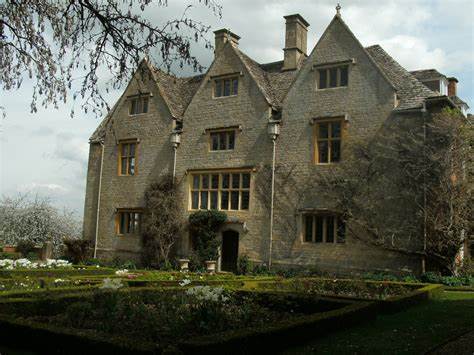
Burnt Norton, which is the title to the first section of Eliot's Four Quartets, originates from a seventeenth-century English manor house in Gloucestershire which burned down in 1741. The house was subsequently rebuilt and renamed Burnt Norton. Eliot visited this rebuilt manor home with an old friend, Emily Hale, whom he had known as a youth in the United States. In this section Eliot eloquently deals with the riddle of time. The riddle of past, present, and future.
Profile Image for Vivek Bali.
48 reviews
July 28, 2020
Only a flicker over the strained time-ridden
faces distracted from distraction by distraction.


Burnt Norton is perhaps one of the most difficult yet simple poems of all times. The very first one from the four quartets by Elliot.
It speaks broadly on the topic of time and the mortal world that we are stuck in as prisoners of time ever transitioning into the future while reflecting on the modern world and touching on all the existential questions in a metaphorical and philosophical manner.
It encompasses the shortcomings of the modern world and keeps pointing out the grind of life that we are all a part of. Busy wasting the present as we struggle with the past and worry about the future.
There are many spiritual references as well especially talking about consciousness and its significance in the mortal world.

The arhythmic style of Elliot uses abstraction to evoke feelings and create thought provoking moments for the reader.
Elliot has used his words mindfully. It takes great amount of time and energy to decipher the real intent of each line. He has taken a simple sentence and then bent it and doubled it up and then turned it back on itself so as to make it difficult to swallow as a whole as a result forcing the reader to chew it up piece by piece or in this case word by word.
This makes the deciphering difficult and at times ambiguous so you have to sit and ponder carefully over all the layers and think about things more seriously. This should be the prime objective of all poetry.

A must read for anyone who likes to dive into the pool of philosophy, science and the mystery of life.
Profile Image for Preetam Chatterjee.
7,584 reviews403 followers
July 24, 2024
“Time present and time past
Are both perhaps present in time future,
And time future contained in time past.
If all time is eternally present
All time is unredeemable.
What might have been is an abstraction
Remaining a perpetual possibility
Only in a world of speculation.
What might have been and what has been
Point to one end, which is always present.
Footfalls echo in the memory
Down the passage which we did not take
Towards the door we never opened
Into the rose-garden. My words echo
Thus, in your mind.
But to what purpose
Disturbing the dust on a bowl of rose-leaves
I do not know.
Other echoes
Inhabit the garden. Shall we follow?”


The poem commences with a speculation on a concept of time which was currently popular. In New Physics it was known as ‘the timespace continuum’.

Critics have held that Eliot may be drawing upon St. Augustine, who had previously observed: “For if there are times past and future. I desire to know where they are. But if as yet I do not succeed, I still know, wherever they are, that they are not there as future or past, but as present............Although past things are related as true, they are drawn out from memory—not the things themselves, which have passed, but the words conceived from the images of the things which they have formed in the mind as foot prints in their passage through the senses. My childhood, indeed, which no longer is, is in time past) which now is not; but when I call to mind its image, and speak of it, I behold it in the present, because it is as yet in my memory. (Confessions XI, 18.)

The epigraphs of the poem are a derivative from Heraclitus, the Greek philosopher and may be rendered thus: The first says: ‘Although the Word (logos) is common to all, most men live as if they had a private wisdom of his own’. The second says : ‘The way up and the way down are one and the same’.

The insinuations must be plainly grappled so as to comprehend the alteration it undergoes in the hands of Eliot. To dissolve into the mystic way of Affirmation (way up) and the way of Negation (the way down) both are the same in as much as the approval of any one of them may lead the mystic to ‘the still point of the turning world’ and afford freedom from the maneuver of time.

Words move, music moves
Only in time; but that which is only living
Can only die. Words, after speech, reach
Into the silence. Only by the form, the pattern,
Can words or music reach
The stillness, as a Chinese jar still
Moves perpetually in its stillness.
Not the stillness of the violin, while the note lasts,
Not that only, but the co-existence,
Or say that the end precedes the beginning,
And the end and the beginning were always there
Before the beginning and after the end.
And all is always now. Words strain,
Crack and sometimes break, under the burden,
Under the tension, slip, slide, perish,
Decay with imprecision, will not stay in place,
Will not stay still. Shrieking voices
Scolding, mocking, or merely chattering,
Always assail them. The Word in the desert
Is most attacked by voices of temptation,
The crying shadow in the funeral dance,
The loud lament of the disconsolate chimera.

The detail of the pattern is movement,
As in the figure of the ten stairs.
Desire itself is movement
Not in itself desirable;
Love is itself unmoving,
Only the cause and end of movement,
Timeless, and undesiring
Except in the aspect of time
Caught in the form of limitation
Between un-being and being.
Sudden in a shaft of sunlight
Even while the dust moves
There rises the hidden laughter
Of children in the foliage
Quick now, here, now, always—
Ridiculous the waste sad time
Stretching before and after.....


This synchronized existence of what we call past, present and future creates the gyrating wheel of time, which Eliot accepts hesitantly, as is hinted by his use of ‘Perhaps’.

This theory of time leaves no room for its reclamation. Under this hypothesis, time cannot be ‘redeemed’, that is, recovered, regained, unconfined, and what is done cannot be undone and what is only willed, anticipated and ineffectively endeavoured remains ‘a perpetual possibility’ only in the world of speculation.

The ‘might have been’ is never comprehended….

Go, said the bird, for the leaves were full of children,
Hidden excitedly, containing laughter.
Go, go, go, said the bird: human kind
Cannot bear very much reality.
Time past and time future
What might have been and what has been
Point to one end, which is always present.”


This is one of the very best that Eliot has created. Most recommended.
Profile Image for Kilburn Adam.
153 reviews60 followers
January 7, 2024
In Burnt Norton, T.S. Eliot epitomizes hallmarks of Modernist literature through intricate themes conveyed via profound symbolism. Time becomes a fluid concept, echoing Bergsonian philosophy and Einsteinian physics, challenging conventional linear perceptions. The poem's polyphonic structure, shifting between memory and the present moment, reflects relativity and Freudian models of the psyche, guiding the speaker on a journey through past regrets and roads not taken. Eliot's free verse form mirrors the fractured consciousness of modernity itself, as the poem explores societal escapism into illusionary worlds that offer refuge from harsh realities. Allusions to Romantic poets like Hardy and Keats cast the central bird symbol as one representing both poetic hope and pessimism, with Eliot also employing the objective correlative technique to imbue symbols with layered significance. Deeper meaning resides in symbols of the door and children, touching on the lingering scars of war and turbulence in modern art. An anti-Romantic stance mocks the limitations of Wordsworthian imagination, shattering romanticized perspectives. Freudian undertones reveal a divided self, reflecting the isolation of the modern individual. In its essence, Burnt Norton stands as a luminous embodiment of the fundamental principles that define Modernism – a dynamic portrayal of the fluidity of time, a rich tapestry woven with the multiplicity of perspectives, an exploration of the fractured nature of reality, an intricate interplay with profound symbolism, a bold rejection of Romantic ideals, and a profound journey into introspective exploration. With an unapologetic embrace of these core tenets, the poem emerges as more than just a literary work; it is a quintessential masterpiece that vividly captures and encapsulates the very soul of Modernist ideals and the relentless pursuits that characterize this transformative era in literary history.
Profile Image for Francesca Marconi.
Author 13 books50 followers
April 4, 2025
Il poema si apre con un'immagine evocativa: un giardino abbandonato, luogo di memorie perdute e di possibilità inespresse. Eliot, attraverso una serie di immagini evocative e di riflessioni filosofiche, esplora la natura del tempo, la sua ciclicità e la sua capacità di racchiudere in sé passato, presente e futuro.
Il giardino di Burnt Norton diviene un simbolo del tempo stesso, un luogo dove i ricordi si intrecciano con le sensazioni del presente, creando un'esperienza atemporale.

Burnt Norton il primo dei "Quattro Quartetti" di T.S. Eliot, è un'opera di straordinaria complessità e profondità, che trascende i confini della poesia per divenire una meditazione filosofica sul tempo, la memoria e la ricerca di significato. Pubblicato nel 1936, questo poema segna una svolta nella produzione eliotiana, abbandonando le immagini frammentate e la disillusione di "La terra desolata" per abbracciare una visione più contemplativa e spirituale.

Fu composto in un periodo storico cruciale, segnato dalla Seconda Guerra Mondiale e dalla crisi dei valori tradizionali. Eliot, con la sua poesia, cerca di offrire una risposta al senso di smarrimento e di incertezza che pervadeva la società dell'epoca. Il poema è permeato da un senso di nostalgia per un passato perduto, ma anche da una speranza di redenzione e di rinascita.

Certamente richiede una lettura attenta e riflessiva, ma che ricompensa il lettore con la sua bellezza e la sua profondità. La sua esplorazione del tempo, della memoria e della ricerca di significato lo rende un'opera universale, capace di parlare alle nuove generazioni.
Profile Image for Jiwon Kim.
231 reviews3 followers
December 30, 2025
Time present and time past
Are both perhaps present in time future,
And time future contained in time past.

Time past and time future
What might have been and what has been
Point to one end, which is always present.

Time past and time future
Allow but a little consciousness.
To be conscious is not to be in time
But only in time can the moment in the rose-garden,
The moment in the arbour where the rain beat,
The moment in the draughty church at smokefall
Be remembered; involved with past and future.
Only through time time is conquered.

Distracted from distraction by distraction
Filled with fancies and empty of meaning
Tumid apathy with no concentration
Men and bits of paper, whirled by the cold wind
That blows before and after time,
Wind in and out of unwholesome lungs
Time before and time after.

***

i had chills reading this.
Profile Image for Asher D Barnes.
58 reviews3 followers
May 29, 2024
I read this one on its own, and out loud this morning, a few lines really stuck with me

- only through time is time conquered
- Distracted from distraction by distraction

Some of this seems entirely spiritual and some of it seems completely unrelated

For example

- The Word in the desert
Is most attacked by voices of temptation

Reminds me of Jesus’ temptation in the desert but it doesn’t seem connected to “the hidden laughter of children in the foliage”

Reading it out loud made it flow more like a poem though and brought to my attention where he intentionally gives up a poetic flow and which pieces are most strongly flowed

The more I sit with this poem the more I come to enjoy it.
Profile Image for Gregory Rothbard.
417 reviews
December 10, 2025
Existentially crisis, welcome to the modern world. The modern times were to be a time of prosperity for humankind. Instead it ended in death, and chaos. The poet from St. Louis, Missouri, found himself the center of a Europe torn apart. This poem is Elliot working out his crisis in poetic form. And boy does he work it out, so economically in the use of words, he adeptly expresses Europe during this age. Recommended by Good Reads.
Profile Image for Eli Harris.
13 reviews
Read
October 23, 2025
It dudn't get much more smurter than this:

"Only a flicker
Over the strained time-ridden faces
Distracted from distraction by distraction
Filled with fancies and empty of meaning
Tumid apathy with no concentration
Men and bits of paper, whirled by the cold wind
That blows before and after time,
Wind in and out of unwholesome lungs
Time before and time after."
Profile Image for Jerzy Andrzejewski.
72 reviews
January 11, 2023
Przeczytałem 2 razy i nadal nie wiem czy wszystko rozumiem w pełni. Uwielbiam jak coś jest tak dobre, że myśle o tym cały czas i interpretuje na różne sposoby. Strasznie podobają mi się wszystkie metafory a w szczególności cytat "wskaż jeden koniec, który jest zawsze obecny"....
Profile Image for Rick-Phil.
52 reviews44 followers
August 20, 2017
Read the Four Quartets, and let not the tears given in appreciative beauty muddle the ink of realization.
Profile Image for Mary Thelma.
291 reviews22 followers
February 13, 2018
Propuesta poética del tiempo permanente. There is no wasted time.
Profile Image for canopus .
7 reviews
March 9, 2022
i am not sure how much i understood of this poem but reading it made me feel so serene in an almost ecstatic way
Profile Image for Mandy.
51 reviews1 follower
November 1, 2022
“Eliot is never far away in this flat”

常读常新
Profile Image for Pablo.
30 reviews
November 27, 2022
Be remembered; involved with past and future.
Only through time time is conquered.


Profile Image for Simone Torn.
76 reviews
May 26, 2023
Footfalls echo in the memory,
Down the passage which we did not take,
Towards the door we never opened,
Into the rose garden...
Profile Image for karolina.
157 reviews
Read
November 10, 2023
goodreads is lying, that was actually more pages than it's shown. read it for uni
Profile Image for Joseph Knecht.
Author 6 books52 followers
December 21, 2023

Time past and time future
What might have been and what has been
Point to one end, which is always present.
Profile Image for Angel Torres.
Author 1 book9 followers
February 3, 2024
I'm at a lost of words and conclusions,
I feel flabbergasted by the truth and comprehension of something so honest and dark.
Profile Image for Aran Chandran.
422 reviews8 followers
October 6, 2024
This piece has stirred up a lot of thoughts and feelings about my life. I’ve read and reread this in the past few days and still find it mercurial but with a core of sereneness.
Displaying 1 - 30 of 33 reviews