

What do you think?

Forgotten Realms: Empires #1
Horselords
Between the valiant kingdoms of the western Realms and the exotic eastern lands of Kara-Tur lies a vast, unexplored kingdom. For centuries, the "civilized" peoples of the Forgotten Realms have given little notice to these barbarians. Now, a powerful leader has united the wild horsemen into a mighty force--an army powerful enough to challenge the world.
Horselords is the first novel in the Empires Trilogy, TSR's newest saga set in the FORGOTTEN REALMS fantasy world.
Horselords is the first novel in the Empires Trilogy, TSR's newest saga set in the FORGOTTEN REALMS fantasy world.
312 pages, Paperback
First published January 1, 1990
About the author
David Zeb Cook
89 books80 followersDavid "Zeb" Cook is an American game designer best known for his work at TSR, Inc., where he was employed for over fifteen years. Cook grew up on a farm in Iowa where his father worked as a farmer and a college professor. In junior high school, Cook playing wargames such as Avalon Hill's Blitzkrieg and Afrika Korps. "I was primarily a wargamer, but there wasn't any role-playing available then," although in college, he was introduced to the Dungeons & Dragons role-playing game through the University of Iowa gaming club. Cook earned his B.A. in English (with a Theater minor) in 1977. He married his high school sweetheart, Helen, with whom he had one son, Ian. Cook became a high school teacher in Milligan, Nebraska, where his students gave him his nickname of "Zeb"; the name derives from his signature, which is dominated by a stroke resembling a 'Z'.
Ratings & Reviews
Friends & Following
Create a free account to discover what your friends think of this book!
Community Reviews
Displaying 1 - 30 of 39 reviews

January 20, 2017
This is kind of a mix.
Part historical epic begins. Nice descriptions and build of characters and civilization.
Pat Game of Thrones, before Game of thrones came about.
Not a lot of action.
YET a lot of political intrigue, plotting and maneuvering.
Helping to set the stage for what is to come next.
Gives a decent view. Of how it may have been. During the Mongol invasions period.
Reads as believable and factual.
We do have a dragon thrown briefly into the ending. That does not seem like we will see it again.
Not a bad read, if you enjoy the historical intrigue and settings.
Part historical epic begins. Nice descriptions and build of characters and civilization.
Pat Game of Thrones, before Game of thrones came about.
Not a lot of action.
YET a lot of political intrigue, plotting and maneuvering.
Helping to set the stage for what is to come next.
Gives a decent view. Of how it may have been. During the Mongol invasions period.
Reads as believable and factual.
We do have a dragon thrown briefly into the ending. That does not seem like we will see it again.
Not a bad read, if you enjoy the historical intrigue and settings.

March 24, 2022
3.5 stars, rounded up.
I had low expectations for this novel, especially after I just read Ironhelm, which I did not enjoy. And, while like Ironhelm this book is heavily modeled after a real culture/event, this novel is done much better.
The novel is told through the perspective of a Furo priest/cleric, who becomes close to the great Kahan who plans to scale a wall and conquer the known world. This is surprisingly magic-light and the author does a great job describing the sights, sounds, and culture of this new world. I was surprised by the ending, but it felt "right" and I'm curious to see where the next book will take me.
I had low expectations for this novel, especially after I just read Ironhelm, which I did not enjoy. And, while like Ironhelm this book is heavily modeled after a real culture/event, this novel is done much better.
The novel is told through the perspective of a Furo priest/cleric, who becomes close to the great Kahan who plans to scale a wall and conquer the known world. This is surprisingly magic-light and the author does a great job describing the sights, sounds, and culture of this new world. I was surprised by the ending, but it felt "right" and I'm curious to see where the next book will take me.

March 27, 2018
I was prepared for this to rather mediocre overall and was very surprised to find a more interesting book than anticipated. The author took the time in my opinion to get good detail on how nomadic horse cultures worked and fit it into a D&D setting. Interesting interactions and intrigue. Great book for fans of the Forgotten Realms.

December 15, 2021
This is a different take on the "empires at war" fantasy trope. It plays on the historical saga of the Mongol Empire, with just enough elements of magic to keep it from being alternate history.
Keep in mind this is a man's book written by a man about men--you'll find battles and strategy and political intrigue, but not so much connection, nurturing or subtlety. The softest interpersonal skill displayed here is loyalty in the face of adversity. The only female character is one-dimensional and not at all likeable.
I was impressed that the author took so long to introduce the more dramatic fantasy elements. He took care to familiarize us with the culture he was writing about and the individuals within their setting before dazzling us with any notion of a dragon.
I purchased the trilogy and will be moving on to Book 2 after a nonfiction palate cleanser.
Keep in mind this is a man's book written by a man about men--you'll find battles and strategy and political intrigue, but not so much connection, nurturing or subtlety. The softest interpersonal skill displayed here is loyalty in the face of adversity. The only female character is one-dimensional and not at all likeable.
I was impressed that the author took so long to introduce the more dramatic fantasy elements. He took care to familiarize us with the culture he was writing about and the individuals within their setting before dazzling us with any notion of a dragon.
I purchased the trilogy and will be moving on to Book 2 after a nonfiction palate cleanser.

April 9, 2026
Fabulous story, intrigue and action throughout. Great characters that develop along with the story

March 7, 2023
Taken at face value, this is an entertaining book. There are surprisingly few books about Central Asia, and even fewer fictional books. Many of those fiction books only briefly mention Central Asians as "bad guys". They're not exactly "good" here, but the book is about the Forgotten Realms version of Mongols. As a fan of D&D and someone interested in Central Asian history, I really wanted to read this. I also like novels that tell the background story of games, movies, etc.
So, taken at face value, that's exactly what this is - the story of a historical event in Faerun. Basically the historical fantasy of the Mongols. Another thing I liked was that most of the characters do have at least one positive and negative trait, and their personal desires also drive the story. It's also a very linear story (not necessarily a bad thing), and the main character is just ok in my opinion.
So, taken at face value, that's exactly what this is - the story of a historical event in Faerun. Basically the historical fantasy of the Mongols. Another thing I liked was that most of the characters do have at least one positive and negative trait, and their personal desires also drive the story. It's also a very linear story (not necessarily a bad thing), and the main character is just ok in my opinion.

January 31, 2011
This is a very good book. It tells us about the adventures of an Khazari priest, Koja, who is sent by his prince as an ambassador to the barbarians people called the Tuigans. These people are the mongols counterparts from real history and they're lead by Yamun Khahan, which is basically Genghis Khan. The plot is strong, the characters are well described with both their strengths and weaknesses, the paceing is good. However, I can't give it a full five starts because in the end the book feels a little rushed, as if the author was given a fixed number of pages to write the book.

March 30, 2020
Se la saga di Maztica inseriva il fantasy alla D&D nella scoperta delle americhe, questo primo libro della saga degli Imperi sposta l'attenzione verso l'oriente, adattando la figura di Gengis Khan a quella Yamun, il capo dei Tuigan. Questo primo tomo "Horselord" si discosta molto dal tradizionale libro di Forgotten Realms, puntando molto di più sulla politica ed intrighi, che su battaglie od oggetti magici da recuperare. Un pochino lento e ridondante, ma tuttosommato un buon libro, anche se non mi ha convinto come viene fatto cadere l'indistruttibile Dragonwall.

March 13, 2025
I have to say, this one was a surprise. This book is the fruits of David Cook's extensive historical research on the Mongols to create the Forgotten Realms setting of Kara-Tur. The plot is about the political intrigues of a not-Tibetan priest sent to the court of not-Genghis Khan as an ambassador. The priest gets swept up in politics and power struggles and the will of the gods, is appointed the royal historian and dragged on campaigns against his will, growing closer to the Khan as he foils assassination attempts and investigates treachery.
So, does it follow the rules of D&D? Yes, though I would expect no less from the guy who, you know, designed 2nd edition.
Does it feel like D&D? Eh, not really. This is a historical event in the Forgotten Realms setting, not an adventure. Even if you played this out as a solo game, the priest gets dragged around by the DMPC, and doesn't get to make many choices. The novel isn't really a D&D adventure, so much as a mixture of historical accounts of Genghis Khan's invasion of China and the story of Marco Polo's time in Kublai Khan's court, with a light frosting of D&D mechanics on top. For a D&D novel, it has a lot of humans and a lot of horses, and not a lot else. It's very much a military campaign, and you can see David Cook's wargamer roots. There's the occasional mention of items made of monster parts, such as wyvern leather quivers or some such, there's one fox spirit, and one of the antagonists is half human in a way that never seems to make a difference. The characters walk past a carrion crawler at one point without interacting with it, it's just a battlefield scavenger like a vulture, and it's not even described. Granted, so that does help with the fantasy tone. The priest protagonist also starts using spells about halfway through the book, mostly to solve mysteries, but overall the book is pretty heavy on the swords and light on the sorcery.
Did I like it? Oh, absolutely. It reads like a romance novel - the priest spends a lot of time blushing and wrestling with his emotions about his vows and loyalties, and growing to respect and care about the Khan. After some mutual life saving, they become blood brothers, and happily ever after.
So, does it follow the rules of D&D? Yes, though I would expect no less from the guy who, you know, designed 2nd edition.
Does it feel like D&D? Eh, not really. This is a historical event in the Forgotten Realms setting, not an adventure. Even if you played this out as a solo game, the priest gets dragged around by the DMPC, and doesn't get to make many choices. The novel isn't really a D&D adventure, so much as a mixture of historical accounts of Genghis Khan's invasion of China and the story of Marco Polo's time in Kublai Khan's court, with a light frosting of D&D mechanics on top. For a D&D novel, it has a lot of humans and a lot of horses, and not a lot else. It's very much a military campaign, and you can see David Cook's wargamer roots. There's the occasional mention of items made of monster parts, such as wyvern leather quivers or some such, there's one fox spirit, and one of the antagonists is half human in a way that never seems to make a difference. The characters walk past a carrion crawler at one point without interacting with it, it's just a battlefield scavenger like a vulture, and it's not even described. Granted, so that does help with the fantasy tone. The priest protagonist also starts using spells about halfway through the book, mostly to solve mysteries, but overall the book is pretty heavy on the swords and light on the sorcery.
Did I like it? Oh, absolutely. It reads like a romance novel - the priest spends a lot of time blushing and wrestling with his emotions about his vows and loyalties, and growing to respect and care about the Khan. After some mutual life saving, they become blood brothers, and happily ever after.
March 23, 2019
It's interesting to me that the first intstallment in the Forgotten Realms series by David Zeb Cook, an author who evidently is less famous than another David Cook nowadays, was very low magic & fantasy in it's setting. This author who had written many or most of the D&D gaming products prior to the novel's 1990 publication, was very cognizant of the richness of the magic & monster system available in the setting but chose to make this a story mainly about internal Tuigan politics instead. This story is very much the combination of modern fictionalized retellings of Marco Polo's travels to Kublai Khan's court and some of Genghis Khan's historical exploits. They only throw in a few spells and a supernatural creature into the plot mainly incidentally.
I can't say enough how much I enjoyed the mechanical writing talent of this author. His description and narrative flow naturally and have very few distracting writing habits that mark 99% of the other Forgotten Realms' novels up to this point (even somewhat in R.A. Salvatore's writing). I enjoyed this and the story was moderately interesting. It was missing a major component, however, it does not include anything very exciting. The battle and action sequences are not very exciting and the character arcs aren't interesting. Even at the end when the khan of khan is determining the punishment to the traitors that worked against him throughout the book, it was wrapped up abrubtly and without much afterthought by the main characteres.
Like most books in the Forgotten Realms series thus far in publication order (1990 pre-Homeland) I wouldn't recommend this book unless you are interested in the FR canon and feel the need to read all of the books.
I can't say enough how much I enjoyed the mechanical writing talent of this author. His description and narrative flow naturally and have very few distracting writing habits that mark 99% of the other Forgotten Realms' novels up to this point (even somewhat in R.A. Salvatore's writing). I enjoyed this and the story was moderately interesting. It was missing a major component, however, it does not include anything very exciting. The battle and action sequences are not very exciting and the character arcs aren't interesting. Even at the end when the khan of khan is determining the punishment to the traitors that worked against him throughout the book, it was wrapped up abrubtly and without much afterthought by the main characteres.
Like most books in the Forgotten Realms series thus far in publication order (1990 pre-Homeland) I wouldn't recommend this book unless you are interested in the FR canon and feel the need to read all of the books.
This entire review has been hidden because of spoilers.
April 5, 2023
This is quite an inferior book, but enjoyable nonetheless. It is the first book by Dave "Zeb" Cook that I have read, and I can say that he's better off as a game designer than a novelist.
This is the first part of a story that is quite known to every Forgotten Realms fan: the Horse invasion of the Realms. Actually, in this book I was a bit surprised, because, differently from what is generally summarized in the game manuals, .
Anyway, the main problems of this novel are in its first part. Since the reader is most likely not familiar with the setting and the customs of the Tuigan, these are presented through the eyes of a Buddhist-style priest. However, the way the setting is presented to the reader has a bit of a feeling of force-feeding, instead of showing things in a more natural way.
Later on, the story improves, without arising to great quality, but still pleasant to read.
I think there is a mistake in the book, because, when Koja speaks with the dead assassins, one of them says that . I can't place it in any way except as a mistake, which kept me puzzled later on.
Now, , I wonder about the significance of naming the second book in the series "Dragonwall".
Throughout the book, there are many typos and minor errors that hint at a poor editing. In theory, some of these might be related to the eBook conversion, but this is a trait that I have commonly found in paper versions of TSR books of that time as well, so I believe there were significant deficits in the editing of novels.
This is the first part of a story that is quite known to every Forgotten Realms fan: the Horse invasion of the Realms. Actually, in this book I was a bit surprised, because, differently from what is generally summarized in the game manuals, .
Anyway, the main problems of this novel are in its first part. Since the reader is most likely not familiar with the setting and the customs of the Tuigan, these are presented through the eyes of a Buddhist-style priest. However, the way the setting is presented to the reader has a bit of a feeling of force-feeding, instead of showing things in a more natural way.
Later on, the story improves, without arising to great quality, but still pleasant to read.
I think there is a mistake in the book, because, when Koja speaks with the dead assassins, one of them says that . I can't place it in any way except as a mistake, which kept me puzzled later on.
Now, , I wonder about the significance of naming the second book in the series "Dragonwall".
Throughout the book, there are many typos and minor errors that hint at a poor editing. In theory, some of these might be related to the eBook conversion, but this is a trait that I have commonly found in paper versions of TSR books of that time as well, so I believe there were significant deficits in the editing of novels.

September 19, 2026
I think this might be the first Forgotten Realms novel I'm confidently rating five stars. It's no doubt the publishing knock-off tie-in series is going from strength to strength, and on reflection, by 1990 it had already delivered a bunch of books that were punching well beyond their paygrade. This, however, is the work of an author who clearly dearly loved to write (and loved D&D since he also designed the 2nd Ed ruleset) as the work is as full of as much descriptive flourish as Tolkien himself (Ok, look, it's not *that* good). Characterisation here is surprising - there's really nobody to root for, our lead Genghis Khan-a-like (Kahahn) spends most of the novel ordering people flogged or dead for various reasons - I had to wonder just how he inspired loyalty - whilst our main window into this verse, Koja, is less a hero and more a simple ambassador forced into servitude/friendship with Kahahn and eventually accepts his role; there's little time for genuine heroine but lots of time for "we're going to war!" This is not a setting I was excited to read and yet it turned out to be engrossingly written with some pleasing political twists and turns and enough genuine fantasy thrown in that felt earned rather than demanded. Written by other authors I highly doubt the follow-ups will compete as this will remain a high watershed for, not just this sort of fiction, but fantasy fiction of the period, period.
September 9, 2020
Le he puesto 2 estrellas; le hubiera puesto más si la adaptación de la cultura mongol a los Reinos Olvidados tuviera tan poco de adaptación y tanto de "copia" o traslación directa.
Me explico. Es cierto que hay un par de giros originales, que se usa un poco (muy poco) la magia y que hay un elemento de fantasía importante en la resolución de la trama (o en su paso a la segunda parte). Pero el tono es poco "Reinos Olvidados" y muy "estepa genérica". Incluso los nombres de algunos personajes secundarios son mongoles y lo que aún me resultaba más sangrante, se cuelan en la novela palabras del idioma mongol, como 'minghan' o 'kuriltai' (escrito "couraltai"). Por si fuera poco, uno de los personajes principales es un lama; con todas sus letras, su vestimenta y su tonsura. Todo esto conseguía "sacarme" de la narración continuamente.
Por lo demás, no podría quejarme. Bien escrito y bien traducido (con algún americanismo); interesante sin llegar a ser demasiado original. En algún comentario he leído que hay conspiraciones al estilo de "Juego de tronos". Pues, exagerando un poquito, quizá. Hay un personaje traicionero y otro que sabe que lo es; poco más.
En definitiva, ni me ha desagradado, ni estoy loco por leer la continuación.
Me explico. Es cierto que hay un par de giros originales, que se usa un poco (muy poco) la magia y que hay un elemento de fantasía importante en la resolución de la trama (o en su paso a la segunda parte). Pero el tono es poco "Reinos Olvidados" y muy "estepa genérica". Incluso los nombres de algunos personajes secundarios son mongoles y lo que aún me resultaba más sangrante, se cuelan en la novela palabras del idioma mongol, como 'minghan' o 'kuriltai' (escrito "couraltai"). Por si fuera poco, uno de los personajes principales es un lama; con todas sus letras, su vestimenta y su tonsura. Todo esto conseguía "sacarme" de la narración continuamente.
Por lo demás, no podría quejarme. Bien escrito y bien traducido (con algún americanismo); interesante sin llegar a ser demasiado original. En algún comentario he leído que hay conspiraciones al estilo de "Juego de tronos". Pues, exagerando un poquito, quizá. Hay un personaje traicionero y otro que sabe que lo es; poco más.
En definitiva, ni me ha desagradado, ni estoy loco por leer la continuación.

May 22, 2026
(FYI I tend to only review one book per series, unless I want to change my scoring by 0.50 or more of a star. -- I tend not to read reviews until after I read a book, so I go in with an open mind.)
I'm finally going through my library owned book list, to add more older basic reviews. If I liked a book enough to keep then they are at the least a 3 star.
3.25*
First time read the author's work?: Yes
Will you be reading more?: Yes
Would you recommend?: Yes
------------
How I rate Stars: 5* = I loved (must read all I can find by the author)
4* = I really enjoyed (got to read all the series and try other books by the author).
3* = I enjoyed (I will continue to read the series)
or
3* = Good book just not my thing (I realised I don't like the genre or picked up a kids book to review in error.)
All of the above scores means I would recommend them!
-
2* = it was okay (I might give the next book in the series a try, to see if that was better IMHO.)
1* = Disliked
Note: adding these basic 'reviews' after finding out that some people see the stars differently than I do - hoping this clarifies how I feel about the book. :-)
I'm finally going through my library owned book list, to add more older basic reviews. If I liked a book enough to keep then they are at the least a 3 star.
3.25*
First time read the author's work?: Yes
Will you be reading more?: Yes
Would you recommend?: Yes
------------
How I rate Stars: 5* = I loved (must read all I can find by the author)
4* = I really enjoyed (got to read all the series and try other books by the author).
3* = I enjoyed (I will continue to read the series)
or
3* = Good book just not my thing (I realised I don't like the genre or picked up a kids book to review in error.)
All of the above scores means I would recommend them!
-
2* = it was okay (I might give the next book in the series a try, to see if that was better IMHO.)
1* = Disliked
Note: adding these basic 'reviews' after finding out that some people see the stars differently than I do - hoping this clarifies how I feel about the book. :-)

December 6, 2020
Where to begin...
This book was not anything that I expected. I picked this up as the first in the Empires trilogy as a result of my interest in reading Troy Denning's Dragonwall.
What I found here was a beautifully tight novel with deep, flawed and emotive characters, plots and cultural references that just kept drawing me further and further in.
David Zeb Cook has clearly drawn heavily from Marco Polo's travelogue here in building both character and events up around Yamun Khahan, the ruler of the Tuigan people who is essentially a combined Genghis and Kublai Khan character (more Kublai and less Genghis), with Koja, the central POV essentially taking up the role of Marco Polo in this story.
The historical research effort really pays off, with a really detailed cultural study on Mongol China following as a result, with a fantastic side note just kind of thrown in - expect pretty low magic most of the time here; this is a novel about people, culture, politics and plots.
I struggle to see how Dragonwall can keep up with this, which is an immense achievement and probably the finest D&D novel I have read to date. Time will tell.
This book was not anything that I expected. I picked this up as the first in the Empires trilogy as a result of my interest in reading Troy Denning's Dragonwall.
What I found here was a beautifully tight novel with deep, flawed and emotive characters, plots and cultural references that just kept drawing me further and further in.
David Zeb Cook has clearly drawn heavily from Marco Polo's travelogue here in building both character and events up around Yamun Khahan, the ruler of the Tuigan people who is essentially a combined Genghis and Kublai Khan character (more Kublai and less Genghis), with Koja, the central POV essentially taking up the role of Marco Polo in this story.
The historical research effort really pays off, with a really detailed cultural study on Mongol China following as a result, with a fantastic side note just kind of thrown in - expect pretty low magic most of the time here; this is a novel about people, culture, politics and plots.
I struggle to see how Dragonwall can keep up with this, which is an immense achievement and probably the finest D&D novel I have read to date. Time will tell.

September 27, 2026
Horselords reads more like a work of historical fiction than a fantasy story, which I was not expecting at all from a Forgotten Realms tie-in. It is also shocking to me that a DnD book from 1990 portrays steppe nomads more accurately than A Song of Ice and Fire does. I didn't like the ending, which was abrupt and anticlimactic, but everything leading up to it was pretty great. I'll definitely check out the sequels.

July 14, 2017
Una novela divertida y entretenida que contiene todos los elementos necesarios para que una historia de fantasía funcione. No cambiará el mundo de la literatura pero si que deja al lector entusiasmado por encontrar la segunda parte y proseguir con la lectura de la saga.

April 2, 2022
Was very surprised by this book, as it turned out to be more of a political intregue story than fantasy. I loved it nonetheless and I'm excited to read the next book in the series.
Looking forward to reading more from David Zeb Cook
Looking forward to reading more from David Zeb Cook
September 27, 2025
I thought that this was an okay read. The world described was reminiscent of the "Mongol horde" era with magic and mention of dwarves and ogres. The descriptions in the book were good but came at the price of pace in my view.

December 14, 2019
This was a fine beginning to a Oriental adventures AD&D world. The characters were interesting, but the story itself want store compelling. Consider it for your RPG world building.
December 31, 2024
A very interesting and enjoyable look into a piece of Faerun that is often left unexplored.
December 20, 2025
Great! Fun look at dnd Mongols’.
March 18, 2026
I Can’t Believe It’s Not Mongols! Very good fantasy story for a mongol history lover.
October 9, 2011
Horselords is the first book in the Empires trilogy, that features Koja of Khazari and Yamun Khahan. It takes place in a wide variety of places, mainly in the Tuigan Steppes, and Khazari. All in all, the book is fairly straightforward, and doesn't have much in "twists and turns", or in...'flavor prose'. It's a pretty nitty, gritty novel, just like the events that go on within it's pages. My book is even ripped (I accidentally cut a line in the cover with a razor blade when I was opening the box it was in when I moved), to give it more grittiness.
In terms of the story, Dave Cook does a pretty decent job of taking something right out of our history books (the Mongols, their invasion of Song China, and the subsequent Mongolian Empire) and spinning and twisting it such that it has it's own somewhat unique Faerûnian spin. Yamun Khahan was given the divine mandate by Teylas himself to conquer all, and make himself the Illustrious Emperor of All Peoples. I like how the book began almost "mid-scene", with various nations already having convened to discuss his claim of sovereignty over the entire world, and we learn of it through bits and pieces.
Yamun, the first time I read the novel, I didn't like too much. Having read it again, he's grown on me a little bit. I envision him a lot like the King of Siam (who doesn't have a name!) from The King and I. Thailand (Siam) was never really influenced by the Mongols, but close enough. The King of Siam and Yamun both have a very similar personality and attitude, though Yamun is certainly a lot more brutal. Koja of Khazari, I liked the first time I read the novel, and my like for the character has increased since. The first time I read it, I liked the character because he was different, being an eastern Lama. This time, I liked him because he provided interesting tidbits of information about eastern Lamas, such as some of his prayers, some mantras; things like that. Old Goyuk, an older Khan, I liked. He was a minor protagonist, but I liked him nonetheless, and was sad when he died.
Chanar and Beylun, the two antagonists, I didn't like too much. Neither, I felt, really had a compelling reason to do what they did, and plot against Yamun. Beylun wanted him dead because he killed her husband (enabling him to become chief). Chanar wanted him dead because he felt that Yamun, his anda, had disrespected him too much, by allowing Koja into the collective Tuigan family, the Lama having slighted him one too many times (perceived, of course). Especially on Chanars part, I would think it would have taken a bit more to make him go from loving Yamun to wanting to see him dead. I suspect, and it is implied, that Beylun used magic and sex to seduce Chanar, but that's still a pretty big leap, in a small amount of time, in my opinion. But, hey, that's just me.
Horselords was very good at providing "flavor text", to make the novel generally better. The one thing that was frustrating about some of that, though, was that definitions, or context, wasn't sometimes given. For example, Beylun uses a Hu Hsien to attempt to assassinate Yamun. The book describes it as a animal spirit assassin that can take Human form. In the context of the book, that's all the explanation that is needed, but being the inquisitive type, I guess, I want to know more, and the book doesn't contain more. The same is done with a couple of locations, and a couple of events.
In terms of the story, Dave Cook does a pretty decent job of taking something right out of our history books (the Mongols, their invasion of Song China, and the subsequent Mongolian Empire) and spinning and twisting it such that it has it's own somewhat unique Faerûnian spin. Yamun Khahan was given the divine mandate by Teylas himself to conquer all, and make himself the Illustrious Emperor of All Peoples. I like how the book began almost "mid-scene", with various nations already having convened to discuss his claim of sovereignty over the entire world, and we learn of it through bits and pieces.
Yamun, the first time I read the novel, I didn't like too much. Having read it again, he's grown on me a little bit. I envision him a lot like the King of Siam (who doesn't have a name!) from The King and I. Thailand (Siam) was never really influenced by the Mongols, but close enough. The King of Siam and Yamun both have a very similar personality and attitude, though Yamun is certainly a lot more brutal. Koja of Khazari, I liked the first time I read the novel, and my like for the character has increased since. The first time I read it, I liked the character because he was different, being an eastern Lama. This time, I liked him because he provided interesting tidbits of information about eastern Lamas, such as some of his prayers, some mantras; things like that. Old Goyuk, an older Khan, I liked. He was a minor protagonist, but I liked him nonetheless, and was sad when he died.
Chanar and Beylun, the two antagonists, I didn't like too much. Neither, I felt, really had a compelling reason to do what they did, and plot against Yamun. Beylun wanted him dead because he killed her husband (enabling him to become chief). Chanar wanted him dead because he felt that Yamun, his anda, had disrespected him too much, by allowing Koja into the collective Tuigan family, the Lama having slighted him one too many times (perceived, of course). Especially on Chanars part, I would think it would have taken a bit more to make him go from loving Yamun to wanting to see him dead. I suspect, and it is implied, that Beylun used magic and sex to seduce Chanar, but that's still a pretty big leap, in a small amount of time, in my opinion. But, hey, that's just me.
Horselords was very good at providing "flavor text", to make the novel generally better. The one thing that was frustrating about some of that, though, was that definitions, or context, wasn't sometimes given. For example, Beylun uses a Hu Hsien to attempt to assassinate Yamun. The book describes it as a animal spirit assassin that can take Human form. In the context of the book, that's all the explanation that is needed, but being the inquisitive type, I guess, I want to know more, and the book doesn't contain more. The same is done with a couple of locations, and a couple of events.

March 25, 2013
Genghis in the Forgotten Realms
25 March 2013
Well, I am currently sitting at boarding gate 43 at the Hong Kong International Airport waiting for my plane to Germany to begin boarding and I don't think I have enough time to see if I can get myself a beer (not that I could see any bars as such, mostly restaurants that will serve you a beer if you have the money to pay for it). Then again, that is probably like most places around the world, though they do have bars here in Hong Kong, but it really all depends on what part of the city you are in. Mind you, last night I went into a place that had 'Nightclub' on the sign out the front and it turned out to be a Karaoke Bar. Basically you go in there and you pay something like $600.00 (Hong Kong) to spend an hour singing to a girl.
Anyway, enough of Hong Kong (and I am sure to say lots more about this place at some other stage) and I should mention that people have become upset (okay one person) that I wrote a commentary on a book that he really liked where I pretty much trashed it. He was deeply offended that I wrote such a review on a book that I had read years ago and wanted me to stop doing that, or at least read the book again before writing such a review. Well, I didn't think that review was all that bad, and since there are so many other books out their to read (as well as people sending messages on Goodreads asking me to read their book – if you are willing to send me a hardcopy, I might consider reading it, depending of course how long the book is, and whether you have spent the time checking it for spelling and grammatical errors) that I don't really have any time to go back and read books that I didn't think all that much of – such as this book.
Okay, I should actually say something about this book since I am writing a commentary on it and well, I can say this: I read it a long time ago, I cannot be bothered reading it again, and while I a vague recollection of things about this book, it wasn't a book that I particularly want to remember. Basically what it is is a Forgotten Realms book that uses the Mongol invasions as a source for the story. Okay, I am not going to trash the book on that particular merit, namely because I am likely to do it as well, and other authors (Isaac Asimov) have done similar things.
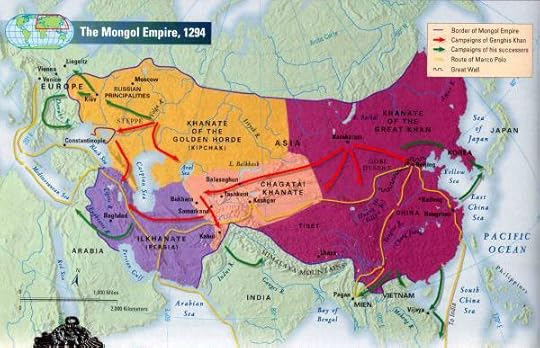
However, what this book is is another attempt to provide reading material for people who cannot be bothered to actually read real literature. The story is based in the Forgotten Realms and uses the Mongol Invasions as a backdrop. I am not quite sure how similar, or different, it is to the real events. In any event, if it does provoke people to study the events upon which this book is based (and the Mongols themselves are a very interesting culture, particularly since they were invincible and commanded the largest contiguous empire that the world has ever known) then I guess it does serve a purpose.
25 March 2013
Well, I am currently sitting at boarding gate 43 at the Hong Kong International Airport waiting for my plane to Germany to begin boarding and I don't think I have enough time to see if I can get myself a beer (not that I could see any bars as such, mostly restaurants that will serve you a beer if you have the money to pay for it). Then again, that is probably like most places around the world, though they do have bars here in Hong Kong, but it really all depends on what part of the city you are in. Mind you, last night I went into a place that had 'Nightclub' on the sign out the front and it turned out to be a Karaoke Bar. Basically you go in there and you pay something like $600.00 (Hong Kong) to spend an hour singing to a girl.
Anyway, enough of Hong Kong (and I am sure to say lots more about this place at some other stage) and I should mention that people have become upset (okay one person) that I wrote a commentary on a book that he really liked where I pretty much trashed it. He was deeply offended that I wrote such a review on a book that I had read years ago and wanted me to stop doing that, or at least read the book again before writing such a review. Well, I didn't think that review was all that bad, and since there are so many other books out their to read (as well as people sending messages on Goodreads asking me to read their book – if you are willing to send me a hardcopy, I might consider reading it, depending of course how long the book is, and whether you have spent the time checking it for spelling and grammatical errors) that I don't really have any time to go back and read books that I didn't think all that much of – such as this book.
Okay, I should actually say something about this book since I am writing a commentary on it and well, I can say this: I read it a long time ago, I cannot be bothered reading it again, and while I a vague recollection of things about this book, it wasn't a book that I particularly want to remember. Basically what it is is a Forgotten Realms book that uses the Mongol invasions as a source for the story. Okay, I am not going to trash the book on that particular merit, namely because I am likely to do it as well, and other authors (Isaac Asimov) have done similar things.
However, what this book is is another attempt to provide reading material for people who cannot be bothered to actually read real literature. The story is based in the Forgotten Realms and uses the Mongol Invasions as a backdrop. I am not quite sure how similar, or different, it is to the real events. In any event, if it does provoke people to study the events upon which this book is based (and the Mongols themselves are a very interesting culture, particularly since they were invincible and commanded the largest contiguous empire that the world has ever known) then I guess it does serve a purpose.

January 8, 2017
The first in a 3 part series on the Forgotten Realms equivalent of the Mongolian invasions of China and Europe, Horselords tells the story of a Khazari (Tibetan) priest who travels as an advisor with a Tuigan (Mongol) warlord on his way to conquer the famous lands of the Shu Lung (China).
Horselords was written by David Cook, who actually created the Eastern lands of KaraTur for Forgotten Realms, and has been working with and creating tabletop games his entire career.
Unfortunately I found his foray into the literary world to be unimaginative and cripplingly predictable. The writing itself is adolescent, and he spends a lot of time shifting the perspective to multiple characters in the same thing, telling the reader exactly what they're thinking, instead of showing the reader through their actions.
It is also hardly a fantasy book. Some fantastical elements aside, this could read as a fictional take on the actual Mongolian invasion of China by Ghengis Khan. Now, I won't discount the book on this alone, and allegories, when done well, are often fun reads. But Cook makes only superficial attempts to adapt this to the Forgotten Realms universe.
I picked this book up because I've always been interested in Kara Tur, and there are surprisingly few novels about it! The Empire series were the only books I could find created specifically for these lands, which is why I found this book to be so disappointing.
The next two books in the series, Dragonwall and Crusade, are written by different authors covering what happens after the events in Horselords. While the boilerplate theme is still the same
Mongol invasion, my hope is that the next authors are more developed and experienced writers.
Horselords was written by David Cook, who actually created the Eastern lands of KaraTur for Forgotten Realms, and has been working with and creating tabletop games his entire career.
Unfortunately I found his foray into the literary world to be unimaginative and cripplingly predictable. The writing itself is adolescent, and he spends a lot of time shifting the perspective to multiple characters in the same thing, telling the reader exactly what they're thinking, instead of showing the reader through their actions.
It is also hardly a fantasy book. Some fantastical elements aside, this could read as a fictional take on the actual Mongolian invasion of China by Ghengis Khan. Now, I won't discount the book on this alone, and allegories, when done well, are often fun reads. But Cook makes only superficial attempts to adapt this to the Forgotten Realms universe.
I picked this book up because I've always been interested in Kara Tur, and there are surprisingly few novels about it! The Empire series were the only books I could find created specifically for these lands, which is why I found this book to be so disappointing.
The next two books in the series, Dragonwall and Crusade, are written by different authors covering what happens after the events in Horselords. While the boilerplate theme is still the same
Mongol invasion, my hope is that the next authors are more developed and experienced writers.

September 12, 2016
I was not sure what to expect with this book, given its place in the publishing order of Forgotten Realms novel and beginning a trilogy written by three different authors. I was very pleasantly surprised, however. The 'Empires' trilogy takes a different empire's perspective in each book, allowing each entry to plot its own course and work reasonably well as standalone novels.
Horselords takes place in lands to the East of the usual happenings of the Forgotten Realms, leading to the lands of Kara-Tur, which is basically Asia (though you would be mistaken to think of this as a Kara-Tur trilogy, but forgiven since it was published in close proximity to the Maztica trilogy, which took readers to the West of the Realms). One could liken the Tuigan people of 'Horselords" to Mongol hordes for a frame of reference, although with magic and stuff mixed in. The magic of the Realms takes a back seat in this story, however. We are introduced to a new culture through the eyes of an outsider. The unfolding of the details of that culture occur with a natural feel, thanks to the writing style found here. The story, to me contained many surprises. I came in without any particular expectations beyond hoping that it would not be a terrible book that I would nevertheless feel committed to finishing, and came out very pleased at the quality of the writing and the way that the story and characters evolved.
Horselords takes place in lands to the East of the usual happenings of the Forgotten Realms, leading to the lands of Kara-Tur, which is basically Asia (though you would be mistaken to think of this as a Kara-Tur trilogy, but forgiven since it was published in close proximity to the Maztica trilogy, which took readers to the West of the Realms). One could liken the Tuigan people of 'Horselords" to Mongol hordes for a frame of reference, although with magic and stuff mixed in. The magic of the Realms takes a back seat in this story, however. We are introduced to a new culture through the eyes of an outsider. The unfolding of the details of that culture occur with a natural feel, thanks to the writing style found here. The story, to me contained many surprises. I came in without any particular expectations beyond hoping that it would not be a terrible book that I would nevertheless feel committed to finishing, and came out very pleased at the quality of the writing and the way that the story and characters evolved.

June 22, 2009
This book was hardly a fantasy novel, in that there was very little of the aspects of what I would say make up the fantasy genre. No monsters or magical people (elves and dwarves and stuff) and very little magic as well. I take that back, there is a dragon's spirit in the last chapter. This is more a study of a culture, which is completely based on the Mongols, and presented in a fantasy setting, and I say fantasy meaning fictional.
Okay, so having said that, it could just be the slow begining of a series that needs a strong cultural basis for the reader to really get involved with what is going on...but I must say I sorta doubt it. As I have already started the second book, which seems to be based on Japanese culture, more than Chinese (which I'm not sure I understand why), the Mongol stuff has already been swept to the wayside, except to comment on how well they fight with bows from horseback.
There is only one genre of novel that I like as much as fantasy, and that's historical fiction. This book was like one of those movies that trys to blend romance and action, but doesn't have enough of either to make it good...Anywho, I'm such a forgotten realms dork that I still gave it 3 stars and the second book is already better than the first, so, for that reason, I'm glad I got through it.
Okay, so having said that, it could just be the slow begining of a series that needs a strong cultural basis for the reader to really get involved with what is going on...but I must say I sorta doubt it. As I have already started the second book, which seems to be based on Japanese culture, more than Chinese (which I'm not sure I understand why), the Mongol stuff has already been swept to the wayside, except to comment on how well they fight with bows from horseback.
There is only one genre of novel that I like as much as fantasy, and that's historical fiction. This book was like one of those movies that trys to blend romance and action, but doesn't have enough of either to make it good...Anywho, I'm such a forgotten realms dork that I still gave it 3 stars and the second book is already better than the first, so, for that reason, I'm glad I got through it.

December 27, 2011
This is the first book of the "Empires Trilogy", as such, it introduces the world and people who take part into the whole story. Because of that, the first chapters introduce each character and develop the story from there. Despite of this fact, this initial introduction to the peculiarities and traits of the different people and races is not a boring one. I found it very easy to follow and pleasant.
The plot slowly unfolds in the middle chapters, and from there on the book turns out to be truly compelling. The story line is kind of plausible, but I would not regard it as predictable. Expect a lot of political intrigues, epic battles and action from this.
The Tuigan people are the main race depicted in this book, and they are inspired in the Mongol people. So one aspect that I found really interesting was the fact that some customs from the nomad people in the real world are the ones of the Tuigan. In that sense you will learn something or at least it will awaken you to know more about the actual Mongol people (as it happened to me :-) ).
On a personal note, I really enjoyed the book, it left me wanting for more!!!. I definitely would suggest to anyone to give this book a try. It's quite enjoyable in my humble opinion.
The plot slowly unfolds in the middle chapters, and from there on the book turns out to be truly compelling. The story line is kind of plausible, but I would not regard it as predictable. Expect a lot of political intrigues, epic battles and action from this.
The Tuigan people are the main race depicted in this book, and they are inspired in the Mongol people. So one aspect that I found really interesting was the fact that some customs from the nomad people in the real world are the ones of the Tuigan. In that sense you will learn something or at least it will awaken you to know more about the actual Mongol people (as it happened to me :-) ).
On a personal note, I really enjoyed the book, it left me wanting for more!!!. I definitely would suggest to anyone to give this book a try. It's quite enjoyable in my humble opinion.

September 29, 2010
This is not a bad book at all.
In fact, if you like Tuigan, it's amazing and would be a great resource for role playing ideas for your character.
I just found it really hard to get into, even though Yamun Khahan is actually pretty bad ass. I plan to finish the trilogy, but I'm not as zealous about it as I am about the Avatar Trilogy.
In fact, if you like Tuigan, it's amazing and would be a great resource for role playing ideas for your character.
I just found it really hard to get into, even though Yamun Khahan is actually pretty bad ass. I plan to finish the trilogy, but I'm not as zealous about it as I am about the Avatar Trilogy.
Displaying 1 - 30 of 39 reviews