

What do you think?

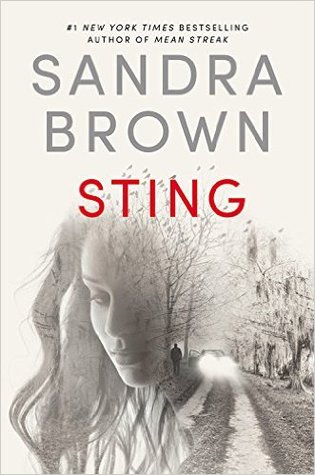
Sting
#1 New York Times and USA Today bestselling author Sandra Brown jolts the reader from the first page of this heart-pounding story of corruption, treachery, and ceaseless deception . . . where nothing is what it seems and every truth brought to light exposes a darker lie.
When Jordie Bennet and Shaw Kinnard lock eyes across a disreputable backwater bar, something definitely sparks. Shaw gives off a dangerous vibe that makes men wary and inspires women to sit up and take notice. None feel that undercurrent more strongly than savvy businesswoman Jordie, who doesn't belong in a seedy dive on the banks of a bayou. But here she is . . . and Shaw Kinnard is here to kill her.
As Shaw and his partner take aim, Jordie is certain her time has come. But Shaw has other plans and abducts Jordie, hoping to get his hands on the $30 million her brother has stolen and, presumably, hidden. However, Shaw is not the only one looking for the fortune. Her brother's ruthless boss and the FBI are after it as well. Now on the run from the feds and a notorious criminal, Jordie and Shaw must rely on their wits-and each other-to stay alive.
Miles away from civilization and surrounded by swampland, the two play each other against their common enemies. Jordie's only chance of survival is to outwit Shaw, but it soon becomes clear to Shaw that Jordie isn't entirely trustworthy, either. Was she in on her brother's scam, or is she an innocent pawn in a deadly vendetta? And just how valuable is her life to Shaw, her remorseless and manipulative captor? Burning for answers-and for each other-this unlikely pair ultimately make a desperate move that could be their last.
With nonstop plot twists and the tantalizing sexual tension that has made Sandra Brown one of the world's best-loved authors, STING will keep readers on the edge of their seats until the final pages.
When Jordie Bennet and Shaw Kinnard lock eyes across a disreputable backwater bar, something definitely sparks. Shaw gives off a dangerous vibe that makes men wary and inspires women to sit up and take notice. None feel that undercurrent more strongly than savvy businesswoman Jordie, who doesn't belong in a seedy dive on the banks of a bayou. But here she is . . . and Shaw Kinnard is here to kill her.
As Shaw and his partner take aim, Jordie is certain her time has come. But Shaw has other plans and abducts Jordie, hoping to get his hands on the $30 million her brother has stolen and, presumably, hidden. However, Shaw is not the only one looking for the fortune. Her brother's ruthless boss and the FBI are after it as well. Now on the run from the feds and a notorious criminal, Jordie and Shaw must rely on their wits-and each other-to stay alive.
Miles away from civilization and surrounded by swampland, the two play each other against their common enemies. Jordie's only chance of survival is to outwit Shaw, but it soon becomes clear to Shaw that Jordie isn't entirely trustworthy, either. Was she in on her brother's scam, or is she an innocent pawn in a deadly vendetta? And just how valuable is her life to Shaw, her remorseless and manipulative captor? Burning for answers-and for each other-this unlikely pair ultimately make a desperate move that could be their last.
With nonstop plot twists and the tantalizing sexual tension that has made Sandra Brown one of the world's best-loved authors, STING will keep readers on the edge of their seats until the final pages.
408 pages, Hardcover
First published August 16, 2016
About the author
Sandra Brown
406 books19.9k followersLibrarian Note: There is more than one author in the GoodReads database with this name. See this thread for more information.
Sandra Brown is the author of more than sixty New York Times bestsellers, including STING (2016), FRICTION (2015), MEAN STREAK (2014), DEADLINE(2013), & LOW PRESSURE (2012), LETHAL (2011).
Brown began her writing career in 1981 and since then has published over seventy novels, bringing the number of copies of her books in print worldwide to upwards of eighty million. Her work has been translated into over thirty languages.
In 2009 Brown detoured from romantic suspense to write, Rainwater, a much acclaimed, powerfully moving historical fiction story about honor and sacrifice during the Great Depression.
Brown was given an honorary Doctorate of Humane Letters from Texas Christian University. She was named Thriller Master for 2008, the top award given by the International Thriller Writer’s Association. Other awards and commendations include the 2007 Texas Medal of Arts Award for Literature and the Romance Writers of America’s Lifetime Achievement Award.
Sandra Brown is the author of more than sixty New York Times bestsellers, including STING (2016), FRICTION (2015), MEAN STREAK (2014), DEADLINE(2013), & LOW PRESSURE (2012), LETHAL (2011).
Brown began her writing career in 1981 and since then has published over seventy novels, bringing the number of copies of her books in print worldwide to upwards of eighty million. Her work has been translated into over thirty languages.
In 2009 Brown detoured from romantic suspense to write, Rainwater, a much acclaimed, powerfully moving historical fiction story about honor and sacrifice during the Great Depression.
Brown was given an honorary Doctorate of Humane Letters from Texas Christian University. She was named Thriller Master for 2008, the top award given by the International Thriller Writer’s Association. Other awards and commendations include the 2007 Texas Medal of Arts Award for Literature and the Romance Writers of America’s Lifetime Achievement Award.
Ratings & Reviews
Friends & Following
Create a free account to discover what your friends think of this book!
Community Reviews
Displaying 1 - 30 of 2,200 reviews

May 9, 2017
4.5 Stars
I almost gave up on this. The thing is, this book starts real slow. Nothing makes sense, you don’t know who, what, where and why. And I thought to myself: This is it. I finally stumbled upon a SB book I don’t like.

One of the best books I’ve read by this author.

I almost gave up on this. The thing is, this book starts real slow. Nothing makes sense, you don’t know who, what, where and why. And I thought to myself: This is it. I finally stumbled upon a SB book I don’t like.
One of the best books I’ve read by this author.

March 1, 2016
Some authors are an "auto-buy" for me. The anticipation of release date is BIG. SB is one of those authors! And, it is a little bit of pressure on an author when you are waiting in 'anticipation' for such a book. Did she disappoint? Fuck, No. SHE.DID.NOT. I loved it. Every single minute!!! I sort of begrudge having to pay more than $6 for an ebook. This one was close to $13 ... but if she can give me a stellar read that keeps me interested for a number of days, it is worth it.

I really didn't read many reviews. Better off just going in!!!
Sexy hero. Strong heroine. Great storyline. Fabulous background characters.

I don't want to give much away ... I think this is my 51st SB book. Some have been duds. But the majority of them have been fantastic.

I loved the alternating chapters with Wiley and Hickman.

We will probably have to wait another year for the next book from this author. But it will be worth it. I love SB. And those of you who love your sexy times in books ... give authors like this a chance. It is not full on sex. Actually can hardly remember the sex scene. But the build up, the anticipation, the looks, the feels. SO FUCKING WORTH IT.

Top marks again for Ms Brown!!

I really didn't read many reviews. Better off just going in!!!
She would not cry, over him.
Sexy hero. Strong heroine. Great storyline. Fabulous background characters.
I don't want to give much away ... I think this is my 51st SB book. Some have been duds. But the majority of them have been fantastic.
I loved the alternating chapters with Wiley and Hickman.
We will probably have to wait another year for the next book from this author. But it will be worth it. I love SB. And those of you who love your sexy times in books ... give authors like this a chance. It is not full on sex. Actually can hardly remember the sex scene. But the build up, the anticipation, the looks, the feels. SO FUCKING WORTH IT.
Top marks again for Ms Brown!!

May 2, 2016
This was one of my most anticipated reads of the year and I have to say - well done, Ms. Brown. She delivered another cleverly crafted story. I found myself completely enamored with her writing and this cast of characters. Not to the mention, the great innuendos, the witty banter and the feels all intertwined with the suspense. I couldn’t get enough.
Ms. Brown pulled me into the story with the action, led me down a path that made me believe I knew exactly what was happening and who I could trust and then *bam*. She hit me over the head with the unrelenting sexual tension and her signature - the unforeseen twist. There is no denying, she is the queen of epic plot twists. In only a few pages, she changed to my entire outlook on everyone and everything.
From the start, I was intrigued. Two hitmen, happen to stumble across their mark in a seedy bar and shit hits the fan. Things don’t go down according to plan, or do they? Jordie ends up being held against her will, with no inkling of how she’s going to get herself out of this messy situation. Is her captor going to negotiate the payoff he wants and finish the job or lure her brother out of hiding for the bigger prize? Or just maybe, things won’t go according to anyone’s plan.
“Do I have any chance of surviving you?”
I found myself on the verge of falling over the Stockholm syndrome cliff, that’s for sure. The chemistry between Jordie and Shaw was electric, full of intensity and incredibly addictive. I was flying through the pages, desperate to find out how things would play out between them. This is a Sandra Brown book, so you know the payoff was BIG.
There is something to be said about the development of Ms. Brown’s characters. She made me care about the secondary characters, just as much as Jordie and Shaw. Especially, Joe and Marsha. They had the best banter and such a close relationship, despite his demanding job. They made me smile more than a few times. And the way the agents played off one another was pretty entertaining, too.
Thankfully, Ms. Brown has an extensive backlist to keep me entertained until her next release. I already can’t wait.
*A big THANK YOU to Grand Central Publishing and NetGalley for an ARC in exchange for an honest review.*
Ms. Brown pulled me into the story with the action, led me down a path that made me believe I knew exactly what was happening and who I could trust and then *bam*. She hit me over the head with the unrelenting sexual tension and her signature - the unforeseen twist. There is no denying, she is the queen of epic plot twists. In only a few pages, she changed to my entire outlook on everyone and everything.
From the start, I was intrigued. Two hitmen, happen to stumble across their mark in a seedy bar and shit hits the fan. Things don’t go down according to plan, or do they? Jordie ends up being held against her will, with no inkling of how she’s going to get herself out of this messy situation. Is her captor going to negotiate the payoff he wants and finish the job or lure her brother out of hiding for the bigger prize? Or just maybe, things won’t go according to anyone’s plan.
“Do I have any chance of surviving you?”
I found myself on the verge of falling over the Stockholm syndrome cliff, that’s for sure. The chemistry between Jordie and Shaw was electric, full of intensity and incredibly addictive. I was flying through the pages, desperate to find out how things would play out between them. This is a Sandra Brown book, so you know the payoff was BIG.
There is something to be said about the development of Ms. Brown’s characters. She made me care about the secondary characters, just as much as Jordie and Shaw. Especially, Joe and Marsha. They had the best banter and such a close relationship, despite his demanding job. They made me smile more than a few times. And the way the agents played off one another was pretty entertaining, too.
Thankfully, Ms. Brown has an extensive backlist to keep me entertained until her next release. I already can’t wait.
*A big THANK YOU to Grand Central Publishing and NetGalley for an ARC in exchange for an honest review.*

March 1, 2016
By now you all know I love Sandra Brown. Her books are amazing. I’ve read a number of them and most, if not all, were 4 or 5 star reviews. Sting can be added to that list. Another fantastic read.
I loved the suspense.
I loved the intrigue.
I loved Shaw Kinnard.
I loved Jordie Bennet.
I loved the sexual tension, the build-up, the anticipation.
As with her other books I would suggest not reading many reviews. Everything you need to know is in her synopsis. I won’t be saying much about the plot because I would hate to give anything away.
It is within the first chapter that Ms. Brown will suck you in. When Jordie and Shaw share a look in a seedy bar there was no telling what would come of these two. Jordie seemed misplaced and Shaw
fit right it. The vibe in the place is not good at all. Things were about to go terribly wrong.

Shaw Kinnard ~ Loved this guy. My initial impression was that he was a bastard. And boy was I right. His actions and words were harsh and intentional. Jordie was his way to $30 million dollars and he wasn’t about to let anything ruin that.

Jordie Bennet ~was deceiving. She was a beauty but a fighter. Her shear tenacity would drive Shaw crazy. There was no telling what she was capable of when she was backed into a corner.

Just when it seemed there was no way out of the mess Jordie was in, SB throws in a twist and things get even more complicated. The NOPD and FBI have a case on their hands that will cause deceit and turmoil.

If you are a fan of Sandra Brown then you know to expect twists and turns, the slow build-up of relationships and fantastic side characters. Even though the plot was well written I did put together a few things early on. But this didn’t take away from the story at all. And the torture SB puts you through as the sexual tension builds between Shaw and Jordie is worth every minute. Don’t worry she will tease you along the way.

The last 10-15% was crazy. At least for me. And I was excited to see that we got an Epilogue too. ❤

**ARC received via Netgalley.**

August 15, 2016
This is an intense, high octane, character driven thriller set in Louisiana, its bayous and swamplands. This is the first book I have read by the author, and I thought it was absolutely terrific. Jordan Elaine Bennett, Jordie, enters a bayou bar that she normally would not be seen in. Shaw Kinnard, along with another hitman are in the bar, and Jordie is their mark. Before you know it, all hell breaks loose. Shaw abducts Jordie, after taking out the other hitman. Jordie has a wanted and criminal brother, Josh Bennett who has stolen $30 million. For obvious reasons, he is of interest to a number of parties, including Special Agents Joe Wiley and Greg Hickam of the FBI, NOPD, and the ruthless and dangerous Billy Panella, suspected of multiple homicides.
Josh has doubled crossed his boss, Billy Panella, and reneged on a deal with the FBI which has put Jordie's life in danger. The enigmatic Shaw's agenda is hard to figure out, is it get a bigger payout or get to the money stolen by Jordie's brother? What is clear is that Jordie is in danger and he takes her to a safe place on the swamplands. Jordie has no intention of taking her abduction lying down. There is an intense sexual attraction between her and Shaw. Whilst it becomes clear that Shaw is a man of secrets, Jordie has a few of her own. She has ambivalent feelings towards Josh, veering from loyalty to hate. This is a tense and gripping tale full of twists and intrigue. Just when you think you have a handle on the story, another unexpected revelation hits you.
This is a superbly constructed story with intricate and complex plotting. The dialogue catches your attention. The writing style in compelling and urgent. The characters are well developed and catch your interest. Sandra Brown has a strong understanding of how to write a story that keeps the reader desperate to find out what is going on. Highly recommended read. Thanks to Grand Central Publishing for an ARC.
Josh has doubled crossed his boss, Billy Panella, and reneged on a deal with the FBI which has put Jordie's life in danger. The enigmatic Shaw's agenda is hard to figure out, is it get a bigger payout or get to the money stolen by Jordie's brother? What is clear is that Jordie is in danger and he takes her to a safe place on the swamplands. Jordie has no intention of taking her abduction lying down. There is an intense sexual attraction between her and Shaw. Whilst it becomes clear that Shaw is a man of secrets, Jordie has a few of her own. She has ambivalent feelings towards Josh, veering from loyalty to hate. This is a tense and gripping tale full of twists and intrigue. Just when you think you have a handle on the story, another unexpected revelation hits you.
This is a superbly constructed story with intricate and complex plotting. The dialogue catches your attention. The writing style in compelling and urgent. The characters are well developed and catch your interest. Sandra Brown has a strong understanding of how to write a story that keeps the reader desperate to find out what is going on. Highly recommended read. Thanks to Grand Central Publishing for an ARC.

February 18, 2017
Sandra Brown is one of my favorite suspense novelists.
Her books all follow a simple recipe:
Strong professional woman falling for tough bad guy (heart of gold- just misunderstood).
Toss in a great story involving the FBI (or police), an all-out manhunt, and you have yourself a perfect Sandra Brown novel.
Oh, and don't forget a dash of romance!
Don't get me wrong, this recipe is a delicious success. Lol!
Works every time, and I keep coming back for more!
As good as always...hungry for the next! 4*
Her books all follow a simple recipe:
Strong professional woman falling for tough bad guy (heart of gold- just misunderstood).
Toss in a great story involving the FBI (or police), an all-out manhunt, and you have yourself a perfect Sandra Brown novel.
Oh, and don't forget a dash of romance!
Don't get me wrong, this recipe is a delicious success. Lol!
Works every time, and I keep coming back for more!
As good as always...hungry for the next! 4*

January 26, 2017
Dang!!! This book was great!! I hadn't read one Sandra's "grown-up" books in a while. This book had a little of everything romance, suspense, and mystery.

July 25, 2016
This is a book that I needed to take a couple of days to ponder about before I wrote the review so that I could clarify why it just didn't work for me. Sting is the second Sandra Brown book I have read in my life, actually, this is the first book I managed to finish. I read one last year or tried, but I could not finish it. And, that's because the plot was so infuriating and I just couldn't stand the characters. This book was better, marginally. Well, I did manage to finish it at least and it seemed promising in the beginning and it was not bad during the first 100 pages or so when the reader was left in the dark about much of what was going on.
Then everything just went south. I had a feeling that this book would turn out to be a Stockholm syndrome kind of book, but I felt that Sandra Brown took the easy way, instead of making the story dark and twisted. It's hard to write about this the books (first) real BIG twist without revealing too much. Just let me say that Brown took the easy road and made everything less complicated and suddenly what was promising turns out to be a story perfect for a Hallmark movie instead!
And, after that, I had a pretty hard time enjoying the book. I felt like I was reading a Nora Roberts book and if you know me, then you know what's not a good comparison. Like with Roberts book's, this one started off good then suddenly the suspense turns into romance, and the plot goes on and on again until the HEA ending. Of course, at the ending Sandra Brown throws in another twist, but by then nothing really could save the book for me. Especially since I have already gotten sick and tired of the main characters that were very flat.
So, if the plot had stayed on track, and turned dark and twisted and if the characters had not turned out to be uninteresting and flat, then I might have enjoyed the book.
I want to thank Grand Central Publishing for providing me with a free copy for an honest review!
Read this review and others on A Bookaholic Swede
Then everything just went south. I had a feeling that this book would turn out to be a Stockholm syndrome kind of book, but I felt that Sandra Brown took the easy way, instead of making the story dark and twisted. It's hard to write about this the books (first) real BIG twist without revealing too much. Just let me say that Brown took the easy road and made everything less complicated and suddenly what was promising turns out to be a story perfect for a Hallmark movie instead!
And, after that, I had a pretty hard time enjoying the book. I felt like I was reading a Nora Roberts book and if you know me, then you know what's not a good comparison. Like with Roberts book's, this one started off good then suddenly the suspense turns into romance, and the plot goes on and on again until the HEA ending. Of course, at the ending Sandra Brown throws in another twist, but by then nothing really could save the book for me. Especially since I have already gotten sick and tired of the main characters that were very flat.
So, if the plot had stayed on track, and turned dark and twisted and if the characters had not turned out to be uninteresting and flat, then I might have enjoyed the book.
I want to thank Grand Central Publishing for providing me with a free copy for an honest review!
Read this review and others on A Bookaholic Swede

August 8, 2016
4.5 STARS

Another jaw-dropper for Sandra Brown. I'm still in shock that I got an ARC from Netgalley... thanks for that! An intriguing plot, with characters that will keep you guessing all the way to the end. I did sort of guess the ending quite early, but I was only partially on target. I still loved the story. I would have liked a little more from the romance, but in retrospect, the intrigue and sexual tension, was probably more effective. Why not a 5? Blame some of her other books, like Envy, and Mean Streak among others that completely blew my mind. I think this makes 10 Sandra Brown books for me so far, and so many more to come.
Another jaw-dropper for Sandra Brown. I'm still in shock that I got an ARC from Netgalley... thanks for that! An intriguing plot, with characters that will keep you guessing all the way to the end. I did sort of guess the ending quite early, but I was only partially on target. I still loved the story. I would have liked a little more from the romance, but in retrospect, the intrigue and sexual tension, was probably more effective. Why not a 5? Blame some of her other books, like Envy, and Mean Streak among others that completely blew my mind. I think this makes 10 Sandra Brown books for me so far, and so many more to come.

April 20, 2017
4.5 Wonderful Stars.
Sandra Brown delivers a solid work here!
It was my first time reading Sandra Brown. I did not know what to anticipate from Sting and I must say that it had been a tremendously great time. At first, I was lost. But once the game initiated, I was unstoppable.
Multiple characters within the characters, offer you an opportunity to live multiple lives within just one book. Realistic actions, dialogues, their background were enough to keep me enthralled.
Suspense and Romance are the genres Sandra Brown demonstrates mastery. She cultivates the plot with mysteries such that the readers will get stick to the characters and explore them further.
I appreciated both Thriller and Romance in Sting. Plot twists at the right moment, right time, did all the wonders. Not foreseeing them, I was bomb-shelled when they hit me. I ended up adoring the same characters I abhorred in another chapter and vice versa. Making a reader change minds about the same characters, Sandra Brown's work is meritorious.
Overall it was a blend of some awesomeness I observed here. Action-packed, meteoric, entertaining and well-executed. Her books are praiseworthy.
I will be reading more books by Sandra Brown soon.
Recommended to romance and thriller readers.
Sandra Brown delivers a solid work here!
It was my first time reading Sandra Brown. I did not know what to anticipate from Sting and I must say that it had been a tremendously great time. At first, I was lost. But once the game initiated, I was unstoppable.
Multiple characters within the characters, offer you an opportunity to live multiple lives within just one book. Realistic actions, dialogues, their background were enough to keep me enthralled.
Suspense and Romance are the genres Sandra Brown demonstrates mastery. She cultivates the plot with mysteries such that the readers will get stick to the characters and explore them further.
I appreciated both Thriller and Romance in Sting. Plot twists at the right moment, right time, did all the wonders. Not foreseeing them, I was bomb-shelled when they hit me. I ended up adoring the same characters I abhorred in another chapter and vice versa. Making a reader change minds about the same characters, Sandra Brown's work is meritorious.
Overall it was a blend of some awesomeness I observed here. Action-packed, meteoric, entertaining and well-executed. Her books are praiseworthy.
I will be reading more books by Sandra Brown soon.
Recommended to romance and thriller readers.

August 15, 2016
4 Suspenseful Stars!!
Sandra Brown is one of my favorite romantic suspense writers, her novels keep me on the edge, her character are intriguing, mysterious, and some are just plain sinister.
This story centers around Jordan “Jordie” Bennet, her brother Josh Bennet and her brother's troubles with his employer who is determined to stop Josh from testifying against him on his multiple fraudulent schemes and all of the missing money. In order to avoid prison, Josh is working the with the FBI. Naturally his employer has sent two men to kill him, Mickey Bolden and Shaw Kinnard. Shaw sees Jordie and next thing you know he takes Jordie with the hopes of a bigger payday.
Shaw knows there is more to the story of the missing money and he's trying to determine if Jordie is an accomplice or an innocent bystander, he knows she's hiding things from him and he’s willing to do whatever necessary to find out her secrets. The last thing Shaw wanted was to find Jordie attractive, Jordie is a complication he was not expecting, and killing her might not be as easy as he thought.

As usual with a Sandra Brown novel, things are never what they seem, we are thrown into a web of lies and deceptions as only SB can weave. Sting has a great plot and characters, it’s engaging and suspenseful. Once I started it, it was hard to put down.
Sandra Brown is one of my favorite romantic suspense writers, her novels keep me on the edge, her character are intriguing, mysterious, and some are just plain sinister.
This story centers around Jordan “Jordie” Bennet, her brother Josh Bennet and her brother's troubles with his employer who is determined to stop Josh from testifying against him on his multiple fraudulent schemes and all of the missing money. In order to avoid prison, Josh is working the with the FBI. Naturally his employer has sent two men to kill him, Mickey Bolden and Shaw Kinnard. Shaw sees Jordie and next thing you know he takes Jordie with the hopes of a bigger payday.
Shaw knows there is more to the story of the missing money and he's trying to determine if Jordie is an accomplice or an innocent bystander, he knows she's hiding things from him and he’s willing to do whatever necessary to find out her secrets. The last thing Shaw wanted was to find Jordie attractive, Jordie is a complication he was not expecting, and killing her might not be as easy as he thought.
“The moment I laid eyes on you, your life was spared.”

As usual with a Sandra Brown novel, things are never what they seem, we are thrown into a web of lies and deceptions as only SB can weave. Sting has a great plot and characters, it’s engaging and suspenseful. Once I started it, it was hard to put down.

November 12, 2016
STING by the talented author Sandra Brown always delivers a romantic suspense novel that is sure to please. This was no exception. Her characters are mysterious and intriguing and the plot grabs your attention.
This story centers around Jordan “Jordie” Bennet, and her brother Josh Bennet. Josh has problems with his employer who is trying to stop Josh from testifying against him on fraudulent missing money schemes. Josh is working with the FBI in order to avoid prison time. Obviously, his employer has sent two men to kill him, Mickey Bolden and Shaw Kinnard. But when Shaw sees Jordie, he decides to take Jordie instead. Is she an accessory or not? He knows she's hiding secrets from him!
But Shaw had not expected his hostage to be so attractive, and killing her might not be as easy as he thought.
“The moment I laid eyes on you, your life was spared.”
This novel was not what it seems….a web of lies and shams that only Sandra Brown can deliver. Sting was an appealing and action-packed story that was a lot of fun to read. Don’t miss out on this romantic suspense novel.
This story centers around Jordan “Jordie” Bennet, and her brother Josh Bennet. Josh has problems with his employer who is trying to stop Josh from testifying against him on fraudulent missing money schemes. Josh is working with the FBI in order to avoid prison time. Obviously, his employer has sent two men to kill him, Mickey Bolden and Shaw Kinnard. But when Shaw sees Jordie, he decides to take Jordie instead. Is she an accessory or not? He knows she's hiding secrets from him!
But Shaw had not expected his hostage to be so attractive, and killing her might not be as easy as he thought.
“The moment I laid eyes on you, your life was spared.”
This novel was not what it seems….a web of lies and shams that only Sandra Brown can deliver. Sting was an appealing and action-packed story that was a lot of fun to read. Don’t miss out on this romantic suspense novel.

September 22, 2016
Every now and then I come across a Sandra Brown book that just doesn't do it for me. This is one of them. To me, Sting felt very formulaic and predictable. Everything felt a little contrived.
I never got involved with the characters, there were no 'OMG' moments, no 'I have to keep reading, I simply can't bear to put this book down' times. In fact it took me a whole two weeks to read and I would go several days without picking it up.
So, sorry Ms Brown, but while there is nothing intrinsically wrong with Sting, it just didn't grab me like it should have. A very lazy 3 stars.
Thank you to NetGalley and Grand Central Publishing for a digital ARC in exchange for an honest and unbiased review.
I never got involved with the characters, there were no 'OMG' moments, no 'I have to keep reading, I simply can't bear to put this book down' times. In fact it took me a whole two weeks to read and I would go several days without picking it up.
So, sorry Ms Brown, but while there is nothing intrinsically wrong with Sting, it just didn't grab me like it should have. A very lazy 3 stars.
Thank you to NetGalley and Grand Central Publishing for a digital ARC in exchange for an honest and unbiased review.
May 22, 2019
Listened to the Audible. Narrator was very good. One of my favourite authors = she rarely disappoints.


June 29, 2016
***ARC Provided by the Publisher and NetGalley***
Sting is a heart racing, edge of your seat, no clue how it is going to work out string of surprises. Each chapter bringing a new revelation that left me unable to stop without knowing what could possibly happen next. Shaw Kinnard is a hit man. Probably. But it is a Sandra Brown novel, and if you have read her before you know there is a chance that you don’t know everything these is to know about Shaw. Jordie is a woman trying to hold her life together while living down the betrayal and suspicions cast upon her by the actions of her brother. The sexual tension between them, amazing. She is attracted to him against her better judgment, and you get the sense that Shaw feels the same way. It’s a Sandra Brown, so you know they each have secrets. Heck, you know their secrets probably have secrets about other secrets. But that is part of the fun…the KNOWING that something is going to happen, that you aren’t going to see it coming, and it is going to leave you stunned.
The main reveal, I never saw it coming. Not once, not in all the thinking I did along the “how in the world is this going to resolve in a HEA, as they always do” did this ever occur to me. At this point, I found myself laughing at the revelation while smiling because, yet again, Brown got me good…I should have seen it coming, but I totally missed it. I loved it.
The writing was strong, the pacing a perfect mix of OMG moments, suspense, and resolutioins to questions that kept you moving forward in the story. One of Brown’s strengths, aside from her writing which is flawless, is her ability to tell a complicated story that makes sense. You get explanations to the questions, and even if you don’t like the answer or the resolution, you get answers. No stone is left unturned, and most importantly, it all adds up at the end, with no holes or flaws in the story.
When you start a Sandra Brown book, you know you are going to start on a wild ride. This was no different. I am a little envious of all readers who haven’t read this one yet, as all of the surprises are still out there waiting to be revealed for the first time. And that is the real fun of reading Sandra Brown.
This book was so much more than 5 stars. It’s been a while since I finished it, and I am still thinking about it, going over it in my mind, and telling people they MUST read it. I highly recommend this book.
***This and other reviews also featured on http://www.imasweetandsassybookwhore.com***
Sting is a heart racing, edge of your seat, no clue how it is going to work out string of surprises. Each chapter bringing a new revelation that left me unable to stop without knowing what could possibly happen next. Shaw Kinnard is a hit man. Probably. But it is a Sandra Brown novel, and if you have read her before you know there is a chance that you don’t know everything these is to know about Shaw. Jordie is a woman trying to hold her life together while living down the betrayal and suspicions cast upon her by the actions of her brother. The sexual tension between them, amazing. She is attracted to him against her better judgment, and you get the sense that Shaw feels the same way. It’s a Sandra Brown, so you know they each have secrets. Heck, you know their secrets probably have secrets about other secrets. But that is part of the fun…the KNOWING that something is going to happen, that you aren’t going to see it coming, and it is going to leave you stunned.
The main reveal, I never saw it coming. Not once, not in all the thinking I did along the “how in the world is this going to resolve in a HEA, as they always do” did this ever occur to me. At this point, I found myself laughing at the revelation while smiling because, yet again, Brown got me good…I should have seen it coming, but I totally missed it. I loved it.
The writing was strong, the pacing a perfect mix of OMG moments, suspense, and resolutioins to questions that kept you moving forward in the story. One of Brown’s strengths, aside from her writing which is flawless, is her ability to tell a complicated story that makes sense. You get explanations to the questions, and even if you don’t like the answer or the resolution, you get answers. No stone is left unturned, and most importantly, it all adds up at the end, with no holes or flaws in the story.
When you start a Sandra Brown book, you know you are going to start on a wild ride. This was no different. I am a little envious of all readers who haven’t read this one yet, as all of the surprises are still out there waiting to be revealed for the first time. And that is the real fun of reading Sandra Brown.
This book was so much more than 5 stars. It’s been a while since I finished it, and I am still thinking about it, going over it in my mind, and telling people they MUST read it. I highly recommend this book.
***This and other reviews also featured on http://www.imasweetandsassybookwhore.com***

August 14, 2016
Sting by Sandra Brown in a 2016 Grand Central Publication.
You gotta love Sandra Brown’s consistency! Sting is another solid and quintessential romantic suspense novel from Brown, whose stories have kept me on the edge of my seat for decades.
Jordie Bennett is a successful business woman, but is still living in the dark shadow cast by her brother, Josh, which is how she winds up being kidnapped by Shaw Kinnard, a man hired by a powerful criminal to kill Jordie.
But, before he completes his mission, he needs vital information from Jordie concerning Josh’s whereabouts, which of course all centers around an incredibly large amount of money only Josh has access to. But, Jordie is one tough nut to crack, refusing to budge, always looking for a way to escape, giving the hardened Shaw a workout of epic proportions, and sparking a weird, twisted, and smoking hot chemistry between them in the process.
Will Shaw kill Jordie and collect his 2 million dollars, not passing go, or will he try to outsmart Josh, and earn a much larger booty…. Or is there more going on here than meets the eye?
Going solely on the book title, I knew going in this was going to be a complex tale and that nothing would be as it appeared on the surface, and I was not surprised, or disappointed, in how things played out. I loved the sharp dialogue between Jordie and Shaw, and the non-stop action, Brown’s trademark plot twists, and of course the steamy romance, but I thought the family drama was the most thought provoking aspects of the novel, and certainly gave me something to mull over and chew on for a while. I thought it made an interesting character study and added a great deal of depth to the standard romantic suspense story, that would have passed muster without the juxtaposition between Jordie and Josh.
So, overall, this is yet another wildly entertaining thriller by one of the best RS authors out there, and frankly, I don’t think you can go wrong here.
4 stars
You gotta love Sandra Brown’s consistency! Sting is another solid and quintessential romantic suspense novel from Brown, whose stories have kept me on the edge of my seat for decades.
Jordie Bennett is a successful business woman, but is still living in the dark shadow cast by her brother, Josh, which is how she winds up being kidnapped by Shaw Kinnard, a man hired by a powerful criminal to kill Jordie.
But, before he completes his mission, he needs vital information from Jordie concerning Josh’s whereabouts, which of course all centers around an incredibly large amount of money only Josh has access to. But, Jordie is one tough nut to crack, refusing to budge, always looking for a way to escape, giving the hardened Shaw a workout of epic proportions, and sparking a weird, twisted, and smoking hot chemistry between them in the process.
Will Shaw kill Jordie and collect his 2 million dollars, not passing go, or will he try to outsmart Josh, and earn a much larger booty…. Or is there more going on here than meets the eye?
Going solely on the book title, I knew going in this was going to be a complex tale and that nothing would be as it appeared on the surface, and I was not surprised, or disappointed, in how things played out. I loved the sharp dialogue between Jordie and Shaw, and the non-stop action, Brown’s trademark plot twists, and of course the steamy romance, but I thought the family drama was the most thought provoking aspects of the novel, and certainly gave me something to mull over and chew on for a while. I thought it made an interesting character study and added a great deal of depth to the standard romantic suspense story, that would have passed muster without the juxtaposition between Jordie and Josh.
So, overall, this is yet another wildly entertaining thriller by one of the best RS authors out there, and frankly, I don’t think you can go wrong here.
4 stars

May 28, 2016
The extra star because it is Sandra Brown, otherwise one star.
Sandra Brown has a good marketing strategy, one book a year and no more. Keep them expectant, filled with gushing anticipation. It works dandy. When one of the most famous (and one of the best) writers in the RS genre releases a book, you are already primed to believe that some fine work has gone into it. And often Sandra Brown delivers on that carefully cultivated expectation. Unfortunately, this is not one of those times.
As is with most of Sandra's heroes, Shaw is reticent and laconic, enigmatic and profane (all traits I like, btw. Shaw says 'I'm going to fuck you', not 'I will make love to you' or 'I want intimacy'. No super-ego discourse for Sandra's boys, just good old base Id). At her best, Sandra Brown can pull it off (as she did in 'Envy', to name but one), at her worst she makes her hero read and feel haphazardly put together, much too formulaic and a tired version of other similar and much better written Sandra heroes. Shaw Kinnard feels a bit cardboard, a bit like a product of routine and tired writing, a bit copy-pastey and deadliney. If one of Sandra's best points, the terse, foul-mouthed hunk with (often) a terrible past and/or an undercover present does not feel right, the whole book collapses. Most of the time, the 'he is not who he is' works just fine with me but not this time, for Shaw merely goes through the motions simply miming all the past Sandra Brown males.
If one is to be honest, the heroine's character has never been one of Sandra's strongest points, and in 'Sting', she is particularly irritating and spectacularly TSTL. In addition, the book suffers from, what is my pet peeve, the constant bickering between the heroine and hero, that went on and on for far too long, coupled with having the heroine physically attack the hero (a man with a gun!) on a number of occasions (face scratching, etc.), the whole thing became ridiculously unbelievable and vexing beyond belief. The problem with endless bickering between the main characters is not only the awful headache it gives you but also the structural impossibility of bouncing back from it and writing a convincing romance. All this cacophony removes the space in which a romance can develop and allow the reader to believe the obligatory 'I love yous' that always follow. It is surprising that a veteran like SB committed such a faux pas, as she knows very well that you simply cannot fight the hero for 100 pages and then profess to feel 'the loss of his presence' on page 101. But the bickering is not all that is wrong with the heroine. Jordie Bennett's story and the reasons she gives for her actions are so cretinous that my intelligence was mortally offended.
The idea behind this book is quite intriguing (despite the fact that a seasoned Sandra Brown reader won't for a moment be fooled about the hero's identity), but the actual book does not deliver the goods. One does not care either for the hero (and there's a mountain of silly piled on his past as well -trauma treated like salad dressing) or the thick heroine (and her asinine actions, motives and reasoning). Sandra's customary multiple points-of-view narrative fails too. Instead of creating suspense, of playing a nice, intricate guessing game, it only confirms the suspicion that the writer, as much as the reader, can't wait to get away from the main couple. It is a well-known trick that when you see your couple clearly does not cut the mustard, you insert as many characters as possible to fill in the page quota.
There are other big problems with the book. Sandra Brown is usually a pro when it comes to police and FBI procedure but not here. The heroine gets away with so much! A Catholic priest at confession would have given her a harder time than the FBI did (really people?!?! She fails to mention her trip to Costa Rica, her grand tour of Costa Rican banks on the arm of the man you've been investigating, and hoping to catch for years, and you simply let her walk away without charging her even with some minor violation?!?!!!).
The heroine's relation to her brother is stated as deeply pathological, yet instead of treating it for what it is ( you know, pathological!), i.e., accepting the fact that the heroine is in desperate need of an army of psychiatrists and psychoanalysts to help her understand her own experience, Sandra trivialises it. She reduces a traumatised family's terrible life to a question of 'guilt' (as if a whole universe of other stuff is not hiding behind the concept). Heroine (and hero) from then on take every opportunity to engage in spectacular dumbfests of tabloid-level talk about 'guilt' (all the vague and trite nonsense you can think about it), while dismissing professional help as useless! After all, did not her brother receive endless therapy to no avail? Since the brother wins the Nobel prize for 'most f*cked up character of the year', states Sandra while licking her lips, then it must be true that therapy makes you worse! While the heroine (whose only problem is, apparently, 'guilt') is congratulated on doing fantastically well after giving up on that therapy thingy! Obviously, the fact that she always succumbs to odious blackmail and does the bidding of her twisted and messed up brother, as well as aiding and abetting a villain, counts as 'doing well by herself' these days. The end result, i.e., what we ACTUALLY see on the page, is not some admirable female character overcoming her traumatic childhood but only a heroine who could not manage a piss-up in a brewery, let alone the consequences of terrible events in her early life, or the present entanglements with her brother and his boss. Yet, all we see asserted (against what is actually there) is how terrifically well this paragon has done by herself. Naturally, when the writer asserts one thing and her characters and story another, a wide chasm is created that cannot be bridged even by the most sympathetic reader.
To Sandra's fans, you've seen it all done much better before, to newcomers, you'll do well to skip this.
Sandra Brown has a good marketing strategy, one book a year and no more. Keep them expectant, filled with gushing anticipation. It works dandy. When one of the most famous (and one of the best) writers in the RS genre releases a book, you are already primed to believe that some fine work has gone into it. And often Sandra Brown delivers on that carefully cultivated expectation. Unfortunately, this is not one of those times.
As is with most of Sandra's heroes, Shaw is reticent and laconic, enigmatic and profane (all traits I like, btw. Shaw says 'I'm going to fuck you', not 'I will make love to you' or 'I want intimacy'. No super-ego discourse for Sandra's boys, just good old base Id). At her best, Sandra Brown can pull it off (as she did in 'Envy', to name but one), at her worst she makes her hero read and feel haphazardly put together, much too formulaic and a tired version of other similar and much better written Sandra heroes. Shaw Kinnard feels a bit cardboard, a bit like a product of routine and tired writing, a bit copy-pastey and deadliney. If one of Sandra's best points, the terse, foul-mouthed hunk with (often) a terrible past and/or an undercover present does not feel right, the whole book collapses. Most of the time, the 'he is not who he is' works just fine with me but not this time, for Shaw merely goes through the motions simply miming all the past Sandra Brown males.
If one is to be honest, the heroine's character has never been one of Sandra's strongest points, and in 'Sting', she is particularly irritating and spectacularly TSTL. In addition, the book suffers from, what is my pet peeve, the constant bickering between the heroine and hero, that went on and on for far too long, coupled with having the heroine physically attack the hero (a man with a gun!) on a number of occasions (face scratching, etc.), the whole thing became ridiculously unbelievable and vexing beyond belief. The problem with endless bickering between the main characters is not only the awful headache it gives you but also the structural impossibility of bouncing back from it and writing a convincing romance. All this cacophony removes the space in which a romance can develop and allow the reader to believe the obligatory 'I love yous' that always follow. It is surprising that a veteran like SB committed such a faux pas, as she knows very well that you simply cannot fight the hero for 100 pages and then profess to feel 'the loss of his presence' on page 101. But the bickering is not all that is wrong with the heroine. Jordie Bennett's story and the reasons she gives for her actions are so cretinous that my intelligence was mortally offended.
The idea behind this book is quite intriguing (despite the fact that a seasoned Sandra Brown reader won't for a moment be fooled about the hero's identity), but the actual book does not deliver the goods. One does not care either for the hero (and there's a mountain of silly piled on his past as well -trauma treated like salad dressing) or the thick heroine (and her asinine actions, motives and reasoning). Sandra's customary multiple points-of-view narrative fails too. Instead of creating suspense, of playing a nice, intricate guessing game, it only confirms the suspicion that the writer, as much as the reader, can't wait to get away from the main couple. It is a well-known trick that when you see your couple clearly does not cut the mustard, you insert as many characters as possible to fill in the page quota.
There are other big problems with the book. Sandra Brown is usually a pro when it comes to police and FBI procedure but not here. The heroine gets away with so much! A Catholic priest at confession would have given her a harder time than the FBI did (really people?!?! She fails to mention her trip to Costa Rica, her grand tour of Costa Rican banks on the arm of the man you've been investigating, and hoping to catch for years, and you simply let her walk away without charging her even with some minor violation?!?!!!).
The heroine's relation to her brother is stated as deeply pathological, yet instead of treating it for what it is ( you know, pathological!), i.e., accepting the fact that the heroine is in desperate need of an army of psychiatrists and psychoanalysts to help her understand her own experience, Sandra trivialises it. She reduces a traumatised family's terrible life to a question of 'guilt' (as if a whole universe of other stuff is not hiding behind the concept). Heroine (and hero) from then on take every opportunity to engage in spectacular dumbfests of tabloid-level talk about 'guilt' (all the vague and trite nonsense you can think about it), while dismissing professional help as useless! After all, did not her brother receive endless therapy to no avail? Since the brother wins the Nobel prize for 'most f*cked up character of the year', states Sandra while licking her lips, then it must be true that therapy makes you worse! While the heroine (whose only problem is, apparently, 'guilt') is congratulated on doing fantastically well after giving up on that therapy thingy! Obviously, the fact that she always succumbs to odious blackmail and does the bidding of her twisted and messed up brother, as well as aiding and abetting a villain, counts as 'doing well by herself' these days. The end result, i.e., what we ACTUALLY see on the page, is not some admirable female character overcoming her traumatic childhood but only a heroine who could not manage a piss-up in a brewery, let alone the consequences of terrible events in her early life, or the present entanglements with her brother and his boss. Yet, all we see asserted (against what is actually there) is how terrifically well this paragon has done by herself. Naturally, when the writer asserts one thing and her characters and story another, a wide chasm is created that cannot be bridged even by the most sympathetic reader.
To Sandra's fans, you've seen it all done much better before, to newcomers, you'll do well to skip this.
This entire review has been hidden because of spoilers.

July 8, 2016
Review written August 22, 2016
4.2 Stars - Jet again another 'winner' by the talented SB who never dissapoint you in this romantic suspense genre
Ah, oh, wow, yeah!! — I just finished the very NEW Sandra Brown novel. And? Goodie, good good!

Lazy as I am nowadays I chosed to listening to the audiobook — 11:40 hours splendid good narrated by a man with a perfect husky manly voice. Stephen Lang is a "safe card" you can trust.
**********************************************
Maybe Sting, Jordie Bennet's and (the dangerous MAN she fears to start with) Shaw Kinnard's, story isn't stunning newish, outstanding unique or very surprising in its twists & turns. You might feel that this is the standard well done SB-concept. Yes, there are honestly not that impressing much new "never heard or seen" stuff here. But who cares? Really, who does? Not me anyway. If you are a sincere SB fan, as this once again happy-smiling girl, and alreadylike love this genre, then you get exactly what you Want, Need and Expect once again.
You get a good enough crime plot, some creepy characters, a bunch of tough FBI agents / detectives, sad old (childhood) memories, a strong heroine to admire and like, gunfights, slowly growing love, heat (hot hot) and a delicious über-sexy hero. Oh yes, everything you yearn for from Mrs. Brown.
At last: Good to know I probably dare to expect a new Sandra Brown book every year ... and that I still has a bunch of good old ones unread to catch up on. A friend (Mo) told me she read 50. Fifty!!! Impressive right?! Sting was my eleventh (since early spring 2015) and I recommend them all.
**********************************************
I LIKE - to thanks my luck every single time I pick a SB
*****
A month or two ago...
4.2 Stars - Jet again another 'winner' by the talented SB who never dissapoint you in this romantic suspense genre
Ah, oh, wow, yeah!! — I just finished the very NEW Sandra Brown novel. And? Goodie, good good!
Lazy as I am nowadays I chosed to listening to the audiobook — 11:40 hours splendid good narrated by a man with a perfect husky manly voice. Stephen Lang is a "safe card" you can trust.
**********************************************
Maybe Sting, Jordie Bennet's and (the dangerous MAN she fears to start with) Shaw Kinnard's, story isn't stunning newish, outstanding unique or very surprising in its twists & turns. You might feel that this is the standard well done SB-concept. Yes, there are honestly not that impressing much new "never heard or seen" stuff here. But who cares? Really, who does? Not me anyway. If you are a sincere SB fan, as this once again happy-smiling girl, and already
You get a good enough crime plot, some creepy characters, a bunch of tough FBI agents / detectives, sad old (childhood) memories, a strong heroine to admire and like, gunfights, slowly growing love, heat (hot hot) and a delicious über-sexy hero. Oh yes, everything you yearn for from Mrs. Brown.
 At last: Good to know I probably dare to expect a new Sandra Brown book every year ... and that I still has a bunch of good old ones unread to catch up on. A friend (Mo) told me she read 50. Fifty!!! Impressive right?! Sting was my eleventh (since early spring 2015) and I recommend them all.
 **********************************************
I LIKE - to thanks my luck every single time I pick a SB
*****
A month or two ago...

July 13, 2016
The Sting grabbed my attention with the first line, Exactly twenty-two minutes before Mickey Bolden met his maker, he tossed a handful of popcorn into his mouth and said, "A woman walks into a bar." Mickey Bolden and Shaw Kinnard appear shocked when Jordie Bennet, the woman they have been hired to kill, walks into the seedy, bayou bar as they are discussing their hit. Clearly, she is out of her element, and they are screwed. What's going on? Twenty-two minutes later, something goes down in the parking lot where they have retreated, waiting to carry out their hit as she leaves the bar. Something goes wrong, and Shaw ends up on the run with Jordie tied up in the backseat. Both the FBI and the criminal who ordered her death are desperate to find them. While Shaw tries to outwit them, Jordie tries to outwit Shaw. After all, there's $30 million dollars and her brother's life at stake. Shaw knows a place to hide in the swamp where no one will find them, buying him time to get the truth out of Jordie & broker a deal with the highest bidder. She has no doubt that he will kill her - He has no doubt she isn't telling him everything she knows. Neither trusts the other. They hadn't planned on the sizzling chemistry that sparked between them as they hid from the world, waiting to see who would cave first. And so this story plays out.
Sandra Brown is a master at manipulating characters and plot lines. Her classic twists & turns are evident in this book, although there is one "reveal" that I felt was obvious - a matter of "when" it would be revealed rather than "if". A strong, well-developed supporting cast adds depth and a sense of urgency that builds throughout as their stories unfold throughout the search for Shaw & Jordie. And as the end approaches, yes, there is the classic Sandra Brown shocking twist so evident in her writing. Intense, Intricate, Sizzling Read! Another great read for fans of Romance/Suspense! A Must Read!
*Many thank to Grand Central Publishing for an ARC of this book via Netgally.
*Reviewed at Cross My Heart Writings & Reviews
Sandra Brown is a master at manipulating characters and plot lines. Her classic twists & turns are evident in this book, although there is one "reveal" that I felt was obvious - a matter of "when" it would be revealed rather than "if". A strong, well-developed supporting cast adds depth and a sense of urgency that builds throughout as their stories unfold throughout the search for Shaw & Jordie. And as the end approaches, yes, there is the classic Sandra Brown shocking twist so evident in her writing. Intense, Intricate, Sizzling Read! Another great read for fans of Romance/Suspense! A Must Read!
*Many thank to Grand Central Publishing for an ARC of this book via Netgally.
*Reviewed at Cross My Heart Writings & Reviews

May 6, 2017
Genre: Romantic Suspense
Setting: Louisiana
POVs: Multiple, 3rd person
Romance: 2/5
Jordan Elaine Bennett is caught in a firestorm of suspicion after a Ponzi scheme involving her younger brother, Josh, comes to light. The two have a strained relationship to begin with but Jordan never anticipates just how deeply disturbed her brother is.
This story started off okay but became progressively unexciting. The dialogue seemed stiff in some areas and even the few twists in the story seemed uneventful. The characters were borderline humdrum, but overall this story was just an okay read--not as captivating as I anticipated.
Setting: Louisiana
POVs: Multiple, 3rd person
Romance: 2/5
Jordan Elaine Bennett is caught in a firestorm of suspicion after a Ponzi scheme involving her younger brother, Josh, comes to light. The two have a strained relationship to begin with but Jordan never anticipates just how deeply disturbed her brother is.
This story started off okay but became progressively unexciting. The dialogue seemed stiff in some areas and even the few twists in the story seemed uneventful. The characters were borderline humdrum, but overall this story was just an okay read--not as captivating as I anticipated.

July 18, 2016
“The moment I laid eyes on you, your life was spared.”
After reading Sting I can only say What a perfect twist!!
I finished this book with a smile on my face. Sandra Brown has become one of my favorite writers. Her stories are full of intrigue and suspense with a dash of amazing.
The story centers around Jordan Elaine Bennet. Her brother Josh Bennet and her brother's boss Billy Panella have been under investigation due to multiple fraudulent schemes. In order to avoid prison, Josh becomes a snitch for the FBI. To keep him quiet, his ex-box sent two hitmen to kill him: Mickey Bolden and Shaw Kinnard.
What happens next, Jody can't believe it. She's kidnapped by Shaw after he kills Mickey. Shaw thinks he can get more money if he keeps her alive. He knows either Josh or his boss can pay more for her.
The last thing Shaw wanted was to find his mark attractive. One look at Jordie and Shaw wants to get to know her despite having a job to fulfill. Shaw knows there is more to the story of the missing money but he's not sure if Jody is an accomplice or a simple bystander. He thinks she's hiding things from him. She's a complication he was not expecting. Killing her might not be as easy as he thought.
Of course, law enforcement in the form of two FBI agents Joe Wiley and Greg Hickam are trying to find Jordie and Shaw before she ends up dead in a ditch. And here is where I stop giving info out. I want you to be surprised too.
Sting has a great plot and characters. Sandra Brown does a great job at keeping the story real and natural. It was a pleasure reading it. I knew once I started it, there was no way I was going to put the book down. Sting demands your attention and your time.
If you like suspense and romance, I strongly recommend for you to read it.
“Still mouthy.”
Cliffhanger: No
5/5 Fangs
A complimentary copy was provided by the publisher via netgalley in exchange for an honest review.
MrsLeif's Two Fangs About It | Facebook | Twitter | Instagram

July 5, 2016
This review can also be found at Carole's Random Life.
I liked this one. It wasn't my favorite Sandra Brown book but it was definitely entertaining. I should say upfront that I am a huge Sandra Brown fan. I was reading and loving her books long before I was blogging or writing any kind of reviews. I haven't read all of her book but I have enjoyed a fair number of them and I have found then to be consistently good. This one did not disappoint.
The story starts with a bang. Shaw is with his partner have been hired to take care of Jordie. By take care of, I mean that they have been hired to kill her. Things don't go exactly as expected and Jordie finds herself being held by Shaw Kinnard. I never had any idea who could be trusted and the past was anything but clear. The more I learned the more exciting the book became. This story started out strong and really never stopped. There were tons of twists and turns that lead to a few surprises.
I liked the characters. I really enjoyed that they were a bit out of the ordinary. Jordie was strong and refused to back down or give up regardless of the circumstances. As much as I liked her, I was never quite sure whether she was as innocent as she claimed. Shaw was ruthless in some ways but he could also be somewhat kind at times. I had a hard time figuring him out which added to the mystery of the story. I thought that the chemistry between Shaw and Jordie was handled perfectly.
The underlying mystery in the book was very well done. There was really so much to figure out in this book and I was never quite sure where things were going. I did have a few guesses along the way that turned out to be correct but I had an equal amount of twists that were completely unexpected. The secondary characters were fully developed and added a lot to the overall story.
I would highly recommend this book to fans of romantic suspense. This is a fast paced, entertaining read that will have at least a couple of surprises for most readers. I definitely plan to continue to read Sandra Brown's work in the future.
I received an advance reader edition of this book from Grand Central Publishing via NetGalley for the purpose of providing an honest review.
Initial Thoughts
Entertaining. Not my favorite Sandra Brown book but still good.
I liked this one. It wasn't my favorite Sandra Brown book but it was definitely entertaining. I should say upfront that I am a huge Sandra Brown fan. I was reading and loving her books long before I was blogging or writing any kind of reviews. I haven't read all of her book but I have enjoyed a fair number of them and I have found then to be consistently good. This one did not disappoint.
The story starts with a bang. Shaw is with his partner have been hired to take care of Jordie. By take care of, I mean that they have been hired to kill her. Things don't go exactly as expected and Jordie finds herself being held by Shaw Kinnard. I never had any idea who could be trusted and the past was anything but clear. The more I learned the more exciting the book became. This story started out strong and really never stopped. There were tons of twists and turns that lead to a few surprises.
I liked the characters. I really enjoyed that they were a bit out of the ordinary. Jordie was strong and refused to back down or give up regardless of the circumstances. As much as I liked her, I was never quite sure whether she was as innocent as she claimed. Shaw was ruthless in some ways but he could also be somewhat kind at times. I had a hard time figuring him out which added to the mystery of the story. I thought that the chemistry between Shaw and Jordie was handled perfectly.
The underlying mystery in the book was very well done. There was really so much to figure out in this book and I was never quite sure where things were going. I did have a few guesses along the way that turned out to be correct but I had an equal amount of twists that were completely unexpected. The secondary characters were fully developed and added a lot to the overall story.
I would highly recommend this book to fans of romantic suspense. This is a fast paced, entertaining read that will have at least a couple of surprises for most readers. I definitely plan to continue to read Sandra Brown's work in the future.
I received an advance reader edition of this book from Grand Central Publishing via NetGalley for the purpose of providing an honest review.
Initial Thoughts
Entertaining. Not my favorite Sandra Brown book but still good.

September 13, 2016
"Unapproachable was Jordie Bennett. With that face, that body, she could afford to be selective. No two ways about it, she could make just about any man’s mouth water. Which kinda sucked. Since Shaw had been hired to kill her."If you are a fan of Sandra Brown, you already know how good she is at writing romance and thriller suspense novels. Her 2016 release: Sting is an engaging and sexy addition to her already impressive collection. Kidnapping, lots of bad guy strategies, tons of money at stake, twisty plot, family dysfunction, all in a well-done Louisiana setting. Wait... did I mention the steamy attraction going on between a certain hitman and his beautiful target? Can't believe I almost left that out ;)
Sting was an engaging and action-packed story that was a lot of fun to read. If you're a fan of this author or if you have thought about checking her out, make sure to consider adding this one to your list!
My favorite quote:
“To live in New Orleans and be a vegetarian—” “'—is a waste.' So you've said. About ten thousand times.” “It's worse than a waste. It's a sin. Ask your priest. He'll back me up.”

April 11, 2016
Savvy. Sexy. Sultry. Suspenseful!
Bestselling talented "queen," Sandra Brown returns following Friction, on my Top Books of 2015 (Best Romantic Suspense), with yet another action-packed crime thriller and romantic suspense, STING.
An unlikely couple on the run hiding out; with plenty of danger, apprehension, hot sizzling sexual tension, and “signature Brown” twists and surprises.
In the boondocks of south central Louisiana, we meet Jordan Elaine Bennett totally out of place in a local dive watering hole, situated on the muddy banks of a sluggish bayou. Inside the blue collar smoky bar, we meet Mickey Bolden (soon to die), and Shaw Kinnard.
Shaw is the hitman hired to kill. Women regarded Shaw with either speculation or flat-out invitation. Men gave him hard stares, which he returned. Sexy Shaw had a way about him.
Locals understood Jordie was off limits to riffraff. She was unapproachable. With her body and face, she could make just about any man’s mouth water. Shaw had been hired to kill her. She may be more valuable alive than dead.
Jordan is the owner of Extravaganza, a much sought after event planning business in New Orleans. She was sister to, and only living relative of Joshua Raymond Bennett, a much sought after crook.
However, Shaw has another plan. He kills Mickey and abducts Jordan. Jordan wonders why she was not killed as well. Why is he keeping her alive?
Everyone is after the $30 Million Jordie’s evil brother has stolen, included FBI, Special Agent Joe Wiley. Shaw wonders why Jodie was in the bar. Someone sent her.
Mickey was a link to Billy Panella and the thirty million dollars, and a suspect in numerous unsolved homicides. Now no one, not even the feds are protecting Josh from Panella. Does Jodie know her brother's whereabouts?
From the moment Josh determined that his best option was to make a deal with the federal government he’d begun preparing for the day he would renege on it. Over the past six months he could have outfoxed his guards and fled, but he had waiting until the hubbub surrounding his turning FBI informant, had died down.
Josh finds out about his kidnapped sister. Josh had double-crossed both the ruthless Billy Panella and the federal government. Now a fugitive.
To make matters worse, Panella had threatened go to after his sister, if Josh ever betrayed him. Of course, he is thinking only of himself. Panella, sadistic, maintained control of Jodie's brother by preying on his weaknesses and insecurities. He had a second chance and blew it.
At the same Jordie had relaxed her vigilance, until she saw Mickey and Shaw and now she wonders why he has waited so long for revenge.
The FBI is not happy about their star witness welshing on the deal. No one can figure out why Shaw, bad ass killed his own partner.
Who is really Shaw Kinnard? Will he kill Jodie and collect his money, unless she can escape. Two dead guys in Mexico, Mickey Bolden, and now an abduction.
Jodie’s thoughts of her brother are conflicting, suspending between loyalty and resentment, anxiety and agitation. Why had her brother done something so stupid? Everything he did was self-serving.
There is more to Shaw than Jodie knows. Is he trying to protect her, harm her, save her, or seduce her?
No one does sexual tension with plot twists and turns, better than Sandra Brown! Fans will devour the tantalizing page-turner, mixed with wit, mystery, suspense, and plenty of high "adrenaline" adventure!
A special thank you to Grand Central and NetGalley for an ARC in exchange for an honest review. 4.5 Stars
JDCMustReadBooks
Bestselling talented "queen," Sandra Brown returns following Friction, on my Top Books of 2015 (Best Romantic Suspense), with yet another action-packed crime thriller and romantic suspense, STING.
An unlikely couple on the run hiding out; with plenty of danger, apprehension, hot sizzling sexual tension, and “signature Brown” twists and surprises.
In the boondocks of south central Louisiana, we meet Jordan Elaine Bennett totally out of place in a local dive watering hole, situated on the muddy banks of a sluggish bayou. Inside the blue collar smoky bar, we meet Mickey Bolden (soon to die), and Shaw Kinnard.
Shaw is the hitman hired to kill. Women regarded Shaw with either speculation or flat-out invitation. Men gave him hard stares, which he returned. Sexy Shaw had a way about him.
Locals understood Jordie was off limits to riffraff. She was unapproachable. With her body and face, she could make just about any man’s mouth water. Shaw had been hired to kill her. She may be more valuable alive than dead.
Jordan is the owner of Extravaganza, a much sought after event planning business in New Orleans. She was sister to, and only living relative of Joshua Raymond Bennett, a much sought after crook.
However, Shaw has another plan. He kills Mickey and abducts Jordan. Jordan wonders why she was not killed as well. Why is he keeping her alive?
Everyone is after the $30 Million Jordie’s evil brother has stolen, included FBI, Special Agent Joe Wiley. Shaw wonders why Jodie was in the bar. Someone sent her.
Mickey was a link to Billy Panella and the thirty million dollars, and a suspect in numerous unsolved homicides. Now no one, not even the feds are protecting Josh from Panella. Does Jodie know her brother's whereabouts?
From the moment Josh determined that his best option was to make a deal with the federal government he’d begun preparing for the day he would renege on it. Over the past six months he could have outfoxed his guards and fled, but he had waiting until the hubbub surrounding his turning FBI informant, had died down.
Josh finds out about his kidnapped sister. Josh had double-crossed both the ruthless Billy Panella and the federal government. Now a fugitive.
To make matters worse, Panella had threatened go to after his sister, if Josh ever betrayed him. Of course, he is thinking only of himself. Panella, sadistic, maintained control of Jodie's brother by preying on his weaknesses and insecurities. He had a second chance and blew it.
At the same Jordie had relaxed her vigilance, until she saw Mickey and Shaw and now she wonders why he has waited so long for revenge.
The FBI is not happy about their star witness welshing on the deal. No one can figure out why Shaw, bad ass killed his own partner.
Who is really Shaw Kinnard? Will he kill Jodie and collect his money, unless she can escape. Two dead guys in Mexico, Mickey Bolden, and now an abduction.
Jodie’s thoughts of her brother are conflicting, suspending between loyalty and resentment, anxiety and agitation. Why had her brother done something so stupid? Everything he did was self-serving.
There is more to Shaw than Jodie knows. Is he trying to protect her, harm her, save her, or seduce her?
No one does sexual tension with plot twists and turns, better than Sandra Brown! Fans will devour the tantalizing page-turner, mixed with wit, mystery, suspense, and plenty of high "adrenaline" adventure!
A special thank you to Grand Central and NetGalley for an ARC in exchange for an honest review. 4.5 Stars
JDCMustReadBooks

March 2, 2016
And Sandra Brown does it again! This book was fantastic. Loved every minute!

June 18, 2016
I have mixed feelings about this and I'm working on the review. These were some of my initial thoughts:
When I first started reading this, I was disappointed when the "meet" between the H & h was that he was the hired assassin to kill the heroine. I had just read Kerrigan Byrnes's The Hunter and didn't like the assassin/victim trope in it so I have to admit I was immediately prejudiced against the start of this with the same trope. It took a little while to pull me into the book and truthfully I don't know if it was the book or my bias. At least I kept telling myself he wasn't really going to be the bad guy so I was able to get through it.
I was getting tired of all the allusions to what happened to her brother and why she was responsible and still keeping "whatever" it was a secret for so long. It was extremely frustrating and didn't help the plot move along. This seems to be a popular trend with authors right now and I'm not sure why when it's more a frustration for the reader versus a real need for the plot.
My opinion of Jordie runs warm/cold. When she was with Shaw in the beginning some of her fight seemed really good, but I don't like the falling for the "assassin" trope (see 1st paragraph of review). Then Jordie comes off pretty lame/stupid during some other scenes. The conversation/dialogue she had with her brother where she's all "who?" and "it's probably not related" was pretty pathetic. She came off as so clueless, it was hard to support her. I can't believe that Sandra Brown wrote that part. (Page 290+)
There are a couple of twists and turns in the book and some readers will guess in advance what will be revealed later. I hoped in the one case and guessed correctly in the other.
Even with my issues I was still drawn into the story.
When I first started reading this, I was disappointed when the "meet" between the H & h was that he was the hired assassin to kill the heroine. I had just read Kerrigan Byrnes's The Hunter and didn't like the assassin/victim trope in it so I have to admit I was immediately prejudiced against the start of this with the same trope. It took a little while to pull me into the book and truthfully I don't know if it was the book or my bias. At least I kept telling myself he wasn't really going to be the bad guy so I was able to get through it.
I was getting tired of all the allusions to what happened to her brother and why she was responsible and still keeping "whatever" it was a secret for so long. It was extremely frustrating and didn't help the plot move along. This seems to be a popular trend with authors right now and I'm not sure why when it's more a frustration for the reader versus a real need for the plot.
My opinion of Jordie runs warm/cold. When she was with Shaw in the beginning some of her fight seemed really good, but I don't like the falling for the "assassin" trope (see 1st paragraph of review). Then Jordie comes off pretty lame/stupid during some other scenes. The conversation/dialogue she had with her brother where she's all "who?" and "it's probably not related" was pretty pathetic. She came off as so clueless, it was hard to support her. I can't believe that Sandra Brown wrote that part. (Page 290+)
There are a couple of twists and turns in the book and some readers will guess in advance what will be revealed later. I hoped in the one case and guessed correctly in the other.
Even with my issues I was still drawn into the story.

December 23, 2016
It's been a while since I read a Sandra Brown book. I have fond memories of her books - Lethal remains one of my favourite all-time books to this very day. This one was sitting quite comfortably on a 4 star nearly all the way, until the last few chapters or so (I admit, I wasn't keeping track, the pages were turning fast by then!) ... when the little twists and turns gained it another star in my opinion.
I like how Sandra Brown writes her characters. They are strong, but not perfect, thus one can't help but like them.
The basic plot of this book revolves around Jordie, a successful business woman; and Shaw, a hit man, hired to take out Jordie. It's fast paced, and has just the right amount of suspense. A great read!
I like how Sandra Brown writes her characters. They are strong, but not perfect, thus one can't help but like them.
The basic plot of this book revolves around Jordie, a successful business woman; and Shaw, a hit man, hired to take out Jordie. It's fast paced, and has just the right amount of suspense. A great read!

August 17, 2016
My first Sandra Brown and goodness gracious can I just wow ! I definitely didn't see that twist coming . And Shaw Kinnard... Ummmm wow !!!! Looking forward to reading more from this author.

June 29, 2017
**** 1/2
When you can't be sure who your enemies are, you'd better follow your instinct. In this captivating thriller by Sandra Brown, never trust what you see.
Jordie is a successful and well known beautiful woman. However, someone wants her dead. Meanwhile, her brother is in witness protection program. He hasn't only betrayed the ruthless drug dealer, but he has stolen a big sum from him too. 30 million dollars!
While the killers are getting ready to kill Jordie, a major change in events sends everything into action. Now the hunter and the hunted are on a very dangerous trip. But who is this man? and why does Jordie feel something about him?
This is a very interesting fast paced thriller. The writing style is awesome and the events will keep you alert.
I totally loved this book by Sandra Brown
*Many thanks to NetGalley and Grand Central Publishing for supplying my copy of the book in exchange for an honest and unbiased review*
For all my reviews please visit http://www.meshascorner.net
When you can't be sure who your enemies are, you'd better follow your instinct. In this captivating thriller by Sandra Brown, never trust what you see.
Jordie is a successful and well known beautiful woman. However, someone wants her dead. Meanwhile, her brother is in witness protection program. He hasn't only betrayed the ruthless drug dealer, but he has stolen a big sum from him too. 30 million dollars!
While the killers are getting ready to kill Jordie, a major change in events sends everything into action. Now the hunter and the hunted are on a very dangerous trip. But who is this man? and why does Jordie feel something about him?
This is a very interesting fast paced thriller. The writing style is awesome and the events will keep you alert.
I totally loved this book by Sandra Brown
*Many thanks to NetGalley and Grand Central Publishing for supplying my copy of the book in exchange for an honest and unbiased review*
For all my reviews please visit http://www.meshascorner.net

September 14, 2016
Three stars seems a bit harsh, I could easily bump it to 3.5. It is a easily read thriller with nice character development. Fun read really!
Displaying 1 - 30 of 2,200 reviews