

What do you think?
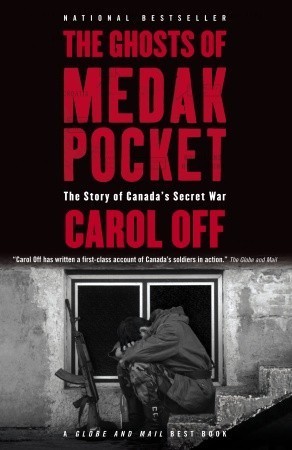
The Ghosts of Medak Pocket: The Story of Canada's Secret War
In 1993, Canadian peacekeepers in Croatia were plunged into the most significant fighting Canada had seen since the Korean War. Their extraordinary heroism was covered up and forgotten. The ghosts of that battlefield have haunted them ever since.
Canadian peacekeepers in Medak Pocket, Croatia, found no peace to keep in September 1993. They engaged the forces of ethnic cleansing in a deadly firefight and drove them from the area under United Nations protection. The soldiers should have returned home as heroes. Instead, they arrived under a cloud of suspicion and silence.
In Medak Pocket, members of the Princess Patricia’s Canadian Light Infantry did exactly the job they were trained — and ordered — to do. When attacked by the Croat army they returned fire and fought back valiantly to protect Serbian civilians and to save the UN mandate in Croatia. Then they confronted the horrors of the offensive’s aftermath — the annihilation by the Croat army of Serbian villages. The Canadians searched for survivors. There were none.
The soldiers came home haunted by these atrocities, but in the wake of the Somalia affair, Canada had no time for soldiers’ stories of the horrific compromises of battle — the peacekeepers were silenced. In time, the dark secrets of Medak’s horrors drove many of these soldiers to despair, to homelessness and even suicide.
Award-winning journalist Carol Off brings to life this decisive battle of the Canadian Forces. The Ghosts of Medak Pocket is the complete and untold story.
From the Hardcover edition.
Canadian peacekeepers in Medak Pocket, Croatia, found no peace to keep in September 1993. They engaged the forces of ethnic cleansing in a deadly firefight and drove them from the area under United Nations protection. The soldiers should have returned home as heroes. Instead, they arrived under a cloud of suspicion and silence.
In Medak Pocket, members of the Princess Patricia’s Canadian Light Infantry did exactly the job they were trained — and ordered — to do. When attacked by the Croat army they returned fire and fought back valiantly to protect Serbian civilians and to save the UN mandate in Croatia. Then they confronted the horrors of the offensive’s aftermath — the annihilation by the Croat army of Serbian villages. The Canadians searched for survivors. There were none.
The soldiers came home haunted by these atrocities, but in the wake of the Somalia affair, Canada had no time for soldiers’ stories of the horrific compromises of battle — the peacekeepers were silenced. In time, the dark secrets of Medak’s horrors drove many of these soldiers to despair, to homelessness and even suicide.
Award-winning journalist Carol Off brings to life this decisive battle of the Canadian Forces. The Ghosts of Medak Pocket is the complete and untold story.
From the Hardcover edition.
320 pages, Paperback
First published January 1, 2004
About the author
Carol Off
9 books68 followersCarol Off is a Canadian television and radio journalist, associated with CBC Television and CBC Radio. She has been a host of CBC Radio's As It Happens since 2006. Previously a documentary reporter for The National, Off also hosted the political debate series counterSpin on CBC Newsworld.
She is the vice-president of Canadian Journalists for Free Expression. She was awarded ACTRA's John Drainie Award, for distinguished contributions to Canadian broadcasting, in 2008.
Off has also written several books on the Canadian military, including 'The Lion, the Fox, and the Eagle' (2000) and 'The Ghosts of Medak Pocket: the Story of Canada's Secret War' (2005, ISBN 0-679-31294-3). In 2006, she released a book, 'Bitter Chocolate,' about the corruption and human rights abuses associated with the cocoa industry. She claimed that French-Canadian journalist Guy-André Kieffer, who was kidnapped in Abidjan, Côte d'Ivoire in 2004, had been murdered for exposing Ivorian government corruption in connection with cocoa.
Off got her start in journalism as a staff writer for The Gazette, the student newspaper at The University of Western Ontario.
She lives in Toronto with her husband, broadcaster and novelist Linden MacIntyre.
She is the vice-president of Canadian Journalists for Free Expression. She was awarded ACTRA's John Drainie Award, for distinguished contributions to Canadian broadcasting, in 2008.
Off has also written several books on the Canadian military, including 'The Lion, the Fox, and the Eagle' (2000) and 'The Ghosts of Medak Pocket: the Story of Canada's Secret War' (2005, ISBN 0-679-31294-3). In 2006, she released a book, 'Bitter Chocolate,' about the corruption and human rights abuses associated with the cocoa industry. She claimed that French-Canadian journalist Guy-André Kieffer, who was kidnapped in Abidjan, Côte d'Ivoire in 2004, had been murdered for exposing Ivorian government corruption in connection with cocoa.
Off got her start in journalism as a staff writer for The Gazette, the student newspaper at The University of Western Ontario.
She lives in Toronto with her husband, broadcaster and novelist Linden MacIntyre.
Ratings & Reviews
Friends & Following
Create a free account to discover what your friends think of this book!
Community Reviews
Displaying 1 - 11 of 11 reviews

February 20, 2017
This is one of those books that makes you want to throw it through the *%ing wall.
Not because it was written, but because it's all true.
Not because it was written, but because it's all true.

March 7, 2015
When we think of the Yugoslav Wars, it's very easy to blame the Serbs for what happened, and in many cases this is rightfully and justifiably so. But one of the things that made these wars so complicated was that it was not so clear-cut: Serbs are bad, Croats and Bosniaks are good. While many Serbs did commit horrible atrocities, others could be victims of Croat or Bosniak perpetrators, who also murdered civilians and ethnically cleansed areas. I'm not saying any of this happened equally, but it's nonetheless a point to remember. Medak Pocket was an area that not only highlighted the complicated nature of the wars, but also the difficulties of peacekeeping.
A lot of the beginning of the book is merely setting up the history to the conflict, which I think Off does very well. She keeps it readable while laying out all the important notes. I also really liked that she included the Croatians who had immigrated to Canada and the United States. She claims that some of the more hardline approaches to Croatian independence and identity were actually born outside the country, where the Croats that fled post-WWII essentially lived with what hatred they had, rather than learning to live in Tito's multi-ethnic Yugoslavia where nationalism from any group was quickly crushed. These immigrants were also involved in trying to arm Croatia after UN embargoes once the conflict started. She even uses a Croat immigrant from my own city(!) as an example of someone instrumental in this.
The Medak Pocket was located in the Krajina, an area with a rather large Serb population. Early on in the war, the Serbs proclaimed the area the Republic of Serbian Krajina with the ultimate goal of eventually linking up with a growing 'Greater Serbia.' The area had seen its share of war and UN peacekeepers were sent in, notably the Canadians in Off's account. The role of peacekeepers is essentially to remain neutral and not fire unless directly fired upon. For the Canadians, there was a clear aggressor by the time they had moved in: the Croats.
Croatia wanted the Krajina back, which in itself was not unreasonable at all. However, what went along with this with a thorough ethnic cleansing program which aimed to remove or kill the Serbian population that had lived there for centuries. The Canadians in the area were a hindrance to this goal, but this did not stop the Croats from launching an offensive to reclaim the territory, even though they were actually supposed to have withdrawn from the area. Dealing with Croat politicians and army higher-ups was difficult enough, but for the troops on the ground it was much worse. In at least one instance, Canadians were involved in firefights with groups of Croatian soldiers, meaning they had been directly targeted. While there were no causalities on the Canadian side, the troops believed they had killed a number of Croats.
Aside from this firefight, the Canadians generally felt helpless. They were witnesses to ethnic cleansing that they weren't able to do anything about and later had to deal with the horrible aftermath which included gathering information on what they found in the area for the Hague so war criminals could be indicted and tried. Gruesome business to say the least. And all that more when they expected to be helping survivors. Morale was low among troops who were frustrated with the situation and their commanders.
When the men and women finally were able to return to Canada, the country ignored what had happened in the Medak Pocket. Nobody wanted to draw attention to the military after numerous incidents involving Canadians in Somalia, the worst of which was the torture and murder of a teenage boy. Many of the soldiers developed PTSD after their deployment and received little help for what they were going through. Some were found unfit for service and dismissed; others left voluntarily or continued to serve, but many had their lives torn apart from their inability to cope with their experiences.
It was the last bit of the book that I found the most shocking. It generally dealt with the return of the troops, which I mentioned above, and how terribly they were treated between the CF and the DND. There were numerous investigations and inquiries opened up in regards to failures of leadership, illnesses developed post-deployment, inappropriate conduct of both enlisted men and officers/NCOs, etc. And through all this, it was nearly a decade before any of the men and women who served were recognized for what they had done in Medak Pocket: in 2002 they received a Governor General's citation for service, presented by Adrienne Clarkson. The firefight some of the troops got into was never mentioned.
I was very impressed with this book. I had never heard of Medak Pocket until it (and this book) was mentioned in Ray Wiss' A Line in the Sand, even though I've done my fair share of reading on the Yugoslav Wars. I liked Off's writing style and her clarity, and I think she did an excellent job covering the entirety of the event from the history leading up to it, to nearly a decade after the Canadians returned home. The role of UN peacekeeping is extremely complicated, as good as its intentions are, and this book clearly shows that. One has to wonder what conflicts such as the Yugoslav Wars would have been like had the UN allowed its peacekeepers to be more aggressive when they needed to be.
A lot of the beginning of the book is merely setting up the history to the conflict, which I think Off does very well. She keeps it readable while laying out all the important notes. I also really liked that she included the Croatians who had immigrated to Canada and the United States. She claims that some of the more hardline approaches to Croatian independence and identity were actually born outside the country, where the Croats that fled post-WWII essentially lived with what hatred they had, rather than learning to live in Tito's multi-ethnic Yugoslavia where nationalism from any group was quickly crushed. These immigrants were also involved in trying to arm Croatia after UN embargoes once the conflict started. She even uses a Croat immigrant from my own city(!) as an example of someone instrumental in this.
The Medak Pocket was located in the Krajina, an area with a rather large Serb population. Early on in the war, the Serbs proclaimed the area the Republic of Serbian Krajina with the ultimate goal of eventually linking up with a growing 'Greater Serbia.' The area had seen its share of war and UN peacekeepers were sent in, notably the Canadians in Off's account. The role of peacekeepers is essentially to remain neutral and not fire unless directly fired upon. For the Canadians, there was a clear aggressor by the time they had moved in: the Croats.
Croatia wanted the Krajina back, which in itself was not unreasonable at all. However, what went along with this with a thorough ethnic cleansing program which aimed to remove or kill the Serbian population that had lived there for centuries. The Canadians in the area were a hindrance to this goal, but this did not stop the Croats from launching an offensive to reclaim the territory, even though they were actually supposed to have withdrawn from the area. Dealing with Croat politicians and army higher-ups was difficult enough, but for the troops on the ground it was much worse. In at least one instance, Canadians were involved in firefights with groups of Croatian soldiers, meaning they had been directly targeted. While there were no causalities on the Canadian side, the troops believed they had killed a number of Croats.
Aside from this firefight, the Canadians generally felt helpless. They were witnesses to ethnic cleansing that they weren't able to do anything about and later had to deal with the horrible aftermath which included gathering information on what they found in the area for the Hague so war criminals could be indicted and tried. Gruesome business to say the least. And all that more when they expected to be helping survivors. Morale was low among troops who were frustrated with the situation and their commanders.
When the men and women finally were able to return to Canada, the country ignored what had happened in the Medak Pocket. Nobody wanted to draw attention to the military after numerous incidents involving Canadians in Somalia, the worst of which was the torture and murder of a teenage boy. Many of the soldiers developed PTSD after their deployment and received little help for what they were going through. Some were found unfit for service and dismissed; others left voluntarily or continued to serve, but many had their lives torn apart from their inability to cope with their experiences.
It was the last bit of the book that I found the most shocking. It generally dealt with the return of the troops, which I mentioned above, and how terribly they were treated between the CF and the DND. There were numerous investigations and inquiries opened up in regards to failures of leadership, illnesses developed post-deployment, inappropriate conduct of both enlisted men and officers/NCOs, etc. And through all this, it was nearly a decade before any of the men and women who served were recognized for what they had done in Medak Pocket: in 2002 they received a Governor General's citation for service, presented by Adrienne Clarkson. The firefight some of the troops got into was never mentioned.
I was very impressed with this book. I had never heard of Medak Pocket until it (and this book) was mentioned in Ray Wiss' A Line in the Sand, even though I've done my fair share of reading on the Yugoslav Wars. I liked Off's writing style and her clarity, and I think she did an excellent job covering the entirety of the event from the history leading up to it, to nearly a decade after the Canadians returned home. The role of UN peacekeeping is extremely complicated, as good as its intentions are, and this book clearly shows that. One has to wonder what conflicts such as the Yugoslav Wars would have been like had the UN allowed its peacekeepers to be more aggressive when they needed to be.

March 17, 2011
I good book, well written on the subject of the Canadian army's involvement in trying to stop the ethnic cleansing/murder in Croatia (former Yugoslavia). Its short-lived success, cover up and aftermath.

March 2, 2025
Carol Off, long a host of CBC’s As It Happens, has a significant reputation for her journalism. This book is no exception. For those who don’t know Medak Pocket was the section of Croatia that the Croats and Serbs were fighting over in the 1990’s when the UN sent in “peacekeeping” troops from around the world and tried to negotiate a cease fire. The Ghosts of Medak Pocket is an uncomfortable read about the nitty gritty of a time when the definition of peacekeeping changed and how it affected our Canadian troops (who were honoured by the UN but not until much later by Canada) for their actions in Croatia. It is a horrific and honest view of the hazards of being enlisted as well as a sobering look at how we treated our own when they returned to Canada. As there is very little recorded and apparently many deleted reports regarding this action, Off’s recording of the memories of those who were there is tremendously important. It is well written and engaging despite the nature of the topic.

April 16, 2026
In the collective world history of the 1990s it would be very easy for the actions of a Canadian Army battle group over a 6month period to be forgotten about and lost forever, even easier considering that this was the goal of the Canadian bureaucracy.
Carol Off manages to wade into the morass that is early 90s Balkan history and present a very clear and impeccably researched account of the aforementioned Canadian unit. Off manages to provide a historical background and context as events unfold, she strikes an excellent balance of providing enough info and background without getting lost in the complicated history of this time period.
The book is essentially three parts 1) background and preparation 2) the actions and 3) the aftermath. The third portion is the most shocking and by this you’d think I was speaking of the aftermath of the ethnic cleansing. The ethnic cleansing was shocking to read but as a student of history was expected, as a Canadian, the truly shocking part was the actions of the Canadian Government and Canadian Armed Forces after the fact.
Carol Off manages to wade into the morass that is early 90s Balkan history and present a very clear and impeccably researched account of the aforementioned Canadian unit. Off manages to provide a historical background and context as events unfold, she strikes an excellent balance of providing enough info and background without getting lost in the complicated history of this time period.
The book is essentially three parts 1) background and preparation 2) the actions and 3) the aftermath. The third portion is the most shocking and by this you’d think I was speaking of the aftermath of the ethnic cleansing. The ethnic cleansing was shocking to read but as a student of history was expected, as a Canadian, the truly shocking part was the actions of the Canadian Government and Canadian Armed Forces after the fact.

May 15, 2025
Very good read into events that aren't well known or even surpressed.
The book did a great job setting the stage on the historical context of the balkans region. Going in i only knew the vague "they don't like each other" but Carol Off did a great job elaborating on that point.
What I found most interesting was Canada's complete unwillingness to acknowledge what had happened because of the Somalia affair. Maybe I should go read about that.
Off has another book about un peacekeepers I should go read about that.
2025 book bingo: published in the decade you were born.
The book did a great job setting the stage on the historical context of the balkans region. Going in i only knew the vague "they don't like each other" but Carol Off did a great job elaborating on that point.
What I found most interesting was Canada's complete unwillingness to acknowledge what had happened because of the Somalia affair. Maybe I should go read about that.
Off has another book about un peacekeepers I should go read about that.
2025 book bingo: published in the decade you were born.
March 28, 2020
The book opens with the story of someone I went to school with - and this made me interested to learn about a conflict I had heard little about. A well written account that also provides the deep historical context of a very conflicted region.
September 8, 2009
Prior to Afghanistan, many Canadians had an image of our participation in UN missions as humanitarian peacekeepers. However in 1993 Croatia, there was very little peace to keep.
Elements of the PPCLI were ordered to enforce a peace between Croat and Serb forces by placing themselves between the two combatants and gradually pushing them apart. Among the last warnings given Canadian commanders by the French General in charge was that he didn't think the Croat forces had been told a ceasefire had been signed.
What followed was the most intense firefight Canadian forces had been involved in since the Korean War. As Canadian soldiers do, the Princess Pats succeeded in their mission, but, unoftunately, not in time to save the Serbian villages. This book is not for the squeamish.
More appalling, was the treatment of these soldiers on their return home as Canadian officials sought to surpress news of the battle, fearful of the negative publicity that may accrue a military action in the wake of the Somalia scandal.
An excellent journalistic treatment by Carol Off, co-host of CBC Radio's As It Happens. If you want to know what "peacekeeping" missions were really like for the young Canadians involved, this book is an eye-opener
Elements of the PPCLI were ordered to enforce a peace between Croat and Serb forces by placing themselves between the two combatants and gradually pushing them apart. Among the last warnings given Canadian commanders by the French General in charge was that he didn't think the Croat forces had been told a ceasefire had been signed.
What followed was the most intense firefight Canadian forces had been involved in since the Korean War. As Canadian soldiers do, the Princess Pats succeeded in their mission, but, unoftunately, not in time to save the Serbian villages. This book is not for the squeamish.
More appalling, was the treatment of these soldiers on their return home as Canadian officials sought to surpress news of the battle, fearful of the negative publicity that may accrue a military action in the wake of the Somalia scandal.
An excellent journalistic treatment by Carol Off, co-host of CBC Radio's As It Happens. If you want to know what "peacekeeping" missions were really like for the young Canadians involved, this book is an eye-opener
April 19, 2013
Just read this for the second time after reading Empty Casing. This provides a great first hand account of the experiences of 2PPCLI during the breakup of Yugoslavia. Normally I think of Serbia vs Bosnia with Serbia being the bad guys. In this situation, Serbia is on Croat lands with a Serb minority population. The Croatians are trying to push she Serbs back, at the same time ethnically cleansing any Serb enclaves. Insert Canadians with fuzzy rules of engagement, chicken shit allies, and an odd bureaucratic UN structure. The book ends with the aftermath of the conflict with the troops (many of which are reservists) sent home with no recognition (in the wake of the Somalia affair), no debriefing, and no support. There is a CBC documentary on this operation which can be found on Youtube.

April 9, 2011
This was a book a long time coming. I had a friend who fought in Medak Pocket, and when he would tell people about what he did they would laugh at him and call him a liar... He wasn't and Canadians should be ashamed of the way those soldiers who returned were treated. They pulled off an nearly impossible task by risking their own lives enforce peace... the first time the UN had turned to open combat to do so.
This was an excellent book that needed to be written for the soldiers who had to witness mass graves and risk their lives to prevent and document the ongoing genocide. Many are suffering today, but doing so in silence since their heroism has gone unrecognized by even their fellow soldiers for so long.
This was an excellent book that needed to be written for the soldiers who had to witness mass graves and risk their lives to prevent and document the ongoing genocide. Many are suffering today, but doing so in silence since their heroism has gone unrecognized by even their fellow soldiers for so long.

November 15, 2015
This was an excellent book documenting this little known or understood battle in Canadian military history. All those with an interest in Canadian military history in the former Yugoslovia should read this book. Very well written and researched.
Displaying 1 - 11 of 11 reviews