It is very easy to say that this book glorifies drug lords. It doesn’t, but that’s not the point. If you look at this account and the only thing you take from it is a supposed glorification of a drug lord, then you entirely missed the point not only of the book, but of what Rio de Janeiro is, and of a very big part of Brazilian identity.
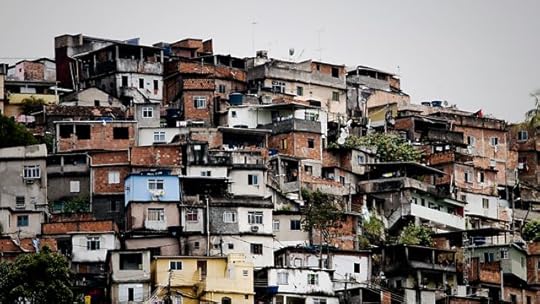
This is a book about Brazil, about Rio, about a society so divided that its division is an unescapable part of its geography. The favelas – the slum cities – are the symbol of that division.
So if you read this book, and you still think that this glorifies drug lords, or if you haven’t read it yet but don’t think you want to read an apology of drug lords, listen to me.
Favelas are slum towns that were built in mid-20th century in large Brazilian cities for those migrants who came from rural areas to work. Unlike what happened in other places of the world where the same happened, Favelas took a much longer time – a process that in many cases still isn’t complete – to become part of the city by which I mean, to get piped water, proper sanitation, electricity, decent urban planning etc. This means that a Favela is a city inside a city – a place that doesn’t have the same services, the same living standards, not even the same transportation as other neighbourhoods of the city.
It is estimated that 11 million people live in Favelas in Brazil. In Rio de Janeiro there are about 1000 favelas. Rocinha, the Favela at the centre of this book, the country’s largest favela, harbours about 100 000 people.
Up until the beginning of the century, Rocinha had open air sewage that ran down its streets. There was no proper garbage disposal, many places had no piped water, and electricity was so deficient that people still used gas lighting. Now, Rocinha as many other Favelas in Rio, is not in the outskirts of the city.
In Rio, Favelas are right in the centre of the city. You can’t escape them. Rocinha– and think carefully about what this means – is located right between Gávea and São Conrado which are two of the richest neighbourhoods in Rio. Additionally, it’s really close to Barra da Tijuca where nearly 90% of its inhabitants are from the upper middle class. In the middle of all this wealth, is a vast land of people who for decades did not have piped water and who, even now, do not even have proper means of public transportation.
And who lives in the Favelas? Drug lords? Drug dealers? Not really. Most people who live in Favelas are working people. Either they work in the Favelas, or, more significantly, they work as domestic employees, shop assistants, supermarket employees for the middle class who live in the richer areas.
There is of course crime. Now why is there crime? Why are favelas home to drug trafficking especially? Well, first because Brazil is the gateway between the countries that produce drugs – Colombia, Bolivia and Peru – and Europe. There is also in Brazil, especially among the rich middle classes, a relevant market for those drugs. In fact, in Brazil even drug consumption is classist: cocaine is the drug of the rich, while maconha (cannabis) is the drug of the poor. Favelas offered the perfect home for these criminals, especially with the rise of global capitalism and consumerism. Young people in Favelas want to have the things that those who live in the neighbourhoods so close to them have. Simple things: phones, TVs, video games, cars. Drug-dealing and trafficking is an easy and fast way to get money for that.
However, the drug lords are from the Favelas themselves. Those are their communities. As in the case of the protagonist of this book, Antônio Francisco Bonfim Lopes, known as Nem, they know nothing else. They were born, raised and most likely will die in the favela. They are its product. They exist as criminals because of the favela and because of the society that lives in fear of the favela. Some drug lords, such as Nem and others before him, realised that the best way to have the population who lives in the favela on their side, would be to provide the services that the State doesn’t provide. And here is the key to understand the whole situation. The problem is not the absence of the State. It's its tremendous incompetence. The State exists in the form of corrupt policemen, of the violence inflicted by a whole Structure that doesn’t care for those who live in the Favelas. A State that for years and years abandoned them to their luck, to drug lords and weapon dealers. Why would the inhabitants of the favelas be on the side of the State when it was the drug lords who provided them with basic services? In Rocinha, Nem and his former boss, Lulu, even distributed something called “Cesta Básica” which was a basket filled with foodstuffs, such as rice, meat, vegetables and fruit. It was the drug lords who made the Favelas actually safer – people in the favelas were safe there, except when there was a battle between criminal factions or when the police came barging in.
Of course, in other Favelas, drug lords often resorted to violence and fear to demand silence and cooperation from the people. They often extorted them for "protection" just like the Mafia. But in the case of Nem, and in the specific case of the Rocinha, that didn’t seem to happen. In reality, what the facts show, is that certain improvements in Rocinha are partly owed to the actions of the drug lords to the point where the people who live there felt safer – albeit always fearful – under the rule of drug lords than under the rule of the State. Imagine that, imagine the State failing so badly at its job that people in a community feel safer with criminals.
Misha Glenny says one very significant thing at the end of the book. If Nem hadn’t been born in a Favela, and hadn’t been forced to enter the drug dealing business to get money for his daughter’s medical treatments, he would have been an upright, successful citizen. This is clear throughout the book. Nem is a criminal, he is not a good person, he gets people killed and beaten, and he enjoys the profits the drug traffic brings him. There’s a harrowing part where it is stated that Nem beat his ex-wife because he thought she had betrayed him to the cops. But he clearly isn't an evil man. In fact, he’s very smart and, at times, even kind. It’s obvious that if he hadn’t been born into such a violent environment, and if the State had been able to help him with his daughter, if the State had fulfilled its part of the Bargain – its part of the Social Contract – then Nem would never have become a criminal.
The story of Favelas is the story of the inability of the State to fulfil its promises to its Citizens. And today, it has become clearer and clearer that the strategies the State used to pacify the Favelas are failing – failing because of the old, same problems: an inability to care and create proper structures for the citizens of the Favelas, and the corruption of the police forces.
A last note:
White people don’t live in Favelas. Favelas are inhabited by black and mixed race people. Favelas are not only a symbol of classist violence. They are a symbol of racial violence. And whatever developments were attained in the Favelas – the vibrant nightlife, the music, the food, the samba, electricity, safety – was achieved in spite of the State, with the help of people and activists from the Favelas themselves. So keep that in mind when you go to the beaches of Rio, when you dance Samba or when you listen to Funk. And keep it in mind when you say that this book glorifies drug lords.


 BOTW
BOTW http://www.bbc.co.uk/programmes/b069jf1z
 1/5: It's 2012 and Misha Glenny travels to Brazil's top security jail to meet Antonio, known as Nem, who became one of the most feared yet respected crime lords in Rio.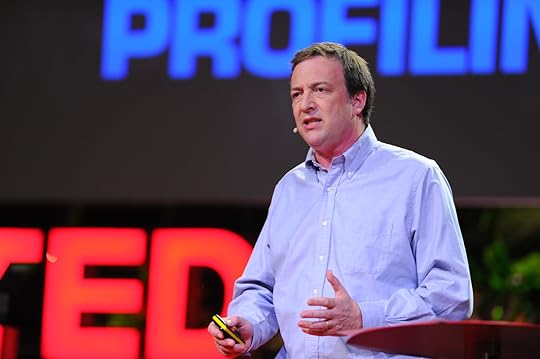
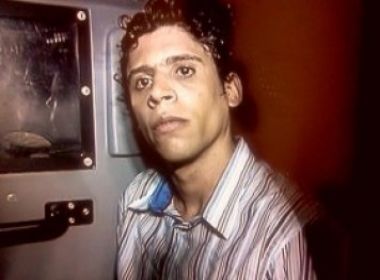 Antônio Francisco Bonfim Lopes aka Nem: drug lord, gangster and murderer.


