

What do you think?

Odessa Stories
Autour de la figure de Bénia Krik, le “Roi” d’une pègre de gangsters, de charretiers, de contrebandiers, s’ordonne le petit monde du quartier juif de l’Odessa des bas-fonds que met en scène – comme un hommage à ses origines – Isaac Babel.
Ici, pourtant, le petit Juif persécuté de l’imagerie de son enfance devient – par le retournement de la fiction – le beau et fort roi des voleurs d’Odessa. Capable de marier une sœur contrefaite, et même, en commanditant l’incendie du commissariat, capable d’empêcher que la cérémonie soit troublée…
C’est bien une fresque baroque, colorée, grouillante de vie et pleine d’humour que dessine ce recueil.
Ici, pourtant, le petit Juif persécuté de l’imagerie de son enfance devient – par le retournement de la fiction – le beau et fort roi des voleurs d’Odessa. Capable de marier une sœur contrefaite, et même, en commanditant l’incendie du commissariat, capable d’empêcher que la cérémonie soit troublée…
C’est bien une fresque baroque, colorée, grouillante de vie et pleine d’humour que dessine ce recueil.
224 pages, Paperback
First published January 1, 1931
About the author
Isaac Babel
219 books320 followersIsaak Emmanuilovich Babel (Russian: Исаак Эммануилович Бабель; 1894 - 1940) was a Russian language journalist, playwright, literary translator, and short story writer. He is best known as the author of Red Cavalry, Story of my Dovecote and Tales of Odessa, all of which are considered masterpieces of Russian literature. Babel has also been acclaimed as "the greatest prose writer of Russian Jewry."
Loyal to, but not uncritical of, the Communist Party of the Soviet Union, Isaak Babel fell victim to Joseph Stalin's Great Purge due to his longterm affair with the wife of NKVD chief Nikolai Yezhov. Babel was arrested by the NKVD at Peredelkino on the night of May 15, 1939. After "confessing", under torture, to being a Trotskyist terrorist and foreign spy, Babel was shot on January 27, 1940. The arrest and execution of Isaak Babel has been labeled a catastrophe for the world of literature.
Loyal to, but not uncritical of, the Communist Party of the Soviet Union, Isaak Babel fell victim to Joseph Stalin's Great Purge due to his longterm affair with the wife of NKVD chief Nikolai Yezhov. Babel was arrested by the NKVD at Peredelkino on the night of May 15, 1939. After "confessing", under torture, to being a Trotskyist terrorist and foreign spy, Babel was shot on January 27, 1940. The arrest and execution of Isaak Babel has been labeled a catastrophe for the world of literature.
Ratings & Reviews
Friends & Following
Create a free account to discover what your friends think of this book!
Community Reviews
Displaying 1 - 30 of 234 reviews

May 21, 2024
Regrettable.
A short story collection by Isaac Babel. Man, this collection was dull AF. This felt like reading Chekhov, but without any of the charm. What a remarkable waste of time!
I don’t know; maybe the stories aren’t bad per se, maybe these stories are even highly representative of Odessa at the time, who knows; but for me, all these stories felt mind numbingly boring, forgettable, and even regrettable. I mean I literally feel I’d have had way more fun rearranging my sock drawer.
Go for the Best, consider the Good, whatever the Meh.
The Meh :
★★☆☆☆ “The King.”
★★☆☆☆ “History of my Pigeon Roost.” [1.5]
★★☆☆☆ "The Father." [1.5]
★☆☆☆☆ "The First Love." [1.5]
★☆☆☆☆ “This is How it was Done in Odessa.” [1.5]
★☆☆☆☆ “Liubka the Cossack.”
★☆☆☆☆ “The End of Asylum.”

-----------------------------------------------
PERSONAL NOTE :
[1920] [94p] [Collection] [Not Recommendable]
-----------------------------------------------
Arrepentible.
Una colección de cuentos cortos por Isaac Babel. Dios, esta colección sí que fue tremendamente aburrida. Esto se sentió como leer a Chekhov, pero sin nada del encanto. ¡Qué increíble pérdida de tiempo!
No sé; tal vez estas historias no sean malas en sí, tal vez incluso sean extremadamente representativas de Odessa en ese momento, quién sabe; pero para mí, todas estas historias me parecieron endemoniadamente aburridas, olvidables, e incluso arrepentibles. Quiero decir, literalmente siento que me habría divertido mucho más reorganizando mi cajón de calcetines.
Ir por lo Mejor, considerar lo Bueno, loquesea lo Meh.
Lo Meh :
★★☆☆☆ “El Rey.”
★★☆☆☆ “Historia de mi Palomar.” [1.5]
★★☆☆☆ “El Padre.” [1.5]
★☆☆☆☆ “El Primer Amor.” [1.5]
★☆☆☆☆ “Así se Hacía en Odessa.” [1.5]
★☆☆☆☆ “Liubka la Cosaco.”
★☆☆☆☆ “El Fin del Asilo.”

-----------------------------------------------
NOTA PERSONAL :
[1920] [94p] [Colección] [No Recomendable]
-----------------------------------------------
A short story collection by Isaac Babel. Man, this collection was dull AF. This felt like reading Chekhov, but without any of the charm. What a remarkable waste of time!
I don’t know; maybe the stories aren’t bad per se, maybe these stories are even highly representative of Odessa at the time, who knows; but for me, all these stories felt mind numbingly boring, forgettable, and even regrettable. I mean I literally feel I’d have had way more fun rearranging my sock drawer.
Go for the Best, consider the Good, whatever the Meh.
The Meh :
★★☆☆☆ “The King.”
★★☆☆☆ “History of my Pigeon Roost.” [1.5]
★★☆☆☆ "The Father." [1.5]
★☆☆☆☆ "The First Love." [1.5]
★☆☆☆☆ “This is How it was Done in Odessa.” [1.5]
★☆☆☆☆ “Liubka the Cossack.”
★☆☆☆☆ “The End of Asylum.”
-----------------------------------------------
PERSONAL NOTE :
[1920] [94p] [Collection] [Not Recommendable]
-----------------------------------------------
Arrepentible.
Una colección de cuentos cortos por Isaac Babel. Dios, esta colección sí que fue tremendamente aburrida. Esto se sentió como leer a Chekhov, pero sin nada del encanto. ¡Qué increíble pérdida de tiempo!
No sé; tal vez estas historias no sean malas en sí, tal vez incluso sean extremadamente representativas de Odessa en ese momento, quién sabe; pero para mí, todas estas historias me parecieron endemoniadamente aburridas, olvidables, e incluso arrepentibles. Quiero decir, literalmente siento que me habría divertido mucho más reorganizando mi cajón de calcetines.
Ir por lo Mejor, considerar lo Bueno, loquesea lo Meh.
Lo Meh :
★★☆☆☆ “El Rey.”
★★☆☆☆ “Historia de mi Palomar.” [1.5]
★★☆☆☆ “El Padre.” [1.5]
★☆☆☆☆ “El Primer Amor.” [1.5]
★☆☆☆☆ “Así se Hacía en Odessa.” [1.5]
★☆☆☆☆ “Liubka la Cosaco.”
★☆☆☆☆ “El Fin del Asilo.”
-----------------------------------------------
NOTA PERSONAL :
[1920] [94p] [Colección] [No Recomendable]
-----------------------------------------------

November 7, 2016
Thus, began my life, full of thought and merriment.
With 'Odessa Stories', Isaac Babel took me to the legendary city of Odessa, the mythical city of Rogues and Schnorrers on the coast of the Black Sea – Fascinated, I listened to the beguiling, mirthful and ironic voice of the narrator ‘with glasses on his nose and autumn in his heart’, depicting the feisty local life in the rambunctious Moldavanka, the tough and sinful district where Babel used to live, a Jewish gangsters’ paradise. As Comrade Babel had access to secret files of the police, he was well informed about Jewish banditism in Odessa.
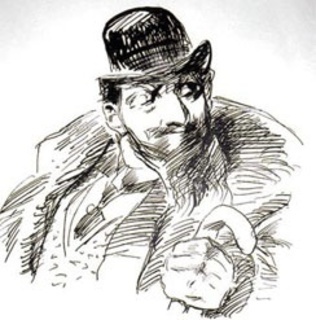

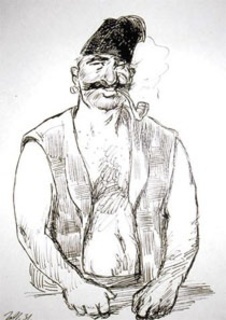
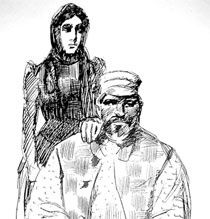
(Illustrations to Babel’s Odessa Stories by G.G. Filippovsky, 1931)
The title of this collection, Odessa Stories might be somewhat confusing, as it includes more stories than the ones originally known as the Tales of Odessa. The 17 stories included in Odessa Stories are arranged in three parts. 9 picaresque stories revolve around the adventures of mobster ‘King’ Benya Krik and other ‘Old Odessans’; 5 stories draw on Babel’s childhood and youth and are assumed semi-autobiographical; 3 are found under the title ‘Loose leaves and Apocrypha’.
As an Odessan Judeo-Russian author, Isaac Babel was acutely aware of his Jewishness and the preponderance of Jewish culture in his beloved hometown. Cosmopolitan Odessa was the most Jewish of Russian cities in the 1920 - in 1900, about 35 percent of the population was Jewish. Inspired by Odessa’s variegated population, Babel passes in review a rich mix of characters in his stories: thieves, swindlers, smugglers, draymen, shopkeepers, prostitutes, musicians, bourgeois, bankers, craftsmen, beggars, old pious Jews like the storyteller Aryeh Leib, luftmenschen – jacks-of-all-trades living on air, going from town to town buying and selling.
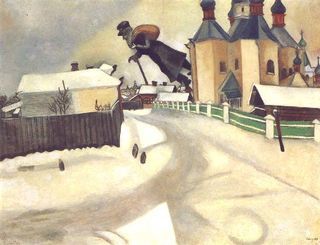
Marc Chagall, Over Vitebsk
Pursuing ‘precision and brevity’ like Pushkin in his literary style, Babel’s utterly perceptive eye only needs a few pages and terse phrases to paint his flamboyant scenes: ’No iron spike can pierce a human heart as icily as a period in the right place’. According to another Soviet author associated with Odessa, his friend Konstantin Paustovsky, Babel once told him that he had to keep his phrases and stories that short because he suffered from asthma.
Babel needed to submerge in real life to inspire him. Infatuated with the prose of Gustave Flaubert and Guy de Maupassant, Babel’s living literary hero and mentor, Maxim Gorky – who protected him politically for 20 years - taught Babel ‘extremely important things and sent me into the world’, resulting in his most famous story cycle, Red Cavalry, on the 1919-21 Polish-Soviet war.
While reading Red Cavalry years ago, Babel’s unsettling juxtaposition of the most violent and blood-soaked savagery and splendid surreal imagery of nature revolted and delighted me so intensely I couldn’t stomach more than one story in one sitting. However stunning Red Cavalry, in some sense I felt relieved most tales in Odessa Stories are less disconcerting and shocking than the ones from Red Cavalry.
Besides the intriguing themes or engaging plots of the stories from the Odessa collection, it was mostly Babel’s unique expressionistic style and visual prose which overwhelmed and charmed me – again. Reading Babel is like stepping into a painting of Chagall, brushing his tableaus inspired by Jewish tradition and Russian folklore in a pictorial language brimming with vivid, brilliant colours. Searingly exuberant, at times affectionate, Babel wins the reader’s heart with his juicy metaphors and gaudy imagery. The sun is almost a character in itself: the sun rises over a head like a sentry with a rifle, sprinkles people with creeping freckles, freckles the colour of lizards, hangs from the sky like a thirsty dog’s rosy tongue or pours down into the clouds like the blood of a stuck hog, or soars up and spins like a red bowl on a spearhead. A sunset viscous as jam boils in the sky.
Babel seems on a personal cosmic mission to revitalize the sun in Russian literature, and in his eyes, it would take Odessa and an Odessite son to bring the sun to Russian literature and to free it from the clutches of cold and misty St Petersburg:
There is the blowup and distorting of reality, and the schmaltzy Jewish pun. After having shot a man in How it Was Done in Odessa, mob leader Benya Krik tells the man’s mother: ‘Aunt Pesya, if you want my life, you can have it, but everyone makes mistakes, even God. That’s what it was, aunt Pesya – a huge mistake. But wasn’t it a mistake on God’s part to put the Jews in Russia, where they suffer as if they’re in hell? I ask you, why not have the Jews live in Switzerland, with nothing but top-quality lakes, mountain air and Frenchmen as far as the eye can see? Everyone makes mistakes, even God.’.
Yet not all is laughing matter. The brutal realism of the times, of the Revolution and the new regime trickle down in stories describing how is done away with old Odessa figures who are useless in the bright Soviet future, like in The End of the Almshouse and Froim the Rook. There is the haunting anti-semitism and horrible pre-revolutionary violence on Jews. One of the most harrowing stories of this collection, The Story of My Dovecote parallels the outrageous brutality of the Red Calvary story cycle , recounting a pogrom from the perspective of a ten year old Jewish boy:
With 'Odessa Stories', Isaac Babel took me to the legendary city of Odessa, the mythical city of Rogues and Schnorrers on the coast of the Black Sea – Fascinated, I listened to the beguiling, mirthful and ironic voice of the narrator ‘with glasses on his nose and autumn in his heart’, depicting the feisty local life in the rambunctious Moldavanka, the tough and sinful district where Babel used to live, a Jewish gangsters’ paradise. As Comrade Babel had access to secret files of the police, he was well informed about Jewish banditism in Odessa.
(Illustrations to Babel’s Odessa Stories by G.G. Filippovsky, 1931)
The title of this collection, Odessa Stories might be somewhat confusing, as it includes more stories than the ones originally known as the Tales of Odessa. The 17 stories included in Odessa Stories are arranged in three parts. 9 picaresque stories revolve around the adventures of mobster ‘King’ Benya Krik and other ‘Old Odessans’; 5 stories draw on Babel’s childhood and youth and are assumed semi-autobiographical; 3 are found under the title ‘Loose leaves and Apocrypha’.
As an Odessan Judeo-Russian author, Isaac Babel was acutely aware of his Jewishness and the preponderance of Jewish culture in his beloved hometown. Cosmopolitan Odessa was the most Jewish of Russian cities in the 1920 - in 1900, about 35 percent of the population was Jewish. Inspired by Odessa’s variegated population, Babel passes in review a rich mix of characters in his stories: thieves, swindlers, smugglers, draymen, shopkeepers, prostitutes, musicians, bourgeois, bankers, craftsmen, beggars, old pious Jews like the storyteller Aryeh Leib, luftmenschen – jacks-of-all-trades living on air, going from town to town buying and selling.
In Odessa, luftmenschen skulk around coffee shops, looking to earn a rouble and feed their families, but there’s no work to be had – and what kind of work could there be for a useless luftmensch? (From Odessa, 1916)
Marc Chagall, Over Vitebsk
Pursuing ‘precision and brevity’ like Pushkin in his literary style, Babel’s utterly perceptive eye only needs a few pages and terse phrases to paint his flamboyant scenes: ’No iron spike can pierce a human heart as icily as a period in the right place’. According to another Soviet author associated with Odessa, his friend Konstantin Paustovsky, Babel once told him that he had to keep his phrases and stories that short because he suffered from asthma.
Babel needed to submerge in real life to inspire him. Infatuated with the prose of Gustave Flaubert and Guy de Maupassant, Babel’s living literary hero and mentor, Maxim Gorky – who protected him politically for 20 years - taught Babel ‘extremely important things and sent me into the world’, resulting in his most famous story cycle, Red Cavalry, on the 1919-21 Polish-Soviet war.
While reading Red Cavalry years ago, Babel’s unsettling juxtaposition of the most violent and blood-soaked savagery and splendid surreal imagery of nature revolted and delighted me so intensely I couldn’t stomach more than one story in one sitting. However stunning Red Cavalry, in some sense I felt relieved most tales in Odessa Stories are less disconcerting and shocking than the ones from Red Cavalry.
Besides the intriguing themes or engaging plots of the stories from the Odessa collection, it was mostly Babel’s unique expressionistic style and visual prose which overwhelmed and charmed me – again. Reading Babel is like stepping into a painting of Chagall, brushing his tableaus inspired by Jewish tradition and Russian folklore in a pictorial language brimming with vivid, brilliant colours. Searingly exuberant, at times affectionate, Babel wins the reader’s heart with his juicy metaphors and gaudy imagery. The sun is almost a character in itself: the sun rises over a head like a sentry with a rifle, sprinkles people with creeping freckles, freckles the colour of lizards, hangs from the sky like a thirsty dog’s rosy tongue or pours down into the clouds like the blood of a stuck hog, or soars up and spins like a red bowl on a spearhead. A sunset viscous as jam boils in the sky.
Babel seems on a personal cosmic mission to revitalize the sun in Russian literature, and in his eyes, it would take Odessa and an Odessite son to bring the sun to Russian literature and to free it from the clutches of cold and misty St Petersburg:
Consider this: Could it be true that, in all Russian literature, there isn’t a single clear and joyous depiction of the sun? (…) And have you ever run across a bright and enlivening sun in Gogol – a man from Ukraine?(..) The first person to talk about the sun in a Russian book – to talk about it with enthusiasm and passion – was Gorky. but precisely because he talks of it with such enthusiasm and passion, we’re still not quite dealing with the real thing. Gorky is a forerunner – the most powerful in our time. But he is not a singer of the sun – he is the herald of truth. And know this: If there is anything worth singing about, it’s the sun (…). I believe the Russian people will soon be drawn to the south, the sea and the sun. Everyone feels the need for new blood. It’s getting hard to breathe. The literary messiah, for whom we’ve awaited so long and so fruitlessly, will come from there – from the sunny steppes washed by the sea. (From Odessa, 1916)
There is the blowup and distorting of reality, and the schmaltzy Jewish pun. After having shot a man in How it Was Done in Odessa, mob leader Benya Krik tells the man’s mother: ‘Aunt Pesya, if you want my life, you can have it, but everyone makes mistakes, even God. That’s what it was, aunt Pesya – a huge mistake. But wasn’t it a mistake on God’s part to put the Jews in Russia, where they suffer as if they’re in hell? I ask you, why not have the Jews live in Switzerland, with nothing but top-quality lakes, mountain air and Frenchmen as far as the eye can see? Everyone makes mistakes, even God.’.
Yet not all is laughing matter. The brutal realism of the times, of the Revolution and the new regime trickle down in stories describing how is done away with old Odessa figures who are useless in the bright Soviet future, like in The End of the Almshouse and Froim the Rook. There is the haunting anti-semitism and horrible pre-revolutionary violence on Jews. One of the most harrowing stories of this collection, The Story of My Dovecote parallels the outrageous brutality of the Red Calvary story cycle , recounting a pogrom from the perspective of a ten year old Jewish boy:
My world was small and terrible. I shut my eyes, so that I wouldn’t have to see it, and pressed myself into the earth, which lay beneath me in soothing silence. This trodden earth had nothing in common with our lives – nothing in common with the anticipation of exams in our lives. Somewhere far away disaster galloped along this very earth on a big horse, but the sound of its hooves was growing weaker, vanishing, and calmness, that bitter calmness that sometimes comes over children during calamities, suddenly obliterated the boundary between my body and the unmoving earth. The earth smelt of damp inner depths, of the grave, of flowers.Isaac Babel was a great storyteller and a brilliant stylist. In 1940, at the age of 45, he was shot by a firing squad for treason, for belonging to a Trotskyist group and spying. His body was thrown into a communal grave.
I stood there all alone, clutching my watch, and suddenly, with a clarity I had never experienced until that point, I saw the towering columns of the City Council, the well-lit foliage along the boulevard, and Pushkin’s bronze head, faintly reflecting the glow of the moon. For the first time I saw my surroundings as they actually were – hushed and unspeakably beautiful. (from Di Grasso)Odessa Stories offers a great sampling of utterly fine Babel stories. The stories were translated by Boris Dralyuk, who also wrote an excellent preface and recently edited an anthology of literary responses to the Russian Revolution , 1917: Stories and Poems from the Russian Revolution.

October 10, 2025
Exotically colourful Odessa Stories… The Jewish milieu… Rabelaisian portraits of thugs… Those who didn’t read this book did lose much…
A preparation for the wedding banquet… An ugly sister of Benya Krik, known as the King of Odessa bandits, is a bride…
How It Was Done in Odessa – Benya Krik becomes a King…
Lyubka the Cossack is an owner of an inn and a whorehouse…
Father – a tale of a bride for a King…
Justice in Quotes – one unusual robbery…
The End of the Almshouse – the end of this institution’s residents’ prosperity…
Karl-Yankel is a story of one circumcision…
The second part is the stories of childhood and youth…
Moments of joy… Days of misery… Tragedies and unhappiness… Childish First Love… Illness… Books… Life In the Basement…
The city is a cauldron in which all the human destinies keep boiling.
A preparation for the wedding banquet… An ugly sister of Benya Krik, known as the King of Odessa bandits, is a bride…
The flats had been turned into kitchens. A meaty flame, a plump, drunken flame, gushed through their sooty doors. The aged faces, wobbly jowls and grimy breasts of housewives baked in its smoky rays. Sweat rosy as blood, rosy as the foam on a mad dog’s lips, streamed down these piles of overgrown, sweetly stinking human flesh. Three cooks, not counting the hired help, were preparing the wedding feast, and over them reigned the eighty-year-old Reyzl – tiny, humpbacked, and traditional as a Torah scroll.
How It Was Done in Odessa – Benya Krik becomes a King…
Lyubka the Cossack is an owner of an inn and a whorehouse…
Father – a tale of a bride for a King…
When the Rook reached his courtyard he saw a woman of gigantic proportions. Her hips were enormous, her cheeks brick red.
“Papa,” the woman boomed in a thunderous bass. “I’m so bored I could burst. I’ve been waiting all day for you… Grandmother died…
Justice in Quotes – one unusual robbery…
The End of the Almshouse – the end of this institution’s residents’ prosperity…
After the Revolution, the old men and women who’d been living off alms at the cemetery grabbed positions as gravediggers, cantors and corpse-bathers. They got hold of an oak coffin with silver tassels and a pall, and started hiring it out to the poor.
Karl-Yankel is a story of one circumcision…
The second part is the stories of childhood and youth…
When I was a child I really wanted a dovecote. I never felt a stronger desire in all my life. I was nine years old when my father promised to give me the money for some planks and three pairs of doves. That was back in 1904.
Moments of joy… Days of misery… Tragedies and unhappiness… Childish First Love… Illness… Books… Life In the Basement…
The city is a cauldron in which all the human destinies keep boiling.

March 17, 2022
Andas no vento como um mau farrapo – disse ele ao ver-me –, estiveste fora uma eternidade... O povo deu cabo do teu avô. Aí o tens... (...) Carregaram contra o teu avô e mais ninguém, mas deu-lhes que fazer, de que maneira; um tipo formidável... Tapa-lhe os olhos com moedas, anda... (...) Se tivessem sido só os tártaros tinha-os arrumado, mas vieram os russos e com eles as mulheres russas. Aos russos custa-lhes perdoar. Conheço os russos...
Foi uma sorte ter encontrado esta relíquia, uma edição de 1972 da Editora Inova Lda., com contos de Isaac Babel, mas tenho pena que seja só uma pequena selecção da obra deste autor ucraniano que, apesar de não ser opositor do regime, acabou por ser executado em 1940, durante a Grande Purga de Estaline.
Estas histórias passam-se em Nikolayev (atual Mykolaiv), onde o narrador passou os primeiros anos da sua vida e que teve deixar após o pogrom de 1905, partindo em direcção a Odessa.
“Contos de Odessa” podem agrupar-se em dois conjuntos distintos: aqueles que dão um colorido da sociedade da altura, um mundo que já não existe, habitado por tártaros, cossacos e bessarábios e com episódios caricatos de gente violenta, conflituosa e até criminosa, como se vê em “O Rei”, “Era Assim em Odessa”, “O Pai” e “Froim Grach”...
E Borovoi disse-lhes que Froim Grach e não Bénia Krik era o legítimo cabecilha dos 40 mil ladrões de Odessa. Movia-se na sombra mas tudo se tramava segundo os planos do velho: o assalto às fábricas, à tesouraria de Odessa, o ataque aos voluntários e às tropas aliadas.
...onde nem as mulheres estão livres da delinquência, como no caso de “Liubka o Cassaco”, mãe que “pensa no filho como pensa na neve do ano passado”, contrabandista e proprietária de pedreira, taberna e bordel, que faz jus ao cognome...
Liubka Shneives, com a carteira a tiracolo, batia e empurrava para a rua um bêbedo. Dava-lhe murros na cara como se ela fosse uma pandeireta e, com a outra mão, segurava o homem para que não caísse. O homem largava pequenos esguichos de sangue pelos dentes e junto de uma orelha. Estava pensativo e olhava Liubka como se fosse uma desconhecida. Depois caiu em cima do mosaico e ficou a dormir. Liubka deu-lhe um pontapé e regressou à loja.
...e dois outros num tom distinto, mais pessoais e emotivos, relativos às aspirações e desgostos de infância do narrador. Em “História do Meu Pombal” e o “Primeiro Amor” vê-se uma criança à beira de realizar um sonho, como prémio por ter passado nos exames de ingresso no liceu, onde dos 40 alunos só dois podiam ser judeus, e o seu desejo a ser desfeito por ódios inexplicáveis que levam a família a refugiar-se em casa de vizinhos depois da pilhagem da loja do pai e do assassinato do avô paterno. Isaac Babel tem uma escrita muito viva e desembestada em relatos rocambolescos, mas é quase lírico nos momentos de grande dor.
Fechei os olhos para o não ver e comprimi-me contra a terra que estava sob mim com a sua mudez tranquilizadora. Aquela terra pisada não se parecia com a nossa vida nem com a espera dos exames da nossa vida. Longe dali caminhava sobre ela a dor no lombo de um grande cavalo, mas o ruído dos cascos tornava-se mais débil, perdia-se, e o silêncio, o amargo silêncio que algumas vezes assombra as crianças em desgraça, apagou a linha entre o meu corpo e a terra imóvel. A terra cheirava a solo húmido, a túmulo e a flores.
Neste livro, há histórias de bandidos e de mulheres de bigode, de circuncisões e outras práticas ligadas ao judaísmo, constantemente atacado e denegrido pelo resto da comunidade. Isaac Babel, ele mesmo de origem judaica, tem fama de ter humanizado os judeus na literatura, que até aí eram simples caricaturas e descritos com preconceito, mas da minha posição leiga e ocidental, um século depois de esta obra ter sido originalmente editada, acho que estão presentes muitos dos estereótipos, sobretudo na história mais divertida, “O Fim do Asilo”.
Depois da Revolução os velhos e as velhas asilados no cemitério monopolizaram os lugares de coveiros, oficiantes e amortalhadores. Arranjaram um caixão de carvalho com um manto e com borlas de prata que alugavam às pessoas pobres. Nessa época, em Odessa, tinham desaparecido as tábuas. O caixão de aluguer não permanecia inactivo. O falecido jazia na caixa de carvalho, em sua casa e na missa; à campa descia envolto num lençol. Era uma esquecida lei judia.
Foi uma sorte ter encontrado esta relíquia, uma edição de 1972 da Editora Inova Lda., com contos de Isaac Babel, mas tenho pena que seja só uma pequena selecção da obra deste autor ucraniano que, apesar de não ser opositor do regime, acabou por ser executado em 1940, durante a Grande Purga de Estaline.
Estas histórias passam-se em Nikolayev (atual Mykolaiv), onde o narrador passou os primeiros anos da sua vida e que teve deixar após o pogrom de 1905, partindo em direcção a Odessa.
“Contos de Odessa” podem agrupar-se em dois conjuntos distintos: aqueles que dão um colorido da sociedade da altura, um mundo que já não existe, habitado por tártaros, cossacos e bessarábios e com episódios caricatos de gente violenta, conflituosa e até criminosa, como se vê em “O Rei”, “Era Assim em Odessa”, “O Pai” e “Froim Grach”...
E Borovoi disse-lhes que Froim Grach e não Bénia Krik era o legítimo cabecilha dos 40 mil ladrões de Odessa. Movia-se na sombra mas tudo se tramava segundo os planos do velho: o assalto às fábricas, à tesouraria de Odessa, o ataque aos voluntários e às tropas aliadas.
...onde nem as mulheres estão livres da delinquência, como no caso de “Liubka o Cassaco”, mãe que “pensa no filho como pensa na neve do ano passado”, contrabandista e proprietária de pedreira, taberna e bordel, que faz jus ao cognome...
Liubka Shneives, com a carteira a tiracolo, batia e empurrava para a rua um bêbedo. Dava-lhe murros na cara como se ela fosse uma pandeireta e, com a outra mão, segurava o homem para que não caísse. O homem largava pequenos esguichos de sangue pelos dentes e junto de uma orelha. Estava pensativo e olhava Liubka como se fosse uma desconhecida. Depois caiu em cima do mosaico e ficou a dormir. Liubka deu-lhe um pontapé e regressou à loja.
...e dois outros num tom distinto, mais pessoais e emotivos, relativos às aspirações e desgostos de infância do narrador. Em “História do Meu Pombal” e o “Primeiro Amor” vê-se uma criança à beira de realizar um sonho, como prémio por ter passado nos exames de ingresso no liceu, onde dos 40 alunos só dois podiam ser judeus, e o seu desejo a ser desfeito por ódios inexplicáveis que levam a família a refugiar-se em casa de vizinhos depois da pilhagem da loja do pai e do assassinato do avô paterno. Isaac Babel tem uma escrita muito viva e desembestada em relatos rocambolescos, mas é quase lírico nos momentos de grande dor.
Fechei os olhos para o não ver e comprimi-me contra a terra que estava sob mim com a sua mudez tranquilizadora. Aquela terra pisada não se parecia com a nossa vida nem com a espera dos exames da nossa vida. Longe dali caminhava sobre ela a dor no lombo de um grande cavalo, mas o ruído dos cascos tornava-se mais débil, perdia-se, e o silêncio, o amargo silêncio que algumas vezes assombra as crianças em desgraça, apagou a linha entre o meu corpo e a terra imóvel. A terra cheirava a solo húmido, a túmulo e a flores.
Neste livro, há histórias de bandidos e de mulheres de bigode, de circuncisões e outras práticas ligadas ao judaísmo, constantemente atacado e denegrido pelo resto da comunidade. Isaac Babel, ele mesmo de origem judaica, tem fama de ter humanizado os judeus na literatura, que até aí eram simples caricaturas e descritos com preconceito, mas da minha posição leiga e ocidental, um século depois de esta obra ter sido originalmente editada, acho que estão presentes muitos dos estereótipos, sobretudo na história mais divertida, “O Fim do Asilo”.
Depois da Revolução os velhos e as velhas asilados no cemitério monopolizaram os lugares de coveiros, oficiantes e amortalhadores. Arranjaram um caixão de carvalho com um manto e com borlas de prata que alugavam às pessoas pobres. Nessa época, em Odessa, tinham desaparecido as tábuas. O caixão de aluguer não permanecia inactivo. O falecido jazia na caixa de carvalho, em sua casa e na missa; à campa descia envolto num lençol. Era uma esquecida lei judia.

August 27, 2020
È un’Odessa pittoresca e viva, quella che emerge dai racconti di Babel. Città punto di incontro di lingue, etnie e culture diverse, all’interno della quale vivevano - quasi un mondo a parte - gli ebrei del ghetto. Una realtà prosaica, fatta di bordelli, uffici, ospizi, cimiteri e scuole ha come sfondo un paesaggio di grande bellezza.
“La sera gironzolava intorno alla panchina, l'occhio splendente del tramonto cadeva nel mare dietro a Peresyp', e il cielo era rosso come una data rossa sul calendario”.
I suoi personaggi, emarginati e respinti, a volte rassegnati, a volte violenti, aspirano a una legittimazione che spesso è rappresentata dal possesso di un oggetto. Babel ha dato loro voce rendendoli quanto mai reali, con le loro passioni, i loro vizi e le loro poche gioie.
“La sera gironzolava intorno alla panchina, l'occhio splendente del tramonto cadeva nel mare dietro a Peresyp', e il cielo era rosso come una data rossa sul calendario”.
I suoi personaggi, emarginati e respinti, a volte rassegnati, a volte violenti, aspirano a una legittimazione che spesso è rappresentata dal possesso di un oggetto. Babel ha dato loro voce rendendoli quanto mai reali, con le loro passioni, i loro vizi e le loro poche gioie.

September 27, 2016
So excited to be starting this book. Isaac Babel was one of the few great prose writers to come out of the Russian Revolution--for most, the events just happened too fast, and the pressure on prose too great--politically, socially... but Babel had a wealth to share, and these stories of the rough, gangsterish world of Odessa, and his (anti-)hero, jewish gangster kingpin Benya Krik, made his name. So excited to read this new translation by Boris Dralyuk, a resident of Los Angeles but a native of Odessa. For Dralyuk, the essence of these beloved stories, about the has always resided in the language, the particular Odessa patois, a Yiddish-flavored, tough guy argot which embodies the temperament and flavor of that melting pot city where Jews and Greeks, Turks and Syrians and Russians, East and West, crime and commerce, came together in a vital, sometimes violent encounter. Anybody who likes tough-guys, wise-guys from Malamud to Scorsese to Damon Runyon, will love these Babel tales. Slated for publication on Nov. 15.
*************************************
YAY, the Guardian agrees: https://www.theguardian.com/books/201...
*************************************
YAY, the Guardian agrees: https://www.theguardian.com/books/201...

February 20, 2017
ARC review: Pushkin Press 2016 edition, translated by Boris Dralyuk
[3.5] Many of these stories are like overhearing gossip in a pub or café in a town you don’t know: there’s an intimacy to them, people and their personalities aren’t explained as such, they simply are as they are. Characters are introduced in a way, but very much like the oral tradition, as if, in a way, they are already familiar even though you, personally, happen to be hearing of them for the first time. And the tone is recognisably that of East European Jewish stories of the early twentieth century, like Sholem Aleichem or another Isaac, Bashevis Singer. Aside from the bustling, occasionally comic but fairly often tragic humanity (for this is the time of the Russian Revolution and its suppressions), there are interspersed some stunning descriptions of scenery: if the ostensibly autobiographical story is true in which the fourteen-year-old scribbler is told he needs to observe and understand nature more, he evidently took the advice to heart. Similarly, Babel’s observation in one of the essay-fragments near the end, that the Golden Age Russian writers didn’t give “enthusiastic and passionate” descriptions of the sun suggests, when read after the short stories, that he – from the warm south of the country – endeavoured to write his own instead.
One of my enduring obsessions when reading any foreign fiction is sense of place, and I must admit I’d have liked a little more here, more about the surroundings and the culture; I found myself filling in gaps with other things I’d read, but I don’t really know that much about Odessa itself, and have heard more about shtetl culture. In Aleichem I found a deep sense of a culture and environment now lost (which he didn’t realise at time of writing would be annihilated); this collection was more about individuals and family members, in part 2, and earlier about gangsters, who are pretty similar in their behaviour the world over, it seems. Perhaps because Babel largely wrote and published under the Soviet regime, his portrayals are more ambivalent than Aleichem’s. A famous old gangster meets his demise at the hands of the Cheka – but how much better was life really when the likes of him ruled the neighbourhood? And not so many today would be sad that a mohel who insisted on sucking blood with his mouth was prohibited from practising by the Russian authorities. The revolution may have been an oppressive machine, but life was far from idyllic before, and some of the most haunting stories are those about pogroms. During one, an angry working-class Russian says, “We don’t need no freedom just so the Yids get free trade.” This apparent angry willingness to decrease civil liberties as a corollary of decreasing trade opportunities for a despised, perceived better-off group sounds too familiar again nowadays.
Whilst there is no shortage of strong characters in the Odessa Stories, there maybe isn’t such a lot of comedy and sense of joy in life; whether it was before or after the revolution, repression (maybe just embarrassment) follows soon enough, perhaps most notably in ‘The Story of my Dovecote’, which encompasses the greatest emotional range of all the pieces in this collection – a title which it’s impossible to see in the same way after reading the story - and more comically ‘In the Basement’ (touching on the personally familiar sense of not having realised when younger that oneself and one’s own family are more interesting than many of us think).
Babel or his narrators repeat many times the stereotype of Jewish men as puny but brainy - still alive and well nowadays in the idea of Jewish action movie heroes as essentially comic, e.g. The Hebrew Hammer… and that other one I can’t remember and can’t find online as I’m writing this really quickly… or the review I read somewhere on GR a few years ago in which a reader was surprised and pleased to discover a book on Jewish gangsters in the US. This emphasis of Babel’s own gives a contrast all the greater to the stories of gangsters and the roughneck Odessa draymen who were their forefathers.
Boris Dralyuk, of Odessan descent himself by the sounds of it, explains some of his translation choices in the introduction. I wasn’t sure about all of them cited – I do like an original metaphor preserved wherever possible, but it all reads reasonably enough.
I have tentative reservations about the sequence of stories in this volume; I’d have liked to see how it flowed with the family stories first, but themselves in a different order, and the gangsters as part two. But, whilst I’ve not read Babel before, I get the impression this provides a good short introduction to his stories for those who may not want to plunge into a collected edition first time.
Thank you to Edelweiss and the publisher, Pushkin Press, for this free advance review copy.
[3.5] Many of these stories are like overhearing gossip in a pub or café in a town you don’t know: there’s an intimacy to them, people and their personalities aren’t explained as such, they simply are as they are. Characters are introduced in a way, but very much like the oral tradition, as if, in a way, they are already familiar even though you, personally, happen to be hearing of them for the first time. And the tone is recognisably that of East European Jewish stories of the early twentieth century, like Sholem Aleichem or another Isaac, Bashevis Singer. Aside from the bustling, occasionally comic but fairly often tragic humanity (for this is the time of the Russian Revolution and its suppressions), there are interspersed some stunning descriptions of scenery: if the ostensibly autobiographical story is true in which the fourteen-year-old scribbler is told he needs to observe and understand nature more, he evidently took the advice to heart. Similarly, Babel’s observation in one of the essay-fragments near the end, that the Golden Age Russian writers didn’t give “enthusiastic and passionate” descriptions of the sun suggests, when read after the short stories, that he – from the warm south of the country – endeavoured to write his own instead.
One of my enduring obsessions when reading any foreign fiction is sense of place, and I must admit I’d have liked a little more here, more about the surroundings and the culture; I found myself filling in gaps with other things I’d read, but I don’t really know that much about Odessa itself, and have heard more about shtetl culture. In Aleichem I found a deep sense of a culture and environment now lost (which he didn’t realise at time of writing would be annihilated); this collection was more about individuals and family members, in part 2, and earlier about gangsters, who are pretty similar in their behaviour the world over, it seems. Perhaps because Babel largely wrote and published under the Soviet regime, his portrayals are more ambivalent than Aleichem’s. A famous old gangster meets his demise at the hands of the Cheka – but how much better was life really when the likes of him ruled the neighbourhood? And not so many today would be sad that a mohel who insisted on sucking blood with his mouth was prohibited from practising by the Russian authorities. The revolution may have been an oppressive machine, but life was far from idyllic before, and some of the most haunting stories are those about pogroms. During one, an angry working-class Russian says, “We don’t need no freedom just so the Yids get free trade.” This apparent angry willingness to decrease civil liberties as a corollary of decreasing trade opportunities for a despised, perceived better-off group sounds too familiar again nowadays.
Whilst there is no shortage of strong characters in the Odessa Stories, there maybe isn’t such a lot of comedy and sense of joy in life; whether it was before or after the revolution, repression (maybe just embarrassment) follows soon enough, perhaps most notably in ‘The Story of my Dovecote’, which encompasses the greatest emotional range of all the pieces in this collection – a title which it’s impossible to see in the same way after reading the story - and more comically ‘In the Basement’ (touching on the personally familiar sense of not having realised when younger that oneself and one’s own family are more interesting than many of us think).
Babel or his narrators repeat many times the stereotype of Jewish men as puny but brainy - still alive and well nowadays in the idea of Jewish action movie heroes as essentially comic, e.g. The Hebrew Hammer… and that other one I can’t remember and can’t find online as I’m writing this really quickly… or the review I read somewhere on GR a few years ago in which a reader was surprised and pleased to discover a book on Jewish gangsters in the US. This emphasis of Babel’s own gives a contrast all the greater to the stories of gangsters and the roughneck Odessa draymen who were their forefathers.
Boris Dralyuk, of Odessan descent himself by the sounds of it, explains some of his translation choices in the introduction. I wasn’t sure about all of them cited – I do like an original metaphor preserved wherever possible, but it all reads reasonably enough.
I have tentative reservations about the sequence of stories in this volume; I’d have liked to see how it flowed with the family stories first, but themselves in a different order, and the gangsters as part two. But, whilst I’ve not read Babel before, I get the impression this provides a good short introduction to his stories for those who may not want to plunge into a collected edition first time.
Thank you to Edelweiss and the publisher, Pushkin Press, for this free advance review copy.

October 13, 2025
Bittersweet and intimate stories of life and hardship, preserved like insects in amber—set in a world that feels both near and impossibly distant. Babel masterfully captures the small, everyday joys and hopes of life in Odessa, the melting pot of Tsarist Russia, and shows just how fragile they are when confronted by violence.

May 10, 2018
I’ve been trying to figure out why Babel hasn’t stolen my heart. On paper this collection has everything I love. I love all things Russian and all things Jewish and all things modernist. The comedy in those stories of Moldavanka thugs should be totally up my street. And yet, there was something too grotesque, too putrid for me to be able to laugh at it. There was nothing cheerful about this comedy and no depth to those characters – it felt like watching them through a thick semi-opaque glass. Or maybe I like my gangsters more glamourous. This was just violent and chaotic (did Benya Krik got married twice in two completely different stories? Did I miss something? Was it two alternative histories? Did something happen between? Did I get the wrong end of the stick here? Am I overthinking this?). A few times while reading this I wondered why any of those people bothered with living. They didn’t really seem sold on the idea.
The semi-autobiographical stories in the collection spoke to me more and eventually saved this reading experience.
The semi-autobiographical stories in the collection spoke to me more and eventually saved this reading experience.

August 14, 2020
Nei bassifondi di Odessa
In questi meravigliosi racconti non c’è trama organica o sviluppo lineare e non c’è neanche scavo interiore dei personaggi; quello che c’è è la vita e le persone, anzi no, più precisamente ci sono momenti di persone, che Babel’ fa risaltare in tutta la loro potenza.
Quanto è bello sentire la vita, con i suoi ritmi da tempo antico, le descrizioni opulente, la carnalità e la freschezza delle emozioni, delle relazioni che nascono, quel gusto del non detto che riempie il cuore di aspettative... Tutto ha una valenza mitica, ma tutto è anche vita, e poi non c'è psicologismo, non sappiamo cosa pensano i personaggi, lo capiamo dalle loro azioni.
”Ed ebbe quel che voleva; perché era un tipo appassionato, Benja Krik, e la passione è signora dei mondi”
In questi meravigliosi racconti non c’è trama organica o sviluppo lineare e non c’è neanche scavo interiore dei personaggi; quello che c’è è la vita e le persone, anzi no, più precisamente ci sono momenti di persone, che Babel’ fa risaltare in tutta la loro potenza.
Quanto è bello sentire la vita, con i suoi ritmi da tempo antico, le descrizioni opulente, la carnalità e la freschezza delle emozioni, delle relazioni che nascono, quel gusto del non detto che riempie il cuore di aspettative... Tutto ha una valenza mitica, ma tutto è anche vita, e poi non c'è psicologismo, non sappiamo cosa pensano i personaggi, lo capiamo dalle loro azioni.
”Ed ebbe quel che voleva; perché era un tipo appassionato, Benja Krik, e la passione è signora dei mondi”

April 27, 2021
The King of Odessa
“I was the one who began.
‘Reb Arye-Leib,’ I said to the old man. ‘Let’s talk about Benya Krik. Let’s talk about his lightning-quick beginning and his terrible end. Three shadows block the path of my thoughts. There is Froim Grach. The steel of his actions—doesn’t it bear comparison to the power of the King? There is Kolya Pakovsky. The rage of that man had everything it takes to rule. And could not Chaim Drong tell when a star was on the rise? So why was Benya Krik the only one to climb to the top of the ladder while everyone else was clinging to the shaky rungs below?’
“Reb Arye-Leib remained silent as he sat on the cemetery wall. Before us stretched the green calm of the graves. A man thirsting for an answer must stock up with patience. A man in possession of facts can afford to carry himself with aplomb. That is why Arye-Leib remained silent as he sat on the cemetery wall. Finally, he began his tale....”
So begins the third story in Isaac Babel’s (1894-1940) quick and witty, ingenious and eccentric, distinctively Russian and proudly Jewish Odessa Stories—a paean to Babel’s childhood stomping grounds; a collection of eight short stories which intimately tell of the lives and misadventures of fictional (and sometimes nonfictional) characters, all unfolding against the vivid and indelible backdrop of the streets, stables, storefronts, and alleyways of Babel’s beloved home city, Odessa.
Prefiguring The Godfather by about fifty years, this gangster story (or collection of short stories mostly revolving around an Odessan gangster named Benya “the King” Krik, to be more precise), Odessa Stories begins with a wedding. It’s the King’s sister, not his daughter, as it was for Vito Corleone in The Godfather, but it very much has the same vibe. Remember in GF1 when Sonny starts yelling at the feds who are posted along the gates of the property, trying to snap pictures of the guests, and tells them to fuck off? Well, Benya and his guys do a whole lot worse than that—or better, I suppose, from their perspective. I won’t spoil the surprise by saying what it is they do, but here’s a slightly excised passage to add some color. It’s toward the beginning of the first story in the collection, which is aptly named The King:
“Before the feast began, a young man unknown to the guests wormed his way into the courtyard. He asked for Benya Krik. He took Benya Krik aside.
‘Listen, King!’ the young man said. ‘I have a couple words I need to tell you. Aunt Hannah from Kostetskaya Street, she sent me.’
‘So?’ Benya Krik, nicknamed ‘the King,’ answered. ‘So what’s these couple of words?’
‘Aunt Hannah, she sent me to tell you that a new chief of police took over the police station yesterday.’
‘I’ve known about that since the day before yesterday,’ Benya Krik answered. ‘Well?’
‘The chief of police called the whole station together and gave a speech—'
‘A new broom is always eager to sweep,’ Benya answered. ‘He wants a raid. So?’
‘King, it’s going to be today! The chief called the whole station together and gave them a speech: “We must finish off Benya Krik,” he said, “because when you have His Majesty the Czar, you can’t have a King too. Today, when Krik gives away his sister in marriage, and they will all be there, is when we raid!”'
‘Good, you can go,’ the King said.
And the young man left. Three or four of Benya’s friends followed him. They said they would be back in about half an hour. And they were back in half an hour. That was that.”
And so the story moves forward, and for the moment you almost forget that warning about police raids and the King’s ominously calm response, as Babel gives a constant, near-manic flow of detail about the guests, and gossip about the guests, and the food, and how the marriage was arranged (and, in one of many TMI moments in Odessa Stories, about Benya’s sister’s enormous goiter, which hangs from her chin, apparently), and many other colorful details besides. It’s only at the end that you find out just what it was that Benya’s friends went and did during that half-hour. And it’s pretty fucking great.
Babel was very much three things: a proud Odessan, a proud Russian, and a proud Jew. The latter would’ve made life pretty awful and frequently dangerous for Babel and the rest of his family and neighbors in late-nineteenth and early-twentieth century Russia, at least up until the time of the Russian Revolution—which, although it mostly ended the pogroms that were so frequent under the Czars, would end up making life terrible and dangerous in so many other ways (and would ultimately lead to Babel’s arrest by Stalin’s secret police on trumped-up charges in 1939, and then to his execution, in 1940).
One of the more welcome surprises in discovering the works of this fantastic and, outside of Russia and Europe at least, far too little-known writer is that they give so much insight, not only into the Russian daily life of their times (the 1910s and 20s), but also into the Jewish Russian life of their era. The food, the family relationships, the modes of communication from idle boasts to shop-talk to grandstanding and late-night rodomontade, and the idiosyncratic, idiomatic Odessan slang heavily peppered with Yiddishisms and local dialect, the practices and behaviors, the mundane and yet dynamic bustle and strain of everyday existence—these things mark Babel’s writing out as different and special among the other well-known Russian writers of the past whom I’ve read over the years.
When I think back on these authors, some of whom I’ve read since childhood and early adulthood—from Pushkin and Gogol, to Turgenev, Dostoevsky, and Chekhov, to more recent Soviet-era writers like Aleksandr Solzhenitsyn and Boris Pasternak; to those I discovered much more recently—like Yevgeny Zamyatin and the brilliant and singular Mikhail Bulgakov; I can’t recall any of them ever representing Jewish Russian life in their work. And certainly none wrote so intimately or knowingly as Babel does.
This is completely understandable, of course, as none of them were Jewish. With Isaac Babel, though, the reader can peer through these eyes—which is of course one of the most beautiful aspects of fiction: its ability to transport the reader, to allow them to walk in the shoes of another. As another vast and heterogeneous country, I think America provides a useful analogy. If you’ve only ever read Nathaniel Hawthorne and, say, John Irving, your vision of America would be of a quiet and pastoral New England setting. But pick up a book by Maya Angelou and you’re transported to the American South, getting a vivid glimpse of the African-American way of life, with all its trials and tribulations. Pick up a Steinbeck novel and you’re whisked away to Depression-era California, there to spend time amongst the downtrodden drifters and masses of poor migrant workers. Read a Philip Roth novel and you get an amazingly distinct feel for the texture of Jewish-American life in New Jersey in the second half of the twentieth century. The same is true of Russian literature, and the literature of every country. Reading the work of more authors is akin to traveling farther; you’re able to drink in more of the local flavors, experience more of the innumerable and different ways of life.
Babel's unique perspective alone would’ve made Odessa Stories an interesting and worthwhile read for me. But along with that distinct Russian-Odessan-Jewish perspective, what you also get in Isaac Babel is a young writer with a sure and confident style, a brilliant flair for metaphor and idiom (difficult to translate though they are), and a consuming zest for life that leaps off of every page, with a fascination and keen eye for all the small moments that comprise it.
An excellent and entertaining read!
~~~~~~~~~
I gotta give this one 4 stars, and only because the writing can be so crazily unfamiliar and of-its-own-era at times as to render it essentially impenetrable to an outsider. More fleshed-out footnotes could’ve gone a long way to help with this!
“I was the one who began.
‘Reb Arye-Leib,’ I said to the old man. ‘Let’s talk about Benya Krik. Let’s talk about his lightning-quick beginning and his terrible end. Three shadows block the path of my thoughts. There is Froim Grach. The steel of his actions—doesn’t it bear comparison to the power of the King? There is Kolya Pakovsky. The rage of that man had everything it takes to rule. And could not Chaim Drong tell when a star was on the rise? So why was Benya Krik the only one to climb to the top of the ladder while everyone else was clinging to the shaky rungs below?’
“Reb Arye-Leib remained silent as he sat on the cemetery wall. Before us stretched the green calm of the graves. A man thirsting for an answer must stock up with patience. A man in possession of facts can afford to carry himself with aplomb. That is why Arye-Leib remained silent as he sat on the cemetery wall. Finally, he began his tale....”
So begins the third story in Isaac Babel’s (1894-1940) quick and witty, ingenious and eccentric, distinctively Russian and proudly Jewish Odessa Stories—a paean to Babel’s childhood stomping grounds; a collection of eight short stories which intimately tell of the lives and misadventures of fictional (and sometimes nonfictional) characters, all unfolding against the vivid and indelible backdrop of the streets, stables, storefronts, and alleyways of Babel’s beloved home city, Odessa.
Prefiguring The Godfather by about fifty years, this gangster story (or collection of short stories mostly revolving around an Odessan gangster named Benya “the King” Krik, to be more precise), Odessa Stories begins with a wedding. It’s the King’s sister, not his daughter, as it was for Vito Corleone in The Godfather, but it very much has the same vibe. Remember in GF1 when Sonny starts yelling at the feds who are posted along the gates of the property, trying to snap pictures of the guests, and tells them to fuck off? Well, Benya and his guys do a whole lot worse than that—or better, I suppose, from their perspective. I won’t spoil the surprise by saying what it is they do, but here’s a slightly excised passage to add some color. It’s toward the beginning of the first story in the collection, which is aptly named The King:
“Before the feast began, a young man unknown to the guests wormed his way into the courtyard. He asked for Benya Krik. He took Benya Krik aside.
‘Listen, King!’ the young man said. ‘I have a couple words I need to tell you. Aunt Hannah from Kostetskaya Street, she sent me.’
‘So?’ Benya Krik, nicknamed ‘the King,’ answered. ‘So what’s these couple of words?’
‘Aunt Hannah, she sent me to tell you that a new chief of police took over the police station yesterday.’
‘I’ve known about that since the day before yesterday,’ Benya Krik answered. ‘Well?’
‘The chief of police called the whole station together and gave a speech—'
‘A new broom is always eager to sweep,’ Benya answered. ‘He wants a raid. So?’
‘King, it’s going to be today! The chief called the whole station together and gave them a speech: “We must finish off Benya Krik,” he said, “because when you have His Majesty the Czar, you can’t have a King too. Today, when Krik gives away his sister in marriage, and they will all be there, is when we raid!”'
‘Good, you can go,’ the King said.
And the young man left. Three or four of Benya’s friends followed him. They said they would be back in about half an hour. And they were back in half an hour. That was that.”
And so the story moves forward, and for the moment you almost forget that warning about police raids and the King’s ominously calm response, as Babel gives a constant, near-manic flow of detail about the guests, and gossip about the guests, and the food, and how the marriage was arranged (and, in one of many TMI moments in Odessa Stories, about Benya’s sister’s enormous goiter, which hangs from her chin, apparently), and many other colorful details besides. It’s only at the end that you find out just what it was that Benya’s friends went and did during that half-hour. And it’s pretty fucking great.
Babel was very much three things: a proud Odessan, a proud Russian, and a proud Jew. The latter would’ve made life pretty awful and frequently dangerous for Babel and the rest of his family and neighbors in late-nineteenth and early-twentieth century Russia, at least up until the time of the Russian Revolution—which, although it mostly ended the pogroms that were so frequent under the Czars, would end up making life terrible and dangerous in so many other ways (and would ultimately lead to Babel’s arrest by Stalin’s secret police on trumped-up charges in 1939, and then to his execution, in 1940).
One of the more welcome surprises in discovering the works of this fantastic and, outside of Russia and Europe at least, far too little-known writer is that they give so much insight, not only into the Russian daily life of their times (the 1910s and 20s), but also into the Jewish Russian life of their era. The food, the family relationships, the modes of communication from idle boasts to shop-talk to grandstanding and late-night rodomontade, and the idiosyncratic, idiomatic Odessan slang heavily peppered with Yiddishisms and local dialect, the practices and behaviors, the mundane and yet dynamic bustle and strain of everyday existence—these things mark Babel’s writing out as different and special among the other well-known Russian writers of the past whom I’ve read over the years.
When I think back on these authors, some of whom I’ve read since childhood and early adulthood—from Pushkin and Gogol, to Turgenev, Dostoevsky, and Chekhov, to more recent Soviet-era writers like Aleksandr Solzhenitsyn and Boris Pasternak; to those I discovered much more recently—like Yevgeny Zamyatin and the brilliant and singular Mikhail Bulgakov; I can’t recall any of them ever representing Jewish Russian life in their work. And certainly none wrote so intimately or knowingly as Babel does.
This is completely understandable, of course, as none of them were Jewish. With Isaac Babel, though, the reader can peer through these eyes—which is of course one of the most beautiful aspects of fiction: its ability to transport the reader, to allow them to walk in the shoes of another. As another vast and heterogeneous country, I think America provides a useful analogy. If you’ve only ever read Nathaniel Hawthorne and, say, John Irving, your vision of America would be of a quiet and pastoral New England setting. But pick up a book by Maya Angelou and you’re transported to the American South, getting a vivid glimpse of the African-American way of life, with all its trials and tribulations. Pick up a Steinbeck novel and you’re whisked away to Depression-era California, there to spend time amongst the downtrodden drifters and masses of poor migrant workers. Read a Philip Roth novel and you get an amazingly distinct feel for the texture of Jewish-American life in New Jersey in the second half of the twentieth century. The same is true of Russian literature, and the literature of every country. Reading the work of more authors is akin to traveling farther; you’re able to drink in more of the local flavors, experience more of the innumerable and different ways of life.
Babel's unique perspective alone would’ve made Odessa Stories an interesting and worthwhile read for me. But along with that distinct Russian-Odessan-Jewish perspective, what you also get in Isaac Babel is a young writer with a sure and confident style, a brilliant flair for metaphor and idiom (difficult to translate though they are), and a consuming zest for life that leaps off of every page, with a fascination and keen eye for all the small moments that comprise it.
An excellent and entertaining read!
~~~~~~~~~
I gotta give this one 4 stars, and only because the writing can be so crazily unfamiliar and of-its-own-era at times as to render it essentially impenetrable to an outsider. More fleshed-out footnotes could’ve gone a long way to help with this!

March 5, 2019
Con prosa vivida, ricca di luci e colori, profumi e odori, suoni e rumori, Babel’ ci accompagna nei bassifondi della sua città, Odessa, e nel ghetto ebraico. Più che racconti veri e propri sono squarci di vita quotidiana della malavita locale (contrabbando, estorsioni, furti…) in un periodo storico tra la fine dell’impero russo e il nascente socialismo sovietico.
Non mi stancherò mai di ripeterlo: Babel’ è una penna straordinaria e merita di essere conosciuto, un russo sui generis, epico, tra poesia e brutalità.
Non mi stancherò mai di ripeterlo: Babel’ è una penna straordinaria e merita di essere conosciuto, un russo sui generis, epico, tra poesia e brutalità.

July 1, 2022
A gift. A little treasure.
I was unaware of this talented Ukranian man who wrote during the beginning of the twentieth century.
He was a journalist for the Russian army as a young man, and later, at forty-five years old, in recompense, stood before its’ firing squad, for good measure.
Stories from this oceanside city. Subtle insights into its’ current war with Russia.
Smart, funny, sad, and wise.
I enjoyed this gem and would recommend it enthusiastically.
I was unaware of this talented Ukranian man who wrote during the beginning of the twentieth century.
He was a journalist for the Russian army as a young man, and later, at forty-five years old, in recompense, stood before its’ firing squad, for good measure.
Stories from this oceanside city. Subtle insights into its’ current war with Russia.
Smart, funny, sad, and wise.
I enjoyed this gem and would recommend it enthusiastically.

January 14, 2023
I have to admit that I didn’t love this book, classic status or not. I found the gangster stories in the first section to be somewhat opaque. I felt that I was several steps removed from the characters and it was difficult for me to care about any of them. (And as another reviewer asked, why does Benya Krik have two different wives in two stories about him? An oversight? Or did I miss something?)
The quasi-autobiographical stories in the second section, “Childhood and Youth,” were more accessible. I liked the moving “The Story of My Dovecote”—although I didn’t quite understand what was going on until the very end. My favorite was “In the Basement,” about the contrast between the narrator from a poor Jewish family and his rich friend from school.
I did enjoy some of Babel’s wry comments about the Jews and the Russians. For example, this question:
Or this remark:
I’m glad to have read this for its historical and cultural value as a window into a long-gone time in a distant place (seemingly not so distant these days). But, with a few exceptions, Babel’s stories didn’t really reach me as I’d expected and hoped they would.
The quasi-autobiographical stories in the second section, “Childhood and Youth,” were more accessible. I liked the moving “The Story of My Dovecote”—although I didn’t quite understand what was going on until the very end. My favorite was “In the Basement,” about the contrast between the narrator from a poor Jewish family and his rich friend from school.
I did enjoy some of Babel’s wry comments about the Jews and the Russians. For example, this question:
“But wasn’t it a mistake on God’s part to put the Jews in Russia, where they suffer as if they’re in hell? I ask you, why not have the Jews live in Switzerland, with nothing but top-quality lakes, mountain air and Frenchmen as far as the eye can see? Everyone makes mistakes, even God.”
Or this remark:
“‘A Russian man with a good disposition,’ said Madame Krivoruchko. ‘Now that’s a real luxury…’”
I’m glad to have read this for its historical and cultural value as a window into a long-gone time in a distant place (seemingly not so distant these days). But, with a few exceptions, Babel’s stories didn’t really reach me as I’d expected and hoped they would.
January 11, 2017
This Pushkin Press edition brings together all of Isaac Babel’s stories with an Odessa setting, in a new translation by Boris Dralyuk. Dralyuk also provides a helpful introduction which explains the context of the stories and gives insights into his approach to the translation. We learn, for instance, that at the start of the 20th century Odessa had the largest Jewish settlement after New York and Warsaw, counting around 140,000 Jews. The community had also its seamier underworld, largely based in the area of Moldavanka. This part of the city, which Dralyuk compares to London’s Whitechapel or New York’s Lower East Side, led to the development of what one might call Odessa’s “urban folklore”, peopled by gangsters at once reviled for their violence and revered for their roguish charm and peculiar code of honour.
The first part of this volume of stories is entitled “Gangsters and other Old Odessans” and includes tales inspired by this “urban folklore”. They feature recurring characters – such as Benya “the King” Krik, Froim “the Rook” and Lyubka “the Cossack”. I must confess that I did not find these criminals particularly likeable, nor did I warm to their dubious exploits. Whatever my feelings about his protagonists, however, there’s no denying Isaac Babel’s brilliance as a writer. His style is very particular, alternating dark humour with lyrical passages inspired, according to Dralyuk, by the argot of Odessa. It must have been a particular challenge to capture the flow of the originals in this English translation, but Dralyuk manages to do so effectively by drawing, believe it or not, on the style of American pulp fiction contemporary with Babel's stories.
The gangster tales are complemented by a number of autobiographical works, grouped under the title “Childhood and Youth”. These vignettes reflect Babel’s Odessan upbringing, but they are an imaginative interpretation of his childhood impressions, rather than a memoir. You could call it autobiographical fiction, or fictional autobiography - or, to use a current term, auto-fiction. Three pieces which could not be comfortably placed under either of these two sections are placed in a final part - "Loose Leaves and Apocrypha."
This is a collection to read, both for the quality of its stories and for the snapshot it gives of the Jewish community of Odessa at a particular point in time. Here was a world which would soon change forever.
The first part of this volume of stories is entitled “Gangsters and other Old Odessans” and includes tales inspired by this “urban folklore”. They feature recurring characters – such as Benya “the King” Krik, Froim “the Rook” and Lyubka “the Cossack”. I must confess that I did not find these criminals particularly likeable, nor did I warm to their dubious exploits. Whatever my feelings about his protagonists, however, there’s no denying Isaac Babel’s brilliance as a writer. His style is very particular, alternating dark humour with lyrical passages inspired, according to Dralyuk, by the argot of Odessa. It must have been a particular challenge to capture the flow of the originals in this English translation, but Dralyuk manages to do so effectively by drawing, believe it or not, on the style of American pulp fiction contemporary with Babel's stories.
The gangster tales are complemented by a number of autobiographical works, grouped under the title “Childhood and Youth”. These vignettes reflect Babel’s Odessan upbringing, but they are an imaginative interpretation of his childhood impressions, rather than a memoir. You could call it autobiographical fiction, or fictional autobiography - or, to use a current term, auto-fiction. Three pieces which could not be comfortably placed under either of these two sections are placed in a final part - "Loose Leaves and Apocrypha."
This is a collection to read, both for the quality of its stories and for the snapshot it gives of the Jewish community of Odessa at a particular point in time. Here was a world which would soon change forever.

January 20, 2011
Odessa è una città schifosa
Odessa di Babel' è un libro sulla fine di un mondo. In questa edizione, infatti, sono raccolti tutti i racconti che l'autore scrisse sulla sua città, dall'epoca prerivoluzioria agli anni '30.
Nei primi viene magistralmente descritta, con uno stile di scrittura scoppiettante e quasi espressionista, la città dei traffici, del porto e dei quartieri popolari ed ebraici, su cui domina la figura del capo malavitoso Benja Krik, il Re, dotato, come i suoi predecessori e i suoi compagni che scopriremo addentrandoci nei racconti, di una moralità e di un senso di giustizia assoluti, benché non convenzionali. Sembra di essere in un film di Kusturica e di sentir suonare ad ogni episodio uno sfrenato ritmo klezmer.
Ma questo mondo è destinato ad essere investito dal grande cambiamento rivoluzionario, e non gli sopravviverà. Ecco quindi che i racconti successivi ci narrano, attraverso piccoli e comici o grandi e tragici episodi, come il nuovo potere bolscevico, cui pure Babel' aveva inizialmente entusiasticamente dato il suo appoggio, spazzi via la Odessa della malavita e dei traffici mercantili. Allo scrittore non resterà che rifugiarsi nei ricordi dell'infanzia.
Odessa è una città schifosa, ci dice Babel all'inizio del libro. Alla fine, dopo trent'anni, Odessa sarà una città morta.
Odessa di Babel' è un libro sulla fine di un mondo. In questa edizione, infatti, sono raccolti tutti i racconti che l'autore scrisse sulla sua città, dall'epoca prerivoluzioria agli anni '30.
Nei primi viene magistralmente descritta, con uno stile di scrittura scoppiettante e quasi espressionista, la città dei traffici, del porto e dei quartieri popolari ed ebraici, su cui domina la figura del capo malavitoso Benja Krik, il Re, dotato, come i suoi predecessori e i suoi compagni che scopriremo addentrandoci nei racconti, di una moralità e di un senso di giustizia assoluti, benché non convenzionali. Sembra di essere in un film di Kusturica e di sentir suonare ad ogni episodio uno sfrenato ritmo klezmer.
Ma questo mondo è destinato ad essere investito dal grande cambiamento rivoluzionario, e non gli sopravviverà. Ecco quindi che i racconti successivi ci narrano, attraverso piccoli e comici o grandi e tragici episodi, come il nuovo potere bolscevico, cui pure Babel' aveva inizialmente entusiasticamente dato il suo appoggio, spazzi via la Odessa della malavita e dei traffici mercantili. Allo scrittore non resterà che rifugiarsi nei ricordi dell'infanzia.
Odessa è una città schifosa, ci dice Babel all'inizio del libro. Alla fine, dopo trent'anni, Odessa sarà una città morta.

May 23, 2022
Alguns estereótipos , alguma ironia em histórias de um mundo que pertence ao passado.
“ (…) todos cometem erros, até Deus nosso Senhor. Aconteceu um enorme erro. Então não foi errado por parte de Nosso Senhor por os judeus na Rússia, para eles sofrerem que nem no Inferno ? Haveria algum mal em por os judeus na Suíça, rodeados de lagos de primeira categoria, a respirar o ar das montanhas e cheia de franceses à volta ? “
“ (…) todos cometem erros, até Deus nosso Senhor. Aconteceu um enorme erro. Então não foi errado por parte de Nosso Senhor por os judeus na Rússia, para eles sofrerem que nem no Inferno ? Haveria algum mal em por os judeus na Suíça, rodeados de lagos de primeira categoria, a respirar o ar das montanhas e cheia de franceses à volta ? “

August 13, 2023
Babel' fu arrestato nel '39 per "spionaggio" e venne fucilato nel '40. Il suo nome compare in una lista preparata da Berija che reca l'approvazione di Stalin ("za").
Era uno scrittore straordinario e non lo si poteva incardinare in alcuno stile precostituito, men che meno nel realismo socialista. La prosa dell'autore è vivace e scoppiettante, densa di iperboli e di metafore, immaginifica e pulsante.
Nella sua famosa raccolta di racconti ci presenta il mondo odessita, poco prima e poco dopo la rivoluzione. Città relativamente recente, Odessa era cresciuta tumultuosamente, fino a diventare la quarta metropoli dell'impero russo, primo porto del mar Nero e regina dei commerci. La vediamo spavalda, rivaleggiare con Pietroburgo, lo scrittore ci accompagna per i suoi prospekt, per le sue vie e i suoi vicoli. Ci introduce alle piazze, ai mercati, ai gloriosi palazzi.
Il punto di vista è del tutto particolare: il mondo della mala, da un lato, e quello ebraico, dall'altro. Quest'ultimo, peraltro, assai poco settario, visto che gli ebrei costituivano una fetta assolutamente preponderante della società di allora. I primi ricordi del giovane Babel' puntano dritti alle questioni focali: le limitazioni imposte agli ebrei (residenza, studio, professionalità) e le violenze ricorrenti (il racconto del pogrom del 1905).
L'edizione è molto curata, con un robusto apparato di note esplicative.
Era uno scrittore straordinario e non lo si poteva incardinare in alcuno stile precostituito, men che meno nel realismo socialista. La prosa dell'autore è vivace e scoppiettante, densa di iperboli e di metafore, immaginifica e pulsante.
Nella sua famosa raccolta di racconti ci presenta il mondo odessita, poco prima e poco dopo la rivoluzione. Città relativamente recente, Odessa era cresciuta tumultuosamente, fino a diventare la quarta metropoli dell'impero russo, primo porto del mar Nero e regina dei commerci. La vediamo spavalda, rivaleggiare con Pietroburgo, lo scrittore ci accompagna per i suoi prospekt, per le sue vie e i suoi vicoli. Ci introduce alle piazze, ai mercati, ai gloriosi palazzi.
Il punto di vista è del tutto particolare: il mondo della mala, da un lato, e quello ebraico, dall'altro. Quest'ultimo, peraltro, assai poco settario, visto che gli ebrei costituivano una fetta assolutamente preponderante della società di allora. I primi ricordi del giovane Babel' puntano dritti alle questioni focali: le limitazioni imposte agli ebrei (residenza, studio, professionalità) e le violenze ricorrenti (il racconto del pogrom del 1905).
L'edizione è molto curata, con un robusto apparato di note esplicative.

September 20, 2016
'Odessa Stories' by Isaac Babel (translated by Boris Dralyuk)
3.5 stars
Although I knew the name of Isaac Babel and a little bit about his life, this is the first book by him that I have read. This short story collection contains both the better known 'Odessa Tales', and other stories by Babel about his time growing up in Nikolayev and Odessa.
This volume opens with an interesting introduction by the translator, giving some background about Babel, Odessa and the context of the stories.
I didn't find Part 1, with the tales about the gangsters and misfits of Odessa, very interesting. However, I thought Part 2, 'Childhood and Youth', was extremely good. The stories were informative, funny, poignant and upsetting at various times. Part 3 had some interesting snippets also.
Thank you to Pushkin Press and to NetGalley for an ARC.

February 14, 2013
Исак Бабел е автор, който ще остане дълго време в мислите ми. Провокативното му писане ме накара да се разровя и да прочета що за човек е бил. Ето кратки откъси от биографията му, които хвърлят така необходимата светлина върху неговото творчество:
„Исак Бабел (1894 - 1940) е сред най-влиятелните и превеждани руски писатели. В творбите му оживяват безумните и често ужасяващи трусове в историята на революционна Русия. Няма друг автор, който така емоционално и с такава разтърсваща енергия да пресъздава трагичното и брутално битие на руската нация. Самият Бабел става жертва на болшевишкия терор. Арестуван през май 1939 година за “антисъветска заговорническа дейност”, той е разстрелян на 27 януари 1940-а. Заповедта е подписана лично от Сталин.
Интересна е и съдбата на втората му жена Антонина Пирожкова и Исак Бабел се запознали през 1932 г., тогава тя била на 23, а той на 38 години. По това време писателят се разделял с жена си – Екатерина Гронфейн. Антонина Пирожкова и Бабел заживели заедно от 1934 г., а през 1937 г. се родила дъщеря им Лидия.През май 1939 г. авторът на „Одески разкази” е бил арестуван по обвинение в антисъветски заговор. Следващите 15 години Антонина Пирожкова посветила на опити да изясни съдбата на безследно изчезналия си съпруг. През 1954 г. Антонина Пирожкова получила официален документ в който се твърдяло, че Бабел е починал на 17 март 1941 г. По-късно Антонина Пирожкова постига съдебна реабилитация на Исак Бабел. Едва през 90-те години на ХХ век бе документално изяснено, че Исак Бабел е бил разстрелян на 27 януари 1940 г.
Антонина Пирожкова е работила в предприятието Метропроект, участвала е в проектирането на московското метро. През 1965 г. тя се пенсионирала и се заела с издаването книгите на своя съпруг. Антонина Пирожкова публикува книга със спомени на съвременници за Исак Бабел, дневниците му и собствените си мемоари. През 1996 г. заедно с дъщеря си тя заминава и заживява в САЩ. През 2010 г. Антонина Пирожкова посети Одеса, където видя проекта за паметник на своя съпруг – Исак Бабел.“
Сборникът с разкази ме покори още с първите прочетени страници. Запознах се със странното чувство за хумор превъплътено в нещо, което бих определила като сюрреалистично-иронично и детайлно описание, с прекалено много думи, които на места те карат буквално да кръстосаш поглед, но с напредването на книгата, започнах да си давам сметка, че нищо не е случайно, дори хаотичното трупане на думи за украса на текста. Текстът е жив, той буквално изкарва образи пред очите, на моменти дори вони. Как можеш да четеш думи и да ги чуваш в главата си? Просто Исак Бабел е един адски добър писател. Не съм сигурна, че съм разбрала в нейната цялост, силата на изразяването му, но и това, до което се докоснах ми беше достатъчно.
Книгата „Одески разкази“ е разделена на две части. В първата част са свързани разкази, но не хронологично подредени ( о, да би било прекалено лесно! ) , в които се описва от първо лице детството на едно еврейче, прокълнато да живее заедно със семейството си в интересни времена, както и моменти от живота на емблематичния Беня Крик, по прякор Краля! В интернет прочетох, че прототип на Беня Крик е известният и в наши дни Михаил Виницки или познат още като Мишка Япончик, Кралят на Молдованка - бос на най-големия престъпен синдикат в Русия в началото на 20-ти век. Днешните одески бандити го смятали за основоположник на съвременния рекет. Полицията не се занимавала с главорезите поданиците на Краля, не само от страх, а и защото получавала редовни финансови инжекции за нейното бездействие.
Отплеснах се. Втората част на сборника, събира по-разнородни разкази, като цяло от по-късен времеви пояс.
Най-ценното в книгата дори не са самите истории, а структурата на изреченията. На моменти, в извайването на описанията, Исак Бабел ми напомня за Борис Виан.
Това, което ме подразни – имаше моменти, в които се питах за Украйна и Русия ли чета или за гоненията на евреите по света. Читателят може лесно да остане с впечатлението, че от Молдова до Беринговия проток, друго население освен евреи и гадни хора, мразещи евреи, няма.
Голямата ми критика е към самото издателство „Фама“. Книгата е пълна с неразбираеми за обикновения читател думи и термини, области, местности и специфични украински и еврейски обичаи и никой не е е сметнал за нужно да направи подробни обяснителни бележки, които биха разкрили истинската красота на разказите на Бабел. Не разбирайки 40% от специфичните думи и потъвайки в сложните описания, е много трудно да изградиш мнение за красотата и стила на мисълта на автора. Книгата е класика, но не е за хора без познания по история. Не може да бъде оценена подобаващо от всеки, който просто препуска през страниците и възприема само телеграфния смисъл на думите, а няма натрупване от знания за самата епоха и исторически вълнения.
Най-накрая, ето и цитатите, които ми направиха впечатление:
„И той постигна своето, Беня Крик, защото беше страстен, а страстта властва над световете“
„Тя подбутваше с две ръце плахия си съпруг към вратата на брачната им стая и го гледаше хищно като котка, която държи мишката в уста и лекичко я опитва със зъби.“
„Беня говори малко, но говори вкусно.“
„Вие знаете всичко, но каква полза, щом продължавате да носите на носа си очила,а в душата си есен…?“
Приятно четене!

October 9, 2021
Isaac Babel me gusta mucho, sus cuentos tienen esa atmosfera judía de Odesa tan particular, son cuentos ligeros sobre el control del "Barrio" por parte de algunos personajes muy interesantes y simpáticos. La edición del libro me parece muy curiosa, uno piensa mucho en un libro infantil, letras grandes, dibujos muy grandes, pero no es así en absoluto, las historias son de maleantes, de prostitutas, nada que (yo creo) debería leerse a un niño, es como un libro que recuerda a esos libros, pero para adultos. En realidad me gustó mucho.

December 10, 2017
An excellent short story by Isaac Babel that manages to weave comedy into tragedy in a story of Jewish Mafiosos living in Odessa.
“Aunt Pessya, everybody makes mistakes, even God. A terrible mistake has been made. But wasn’t it a mistake on God’s part to settle the Jews in Russia, where they’ve had to suffer the tortured of hell? Would it be bad if the Jews lived in Switzerland, where they’d be surrounded by first-class lakes, mountain air and nothing but Frenchmen? Everybody makes mistakes, even God.”
“Aunt Pessya, everybody makes mistakes, even God. A terrible mistake has been made. But wasn’t it a mistake on God’s part to settle the Jews in Russia, where they’ve had to suffer the tortured of hell? Would it be bad if the Jews lived in Switzerland, where they’d be surrounded by first-class lakes, mountain air and nothing but Frenchmen? Everybody makes mistakes, even God.”

February 10, 2025
"But father was too trusting; he offended people with the raptures of first love, and they never forgave him for this, deceiving him mercilessly. And so father came to believe that his life was governed by some malicious fate, an enigmatic creature that dogged his every step and with which he had nothing in common."

September 20, 2026
A transição de uma Odessa vibrante, colorida, confusa e torrencial, dominada por gangues e personagens amorais - o que se reflecte no próprio estilo narrativo do autor -, para o regime bolchevique, com a entrada em cena de informadores, prisões, mortes e dirigismo.
Um conjunto de contos que, na verdade, constituem peças de um mosaico em que as mesmas personagens vão surgindo, são vistas pelas perspectivas de outras, e se encaixam para caracterizar a Odessa no "antes" e no "depois".
3,5 *, arredondado para 4 *.
Um conjunto de contos que, na verdade, constituem peças de um mosaico em que as mesmas personagens vão surgindo, são vistas pelas perspectivas de outras, e se encaixam para caracterizar a Odessa no "antes" e no "depois".
3,5 *, arredondado para 4 *.
March 13, 2023
Isaak Emmanuilovic Babel [1894-1940] è stato uno scrittore russo che dopo aver combattuto nella guerra civile russa, fu assegnato come giornalista all'Armata a cavallo che cercava di portare fuori dai confini della Russia la rivoluzione; da questa esperienza nacquero i racconti di "L'Armata a Cavallo" che gli diedero notorietà ma anche nemici perché la sua onesta descrizione degli eventi cozzava contro il "romanticismo rivoluzionario".
Tornato a Odessa, sua città natale, cominciò a scrivere racconti ambientati nel ghetto della Moldavanka, dove egli era nato, descrivendo il mondo della criminalità ebraica in modo mitico e fiabesco: questi racconti sono raccolti come "Racconti di Odessa". Morì fucilato incolpato di spionaggio a seguito di una delle tante purghe staliniane e scagionato dai crimini imputatigli dopo la morte del grande dittatore.
Ho cominciato a leggere i "Racconti di Odessa" animato da grande entusiasmo perché sto seguendo un viaggio metaforico nella letteratura russa tra ottocento e novecento e Babel mi sembrava a priori uno scrittore cardine del periodo della rivoluzione e di quello immediatamente successivo, ma questi racconti, così lontani dalla realtà storica e politica russa di quegli anni, complice probabilmente il rigetto dello scrittore nei confronti della brutalità dell'imposizione della collettivizzazione, mi hanno deluso e lasciato indifferente.
E' probabile che troverò più entusiasmo e coinvolgimento nell "Armata a Cavallo" scritta in un periodo appena successivo alla Rivoluzione a cui lui partecipò attivamente.
Tornato a Odessa, sua città natale, cominciò a scrivere racconti ambientati nel ghetto della Moldavanka, dove egli era nato, descrivendo il mondo della criminalità ebraica in modo mitico e fiabesco: questi racconti sono raccolti come "Racconti di Odessa". Morì fucilato incolpato di spionaggio a seguito di una delle tante purghe staliniane e scagionato dai crimini imputatigli dopo la morte del grande dittatore.
Ho cominciato a leggere i "Racconti di Odessa" animato da grande entusiasmo perché sto seguendo un viaggio metaforico nella letteratura russa tra ottocento e novecento e Babel mi sembrava a priori uno scrittore cardine del periodo della rivoluzione e di quello immediatamente successivo, ma questi racconti, così lontani dalla realtà storica e politica russa di quegli anni, complice probabilmente il rigetto dello scrittore nei confronti della brutalità dell'imposizione della collettivizzazione, mi hanno deluso e lasciato indifferente.
E' probabile che troverò più entusiasmo e coinvolgimento nell "Armata a Cavallo" scritta in un periodo appena successivo alla Rivoluzione a cui lui partecipò attivamente.

July 24, 2022
Ritratto di una città e di un’epoca che non esiste più (la città di oggi è molto diversa dalla Odessa di un secolo fa, in termini di etnie e multiculturalismo che la abitano).
Questi racconti sembrano provenire da un mondo immaginario, c’è qualcosa di fiabesco, ma il motivo è la totale ignoranza che abbiamo dell’est Europa di oggi, per non parlare di quello di ieri.
Si inizia ad avvertire un po’ l’età di questi racconti, ma rimangono comunque piacevoli.
Questi racconti sembrano provenire da un mondo immaginario, c’è qualcosa di fiabesco, ma il motivo è la totale ignoranza che abbiamo dell’est Europa di oggi, per non parlare di quello di ieri.
Si inizia ad avvertire un po’ l’età di questi racconti, ma rimangono comunque piacevoli.
Read
September 20, 2019"Col solo occhio che m'era rimasto aperto guardavo il mondo davanti a me, e quel mondo era piccolo e orribile [...]. Era piccolo e orribile, quel monod, e io chiusi l'occhio per non vederlo, per non sentirlo; m'appiattii contro la terra rassicurante e silenziosa; una terra che non somigliava più alla nostra vita, alle nostre attese, alle nostre paure."
Tra poesia e brutalità (e altro).
Tra poesia e brutalità (e altro).

Read
May 11, 2021Я понимаю, почему дедушка очень хотел, чтобы я прочитала «Рассказы». Очень, очень бойко, очень весело, пока не станет очень грустно. Как там у Льва Лосева?
”...канючит, корчась: «Хлопцы, вы ошиблись!
Ребята, вы чего — я не еврей».
Он не еврей? Подымем, отряхнём.”
”...канючит, корчась: «Хлопцы, вы ошиблись!
Ребята, вы чего — я не еврей».
Он не еврей? Подымем, отряхнём.”

March 19, 2019
دعوني أكمل عملي..
كانت هذه الجملة آخر مانطق به الأديب الروسي إسحاق بابل، حيث بعدها مباشرة، التف حبل المشنقة حول عنقه، لينهي حياته في عام 1940م، عقب محاكمة صورية، بقرار من ستالين، والتي ثبت بعدها بعدة أعوام، براءته من الافتراءات التي نسبت اليه.
بهوية يهودية، و معاناة بلشفية، ينزف قلم إسحاق بابل، مدادا من الألم، و الخوف، و الاضطهاد، في ظل معاصرته للأحوال المضطربة، التي كانت تمر بها روسيا و المنطقة المحيطة بها، من قيام الثورة البلشفية، و استئصالها لطبقة البرجوازية، بلا رحمة، و الاضطهاد الذي تعرض له اليهود أيضا حينها.
متتالية قصصية، يشترك بعض أبطالها في اكثر من موضع، مع الاحتفاظ بالاطار العام لهذه القصص، و النطاق الجغرافي لها، حيث تدور أحداثها، في شوارع مدينة أوديسا الاوكرانية، مسقط رأس الكاتب، و ازقتها الضيقة، و عرض لأسلوب حياة الأسر اليهودية، و سرد لادق التفاصيل اليومية، مع إلقاء الضوء، على كيفية إدارة تلك الأحياء، من قبل العصابات اليهودية، و تمسكهم بالكثير من القيم، التي يندر ان يتمسك بها الصالحون، لا الطالحون، و مزج ذلك، مع ذكريات من طفولته، و مراهقته، و التشديد على التزامه بتعليم الديانة اليهودية، في اكثر من موضع، فاستطاع تكوين عمل فني، في صورة أدبية، بتعابير و مقاطع لغوية، فيتبادر لذهن القارئ، أن القصص، ماهي إلا تأصيل لفن الحكي الشعبي، بلغة فصيحة و بلاغية، و أعتقد أن المترجم قد واجهته بعض الصعوبات، في ترجمتها بروحها الحقيقية، والتي أكدت مكانته ككاتب، خلدت كتاباته لاسمه.
كانت هذه الجملة آخر مانطق به الأديب الروسي إسحاق بابل، حيث بعدها مباشرة، التف حبل المشنقة حول عنقه، لينهي حياته في عام 1940م، عقب محاكمة صورية، بقرار من ستالين، والتي ثبت بعدها بعدة أعوام، براءته من الافتراءات التي نسبت اليه.
بهوية يهودية، و معاناة بلشفية، ينزف قلم إسحاق بابل، مدادا من الألم، و الخوف، و الاضطهاد، في ظل معاصرته للأحوال المضطربة، التي كانت تمر بها روسيا و المنطقة المحيطة بها، من قيام الثورة البلشفية، و استئصالها لطبقة البرجوازية، بلا رحمة، و الاضطهاد الذي تعرض له اليهود أيضا حينها.
متتالية قصصية، يشترك بعض أبطالها في اكثر من موضع، مع الاحتفاظ بالاطار العام لهذه القصص، و النطاق الجغرافي لها، حيث تدور أحداثها، في شوارع مدينة أوديسا الاوكرانية، مسقط رأس الكاتب، و ازقتها الضيقة، و عرض لأسلوب حياة الأسر اليهودية، و سرد لادق التفاصيل اليومية، مع إلقاء الضوء، على كيفية إدارة تلك الأحياء، من قبل العصابات اليهودية، و تمسكهم بالكثير من القيم، التي يندر ان يتمسك بها الصالحون، لا الطالحون، و مزج ذلك، مع ذكريات من طفولته، و مراهقته، و التشديد على التزامه بتعليم الديانة اليهودية، في اكثر من موضع، فاستطاع تكوين عمل فني، في صورة أدبية، بتعابير و مقاطع لغوية، فيتبادر لذهن القارئ، أن القصص، ماهي إلا تأصيل لفن الحكي الشعبي، بلغة فصيحة و بلاغية، و أعتقد أن المترجم قد واجهته بعض الصعوبات، في ترجمتها بروحها الحقيقية، والتي أكدت مكانته ككاتب، خلدت كتاباته لاسمه.

March 29, 2019
To jest tak dobre, że aż mi dech odjęło. A gdy już odzyskałem oddech, zobaczyłem, jak płasko i nieudolnie Twardoch podrabiał Babla w swoim "Królu".
Displaying 1 - 30 of 234 reviews