

What do you think?
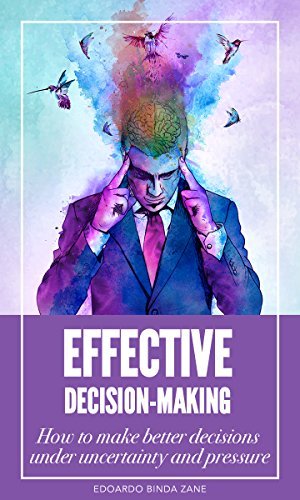
Effective Decision-Making: How to make better decisions under uncertainty and pressure
The aim of this book is to quickly empower you to make better decisions by giving you step-by-step explanations of the best techniques. We always make decisions under uncertainty and pressure, especially in business. We need faster and better decisions to cope, but we don’t have the time to learn how to make them well. That is where I come in. I wrote this book to allow you to make better decisions without spending weeks studying theory and practice. THE INTRODUCTION gives you a snapshot of two decision-making biases, of the worst mistake you can do when making decision, and a lesson taken straight from philosophy. - Decision Biases (why your brain isn’t always your friend in decisions) - The Worst Mistake in Decision-Making - A Lesson From Another Time THE FIRST CHAPTER looks at frameworks of reference, meaning how you can apply decision-making to achieve your goals, for example how and why some decisions are able to automatically give you a competitive advantage. - The OODA Loop - The Recognition-Primed Decision Model - GROW or the John Whitmore Model - The PDSA Cycle CHAPTERS 2 TO 5 look at separate phases of understanding your context, understanding the problem, generating solutions and selecting one option out of many. 2 - CONTEXT Contexts can be very different – and there is no one size fits all approach, which is why this book provides you with five. - SWOT and PEST - TELOS - Porter’s Five Forces - Causal Loops Diagrams 3 - PROBLEM ASSESSMENT Before making decisions, then, you need to work on finding out exactly what you are trying to solve. This chapter gives you 5 tools to do - Root Cause Ishikawa’s Diagramand the 5 Whys Technique - Pareto Analysis - Kipling Method (5W1H) - CATWOE 4 - GENERATING IDEAS In “pure” decision-making, little attention is given to this phase, as it belongs to a different creativity. This book includes two tools that can work fairly - Zwicky’s Box - SCAMPER 5 - WEIGHING ALTERNATIVES This is one of the cores of decision-making, and phase most people deal with via a pros and cons list. This book gives you several tools to make that decision. Each one has its specificities, and with six to choose from, you should be covered for your decisions. - Weights and the Grid Analysis and the KT Matrix - The Paired Comparison Analysis - The Quantitative Strategic Planning Matrix - The Analytic Hierarchy Process - The Eisenhower Matrix CHAPTER 6 AND 7 look at group decisions, meaning whether it’s a good idea to make decisions in a group and, if it is, how that group should make decisions. 6 - DO YOU NEED YOUR TEAM? You can either involve your team in decisions or exclude them. Often, managers are torn between these two options – you have three tools to help you - The Vroom-Yetton-Jago Model - The Hoy-Tarter Model - The Hersey-Blanchard Model 7 - GROUP TECHNIQUES To be used when making decisions in a group is necessary. - The Nominal Group Technique - The Delphi Method - Hartnett’s Consensus-Oriented Decision-Making Model - The Stepladder Technique - DeBono’s Six Thinking Hats - The Charette Procedure - RAPID CHAPTERS 8 AND 9 look at decisions in corporate strategy and analyse a decision's consequence 8 -
144 pages, Kindle Edition
Published February 18, 2016
Ratings & Reviews
Friends & Following
Create a free account to discover what your friends think of this book!
Community Reviews
Displaying 1 - 10 of 10 reviews
March 11, 2016
Imagine you take two dozens of decision models, describe them in a paragraph or two, just like one would do for intro paragraphs on Wikipedia entries.
The summaries are too short for someone not familiar with those models to learn them—one wouldn’t know how to translate them into practical advice—and way too oversimplified for someone already using them. Reading about them on Wikipedia is more useful than this book.
The main positive aspect of this book is to provide a list of potentially interesting models.
The summaries are too short for someone not familiar with those models to learn them—one wouldn’t know how to translate them into practical advice—and way too oversimplified for someone already using them. Reading about them on Wikipedia is more useful than this book.
The main positive aspect of this book is to provide a list of potentially interesting models.

December 14, 2017
Good short summary of a bunch of decision making tools.

April 2, 2024
🛠️ Migliorare le decisioni: tecniche e strumenti
Prendere decisioni è qualcosa che facciamo di continuo, più e più volte al giorno, sia nella vita personale che professionale.
Occorre dire che è impossibile essere obiettivi al 100% a causa di almeno due bias cognitivi.
🧠 Il 𝐛𝐢𝐚𝐬 𝐝𝐢 𝐜𝐨𝐧𝐟𝐞𝐫𝐦𝐚 ci porta a favorire le informazioni che supportano la nostra decisione, mentre tendiamo a ignorare quelle che potrebbero contraddirla. L’𝐞𝐟𝐟𝐞𝐭𝐭𝐨 𝐃𝐮𝐧𝐧𝐢𝐧𝐠-𝐊𝐫𝐮𝐠𝐞𝐫, d’altra parte, descrive come le persone inesperte tendano a sovrastimare le proprie capacità, mentre le persone esperte tendano a sottostimarle.
🤔 Questi bias possono avere effetti devastanti nelle 𝐫𝐢𝐮𝐧𝐢𝐨𝐧𝐢, soprattutto quando la persona che prende la decisione occupa una posizione di potere.
🤷♂️ Il 𝐛𝐫𝐚𝐢𝐧𝐬𝐭𝐨𝐫𝐦𝐢𝐧𝐠 è stato spesso sopravvalutato come tecnica decisionale, perché può portare come risultato a una lista di idee portata dai membri più estroversi del gruppo.
Quando si tratta di decision-making e leadership, i manager spesso si trovano divisi tra il 𝐜𝐨𝐢𝐧𝐯𝐨𝐥𝐠𝐞𝐫𝐞 𝐢𝐥 𝐥𝐨𝐫𝐨 𝐭𝐞𝐚𝐦, per rafforzare lo spirito di squadra e la coesione, o 𝐞𝐬𝐜𝐥𝐮𝐝𝐞𝐫𝐥𝐢 per una gestione del tempo più efficiente. ⏳
Ecco 5 𝐭𝐞𝐜𝐧𝐢𝐜𝐡𝐞 𝐩𝐞𝐫 𝐩𝐫𝐞𝐧𝐝𝐞𝐫𝐞 𝐝𝐞𝐜𝐢𝐬𝐢𝐨𝐧𝐢, alcune note e altre meno, tratte dal libro “Effective Decision-Making: How to make better decisions under uncertainty and pressure” di Edoardo Binda Zane:
1️⃣ La 𝐌𝐚𝐭𝐫𝐢𝐜𝐞 𝐝𝐢 𝐄𝐢𝐬𝐞𝐧𝐡𝐨𝐰𝐞𝐫 è uno strumento che aiuta a stabilire le priorità delle attività in base alla loro urgenza e importanza. 📅
2️⃣ Il 𝐦𝐨𝐝𝐞𝐥𝐥𝐨 𝐕𝐫𝐨𝐨𝐦-𝐘𝐞𝐭𝐭𝐨𝐧-𝐉𝐚𝐠𝐨 delinea tre stili decisionali e di coinvolgimento del team a seconda dei casi. 🤝
3️⃣ Il 𝐌𝐨𝐝𝐞𝐥𝐥𝐨 𝐝𝐢 𝐇𝐞𝐫𝐬𝐞𝐲-𝐁𝐥𝐚𝐧𝐜𝐡𝐚𝐫𝐝 si riferisce allo stile di Leadership situazionale che si adatta sulla base del livello di maturità del team. 📊
4️⃣ La 𝐭𝐞𝐜𝐧𝐢𝐜𝐚 𝐝𝐞𝐥 𝐠𝐫𝐮𝐩𝐩𝐨 𝐧𝐨𝐦𝐢𝐧𝐚𝐥𝐞 (NGT) facilita la generazione di idee in un gruppo, minimizzando l’influenza di fattori personali. 🗣️
5️⃣ Il 𝐦𝐞𝐭𝐨𝐝𝐨 𝐝𝐞𝐢 𝟔 𝐜𝐚𝐩𝐩𝐞𝐥𝐥𝐢 𝐩𝐞𝐫 𝐩𝐞𝐧𝐬𝐚𝐫𝐞 di Edward DeBono è una tecnica decisionale che suddivide la discussione in sei fasi di pensiero. 🎩
La comprensione e l’applicazione di tecniche e strumenti per prendere decisioni migliori possono essere d'aiuto in un contesto di complessità e incertezza come quello attuale. 🌐
Prendere decisioni è qualcosa che facciamo di continuo, più e più volte al giorno, sia nella vita personale che professionale.
Occorre dire che è impossibile essere obiettivi al 100% a causa di almeno due bias cognitivi.
🧠 Il 𝐛𝐢𝐚𝐬 𝐝𝐢 𝐜𝐨𝐧𝐟𝐞𝐫𝐦𝐚 ci porta a favorire le informazioni che supportano la nostra decisione, mentre tendiamo a ignorare quelle che potrebbero contraddirla. L’𝐞𝐟𝐟𝐞𝐭𝐭𝐨 𝐃𝐮𝐧𝐧𝐢𝐧𝐠-𝐊𝐫𝐮𝐠𝐞𝐫, d’altra parte, descrive come le persone inesperte tendano a sovrastimare le proprie capacità, mentre le persone esperte tendano a sottostimarle.
🤔 Questi bias possono avere effetti devastanti nelle 𝐫𝐢𝐮𝐧𝐢𝐨𝐧𝐢, soprattutto quando la persona che prende la decisione occupa una posizione di potere.
🤷♂️ Il 𝐛𝐫𝐚𝐢𝐧𝐬𝐭𝐨𝐫𝐦𝐢𝐧𝐠 è stato spesso sopravvalutato come tecnica decisionale, perché può portare come risultato a una lista di idee portata dai membri più estroversi del gruppo.
Quando si tratta di decision-making e leadership, i manager spesso si trovano divisi tra il 𝐜𝐨𝐢𝐧𝐯𝐨𝐥𝐠𝐞𝐫𝐞 𝐢𝐥 𝐥𝐨𝐫𝐨 𝐭𝐞𝐚𝐦, per rafforzare lo spirito di squadra e la coesione, o 𝐞𝐬𝐜𝐥𝐮𝐝𝐞𝐫𝐥𝐢 per una gestione del tempo più efficiente. ⏳
Ecco 5 𝐭𝐞𝐜𝐧𝐢𝐜𝐡𝐞 𝐩𝐞𝐫 𝐩𝐫𝐞𝐧𝐝𝐞𝐫𝐞 𝐝𝐞𝐜𝐢𝐬𝐢𝐨𝐧𝐢, alcune note e altre meno, tratte dal libro “Effective Decision-Making: How to make better decisions under uncertainty and pressure” di Edoardo Binda Zane:
1️⃣ La 𝐌𝐚𝐭𝐫𝐢𝐜𝐞 𝐝𝐢 𝐄𝐢𝐬𝐞𝐧𝐡𝐨𝐰𝐞𝐫 è uno strumento che aiuta a stabilire le priorità delle attività in base alla loro urgenza e importanza. 📅
2️⃣ Il 𝐦𝐨𝐝𝐞𝐥𝐥𝐨 𝐕𝐫𝐨𝐨𝐦-𝐘𝐞𝐭𝐭𝐨𝐧-𝐉𝐚𝐠𝐨 delinea tre stili decisionali e di coinvolgimento del team a seconda dei casi. 🤝
3️⃣ Il 𝐌𝐨𝐝𝐞𝐥𝐥𝐨 𝐝𝐢 𝐇𝐞𝐫𝐬𝐞𝐲-𝐁𝐥𝐚𝐧𝐜𝐡𝐚𝐫𝐝 si riferisce allo stile di Leadership situazionale che si adatta sulla base del livello di maturità del team. 📊
4️⃣ La 𝐭𝐞𝐜𝐧𝐢𝐜𝐚 𝐝𝐞𝐥 𝐠𝐫𝐮𝐩𝐩𝐨 𝐧𝐨𝐦𝐢𝐧𝐚𝐥𝐞 (NGT) facilita la generazione di idee in un gruppo, minimizzando l’influenza di fattori personali. 🗣️
5️⃣ Il 𝐦𝐞𝐭𝐨𝐝𝐨 𝐝𝐞𝐢 𝟔 𝐜𝐚𝐩𝐩𝐞𝐥𝐥𝐢 𝐩𝐞𝐫 𝐩𝐞𝐧𝐬𝐚𝐫𝐞 di Edward DeBono è una tecnica decisionale che suddivide la discussione in sei fasi di pensiero. 🎩
La comprensione e l’applicazione di tecniche e strumenti per prendere decisioni migliori possono essere d'aiuto in un contesto di complessità e incertezza come quello attuale. 🌐

January 10, 2024
“Effective Decision Making" by Zane is a guide aimed at helping individuals improve their decision-making skills. While the book offers some useful advice and techniques, it has its limitations, leading to a three-star rating.
One of the book's strengths is its practical approach to decision making. Zane introduces readers to various decision-making models and provides step-by-step guidance on how to apply them. This can be helpful for individuals looking to structure their decision-making process.
Moreover, the author emphasizes the importance of gathering relevant information and considering potential consequences before making a decision, which are valuable principles for effective decision making.
Additionally, "Effective Decision Making" includes real-world examples and case studies to illustrate the concepts presented, making the content more relatable and applicable to readers' lives.
However, some readers may find that the book lacks depth in its exploration of decision-making strategies. The content primarily focuses on familiar decision-making models and may not provide more advanced insights for those seeking a deeper understanding of the topic.
Furthermore, the book's writing style and organization could benefit from improvement. Some readers may find the text somewhat repetitive, and the flow of the content could be smoother.
In conclusion, "Effective Decision Making" by Zane is a practical guide for individuals looking to enhance their decision-making skills. While it provides some valuable advice and techniques, it falls short in offering more advanced insights into the intricacies of decision making. Nevertheless, it remains a decent resource for those seeking a structured approach to making better decisions in various aspects of life, warranting a three-star rating for its practicality and potential for improvement.
One of the book's strengths is its practical approach to decision making. Zane introduces readers to various decision-making models and provides step-by-step guidance on how to apply them. This can be helpful for individuals looking to structure their decision-making process.
Moreover, the author emphasizes the importance of gathering relevant information and considering potential consequences before making a decision, which are valuable principles for effective decision making.
Additionally, "Effective Decision Making" includes real-world examples and case studies to illustrate the concepts presented, making the content more relatable and applicable to readers' lives.
However, some readers may find that the book lacks depth in its exploration of decision-making strategies. The content primarily focuses on familiar decision-making models and may not provide more advanced insights for those seeking a deeper understanding of the topic.
Furthermore, the book's writing style and organization could benefit from improvement. Some readers may find the text somewhat repetitive, and the flow of the content could be smoother.
In conclusion, "Effective Decision Making" by Zane is a practical guide for individuals looking to enhance their decision-making skills. While it provides some valuable advice and techniques, it falls short in offering more advanced insights into the intricacies of decision making. Nevertheless, it remains a decent resource for those seeking a structured approach to making better decisions in various aspects of life, warranting a three-star rating for its practicality and potential for improvement.
December 31, 2019
A book with a good start but then it falls short of all its goals. At the end you get a nice, long list of possible ways to come to a decision, but without the necessary pages to explain them well enough so that you can put them in action. I especially missed a comparison between the different approaches and when you should use which. If you know those approaches already, then you do not need to read this book. If you don’t know them this book will not change much. Therefore, do not bother reading it.

December 10, 2021
Hm, how weird. This book was not as dislikeable as I think it was.
Most ideas are insightful for me, and applicable on different aspects despite its purpose as a business-related improvement book.
A definitely reread whenever I can later!
Most ideas are insightful for me, and applicable on different aspects despite its purpose as a business-related improvement book.
A definitely reread whenever I can later!

October 8, 2021
Good short summary of a bunch of decision making tools.

March 10, 2023
a book that promised a lot at first, but then became vulgar...more of the same
April 20, 2024
Headway

March 24, 2025
⭐⭐⭐⭐ (4/5 Stars)
A Necessary Guide for Trading Intuition for Intentionality
This book isn't another collection of inspirational quotes about trusting your gut. It's a pragmatic, principle-driven guide for anyone who needs to make high-stakes choices under the real-world pressures of complexity and incomplete information.
The core insight here is that resilience in decision-making doesn't come from being personally fearless; it comes from having a principled, structured process. Zane provides an arsenal of tools—from the rapid-fire OODA Loop and the iterative PDSA cycle to the strategic analysis of Porter’s 5 Forces and the creativity of SCAMPER.
The most valuable takeaway is the non-negotiable need for contextual adaptability. You must be able to pivot between fast, experience-based decision models for emergencies and structured, reflective frameworks for long-term strategy. This diversity of approach is the intellectual equivalent of Ecosystems Engineering—it builds the systemic redundancy required to thrive through change.
If you’re a professional tired of wasting time on symptoms, this book provides the discipline to apply Ishikawa’s Diagram and the 5 Whys to find the root cause, ensuring every resource is used efficiently. It gives you the methods to manage team bias and ensure true collaborative input.
My only critique is that while the book excels at providing the what and the how of the models, the reader must commit to the why—the hard work of applying these structures consistently. Actionable resilience requires intentionality, not just a list of frameworks.
Bottom Line: This isn't a book to skim; it's a manual to implement. Highly recommended for leaders, entrepreneurs, and anyone committed to trading analysis paralysis for confident, principled action.
A Necessary Guide for Trading Intuition for Intentionality
This book isn't another collection of inspirational quotes about trusting your gut. It's a pragmatic, principle-driven guide for anyone who needs to make high-stakes choices under the real-world pressures of complexity and incomplete information.
The core insight here is that resilience in decision-making doesn't come from being personally fearless; it comes from having a principled, structured process. Zane provides an arsenal of tools—from the rapid-fire OODA Loop and the iterative PDSA cycle to the strategic analysis of Porter’s 5 Forces and the creativity of SCAMPER.
The most valuable takeaway is the non-negotiable need for contextual adaptability. You must be able to pivot between fast, experience-based decision models for emergencies and structured, reflective frameworks for long-term strategy. This diversity of approach is the intellectual equivalent of Ecosystems Engineering—it builds the systemic redundancy required to thrive through change.
If you’re a professional tired of wasting time on symptoms, this book provides the discipline to apply Ishikawa’s Diagram and the 5 Whys to find the root cause, ensuring every resource is used efficiently. It gives you the methods to manage team bias and ensure true collaborative input.
My only critique is that while the book excels at providing the what and the how of the models, the reader must commit to the why—the hard work of applying these structures consistently. Actionable resilience requires intentionality, not just a list of frameworks.
Bottom Line: This isn't a book to skim; it's a manual to implement. Highly recommended for leaders, entrepreneurs, and anyone committed to trading analysis paralysis for confident, principled action.
Displaying 1 - 10 of 10 reviews