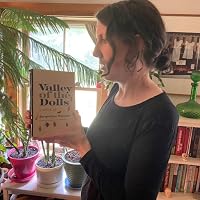
The untimely death of the daughter of wealthy Californian landowners slowly destroys the community that loved her in life. Eight-year-old Princess Annamay Hyatt rules her avocado kingdom benevolently. With the faithful companionship of her attendants--the two enormous family dogs--precocious Annamay spends her days in the playhouse her wealthy parents have built her in the garden, entertaining her friends—dolls, neighbors, hitchhikers who wander through the avocado groves in search of fallen fruit.Then one summer day, Annamay disappears. When her bones are discovered a few months later, the news of her murder tears her family apart. Her parents' struggling marriage reaches a breaking point; her bereft grandfather contemplates why he is alive; her beloved housekeeper wonders how she could have made the little girl heed her warnings about strangers; the minister who buried her has lost his faith. Everyone in Annamay's circle is blaming themselves and one another for her death--but who was really responsible?
Margaret Ellis Millar (née Sturm) was an American-Canadian mystery and suspense writer. Born in Kitchener, Ontario, she was educated there and in Toronto. She moved to the United States after marrying Kenneth Millar (better known under the pen name Ross Macdonald). They resided for decades in the city of Santa Barbara, which was often utilized as a locale in her later novels under the pseudonyms of San Felice or Santa Felicia.
Millar's books are distinguished by sophistication of characterization. Often we are shown the rather complex interior lives of the people in her books, with issues of class, insecurity, failed ambitions, loneliness or existential isolation or paranoia often being explored with an almost literary quality that transcends the mystery genre. Unusual people, mild societal misfits or people who don't quite fit into their surroundings are given much interior detail. In some of the books we are given chilling and fascinating insight into what it feels like to be losing touch with reality and evolving into madness. In general, she is a writer of both expressive description and yet admirable economy, often ambitious in the sociological underpinnings of the stories and the quality of the writing.
Millar often delivers effective and ingenious "surprise endings," but the details that would allow the solution of the surprise have usually been subtly included, in the best genre tradition. One of the distinctions of her books, however, is that they would be interesting, even if you knew how they were going to end, because they are every bit as much about subtleties of human interaction and rich psychological detail of individual characters as they are about the plot.
Millar was a pioneer in writing intelligently about the psychology of women. Even as early as the '40s and '50s, her books have a very mature and matter-of-fact view of class distinctions, sexual freedom and frustration, and the ambivalence of moral codes depending on a character's economic circumstances. Her earliest novels seem unusually frank. Read against the backdrop of Production Code-era movies of the time, they remind us that life as lived in the '40s and '50s was not as black-and-white morally as Hollywood would have us believe.
While she was not known for any one recurring detective (unlike her husband, whose constant gumshoe was Lew Archer), she occasionally used a detective character for more than one novel. Among her occasional ongoing sleuths were Canadians Dr. Paul Prye (her first invention, in the earliest books) and Inspector Sands (a quiet, unassuming Canadian police inspector who might be the most endearing of her recurring inventions). In the California years, a few books featured either Joe Quinn, a rather down-on-his-luck private eye, or Tom Aragorn, a young, Hispanic lawyer. Sadly, most of Millar's books are out of print in America, with the exception of the short story collection The Couple Next Door and two novels, An Air That Kills and Do Evil In Return, that have been re-issued as classics by Stark House Press in California.
In 1956 Millar won the Edgar Allan Poe Awards, Best Novel award for Beast in View. In 1965 she was awarded the Woman of the Year Award by the Los Angeles Times. In 1983 she was awarded the Grand Master Award by the Mystery Writers of America in recognition of her lifetime achievements.
Margaret Millar was a mystery writer, a Grand Master in fact, but after reading Banshee I’m still not sure what kind of mysteries she wrote. Certainly not the hardboiled detective stories her husband, Ross MacDonald, was justly famous for helping define in its infancy. But not quite cozies either. “Not quite” because Banshee begins with the characteristics of a cozy. There is an affluent California town with its network of family and friends. There is a victim, an eight-year-old little girl missing for four months before her remains are found. A coroner’s jury declares a crime had been committed and the police initiate an investigation and then . . . nothing. The police are stymied. The girl’s father and the local Reverend, friends since college, decide to investigate on their own.
Except it’s not that. The investigation, all of three interviews, goes nowhere--results each character on some level had expected from the beginning. It had only been the means chosen by one to cope with the loss of his daughter and the other with the loss of his faith. That’s why the four months between the disappearance and the funeral were necessary. Banshee is a character study. The funeral is the catalyst that allows Millar to explore the various aspects of grief, loss and guilt within this community.
If Millar had stayed the course Banshee could have been a successful book. These were well-drawn character and they were involved in interesting situations and interactions, some of which changed in unexpected way, forcing responses. Maybe not the kind of frenetic responses as would be required today, but appropriate for a psychological study from 1983. Unfortunately there came a point where she remembered she was a mystery writer. It was time for the solution and in providing a traditional one--placed as close to the end as possible--she shunted aside most what she had built. It left too many incomplete journeys. Even the two characters directly involved and affected by the finale were not completely serviced.
You don’t become a Grand Master without knowing how to marry a character study to a mystery. It’s why I’m still not sure what kind of mysteries Margaret Millar wrote. Banshee felt experimental, a deliberate attempt to ignore what had always made the character-driven mystery work. Both elements, the mystery and the exploration of character, have to be intertwined from beginning to end. They’re almost symbiotic in nature. Once both are established, neither have the strength to stand alone.
Banshee’s abrupt turn from one to other cripples the work as whole. It can still be enjoyed. I was aware of the pages running out as I neared the end, and realizing that a satisfying conclusion was no longer possible did not make me regret the time invested. If anything, it made me want to read one of her more accomplished works. I guess that a success of sorts.
I love these odd late Millar books - it's so sad that her output slowed to a crawl after her amazing run of the late 50s/early 60s. I could happily read only stuff like this and the Tom Aragon books 'til my dying day.
This book actually gains a lot of its suspense from being the tension generated by whether it's a murder mystery or a study of individual personalities falling apart under age and a family tragedy. This keeps the pages turning, along with Millar's always-wonderful prose.
A little bummed that after I read Spider Webs I'll have exhausted all of her novels from Beast in View on. I've enjoyed them immensely and owe Soho Syndicate an enormous debt (beyond the ludicrously low prices they charge for their Millar omnibuses) for making them all available.
Me ha recordado a otra novela suya The Fiend (El Maligno), en el sentido de que el misterio de la muerte y/o desaparición de una niña, son usados como una especie de excusa para describirnos a una serie de personajes, todos arrastrando una profunda carga de desesperación. Es una novela corta, apenas llega a las 200 páginas, aqui no hay policias, ni detectives, pero si que hay una investigación inusual en un intento por descubrir el misterio de la muerte de la pequeña Annamay, y es en esta investigación dónde Margaret Millar demuestra su gran talento para indagar en las zonas más oscuras y ocultas de la psique humana, porque para Magaret Millar todos tenemos una zona oscura e insondable que quizás no mostremos nunca, o sí...
Se podría considerar una novela de misterio pero es totalmente imprevisible en su estructura por algunas escenas, conversaciones, divagaciones de algunos personajes, y a veces el lector pueda tener la sensación de que la resolución del misterio no le interese lo más mínimo a Margaret Millar. Una de sus últimas novelas, de 1983, no sé como sería acogida en su momento, pero me parece una novela muy moderna por esa estructura. Y el final es un latigazo que una vez más, demuestra que lo que de verdad le interesa a esta autora es la desesperación interior de sus personajes.
Millar's penultimate novel is an easy, enjoyable read, but at the end of her career her novels were only average. Better than her previous one, Mermaid (1982), but not as good as her books from the Fifties and Sixties. As in Mermaid the story involves the disappearance of a girl, but here for most of the narrative the focus is on the effect of that loss on those around her and only secondarily on the mystery itself. At the end Millar drops the character studies leaving them largely unresolved, and returns to an only partially-satisfying resolution of the puzzle. Millar was known for, and I think at some point became trapped by, her surprise endings.
Una bambina di 8 anni, Annamay scompare improvvisamente. Il suo corpo verrà ritrovato solo dopo 4 mesi, impossibile determinare la causa della morte. Il padre della bimba e un suo amico prete iniziano ad indagare, dato che la polizia brancola nel buio. A corollario di un giallo "classico", tanti personaggi strambi e un po' sospetti, fino all'insolito e inaspettato finale. Da leggere.
La novela está muy bien escrita pero la trama no me ha llegado, hasta me ha aburrido a veces y si la he terminado ha sido por inercia, llega un momento que no me importaba quien pudiera ser el asesino o si en realidad fue un asesinato o no. Muchos personajes que no aportan nada y distraen del nudo de la historia.
Margaret Millar was one of my mother's all-time favorites, and I'd read quite a number of them when I was younger. I think it's probably fair to say that her earlier work is somewhat better than her later work, but that may be because the earlier period is marked by so many amazing books. From what I've been able to figure out, Millar continued to use her trademark surprise endings in her later books, but she took a different approach to them - they are more twists that confound the reader's expectations of the genre than plot twists (as in her earlier books). I found this to be the case in BANSHEE, but I don't want to say more about it for fear of putting forth a spoiler.
Let me just say that the first chapter is one of the most effective I've ever read. Millar makes you fall in love with a child, Annamay Hyatt, who is found dead at the start of Chapter 2. This knocked me for such a loop that I ended up reading the first 100 pages with tears in my eyes. Then, by the end, I started tearing up again. I had remembered Millars' wise-alecky characters and her strong women, but I didn't remember her earlier books packing the emotional punch that this one did.
La pequeña y adorable Annamay Hyatt de ocho años, desaparece una soleada tarde de verano y cuatro meses después, su cadáver en avanzado estado de descomposición es encontrado en las inmediaciones de la finca familiar. Su funeral desencadena en su entorno más cercano sentimientos de pérdida, dolor, fristracion y tristeza que cada uno manifiesta a través de comportamientos muy diferentes: *Los padres: Se distancian física y emocionalmente para sobrellevar su duelo en solitario. *La prima y mejor amiga: Muestra un bajo rendimiento escolar y rebeldía. *El amigo de la familia: Consume alcohol más de lo socialmente aceptado. *El ama de llaves: Calma su ansiedad cocinando y comiendo de manera compulsiva. *El religioso: Asqueado de la maldad y crueldad del prójimo, pierde la fé. *El abuelo: Apático y melancólico, se lamenta por continuar con vida a pesar de su avanzada edad. Publicada en 1983, Banshee es la penúltima novela escrita por Margaret Millar; un misterio que explora el impacto emocional por la perdida de un ser querido. La novela empieza como si fuera un cuento de hadas, con Annamay en el papel de princesa que recorre los dominios de su pequeño reino, acompañada de sus dos mascotas que integran su corte y finaliza con Annamay recitando un poema acerca de lo que debe evitar hacer para estar a salvo fuera de la seguridad de su hogar. Luego a partir del segundo capítulo, el tono de la narración es más sobrio; con párrafos que rozan el humor negro. El rol de investigador lo asume el pastor y guía espiritual de la familia, quien en busca de respuestas interactúa con personajes mezquinos, alienados y patéticos. El enigma se revela a través de un final sorpresa, tan característicos en la bibliografía de la autora. Puede que conocer la verdad provoque otro drama y se abran nuevas heridas. Banshee me parece una extraña obra de género negro criminal: Una mezcla de Cozy mistery sombrío y drama psicológico. A destacar: El ambiente de desolación y vacío que reina en la mansión familiar de los Hyatt, con ese silencio tan sobrecogedor que denota la ausencia del niño que antes habitaba la casa, que parece hacerse más notable con el sibilante y borrascoso viento de Santana.
An interesting take on the thriller/detective story. This is the first of her books I have read. She has such a great reputation I certainly need to read more - and have a few on my list. Not sure why I had missed her until now. The story certainly has an unexpected ending and details are cleverly presented - a lot of attention to detail and how people see the world.
Intriguing late-career novel by Millar. I would not be surprised if the grandfather's portrayal was informed by her husband Ross Macdonald, who would have been suffering from Alzheimer's at this time. The first two chapters are especially good, but the entire book is worth reading, even if you're expecting something different from what you eventually get.
Die achtjährige Annamay verschwindet. Mehr passiert nicht wirklich. Der Anfang war gut, aber dann habe ich mich bis zum Ende gefragt, wann die Geschichte denn endlich anfängt. Vielleicht habe ich es auch einfach nicht verstanden.
⭐️⭐️⭐️⭐️1/2 I believe this book from 1983 is no longer in print, but I found it on archive.org for free (because books matter). Despite being a heartbreaking story of a little girl who disappears…it’s really quite charming. The writing style is very clever. I liked it a lot.
A good sketch of the residents and visitors to a moderately high toned SoCal canyon in the late 70s. None of the adult characters were particularly sympathetic or intriguing. I don't think I need to read any more from this author.
I received this book as a gift from my friend, Jamie, who found it at Powells. I haven't read any Margaret Millar books before; most are out of print. A well-written, quiet mystery about the death of a young, wealthy little girl.
This book was published as a mystery novel. There is a mystery, but it is very incidental to the character development and the changing relationships between the characters. This is a mainstream novel parading as a mystery.