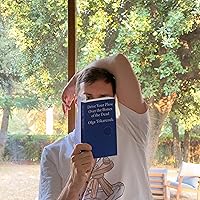
UK first edition hard cover in very good condition, with unclipped dust jacket in good condition. General shelf and handling wear to DJ, including tanning and light creasing to edges. Some light age-related discolouration to rear pale cover. Boards are in fine condition, pages tightly bound, and content is 'as unread'. CN
Joanna Russ (February 22, 1937 – April 29, 2011) was an American writer, academic and feminist. She is the author of a number of works of science fiction, fantasy and feminist literary criticism such as How to Suppress Women's Writing, as well as a contemporary novel, On Strike Against God, and one children's book, Kittatinny. She is best known for The Female Man, a novel combining utopian fiction and satire. [Wikipedia]
Joanna Russ was most prominent as a radical feminist critic back in the wild and wooly days of 1970s sci-fi. I think I got wind of her because Gene Wolfe named her in an interview as one of the writers he most admired. And I thought that if stodgy old conservative Catholic Wolfe admires the writing of a lesbian college professor she must be fantastic!
And she is pretty damn good. The setup is straightforward--at least as sci-fi goes. Shadowy far future agency rips bronze-age Mediterranean Alyx from the mists of history. Alyx is the ideal candidate for a very specific job: A bunch of futuristic super-dilettantes are trapped on a resort/nature preserve planet ("Paradise") when a war starts. If they use their normally omnipresent technology the kill bots (or whatever) will easily find and butcher them. So who better than a primitive barbarian to escort them over harsh and untamed wilderness to the drop point?
Alyx is a great character. She's tiny, wizened and accustomed to a time when life was nasty, brutish and short. A great foil for her artificially beautiful and cozened charges. But it's not just a simple juxtaposition like that. One character might be some sort of android. One is something like a reality TV star. There are genuine and spiritual Buddhist (?) nuns whose faith has become tied to some sort of narcotic.
Russ sets herself apart through her complex, dense and careful prose. Each scene, and each cast interaction has a powerfully real, and even heightened, level of understated meaning. Consider the complexity of every interaction you personally have--even limited to your own perspective. Now multiply that by two, and three, and eight perspectives. Now capture it in as concise a manner as possible--almost minimalist. Read it quickly and you'll just think "huh, that was weird." Read it slowly and it begins to unfold.
Anyway, great book. Easily satisfies the "literature" criteria that it is meant to be re-read, not just read.
I think I definitely need more time to process this book.
Through deliberately stylized and inventively evocative prose, which often flips between the melodramatic/hyperbolic and the stream-of-consciousness/philosophical (sometimes in the middle of a paragraph or sentence), Picnic on Paradise packs in a lot of ideas about culture, religion, gender, and the meaning of normative assumptions. Some passages struck me as incredibly deep and tender and some as glib--which was surely part of the point. I was engaged by the story, but a hard time connecting to any of the characters except Alyx--and that was part of the point too, I suppose?
Like I said, I need more time to think about this one.
The other day, while complaining about the clumsy prose in Night Film, I allowed that it wasn't necessarily worse than a lot of actual genre fiction. But I take it all back, there's no excuse. Just read someone like Delany or, here, Joanna Russ, who, even in an admittedly more frivolous early "time barbarian" sorta setup, manages consistently sharp style and well-formed, interesting characters, and of course breakneck and steadily unexpected plotting.
And of course, there's the cover (this one from 1979):
Check out my full, spoiler free, video review HERE.
Alyx shows up in the future and is given a mission from the Trans-Temporal Authority. She is tasked with escorting some giant tourists across an alien world. For such a seemingly simple premise there is a lot more going on than you would think. Alyx is an outsider and challenges a lot of the social norms from this group of tourists, at times it can be humorous and the phrase ‘herding cats’ comes to mind. Russ’s writing is so good and the interplay between characters is very entertaining. This one is about the journey more so than the destination. I will be rereading this one in the future. A-
What makes Joanna Russ' 1st novel so memorable is Alyx, her raven-haired heroine thrusted out from ancient Tyre/Crete into a future world where all feels fabricated, and forced into the protector/tour-guide role for a bunch of vapid, ridiculous tourists. In a wholly artificial world, Alyx is the ultimate warrior, barely 5 feet tall, scarred and 'repulsive', in essence, a savage thief. Doctored to adapt to this ice-cold vista (called Paradise, no less), she figures out that hard knuckles and a salty tongue are the only ways to survive. And while she belittles and manhandles the tourists (Gunnar, the viking mountaineer cut from Excalibur's jock strap - Maudey, the plastic surgery grandmother - Machine, obviously a droid but with a teenager's propensity to get in the pants of Alyx), she slowly submits to the oasis, the mirage, and pops a few pills (from a pair of neo-Buddhist nuns) which slowly shake her to a new level of consciousness, and of course, reality.
Note: While I was enjoying 'Picnic on Paradise' for its wry & spastic approach to the SF survival novel, all of a sudden I imagined Divine of John Water's stable playing the titular lead, Alyx. Once this hit a note in my head, the novel elevated itself into even more of a farce, and a lovely one at that. Perhaps it's in the dialogue, or perhaps some of the wardrobes. There's not many SF novels that I'd hire John Waters to direct, but I'm sold on this one.
-En cierto modo, muy ilustrativo sobre las tendencias de una buena parte de la producción de la autora.-
Género. Ciencia ficción.
Lo que nos cuenta. La agente Alyx de la Autoridad Militar Trans-Temporal es enviada al planeta Paraíso para que escolte a un grupo de personas hasta una base neutral desde la que serán evacuados del planeta. Paraíso es un planeta muy particular, un lugar turístico en su globalidad que se considera una reserva que no debe ser alterada y, por tanto, la guerra que tiene lugar en su superficie será peleada con armas nada convencionales.
¿Quiere saber más de este libro, sin spoilers? Visite:
I really enjoyed parts of it. But then I didn't like other parts so much. Russ's style of writing here kept me off balance at times and maybe that was the intent. Also, the field of science fiction at the time this was published was far more comfortable being experimental then perhaps it's been since. But I can't swear to that, since I haven't read much sci-fi of more recent vintage. Briefly, here is a Nebula nominated "pulp" novel from 1968. A short novel; my edition is an old Ace paperback that would have nicely paired with another sci-fi adventure in an old ACE Double. Here is a book that gives the pulp adventure a 180 by having a female as the lead hardboiled badass. Alyx is plucked from her world by the Trans-Temporal Agency and is assigned to protect and lead a group of tourists to safety on a frozen "paradise" planet in the midst of a "commercial" war. Again, the story is pretty cool, but the style of writing kept tossing curve balls at me, forcing me to go back and reread passages for clarity. But a lot of New Wave science fiction is like that. I seem to recall Alyx was also featured in a couple of stories from the old ORBIT anthologies back in the 60s and 70s. Recommended for any science fiction fan.
Interesting, but not engaging science fiction tale involving the consequences of previous time travel. Given the nonsensical premise (hey, it’s science fiction) the story has nothing to do with time travel and little to do with science. It’s mostly an anything-that-can-go-wrong-does story.
"The nineteenth [day]. The twentieth. The twenty-first. They were very quiet. They were idealizing, trusting, companionable, almost happy. It made Alyx nervous, and the more they looked at her, asked her about her and listened to her, the more unnerved she became. She did not think they understood what was happening."
The protagonist is a fish out of water, yet she adapts and leads where her party of contemporary trekkers are babes in the wilderness. It doesn’t go well for any of them. Pretty violent.
“I have,” said Alyx, “just killed a bear. It was eleven feet high and could have eaten the lot of you. If anyone talks loud again, any time, for any reason, I shall ram his unspeakable teeth down his unspeakable throat.”
This isb a story that can be read on many levels. I first read it in my early teens, working my way through the SF section of my local public library.
it registered as a straightforward adventure story, most memorable for a vivid (though not particularly explicit) sex scene that fed my voracious curiosity about How Grownups Do It.
Reading it more recently, and having read a bit more Russ in the intervening decades, it unfolded ideas about gender, technology, maturity, and courage.
i'm writing this now on my smarphone, standing at a bus stop, staring at the tiny screen rather than the crowd of strangers around me. With the character of Machine in this book, Russ casually and almost parenthetically, told us more about where the relationship between technology and everyday life was going than all the Cyberpunks after her.
Overstijgt nipt simpel 'girlboss redt de stad' narratief. Het beste moment was wanneer ze een vogel (blijkt een soldaat met een jetpack) zien en hun hoofden 5 minuten in de sneeuw steken, dan pas gezien worden nadat ze omhoog kijken.
I was drawn to read this book because it was nominated for the Hugo in 1969. Three-quarters of the way through it, however, I had to go online to see if I could find out more about it because I couldn't figure out exactly what the book was trying to achieve. I found it rather hallucenogenic, featuring a no-nonsense female protagonist Alyx who was smarter and tougher than all others around her, called out-of-time to lead a motley gang of fools to safety after a war had broken out on their planet.
Came to find out that Picnic in Paradise was early feminist science fiction, whose portrayal of the main character--in contrast to the "damsel in distress" tropes common to sci fi and fantasies of the day--was considered quite radical for the time. The fools Alyx leads along as basically "types" the protagonist can prove her superiority against.
Maybe Alyx pioneered the way for strong women characters who have since appeared. But nearly 50 years lately, after we've had Buffy and Black Widow and other tough-as-nails women who know how to take care of business--heck, I have female friends and colleagues who are smarter and tougher than I am and aren't afraid to show it--I found Picnic on Paradise, for whatever paths it blazed, to now be a bit dated.
I'd previously read The Female Man, Russ' classic examination of gender, a novel that was more notable for the ideas it contained than for telling a successful story (that's alright by me, by the way - there are many parameters of success for a novel, in my opinion, and story is only one of them). This smart, swift and vivid novel is nearly as intellectually deep and loads more fun.
A clever little adventure, typical of pulp science fiction of the sixties. Only, when the genre is wrested out of the hands of men, and written by a woman, starring a woman, everything is just slightly tilted from the expected and made much more palatable (for this woman, at least). A fun read.
As someone who fancies himself a non-professional scholar of 20th century Science Fiction, I had one major gap in my reading. I got called out for my bullshit on this one, I promise you that. This all started when I declared Stand on Zanzibar by John Brunner the greatest Science Fiction novel of the 20th century and several people disagreed that was the best of 1968. So I started to put together a list of 1968 (novels I admit I mostly started with the Hugo nominated novels, the plan have a debate about what was the best of 68 debate panel on the podcast. I posted a list of novels that we were discussing.
Professor Lisa Yaszek, the Georgia Tech scholar of Science Fiction has been regularly one of my favorite guests on Dickheads rightly called bullshit. My list was all male writers, and 68 was the debut of Joanna Russ who was nominated for the best novel nebula that year.
Joanna Russ is important, goddamn important I know that but she is my biggest gap in reading. I knew she was good and important, I had books on the shelf and in my mind, I was saving her for my post-PKD (podcast) period of reading. Lisa was right to call BS as Picnic on Paradise is a GREAT science fiction novel and should be in this discussion. As with the other 1968 books I am going to judge this one alone in this review. If you want to hear how it fits into the 68 debate…You’ll have to wait for the podcast, I will post here when I have it.
From a 21st-century point of view if you ask your average fan of Science Fiction who were the most important women writing Science Fiction the common answers will be Octavia Butler and Ursula K. Leguin. They are two important writers for sure, and it is not competition but for people who go deeper, there are names that are just as important maybe more so. For the golden age, CL Moore and Leigh Brackett come to mind, Judith Merril is an important bridge to the New Wave and Certainly, Joanna Russ might be the most important voice of the New Wave era.
While I have not read her fiction, because I have several of her essays and I know about her impact. I promise I am now to determined to fix my error and read more Russ. Her first SF sale came in the Magazine of Fantasy and Science Fiction, the magazine founded by Boucher and McCommas that discovered many giants in the field. Later she penned 15 years of columns for the magazine.
As a science fiction writer or an essayist she was more directly a feminist thinker and commentator that any of the other major women writers in the genre. Something addressed more directly in her classic novel The Female Man, and essays. I say all this to give you background on the author but we are going to focus on this novel.
Picnic on Paradise is a science fiction novel of the late 60s that embraces the experimentational feel the era is known for. By that I mean it is not a pulp novel trying to do a 30th-generation carbon copy of Flash Gordan or John Carter of Mars. There is a reading of this novel that is focused on the adventure, but a deeper look at the narrative comments on gender, technology, and the tropes of the genre it doesn’t all with the coming-of-age story that oozes world-building.
I can suspect just from this novel, that Russ was not at the height of her powers but this novel seems like a good exercise. I had an image in my head of a swordswoman sharpening her blade.
Alyx is a hero, I am told was introduced in a series of stories that appeared in Damon Knight’s Orbit books. Alyx is a fish out of water character, a trans-temporal agent pulled through time from Ancient Greece to this future colony world. She escaped abuse and a dangerous ancient child and is introduced by saving a big tough guy from a bear. I saw one review that thought this was pretty progressive for 1968, come on now. CL Moore’s Jirel was saving fools for three decades. None the less Alyx is a great character.
“She was a soft-spoken, dark-haired, small-boned woman, not even coming up to their shoulders, like a kind of dwarf or miniature—but that was normal enough for a Mediterranean Greek of nearly four millennia ago, before super-diets and hybridization from seventy colonized planets had turned all humanity (so she had been told) into Scandinavian giants.”
The story is simple in set our time-traveling hero has to enter a warzone on a colony world and take a group of tourists (and nuns) stranded on a colony to safety. The planet lost in these future wars is forced into the process of getting terraformed at a brutally intense speed by the victors. Paradise however has rules against any technology or construction even. A pristine planet.
“Paradise,” he said is impossible to colonize, but still too valuable to mess up. It’s too beautiful.” He took a deep breath. “It happens,” he said, “to be a tourist resort."
It will probably just be me, but I loved this world-building stuff, that seemed front-loaded. Russ clearly didn’t care about it much once she got into the themes. The story of crossing nature reminded me of the Leguin classic The Left Hand of Darkness, but this novel predates it. Alyx having survived in a much harsher era is more equipped to survive than the members of this coddled future. Something Russ portrays well. The character of Machine was the most interesting to me, being a trans-human technology augmented teenager.
The character interactions and the relationships that drive many of the ideas start coming to life when they make camp and get to know each other. Alyx is physically a fish out of water not just culturally in this time. This is a concept I have not seen explored in SF before and I really dug that. Picnic on Paradise is sneaky good, it is a novel that rewards deep dives, study and re-reads but it doesn’t have the classic/masterwork status of some of her other work. Too bad. I thought this novel was pretty good when I read it. When I sat down to write this review I ended up re-reading big chunks and getting a stronger feeling for it.
This is a short debut SF novel by Joanna Russ, more known for her feminist SF like The Female Man. I read it as a part of the monthly reading for December 2024 at Hugo & Nebula Awards: Best Novels group. The novel was published in 1968 and was nominated for Nebula (the only novel by a woman writer that year. It lost to Rite of Passage by Alexei Panshin.
The story starts with Trans-Temporal Agent Alyx arriving on the planet Paradise. She is from bronze-age Europe (before this novel she appeared in several short stories) and now it is 4000 later and both the world and humans have significantly changed. While Alyx is dark-haired, small-boned woman, not even coming up to their shoulders, like a kind of dwarf or miniature—but that was normal enough for a Mediterranean Greek of nearly four millennia ago, before super-diets and hybridization from seventy colonized planets had turned all humanity (so she had been told) into Scandinavian giants. The young lieutenant, who was two meters and a third tall, or three heads more than herself, very handsome and ebony-skinned. She is assigned to lead a diverse group of these giants literally from point A to B. The group consists of four women (two post-Buddhist nuns, a mother and a daughter, who look the same young age) and four men (an artist, a famous adventurer, a corp man and a young man, who screens himself from any external input).
From the start, it is shown that those people of the future are ‘weaklings’, so when Alyx disrobes to follow naked giants around her – they are shocked: she has multiple scars and they are not used to the idea of fights in which people are neither painlessly killed nor painlessly fixed up but linger on and die—slowly—or heal—slowly. When men sometimes try to prevent her from doing something, she drops them quickly and efficiently. And men cry and faint… such an attitude I think is surprising from a then-young author.
The rest of the book is a travel through snowy mountain terrain, initially from A to B and then further, without using any tech with metal or any openly military items. The reason is a vague defined “commercial war” that roams on the planet, so automatic systems attack the supposed military.
If it wasn’t a Nebula nominee, I most likely would have DNFed it, for neither the characters and their relations nor their journey kept my interest. I understand that the author tried to give a strong female character with other characteristics of able male characters of the day. Maybe back then it was an amazing novelty, but hardly now.
I almost certainly read this book sometime in the 1970s, but I have very little detailed memory of it, so the experience was like reading it for the first time.
Russ was a master of language and description even this early in her career. The prose is extraordinary; it's a "cold" book not just because it's the tale of a trek on a snowy planet but also because the characters' behavior and emotions are given to us from a distance. Even the most intense reactions are muffled by the book's style.
The book starts with Alyx, the tiny heroine, effortlessly flipping and besting a large man who is challenging her abilities--now this reads like a cliche, but in 1968 Russ may have been the first person ever to write this scene. Alyx is tasked with taking a motley group of tourists to safety, in a culture she doesn't understand, on a planet she doesn't know, with companions who are often disinclined either to trust her or to help.
In the cold atmosphere, she tackles the impossible implacably -- until something happens toward the end of the book which completely cracks her open. It's hard to care about the characters in this story, and at the same time it's almost impossible not to care what happens to them. The suspense simply crackles, and Alyx's frustration with her charges can be palpable.
I've never seen a comparison of this book to THE LEFT HAND OF DARKNESS, and I think one would be fascinating. Genly Ai and Estraven's journey across the ice of Gethen could not be more different from Alyx's journey through the blinding snow on Paradise, and yet commonalities and distinctions draw themselves.
Most 1968 books are completely dated and quaint at this point, but this one could have been written yesterday.
This is one of those books where I finished it and I wasn't really sure what I'd read. Also it was kind of boringly confusing, not even interestingly confusing.
Like the other Russ I've read, Picnic on Paradise is something I'm only tangentially comfortable claiming I understand, and while her iconic brand of virulently angry feminist sci-fi begins here with a more straightforward story, there's still such a depth behind it that I think you could come back to these hundred-odd pages again and again and come away with something new.
It's such a cool premise - a bronze age badass, Alyx, brought forward in time to utilize her survival skills sheparding a group of pompous, sheltered tourists as they traverse a hostile environment... there's more to the setup and the commentary, but that's basically the core: This Conan-esque sword and sorcery woman warrior trying to handle the vain interpersonal bruised egos of a bunch of cut-off weirdos... and do it well or they all die.
It's shot through with this vivid style that's just awkward enough to be not simple to read, but so much characterization is imbued into the movement of the page that you eventually don't notice you're missing subtle descriptions or queues. But, while this flows well in the best of times, it does mean if you ever stumble off the path and become confused by where the character's mentalities are, it's not going to be an easy solve coming back. Russ isn't going to make anything explicit, nothing spelled out, and very little obvious, beyond the stark clear blatancy of the initial scenario itself.
And it goes somewhere much more fascinating than the simple send-up it appears to be. Again, not sure if I quite get it all, but it's definitely one I'll continue to think of, which.... 3 for 3 on Russ so far.
"Andaban a través de la suave nieve de Paraíso que caía en absoluto silencio, bajo un cielo que ella nunca antes había visto y que convertía en interminables almohadones y montículos las redondeadas piedras de Paraíso, piedras apenas lo suficiente grandes como para sentarse en elas, como si alguien hubiera estado allí antes que ellos, a lo largo de todo su camino proporcionando sillones y mesas."
Tot i que la premissa semblava interessant, m'he sentit com els personatges enmig d'una travessa per la neu sense conèixer la gent que em rodeja, el món on estem, ni què està passant durant la major part del temps. Ho sento Russ, crec que m'haig de donar per vençuda amb tu.
Plucked out of Greece in the time of Tiberius and plunked down in the far future, Alyx, whose short stories established her as a wily master thief and all around survivor, is assigned as an agent by a mysterious government agency to save civilians from the ravages of a corporate war on the planet Paradise. Having to trek across the planet in the throes of winter tests all of her skills, not to mention her patience with a group of people who have never endured danger and privation, who have had everything they wanted at their fingertips their entire lives, including the ability to extend their lives, and overcome disease and injury.
This is a story about the responsibilities we take on in spite of our intentions, of resilience, loss, grief, love and redemption. You won't find many '60s sf/f novels with sharper satire or wrapped in a bigger heart.
After more than forty years, I can still remember the thrill of encountering this, the most immediately engaging first sentence I had ever read:
“She was a soft-spoken, dark-haired, small-boned woman, not even coming up to their shoulders, like a kind of dwarf or miniature—but that was normal enough for a Mediterranean Greek of nearly four millennia ago, before super-diets and hybridization from seventy colonized planets had turned all humanity (so she had been told) into Scandinavian giants.”
And the second sentence was even better:
“The young lieutenant, who was two meters and a third tall, or three heads more than herself, very handsome and ebony-skinned, said ‘I'm sorry, ma'am, but I cannot believe you're the proper Trans-Temporal Agent; I think—‘ and he finished his thought on the floor, his head under one of his ankles and this slight young woman (or was she young? Trans-Temp did such strange things sometimes!) somehow holding him down in a position he could not get out of without hurting himself to excruciation.”
Part of the thrill—and it =was= a thrill, an electric shiver—was in realizing that this character was Alyx, whom Russ had previously written about in three stories in Orbit. The first two stories were essentially a revisionist take on heroic fantasy, without any fantastic elements, but in the third story Alyx encountered a wizard of some sort who was plainly, to the knowing reader, a time traveler. The abrupt reversal in perspective—these stories suddenly occupied a different genre than the trusting reader had assumed—was a real excitement for a thirteen- or fourteen-year old.
And in this, Russ’s first novel, Alyx is now presented, without explanation, as an agent of the Trans-Temporal Military Authority in the far future. (A bit of an explanation comes in the novel’s last pages, though we never learn anything about the Trans-Temporal Military Authority except its name.) Russ kept jerking the frame of perspective around on the reader from story to story, and SF—even very good SF—did not do that. This was almost as exciting as the novel’s lyrical prose, which I then thought (and still think) better than anyone else’s.
This is another scifi novel written during the transition from great storytelling based on a thorough understanding of what makes a story great to WTF storytelling based on how obtuse can we make our stories so our readers will think they're part of the cool kids' club if they walk around with a copy. Yeah, well...I've never been cool.
Die aus der Vergangenheit geholte Zeitreisende Alyx soll im Auftrag ihrer Agentur eine Gruppe von Touristen über einen eisigen Planeten führen. Als "Barbarin" sollte sie bestens auf diese Aufgabe vorbereitet sein, denn die technikverwöhnten Menschen der Zukunft dürfen hier keine ihrer modernen Errungenschaften nutzen und sind somit auf Alyx Fähigkeiten und Fertigkeiten angewiesen. Die unerwartet verlängerte Reise erweist sich als große Herausforderung, in der Alyx sich als Anführerin durchsetzen muss.
Ich muss zugeben, dass ich die Geschichte beim Lesen ziemlich öde fand und mich fragte, was mir die Autorin sagen wollte. Die Geschichte selbst ist banal (Leute laufen und haben unterwegs Begegnungen), aber darum gings ja auch nicht. Die Autorin war eine radikale Feministin und ich erwartete eine radikale Protagonistin. Mir kam Alyx aber vor allem ziemlich cholerisch vor (kein Charakterzug, den ich als besonders emanzipiert sehen würde). Sie scheint keine Autorität aufgrund ihrer Fähigkeiten zu vermitteln, sondern löst sämtliche Probleme, indem sie Gewalt anwendet, bis sich keiner mehr traut, was zu sagen. Am Ende sind fast alle ihrer Schützlinge tot, einen hat sie selbst umgebracht. Fand ich eher beknackt.
Dann habe ich mich ein wenig belesen, was das eigentlich sollte. Mir fiel auf, dass ich den Text aus heutiger Sicht bewerte, wo ich ihn im Sinne des Zeitgeistes seiner Entstehungszeit würdigen müsste. Alyx ist eine radikale Feministin der 1960er. Sie ist der Gegenentwurf zum braven Hausmütterchen, das damals das US-amerikanische Idealbild einer Frau darstellte. Sie ist laut, brutal, vertritt ihre eigene Meinung, führt an, wo sie folgen sollte. Sie ist nicht prüde, aber auch kein gutaussehendes Sexsymbol. Sie ist keine gute Mutter (obwohl nicht herzlos). Sie lässt sich nichts bieten und schon gar nicht von Männern und sie leitet andere Frauen an, ihrem Vorbild zu folgen. So gesehen ist das ein ziemlich abgefahrener Text, der C. L. Moores Jirel von Joiry aus den 1930ern auf den Stand der Dinge in den 1960ern bringt und sie konsequent und radikal fortführt.
Ich werte es mal als gutes Zeichen, dass ich Alyx nicht mehr verstanden habe. ;)
It’s a hard read, not only because of Russ’s idiosyncratic style but also because of the subject matter. It’s written in the pulp gory tradition of mid century sci-fi, so get ready for a lot of violence. I think Russ polished her style to perfection after this (to be fair this is only her first novel) and her later books are definitely worth reading; this one’s interesting, if only to see the elements that built her future masterpieces.
He terminado el libro porque me daba pena no hacerlo siendo tan corto. Me ha dejado totalmente fría. No me ha gustado demasiado la manera de narrar la historia, los personajes no han sido nada del otro mundo y resultaba un tanto complicado seguir planteamientos y diálogos. La premisa no estaba nada mal, pero ahí se ha quedado todo.