"Ten times, an elderly grey-haired man gets up on the stage. Ten times puffing and sighing. Ten times slowly tracing out strange multi-coloured arabesques that interweave, curling with the meanders of his speech, by turns fluid and uneasy. A whole crowd looks on, transfixed by this enigma-made-man, absorbing the ipse dixit and anticipating some illumination that is taking its time to appear. Non lucet. It’s shady in here, and the Théodores go hunting for their matches. Still, they say, cuicumque in sua arte perito credendum est, whosoever is expert in his art is to be lent credence. At what point is a person mad? The master himself poses the question. That was back in the day. Those were the mysteries of Paris forty years hence. A Dante clasping Virgil’s hand to be led through the circles of the Inferno, Lacan took the hand of James Joyce, the unreadable Irishman, and, in the wake of this slender Commander of the Faithless, made with heavy and faltering step onto the incandescent zone where symptomatic women and ravaging men burn and writhe. An equivocal troupe was in the struggling his son-in-law; a dishevelled writer, young and just as unreadable back then; two dialoguing mathematicians; and a professor from Lyon vouching for the seriousness of the whole affair. A discreet Pasiphaë was being put to work backstage. Smirk then, my good fellows! Be my guest. Make fun of it all! That’s what our comic illusion is for. That way, you shall know nothing of what is happening right before your very the most carefully considered, the most lucid, and the most intrepid calling into question of the art that Freud invented, better known under its psychoanalysis." ―Jacques-Alain Miller
Jacques-Marie-Émile Lacan was a French psychoanalyst, psychiatrist, and doctor, who made prominent contributions to the psychoanalytic movement. His yearly seminars, conducted in Paris from 1953 until his death in 1981, were a major influence in the French intellectual milieu of the 1960s and 1970s, particularly among post-structuralist thinkers.
Lacan's ideas centered on Freudian concepts such as the unconscious, the castration complex, the ego, focusing on identifications, and the centrality of language to subjectivity. His work was interdisciplinary, drawing on linguistics, philosophy, mathematics, amongst others. Although a controversial and divisive figure, Lacan is widely read in critical theory, literary studies, and twentieth-century French philosophy, as well as in the living practice of clinical psychoanalysis.
Em O Espírito do Nós, Lacan elabora o conceito de nó borromenano de 4, onde esse quarto elemento seria o sinthoma. A pista de Joyce cogita a loucura de Joyce, como as falas impostas aparecem em seu texto escrito, sua relação com pai e filha e sua obra intermeada aos nós borromeanos. A invenção do Real entremeia Joyce, o Real e o Sinthoma correlativamentre. Na conclusão Lacan enfim explica a relação da literatura de Joyce com o nó borromeano. Como anexos temos mais um texto de Lacan referente ao congresso sobre Joyce de que participou, assim como a participação de Jacques Aubert em seu Seminário, além de extensivas notas do Jacques Alain Miller sobre todo o livro.
Lacan set out to answer the question: was Joyce mad? I would answer this way: writing kept Joyce at bay.
In Lacan's terminology, Joyce didn't know he was making the sinthome. He was unconscious of it.
The book is a way into Joyce's past especially on his family and upbringing. Most notably on his father and religion (the "falsehoods" of the priests). His father had never been to him a (real) father. Lacan talks about a paternal "resignation". Joyce's father was lacking.
maybe Lacan's funniest (seminar) book... lots of little digressions, constantly lamenting over the size of the audience, megalomaniacally obsessing over knots and different configurations of those knots. But as always, if you're willing to do the digging, and a bit of extra reading (don't bother with this if you haven't bothered with Joyce's novels), Lacan still has lots to say, even if he comes across as perplexed about what he's saying. Also, the dig at Chomsky about halfway through this is pretty funny.
It’s over! I finally made it. I’ve read all of Lacan’s work that have been translated to English (officially). Not to say, I won’t be reading the seminars as they are translated and hopefully an English translation of Autre écrits is pending. Nevertheless, this feels like an accomplishment and now I look forward to having all the information I’ve devoured being digested and packaged up into a nice stinky piece of shit that will (as manure) be the groundwork for a fertile blooming of my thought.
On the seminar itself, rather than finding it funny, as Others/others on here seem to have found it, i found it a a bit tragic. There is a tragic element here; watching one of the greatest thinkers in the history of the western tradition desperately try to find a lasting consistency to his entire edifice and then just not ever getting it, is tragic. Tragic like all those thinkers who touch upon something on the real that then try to establish Truth based on this encounter, who ultimately die before getting there; Freud died essentially mid-sentence. I presume all our lives end this way, with everything still being incomplete, though we do like to suppose that our Others do not experience this. Well they assuredly do and Lacan certainly did. At least, he managed to reveal and position himself as the refuse object-a to his students as much as he did to his analysands before the end - the most the Master can do is reveal that she/he, too, has no phallus. This is one of Lacan’s most fundamental teachings that he managed to demonstrate (or monstrate?), he too is lacking perhaps the most of all.
Lacan más insoportable que nunca. Me parece preciosísimo el concepto de sinthome y todo el desarrollo teórico que se desprende de lo poco que dice Lacan acá. Me parece, también, bastante triste y simplón el modo que tiene Lacan de pensar la literatura, de reducir la obra de Joyce a un psicologismo como si Joyce no pudiera escribir más allá de su psicosis. Ambos juicios pueden coexistir supongo. Nadie ha muerto nunca de contradicciones dicen Deleuze y Guattari.
In part Lacan's most groundbreaking seminar, in part his most incomplete, The Sinthome is characterized by interruption. The psychic structure of the sinthome, too, is in a sense an interruption thus making a poetic confluence.
These interruptions highlight the verbal nature of these seminars and serve to reminds readers that what they look upon is a transcript. Lacan talks about his life, complexities getting material across to students, and cuts the seminar short for exams. Of course, this is a tertiary pleasure of this text. The real thrill is in the theory itself.
Throughout, Lacan primarily engages with the work of James Joyce trying to formulate the ideas of lalangue and the sinthome. He attributes to Joyce a particular kind of ego, one that exists at the imaginary level and serves to suture the imaginary's relation to the real and the symbolic. Lacan also considers the limits of psychoanalysis based on Freud's formulation of perversion. Because all sexuality is perverse, in Lacan's view, psychoanalysis is trapped within that teleology. Lacan looks for a different kind of perversion, locating it in the confluence of Joyce's biography and work.
This is a difficult, rewarding, and brief seminar. The question of the sinthome will be taken up by Lacanians for years to come.
I always suggest reading Lacan's seminars rather than his actual books, considering most of the English translations are trash anyway. Even though the seminars are easier to understand, he does intentionally try to seem as 'mysterious' as possible when speaking infront of people. Therefore, he can overcomplicate a lot of his ideas. Essentially, you really don't need to know math (he isn't very good at it either) but, you should have some basic knowledge of the relationship between the symbolic, the real and the imaginary. As well, the sinthome is, more simply, the knot that holds the three together to stabilize the neurotic character held within the real without the presence of any others. This is why Ulysses is so important; through his creative output, Joyce was able to establish himself as a subject outside of the Other, and by extension the symbolic. There's a lot more to be said on this subject, especially since there is so much critical literature missing regarding how the psychotic attempts to form their own sinthome through an Other (which I have mentioned, is not possible because the sinthome is critically sans l'autre.) This can be God, or as I hope to write about soon, Aritificial Intelligence.
Lacan at his most incoherent. The best I can glean from it is this. Previously, Lacan had described the psychological makeup of the experience of the world using three terms, the symbolic, the imaginary, and the real. The symbolic is the set of rules or laws that give coherence to the imaginary, those things which are perceived in everyday experience. But, according to Lacan, occluded behind this imaginary is the real, which allows the objects and people in the symbolic-imaginary to appear.
Here, Lacan's Seminar XXIII adds another term, the sinthome, a coinage, more prosaically rendered "the symptom." According to Lacan, all humans possess a lack at their core that they try to satisfy through the pursuit of various desires, and this pursuit leads us to a characteristic symptom that typically hinders us. Well, in this seminar, Lacan holds up James Joyce as a model who made his symptom work for him. "Ulysses," he writes, "is the testimony of how Joyce remains deeply rooted in his father while still disowning him. That's precisely what the symptom is." In Lacan's view we are all supposed to do likewise with our symptom.
Lecture difficile, le langage choisi par Lacan (celui des noeuds, des chaînes, de la topologie en général) reste assez mystérieux pour moi. Je me suis donc raccroché au texte le plus possible. Avec un bon dictionnaire de psychanalyse et la lecture de quelques articles en parallèle, je pense néanmoins avoir saisi l’essentiel du projet. Je conseillerais aussi la lecture de Colette Soler en parallèle (Lacan, l’inconscient réinventé).
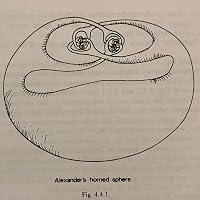
I was particularly disappointed in reading Lacan's The Sinthome, which I was unfortunately under the impression was going to posit, as a workable type of scientific thesis, a reconciliation of relativity theory in a cosmic sense with quantum physics on a microscopic level. What I got instead was Jung-inspired Mandela-type drawings and heaps of Joycean criticism featuring all kinds of word-play, jokes and asides. Disappointing, to say the least! It makes me want to go out and purchase "Lacan the Charlatan", a book I said I would never read, despite an email exchange made (unbeknownst to me) with the author himself.
Excelente esse seminário de Lacan! Ele esclarece vários pontos importantes da clínica psicanalítica de nossa contemporaneidade! Importante ressaltar que é fundamental estar bem cientes de seu ensino anterior e da invenção de Freud para acompanhar suas elocubracõe com os nós. Vale a pena se embrenhar pelos seus fios de barbantes!