

What do you think?

Horror Vacui: Poems
“These are ambitious, moving poems, deft, panged, and stunning.”—Dean Young
“Existential chilliness, mourning, and dread find a uniquely compelling voice in Thomas Heise's poetry. . . .”—Alan Williamson
"Horror Vacui offers an often vertiginous account of how death imposes [an] irresistible fact on minds bent on both accommodating and resisting this one inevitable yet impossible truth. . . . And it's this property of being barely held together that makes Horror Vacui so striking. . . . an extraordinary mood piece."—Ray McDaniel
In his haunting debut collection Horror Vacui, Thomas Heise explores the fear of empty space, a mysterious and abiding absence that is a pronounced presence in this poet's lyrical voice.
“Existential chilliness, mourning, and dread find a uniquely compelling voice in Thomas Heise's poetry. . . .”—Alan Williamson
"Horror Vacui offers an often vertiginous account of how death imposes [an] irresistible fact on minds bent on both accommodating and resisting this one inevitable yet impossible truth. . . . And it's this property of being barely held together that makes Horror Vacui so striking. . . . an extraordinary mood piece."—Ray McDaniel
In his haunting debut collection Horror Vacui, Thomas Heise explores the fear of empty space, a mysterious and abiding absence that is a pronounced presence in this poet's lyrical voice.
88 pages, Paperback
First published April 1, 2006
About the author
Thomas Heise
6 booksThomas Heise is the author of four books: "The Gentrification Plot: New York and the Postindustrial Crime Novel" (2022), which is part of Columbia University Press's highly regarded "Literature Now" series; the experimental novel "Moth" (2013), which was nominated for the Foreword Book of the Year; the interdisciplinary literary study "Urban Underworlds: A Geography of Twentieth-Century American Literature and Culture" (2011), which is part of the Mellon-funded American Literatures Initiative; and Horror Vacui: Poems (2006), whose title poem won the Gulf Coast Prize in Poetry. His work has appeared in numerous magazines and journals, including Modern Fiction Studies, Twentieth Century Literature, Arizona Quarterly, The Journal of Popular Culture, Gulf Coast, Columbia: A Journal of Literature and Art, Ploughshares, and others. He's a faculty member at Penn State (Abington) and lives in Manhattan.
Ratings & Reviews
Friends & Following
Create a free account to discover what your friends think of this book!
Community Reviews
Displaying 1 - 5 of 5 reviews

March 28, 2018
Like the branches of a barren tree casting shadows in the wind...a journey taken with vivid courage. Traces of Baudelaire and Poe here; in tone Beckettian echoes are whispered - ennui drenched - reminded me of a dream one does not fully want to remember - but that will not be forgotten. A powerful poetic voice!
July 18, 2007
I read several poetry books before I settled on this one to write a review about. Here it is: [http://indianareview.blogspot.com/200...]

May 4, 2011
I picked this collection of poems up because I liked the title, more specifically that it had the word "horror" in the title, as I'm a fan of the genre. It's not really about horror, of course, rather the title (I've just learned) is from the latin, meaning "fear of empty space", referring to works of art in which every available space is filled in with minute detail.
It's a beautiful title for the book (which makes me like the title even more) and suits the poems within, which look at how the empty spaces of our life are filled or cannot be filled. Many of my favorite poems in the collection are obviously haunted, not just in emotional content, but in the way some unknown force seems to be communicating with the narrator. It could be a ghostly presence, or god, or the narrator's conscience -- it's never clear, but it doesn't matter, for sometimes the narrator is actively interacting with this presence, and sometimes the narrator continues as though not hearing it at all.
Other poems touch upon other forms of supernatural or the mythological, while never leaving the mundane or everyday. Some are strange collisions of imagery that leave one slightly intellectually befuddled but smiling. All in all this is a wonderfully odd and pleasing collection of poetry. I would definitely recommend it.
It's a beautiful title for the book (which makes me like the title even more) and suits the poems within, which look at how the empty spaces of our life are filled or cannot be filled. Many of my favorite poems in the collection are obviously haunted, not just in emotional content, but in the way some unknown force seems to be communicating with the narrator. It could be a ghostly presence, or god, or the narrator's conscience -- it's never clear, but it doesn't matter, for sometimes the narrator is actively interacting with this presence, and sometimes the narrator continues as though not hearing it at all.
Other poems touch upon other forms of supernatural or the mythological, while never leaving the mundane or everyday. Some are strange collisions of imagery that leave one slightly intellectually befuddled but smiling. All in all this is a wonderfully odd and pleasing collection of poetry. I would definitely recommend it.

August 15, 2018
At times a bit too surreal or experimental to allow the reader in, but for the most part these poems had profound moving images and were very resonant.

Read
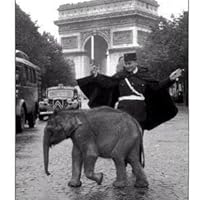
March 6, 2025was hoping based on the cover that it would engage with medieval texts and that was not the case. however i did like “the orchard of orange trees” at the center of the book
Displaying 1 - 5 of 5 reviews