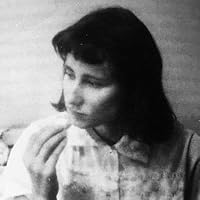
Maria Pawlikowska-Jasnorzewska, née Kossak was a Polish poet known as the Polish Sappho and "queen of lyrical poetry" of Poland's interwar period. Fluent in French, English, and German, she married three times and lived the life of a world traveller.
Born in Kraków to a family of artists, Maria Kossak grew up around painters, writers, and intellectuals. Her grandfather, Juliusz Kossak, and father, Wojciech Kossak, were both professional painters famous for their historical paintings. Her younger sister, Magdalena Samozwaniec, was also a popular writer. As well as her cousin Zofia Kossak-Szczucka.
In her youth, Kossak painted as often as she wrote poetry. It was only during her marriage to Jan Pawlikowski — after the invalidated first marriage to Władysław Bzowski — that her literary interests prevailed, inspired by the couple's discussions about her poetic output and the world of literature in general. Their passionate relationship based on shared interests and mutual love was the endless source of her poetic inspiration. However, the second marriage didn't last either.
Following her divorce, Maria Pawlikowska became active in the community of poets from the Warsaw-based Skamander group: Julian Tuwim, Jan Lechoń, Kazimierz Wierzyński, and renowned writers such as Jarosław Iwaszkiewicz, Irena Krzywicka, Kazimiera Iłłakowiczówna and Tadeusz Boy-Żeleński. During the inter-war period Pawlikowska-Jasnorzewska published twelve volumes of poetry and established herself as one of the most innovative poets of the era.
She began her career as a playwright in 1924, with her first farce, Archibald the Chauffeur, produced in Warsaw. By 1939 she had written fifteen plays whose treatment of taboo topics such as abortion, extramarital affairs, and incest provoked scandals. She was compared by critics to Molière, Marivaux, Oscar Wilde, George Bernard Shaw, and Witkacy. Her plays depicted her unconventional approach to motherhood, which she understood as a painful obligation that ends mutual passion. She spoke in support of a woman's right to choose according to her needs and feelings.
In 1939, at the onset of World War II, she followed her third husband, Stefan Jasnorzewski, to England. She was diagnosed with cancer in 1944, became semi-paralyzed, and on 9 July 1945 died in Manchester, cared for by her husband.
Wstęp odrobinę wyprowadzał mnie z równowagi... ale same wiersze są niesamowite. Miałam okazje się w nie wczytać i poznać je naprawdę blisko. Podobały mi się ogromne.
Poezja, która porusza, dotyka, rozumie i chce być zrozumiana. Niezwykle czuła i przepełniona sensualizmem. Widoczny wpływ skamandrytów ale tez kobiecej psychiki. Trudno mi napisać coś negatywnego na ten temat, gdyż Maria Pawlikowska-Jasnorzewska trafiła do mnie jak nikt inny.
I'm never completely sure whether I like this poetry or not. On one hand, there are some really beautiful, charming poems; on the other hand, they always seem quite fluffy to me. Lots of colours, birds, falling leaves, dancing and kissing, lots of waiting, missing and broken hearts; as if nothing really mattered except love - or maybe not even love, but romance. It's definitely not for me, but I gave the book four stars, because I enjoyed some of the poems.
kompletnie nie wiem jak mam to ocenic. czesc przyprawiala mnie o ciary z zazenowania, czesc byla po prostu okej, a czesc to czyste zloto. marysia fajnie ze pisalas duzo bo czasem ci sie udalo takiego bangera napisac ze japierdole jestem fanem tworczosci od 1937 roku. masterpieces