

What do you think?

Pearl
A new version of the Middle English poem Pearl, from the acclaimed poet and translator of Gawain and the Green Knight.
Simon Armitage's version of Sir Gawain and the Green Knight garnered front-page reviews across two continents and confirmed his reputation as a leading translator.
This new work is an entrancing allegorical tale of grief and lost love, as the narrator is led on a Dantean journey through sorrow to redemption by his vanished beloved, Pearl. Retaining all the alliterative music of the original, a Medieval English poem thought to be by the same anonymous author responsible for Gawain, Pearl is here brought to vivid and intricate life in care of one of the finest poets writing today.
Praise for Sir Gawain and the Green Knight:
'Takes you back closer to something of the thrill and the wonder the poem would have had in the days when it was composed. It might even be the best translation of any poem I've ever seen . [Armitage] was put on the planet to translate this poem.' Guardian
'[Armitage] captures his dialect and his landscape and takes great pains to render the tale's alliterative texture and drive . He has given us an energetic, free-flowing, high-spirited version.' New Yorker
Simon Armitage's version of Sir Gawain and the Green Knight garnered front-page reviews across two continents and confirmed his reputation as a leading translator.
This new work is an entrancing allegorical tale of grief and lost love, as the narrator is led on a Dantean journey through sorrow to redemption by his vanished beloved, Pearl. Retaining all the alliterative music of the original, a Medieval English poem thought to be by the same anonymous author responsible for Gawain, Pearl is here brought to vivid and intricate life in care of one of the finest poets writing today.
Praise for Sir Gawain and the Green Knight:
'Takes you back closer to something of the thrill and the wonder the poem would have had in the days when it was composed. It might even be the best translation of any poem I've ever seen . [Armitage] was put on the planet to translate this poem.' Guardian
'[Armitage] captures his dialect and his landscape and takes great pains to render the tale's alliterative texture and drive . He has given us an energetic, free-flowing, high-spirited version.' New Yorker
103 pages, Hardcover
First published January 1, 1380
Ratings & Reviews
Friends & Following
Create a free account to discover what your friends think of this book!
Community Reviews
Displaying 1 - 30 of 139 reviews

August 13, 2019
Living for lazy mornings like the one I had today. I spent a glorious hour with coffee and my current read, ignoring all obligations as I immersed myself. I then spent a just as blissful evening as I polished off the final few pages and here we are now!
Pearl is Simon Armitage's translation of the originally untitled poem, created in the 1390s and believed to be the work of the same genius who penned Sir Gawain and the Green Knight. Pearl is a heart breaking account of a father's grief at the loss of his two-year-old daughter. Upon visiting her grave he falls into a slumber that delivers him to a fantastical oasis and reunites him with his lost child.
This was a wonderful, if often desolate and heart breaking, read and I especially adored the natural focus and clever rhyming scheme.
The introduction provided information that further heightened my adoration. An example is that the 12-lined stanzas equate to a total of 1212 lines. This was a deliberate creation meant to mimic the structure of heavenly Jerusalem, which was 12×12 furlongs, with 12 gates for the 12 tribes of Isreal.
Facets like this only made me applaud the original poet all the more and Armitage's exemplary recreation here allows for the modern reader to still pay homage to the lost wordsmith.
Pearl is Simon Armitage's translation of the originally untitled poem, created in the 1390s and believed to be the work of the same genius who penned Sir Gawain and the Green Knight. Pearl is a heart breaking account of a father's grief at the loss of his two-year-old daughter. Upon visiting her grave he falls into a slumber that delivers him to a fantastical oasis and reunites him with his lost child.
This was a wonderful, if often desolate and heart breaking, read and I especially adored the natural focus and clever rhyming scheme.
The introduction provided information that further heightened my adoration. An example is that the 12-lined stanzas equate to a total of 1212 lines. This was a deliberate creation meant to mimic the structure of heavenly Jerusalem, which was 12×12 furlongs, with 12 gates for the 12 tribes of Isreal.
Facets like this only made me applaud the original poet all the more and Armitage's exemplary recreation here allows for the modern reader to still pay homage to the lost wordsmith.

Read
July 24, 2015A very good Middle English poem about the mystery of God's grace, presumed written by whoever wrote Gawain and the Green Knight. The poem is, at least apparently, a consolation for the loss of a loved one. The teller of the tale has lost a very young daughter, his Pearl, and at her graveside he receives a dream-vision of Heaven which reveals to him why he should not grieve, and God's goodness and mercy is great, etcetera. But one reason the poem was very effective and affecting for me was that, despite offering us this hope and consolation, it is ultimately quite expressive of the man's profound and inconsolable sense of loss. Even knowing that his daughter has been given God's highest grace and mercy, and that she will dwell eternal in heaven, we (or I) feel the man's sense of doubt and bewilderment, as he's forced to continue dwelling on earth, and he's not fully capable of understanding God's infinite goodness while he is (and we are) still trapped in the finite and temporal but real badness of sin and suffering, loss and deprivation.
The theological content of the poem is an elucidation of the parable in which a lord hires workers for his vineyard, and gives equal pay to those who arrived in the eleventh hour with those who toiled throughout the day, and thus in God's granting of Grace (which cannot be earned, by the way, in case you forgot), "the first shall be last and the last shall be first."
I enjoyed the exercise of reading through the Middle English version, and with time some of it became clearer... though I'm not sure I fully comprehended what happens to "other goats of golf that never charred." Well anyway, you could always read one of the good modernizations, as I did... it does read well in translation.
The theological content of the poem is an elucidation of the parable in which a lord hires workers for his vineyard, and gives equal pay to those who arrived in the eleventh hour with those who toiled throughout the day, and thus in God's granting of Grace (which cannot be earned, by the way, in case you forgot), "the first shall be last and the last shall be first."
I enjoyed the exercise of reading through the Middle English version, and with time some of it became clearer... though I'm not sure I fully comprehended what happens to "other goats of golf that never charred." Well anyway, you could always read one of the good modernizations, as I did... it does read well in translation.

May 3, 2018
Perhaps I would not have read this book had I not have read and loved "Sir Gawain and the Green Knight." Furthermore, I also would not have read Armitages's translation, had I not thoroughly relished his own translation of "Gawain." Of course, I had been exposed to both these poems in Tolkien's own versions, which are bundled together in my crumbling paperback along with "Sir Orfeo"." Yet, I never quite got into Tolkien's translation of "Pearl" and the truth is that while I do enjoy Tolkien as a writer, even as a critic, I have not quite warmed up to his translations as I thought I would. His versions follow the alliteration from the originals almost to a fault.
What I enjoy most about this particular translation by Armitage, as well as his other translations of "Gawain" and also the Alliterative "Death of King Arthur" is how he seamlessly modernizes medieval alliterative verse by blowing his warm breath across it and making it into something which is pleasant to the ear. All his translated poems are enriched by reading them aloud.
"Pearl" is most likely composed by the same author of "Gawain" and there is enough linguistic similitude to understand why the author of "Gawain" has been called the Pearl Poet. The poem itself or at least the part that touches me the most is not the metaphorical imagery that gives the work its title but the very heartfelt (and most real) apparition of a girl, presumably the poet's own daughter whom he lost before she was two.
This is a poem of a father's despair as he contemplates what he deems to be the unfairness of a blameless life taken so early. A young girl, his dead daughter, appears and is blissfully radiant as a pearl. She consoles her father, attempting to call him out of his misery, and exhorts him by suggesting that surely he could bide his time in this earthly dungeon, knowing that his daughter was happier in heaven. She calls her father out of his hollow existence to follow his faith and that he cannot as of yet join her (although, understandably, he desperately wants to).
Whatever you may think of medieval verse, you will be touched by this poem. I found myself there with the Pearl Poet under the trees for a moment listening to his story of tears and bliss.
Two little notes to the translator & publisher:
Armitage: if you ever read this, I always have your translations by my side; "Gawain" & "Pearl" are masterpieces, but it is you have truly given these poems a breath of fresh air. I am a fan—both of the Pearl Poet and you as his translator.
Publishers: Armitage's translations of "Sir Gawain" "Death of King Arthur" & "Pearl" would make a beautiful box set.
What I enjoy most about this particular translation by Armitage, as well as his other translations of "Gawain" and also the Alliterative "Death of King Arthur" is how he seamlessly modernizes medieval alliterative verse by blowing his warm breath across it and making it into something which is pleasant to the ear. All his translated poems are enriched by reading them aloud.
"Pearl" is most likely composed by the same author of "Gawain" and there is enough linguistic similitude to understand why the author of "Gawain" has been called the Pearl Poet. The poem itself or at least the part that touches me the most is not the metaphorical imagery that gives the work its title but the very heartfelt (and most real) apparition of a girl, presumably the poet's own daughter whom he lost before she was two.
This is a poem of a father's despair as he contemplates what he deems to be the unfairness of a blameless life taken so early. A young girl, his dead daughter, appears and is blissfully radiant as a pearl. She consoles her father, attempting to call him out of his misery, and exhorts him by suggesting that surely he could bide his time in this earthly dungeon, knowing that his daughter was happier in heaven. She calls her father out of his hollow existence to follow his faith and that he cannot as of yet join her (although, understandably, he desperately wants to).
Whatever you may think of medieval verse, you will be touched by this poem. I found myself there with the Pearl Poet under the trees for a moment listening to his story of tears and bliss.
Two little notes to the translator & publisher:
Armitage: if you ever read this, I always have your translations by my side; "Gawain" & "Pearl" are masterpieces, but it is you have truly given these poems a breath of fresh air. I am a fan—both of the Pearl Poet and you as his translator.
Publishers: Armitage's translations of "Sir Gawain" "Death of King Arthur" & "Pearl" would make a beautiful box set.

February 4, 2017
Having read Gawain and the Green Knight multiple times with much pleasure, I picked up Pearl expecting something amazing. After all, we’re told the same poet composed this work. Unfortunately, I was disappointed.
The poem is all right. But it’s a religious vision and with it is a religious dogma and narrow iconography that’s not appealing to me as a non-believer. Outside of those elements, the poem does not have enough of story, character, drama, or beautiful poetry to carry someone like myself.
And I felt a strange tone in the poem, highlighted by a few strange moments. The poem is about a father seeing his deceased daughter in paradise. At one point, though, he wonders how she could be there – and not in the nicest way either. He expresses quite a bit of outrage. That was weird.
Then the daughter explains how it is harder for someone living a long life to get to heaven. You have more time to commit sins. That’s an odd argument. And then there’s the whole "bride of Jesus” thing which is kind of weird. Even the daughter says that “many might find unfitting” their nuptials. Again, a bit awkward.
All that aside, the point of the poem is to assuage the father’s sorrow at his daughter’s death. For me, the poem doesn’t do it. It is not consoling or uplifting, it’s more hectoring and threatening. There’s no refuge from the suffering of the world, but there is a strict lord who jealously guards his bountiful lands from those deemed unworthy based on a strict, narrow set of morals.
If you are a believer, this might be moving. For the rest of us, I suggest going back to Gawain.
The poem is all right. But it’s a religious vision and with it is a religious dogma and narrow iconography that’s not appealing to me as a non-believer. Outside of those elements, the poem does not have enough of story, character, drama, or beautiful poetry to carry someone like myself.
And I felt a strange tone in the poem, highlighted by a few strange moments. The poem is about a father seeing his deceased daughter in paradise. At one point, though, he wonders how she could be there – and not in the nicest way either. He expresses quite a bit of outrage. That was weird.
Then the daughter explains how it is harder for someone living a long life to get to heaven. You have more time to commit sins. That’s an odd argument. And then there’s the whole "bride of Jesus” thing which is kind of weird. Even the daughter says that “many might find unfitting” their nuptials. Again, a bit awkward.
All that aside, the point of the poem is to assuage the father’s sorrow at his daughter’s death. For me, the poem doesn’t do it. It is not consoling or uplifting, it’s more hectoring and threatening. There’s no refuge from the suffering of the world, but there is a strict lord who jealously guards his bountiful lands from those deemed unworthy based on a strict, narrow set of morals.
If you are a believer, this might be moving. For the rest of us, I suggest going back to Gawain.

May 19, 2017
I read this book as part of the Book Riot Read Harder 2017 Challenge. This challenge was to read a book of poetry in translation on a theme other than love. Super specific.
Pearl is a translation of a medieval work written ca 1390s and tells the story of a grieving man who has lost his "Perle." We come to understand that Perle is his deceased daughter. As the grieving father goes to visit the place where she died, he falls into a trance and envisions her in an ethereally beautiful dress, and speaking to him from the other side of a river he cannot cross. She tells him that she has risen to an important place by God's side and, after questioning and arguing with her, he comes to accept that she is gone and goes to follow her to the next life but is jolted awake just before he can make it there.
Written in old English, this translation comes from Armitage, a translator who specializes in medieval writings and it reads like a modern text in his hands. This version has the original text on the pages that face the translation and, as unintelligible as old English is to me, I enjoyed comparing the two, marveling each time how Artmitage has preserved the rhythm and alliteration of the original and made it palatable to modern readers.
Pearl is a translation of a medieval work written ca 1390s and tells the story of a grieving man who has lost his "Perle." We come to understand that Perle is his deceased daughter. As the grieving father goes to visit the place where she died, he falls into a trance and envisions her in an ethereally beautiful dress, and speaking to him from the other side of a river he cannot cross. She tells him that she has risen to an important place by God's side and, after questioning and arguing with her, he comes to accept that she is gone and goes to follow her to the next life but is jolted awake just before he can make it there.
Written in old English, this translation comes from Armitage, a translator who specializes in medieval writings and it reads like a modern text in his hands. This version has the original text on the pages that face the translation and, as unintelligible as old English is to me, I enjoyed comparing the two, marveling each time how Artmitage has preserved the rhythm and alliteration of the original and made it palatable to modern readers.

March 10, 2022
From my reading and understanding of this masterful poem (a medieval allegory), it’s about losing a precious pearl, the loss of innocence. Even before we are grown, many lose that child-like wonder and unity with life.
The poem contains numerous biblical references (a usage that was particularly popular in Britain in the 1300s), but I believe it is more than a religious message, since the loss of such a wonderous treasure applies to all creeds and cultures. We can all feel, at some point in our lives, a similar loss, a void that cannot be filled. Some name it grief or sorrow, or a sense of something missing. A quiet yearning. The poet clearly expresses; it was Grace that gifted us that beautiful pearl, but we let it slip from our hands, to be lost in ‘The Garden’. Only Grace can restore the ‘spotless’ jewel.
We are fortunate the original manuscript survived, since having been written in the late fourteenth century by an unknown author, and it is worthy of a read for this alone. Comparing the original text with this newer translation can help clarify the verses and open them up to the modern reader.
I think we all have a chance of cleansing our minds, purifying our souls, and having our own precious pearl redeemed … Grace permitting.
The poem contains numerous biblical references (a usage that was particularly popular in Britain in the 1300s), but I believe it is more than a religious message, since the loss of such a wonderous treasure applies to all creeds and cultures. We can all feel, at some point in our lives, a similar loss, a void that cannot be filled. Some name it grief or sorrow, or a sense of something missing. A quiet yearning. The poet clearly expresses; it was Grace that gifted us that beautiful pearl, but we let it slip from our hands, to be lost in ‘The Garden’. Only Grace can restore the ‘spotless’ jewel.
We are fortunate the original manuscript survived, since having been written in the late fourteenth century by an unknown author, and it is worthy of a read for this alone. Comparing the original text with this newer translation can help clarify the verses and open them up to the modern reader.
I think we all have a chance of cleansing our minds, purifying our souls, and having our own precious pearl redeemed … Grace permitting.

March 21, 2019
The second of Simon Armitage's Middle English modernisations which I have read. As with his updating of Sir Gawain, here the guiding principle seems to be the preservation of the original's alliterative quality. I enjoyed Sir Gawain, but I am less certain about Pearl. It is a more enigmatic poem, of course: a dream vision of the City of God, of which parts are verbatim reproductions of Bible verse. Fundamentally, I'm not sure the numinous subject-matter is so suited to the artificial alliteration as was the pastoral tale of Sir Gawain. A description of the hunt, of the earthy disembowelling of the kill, of the knight's weaponry and habiliments, suits the tactile quality which Armitage's language achieves. There is none of that in Pearl, except for a line near the very beginning in which the narrator imagines his deceased love:
now clad in clods...
oh black soil, you blot and spoil
my precious pearl without a spot.
Afterwards, in a dream-vision characteristic of medieval literature, we witness a conversation between dreamer and dreamed-of, father and child. It lacks the limpidity which makes the Bible so easy to read, and descended at times into (to my ears) gibbering silliness. This was not helped by the poem's elaborate structure, broken into twelve-line stanzas, with first and last lines made to repeat each other and echo into the next. Thus we get a regular repetition of 'priceless pearl' and other metaphors pushed past their point of expiry such as the narrator being a jeweller missing his jewel. (And the 'dj' sound is not the best our language offers to the alliterator, consider: 'But gentle jeweller, if you are dejected/at the loss of a gem which lent you such joy.' So begins a twelve-line stanza which ends in: I judge you to be no natural jeweller.) All of which gets in the way of emotion and meaning. Things pick up towards the end when the conversation stops and we get a very detailed (again in the vivid medieval mode) portrait of the new Jerusalem.
This review is more of Armitage than the anonymous poet. The original was an alliterative piece itself. I wonder if it reads more easily than this. Armitage says that, though a contemporary of Chaucer, the Gawain/Pearl poet is harder to understand, employing a midlands dialect which did not spread so far in time as Chaucer's cosmopolitan vernacular. I'm sure I'll return to it again in the future.
now clad in clods...
oh black soil, you blot and spoil
my precious pearl without a spot.
Afterwards, in a dream-vision characteristic of medieval literature, we witness a conversation between dreamer and dreamed-of, father and child. It lacks the limpidity which makes the Bible so easy to read, and descended at times into (to my ears) gibbering silliness. This was not helped by the poem's elaborate structure, broken into twelve-line stanzas, with first and last lines made to repeat each other and echo into the next. Thus we get a regular repetition of 'priceless pearl' and other metaphors pushed past their point of expiry such as the narrator being a jeweller missing his jewel. (And the 'dj' sound is not the best our language offers to the alliterator, consider: 'But gentle jeweller, if you are dejected/at the loss of a gem which lent you such joy.' So begins a twelve-line stanza which ends in: I judge you to be no natural jeweller.) All of which gets in the way of emotion and meaning. Things pick up towards the end when the conversation stops and we get a very detailed (again in the vivid medieval mode) portrait of the new Jerusalem.
This review is more of Armitage than the anonymous poet. The original was an alliterative piece itself. I wonder if it reads more easily than this. Armitage says that, though a contemporary of Chaucer, the Gawain/Pearl poet is harder to understand, employing a midlands dialect which did not spread so far in time as Chaucer's cosmopolitan vernacular. I'm sure I'll return to it again in the future.

February 4, 2024
An elegy becomes an allegory of the soul’s quest for a God/transcendence - or, stretching it a bit, wisdom/peace - that remains a dream/vision beyond its reach.

March 17, 2025
"First published January 1, 1400”
A truly beautiful and unworldly visit back 600 years, and a reminder that people have always been people, loving and grieving and hurting and waiting. The unknown narrator, who also is thought to have written Sir Gawain and the Green Knight, has written an incredibly moving and visual epic poem to his precious lost child, a little girl who is believed to have been two years old. It's been beautifully translated by Simon Armitage into modern English from the original Middle English, and when the book is open, it shows the original poem on the left and the translation on the right, so it’s possible to follow along in both languages, and learn an incredible amount about how language has changed over the last six centuries.
A truly beautiful and unworldly visit back 600 years, and a reminder that people have always been people, loving and grieving and hurting and waiting. The unknown narrator, who also is thought to have written Sir Gawain and the Green Knight, has written an incredibly moving and visual epic poem to his precious lost child, a little girl who is believed to have been two years old. It's been beautifully translated by Simon Armitage into modern English from the original Middle English, and when the book is open, it shows the original poem on the left and the translation on the right, so it’s possible to follow along in both languages, and learn an incredible amount about how language has changed over the last six centuries.
In the original:It's significant to me that I've finished reading this but keep going back to reread passages and "see" the poet's breathtaking visions again. This one’s a keeper. 5 stars
The adubbemente of the downez were
Garten my goste al gruff forghete;
So frech flavorez of frytez were
As fode hit con me fayre refit.
And in modern translation:
The image of highly ornamented hills
Made my spirit forget all feelings of grief.
The air was fresh with the scent of fruit
It nourished and fed me as if it were food.

July 12, 2022
Very beautiful, lyrical, and moving poem. The pearl itself seems to be representative of God's grace. After finishing the poem, I did read that this poem is meant to be about the death of a child, which I didn't get while reading it. I really thought the girl he found was a personification of the "pearl of God's grace." Like it's something beautiful made from rough circumstances. There were so many mentions of God's grace and the crucifixion that I still think there's something to my interpretation.
I really loved the little parable about calling men to the field to work, but no matter how long they were out there, they all got the same payment (salvation).
This entire poem was really beautiful. I read a few sections aloud to my husband. This is the sort of poem you have to go back to a few times, I think.
I really loved the little parable about calling men to the field to work, but no matter how long they were out there, they all got the same payment (salvation).
This entire poem was really beautiful. I read a few sections aloud to my husband. This is the sort of poem you have to go back to a few times, I think.

September 3, 2019
A beautiful translation of a Middle English poem, which explores the loss of a beloved daughter and her father's vision of her in Heaven.

February 16, 2025
stunning! what a poignant account of love, loss and grief. usually overly theological texts lose me because i think it’s all bollocks but the dreamer’s earthly attachments counteracted that somewhat. absolutely incredible structure and so so so cleverly crafted, 10/10 gaiwan-poet. so much to unravel and will reread in the original alone rather than original alongside translation

October 10, 2025
The speaker comes to conflate worldly payment and satisfaction with emotional resolution throughout the Pearl poem. And the translation makes matters worse in rendering the middle English word paye as satisfaction in the modern one. Here's a response I wrote for a colleague about this issue:
Hi Cameron,
I like that you mention the word “satisfaction” and I’m wondering if we could trust the persona’s conclusion by the end of this stanza (and even the entire poem). I’m interested in the conflation of the original word paye in Middle English, which means payment, with the word satisfaction in the translation. This conveyed sense or recasting was brought home to me by Alec’s reading of the original poem, something that makes the translation less immediate and even less appealing (at least for my taste). The overemphasis on the pearl countenances this collapsing of distinction between inner satisfaction and material paye or payment. One research I’ve found reinforces this conflict by claiming that throughout the poem, “the earthly notion of ‘payment’ is transformed into the heavenly notion of ‘satisfaction,’ with the emphasis on the element ‘satis,’ that is, on the idea of ‘enough’” (25). It’s also interesting that another translation of the work is entitled Pearl of Great Price, which foregrounds the materiality aspect over the idea of spiritual salvation. In the end, I’m not sure if we can locate a sense of contentment with the persona. I think the conflation of psychological satisfaction with material fulfillment precludes our arriving at a fully realized resolution concerning the speaker’s degree of consolation.
Thanks,
SM
Hi Cameron,
I like that you mention the word “satisfaction” and I’m wondering if we could trust the persona’s conclusion by the end of this stanza (and even the entire poem). I’m interested in the conflation of the original word paye in Middle English, which means payment, with the word satisfaction in the translation. This conveyed sense or recasting was brought home to me by Alec’s reading of the original poem, something that makes the translation less immediate and even less appealing (at least for my taste). The overemphasis on the pearl countenances this collapsing of distinction between inner satisfaction and material paye or payment. One research I’ve found reinforces this conflict by claiming that throughout the poem, “the earthly notion of ‘payment’ is transformed into the heavenly notion of ‘satisfaction,’ with the emphasis on the element ‘satis,’ that is, on the idea of ‘enough’” (25). It’s also interesting that another translation of the work is entitled Pearl of Great Price, which foregrounds the materiality aspect over the idea of spiritual salvation. In the end, I’m not sure if we can locate a sense of contentment with the persona. I think the conflation of psychological satisfaction with material fulfillment precludes our arriving at a fully realized resolution concerning the speaker’s degree of consolation.
Thanks,
SM

May 31, 2017
I have certain hesitations about any approach to the translation of a rhymed, metrical poem that deliberately avoids end rhyme. If you believe that naturalness of language is the primary criterion for the translation of a poem, this will probably suit you. I guess most people do believe that; the book won prizes. But if you want a faithful metrical translation, wait for John Ridland's version, which will be out later in 2017 from Able Muse Press.

Read
January 14, 2017This is an astonishingly accomplished translation.

July 28, 2017
I love alliterative verse.

February 21, 2022
The premise is better than the payoff.
It sounded like a beautiful, quiet, sad story about a father falling asleep on his daughter's grave and in dreams, he meets her again... but, in reality, it became an almost incomprehensible, psychedelic religious fever dream focusing almost entirely on extreme Christianity and recitations of passages from the Bible which don't really make much sense. This made the book lose all sense of the basic premise and turned it into something that I was not expecting, which was disappointing. It has no real characters you can follow, and the "plot" (about the father falling asleep, etc) exists for about 4 or 5 pages, and after this, it enfolds into the mad Christian fever dream mentioned above, about goats and Christ weddings of children or something... And the father is not exactly the nicest guy either. Mhh. I don't really care anymore. It felt like reading a book of religious teachings than an actual story-driven poem that I was looking forward to.
I had high hopes after Simon's "Sir Gawain..." as that is a definite 5 star and one of my favourite books of all time, but this is not good, and it pains me. But maybe this is truly the fault of the Gawain poet?... I will have to read the original Middle English to see.
It sounded like a beautiful, quiet, sad story about a father falling asleep on his daughter's grave and in dreams, he meets her again... but, in reality, it became an almost incomprehensible, psychedelic religious fever dream focusing almost entirely on extreme Christianity and recitations of passages from the Bible which don't really make much sense. This made the book lose all sense of the basic premise and turned it into something that I was not expecting, which was disappointing. It has no real characters you can follow, and the "plot" (about the father falling asleep, etc) exists for about 4 or 5 pages, and after this, it enfolds into the mad Christian fever dream mentioned above, about goats and Christ weddings of children or something... And the father is not exactly the nicest guy either. Mhh. I don't really care anymore. It felt like reading a book of religious teachings than an actual story-driven poem that I was looking forward to.
I had high hopes after Simon's "Sir Gawain..." as that is a definite 5 star and one of my favourite books of all time, but this is not good, and it pains me. But maybe this is truly the fault of the Gawain poet?... I will have to read the original Middle English to see.

May 15, 2020
A jeweller and father loses his 'pearl' and collapses from grief in the garden. Upon awakening he's in another place, radiant and resplendent, and on a 'distant shore' stands a young girl dressed in pearls.
This is an absolutely beautiful poem on parental loss and grief, which attempts to console the reader through Christian teachings. The basic argument is that, though the Jeweller's daughter died young and never lived a life or married, she lives on the other side of the veil in comfort and warmth, finely adorned and married to Jesus no less (as is every other girl who died a virgin. No, I don't know who the virgin males get):
While it's full of lovely and soothing thoughts, it gets heavy handed at times. The Jeweller is repeatedly slapped down for questioning faith or what his Pearl tells him about the other side:
The poem loses its punch for me when it starts going into the Book of Revelation and takes ages describing the wondrous city of Heaven as a jewel encrusted castle, which is a far more sober version of upstairs than the surreal rings of Dante's Paradiso, but the language never stops being gorgeous.
The poem ends with the Jeweller feeling what the author hoped the reader would: sobered and comforted, content that his daughter is safe and loved, that though he wishes to reach her he obviously can't, but with renewed faith in a God that's loving, though previously seemed cold and unjust.
Despite not following any religion myself and though I am most certainly not converted, it's hard to deny the poignancy of it all and the beauty of the wording, and Pearl is inarguably a wonderful little gem of Middle Season and religious poetry.
(Vernard Eller translation)
This is an absolutely beautiful poem on parental loss and grief, which attempts to console the reader through Christian teachings. The basic argument is that, though the Jeweller's daughter died young and never lived a life or married, she lives on the other side of the veil in comfort and warmth, finely adorned and married to Jesus no less (as is every other girl who died a virgin. No, I don't know who the virgin males get):
Therefore each soul that had ne'er a touchThe poem argues many such teachings of 'the first shall be last' and innocence rewarded, so the father shouldn't fear that his daughter's short life was meaningless or wasted, because it carries on in greater splender and happiness, which is exactly what a grieving parent would like to think and the poem symbolises the whole idea of the comfort of Heaven.
Is for that Lamb a worth wife.
While it's full of lovely and soothing thoughts, it gets heavy handed at times. The Jeweller is repeatedly slapped down for questioning faith or what his Pearl tells him about the other side:
I hold that jeweler little to praiseBasically: 'I find your lack of faith disturbing', and bluntly telling the grieving they're being a dick for not having unquestionable faith in a God that essentially took their child seems more than a bit harsh.
who believeth well that he seeth with eye.
And much to blame and discourteous
Who believeth our Lord would make a lie,
Who loyally promised your life to raise,
Tho fortune destined your flesh to die.
[...]
That is a pride unworthy of praise
Which any good man will never indulge--
No tale believing as truth he can trace
Except when his own sense is the judge.
The poem loses its punch for me when it starts going into the Book of Revelation and takes ages describing the wondrous city of Heaven as a jewel encrusted castle, which is a far more sober version of upstairs than the surreal rings of Dante's Paradiso, but the language never stops being gorgeous.
The poem ends with the Jeweller feeling what the author hoped the reader would: sobered and comforted, content that his daughter is safe and loved, that though he wishes to reach her he obviously can't, but with renewed faith in a God that's loving, though previously seemed cold and unjust.
Despite not following any religion myself and though I am most certainly not converted, it's hard to deny the poignancy of it all and the beauty of the wording, and Pearl is inarguably a wonderful little gem of Middle Season and religious poetry.
(Vernard Eller translation)
Read
November 11, 2024reread in the context of my essay question this week, which is 'For dreme was hyt none, ne fantasye. Hyt was unto me a gratius mene [medium, path, course of action].'. amusingly this quote is from the text 'Why I can't be a nun'. i haven't read it, but i might seek it out after these hellish next couple of days are over! i am very tired and still have nearly a month to go, but oh well. christmas soon :)

April 22, 2025
started strong but then quickly fell off for me. was a lot more about religion than i thought it would be (didn't expect any). i like how it's structured and the first part but that's it.

October 8, 2025
Missed my medieval class so much I reread this entire thing again I did not appreciate it as much as I should have when I first read it damn bro

February 16, 2026
read for class, honestly I surprisingly loved it, beautifully written

March 15, 2026
(uni) my favourite text so far from my medievalism module! really nicely translated, always appreicate a dual text loeb-style, and actually pretty poignant (grief, father-daughter relationships, weird gender stuff and nature all really resonated with me). gawain poet my beloved!
December 3, 2024
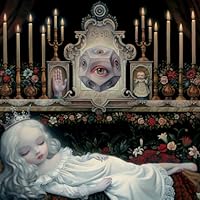
this is one of the most beautiful book covers i have ever seen. this has perhaps increased my rating, although this was my favourite of the two translations i read ('read' is perhaps a stretch. 'hurriedly skimmed' would be more accurate but i absorbed enough to write a whole essay without any other secondary so i'm counting it here.)

January 17, 2025
This definitely hit so hard in the 1390s

May 26, 2025
Overtly religious but beautiful language and a vibrant modern translation to boot.

November 18, 2023
3 1/2 the alliteration made my brain go brrr but ultimately i’m not christian enough for this one lads

October 29, 2016
I read this after enjoying Simon Armitage's recent translation of another Middle English poem, possibly by the same unknown author, Sir Gawain and the Green Knight. In some ways Pearl is more challenging as the original has a very tight structure of recurring words, alliteration and a regular rhyme scheme. I stumbled across an old 1950s edition of the original poem, so was able to try and read the old and new alongside each other. This showed the difficulties in creating a new edition, as at times and Armitage has to praised for retaining the music of the original. The story itself is of a man returning to a spot where he lost his beautiful, perfect pearl. This turns out to be his young daughter and as he falls asleep she comes to him in a dream, reassuring him that she now stands alongside Jesus in paradise. Biblical parables are quoted to explain this and as the father tries to move across the stream towards her, he jolts himself awake on the bank of the stream where he fell asleep. As in Dante's Divine Comedy, religious arguments are made and explained as he is led through this heavenly dream, but throughout it all the story feels real, and genuine. The father's grief palpable. Armitage's short introduction provides useful background and is an interesting look at the compromises he had to make in his translation.
Above all this is a beautiful, clever, carefully crafted and very readable poem.
Above all this is a beautiful, clever, carefully crafted and very readable poem.

May 15, 2020
I read and very much enjoyed Sir Gawain and the Green Knight: A New Verse Translation and decided to read Pearl, believed to be written by the same hand, because of it. While it has some beautiful lyrical passages and the grief of the narrator is moving, Pearl is ultimately more of a religious allegory with around half of it retelling Biblical passages and recreating a Christian doctrine-compliant version of heaven. And while I don't mind a bit of moralism, I rarely enjoy it when it's so straightforward.

May 10, 2016
I was interested in reading this Simon Armitage translation of a poem thought to be by the author of Sir Gawain and the Green Knight, because that anonymous author seems to have been from somewhere on on the other side of the Peak District, and because I'd not long visited Lud's Church, thought to feature in that poem.
It is such a lovely name for a poem, which turns out to be about a dead child. The story is very simple and poignant, a grieving parent has a dream in which he sees and converses with the girl, grown and residing in paradise, and he is desperate to go to her. And then he wakes up.
I felt it was more a work to admire and study than one which I could enjoy at this point. The introduction by Simon Armitage was essential to appreciate what I was about to read... and his achievement in the translation. I'd be interested to know what a modern-day Christian might make of it, given the overwhelmingly religious content.
It is such a lovely name for a poem, which turns out to be about a dead child. The story is very simple and poignant, a grieving parent has a dream in which he sees and converses with the girl, grown and residing in paradise, and he is desperate to go to her. And then he wakes up.
I felt it was more a work to admire and study than one which I could enjoy at this point. The introduction by Simon Armitage was essential to appreciate what I was about to read... and his achievement in the translation. I'd be interested to know what a modern-day Christian might make of it, given the overwhelmingly religious content.
Displaying 1 - 30 of 139 reviews