

What do you think?

Evening Proposal
Evening Proposal is a collection of eight stories about the grim and often faceless nature of urban life. Faintly reminiscent of Franz Kafka, the stories range from a man who discovers that his job performance has no significance while taking refuge in taking care of an abandoned rabbit to a man who finally expresses his love to discover that his expression frightened him more than his fear in anticipating the event. Evening Proposal reissues the warning that the orderliness and system that civilization created in order to confront nature’s chaos is in fact “the hell of monotony.”
230 pages, Paperback
First published March 11, 2011
About the author
Hye-Young Pyun
29 books238 followers편혜영(片惠英,1972년~)은 대한민국의 소설가이다. 서울에서 태어났으며, 서울예대 문예창작과를 졸업하고 한양대학교 국어국문학과 대학원 석사과정을 졸업했다. 2000년 서울신문 신춘문예에 단편소설 〈이슬털기〉가 당선되면서 데뷔했다. 2007년 단편소설 〈사육장 쪽으로〉로 제40회 한국일보문학상을, 2009년 단편소설 〈토끼의 묘〉로 제10회 이효석문학상을, 2012년 소설집 〈저녁의 구애〉로 제42회 동인문학상을, 2014년 단편소설 〈몬순〉으로 제38회 이상문학상을 수상했다. 현재 명지대학교 문예창작학과 교수(2013~)로 재직 중이다.
Pyun Hye-young was born in Seoul in 1972. She earned her undergraduate degree in creative writing and graduate degree in Korean literature from Hanyang University. After receiving these degrees, Pyun worked as an office worker, and many office workers appear in her stories.
Pyun began publishing in 2000 and published three collections of stories, Aoi Garden, To The Kennels, and Evening Courtship as well as the novel Ashes and Red. In 2007, To the Kennels won the Hankook Ilbo Literary Award, in 2009 the short story O Cuniculi won the Yi Hyo-Seok Literature prize and then the Today’s Young Writer Award in 2010, while in 2011 Evening Courtship won the Dong-in Literary Award. Her works have several themes including alienation in modern life, an apocalyptic world, and they are often infused with grotesque images. The novel Ashes and Red explores irony and the dual nature of humanity.
Pyun Hye-young was born in Seoul in 1972. She earned her undergraduate degree in creative writing and graduate degree in Korean literature from Hanyang University. After receiving these degrees, Pyun worked as an office worker, and many office workers appear in her stories.
Pyun began publishing in 2000 and published three collections of stories, Aoi Garden, To The Kennels, and Evening Courtship as well as the novel Ashes and Red. In 2007, To the Kennels won the Hankook Ilbo Literary Award, in 2009 the short story O Cuniculi won the Yi Hyo-Seok Literature prize and then the Today’s Young Writer Award in 2010, while in 2011 Evening Courtship won the Dong-in Literary Award. Her works have several themes including alienation in modern life, an apocalyptic world, and they are often infused with grotesque images. The novel Ashes and Red explores irony and the dual nature of humanity.
Ratings & Reviews
Friends & Following
Create a free account to discover what your friends think of this book!
Community Reviews
Displaying 1 - 11 of 11 reviews

March 1, 2018
2.5 stars
With the Winter Olympics being held in Pyeongchang, South Korea, I thought it would be fitting to read a work of Korean literature during the month of February and a collection of short stories from an author that is advertised as a modern Franz Kafka definitely sounded appealing. I am very much fond of works that are outside of the box and absurdist as well, so for its face value, this collection looked like it was just what I was looking for. Unfortunately, I felt that this collection was mediocre at best. While the concepts were great, the characters were zero dimensional. While giving little depth to these characters could be a strategy, there was nothing that these characters had to offer that gave me, the reader, any interest to want to continue reading forward.
The stories in this collection were:
Rabbit's Tomb- A man takes in an abandoned rabbit and cares for it all while he is neglecting what he has found to be an insignificant job. There was an interesting snippet about how and why rabbit's are frequently abandoned as pets and how children are known for getting bored of what ever animal it is they get as a pet, but specifically rabbits.
Evening Proposal- Kim and his friend are preparing a funeral for a dying man, all while he is preparing to turn down a commitment to someone he is dating.
Monotonous Lunch- A man is stuck in his routine of eating the same lunch, taking the same train, and fulfilling the same kind of job in a copy room day after day. Will a sudden death that happens right before this man's eyes change that routine?
Would You Like to Take a Tour Bus?- S and K work with storage compartments as movers. What happens when they find themselves on a tour bus?
Out for a Walk- A man and his pregnant wife move into new living quarters in order to fulfill his job, but there is a guard dog within the quarters that is bound to be a handful for this couple.
Jungle Gym- A man's confidence is tested through a business trip.
Room with a Beige Sofa- Jin, his wife Seo, and their baby adjust to living in a new house.
Canning Factory- The strict, but punctual plant manager of a canning factory does not show up one day, drawing suspicion on his disappearance.
A lot of these concepts were interesting and I feel that this material will be subject to rereading and studying for its use of absurdism at some point in time. As works that exercise your mind and are meant to be thought about critically, this did a good job. As stories, though, they were difficult to get through with uninteresting characters and a vague ability to set the scene. I feel that with a writer like Franz Kafka, the information we learned about him and his ability to not limit his boundaries had an impact on how we saw his writing. I would even say that George Saunders writes in a similar manner and with a work like The Semplica-Girl Diaries, it explores an outlandish idea, but it connects to a very logical argument. These stories do not engage in this practice. They are very dull.
I may return to looking over some of these works at some point in time, but for now, I did not enjoy this and would not encourage others to check this out. There are so many other better absurdist writers, like Franz Kafka, George Saunders, and Lewis Carroll.
With the Winter Olympics being held in Pyeongchang, South Korea, I thought it would be fitting to read a work of Korean literature during the month of February and a collection of short stories from an author that is advertised as a modern Franz Kafka definitely sounded appealing. I am very much fond of works that are outside of the box and absurdist as well, so for its face value, this collection looked like it was just what I was looking for. Unfortunately, I felt that this collection was mediocre at best. While the concepts were great, the characters were zero dimensional. While giving little depth to these characters could be a strategy, there was nothing that these characters had to offer that gave me, the reader, any interest to want to continue reading forward.
The stories in this collection were:
Rabbit's Tomb- A man takes in an abandoned rabbit and cares for it all while he is neglecting what he has found to be an insignificant job. There was an interesting snippet about how and why rabbit's are frequently abandoned as pets and how children are known for getting bored of what ever animal it is they get as a pet, but specifically rabbits.
Evening Proposal- Kim and his friend are preparing a funeral for a dying man, all while he is preparing to turn down a commitment to someone he is dating.
Monotonous Lunch- A man is stuck in his routine of eating the same lunch, taking the same train, and fulfilling the same kind of job in a copy room day after day. Will a sudden death that happens right before this man's eyes change that routine?
Would You Like to Take a Tour Bus?- S and K work with storage compartments as movers. What happens when they find themselves on a tour bus?
Out for a Walk- A man and his pregnant wife move into new living quarters in order to fulfill his job, but there is a guard dog within the quarters that is bound to be a handful for this couple.
Jungle Gym- A man's confidence is tested through a business trip.
Room with a Beige Sofa- Jin, his wife Seo, and their baby adjust to living in a new house.
Canning Factory- The strict, but punctual plant manager of a canning factory does not show up one day, drawing suspicion on his disappearance.
A lot of these concepts were interesting and I feel that this material will be subject to rereading and studying for its use of absurdism at some point in time. As works that exercise your mind and are meant to be thought about critically, this did a good job. As stories, though, they were difficult to get through with uninteresting characters and a vague ability to set the scene. I feel that with a writer like Franz Kafka, the information we learned about him and his ability to not limit his boundaries had an impact on how we saw his writing. I would even say that George Saunders writes in a similar manner and with a work like The Semplica-Girl Diaries, it explores an outlandish idea, but it connects to a very logical argument. These stories do not engage in this practice. They are very dull.
I may return to looking over some of these works at some point in time, but for now, I did not enjoy this and would not encourage others to check this out. There are so many other better absurdist writers, like Franz Kafka, George Saunders, and Lewis Carroll.

January 28, 2017
He would from time to time get a paper cut, and that was the only type of scar he'd ever have.
Evening Proposal by Pyun Hye-Young is another in the very worthwhile Dalkey Archive Library of Korean Literature, and the 16th of the 26 book series I have read.
This is a short-story collection - 8 stories, all a very uniform 20-24 pages. This is an important genre in Korean literature, arguably the dominant one, but not my personal favourite form and that rather influenced my view of the book. The stories seem to stop just as they get going and while there is some commonality of theme these are ultimately individual stories, originally published separately in various publications, before being bought together in this collection, and if anything some of the common themes wore a little with repetition. However, I very much look forward to the forthcoming novels in English from Pyun Hye-Young.
The translation is by Park Youngsuk and Gloria Cosgrove Smith, both new to me. It certainly reads well, although there was the odd awkward phrase. For example the opening story features the odd English phrase "older alumnus" multiple (20+) times. This would be a literal translation of the Korean 선배, but it is a much more natural and common term in Korean and here in English mentor / senior / superior would all work much better. Even odder, checking the Korean, the word used appears to be 상사 which anyway is closer to the English words I suggested.
Translators such as the inaugral MBI winning Deborah Smith, Jung Yewon (at the highly literary end of the spectrum) and Sora Kim-Russell (for natural English prose) have rather raised the bar on Korean-English and this isn't in that league. Indeed one can make a direct comparison in the opening story as Sora Kim Russell has also translated it (albeit under the rather odd title O Cuniculi) at Words Without Borders (Korean original also here http://www.wordswithoutborders.org/ar...). Taking a key line for example:
The Korean original:
"지시하는 사냥감을 단지 잡아오기만 하면 되거든. 무엇을 잡을지, 잡은 후에 구울지 삶을지 버릴지 박제를 할지 결정하는 것은 숲을 달리는 사냥개가 아니라 지시를 내리고 서서 구경하는 주인이지. 그러니까 개는 잡을 때까지 죽도록 초원을 달리기만 하면 되는 거야."
토끼의 묘
The translation in this book:
"You must catch and brings back the targeted object," the older alumnus continued. "It's as simple as that. What to catch and what to do with it afterwards, broil, boil, throw away or stuff, making those decisions isn't the role for a hunting dog nosing through the woods. It is for the owner, who orders and watches. Therefore, all the dog has to do is run in the field - even to his death - until he makes the catch."
Rabbit Tomb
Sora Kim-Russell's version reads, more naturally and compactly:
“You retrieve the game. The master decides what to catch and whether to roast it, boil it, toss it out, or stuff it. Not the hunting dog racing through the woods. The master gives the command then watches as you run like mad until the game is caught.”
Rabbit Tomb / O Cuniculi
Rabbit Tomb was actual my favourite of the stories - although in part because I read it first, before several other similar tales. A rather haunting tale of the futile, empty and monotonous life of a clerical worker sent on assignment to a distant city, and his own self-comparison to an abandoned rabbit he finds in a city park (As he gazed into the eyes, relief at the thought that he was not the only one in this world with eyes red from exhaustion washed over him from the Kim-Russell version)
The other stories can be summarised as:
For him the real disasters, disasters far worse than earthquakes or tsunamis, were the occasions when the flowers in the shop faded before he could sell them ... the misfortune he feared was the misfortune that affected only him, while the rest of the world was well and safe.
Evening proposal
A rather cynical flower seller is forced to wait late into the evening at a funeral parlour, while an elderly man, who he knew many years ago, stubbornly cling on to life. Meanwhile he conduct his love life (the evening proposal) over the phone.
His heart pounded as he frantically opened the door of the copy room thirty minutes later than usual. The rest of the world remained calmly unaware of his being late for the first time in his life.
...
He would from time to time get a paper cut, and that was the only type of scar he'd ever have.
Monotonous lunch
This contains my favourite line in the book - a wonderful description of the rather sad and empty state to which humankind has been reduced by clerical work.
It took them quite a while to find a word with only two syllables starting with "b" which meant an unnecessary or useless thing.
Would you like to take a tour bus
Another in the pointlessness of most jobs theme, as two office workers are sent on an odd assignment to take a mysterious package to an unknown destination.
It wasn't the sudden flight of birds or even the thought of a wild boar that stopped him walking on the forest. It was the mayflies that hovered around him
Out for a walk.
One of the more dystopian and disturbing stories (and closer to Pyun's earlier work), as an office worker and his wife are sent to a rural branch office, where they find nature invading their lives.
There are no legal issues here?" he had asked, not being aware in three beginning that questioning Baik's orders wouldn't be appreciated. Later he came to realise that Baik regarded that question as an expression of agreement. He only wished that the [accounting] methods weren't illegal, or if they were illegal, they'd at least be handled clandestinely.
Jungle Gym
An accountant who has been cooking the books for his boss is sent out of town on a "business trip" before the auditors arrive.
The [old] sofa was a symbol of their cramped, tiresome life in company housing tucked away in a small city.
...
Finally she chose a beige sofa designed for a four-member family. The leather upholstery was strong it soft. It looked like the delicious layers of a freshly baked pie, and it seemed it couldn't possibly contain any spiral shaped springs, nailed wood, or cheap sponge... This beige sofa was to represent Jin and Seo's new life together.
Room With A Beige Sofa
Jin, who has been managing a regional branch office for a number of years is, much to his relief, being transferred back to Seoul with his new wife Seo and their 100 day old (baekil) baby. But en route they get tangled up with some local rowdy youth and the bright lights of Seoul remain literally just out of sight.
"Prior to the expiration date its assumed that the condition is perfectly maintained. Right after the expiration date, it's assumed that the condition has immediately broken down. At that point, we discard them regardless."
Canning Factory
Another in the why-do-we-bother theme, although with a twist. The plant manager of a canning factory (whose workers don't just can the goods they are supposed to) suddenly disappears, and a senior worker Park takes his place. Just like the opening story, Park finds himself doing exactly the things his predecessor did, and the story collection as well as life comes full circle.
Worthwhile.
Evening Proposal by Pyun Hye-Young is another in the very worthwhile Dalkey Archive Library of Korean Literature, and the 16th of the 26 book series I have read.
This is a short-story collection - 8 stories, all a very uniform 20-24 pages. This is an important genre in Korean literature, arguably the dominant one, but not my personal favourite form and that rather influenced my view of the book. The stories seem to stop just as they get going and while there is some commonality of theme these are ultimately individual stories, originally published separately in various publications, before being bought together in this collection, and if anything some of the common themes wore a little with repetition. However, I very much look forward to the forthcoming novels in English from Pyun Hye-Young.
The translation is by Park Youngsuk and Gloria Cosgrove Smith, both new to me. It certainly reads well, although there was the odd awkward phrase. For example the opening story features the odd English phrase "older alumnus" multiple (20+) times. This would be a literal translation of the Korean 선배, but it is a much more natural and common term in Korean and here in English mentor / senior / superior would all work much better. Even odder, checking the Korean, the word used appears to be 상사 which anyway is closer to the English words I suggested.
Translators such as the inaugral MBI winning Deborah Smith, Jung Yewon (at the highly literary end of the spectrum) and Sora Kim-Russell (for natural English prose) have rather raised the bar on Korean-English and this isn't in that league. Indeed one can make a direct comparison in the opening story as Sora Kim Russell has also translated it (albeit under the rather odd title O Cuniculi) at Words Without Borders (Korean original also here http://www.wordswithoutborders.org/ar...). Taking a key line for example:
The Korean original:
"지시하는 사냥감을 단지 잡아오기만 하면 되거든. 무엇을 잡을지, 잡은 후에 구울지 삶을지 버릴지 박제를 할지 결정하는 것은 숲을 달리는 사냥개가 아니라 지시를 내리고 서서 구경하는 주인이지. 그러니까 개는 잡을 때까지 죽도록 초원을 달리기만 하면 되는 거야."
토끼의 묘
The translation in this book:
"You must catch and brings back the targeted object," the older alumnus continued. "It's as simple as that. What to catch and what to do with it afterwards, broil, boil, throw away or stuff, making those decisions isn't the role for a hunting dog nosing through the woods. It is for the owner, who orders and watches. Therefore, all the dog has to do is run in the field - even to his death - until he makes the catch."
Rabbit Tomb
Sora Kim-Russell's version reads, more naturally and compactly:
“You retrieve the game. The master decides what to catch and whether to roast it, boil it, toss it out, or stuff it. Not the hunting dog racing through the woods. The master gives the command then watches as you run like mad until the game is caught.”
Rabbit Tomb / O Cuniculi
Rabbit Tomb was actual my favourite of the stories - although in part because I read it first, before several other similar tales. A rather haunting tale of the futile, empty and monotonous life of a clerical worker sent on assignment to a distant city, and his own self-comparison to an abandoned rabbit he finds in a city park (As he gazed into the eyes, relief at the thought that he was not the only one in this world with eyes red from exhaustion washed over him from the Kim-Russell version)
The other stories can be summarised as:
For him the real disasters, disasters far worse than earthquakes or tsunamis, were the occasions when the flowers in the shop faded before he could sell them ... the misfortune he feared was the misfortune that affected only him, while the rest of the world was well and safe.
Evening proposal
A rather cynical flower seller is forced to wait late into the evening at a funeral parlour, while an elderly man, who he knew many years ago, stubbornly cling on to life. Meanwhile he conduct his love life (the evening proposal) over the phone.
His heart pounded as he frantically opened the door of the copy room thirty minutes later than usual. The rest of the world remained calmly unaware of his being late for the first time in his life.
...
He would from time to time get a paper cut, and that was the only type of scar he'd ever have.
Monotonous lunch
This contains my favourite line in the book - a wonderful description of the rather sad and empty state to which humankind has been reduced by clerical work.
It took them quite a while to find a word with only two syllables starting with "b" which meant an unnecessary or useless thing.
Would you like to take a tour bus
Another in the pointlessness of most jobs theme, as two office workers are sent on an odd assignment to take a mysterious package to an unknown destination.
It wasn't the sudden flight of birds or even the thought of a wild boar that stopped him walking on the forest. It was the mayflies that hovered around him
Out for a walk.
One of the more dystopian and disturbing stories (and closer to Pyun's earlier work), as an office worker and his wife are sent to a rural branch office, where they find nature invading their lives.
There are no legal issues here?" he had asked, not being aware in three beginning that questioning Baik's orders wouldn't be appreciated. Later he came to realise that Baik regarded that question as an expression of agreement. He only wished that the [accounting] methods weren't illegal, or if they were illegal, they'd at least be handled clandestinely.
Jungle Gym
An accountant who has been cooking the books for his boss is sent out of town on a "business trip" before the auditors arrive.
The [old] sofa was a symbol of their cramped, tiresome life in company housing tucked away in a small city.
...
Finally she chose a beige sofa designed for a four-member family. The leather upholstery was strong it soft. It looked like the delicious layers of a freshly baked pie, and it seemed it couldn't possibly contain any spiral shaped springs, nailed wood, or cheap sponge... This beige sofa was to represent Jin and Seo's new life together.
Room With A Beige Sofa
Jin, who has been managing a regional branch office for a number of years is, much to his relief, being transferred back to Seoul with his new wife Seo and their 100 day old (baekil) baby. But en route they get tangled up with some local rowdy youth and the bright lights of Seoul remain literally just out of sight.
"Prior to the expiration date its assumed that the condition is perfectly maintained. Right after the expiration date, it's assumed that the condition has immediately broken down. At that point, we discard them regardless."
Canning Factory
Another in the why-do-we-bother theme, although with a twist. The plant manager of a canning factory (whose workers don't just can the goods they are supposed to) suddenly disappears, and a senior worker Park takes his place. Just like the opening story, Park finds himself doing exactly the things his predecessor did, and the story collection as well as life comes full circle.
Worthwhile.

June 19, 2017
Pyun Hye Young’s Evening Proposal (translated by Youngsuk Park and Gloria Cosgrove Smith, electronic review copy courtesy of Dalkey Archive Press) is yet another work from the Library of Korean Literature series. Once again, we have a collection of short stories (eight in total, each about twenty-pages long), and while the pieces have no real connection in terms of characters or content, there are some strong themes running throughout the collection.
One of these is repetition, with several of the protagonists trapped in a mind-numbing circular existence. However, ‘trapped’ is probably the wrong word here as they are often quite content to do the same thing day in, day out, as typified by the ‘hero’ of ‘Monotonous Lunch’:
The same thing for lunch every day. Every day he ate the same thing, the Set A menu from the cafeteria in the School of Liberal Arts. And the Set A menu was always the same. It included rice, soup, kimchi and three side dishes. The three side dishes did consist of something different each day, but the overall menu was so similar from one day to the next that by the time he was on his way home, he could barely remember what side dishes he’d eaten.
p.49, ‘Monotonous Lunch’ (Dalkey Archive Press, 2016)
Don’t feel too sorry for our hapless friend – changing his routine (or his diet) makes him nervous, and even when a major disruption occurs in his life, the only way he knows how to react is to crawl off to his small office to await the dawning of a new (dull) day.
Another story based on repetition is ‘Canning Factory’, in which the Plant Manager’s disappearance gradually turns into a realisation that life goes on. The worker who was the last to see him gradually usurps his position, almost without wanting to, ending up in his boss’s old company dormitory, along with some sealed cans (I wonder what’s inside…). Here, we see a life of work for the sake of it, with the cans gradually spreading into the workers’ lives to the extent that they prefer eating the stodge inside to better quality food.
Work is a constant thread running through Pyun’s stories, and in many of them there’s a heavy focus on doing what you’re told without asking questions. This results in some bizarre situations where K-Lit meets Kafka, and the opening piece, ‘Rabbit Tomb’, is Exhibit A, with a worker sent on a short-term stay to another town to gather information discovering that life in the office can be rather anonymous:
The office was like an enormous beehive composed of endless divisions subdivided by cubicles. It was arranged by region and city, and each cubicle was marked with a section indicator and a seat number so that it could be easily located.
p.11, ‘Rabbit Tomb’
In this lonely, corporate atmosphere, there are no conversations, apart from when the worker hands in his useless pieces of paper every day. Unable to contact his predecessor (whom he knows is still in the town), he spends most of his time caring for a rabbit he found in the local park, but towards the end of his stay, he senses that this may not have been the first time that these events have occurred. His actions, unexpectedly, may not have been as free as he thought.
There are several more stories in the collection based on work life and the obligations it entails. In ‘Jungle Gym’, an accountant is told to take a ‘business trip’ (mainly to get him away from snooping investigators back at the office). Our hapless friend obligingly goes and… that’s about it. ‘Would You Like to Take a Tour Bus?’ pushes the idea to the next level, as two low-level workers, K. & S., are asked by their boss to deliver a sealed sack to a remote location. As they change from trains to buses, always waiting for a call telling them where to go next (the boss himself is receiving orders from his own superiors), the pair begin to wonder what’s actually in the sack – and whether the smell that’s following them is coming from the contents…
While most of the stories are enjoyable, I wouldn’t say they’re all successful. ‘Room with a Beige Sofa’ sees a couple’s drive to their new home interrupted by car trouble, but the initial tense tone soon fizzles out into a weak, ambiguous ending. Similarly, the title story, ‘Evening Proposal’, has a flower shop owner obliged by past ties make a journey to see a dying man. The reader is left to fill in the gaps between his conversations with an old colleague and the man’s own girlfriend, and the story never quite seems to work.
Pyun is at her best when it all turns creepy, and one of my favourite stories, ‘Out for a Walk’, dials that up to eleven. This one is centred on the experiences of a businessman transferred to a country town and caught between the presence of a friendly dog and the sensitivities of his pregnant wife (it makes sense, trust me). Needing to resolve the issue, he goes for a long walk, only to discover that nature is very different to how it looks in movies:
His foot was caught, and again he fell, scraping his already sore knees. He stepped on a patch of slippery grass, slid, and fell again. His sides throbbed with pain, and still the mayflies continued their attack. He didn’t realize until he was out of breath that he couldn’t escape from them no matter how fast he ran because they weren’t merely chasing him. They were swarming all over him. They were nesting in him.
p.110, ‘Out for a Walk’
Would you believe me if I said that it only gets worse from here?
One of the features of the latest batch of the Library of Korean Literature offerings is extended commentaries by literary critics, but (not for the first time) I found this one a little convoluted. Kim Hyeong-jung’s take on Pyun’s stories revels in the decay and ooze found in her work rather more than any respectable person should; the main problem here, though, is that the commentary actually focuses more on the writer’s earlier books. It gives an insight into what else Pyun has been up to, but it’s not of much use in looking at this collection.
However, even if there are a few weak points, there’s a lot to like about Evening Proposal. It’s marked by a straight-forward tone telling unusual stories about people sleep-walking through their lives, even when confronted by bizarre events, and when Pyun gets it right, the stories certainly leave an impression. There’s more of her work coming in English, with Sora Kim-Russell’s translation of the novel The Hole out in August in the US from Arcade Publishing. On the basis of this one, I think it might be work keeping an eye out for 🙂
One of these is repetition, with several of the protagonists trapped in a mind-numbing circular existence. However, ‘trapped’ is probably the wrong word here as they are often quite content to do the same thing day in, day out, as typified by the ‘hero’ of ‘Monotonous Lunch’:
The same thing for lunch every day. Every day he ate the same thing, the Set A menu from the cafeteria in the School of Liberal Arts. And the Set A menu was always the same. It included rice, soup, kimchi and three side dishes. The three side dishes did consist of something different each day, but the overall menu was so similar from one day to the next that by the time he was on his way home, he could barely remember what side dishes he’d eaten.
p.49, ‘Monotonous Lunch’ (Dalkey Archive Press, 2016)
Don’t feel too sorry for our hapless friend – changing his routine (or his diet) makes him nervous, and even when a major disruption occurs in his life, the only way he knows how to react is to crawl off to his small office to await the dawning of a new (dull) day.
Another story based on repetition is ‘Canning Factory’, in which the Plant Manager’s disappearance gradually turns into a realisation that life goes on. The worker who was the last to see him gradually usurps his position, almost without wanting to, ending up in his boss’s old company dormitory, along with some sealed cans (I wonder what’s inside…). Here, we see a life of work for the sake of it, with the cans gradually spreading into the workers’ lives to the extent that they prefer eating the stodge inside to better quality food.
Work is a constant thread running through Pyun’s stories, and in many of them there’s a heavy focus on doing what you’re told without asking questions. This results in some bizarre situations where K-Lit meets Kafka, and the opening piece, ‘Rabbit Tomb’, is Exhibit A, with a worker sent on a short-term stay to another town to gather information discovering that life in the office can be rather anonymous:
The office was like an enormous beehive composed of endless divisions subdivided by cubicles. It was arranged by region and city, and each cubicle was marked with a section indicator and a seat number so that it could be easily located.
p.11, ‘Rabbit Tomb’
In this lonely, corporate atmosphere, there are no conversations, apart from when the worker hands in his useless pieces of paper every day. Unable to contact his predecessor (whom he knows is still in the town), he spends most of his time caring for a rabbit he found in the local park, but towards the end of his stay, he senses that this may not have been the first time that these events have occurred. His actions, unexpectedly, may not have been as free as he thought.
There are several more stories in the collection based on work life and the obligations it entails. In ‘Jungle Gym’, an accountant is told to take a ‘business trip’ (mainly to get him away from snooping investigators back at the office). Our hapless friend obligingly goes and… that’s about it. ‘Would You Like to Take a Tour Bus?’ pushes the idea to the next level, as two low-level workers, K. & S., are asked by their boss to deliver a sealed sack to a remote location. As they change from trains to buses, always waiting for a call telling them where to go next (the boss himself is receiving orders from his own superiors), the pair begin to wonder what’s actually in the sack – and whether the smell that’s following them is coming from the contents…
While most of the stories are enjoyable, I wouldn’t say they’re all successful. ‘Room with a Beige Sofa’ sees a couple’s drive to their new home interrupted by car trouble, but the initial tense tone soon fizzles out into a weak, ambiguous ending. Similarly, the title story, ‘Evening Proposal’, has a flower shop owner obliged by past ties make a journey to see a dying man. The reader is left to fill in the gaps between his conversations with an old colleague and the man’s own girlfriend, and the story never quite seems to work.
Pyun is at her best when it all turns creepy, and one of my favourite stories, ‘Out for a Walk’, dials that up to eleven. This one is centred on the experiences of a businessman transferred to a country town and caught between the presence of a friendly dog and the sensitivities of his pregnant wife (it makes sense, trust me). Needing to resolve the issue, he goes for a long walk, only to discover that nature is very different to how it looks in movies:
His foot was caught, and again he fell, scraping his already sore knees. He stepped on a patch of slippery grass, slid, and fell again. His sides throbbed with pain, and still the mayflies continued their attack. He didn’t realize until he was out of breath that he couldn’t escape from them no matter how fast he ran because they weren’t merely chasing him. They were swarming all over him. They were nesting in him.
p.110, ‘Out for a Walk’
Would you believe me if I said that it only gets worse from here?
One of the features of the latest batch of the Library of Korean Literature offerings is extended commentaries by literary critics, but (not for the first time) I found this one a little convoluted. Kim Hyeong-jung’s take on Pyun’s stories revels in the decay and ooze found in her work rather more than any respectable person should; the main problem here, though, is that the commentary actually focuses more on the writer’s earlier books. It gives an insight into what else Pyun has been up to, but it’s not of much use in looking at this collection.
However, even if there are a few weak points, there’s a lot to like about Evening Proposal. It’s marked by a straight-forward tone telling unusual stories about people sleep-walking through their lives, even when confronted by bizarre events, and when Pyun gets it right, the stories certainly leave an impression. There’s more of her work coming in English, with Sora Kim-Russell’s translation of the novel The Hole out in August in the US from Arcade Publishing. On the basis of this one, I think it might be work keeping an eye out for 🙂
May 29, 2019
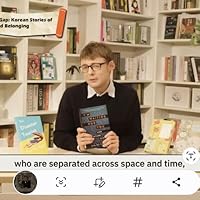
Please watch my review on YouTube here - https://www.youtube.com/watch?v=T4Y_q...
Watch my Pyun Hye-young Roundup on YouTube here - https://www.youtube.com/watch?v=NIz9G...
Read my review on Substack here - https://open.substack.com/pub/barrywe...
Watch my Pyun Hye-young Roundup on YouTube here - https://www.youtube.com/watch?v=NIz9G...
Read my review on Substack here - https://open.substack.com/pub/barrywe...

August 21, 2019
These stories all seem to share a theme of being lost, whether physically or as in losing control over one's direction in life (or both). The atmosphere is similar for each story, and there are definitely certain themes (monotonous work, one's employment not mattering, travel, being stuck in a situation and not being able to get out, etc.) I'm sure there are parallels that I'm not catching, as well, like the life of the rabbit probably being a metaphor for the life of the protagonist.
Regardless, I enjoyed these. I wish I had spaced each story out a bit more, so I could come back to them with breaks in between. I might do that the next time I read Pyun's Hye-young's work.
Regardless, I enjoyed these. I wish I had spaced each story out a bit more, so I could come back to them with breaks in between. I might do that the next time I read Pyun's Hye-young's work.

May 6, 2018
I found it difficult to read and a bit boring. Mostly because all the short stories were more or less the same and had the same ending, which was, that there was no definite ending, thus for someone like me it was infinitely bothersome. However, there was a lot of concepts worth thinking over and a lot of symbols that are fun to analyse and think what they could actually mean. Overall, it did a good job portraying what a pointless, plain and depressing our daily life is and I did like the subtle humour that was borderline tragic due to the circumstances, however it wasn't my cup of tea.
May 6, 2021
Probably a 3.5 in reality, the good stories in Pyun's collection stand out. There's an overarching sense of tedium of city life and city work throughout this stories published between 2008-2009, and Pyun's writing highlights the existential quandary of seeking something more from that mundanity. The less successful stories don't quite anchor a compelling character with this climate, but "Rabbit's Tomb" and "The Canning Factory" are both excellent.
Want to Read
March 26, 2022'저녁의 구애'까지 읽고 일단 포기. 문장들이 어려운건 아닌데 내용 때문인지 빨리 읽히는 책은 아니다. 하지만 몇몇 문장들은 놀랍도록 재치있고 서늘하다.
"간혹 배달 지연이 문제되지 않는 행운을 만나기도 했다. 독촉하던 의뢰인이나 수신인에게 뜻밖의 일이 생기는 경우였다. 꽃다발이 도착하기 전에 프러포즈하려던 애인에게 이별을 통보받거나 난데없이 폭력배가 나타나 개업식을 난장판으로 만들어놓는 일, 아이를 사산하는 바람에 산모가 혼절하는 일들이었다. 꽃을 늦게 배달해도 좋은 행운이란 그런 것들이었다." (47)
"죽지 않은 채로 자신의 죽음을 애도하는 자리에 먼저 내려와 있는 것이 재미있다는 표정이었다." (55)
"간혹 배달 지연이 문제되지 않는 행운을 만나기도 했다. 독촉하던 의뢰인이나 수신인에게 뜻밖의 일이 생기는 경우였다. 꽃다발이 도착하기 전에 프러포즈하려던 애인에게 이별을 통보받거나 난데없이 폭력배가 나타나 개업식을 난장판으로 만들어놓는 일, 아이를 사산하는 바람에 산모가 혼절하는 일들이었다. 꽃을 늦게 배달해도 좋은 행운이란 그런 것들이었다." (47)
"죽지 않은 채로 자신의 죽음을 애도하는 자리에 먼저 내려와 있는 것이 재미있다는 표정이었다." (55)
January 6, 2019
I like writing style. I hope the story line develop little mote.
July 3, 2021
Stories were repetitively grim and thematically identical,and I felt like I gained neither joy nor greater insight from reading this collection.
March 30, 2024
Pyun writes horror in a way that makes you feel a terrible sense of dread. Her writing is unsettling, her stories are usually quiet, yet there is a feeling that something is terribly wrong. Creeping, hiding, abiding its time...I am left waiting for a resolution, for something to happen. And sometimes something happens. Sometimes not. Sometimes the horror is the whole storyline, and there is no surprise.
Nothing scary is happening, but dread fills me to the brim. How does it feel to be a worker that nobody gives a fuck about, to work such a purposeless job that has no effect whatsoever on the world? A common story, but Pyun twists this idea into a dreadful tale. Pyun's horror isn't derived from the supernatural, but from what is man-made and ultimately real.
Pyun portrays the lives of workers as disposable, replaceable cogs in a capitalistic hell. She paints humans as creatures who reject monotony, yet they cannot help themselves from running back to the comfort it provides. This collection is a look into how the biggest horror is our own man-made capitalistic hell called "civilization", and how we simultaneously suffer and thrive in the tedium of it all. Her stories also talked about the horrifying nature of dullness, and that maybe the scariest thing of all is to suffer in the hell of monotony.
Pyun's characters are separated into two categories: those who reject monotony and choose to walk over the boundaries of "civilized" cities, and those who suffer in it because what other choice do they have? The former group inevitably suffers a tragic ending in the stories, and they end up missing what they left behind, while the latter suffers in the monotonous lives they lead.
At one point, the stories become redundant as they all share the same ideas and messages. Pyun's writing suffocates, and I think that's what truly shines in her books. Her stories are fresh and original, but a lot of the stories left me wanting more. However, I do have some of my favorites from here:
- Evening Proposal
- Out for a Walk
- Jungle Gym
- The Canning Factory
- A Monotonous Lunch
This was part of my #mansemarch challenge. A thought-provoking, unique collection of horror short stories. I feel like some of the stories here are just too similar.
3.75 ⭐️
Nothing scary is happening, but dread fills me to the brim. How does it feel to be a worker that nobody gives a fuck about, to work such a purposeless job that has no effect whatsoever on the world? A common story, but Pyun twists this idea into a dreadful tale. Pyun's horror isn't derived from the supernatural, but from what is man-made and ultimately real.
Pyun portrays the lives of workers as disposable, replaceable cogs in a capitalistic hell. She paints humans as creatures who reject monotony, yet they cannot help themselves from running back to the comfort it provides. This collection is a look into how the biggest horror is our own man-made capitalistic hell called "civilization", and how we simultaneously suffer and thrive in the tedium of it all. Her stories also talked about the horrifying nature of dullness, and that maybe the scariest thing of all is to suffer in the hell of monotony.
Pyun's characters are separated into two categories: those who reject monotony and choose to walk over the boundaries of "civilized" cities, and those who suffer in it because what other choice do they have? The former group inevitably suffers a tragic ending in the stories, and they end up missing what they left behind, while the latter suffers in the monotonous lives they lead.
At one point, the stories become redundant as they all share the same ideas and messages. Pyun's writing suffocates, and I think that's what truly shines in her books. Her stories are fresh and original, but a lot of the stories left me wanting more. However, I do have some of my favorites from here:
- Evening Proposal
- Out for a Walk
- Jungle Gym
- The Canning Factory
- A Monotonous Lunch
This was part of my #mansemarch challenge. A thought-provoking, unique collection of horror short stories. I feel like some of the stories here are just too similar.
3.75 ⭐️
Displaying 1 - 11 of 11 reviews