

What do you think?

Irish Witchcraft and Demonology
CHAPTER I Some remarks on witchcraft in Ireland CHAPTER II A.D. 1324 Dame Alice Kyteler, the Sorceress of Kilkenny CHAPTER III A.D. 1223-1583 The Kyteler Case and its surroundings of sorcery and heresy-Michael Scot-The Fourth Earl of Desmond-James I and the Irish Prophetess-A sorcery accusation of 1447-Witchcraft trials in the sixteenth century-Statutes dealing with the subject-Eye-biters-The enchanted Earl of Desmond CHAPTER IV A.D. 1606-1656 A clerical wizard-Witchcraft cured by a relic-Raising the Devil in Ireland-How he was cheated by a Doctor of Divinity-Stewart and the Fairies-Rev. Robert Blair and the Man possessed with a Devil-Strange occurrences near Limerick-Apparitions of murdered people at Portadown-Charmed lives-Visions and portents-Petition of a bewitched Antrim man in England-Archbishop Ussher's prophecies-Mr. Browne and the locked chest CHAPTER V A.D. 1661 Florence Newton, the Witch of Youghal CHAPTER VI A.D. 1662-1686 The Devil at Damerville-And at Ballinagarde-Taverner and Haddock's ghost-Hunter and the ghostly old woman-A witch rescued by the Devil-Dr. Williams and the haunted house in Dublin-Apparitions seen in the air in co. Tipperary-A clergyman and his wife bewitched to death-Bewitching of Mr. Moor-The fairy-possessed butler-A ghost instigates a prosecution-Supposed witchcraft in co. Cork-The Devil among the Quakers CHAPTER VII A.D. 1688 An Irish-American Witch CHAPTER VIII A.D. 1689-1720 Portent on entry of James II-Witchcraft in co. Antrim-Traditional version of same-Events preceding the Island-Magee witch-trial-The trial itself-Dr. Francis Hutchinson CHAPTER IX A.D. 1807 TO PRESENT DAY Mary Butters, the Carnmoney witch-Ballad on her-The Hand of Glory-A journey through the air-A "witch" in 1911-Some modern illustrations of cattle- and milk-magic-Transference of disease by a cailleach-Burying the sheaf-J.P.'s Commission-Conclusion "
229 pages, Hardcover
First published January 1, 1913
About the author
St. John D. Seymour
53 books4 followersSt John [variously pronounced 'Sinjin' or 'Sinjun'] Drelincourt Seymour, BD, D.Litt, MRIA was a Church of Ireland clergyman who wrote about Irish history, folklore, and the supernatural.
Ratings & Reviews
Friends & Following
Create a free account to discover what your friends think of this book!
Community Reviews
Displaying 1 - 14 of 14 reviews

August 12, 2018
St. John D. Seymour was a priest of the Church of England and a scholar, and he published the relatively succinct Irish Witchcraft and Demonology in 1913. Given the fact that he was obviously a deeply religious (meaning Christian) man and given the fact that he published this book more than a century ago, I found myself surprised by how progressive that he seemed to be. He, for example, admits that there was and is a such thing as white witchcraft, the followers of which were and are people who practice what could be considered witchcraft but do so for the good of humankind by making medicines, and he does not villainize such people but instead defends them. He also says that many, if not all, of us partake in rituals that could be considered witchcraft on a daily basis. (He uses the example of placing a teddy bear on one's radiator as a good luck charm – to prevent anything bad from happening to the car.) Far removed from many of the religious figures of the stories that he shares, Seymour doubts the veracity of many of such fantastic stories, blaming religious mania and fanaticism. While I do appreciate the fact that he was a forward thinker in such a way, he also seemed to be somewhat racist: "From the Aran Islands a story comes of the power of an old woman to transfer disease from the afflicted individual to another, with the result that the first recovered, while the newly-stricken person died; the passage reads more like the doings of savages in Polynesia or Central Africa than of Christians in Ireland” (Seymour 215). I personally found it appalling that he would refer to such people as savages, but I suppose that someone writing in the early part of the twentieth century had to have had some sort of bigoted fault. I picked up Irish Witchcraft and Demonology because I am vehemently interested not only in suspected witchcraft of the past but also in actual practicing witchcraft of both the past and the present, and I am also deeply interested in Ireland and its history. This book, however, is ultimately not what I was expecting; I was, for example, not expecting it to be as old as it is, and I was also, for some reason, expecting it to be authored by someone who, like me, was interested in (and potentially even a follower of) modern witchcraft and Paganism his or her self, not someone who was an Anglican priest. Seymour also narrates most of the stories as he would if he were writing unbiased news articles; the book consequently features very little passion or excitement about its content, which makes a good deal of it a chore to read. (That's why, even though the book is relatively succinct at only a little over 200 pages in length, it took me nearly five months to read it.) Some, although not many, of the stories are interesting; for example, some of the stories are not really about witchcraft or demonology at all but are about other mystical creatures such as ghosts or faeries, which could mean that the people of the time chalked such beliefs up to witchcraft and/or demonology. (Seymour does, in fact, tell readers that they ultimately have to decide for themselves whether or not they consider such stories to be examples of witchcraft and/or demonology.) I am, overall, pleased that I read St. John D. Seymour's Irish Witchcraft and Demonology because of the interest that I have in its general content, but I would not recommend it to anyone unless said person has a preexisting similar interest. If you are simply looking for a fun page-turner to read, pass on this. (Anyone who does happen to be interested, however, need not even buy the book, as it is legally available for free download on Project Gutenberg's website.)

May 11, 2014
I found this book in a creepy little bookstore in San Francisco specializing in books on ~supernatural and esoteric~ literature 000OOooOOo. It is an incredible resource for a very specific topic, fortunately written in a casual and humorous tone. The author compiled the most comprehensive (and perhaps only) collection of historical anecdotes from this little-known time in Irish history; that alone was really impressive.
The book is split into a number of sections in which Seymour chronologically recounts individual and related legal cases involving witchcraft, citing about 2 to 4 instances each section. He discusses the physical/reasonable explanations for the supernatural accusations as well as the cultural and religious context that ultimately led to the fervor with which many of the supposed witches were persecuted.
Seymour never takes an explicit stance on the validity of the supernatural beliefs discussed; rather, he proposes explanations when supportable, and he admits when they are not.
An interesting characteristic of his writing is its lack of organization and direction, making the book read more like personal notes than an intended sole reference. Within each chapter, the stories are presented more as a stream-of-consciousness than anything else, making it sound like part of a conversation (which actually served to sustain my interest.) This book does not feel as though it was written by a detached historicist, but by a relatable individual who happens to share your interests. His prose is candid and sympathetic, admitting that an unorganized listing of dates and unfamiliar names can be a tedious thing to read.
I definitely recommend this to anyone with a specific interest in the history of witch persecution in Ireland. Otherwise, this won't really provide you with anything else!
The book is split into a number of sections in which Seymour chronologically recounts individual and related legal cases involving witchcraft, citing about 2 to 4 instances each section. He discusses the physical/reasonable explanations for the supernatural accusations as well as the cultural and religious context that ultimately led to the fervor with which many of the supposed witches were persecuted.
Seymour never takes an explicit stance on the validity of the supernatural beliefs discussed; rather, he proposes explanations when supportable, and he admits when they are not.
An interesting characteristic of his writing is its lack of organization and direction, making the book read more like personal notes than an intended sole reference. Within each chapter, the stories are presented more as a stream-of-consciousness than anything else, making it sound like part of a conversation (which actually served to sustain my interest.) This book does not feel as though it was written by a detached historicist, but by a relatable individual who happens to share your interests. His prose is candid and sympathetic, admitting that an unorganized listing of dates and unfamiliar names can be a tedious thing to read.
I definitely recommend this to anyone with a specific interest in the history of witch persecution in Ireland. Otherwise, this won't really provide you with anything else!

March 18, 2023
I was expecting a study of the practices of Irish witchcraft and demonology, not an account of how it was treated in Ireland over the years. This may have been partly my fault in misunderstanding when I went in. If you are looking for an informative book on the history of how it was approached (witch trials and such) then this is the book for you. If you're looking for literally anything else, then don't bother.

July 11, 2013
A very informative book. The writing is difficult to understand but this is due to the time period it was written. Do not let this put you off, the stories about witchcraft and the supernatural in Ireland are haunting and will stay with me forever.
January 27, 2023
Fascinating. I learned a lot. Some parts, uh, do not age well.

December 26, 2019
This was interesting as a historical read and *most* of the time the author is balanced in talking about what the reality was/could have been regarding witchcraft allegations. But then there are a few parts where he's a little condescending of believers. This was published in 1913 though so I would have been astounded for that to be absent. I'm actually pleasantly surprised he was as objective as he was when he was given that he was a priest.

March 22, 2021
A very historical look at witchcraft and Ireland. Nothing mind breaking or new but it's Nice in the fact that it's specific. when this was written the author did his best to collect all the information he could on witchcraft in Ireland which was not an easy task for him so I'm very appreciative he took the time to wrote this book. But the title is basically what is inside and if you're interested I would suggest it.
December 1, 2024
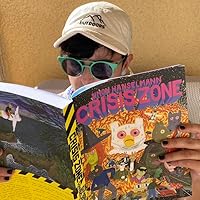
#leyendofuerte este tratado de demonología y brujería durante la edad media en Irlanda. Una cosa muy interesante y divertida pero difícil de leer por la mezcla de inglés antiguo y gaélico.
Siempre fan de la gente que en su estantería de las especias guarda ojos, ancas de ranas y uñas.
Le doy: una buena manicura 💅🏽 y dos diccionarios 📕📗
Siempre fan de la gente que en su estantería de las especias guarda ojos, ancas de ranas y uñas.
Le doy: una buena manicura 💅🏽 y dos diccionarios 📕📗

August 18, 2017
Just a scant scattering of unrelated incidents, but written in a pretty lively style.

September 21, 2022
I thought it was great. Some stories are better than others, that's to be expected. I made so many reference notes to look further into. I thought it was all very interesting.

February 23, 2010
It's always amazed me how researches can present documentary accounts of such non-documentary things as, for example, cases of bewitchment or of witnessing apparitions. Being a master in this field of research, John D. Seymour appears in this book (and in his other researches) not only as a researcher, but in some places as a philosopher. But no matter what role he appears in he is always competent and just great.

January 9, 2014
An enjoyable little history of witchcraft in Ireland. A lot of the book is taken up with folktales that seem unlikely to have had any basis in truth but there are a few sinister and curious accounts of what were doubtlessly real events. Seymour isn't out to scare anyone and definitely comes across as dubious of the witch craze. A good attempt to compile a history of witchcraft of an almost witch-less country. Short, interesting and definitely worth a read.

December 11, 2015
An older book that admits to a limited supply of reference material, Seymour does well to hobble together his incomplete history of the Irish's burning times. Unlike the rest of Europe, Ireland knew a very small witch hunt, mostly spawned by protestant missionaries, english quakers and at least one case of what appears to be schizophrenia. All in all not too bad a read.

December 2, 2020
Very thorough and we'll researched.
Displaying 1 - 14 of 14 reviews