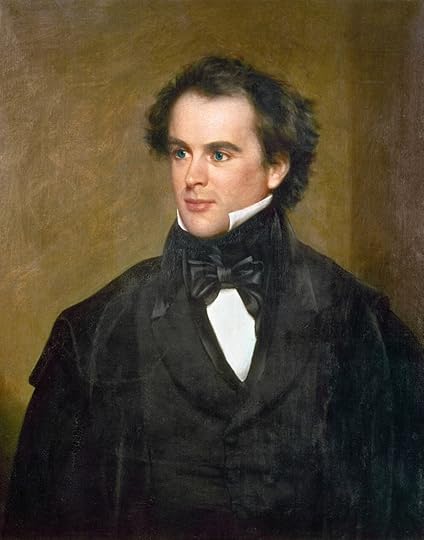
Surveying Hawthorne's entire career, from his earliest surviving stories through the romances left unfinished at his death, Frederick Crews defines the terms of Hawthorne's self-debate as revealed in his fiction. Hawthorne emerges from this study as a writer of acute psychological awareness.
In an Afterword written for this edition, Crews interrogates his own argument with characteristic unsparingness. He candidly reassesses the theoretical commitments behind his book, reflects on the path taken by Hawthorne criticism since 1966, and answers the question that many readers have asked of this ex-Freudian: "How much, today, remains valid in The Sins of the Fathers ?" This essay is itself a significant contribution to the current debate over the role of 'theory' in literary studies.
Crews was born in suburban Philadelphia in 1933. In high school, Crews was co-captain of the tennis team; and he continues to be an avid skier, hiker, swimmer, motorcyclist, and runner. Crews lives in Berkeley with his wife of 52 years, Elizabeth Crews, a photographer who was born and raised in Berkeley, CA. They have two daughters and four grandchildren.
Crews completed his undergraduate education at Yale University in 1955. Though his degree was in English, Crews entered the Directed Studies program during his first two years at Yale, which Crews described as his greatest experience because the program was taught by a coordinated faculty and required students to distribute their courses among sciences, social sciences, literature, and philosophy. He received his Ph.D in Literature from Princeton University in 1958.
Crews joined the UC Berkeley English Department in 1958 where he taught for 36 years before retiring as its chair in 1994. Crews was an anti-war activist from 1965 to about 1970 and advocated draft resistance as co-chair of Berkeley’s Faculty Peace Committee. Though he shared the widespread assumption during the mid-1960s that psychoanalytic theory was a valid account of human motivation and was one of the first academics to apply that theory systematically to the study of literature, Crews gradually came to regard psychoanalysis as a pseudoscience. Crews’ change of heart about psychoanalysis convinced him that his loyalty shouldn’t belong to any theory but rather to empirical standards and the skeptical point of view. Throughout his career, Crews has brought his concern for rational discourse to the study of various issues, from the recovered memory craze, Rorschach tests, and belief in alien abductions, to theosophy, creationism, and “intelligent design,” to common standards of clear and effective writing.
Fulbright Lectureship, Turin, Italy, 1961–62 Essay Prize, National Council on the Arts and Humanities, 1968 Fellow, Center for Advanced Study in the Behavioral Sciences, Stanford, 1965–66 Guggenheim Fellowship (Literary criticism), 1970[1] Distinguished Teaching Award, University of California, Berkeley, 1985 Election to the American Academy of Arts and Sciences, 1991 Faculty Research Lecturer, University of California, Berkeley, 1991–92 Editorial Board, “Rethinking Theory” series, Northwestern University Press, 1992–present Nomination for National Book Critics Circle Award for Nonfiction (The Critics Bear It Away), 1992 PEN/Diamonstein-Spielvogel Award for the Art of the Essay (The Critics Bear It Away), 1993 Berkeley Citation, 1994 Inclusion in The Best American Science and Nature Writing 2002, ed. Natalie Angier (Houghton Mifflin), 2002 Fellow, Commission for Scientific Medicine and Mental Health, 2003–present Berkeley Fellow, 2005–present Inclusion in The Best American Science and Nature Writing 2005, ed. Jonathan Weiner (Houghton Mifflin), 2005 Nominated for National Book Critics Circle Award (Follies of the Wise), 2006
Hawthorne had been haunting me since delving into his books for the first time in my life a couple years ago as part of an overall survey of American literature. His place in that tradition is a curious one—to my mind he was a stuffy old clodhopper, quaint to the core, and his most famous book was… a kind of feminist statement? Vague to be sure, my opinion needed more than a little investigation.
The House of the Seven Gables followed by the abovementioned classic The Scarlet Letter and a collection of his short stories had me more or less up to speed in terms of what the man had written, but I was still very… ambivalent, I guess is the word, as to what I thought about the dude. To be brief, I couldn’t tell if he was against the injustice that was certainly at the core of both novels (and his stories to a more abstract degree), or if he was a proponent of the villains who wrought such injustice. Certainly on the outside, on the conscious side of it, he was… against? I mean setting up the moral boundaries as he did was definitely dualistic, meaning there was a “good” and “evil” at work, and his characters were on the “good” side, technically. But where was Hawthorne himself?
When we write, we convey certain emotions and feelings in the emphasis we place on character, scene, plot, everything. Chllingworth and Jaffrey Pynchon were easy enough to pick out as baddies, but even then there was weirdness. I think of a scene in The Scarlet Letter where Chillingworth touches the eponymous letter on Hester’s dress in a straight up not-OK way, and it just passes by. I felt in that moment the weight and terror of sexual harrassment for Hester, that heaviness, in a very similar way that Jack Nicholson gives me, esp. in The Departed. Here was a bad guy who thought he had the right to touch people regardless of their consent. Now you can depict a bad person doing bad things, but when you do that unwittingly, without irony or satire or any demonstration of the wrongness of that behavior, it makes me wonder.
That’s just one. Aylmer in “The Birthmark” fixates on his fiance’s one bodily imperfection to such an extent that he ends up killing her, and afterward the vibe Nathan gives off is one of... melancholy. Like WTF is that? You’re sad that you killed your fiance because she had a birthmark and you couldn’t handle that? Sad is not the right emotion. You should be fucking ashamed, as you sit in jail, preferably put there before you kill any innocent people. Zenobia’s death in The Blithedale Romance haunts as well, esp after he’s been describing how sexually attractive she is the whole book. That whole toxic male notion of “the death of a beautiful women being the most poetic” (Poe) is very strong in the man from Salem.
So what was the deal with ol’ Nathaniel?
Just a normal dude, right?
Well, this book goes deep into what exactly it is. Unresolved oedipal conflict and an obsession with guilt inspired by thoughts of incest are demonstrated throughout the ~270ppg, and in my opinion, it is convincing. The author uses Freudian concepts that—I have no idea—may be out of favor today for some reason, but to me they make sense. Each individual reader will have to make up their own minds about whether or not they agree.
Freudian psychology and esp. the oedipal complex are basically taboo subjects in themselves at this point, and when we put someone under such a microscope it tends to put its own kind of scarlet letter on them, in this case P for Pervert. Freud didn’t see it that way. He said all men were like this to some extent, and only the strongest people could live free of the super-ego, the same “Sins of the Fathers” concept that tortured Nathaniel every time he got turned on.
I had to pump the breaks on judging Hawthorne repeatedly throughout reading this book and his books, too. I’m ultimately disappointed in how he goes about it, the final conclusions he draws from his oedipal forays, but I have to forgive him his situation because I too am a man. Sex and sexual desire shouldn’t be a weight on you sucking your soul with guilt and then demanding a satisfying punishment, but people are affected in different ways by the Goddess of Love, shining Aphrodite. We may offend her without our knowing, and without wanting to. Harold Bloom says that Freud is a mythographer, that his psychology is a metaphor. Traditionally, myth and metaphor are given to us as gifts from the Muses so that we humans can try and understand ourselves a little better. I would argue that Hawthorne is very relevant today, because his, often tortured, psychology as it plays out in his characters and plots, can help us to understand the mindset of frustrated men everywhere. There are a few of those around in contemporary society, aren’t there?