

What do you think?
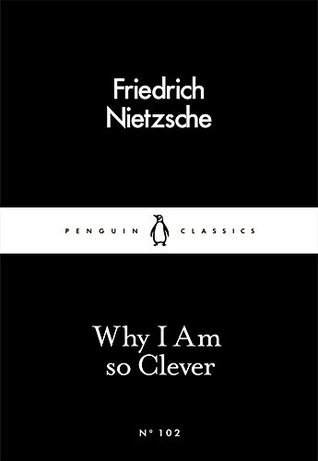
Why I Am so Clever
'Why do I know a few more things? Why am I so clever altogether?'
Self-celebrating and self-mocking autobiographical writings from Ecce Homo, the last work iconoclastic German philosopher Nietzsche wrote before his descent into madness.
One of 46 new books in the bestselling Little Black Classics series, to celebrate the first ever Penguin Classic in 1946. Each book gives readers a taste of the Classics' huge range and diversity, with works from around the world and across the centuries - including fables, decadence, heartbreak, tall tales, satire, ghosts, battles and elephants.
52 pages, Paperback
First published January 1, 1888
About the author
Friedrich Nietzsche
4,018 books26.9k followersFriedrich Wilhelm Nietzsche was a German classical scholar, philosopher, and critic of culture, who became one of the most influential of all modern thinkers. He began his career as a classical philologist before turning to philosophy. He became the youngest person to hold the Chair of Classical Philology at the University of Basel in 1869 at the age of 24, but resigned in 1879 due to health problems that plagued him most of his life; he completed much of his core writing in the following decade. In 1889, at age 44, he suffered a collapse and afterward a complete loss of his mental faculties, with paralysis and probably vascular dementia. He lived his remaining years in the care of his mother until her death in 1897 and then with his sister Elisabeth Förster-Nietzsche. Nietzsche died in 1900, after experiencing pneumonia and multiple strokes.
Nietzsche's work spans philosophical polemics, poetry, cultural criticism, and fiction while displaying a fondness for aphorism and irony. Prominent elements of his philosophy include his radical critique of truth in favour of perspectivism; a genealogical critique of religion and Christian morality and a related theory of master–slave morality; the aesthetic affirmation of life in response to both the "death of God" and the profound crisis of nihilism; the notion of Apollonian and Dionysian forces; and a characterisation of the human subject as the expression of competing wills, collectively understood as the will to power. He also developed influential concepts such as the Übermensch and his doctrine of eternal return. In his later work, he became increasingly preoccupied with the creative powers of the individual to overcome cultural and moral mores in pursuit of new values and aesthetic health. His body of work touched a wide range of topics, including art, philology, history, music, religion, tragedy, culture, and science, and drew inspiration from Greek tragedy as well as figures such as Zoroaster, Arthur Schopenhauer, Ralph Waldo Emerson, Richard Wagner, Fyodor Dostoevsky, and Johann Wolfgang von Goethe.
After his death, Nietzsche's sister Elisabeth became the curator and editor of his manuscripts. She edited his unpublished writings to fit her German ultranationalist ideology, often contradicting or obfuscating Nietzsche's stated opinions, which were explicitly opposed to antisemitism and nationalism. Through her published editions, Nietzsche's work became associated with fascism and Nazism. 20th-century scholars such as Walter Kaufmann, R.J. Hollingdale, and Georges Bataille defended Nietzsche against this interpretation, and corrected editions of his writings were soon made available. Nietzsche's thought enjoyed renewed popularity in the 1960s and his ideas have since had a profound impact on 20th- and early 21st-century thinkers across philosophy—especially in schools of continental philosophy such as existentialism, postmodernism, and post-structuralism—as well as art, literature, music, poetry, politics, and popular culture.
Nietzsche's work spans philosophical polemics, poetry, cultural criticism, and fiction while displaying a fondness for aphorism and irony. Prominent elements of his philosophy include his radical critique of truth in favour of perspectivism; a genealogical critique of religion and Christian morality and a related theory of master–slave morality; the aesthetic affirmation of life in response to both the "death of God" and the profound crisis of nihilism; the notion of Apollonian and Dionysian forces; and a characterisation of the human subject as the expression of competing wills, collectively understood as the will to power. He also developed influential concepts such as the Übermensch and his doctrine of eternal return. In his later work, he became increasingly preoccupied with the creative powers of the individual to overcome cultural and moral mores in pursuit of new values and aesthetic health. His body of work touched a wide range of topics, including art, philology, history, music, religion, tragedy, culture, and science, and drew inspiration from Greek tragedy as well as figures such as Zoroaster, Arthur Schopenhauer, Ralph Waldo Emerson, Richard Wagner, Fyodor Dostoevsky, and Johann Wolfgang von Goethe.
After his death, Nietzsche's sister Elisabeth became the curator and editor of his manuscripts. She edited his unpublished writings to fit her German ultranationalist ideology, often contradicting or obfuscating Nietzsche's stated opinions, which were explicitly opposed to antisemitism and nationalism. Through her published editions, Nietzsche's work became associated with fascism and Nazism. 20th-century scholars such as Walter Kaufmann, R.J. Hollingdale, and Georges Bataille defended Nietzsche against this interpretation, and corrected editions of his writings were soon made available. Nietzsche's thought enjoyed renewed popularity in the 1960s and his ideas have since had a profound impact on 20th- and early 21st-century thinkers across philosophy—especially in schools of continental philosophy such as existentialism, postmodernism, and post-structuralism—as well as art, literature, music, poetry, politics, and popular culture.
Ratings & Reviews
Friends & Following
Create a free account to discover what your friends think of this book!
Community Reviews
Displaying 1 - 30 of 561 reviews
April 29, 2019
Weird flex but okay.

September 14, 2022
Nietzsche is certainly an engaging writer, and his philosophy is pleasant to read because he is quite conversational... but his awareness of this talent makes it decidedly less pleasant: “I have been told it is impossible to put a book of mine down — I even disturb the night’s rest”.
My biggest issue with Nietzsche is that his explanations and arguments just aren't convincing. He relies more on sophistry than philosophy, basically arguing that a reader would only not agree with him if they were not intelligent enough. He even says that “ultimately no one can extract from things, books included, more than he already knows”... and yet decides to use books as the main way of teaching his philosophy??
I think a lot of this is antagnositic for the sake of being antagonistic, though I do think there are some nice snippets in here. In particular, I love how he privileges pop culture over high culture, and just his willingness to rebel against standard ways of thinking.
My biggest issue with Nietzsche is that his explanations and arguments just aren't convincing. He relies more on sophistry than philosophy, basically arguing that a reader would only not agree with him if they were not intelligent enough. He even says that “ultimately no one can extract from things, books included, more than he already knows”... and yet decides to use books as the main way of teaching his philosophy??
I think a lot of this is antagnositic for the sake of being antagonistic, though I do think there are some nice snippets in here. In particular, I love how he privileges pop culture over high culture, and just his willingness to rebel against standard ways of thinking.

June 2, 2024
Nietzsche describes a period when decadent ideals tempted him. During that time, he sentenced himself "to absolute solitude" and refused any care from others. He reports that he succeeded in cultivating his "Will to Health and to Life" to shape his philosophy.

August 4, 2018
Let me sum this collection up for you: Nietzsche is the smartest person in the world, Germans are dumb and eat awful food, and women are inferior to men and want to be oppressed.

July 27, 2019
What a blast of self-awareness and ego from Nietzsche here. If I had half of the man’s knowledge, I’d be living a very good life.
Broken into three sections on why Nietzsche is so wise, so clever, and why he writes such good books, this collection reads almost like a diatribe on how Nietzsche is so bloody cool. It’s quite self-aggrandising, and good tickle of his own ego, but impressive nonetheless. The man is unbelievably intelligent, yet this became old quite quickly.
It’s quite a slog to get through his words, and I can’t pretend to have grasped it all. Still, it’s a worthwhile read, and an interesting look into the brain of this sharp man.
Broken into three sections on why Nietzsche is so wise, so clever, and why he writes such good books, this collection reads almost like a diatribe on how Nietzsche is so bloody cool. It’s quite self-aggrandising, and good tickle of his own ego, but impressive nonetheless. The man is unbelievably intelligent, yet this became old quite quickly.
It’s quite a slog to get through his words, and I can’t pretend to have grasped it all. Still, it’s a worthwhile read, and an interesting look into the brain of this sharp man.

October 2, 2020
I've read this book with caution because I knew a little bit about Nietzsche and his philosophy and I advise everyone should do so. What took me aback was the sight of such self-confidence in a man and I admit, it was rather contagious.
His philosophy is rather captivating, but one should not be lured straight away into it.
Through his beliefs, he manages to make one reflect on the things one would take for granted. He brings up the close connection between Christianity and the instilling of the normalisation of guilt and of the denial of envy, ideas that are considered as poisonous to one's good conscience in Nietzsche's beliefs. He thinks that envy is a basic human feeling and that guilt should not take root as it just lead to other unnecessary feelings.
At first sight he may seem a rather egocentric persona, as he reaches beyond virtues and his views on idealism, including equality of sexes. Although he doesn't consider men equal to women, he sees women as far more superior and that the desire of equal rights is just a "sickness".
What he certainly got right, though, is that life is not about the things that happen to us, but about how we see those things. It's all about our perception. Nietzsche realised that greatness can be achieved by embracing who we are and not desiring to be something else and to be grateful for what there already is.
Due to the rather controversial principles of life, this book offers a new perspective on existence whose elements could as well be adopted into our own ways of seeing life, with the mention that we take on just what we believe is going to be in our own benefit.
His philosophy is rather captivating, but one should not be lured straight away into it.
Through his beliefs, he manages to make one reflect on the things one would take for granted. He brings up the close connection between Christianity and the instilling of the normalisation of guilt and of the denial of envy, ideas that are considered as poisonous to one's good conscience in Nietzsche's beliefs. He thinks that envy is a basic human feeling and that guilt should not take root as it just lead to other unnecessary feelings.
At first sight he may seem a rather egocentric persona, as he reaches beyond virtues and his views on idealism, including equality of sexes. Although he doesn't consider men equal to women, he sees women as far more superior and that the desire of equal rights is just a "sickness".
What he certainly got right, though, is that life is not about the things that happen to us, but about how we see those things. It's all about our perception. Nietzsche realised that greatness can be achieved by embracing who we are and not desiring to be something else and to be grateful for what there already is.
Due to the rather controversial principles of life, this book offers a new perspective on existence whose elements could as well be adopted into our own ways of seeing life, with the mention that we take on just what we believe is going to be in our own benefit.

October 2, 2022
Nietzche sounds like a random uncle in my village boasting about his children, his children’s cats and childrens neighbour at kenduri.

December 20, 2021
why did I buy this

March 20, 2022
"let us live above them like strong winds, neighbours of the eagles, neighbours of the snow, neighbours of the sun: that is how strong winds live" --Thus Spoke Zarathustra--
Nietzsche is the world’s first highperformance philosophe, he is the bravest one, the only one after buddha who reached the emptiness of existence and returned with a dancing star🌟 (the most beautiful star in all human ideas) : 'Übermensch', 'Superman', 'L'homme supérieur', 'الإنسان الأعلى'.
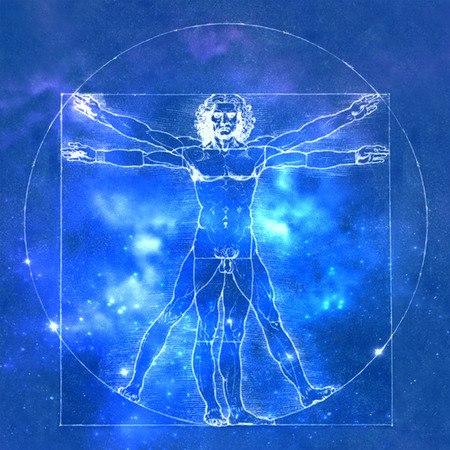
Buddha said: life is pain accept pain.
Nietzsche said: life is a fight learn to fight.
How to become “Übermensch” was Nietzsche’s core concern.
Nietzsche earns this title "the world’s first highperformance philosophe" not because he’s the first philosopher to ponder peak performance. There’s a lot of history here: the Stoic creed of the ancient Greeks, the perfectibility of man of the Enlightenment thinkers. But Nietzsche was the first philosopher to care about the issue after Charles Darwin published On the Origin of Species—which means he was the first to believe that peak performance came down to biology
Nietzsche wrote in Ecce Homo: “Who among the philosophers before me was in any way a
psychologist? Before me there simply was no psychology.”
Nietzsche felt we could escape that chaos. We could replace the struggle for survival with the “will to power,” the battle for self-actualization, for selfcreation and self-overcoming, for mastery, excellence, and meaning. In other words, all the things that used to come from God must now come from us.
Okay, Nietzsche, so how to do that?
This is where the story gets interesting, because Nietzsche had a plan, a fairly practical plan for tapping one’s will to power and becoming the Übermensch
in this book Nietzsche describes the life that led him to his great ideas ❤
I won't talk about the engineering process behind the concept of Übermensch in this review,
(feel free to start a conversation with me on this topic, but be careful I will change your perspective)
I love you Nietzsche, in my beliefs you are an enemy, but you taught me in Zarathustra how to love your enemies.
"Übermensch" idea is not for everyone, it is jut for the bold venturers and adventurers, and whoever has embarked with cunning sails upon dreadful seas, to you who are intoxicated with riddles, who take pleasure in twilight, whose soul is lured with flutes to every treacherous abyss – for you do not desire to feel for a rope with cowardly hand; and where you can guess you hate to calculate
Oh, I have found it, my brothers! Here, in the extremest height, the fountain of delight gushes up for me! And here there is a life at which no rabble drinks with me!
Nietzsche is the world’s first highperformance philosophe, he is the bravest one, the only one after buddha who reached the emptiness of existence and returned with a dancing star🌟 (the most beautiful star in all human ideas) : 'Übermensch', 'Superman', 'L'homme supérieur', 'الإنسان الأعلى'.
Buddha said: life is pain accept pain.
Nietzsche said: life is a fight learn to fight.
How to become “Übermensch” was Nietzsche’s core concern.
Nietzsche earns this title "the world’s first highperformance philosophe" not because he’s the first philosopher to ponder peak performance. There’s a lot of history here: the Stoic creed of the ancient Greeks, the perfectibility of man of the Enlightenment thinkers. But Nietzsche was the first philosopher to care about the issue after Charles Darwin published On the Origin of Species—which means he was the first to believe that peak performance came down to biology
Nietzsche wrote in Ecce Homo: “Who among the philosophers before me was in any way a
psychologist? Before me there simply was no psychology.”
Nietzsche felt we could escape that chaos. We could replace the struggle for survival with the “will to power,” the battle for self-actualization, for selfcreation and self-overcoming, for mastery, excellence, and meaning. In other words, all the things that used to come from God must now come from us.
Okay, Nietzsche, so how to do that?
This is where the story gets interesting, because Nietzsche had a plan, a fairly practical plan for tapping one’s will to power and becoming the Übermensch
in this book Nietzsche describes the life that led him to his great ideas ❤
I won't talk about the engineering process behind the concept of Übermensch in this review,
(feel free to start a conversation with me on this topic, but be careful I will change your perspective)
I love you Nietzsche, in my beliefs you are an enemy, but you taught me in Zarathustra how to love your enemies.
"Übermensch" idea is not for everyone, it is jut for the bold venturers and adventurers, and whoever has embarked with cunning sails upon dreadful seas, to you who are intoxicated with riddles, who take pleasure in twilight, whose soul is lured with flutes to every treacherous abyss – for you do not desire to feel for a rope with cowardly hand; and where you can guess you hate to calculate
Oh, I have found it, my brothers! Here, in the extremest height, the fountain of delight gushes up for me! And here there is a life at which no rabble drinks with me!

May 14, 2017
My first experience of Nietzsche and in conclusion...
A pompus arrogant man who is crazier than a sackful of cats.
YIKES!
A pompus arrogant man who is crazier than a sackful of cats.
YIKES!

Want to Read
September 14, 2025i wish i had this level of arrogance lol 💀
January 31, 2021
I wanted to dip my toes into a bit of Nietzsche. I tried, I was confused, I giggled and I was confused again. I marked a few interesting thoughts, but damn this man really loved himself. I think we can all learn a couple of things from Nietzsche when we talk about self care and self love. If only I could be 10% as confident and arrogant as he was. Curious to read more of him when my brain can actually process it.

June 17, 2020
Bought it for a laugh. I mean, look at the title. Joke's on me. It was a collosal waste of time. He's full of himself and sexist to boot. Goodbye Nietzche, may your work never cross my path.

March 13, 2022
Nietzsche is a pretentious piece of sh*t.

May 21, 2020
Never have I ever read a book this short, yet never have I ever wanted a book to end faster..

July 28, 2024
the type of person my mom warns me about

April 10, 2026
Start by following the rhythm, and now I can sense and follow the footsteps from Nietzsche. The bullet holes from the war back in Beyond Good and Evil, unfinished, left me with a sense of wonder. How could a man hate so much? Maybe it wasn’t hate? These are all criticisms, maybe because he’s been delivered so well by his own philosophy that’s why it wouldn’t work for me when I tried to understand him. And the complaints were validated by his own personal preference; he was surely very much of a talker.
It's a surprise to know he wrote this when he was suffering from illness, yet he decided to be the man he thought he was, a man of truth, he thought, he was. He tried to make a point on his own dance floor, isn’t it bravery? 'There was nothing like regret and struggle in my life,' he said. Confusing, but then again, I gulped it nervously. He’s the man he was, I thought. My eyes were running from Beyond Good and Evil that perfectly dusted on my bookshelf, to the small white book titled Ecce Homo centimeters away. Hate to admit that I kinda like it, not as much as I used to get tired of BGE, well, one day I'll pick it up again from the shelf, but not now, perhaps after I finish that thin white book.
Nietzsche, you’re weird, I would love to stand in front of you and roll my eyes. 'You’re so whatever, dude,' I would say; my heart would never understand him.
It's a surprise to know he wrote this when he was suffering from illness, yet he decided to be the man he thought he was, a man of truth, he thought, he was. He tried to make a point on his own dance floor, isn’t it bravery? 'There was nothing like regret and struggle in my life,' he said. Confusing, but then again, I gulped it nervously. He’s the man he was, I thought. My eyes were running from Beyond Good and Evil that perfectly dusted on my bookshelf, to the small white book titled Ecce Homo centimeters away. Hate to admit that I kinda like it, not as much as I used to get tired of BGE, well, one day I'll pick it up again from the shelf, but not now, perhaps after I finish that thin white book.
Nietzsche, you’re weird, I would love to stand in front of you and roll my eyes. 'You’re so whatever, dude,' I would say; my heart would never understand him.

December 31, 2021
'Why do I know a few more things? Why am I so clever altogether?'
The last iconoclastic German philosopher Nietzsche wrote self-celebrating and self-mocking autobiographical essays from "Ecco Homo" before his descent into madness.
Friedrich Nietzsche is a tasty bite-size amount of nutrition. The general perception of him and his work is wildly inaccurate. One thinks of him as being very nationalistic, but he does not adore Germany or German culture, and although he is a fan of Wagner, there is much in his work that he does not value.
This short book consists of three sections: "Why I am So Wise," "Why I am So Clever," and "Why I Write Such Good Books." Which, by heading alone, shows off his understanding of humour.
Overall, I enjoyed this book especially reading a ride after another word of his, and I think it's pretty astonishing that this was his last work. He wanted to clarify how to proceed with his results. I would not recommend it to anyone, just those interested in Nietzsche in general.
The last iconoclastic German philosopher Nietzsche wrote self-celebrating and self-mocking autobiographical essays from "Ecco Homo" before his descent into madness.
Friedrich Nietzsche is a tasty bite-size amount of nutrition. The general perception of him and his work is wildly inaccurate. One thinks of him as being very nationalistic, but he does not adore Germany or German culture, and although he is a fan of Wagner, there is much in his work that he does not value.
This short book consists of three sections: "Why I am So Wise," "Why I am So Clever," and "Why I Write Such Good Books." Which, by heading alone, shows off his understanding of humour.
Overall, I enjoyed this book especially reading a ride after another word of his, and I think it's pretty astonishing that this was his last work. He wanted to clarify how to proceed with his results. I would not recommend it to anyone, just those interested in Nietzsche in general.

November 7, 2020
I respect Nietzsche as a philosopher, but I can't respect his ego.
October 9, 2021
He's a bit confused but at least he got the spirit

July 22, 2023
frauen mögen dich nicht so sehr wie du denkst nietzschke

August 15, 2026
Nietzsche really sat down and wrote an entire book basically saying “I’m actually just built different” and somehow made it philosophy.
I can’t even lie, some of his ideas were genuinely interesting, especially the whole thing about how your environment, health, habits, and lifestyle affect the way you think. But BRO 😭 the self-praise was doing WORK. Every other page felt like Nietzsche was fighting for the title of Most Interesting Man Alive.
The writing is clever, provocative, and occasionally hilarious, but also incredibly pretentious. I liked the ideas way more than I liked Nietzsche talking about himself for approximately 700 business days.
3 stars because I was interested enough to finish it, but I definitely needed a break from this man’s ego afterwards.
I can’t even lie, some of his ideas were genuinely interesting, especially the whole thing about how your environment, health, habits, and lifestyle affect the way you think. But BRO 😭 the self-praise was doing WORK. Every other page felt like Nietzsche was fighting for the title of Most Interesting Man Alive.
The writing is clever, provocative, and occasionally hilarious, but also incredibly pretentious. I liked the ideas way more than I liked Nietzsche talking about himself for approximately 700 business days.
3 stars because I was interested enough to finish it, but I definitely needed a break from this man’s ego afterwards.

January 11, 2026
He's not

November 19, 2021
Why I Am so Clever? It is one of the Penguin Classics, about philosophy. It is written by one of the most misunderstood authors in the world of philosophical knowledge. It is softbound, small and easy to carry. It is like one of those romance pocket books that your mother used to read. However, it is much more than that. The cover is simple, black and white for a book that has a colorful content and vocabulary. It is very cheap too, for P80.00 (L50.00) you'll get to experience unique knowledge about life.
Before reading it, I thought it's pure philosophy. But there's a lot of it, even though it's an autobiographical book about the life of Friedrich Nietzsche, and his famous writings "Ecce Homo". There's also a taste of "Thus Spoke Zarathustra" however, it's just general information about the book. "Why I Am so Clever" is divided into three chapters, "Why I Am so Wise", "Why I Am so Clever" and "Why I Write such Good Books". You may find it few, but these three chapters are like large files from your computer. it needed to be zipped, to reduce all the information from different perspectives about life.
What I like about this book is that it lets you view life from a different perspective. Just so you know, Nietzsche is very different from the other famous philosophers who feed you positive outputs. Nietzsche on the other hand will slap you the very truth of your existence. Another thing to like about this masterpiece is it will give you teasers from his previous writings. When you're done reading, you're going to be like "I need to read the rest of his works".
I like the idea of how Nietzsche executed this book. If you're into feminism, you'll find him annoying because of his egocentric persona. To label yourself as clever, wise, and a writer of good books will take you away easily. However, as you indulge deeper, you will find him adorable because somehow it's all true. Others might label this book as gibberish or monkey-talk, but that just proves you can't take the truth, the hard way.
One idea that struck me the most is his perception of being envious. For christianity it is one of the seven deadly sins. It is against morality, that we should learn to be content with what we have. For Nietzsche, being envious is a way towards self-awareness. It is a gateway to be aware of who, what and where we want to be. What I don't like nonetheless, is that it is filled with highfalutin words. Well, we can't blame someone for being so clever, do we?
I think the reason why Nietzche is misunderstood by the many, is the way he views life. His pessimism can be overwhelming but his reasoning and how he explains things will make you pause and think. This autobiographical book about Nietzsche, will make you understand that pessimism can be an optimistic thing too. You'll also learn a bit of German culture, French and some parts of Europe that he visited. Here he also explained his realizations of his existence, what could have been and what lies ahead. You'll be amazed how someone who doesn't get along with his family (a son of a priest to be exact), left christianity and experienced the Franco-Perussian war, lived a good life. I'm an agnostic person, I think it is one of the reasons why I can relate and understand some of Nietzsche's idealism. If you are someone who craves a curious philosophy, This book is perfect for you. Just be prepared for some words against christianity if you are one. Also, if you are someone who is looking for a book to inspire you, give you sugar coated words to get you through life, might as well pass on this one. Friedrich Nietzsche is the type of person who will not comfort you and tell you everything is going to be okay.
Before reading it, I thought it's pure philosophy. But there's a lot of it, even though it's an autobiographical book about the life of Friedrich Nietzsche, and his famous writings "Ecce Homo". There's also a taste of "Thus Spoke Zarathustra" however, it's just general information about the book. "Why I Am so Clever" is divided into three chapters, "Why I Am so Wise", "Why I Am so Clever" and "Why I Write such Good Books". You may find it few, but these three chapters are like large files from your computer. it needed to be zipped, to reduce all the information from different perspectives about life.
What I like about this book is that it lets you view life from a different perspective. Just so you know, Nietzsche is very different from the other famous philosophers who feed you positive outputs. Nietzsche on the other hand will slap you the very truth of your existence. Another thing to like about this masterpiece is it will give you teasers from his previous writings. When you're done reading, you're going to be like "I need to read the rest of his works".
I like the idea of how Nietzsche executed this book. If you're into feminism, you'll find him annoying because of his egocentric persona. To label yourself as clever, wise, and a writer of good books will take you away easily. However, as you indulge deeper, you will find him adorable because somehow it's all true. Others might label this book as gibberish or monkey-talk, but that just proves you can't take the truth, the hard way.
One idea that struck me the most is his perception of being envious. For christianity it is one of the seven deadly sins. It is against morality, that we should learn to be content with what we have. For Nietzsche, being envious is a way towards self-awareness. It is a gateway to be aware of who, what and where we want to be. What I don't like nonetheless, is that it is filled with highfalutin words. Well, we can't blame someone for being so clever, do we?
I think the reason why Nietzche is misunderstood by the many, is the way he views life. His pessimism can be overwhelming but his reasoning and how he explains things will make you pause and think. This autobiographical book about Nietzsche, will make you understand that pessimism can be an optimistic thing too. You'll also learn a bit of German culture, French and some parts of Europe that he visited. Here he also explained his realizations of his existence, what could have been and what lies ahead. You'll be amazed how someone who doesn't get along with his family (a son of a priest to be exact), left christianity and experienced the Franco-Perussian war, lived a good life. I'm an agnostic person, I think it is one of the reasons why I can relate and understand some of Nietzsche's idealism. If you are someone who craves a curious philosophy, This book is perfect for you. Just be prepared for some words against christianity if you are one. Also, if you are someone who is looking for a book to inspire you, give you sugar coated words to get you through life, might as well pass on this one. Friedrich Nietzsche is the type of person who will not comfort you and tell you everything is going to be okay.

October 15, 2025
Ramblings of a (self)-opinionated yapper/thinker. Was amused by snarky remarks about Germans.

March 12, 2018
Friedrich Nietzsche as a bite-size tasty piece of food. The public perception of him and his work is very wrong. One thinks of him as being uber-Nazi, but the fact is he's not that fond of Germany or German culture, and on top of that, although he's a fan of Wagner, there is much in his work that he's not fond of. This little book consists of three sections: "Why I am So Wise," "Why I am so Clever," and "Why I Write Such Good Books." Which by title alone shows off his sense of humor. These pieces are taken from "Ecce Homo," the only book I read by Nietzsche. Weirdly enough, I bought this small book at Tower Records in Tokyo, and I read the main volume about twenty-nine years ago during a flight to Japan. It's a great book, either by the whole or in sections.

June 8, 2017
52/100
Not clever enough.
Not clever enough.

December 11, 2022
God, I need some of Nietzsches's self-confidence.
April 10, 2025
he's just like me
Displaying 1 - 30 of 561 reviews