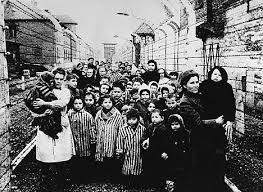
Evě Mozes bylo deset let, když byla se svou rodinou poslána do Osvětimi. Zatímco její rodiče a dvě starší sestry byli posláni do plynových komor, Evu a její dvojče Miriam si vybral coby pokusné objekty muž, který byl znám jako Anděl smrti - Dr. Josef Mengele. Dívky byly podrobeny sadistickým medicínským experimentům a musely každodenně bojovat o svůj život. V tomto neuvěřitelném příběhu, který sepsala samotná oběť děsivých událostí, jsou čtenáři svědky dětské odolnosti proti mimořádnému zlu. Eva byla například vystavena infekci, u níž Mengele věřil, že bude smrtelná, a bude pak moci provést pitvu i na Miriam, která měla sloužit jako "srovnávací vzorek". Přežila - a dodnes neví, jaké onemocnění to bylo. Po osvobození tábora sestry založily skupinu, která podporovala bývalé oběti Mengeleho experimentů.
Eva Mozes Kor was a Romanian survivor of the Holocaust. Along with her twin sister Miriam, Kor was subjected to human experimentation at the Auschwitz concentration camp during World War II. She lost both of her parents and two older sisters to the Holocaust; only she and Miriam survived. Kor founded the organization CANDLES (an acronym for "Children of Auschwitz Nazi Deadly Lab Experiments Survivors") in 1984 and through this program located 122 other survivors. In 1984 Kor founded the CANDLES Holocaust Museum and Education Center to educate the public about eugenics, the Holocaust, and the power of forgiveness.
A Jewish family was taken from their small village in Romania in 1944, and sent to Auschwitz. The family consisted of father, mother, and four daughters. The youngest daughters were ten year old identical twins, Eva and Miriam. Upon arrival, the twins were separated from their family and along with many other sets of twins of various ages, put under the care of Dr. Josef Mengele (The Angel of Death) This is the story of how they were experimented on and how they survived the camp and also their lives following the liberation in 1945. Another very difficult read from this time in history.
All or most World War II books are depressing, but this one especially so for it being 1) true and 2) about 10 year old twin girls in Auschwitz. It's a very short book but even so it took me over a week to finish it because I had to get myself in the mood for it between readings. Well, not that I'm ever in the mood for torture, death, and denizens of evil; but I am absolutely hooked on these books about the Nazis for reasons beyond my control and when it's time for the occasional fix, it's time.
Josef Mengele took the prize figuratively for experimenting on living humans simply to satisfy some sick curiosity he had about this or that. Can we turn boys into girls via blood transfusions? Ooooh, let me try it. Can we change someone's eye color? Well, give them this injection and let's see. If I make a twin die from beri beri, wouldn't it be cool to kill the healthy twin too and perform side by side autopsies? Just a vile, sick pig he was.
The Romanian twins Eva and Miriam Kor end up in Mengele's Auschwitz, normally a sure death sentence, but are able to defy the odds. It is heartbreaking to read about how close the girls were, and how broken Miriam became when Eva was separated from her. We know there is hope, however, since Eva obviously lives to write this book. And there is forgiveness in her heart, which she would like the world to heed. Very important message in these times. "Forgiveness is a seed for peace. It is the ultimate act of self healing."
Surviving the Angel of Death is the true story of Eva Mozes and her twin sister Miriam and the place where they were raised . . .
"At Auschwitz dying was so easy. Surviving was a fulltime job. We gave them our blood, our bodies, our pride, our dignity, and in turn, they let us live one more day."
Eva and Miriam began their life as normal as you or I . . .
They were born to a middle-income family in Romania and were doted on by all for not only being adorable, but for being a matched set as well. When war broke out, many of Eva's relatives fled to Palestine in order to escape the rumored persecution of the Jews they kept hearing about, but Eva's mother held her ground and refused to move. By refusing to flee she signed the death certificate for nearly their entire family. Portions of Romania were eventually turned over to Hungarian rule and the family was relocated first to one of the many ghettos and eventually onto a train which would transport them to Auschwitz.
It is there the girls were put under the care of Dr. Josef Mengele.
The remainder of the book is Eva and Miriam's remarkable tale of survival. Ms. Kor tells of how she and her sister had to endure illness, starvation and experimentation at the hand of the Nazis. And amazingly, at the end of it all she talks about forgiveness . . .
"I hope, in some small way, to send the world a message of forgiveness; a message of peace, a message of hope, a message of healing. Let there be no more wars, no more experiments without informed consent, no more gas chambers, no more bombs, no more hatred, no more killing, no more Auschwitzes."
This story is such an important one and I applaud Ms. Kor's decision to write it in a style appropriate for children. There are no gory details or any added "shock and awe" factors other than the horrifying reality of life in a concentration camp told. The effect is still chilling.
Escrita super fluida e muito teen, li em 2 horas. Gostei e é a leitura ideal para quem, como eu, não gosta de livros muito pesados sobre a Segunda Guerra e os campos de concentração.
I read the first 84 pages in one sitting, then stopped, gasping, to remind myself to breathe. The horrors of Auschwitz weren't the part of this book that most affected me. Instead it was the beginning, in which the Christian villagers slowly turned against Ms. Kor's family, and even her best friend, Luci, joined with the anti-Semites.
But the true genius of this book is the powerful epilogue. My words can't do it justice, so here are a few of Ms. Kor's, "Anger and hate are seeds that germinate war. Forgiveness is a seed for peace." After despairing for the human race for 133 pages, Ms. Kor found just the words to give me hope again.
I recieved this book through NetGalley in exchange for an honest review.
This review is extremely hard to write, just as this book was exceptionally hard to read. I've read dozens of book about holocaust and saw dozens of movies on this topic, but this book had a huge impact on me. Right after first few chapters, I had to put it down just to compose myself. I knew what I was getting myself into, and I've read about Mengele experiments before, but this was very graphic. Eva Mozes Kor is a survivor in every sense of the word. She is a survivor of the Holocaust who, with her twin sister Miriam, was subjected to human experimentation under Josef Mengele at Auschwitz. She was literally turned into a "human guinea pig". Her whole family was deported to Auschwitz in 1944, and she never saw them again. Eva and her identical twin, Miriam, survived the deadly genetic experiments conducted by The Angel of Death, Josef Mengele and they lived to tell. Today, she is a lecturer, forgiveness advocate, public speaker, activist, and a founder of CANDLES Holocaust Museum and Education Center in Terre Haute, Indiana. As human beings must never forget more than 6 million Jews that perished, but also the ones who survived. This book should be a part of a school curriculum, to show young people what holocaust is, but also to open everyone's eyes to the fact that it still happens today.
É um não-ficção que narra a história de duas gémeas verdadeiras, quando foram levadas para Auschwitz e a sua vida após libertação. É narrado por uma delas de forma muito simplista mas não menos arrepiante. É sempre surpreendente ler sobre este período negro da História e é horrível tentar imaginar o sofrimento de um povo por causa de um Louco!! No entanto, o objectivo deste relato é chegar aos mais novos, sendo este livro um Young Adult, tal como a autora queria. Nesse sentido é um livro útil para mostrar alguns dos horrores que se passaram durante a guerra, mas achei um pouco redutor ao mesmo tempo.
Wow. Just...wow. Never ceases to amaze me how the Nazis came up with so many ways to torture people. In this book, it was “experiments” performed on twins. If there are different levels of Hell, “Uncle” Joseph Mengele must certainly be in the one created for the most atrocious and evil. I was surprised that this book is not classified as Y.A. non-fiction. It would be appropriate to use in classes for older students, but too disturbing for younger ones to read. Even more astonishing-that Eva was able to find it in her heart to forgive her torturers...
Um dos meus temas preferidos são livros sobre a Segunda Guerra e, por isso, fiquei muito curiosa com esta novidade, ainda para mais, é um livro narrado na primeira pessoa e de alguém que foi um dos gémeos do Dr Mengele. Eva e Miriam tinham apenas 10 anos quando, juntamente com a sua família, foram levadas para Auschwitz, mas por serem gémeas, foram separadas da família e levadas para serem inspeccionadas pelo Dr. Mengele. É um livro muito interessante e que nos permite ficar a conhecer um pouco melhor sobre as atrocidades que foram infligidas aos gémeos do Dr. Mengele. No entanto, sendo uma história na primeira pessoa, confesso que esperava um pouco mais de descrições de cenas chocantes e senti que o livro era muito pequeno. Não me interpretem mal, temos descrições de acontecimentos que nos fazem arrepiar mas, sendo narrado por alguém que passou na pele, julgava que teríamos muito mais descrições do que faziam aos gémeos. No entanto, é uma grande leitura e que recomendo a quem gosta da temática, pois nunca é demais relembrar o que aconteceu.
Vejam a minha opinião mais detalhada em vídeo, AQUI.
"As gémeas de Auschwitz" retrata a história de sobrevivência de Eva Mozes e da sua irmã gémea em Auschwitz. Escolhidas à chegada ao campo de concentração para fazerem parte do grupo de gémeos de Mengele, o Anjo da Morte. Ainda que seja um livro sem um retrato demasiado forte de todas as experiências médicas feitas por Mengele em Auschwitz, permite-nos ter uma ideia das atrocidades cometidas em nome de um suposto avanço da ciência. Um livro que recomendo a todos
At Auschwitz dying was so easy. Surviving was a full time job.
Great book from an amazing woman!
Eva and Miriam are the youngest of the family, and they’re also the favourites. Growing up Jewish in Romania at the break of WWII is not easy – they get increasingly bullied, and their family is persecuted. When they all get deported to Auschwitz, the twins will keep their status in the eyes of a dark figure – some call him uncle, some Josef Mengele, but Todesengel (Angel of Death) is his most apt name. From then on is a battle not only for survival, but to stay united.
Despite how tough this book is to read, I liked it. And I most of all liked to get to know Eva, the narrator of the story.
Eva is a tough child, having to grow fast at the beginning of WWII. She’s only ten years old when she gets deported with her family to Auschwitz. She will lose her family, get a sinister “protector”, and wait one year before she will be able to slowly taste freedom again. In that year she’ll get to know the darkest side of the human heart, and she will have to be the pillar that keeps his sister and herself united, until the liberation by the hand of the Allies.
The author covers the years before, during, and after her imprisonment in the concentration camp. She explains how she managed to survive, how the camp worked, and what she had to endure being what she calls a “Mengele twin”, something that was really precious to the deprived doctor of the camp. Having the Aryan ideal in mind, he wanted to discover the secret of twins and eugenics.
Although the book is targeted to children and young adults, Eva uncovers some of the horrors she faced in the camp, even having the “priviliged” status of twins. Having to endure torture and experiments is not a privilege, and it is what ultimately killed her sister years after leaving the camp.
The new edition of this books comes with a sad epilogue – the passing of the author. The last part of the book is dedicated to Eva – the person she was, and the legacy she left.
The controversial topic of Eva forgiving the Nazi is also touched, explaining once and for all how it was her personal choice: she did not forgive them on behalf of all the victims, and this act benefits the victim, not the oppressor – that’s how you start leaving grief and anger behind, and live on your own terms. That’s how victims take control back over their lives.
I would recommend this book to anybody, regardless of their age and background.
I was a little worried when I picked up this book. Nazi experiments...children...just no. But something about it made me want to listen. Its a part of the camps we don't hear much about. And in this case, being a twin and therefore a "wanted prisoner" ultimately saved her life. Saved her, while so nearly killing her as well. Let's just say it bought her time. Time in which to fight for survival. And fight she did.
So how does one write a book about Nazi atrocities and make it suitable for YA? Somehow, Eva manages it. We as the reader feel the horror of the situation and yet we are spared the complete nightmare. So well done!
It's a short book (only 175 pages) but packs a wallop.
A few tidbits that really spoke to me...
As the political situation was heating up in the country, life was becoming more hostile in school. For one thing, the school started teaching Nazi propaganda. One day, Eva is given a math worksheet. On the paper is the word problem: "If you have five Jews and you kill three, how many Jews are left?" can you imagine the horror, being the only two Jews in your class while everyone is working out problems like this?
Another telling statement was when they were released from the camp. Eva and her twin sister were temporarily set up in someone's house where they were put in a room with toys. The toys made her angry and she had no idea what to do with them. She was 11 years old and no longer knew how to play...
And finally, on reaching their old home now dilapidated and deserted. She is met by her mother's old red dachshund, Lily. After all that time the dog was still there! She made this observation, "apparently only Jewish people were sent to concentration camps, not Jewish dogs."
This is an extremely heartfelt memoir that everyone should read. Its not always pleasant, but if they lived it, we can read it. Its the least we can do. And make sure this never happens again.
CONTENT: SEX: None PROFANITY: Jews are called 'Swine ' and 'smelly, dirty Jews ' VIOLENCE: Some disturbing imagery
MY RATING: PG
Many thanks to the publisher and Netgalley for my free ecopy to read and review.
“Surviving the Angel of Death: The Story of a Mengele Twin in Auschwitz” was a very good but upsetting book, and I highly recommend it for anyone who is interested in learning about survivors of the holocaust. 5 stars.
“Never ever give up on yourself or your dreams, for everything good in life is possible.
Judge people on their actions and the content of their character.
Forgive your worst enemy and forgive everyone who has hurt you—it will heal your soul and set you free.
*Never ever give up. You can survive and make your dreams come true.” -Eva Mozes Kor
Como classificar um livro que é um relato em primeira mão de uma sobrevivente não só do Holocausto e de um campo de concentração, como das mãos de Mengele o “Anjo da Morte”. Eva Mozes faleceu a 4/07/2018 juntando-se novamente a Miriam, sua gémea falecida em 1993
“If you had five Jews, and you killed three Jews, how many Jews would be left?”
This was what the author found in her math class workbook in her early schooldays living under Nazi régime. The early sweetness, living in harmony before the conquest of Nazis and the Condition of them getting worse and the evolving of the anti-Semitism in the village was pretty depressing. Sure I've had read camp experiences of people more than once but not from a perspective of 10 year old twins'. And i was totally oblivious of the part of experiments done by Dr. Josef Mengele on the children inside concentration camp at Auschwitz.
In some places, it felt a bit overdone verbally to get some optimistic feel for the end but still that makes it a less realistic personally. The Journey is unbelievable and overwhelming regardless of the seldom verbosity issues. Made me break many times during the go.
I thank Netgalley and friends for randomly selecting to receive the Kindle edition in exchange for this review of mine.
I've read a lot of memoirs in the last 10 years written by survivors of the holocaust. Shocking, haunting and enough to make your blood boil, these are unimaginable stories of loss, pain and heartbreak but also inspiring and motivating.
Surviving the Angel of Death is one of the few Holocaust books that I've read aimed primarily at a younger audience, but that doesn't make it any less shocking than accounts that are more adult-focused. In fact, being lived through the eyes of 10-year-old Eva is in some ways even more heartbreaking.
The writing is honest and straightforward with no feeling of events being romanticized or dumbed-down in order not to shock the reader. As Eva fights for both her own life and the life of her sister, my admiration grew stronger by the line for this tough, spirited child who used her own experiences to help others become inspired and to understand exactly how much forgiveness can achieve.
Enjoyed is not the right word for a book about the Holocaust - enthralled, enraged, saddened and admiration are more apt descriptions, that completely sum up my feelings after I turned the last page.
Surviving the Angel of Death by Eva Mozes Kor and Lisa Rojany Buccieri is the incredible true story of Eva's time at Auschwitz where she, along with her sister Miriam, was subjected to the torturous experiments of Dr Josef Mengele. As stated in the afterword, it is extremely rare to hear an account of a child who survived the camps, let alone one who survived as one of Mengele's twins, and this deeply personal story will serve as a tool not only towards education, but as a lesson in the power of forgiveness. Eva was clearly a remarkable woman, and it is gratifying to know that she found such purpose in her life following unimaginably horrific circumstances. Recommended.
Many thanks to NetGalley and Tanglewood Publishing for the opportunity to read Eva's story.
O marturie simpla, onesta, plina de invataminte si scrisa cu suflet, facuta de Eva Mozes, supravietuitoare a lagarului de concentrare de la Auschwitz. Aceasta ne impartaseste, prin ochii copilei de atunci, aspecte ale copilariei ei inainte de razboi, in timpul persecutiilor evreilor din cel de-al Doilea Razboi Mondial si al vietii la Auschwitz, precum si greutatile si bucuriile care au urmat eliberarii. O carte pe care orice om ar fi frumos sa o citeasca, indiferent de varsta. O carte care are invataminte pentru noi toti. Astfel, participam si noi la istorie prin a intelege, a invata, a nu uita si a transmite mai departe povestea acestor oameni.
This is the short recitation of the narrator's journey through Auschwitz to forgiveness. I swear I have read a book about her organization, CANDLES, but I cannot locate it on my list. She was only 10 when she and her twin were put through Mengele's experiments. She has little to no memory of what she experienced, what was injected or scanned, but she has a vivid recollection of camp life. This may sound insensitive, but I wish the book has been longer and more detailed.
Thanks to Netgalley and respective publisher for sending me copy for honest review.
Comprehensive ! Splendid ! It was exceptional piece of narration regarding this theme. As many writers have described thoroughly in Historical fiction and Historical events. Although, it's quite innovative and true story as the author foreseen and arranged herself. It was precisely expressed the events and hardship of author and her family.
Surviving the Angel of Death // by Eva Mozes Kor and Lisa Rojany Buccieri
I generally like to mix up my genres to avoid getting burned out and so that I don’t read a lot of serious books one after the other. I just finished a fantastic fantasy book (see my review here) so I thought this would be a good time to read another serious book. Well, it does not get much more serious than this and I sobered up rather quickly. It starts like so many books about the survivors of the Holocaust do: with a cattle cart headed for Auschwitz.
As a German myself, I have often been on the receiving end of both questions about our education on the Holocaust as well as Nazi jokes to the point of practicing my English so much that I have lost my accent enough to not sound German anymore. While I’m glad to say that we receive much more education about the horrors of the time of our country than the US does about their atrocities, there are still so many things that I have not heard of. The evils of the Nazi regime knew no bounds and this book is another testament to that. As the remaining survivors continue to leave this earth, we are receiving less and less first-hand details about this time in history. It is important to never forget what happened, which is why I continue to pick up these books despite the pain they bring of knowing that my own country has been so cruel.
While I knew about the propaganda in Germany against Jews and how, step-by-step, Hitler and his government managed to spread hate for Jews and other minorities, I did not know the extent to which that was shown to young children in school in other countries as well, using math problems and short films about how to kill Jews. I also have often heard about the denial of many Germans that did not believe that things were as bad as people made it out to be but I did not realize that there were also Jews that felt the same way, believing things just could not be that bad until it was too late for them and they arrived in the ghettos or even the concentration camps. Every time you think that something has to be the worst thing you learned about, something else comes along to shatter that illusion, such as finding out about the experiments that Mengele performed on twins and other groups of people. When I read that after the death of one twin due to a purposely caused disease, the other (healthy) twin would be killed so they could compare their organs to each other, I had to put down the book and walk away to work through all the emotions.
I am so thankful that Eva Mozes Kor did the difficult work of remembering her experiences in detail to pass along the story of what happened to her and her family. I am in awe of the work she did throughout her life as well to spread awareness about what happened during the Holocaust in an effort to never let the world forget about it. While I have some mixed feelings about certain choices in her later life, especially after reading The Lemon Tree by Sandy Tolan, there is no doubt that she did what she felt was right to honor the memory of her family and the many lives that were lost. As someone that often skips over acknowledgements, afterwords, etc., I highly recommend you continue reading through everything after her Epilogue. There is a lot of interesting information there and I appreciate that we get to hear even the criticism that she received as well. It helps paint a complete picture of who she was and what her goals were.
Thank you to the publisher and NetGalley for providing me with a free copy in exchange for an honest review.
O que dizer sobre esta história... relatada por uma sobrevivente do Holocausto, Eva Mozes mostra-nos um pouco do que se viveu - e do que viveu - nos campos de concentração.
Apenas com 10 anos, Eva e a sua família foram levadas para Auschwitz onde acabaram por ser separadas. No entanto houve uma exceção, visto que Eva permaneceu com a sua irmã gémea, Miriam, precisamente por serem gémeas. Em Auschwitz Mengele realizava experiências atrozes com gémeos e, precisamente por isso, Eva e Miriam foram selecionadas para fazer parte das mesmas. Fiquei completamente chocada com alguns relatos que mostraram um pouco do que se fazia nessas experiências. Eram completamente surreais e, como se isso não fosse suficientemente mau, eram feitas com crianças.
Foi muito enriquecedor, mas ao mesmo tempo revoltante, ler sobre um dos marcos mais importantes e impactantes para o ser humano, mas este relato mostra-nos também o outro lado da moeda. Por um lado, vemos um ambiente de incompreensão, injustiça e revolta perfeitamente compreensível tendo em conta tantas atrocidades. Por outro, esta história mostra-nos a esperança, resiliência, luta e sobrevivência num momento em que a escuridão reinava.
«Se eu tivesse morrido, Mengele teria dado uma injeção letal à minha irmã para fazer uma autópsia dupla. Só me lembro de repetir para mim mesma: tenho de sobreviver, tenho de sobreviver.» Eva Mozes Kor
Esta é a história impressionante de Eva e Miriam, duas gémeas de 10 anos que em 1944 foram levadas com a sua família para o campo de concentração de Auschwitz. Mal chegaram, foram separadas dos pais e das duas irmãs mais velhas e nunca mais os viram. Por serem gémeas, foram selecionadas para experiências médicas feitas pelo médico nazi, Dr. Mengele. Depressa perceberam que se uma das duas morresse, a outra seria morta para fazerem as duas autópsias para serem comparadas. Então, tentavam sobreviver juntas a todo o custo, dia após dia...
Tive o privilégio de vistar Auschwitz no ano passado (um lugar marcante, sem qualquer dúvida) e isso permitiu-me visualizar as cenas na perfeição. Senti que estava de novo em Auschwitz mas desta vez, a acompanhar a história destas duas gémeas incríveis. ADOREI este relato!
Despre gemenii care au nimerit în lagărele de concentrare am citit foarte puțin, doar ceea ce a fost povestit de Miklos Nyiszli în “Am fost medic la Auschwitz”. De aceea povestea Evei și a lui Miriam, două surori evreice dintr-un mic sătuc din Transilvania care la 10 ani au devenit “gemenele lui Mengele”, mi s-a părut sfâșietoare.